Blog > Treatment Strategies > 10 Effects of Cyberbullying on Children's Mental Health: Warning Signs & Interventions (2026)
Effects of Cyberbullying on Children's Mental Health: Warning Signs, Statistics & Interventions
The effects of cyberbullying on children and adolescents extend far beyond online interactions, with research showing a significant psychological impact on mental health, emotional development, and academic functioning. This in-depth guide examines the impact of cyberbullying on anxiety, depression, self-esteem, social withdrawal, and suicidal ideation, while exploring how cyberbullying affects mental health differently than traditional bullying. Written for behavioral health clinicians, school professionals, and caregivers, the article outlines common warning signs, explains the cyberbullying effects on mental health across developmental stages, and presents evidence-based strategies to support recovery, resilience, and prevention.


Last Updated: May 4, 2026

What You'll Learn
-
How the effects of cyberbullying impact mental health across emotional, behavioral, physical, academic, and developmental domains
-
The psychological impact of cyberbullying, including anxiety, depression, low self-esteem, trauma symptoms, and increased risk for substance use and suicidal ideation
-
Why cyberbullying is often more harmful than traditional bullying, including the roles of permanence, anonymity, unlimited audience, and 24/7 access
-
Common behavioral, emotional, physical, and academic warning signs that may indicate a child is experiencing cyberbullying — whether they are a victim, bystander, or both
-
How cyberbullying can contribute to vicious cycles involving emotional distress, maladaptive coping (including substance use), worsening functioning, and continued victimization
-
Evidence-based therapeutic strategies clinicians use to address cyberbullying, including CBT, trauma-informed care, emotional regulation skills, family involvement, school collaboration, and digital safety planning
-
Practical guidance on how parents, educators, and clinicians can work together to prevent cyberbullying, intervene early, and support recovery and resilience
Contents
- 10 Effects of Cyberbullying on Children's Mental Health
- The Prevalence of Cyberbullying in Children and Teens
- Why Do Children and Teens Engage in Cyberbullying?
- How Cyberbullying Affects Mental Health: Psychological Impact in Children and Teens
- Physical and Somatic Effects of Cyberbullying
- Academic and Developmental Impact of Cyberbullying
- Cyberbullying and Substance Abuse Connection
- FAQ: Effects of Cyberbullying
- Effects of Cyberbullying on Perpetrators
- The Psychological Impact of Cyberbullying on Bystanders and Witnesses
- How to Tell if a Child is Being Cyberbullied: Warning Signs
- Why is Cyberbullying More Harmful Than Traditional Bullying?
- Evidence-Based Therapeutic Strategies for Addressing Cyberbulling
- Case Studies: Applying Interventions in Clinical Practice
According to a Stanford study, children typically receive their first cell phones between 10.7 and 12.5 years of age. Many of these phones allow children to access Wi-Fi or the internet, which means they can be exposed to social media, inappropriate online content, or cyberbullying.
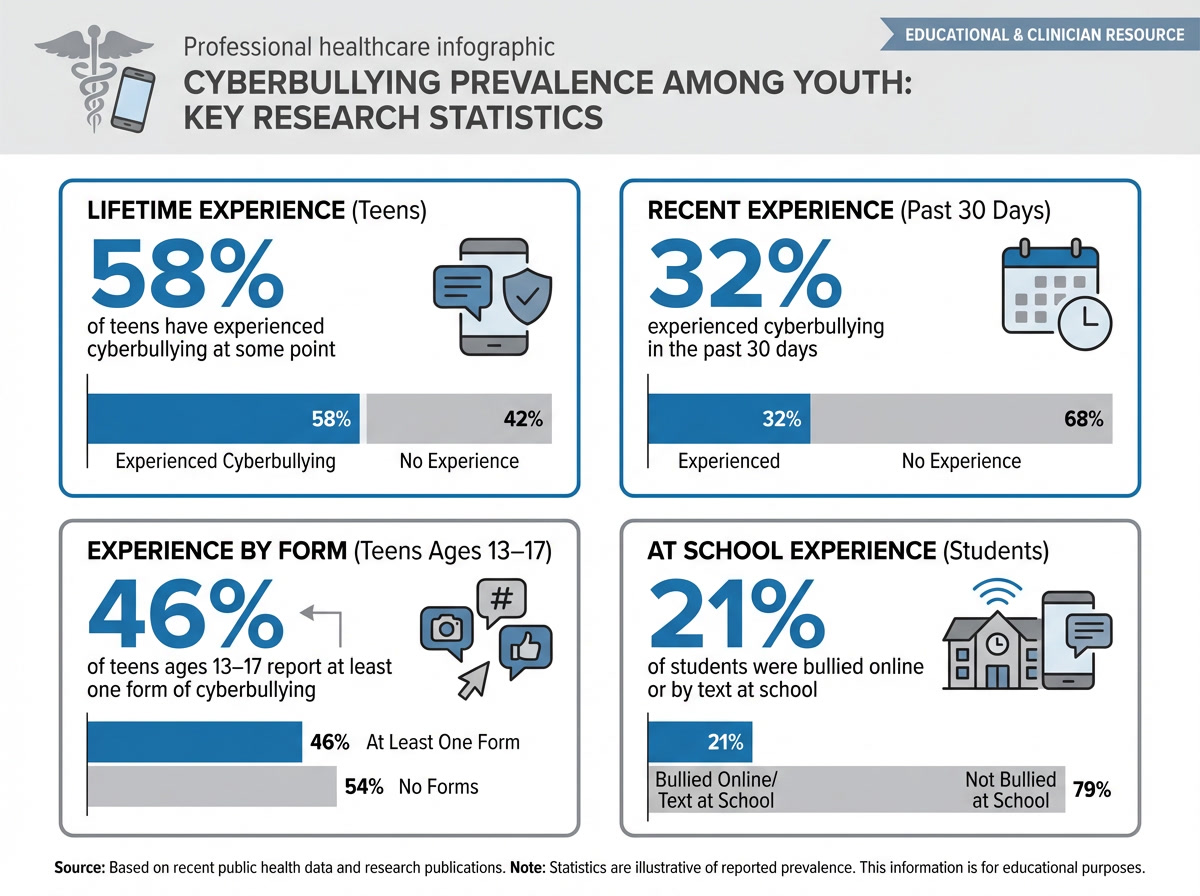
The statistics are alarming and growing worse. According to the latest data from the Cyberbullying Research Center, lifetime victimization has surged from 33.6% in 2016 to 58.2% in 2025 — meaning more than half of all teens have experienced online harassment at some point. Even more concerning, 30-day victimization rates have doubled from 16.5% to 32.7% in the same period, while perpetration has jumped dramatically to 16.1% in 2025.
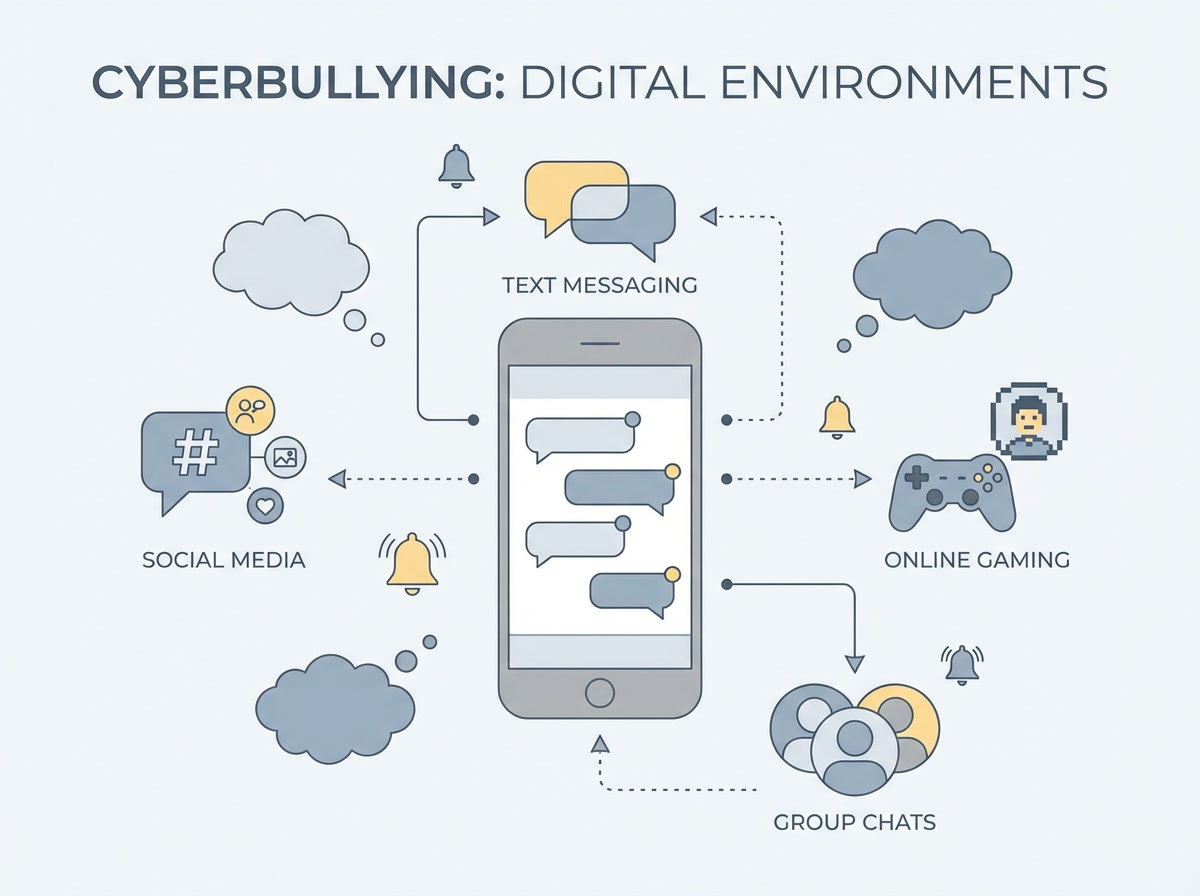
Cyberbullying refers to individuals who send any type of threatening or humiliating message using an electronic device. Whether it's through social media posts, text messaging, online gaming platforms, or direct messages, it all counts as cyberbullying. Today, cyberbullying remains an increasing concern for parents and a prominent risk for youth. In fact, research shows that parental concern about cyberbullying has surpassed that of teen drug use, alcohol use, and pregnancy.
As a behavioral health clinician, you can help parents and educators protect kids by raising awareness and sharing cyberbullying interventions for youth. This comprehensive guide explores the effects of cyberbullying, warning signs, and evidence-based therapeutic strategies.
What Are the Effects of Cyberbullying? 10 Mental Health Impacts on Children and Teens
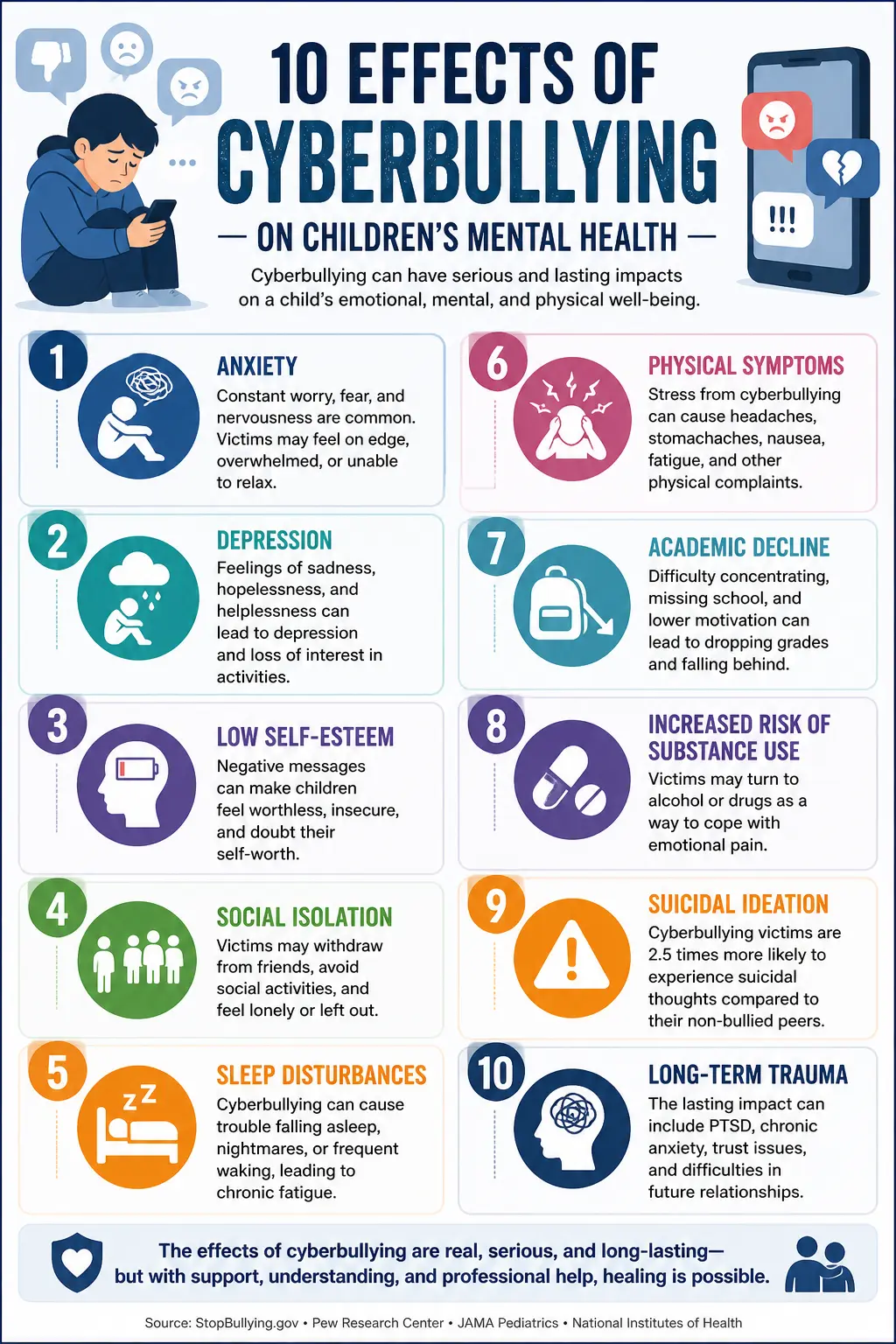
Research consistently shows that cyberbullying produces serious, measurable harm across multiple domains of a young person’s life. The most common effects of cyberbullying include:
- Anxiety and anxiety disorders
- Depression and depressive symptoms
- Suicidal ideation and self-harm behavior
- Social isolation and loneliness
- Low self-esteem and negative self-image
- Sleep disturbances and fatigue
- Physical symptoms and somatic complaints
- Academic decline and school avoidance
- Substance use and maladaptive coping
- Long-term psychological trauma
While these effects are presented individually, they rarely occur in isolation. Many children and teens experience several of these outcomes at the same time, with one issue often reinforcing another — for example, sleep disruption worsening anxiety, or social isolation deepening depressive symptoms. The cumulative impact can significantly interfere with a young person’s emotional development, academic functioning, and ability to maintain healthy relationships.
It’s also important to recognize that the severity and duration of these effects can vary widely depending on factors such as the frequency of the cyberbullying, the level of social support available, and whether the child receives timely intervention. For some, the effects may be relatively short-lived. For others, especially in cases of chronic or severe cyberbullying, the impact can persist for months or even years without appropriate support.
For clinicians, this underscores the importance of assessing cyberbullying not as a single presenting issue, but as a contributing factor that may be driving multiple symptoms across emotional, behavioral, and physical domains. Understanding how these effects show up in real-world behavior is critical for early identification and intervention.
What is Cyberbullying?
Cyberbullying is the use of electronic communication to harass, threaten, intimidate, or humiliate someone. This digital form of bullying encompasses a wide range of harmful behaviors conducted through technology — including social media posts, text messages, emails, instant messaging, online gaming platforms, and forum posts.
Common forms of cyberbullying include:
- Sending threatening or hostile messages
- Posting embarrassing photos or videos without consent
- Spreading false rumors or lies
- Creating fake profiles to impersonate or mock someone
- Excluding someone from online groups or activities
- Sharing private information publicly (doxing)
- Cyberstalking or persistent harassment
- Sending unwanted explicit images
- Rating or ranking peers based on appearance
- Encouraging self-harm or suicide
The Prevalence of Cyberbullying in Children and Teens
Cyberbullying has evolved from an emerging concern to a widespread crisis affecting the majority of young people. Unlike traditional bullying confined to school hours and physical locations, digital harassment can occur anywhere, anytime, making it nearly inescapable for victims.
Current Statistics (2024-2025)
The latest research paints a sobering picture of how pervasive cyberbullying has become:
- 58.2% of teens have experienced cyberbullying at some point in their lives (up from 33.6% in 2016)
- 32.7% of teens experienced cyberbullying in the past 30 days alone
- 26.5% of teens reported being cyberbullied in 2023, surpassing the 25% who experienced in-person bullying
- 46% of teens aged 13-17 report experiencing at least one form of cyberbullying, according to the Pew Research Center
- 28% have experienced multiple types of cyberbullying
- Girls aged 15-17 face the highest rates, with 38% experiencing two or more kinds of online harassment
School-Based Statistics
During the 2021-2022 school year, more than 21% of students reported being bullied online or by text. Female students were almost twice as likely to be electronically bullied than male students. Notably, cyberbullying occurred more frequently than bullying on school buses, in bathrooms, or in locker rooms.
The impact on school attendance is significant: 19.2% of teens stayed home from school because of cyberbullying in 2023 — nearly double the 10.3% reported in 2016.
Most Common Platforms for Cyberbullying
According to StopBullying.gov, the platforms where cyberbullying most frequently occurs include:
- Instagram (96.9% detection rate by platform as of 2024, improved from 35% in 2020)
- Snapchat
- TikTok
- WhatsApp and text messaging
- Online gaming platforms
- Reddit and other forums
Types of Harassment Experienced
The Pew Research Center found that teens experience cyberbullying in various forms:
- 32% have been called offensive names online
- 22% have had false rumors spread about them
- 17% have been sent explicit images they didn't ask for
- 16% have been persistently asked where they are or what they're doing
- 7% have had explicit images of them shared without consent
Boys and girls aged 13 to 17 were most likely to say they were harassed or targeted online because of their physical appearance, followed by their gender, race or ethnicity, sexual orientation, and political views.
Recognizing Teen Cyberbullying: Examples
Cyberbullying manifests in countless ways. Here are real-world examples of what it looks like:
- Colleen makes negative social media posts about her classmate, Eric
- Katie prank calls Jessica's cell phone and leaves taunting messages about her looks
- Taylor calls Nora names and insults her during their online game
- Mason creates a social media post to rate the appearance or popularity of girls in his grade
- Dylan spreads a false rumor on Instagram about Mark engaging in sexual activities
- Jane posts a private or embarrassing photo of Julia
- Joe sends a threatening email to Patrick after finding out they both like the same girl
- Tate creates a fake account to impersonate Peter and hurt his reputation
Keep in mind that this is not an exhaustive list. Cyberbullying can occur through phone calls, emails, text messages, instant messages, social media comments or posts, online gaming chat, and any digital platform where communication occurs.
Free Download: Cyberbullying Clinical Response Toolkit
Cyberbullying cases can be clinically complex and emotionally charged—often requiring careful risk assessment, safety planning, and documentation across multiple sessions. This free, clinician-designed toolkit includes intake prompts, red-flag checklists, sample progress note language, and intervention guidance to help you respond confidently while supporting medical necessity and continuity of care.
Why Do Children and Teens Engage in Cyberbullying?
Understanding motivations helps inform treatment approaches. According to Dr. Joseph Magliano, Professor of Psychology at Northern Illinois University, the factors are "multiple and complex." Research shows that children and teens engage in cyberbullying due to a combination of psychological, social, family, and environmental factors. The infographic below breaks down the most common underlying drivers.
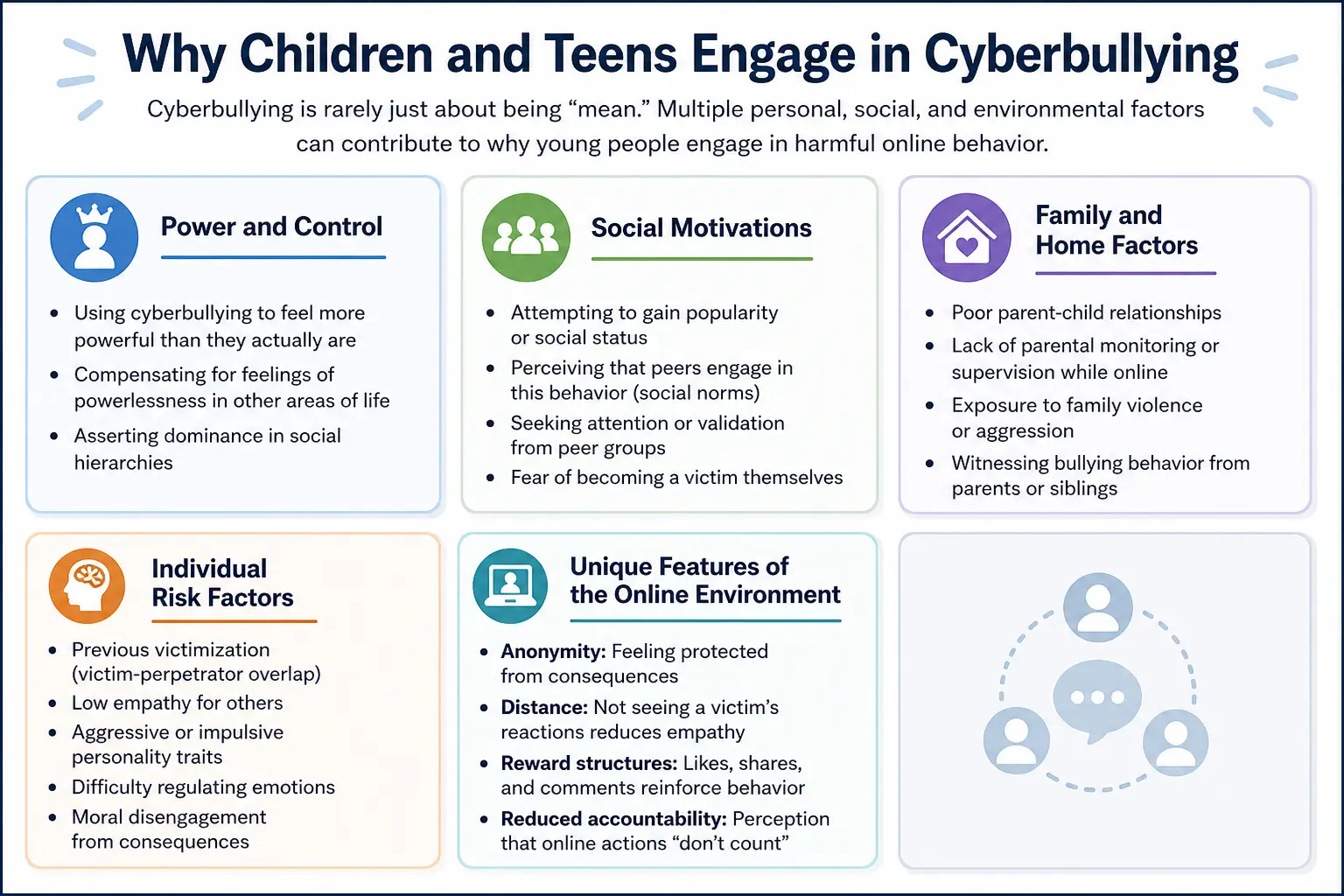
Power and Control
For some adolescents, cyberbullying is fundamentally about power — or more precisely, about compensating for its absence. Children who feel powerless in other areas of their lives, whether at home, in the school social hierarchy, or in their own sense of self, may use online harassment to assert dominance they cannot access elsewhere. The anonymity and asymmetry of digital environments make this dynamic particularly potent: a child who feels overlooked or subordinate offline can wield considerable influence — and inflict considerable pain — with very little risk of accountability.
Social Motivations
Social pressures also play a significant role. Cyberbullying often functions as a form of in-group behavior — something adolescents engage in partly because they perceive that peers expect or reward it. Seeking status, validation, or attention within a peer group is a powerful motivator during the developmentally heightened social sensitivity of adolescence, and it can lead young people to participate in behavior they might privately recognize as harmful. For some, cyberbullying is also preemptive: a way of positioning themselves as a threat, hoping to avoid becoming a target themselves.
Family and Home Factors
Home environment is among the strongest predictors of cyberbullying perpetration. Adolescents who bully others online are significantly more likely to come from families characterized by poor parent-child relationships, limited parental monitoring of online activity, and exposure to aggression within the household. Children who witness violence at home — whether between parents or directed at them — absorb a model of how conflict is resolved and how power operates in relationships. Inadequate supervision, meanwhile, creates the unsupervised online time in which cyberbullying typically occurs.
Individual Risk Factors
At the individual level, several characteristics are consistently associated with perpetration. Previous victimization is among the most significant — many adolescents who bully others online have themselves been bullied, either in digital or physical spaces. Low empathy, difficulty regulating emotions, and impulsive or aggressive personality traits reduce the internal checks that might otherwise deter harmful behavior. Moral disengagement — the psychological process by which people convince themselves that harmful actions are justified, or that a victim's distress is exaggerated — is also strongly associated with cyberbullying perpetration.
Unique Features of the Online Environment
The online environment itself lowers barriers to cyberbullying in ways that have no real analogue in traditional bullying. Anonymity removes the social consequences that typically deter aggressive behavior. Physical distance eliminates the empathy-activating experience of seeing a victim's reaction in real time. Algorithmic reward structures — likes, shares, and comments — can provide genuine positive reinforcement for harmful content, particularly when a bullying post generates engagement. And many adolescents operate with a distorted sense that online behavior exists in a separate moral universe where actions carry diminished real-world significance — a distortion that clinicians and educators are uniquely positioned to challenge.
How Cyberbullying Affects Mental Health: Psychological Effects in Children and Teens
Cyberbullying can create devastating and long-lasting consequences for victims' mental health. Research consistently demonstrates strong correlations between cyberbullying victimization and a range of psychological problems. Here are the most significant mental health effects documented in current research.
Short-Term vs. Long-Term Effects of Cyberbullying
| Short-Term Effects | Long-Term Effects |
|---|---|
| Acute anxiety and distress | Generalized anxiety disorder |
| Mood changes and crying | Chronic depression |
| Sleep disruption | PTSD and complex trauma |
| Refusing to attend school | Persistent school avoidance or dropout risk |
| Withdrawal from friends | Long-term social isolation |
| Loss of appetite | Disordered eating patterns |
1. Anxiety and Anxiety Disorders
Bullying, both in person and online, is positively associated with anxiety, which develops as a response to threatening or stressful situations. Research shows that victims of cyberbullying are significantly more likely to develop anxiety compared to their peers who are not harassed online.
Girls are significantly associated with higher anxiety due to cyberbullying compared to males. Individuals who are slightly older in age are also more likely to develop anxiety symptoms.
Additionally, those who experience cyberbullying victimization have an increased likelihood of developing social anxiety and appearance anxiety. Many kids feel that online harassment is inescapable, causing them to live in constant fear and hypervigilance.
This chronic stress can lead to the development of clinical anxiety disorders, including:
- Social Anxiety Disorder (SAD): Intense fear of social situations and judgment from others
- Generalized Anxiety Disorder (GAD): Persistent, excessive worry about various aspects of life
- Panic Disorder: Recurring panic attacks with physical symptoms
- Post-Traumatic Stress Disorder (PTSD): Trauma responses triggered by severe or prolonged harassment
It's important to note that anxiety caused by cyberbullying can have long-term psychological effects. Adolescents who experience cyberbullying are more likely to develop symptoms of anxiety that persist as they age, potentially affecting their relationships, career prospects, and overall quality of life.
2. Depression and Depressive Symptoms
Another common psychological impact of cyberbullying is depression. Multiple studies demonstrate that cyberbullying victims are at significantly higher risk of experiencing depressive symptoms and developing major depressive disorder.
A three-year cohort study on cyberbullying victimization revealed that about 33% of females and 16.6% of males had depressive symptoms after being harassed online. Adolescents who experienced cyberbullying were more than twice as likely to have depressive symptoms compared to those who did not.
Research shows that those involved in cyberbullying — including victims, witnesses, and perpetrators — are all more likely to experience depression, even among elementary and middle school students.
Clinically, the depressive presentation in cyberbullying victims tends to cluster around a recognizable pattern: persistent sadness and hopelessness, loss of interest in previously enjoyed activities, changes in sleep and appetite, fatigue, difficulty concentrating, and a pervasive sense of worthlessness or powerlessness. These symptoms rarely appear in isolation — they tend to arrive together and reinforce one another, creating a clinical picture that warrants careful assessment and may meet diagnostic criteria for major depressive disorder.
In one study, 93% of cyberbullying victims reported negative effects, with the majority experiencing feelings of sadness, hopelessness, and powerlessness.
3. Social Isolation and Loneliness
Kids who are cyberbullied often face harassment both online and in shared social spaces, including school. No matter the reason for the online harassment, individuals who are cyberbullied frequently develop profound feelings of isolation and loneliness.
Children who are cyberbullied tend to retract their personalities and find any means of "blending in" with others to protect themselves from becoming targets. This defensive withdrawal makes it extremely challenging to develop genuine friendships and maintain healthy social connections.
Cyberbullying victims report significantly higher feelings of loneliness, and school absence is also strongly associated with cyberbullying. Many victims may only feel safe when by themselves, leading them to avoid social activities, extracurricular programs, and events they once enjoyed.
This social withdrawal can create a vicious cycle. This withdrawal tends to feed on itself. A child who pulls back from social situations to escape harassment loses the peer connections that would otherwise buffer the psychological impact of being bullied. The more isolated they become, the less supported they feel — and the more vulnerable they are to continued victimization and worsening mental health. For many victims, what begins as a protective instinct gradually becomes a self-reinforcing pattern of avoidance that grows increasingly difficult to break without clinical support.
4. Distorted Self-Image and Low Self-Esteem
Victims of cyberbullying report significantly lower levels of self-esteem and more negative attitudes toward themselves. Repeated occurrences of cyberbullying can cause victims to internalize the negative comments and judgments they receive until they eventually believe what others say about them.
In a comprehensive study of the relationship between cyberbullying and self-esteem, 86% of respondents reported that cyberbullying impacted them negatively:
- 78% said the bullying impacted their self-confidence
- 70% said it affected their self-esteem
Low self-esteem stemming from cyberbullying has been linked to numerous other mental health conditions, including depression and self-injury behaviors.
Over time, the psychological portrait that emerges in many cyberbullying victims is one of eroded self-concept. Negative body image is especially common when appearance was the target of harassment. Children may develop patterns of perfectionism — working compulsively to preempt future criticism — or shift toward people-pleasing behaviors designed to minimize the risk of conflict. Compliments become difficult to accept; persistent negative self-talk fills the space once occupied by a more neutral or positive self-regard. For clinicians, recognizing this pattern early matters, because it has implications not just for current functioning but for long-term identity development.
5. Suicidal Ideation and Behavior
Perhaps the most alarming consequence of cyberbullying is its strong association with suicidal thoughts and behaviors. Higher rates of anxiety and depression are significantly associated with suicidal ideation globally.
The statistics are deeply concerning:
- Cyberbullying victims were 2.50 times more likely to experience suicidal ideation compared to their non-bullied counterparts
- In one study, 7.5% of females and 2.3% of males reported serious consideration of attempting suicide in the past year after being cyberbullied
- Kids who reported cyberbullying were 11.5 times more likely to present with suicidal ideation when visiting emergency departments
- Those who were both victims and perpetrators faced the highest risk, with 24.2% reporting suicidality
- Victims of cyberbullying were 4.2 times more likely to experience suicidality compared to those who weren't bullied
Cyberbullying is also associated with actual suicide attempts and completed suicides. Research reveals that both cyberbullying and adolescent suicide are increasing in the United States, with nearly 14% of adolescents making a serious suicide attempt in relation to cyberbullying.
Several high-profile cases have brought national attention to the devastating link between cyberbullying and suicide, including the case of Rebecca Sedwick, a 12-year-old girl from Polk County, Florida, who died by suicide after experiencing relentless acts of cyberbullying.
Physical and Somatic Effects of Cyberbullying
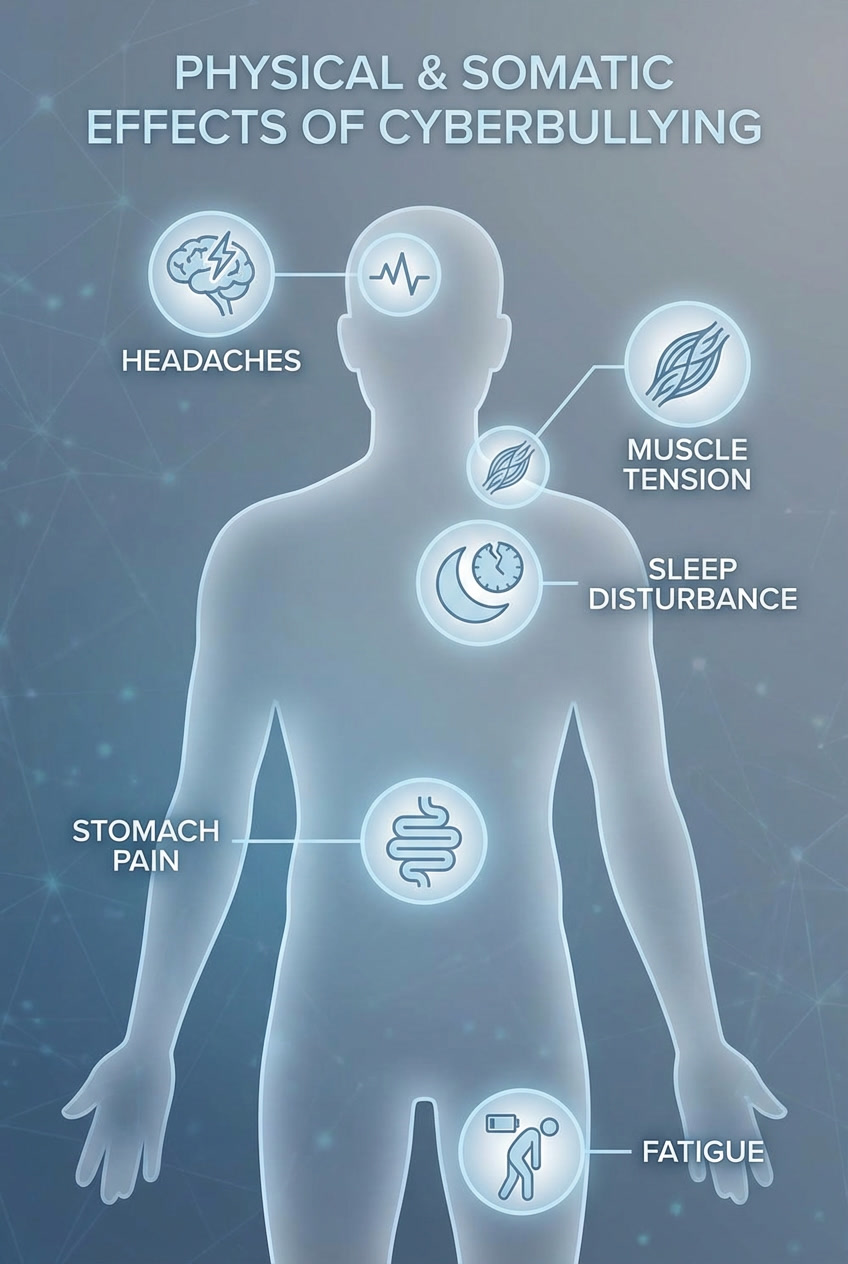
While the psychological impacts of cyberbullying receive significant attention, the physical health consequences are equally concerning. Victims frequently experience psychosomatic symptoms, physical manifestations of psychological stress, that can significantly impact their daily functioning and quality of life.
Common Physical Symptoms
Research shows that cyberbullying victims are twice as likely to experience physical symptoms compared to their non-bullied peers. These symptoms include:
Headaches and Migraines
Chronic stress from ongoing harassment frequently manifests as tension headaches or migraines. The constant anxiety and rumination about cyberbullying can trigger frequent headache episodes that interfere with schoolwork and daily activities.
Gastrointestinal Problems
Stomachaches, nausea, and digestive issues are among the most commonly reported physical symptoms. The anxiety associated with cyberbullying can cause:
- Upset stomach and nausea
- Abdominal pain
- Changes in bowel habits
- Loss of appetite or stress eating
Sleep Disturbances
Cyberbullying significantly disrupts normal sleep patterns, leading to:
- Insomnia: Difficulty falling asleep or staying asleep due to anxiety and rumination
- Nightmares: Disturbing dreams related to harassment experiences
- Sleep anxiety: Fear of checking messages or missing school the next day
- Daytime fatigue: Exhaustion from poor-quality sleep
Changes in Eating Patterns
Stress and emotional distress can cause significant appetite changes:
- Loss of appetite and weight loss
- Stress eating and weight gain
- Development of disordered eating patterns
- Risk for eating disorders, particularly when targeted about appearance
Fatigue and Low Energy
The emotional toll of cyberbullying, combined with sleep disturbances and chronic stress, often results in persistent fatigue, low energy levels, and general malaise.
Other Somatic Complaints
Victims may also experience:
- Muscle tension and body aches
- Rapid heartbeat or palpitations
- Dizziness or lightheadedness
- Chest tightness or difficulty breathing
- Weakened immune system leading to frequent illness
Long-Term Physical Health Implications
When left unaddressed, the chronic stress from cyberbullying can contribute to more serious long-term health consequences, including:
- Cardiovascular problems from prolonged stress
- Weakened immune function
- Chronic pain conditions
- Higher risk for stress-related illnesses in adulthood
As clinicians, it's essential to assess for these physical symptoms when evaluating adolescents for cyberbullying impacts, as they often serve as important indicators of psychological distress.
Academic and Developmental Impact of Cyberbullying
The effects of cyberbullying extend far beyond emotional distress, significantly impacting victims' academic performance, cognitive functioning, and educational trajectory. Understanding these academic consequences is crucial for clinicians working with school counselors and educational systems.
Impact on Learning and School Performance
According to the Cyberbullying Research Center, 64% of victims say cyberbullying affects their ability to learn and feel safe at school. This profound impact manifests in multiple ways:
Decreased Concentration and Productivity
Victims of cyberbullying experience significant difficulty concentrating on their studies. The psychological distress — including anxiety, depression, and intrusive thoughts about harassment — makes it nearly impossible to focus on academic tasks. Students report:
- Inability to concentrate during class
- Difficulty completing homework assignments
- Problems retaining information
- Mind wandering to harassment experiences
- Reduced productivity on projects and papers
Declining Grades and Academic Achievement
Research consistently shows that cyberbullying victimization correlates with poor academic performance. Students who are cyberbullied often experience:
- Dropping grades across multiple subjects
- Missing or incomplete assignments
- Failing tests due to inability to study or concentrate
- Reduced participation in class discussions
- Lower overall GPA
School Avoidance and Absenteeism
One of the most measurable impacts is the increase in school absences. The statistics are striking:
- 19.2% of teens stayed home from school because of cyberbullying in 2023
- This represents nearly double the 10.3% reported in 2016
- More than half of teens (54%) view online bullying in schools as a major issue
Victims avoid school for multiple reasons:
- Fear of facing bullies in person
- Anxiety about peers who may have seen humiliating content
- Physical symptoms (headaches, stomachaches) that make attendance difficult
- Depression and lack of motivation to attend
- Feeling unsafe in the school environment
Long-Term Educational Consequences
Dropout Risk
The cumulative effects of cyberbullying significantly increase the risk of students dropping out of school. Research on those who engage in cyberbullying shows that 39% eventually drop out, and victims face similar risks when the harassment becomes overwhelming.
Reduced Educational Aspirations
Chronic victimization can diminish students' confidence in their abilities and reduce their educational and career aspirations. They may:
- Avoid pursuing challenging courses
- Give up on college plans
- Limit career goals due to damaged self-confidence
- Miss opportunities for academic advancement
Impact on Extracurricular Participation
Cyberbullying often causes students to withdraw from:
- Sports teams
- Clubs and organizations
- Student government
- Arts programs
- Social events
This withdrawal deprives them of opportunities for skill development, leadership experience, and positive peer relationships, all of which are important for healthy development and college applications.
Cognitive and Developmental Effects
Beyond grades and attendance, cyberbullying can impact fundamental cognitive and developmental processes:
- Executive function impairment: Chronic stress affects decision-making, planning, and impulse control
- Memory problems: Anxiety and depression interfere with memory formation and recall
- Reduced cognitive flexibility: Difficulty adapting to new situations or problem-solving
- Delayed social-emotional development: Interrupted normal developmental milestones
Clinical Implications for Behavioral Health Professionals
As clinicians, we must:
- Assess academic performance as part of comprehensive evaluations
- Collaborate with school counselors and teachers
- Advocate for academic accommodations when needed
- Help students develop strategies to maintain academic progress during treatment
- Address school avoidance behaviors specifically in treatment plans
- Work with families to support educational continuity
Cyberbullying and Substance Abuse Connection
An often-overlooked consequence of cyberbullying is its strong association with substance use and abuse among adolescents. Understanding this connection is crucial for comprehensive assessment and treatment planning.
Research on the Connection
Studies reveal that cyberbullying victims are 2.37 times more likely to engage in substance abuse compared to their non-victimized peers (adjusted odds ratio: 2.37; 95% confidence interval: 1.02-5.49; p = 0.044). Among those who engage in cyberbullying as perpetrators, 32% report frequent substance abuse.
Why Cyberbullying Leads to Substance Use
Adolescents who experience cyberbullying often lack the emotional vocabulary and coping resources to process the shame, fear, and social pain that persistent harassment creates. For some, substances fill that gap. Alcohol and drugs offer temporary relief from depression and anxiety, numb the intrusive thoughts that accompany chronic harassment, and reduce the social inhibition that cyberbullying often produces. Some victims turn to substances specifically to manage sleep problems or self-medicate anxiety; others do so as a misguided route to social belonging — attempting to fit in with peers at a time when they feel fundamentally excluded.
It's worth recognizing that these motivations are rarely conscious or deliberate. Most adolescents who turn to substances in response to cyberbullying are not making a calculated decision; they are responding to overwhelming distress with whatever tools are available to them. Understanding this context is essential for clinicians who approach substance use treatment with this population.
Common Substances Used
Research indicates that cyberbullying victims are at elevated risk of using alcohol (most commonly), marijuana, prescription sedatives and painkillers, and tobacco and vaping products.
The Dangerous Cycle
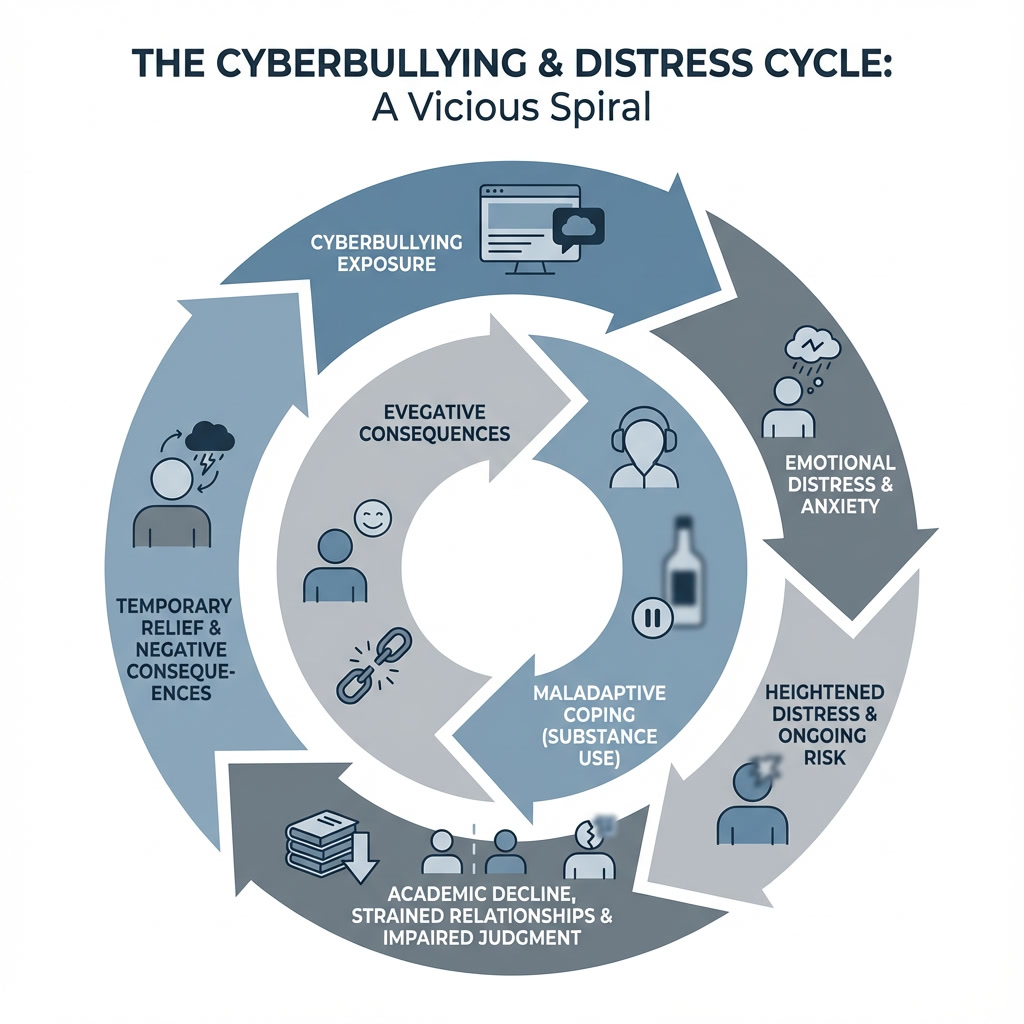
Cyberbullying rarely exists in isolation. For many children and adolescents, ongoing online harassment creates significant psychological distress that interferes with emotional regulation, coping capacity, and judgment. When supportive resources are limited or distress feels overwhelming, some youth turn to substances as a maladaptive coping strategy to temporarily escape anxiety, depression, shame, or social pain associated with cyberbullying experiences.
Related: Anxiety and Substance Use: Breaking the Cycle
While substance use may offer short-term relief, it often intensifies the overall impact of cyberbullying by introducing new academic, behavioral, and relational challenges. Declining school performance, impaired decision-making, and strained peer or family relationships can increase vulnerability to continued victimization, deepen emotional distress, and reinforce avoidance-based coping. Over time, this pattern can evolve into a self-perpetuating cycle in which cyberbullying and substance use interact, significantly elevating the risk for long-term mental health concerns and substance use disorders if not addressed through early, coordinated intervention.
This pattern often unfolds in predictable stages, with each step reinforcing the next and increasing the child’s vulnerability over time. This dynamic is clinically important because it means effective intervention requires addressing both issues simultaneously. Treating only the substance use without addressing the underlying cyberbullying trauma is likely to fail, just as focusing only on the cyberbullying without recognizing how substances have become embedded in the coping pattern will leave a critical treatment need unmet.
Clinical Assessment and Intervention
For clinicians working with cyberbullying victims, substance use screening should be a standard part of the assessment process — not an afterthought. When use is present, it's critical to understand its function before developing a treatment approach. Simply identifying what is being used tells you relatively little; understanding why it's being used opens the door to effective intervention.
From there, treatment involves building a repertoire of evidence-based coping strategies that can replace substance use, while addressing the cyberbullying trauma at its root. Co-occurring conditions — particularly depression and anxiety — often drive the substance use and must be treated concurrently rather than sequentially. Family involvement is essential: parents and caregivers need psychoeducation about the pathway from cyberbullying to substance use, including what warning signs to watch for. For cases that have progressed to a use disorder, referral to specialized addiction treatment may be appropriate, ideally coordinated with ongoing trauma-focused care.
Related: Substance Abuse Treatment Plan: Template, Examples, Goals & Interventions
Prevention Through Early Intervention
Early identification and intervention for cyberbullying can prevent the development of substance abuse problems. By addressing the cyberbullying trauma promptly and teaching healthy coping strategies, we can interrupt the pathway to substance use before it begins.
Frequently Asked Questions: Effects of Cyberbullying
What are the psychological effects of cyberbullying?
The psychological effects of cyberbullying are wide-ranging and well-documented. Victims commonly experience anxiety, depression, social isolation, and significantly lower self-esteem. Many develop distorted beliefs about themselves — internalizing the negative messages they've received — which can manifest as persistent negative self-talk, perfectionism, and difficulty trusting others. Suicidal ideation is among the most serious psychological consequences: research shows that cyberbullying victims are 2.5 times more likely to experience suicidal thoughts than their non-bullied peers. What distinguishes cyberbullying from other stressors is the degree to which these psychological effects persist. The permanence of online content, the anonymity of perpetrators, and the inescapable nature of digital harassment combine to produce trauma responses that can be difficult to resolve without professional support.
What are the long-term effects of cyberbullying?
The long-term effects of cyberbullying can persist well into adulthood and include chronic depression and anxiety disorders, PTSD symptoms, low self-esteem that affects relationships and career, difficulty trusting others, social anxiety and avoidance, increased risk of substance abuse, and higher rates of suicidal ideation. Research shows that adolescents who experience cyberbullying are more likely to develop mental health issues as adults, with effects lasting years after the bullying has stopped.
The permanence of online content means victims may continue to experience distress when past harassment is discovered by new people.
What are the short-term effects of cyberbullying?
In the short term, cyberbullying typically produces acute emotional distress — intense anxiety, sudden mood changes, and episodes of crying or emotional withdrawal that may appear without obvious explanation to parents and teachers. Many victims begin avoiding the devices or platforms where harassment occurred, which can look like disinterest in technology but is more accurately understood as avoidance behavior. Sleep disruption is common and often appears quickly, as is a loss of appetite and a withdrawal from social activities and friendships. School avoidance — staying home, refusing to attend, or finding reasons to leave early — frequently begins as a short-term protective response. Left unaddressed, these initial reactions tend to deepen over time, making early identification and intervention important for preventing acute distress from developing into longer-term mental health conditions.
How common is cyberbullying in 2025?
Cyberbullying has become extremely common. As of 2025, 58.2% of teens report having experienced cyberbullying at some point in their lives, up from 33.6% in 2016; 32.7% experienced it in the past 30 days alone; 46% of teens aged 13-17 have experienced at least one form of cyberbullying; and 28% have experienced multiple types. During the 2021-2022 school year, more than 21% of students reported being bullied online or by text, with female students almost twice as likely to be targeted.
The increase has been dramatic and consistent across most demographics, making cyberbullying one of the most common mental health risks facing adolescents today.
How does cyberbullying affect students academically?
The academic impact of cyberbullying is substantial and measurable. Research shows that 64% of victims say cyberbullying affects their ability to learn and feel safe at school, and by 2023, 19.2% of teens had stayed home from school specifically because of cyberbullying — nearly double the rate reported in 2016. In the classroom, the effects tend to show up as decreased concentration, declining grades, reduced participation, and growing disengagement from school life. Extracurricular activities are often among the first things victims withdraw from. Over time, chronic absenteeism compounds the academic impact, with some students falling so far behind that dropout becomes a realistic outcome. For behavioral health clinicians working with cyberbullied youth, the academic picture is a useful clinical indicator — and for many clients, school reintegration and academic recovery become important treatment goals alongside the mental health work.
Can cyberbullying cause physical health problems?
Yes. Research consistently shows that cyberbullying victims are twice as likely to experience physical symptoms compared to their non-bullied peers. The most commonly reported physical effects include headaches and migraines, gastrointestinal problems such as stomachaches and nausea, sleep disturbances ranging from insomnia to hypersomnia, changes in appetite and eating patterns, and chronic fatigue and low energy. These are not incidental complaints — they reflect the physiological toll of sustained psychological stress on a developing body. The same stress hormones that drive the mental health effects of cyberbullying also affect the immune system, digestive function, and sleep architecture. For clinicians, this means that physical symptom complaints in a cyberbullied young person deserve to be taken seriously as part of the clinical picture rather than dismissed as somatic or attention-seeking.
What are the warning signs a child is being cyberbullied?
Key warning signs include sudden changes in device use, either excessive checking or complete avoidance; emotional changes like increased sadness, anxiety, or irritability; social withdrawal from friends and activities; declining academic performance and school avoidance; physical symptoms like headaches and stomachaches; sleep disturbances and nightmares; secretiveness about online activities; and nervous reactions when receiving messages.
More severe signs requiring immediate attention include suicidal thoughts or statements, self-harm behaviors, giving away possessions, and substance use. Many victims don't tell adults, so vigilance for these signs is crucial.
How is cyberbullying different from traditional bullying?
Cyberbullying differs from traditional bullying in several critical ways that often make it more harmful: it's permanent, has unlimited audience reach, occurs 24/7, often involves anonymity, reduces empathy, and can go viral, spreading rapidly beyond the initial target.
Traditional bullying is typically limited to school hours and specific locations, involves known perpetrators, and doesn't create a permanent digital record.
Can cyberbullying cause PTSD?
Yes, cyberbullying can cause post-traumatic stress disorder, especially in severe or prolonged cases. Victims may experience intrusive thoughts about the harassment, nightmares, hypervigilance, avoidance of trauma reminders such as social media platforms, difficulty concentrating, emotional numbing, and exaggerated startle response. The chronic stress and repeated traumatization from ongoing cyberbullying creates the conditions for PTSD development.
Treatment with trauma-focused therapies like CBT and EMDR can be highly effective.
What therapy works best for cyberbullying victims?
The most effective therapeutic approaches for cyberbullying victims include Cognitive Behavioral Therapy to address depression, anxiety, and negative thought patterns; trauma-focused CBT for those with PTSD symptoms; family therapy to strengthen support systems and communication; group therapy with other cyberbullying survivors; and mindfulness-based interventions for anxiety management.
A comprehensive approach often combines individual therapy, family involvement, collaboration with schools, and building social support networks. Treatment should be tailored to the individual's specific symptoms and needs. Building resilience, self-esteem, and healthy coping strategies are key components of effective treatment.
What should parents do if their child is being cyberbullied?
Parents should take the following steps: stay calm and avoid overreacting, listen to and validate their child's experience, document the harassment with screenshots before blocking, report the behavior to the platform and school, avoid engaging with the bully or retaliating, consider temporarily limiting social media access, seek professional help if the child shows signs of depression or suicidal thoughts, strengthen communication and support at home, work with school administrators, and contact law enforcement in cases involving threats or illegal activity.
Parents should balance protecting their child with empowering them to develop resilience.
Is cyberbullying illegal?
The legality of cyberbullying varies by jurisdiction. Many states have passed laws specifically addressing cyberbullying, particularly in school contexts. Certain forms of cyberbullying may violate existing laws against harassment, stalking, threats, defamation, or distribution of sexual images of minors. Federal laws like Title IX may apply in educational settings.
Even when not explicitly illegal, cyberbullying that occurs at school or affects the school environment can result in disciplinary action. Severe cases involving threats, extortion, or sharing intimate images without consent may result in criminal charges. Parents and clinicians can find information about their state's laws at StopBullying.gov.
Related Resources for Clinicians
Effects of Cyberbullying on Perpetrators
While much attention focuses on victims, those who engage in cyberbullying also experience significant negative mental health outcomes. Understanding perpetrator psychology and consequences is essential for comprehensive prevention and intervention strategies.
Mental Health Impacts on Perpetrators
The popular image of the cyberbully as a confident, socially dominant teenager is largely inaccurate. Research consistently shows that adolescents who engage in cyberbullying experience significantly elevated rates of psychological distress compared to non-involved peers — higher stress, higher anxiety, and greater propensity for aggressive behavior than those who neither bully nor are bullied. While perpetrators may show somewhat lower rates of depression than victims, they are not psychologically unaffected. A substantial proportion — approximately 16% — experience severe depressive episodes, and 37% show patterns of delinquent behavior that extend well beyond cyberbullying into other domains of their lives.
Academic and Social Consequences
The academic and social trajectory for cyberbullying perpetrators is also troubling. Perpetrators face dropout rates of approximately 39% — significantly higher than the general adolescent population — along with elevated rates of substance abuse (32% report frequent use), difficulty forming genuine peer relationships, and exposure to disciplinary consequences ranging from school suspension to legal action. What research makes increasingly clear is that the harm perpetrators cause has a cost for the perpetrators themselves. These are not adolescents who escape the consequences of their behavior; they carry them into adulthood in ways that shape their relationships, employment, and long-term mental health.
The Victim-Perpetrator Overlap
Research shows significant overlap between victims and perpetrators. Many who engage in cyberbullying have themselves been bullied — either online or in person. This group consistently shows the worst outcomes across all measured domains. They face suicidality rates of 24.2% — higher than either victims or perpetrators alone — along with the most elevated rates of mental health problems, substance abuse, and delinquency. Clinically, they also present the most complex treatment needs, often requiring simultaneous attention to trauma from victimization, active intervention around perpetrating behavior, and the underlying factors that contributed to both.
Long-Term Consequences for Perpetrators
The long-term picture for adolescents who engage in cyberbullying without intervention is concerning. Research indicates elevated risk for antisocial behavior and criminal conduct in adulthood, difficulty forming healthy intimate relationships, and a digital footprint that can follow perpetrators into college admissions and employment for years. In jurisdictions where cyberbullying has been codified into law, there may also be lasting legal consequences. Studies additionally suggest that adolescents who engage in aggressive or bullying behavior are at higher risk for abusive parenting patterns — a finding with implications for intergenerational harm that extend well beyond the individual.
Clinical Interventions for Perpetrators
When working clinically with adolescents who have engaged in cyberbullying, the first task is often broadening the assessment beyond the presenting behavior. Many perpetrators have histories of victimization, and that context is essential for understanding the function of their bullying. Exploring family dynamics — the quality of parent-child relationships, exposure to aggression at home, the level of parental monitoring — helps locate the behavior within its environmental context rather than treating it as an individual character failure.
From there, the therapeutic work typically involves building empathy, which for some adolescents requires first dismantling the cognitive distortions and moral disengagement that have allowed them to minimize the impact of their actions. Underneath those distortions there are often genuine mental health issues — depression, anxiety, unresolved trauma — that need treatment in their own right. Emotional regulation skills are particularly important for adolescents whose bullying behavior is driven by impulsivity or difficulty managing anger.
Family therapy is often essential, both to improve relational dynamics at home and to establish appropriate parental involvement in the adolescent's online life going forward. The goal isn't surveillance as punishment, but creating the home conditions — parental connection, clear expectations, supervised online time — that address the environment in which the behavior developed.
Prevention Through Understanding
Recognizing that perpetrators also struggle with mental health issues and often have histories of adversity helps us develop more compassionate and effective prevention programs. Addressing root causes — such as family dysfunction, previous victimization, and poor emotional regulation — can prevent individuals from engaging in cyberbullying in the first place.
The Psychological Impact of Cyberbullying on Bystanders and Witnesses
Cyberbullying doesn't only affect victims and perpetrators — witnesses and bystanders also experience significant psychological distress. Understanding these effects is crucial because the majority of young people will witness cyberbullying at some point, making this a widespread mental health concern.
Prevalence of Witnessing Cyberbullying
The statistics show that witnessing online harassment is extremely common:
- More than half of teens (54%) view online bullying in schools as a major issue
- Most adolescents report having witnessed cyberbullying on social media platforms
- Bystanders often see harassment repeatedly across multiple platforms
Mental Health Effects on Bystanders
Research demonstrates that witnessing cyberbullying can lead to various negative psychological outcomes:
Anxiety and Fear
- Vicarious trauma: Experiencing distress from witnessing others' suffering
- Fear of becoming the next target: Worry that they could be victimized next
- Hypervigilance: Constantly monitoring online spaces for potential threats
- Social anxiety: Increased anxiety about their own social standing and online presence
Feelings of Helplessness and Powerlessness
Witnesses often feel:
- Uncertain about how to intervene safely
- Guilty for not taking action to help the victim
- Frustrated by the inability to stop the harassment
- Overwhelmed by the pervasiveness of the problem
Moral Distress and Guilt
Bystanders frequently experience moral and ethical distress:
- Guilt about remaining silent or not defending the victim
- Internal conflict between wanting to help and fear of consequences
- Shame about contributing through likes, shares, or passive engagement
- Rumination about what they should have done differently
Depression and Sadness
- Feeling sad or distressed about what they witnessed
- Developing depressive symptoms from repeated exposure
- Losing faith in peer relationships and humanity
- Decreased overall mood and life satisfaction
Sleep and Eating Disturbances
Similar to victims, bystanders may experience:
- Difficulty falling asleep due to disturbing images or content
- Nightmares about witnessed harassment
- Changes in appetite from stress and worry
The Bystander Effect in Cyberbullying
The bystander effect — the well-documented phenomenon in which individuals are less likely to intervene when others are present — operates with particular force in digital environments. When a bullying post generates dozens of comments and thousands of views, each witness experiences a diffusion of responsibility: with so many others watching, the felt obligation to act individually diminishes. Compounding this, what psychologists call pluralistic ignorance shapes behavior online: when no one in a comment thread intervenes, observers infer that intervention must not be warranted or appropriate.
Online audiences also face evaluation apprehension specific to social media — the fear of being judged by peers, or of having a supportive comment become the target of ridicule. And unlike in-person bystander situations, online witnesses may not know how many other people are seeing the same content, which makes it harder for any individual viewer to calibrate their own responsibility to act.
Barriers to Intervention
Understanding why bystanders don't act is as important as understanding what effective intervention looks like. Fear of retaliation is the most frequently cited barrier — the reasonable concern that defending a victim will redirect the bully's attention toward the defender. Social consequences weigh heavily too: in adolescent peer cultures, being seen as someone who reports or intervenes can carry real costs to social standing. Many bystanders also simply don't know how to help, lacking awareness of platform reporting tools or doubting that anything they could do would make a difference. Peer norms that frame intervention as "snitching" add a further layer of deterrence. For clinicians and educators, these barriers make a strong argument for explicit, skills-based bystander training — the kind that provides concrete tools and language rather than simply exhorting young people to do the right thing.
Positive Bystander Intervention
Despite these barriers, bystanders have enormous power to prevent and stop cyberbullying. Research shows that when bystanders intervene, bullying stops within 10 seconds 57% of the time. Effective bystander responses don't require confronting the bully directly. One of the most powerful things a witness can do is reach out privately to the person being targeted — a simple message expressing support can meaningfully reduce a victim's sense of isolation. Where it feels safe, public support (posting a supportive comment, or simply declining to engage with harassing content) shifts the social environment in ways that matter. Reporting through platform tools, documenting harassment with screenshots before blocking, and involving trusted adults are practical options that require no direct confrontation with the perpetrator. Perhaps most importantly, refusing to like, share, or comment on bullying content withdraws the algorithmic oxygen that makes viral harassment possible.
Clinical Implications for Treating Bystanders
In clinical settings, bystanders are sometimes overlooked because they are not the direct victims of harassment — a missed opportunity. Witnessing cyberbullying can be genuinely traumatic, particularly when the victim is a close friend or when the content is graphic or threatening. Clinicians working with adolescent witnesses should begin by validating the distress they carry — including the guilt that often accompanies inaction — without amplifying or pathologizing it. From there, therapy can focus on equipping bystanders with concrete intervention strategies calibrated to their individual comfort level, processing vicarious trauma from exposure to disturbing content, and building the resilience and digital literacy that help young people navigate online environments with greater confidence going forward.
Prevention Through Bystander Education
Prevention programs that center bystanders rather than targeting perpetrators directly have shown real promise, for a straightforward reason: there are far more bystanders than bullies, and peer influence is the most powerful force shaping adolescent behavior. Creating social norms that make bullying feel unacceptable — rather than simply punishing individual incidents after the fact — is a more durable prevention strategy. Well-designed bystander education programs give young people the language, tools, and social permission to intervene, and have demonstrated measurable success in reducing bullying frequency over time.
How to Tell if a Child is Being Cyberbullied: Warning Signs
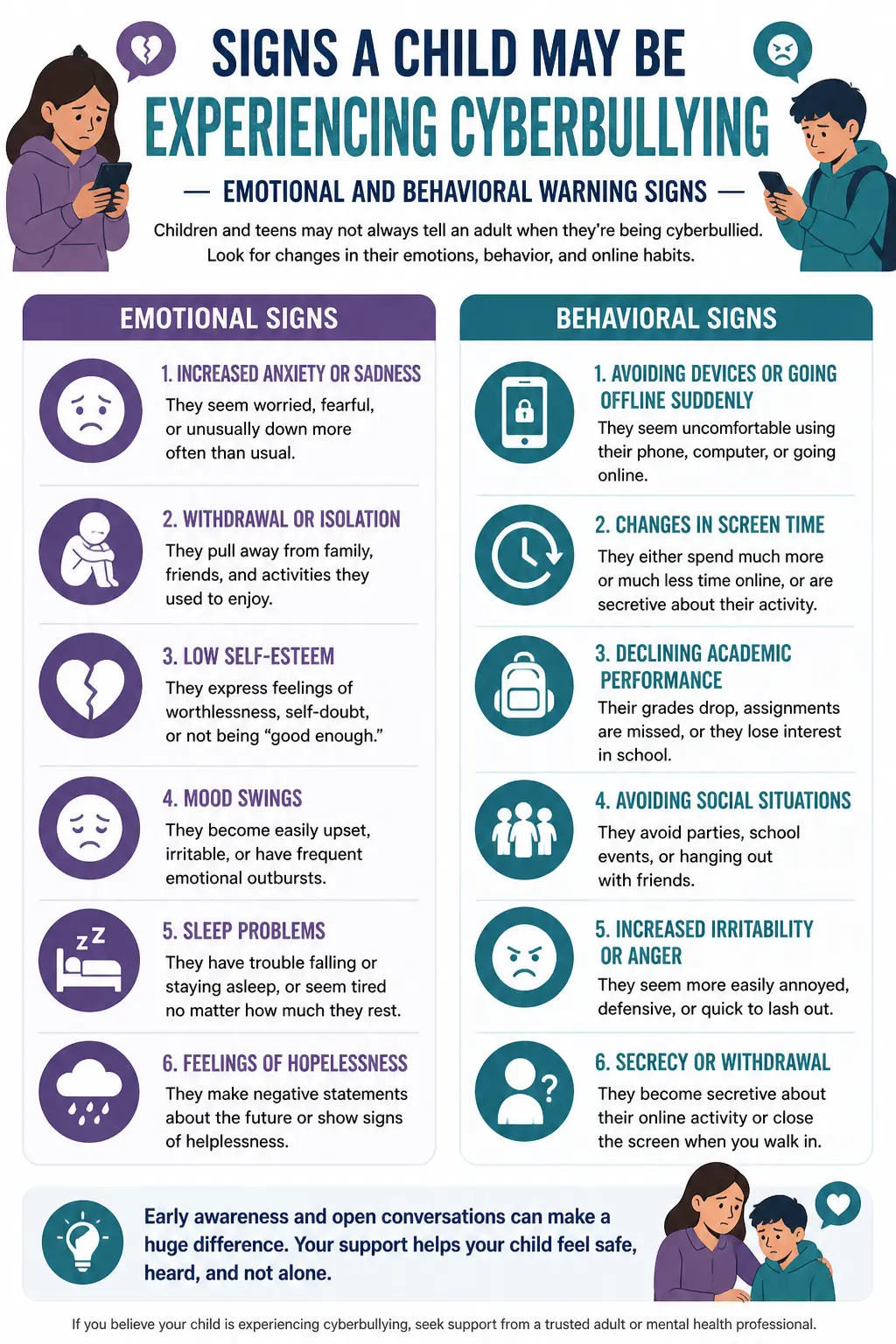
As a school counselor, child therapist, or behavioral health clinician, you must know how to identify warning signs of cyberbullying. Many children and teens who are cyberbullied do not tell a parent, counselor, or teacher because they feel embarrassed, ashamed, or fear that their electronic devices will be taken away. Instead, the impact tends to show up through changes in mood, behavior, and daily routines. Recognizing these warning signs early can help parents, educators, and clinicians intervene before the effects become more severe. The infographic below highlights the most common emotional and behavioral indicators to watch for.
Behavioral and Emotional Changes
- Emotional changes: Being sad, withdrawn, depressed, anxious, or irritable for no apparent reason
- Crying spells: Unexplained crying or emotional outbursts
- Anger and frustration: Disproportionate reactions of anger, particularly after using devices
- Social withdrawal: Avoiding friends or activities they used to enjoy
- Low self-esteem: Expressing feelings of worthlessness or inadequacy
- Secretiveness: Being unusually secretive about online activities
- Emotional unavailability: Being unable or unwilling to talk about feelings
Device-Related Behaviors
- Excessive checking: Compulsively checking social media
- Nervous reactions: Acting anxious when receiving notifications
- Device avoidance: Suddenly avoiding phones or social media
- Hiding activity: Quickly closing screens when approached
- Account changes: Deleting or creating new accounts
Physical Symptoms
- Sleep problems: Insomnia, nightmares, or disrupted sleep
- Appetite changes: Eating much more or less than usual
- Physical complaints: Headaches, stomachaches, or somatic symptoms
- Fatigue: Ongoing tiredness or low energy
- Self-harm evidence: Signs of injury or self-harm behaviors
Academic and School-Related Signs
- School avoidance: Refusing or resisting going to school
- Declining grades: Sudden academic performance drops
- Poor concentration: Difficulty focusing or paying attention
- Missing assignments: Incomplete or missing work
- Increased absences: Frequent tardiness or absences
- Isolation at school: Spending time alone
Social and Relationship Changes
- Friend group changes: Losing or changing friend groups
- Social isolation: Increased time spent alone
- Activity withdrawal: Quitting clubs or extracurriculars
- Avoiding social situations: Avoiding events or gatherings
Extreme Warning Signs Requiring Immediate Action
Some signs indicate a crisis situation requiring immediate intervention:
- Suicidal ideation: Talking about suicide, death, or not wanting to live
- Self-harm behavior: Cutting, burning, or other self-injury
- Giving away possessions: Getting rid of valued items
- Saying goodbye: Unusual goodbyes to friends or family
- Reckless behavior: Sudden engagement in dangerous activities
- Substance abuse: Sudden onset of alcohol or drug use
If you observe these signs, immediate intervention is critical. Contact the 988 Suicide & Crisis Lifeline or take the individual to an emergency department.
Differences Between Parent and Clinician Observations
Research demonstrates that witnessing cyberbullying can lead to various negative psychological outcomes:
What Parents May Notice
Parents are more likely to observe:
- Changes in daily routines and habits
- Shifts in device usage patterns
- Physical complaints (e.g., headaches, stomachaches)
- Sleep and eating changes
- Noticeable mood changes at home
What Clinicians May Observe
During clinical sessions, professionals may notice:
- Difficulty maintaining eye contact
- Flat affect or inappropriate emotional responses
- Themes in play or art therapy suggesting victimization
- Avoidance of topics related to school or peers
- Changes in therapeutic engagement
- Trauma symptoms (hypervigilance, exaggerated startle response)
Assessment Strategies for Clinicians
When you suspect cyberbullying, use these assessment approaches:
- Create safety first: Establish that the clinical space is safe and confidential
- Ask directly but gently: Use straightforward questions about online experiences
- Normalize experiences: Help them understand that many peers face similar issues
- Use screening tools: Employ validated cyberbullying assessment instruments
- Gather collateral information: Speak with parents and teachers (with appropriate consent)
- Assess severity and duration: Determine how long bullying has occurred and its intensity
- Evaluate safety: Assess for suicidal ideation, self-harm, and immediate safety concerns
Related: Mental Health Safety Planning: Why It's No Longer Optional for Clinicians
It's important to remember that the absence of warning signs doesn't mean a child isn't being cyberbullied. Some children become very skilled at hiding their distress. Regular check-ins and open communication about online experiences are essential.
Why Cyberbullying is More Harmful Than Traditional Bullying
While all forms of bullying can cause significant harm, research increasingly shows that cyberbullying can be even more detrimental to victims' mental health than traditional face-to-face bullying. Understanding these unique characteristics helps explain why the psychological impact is often more severe and longer lasting.
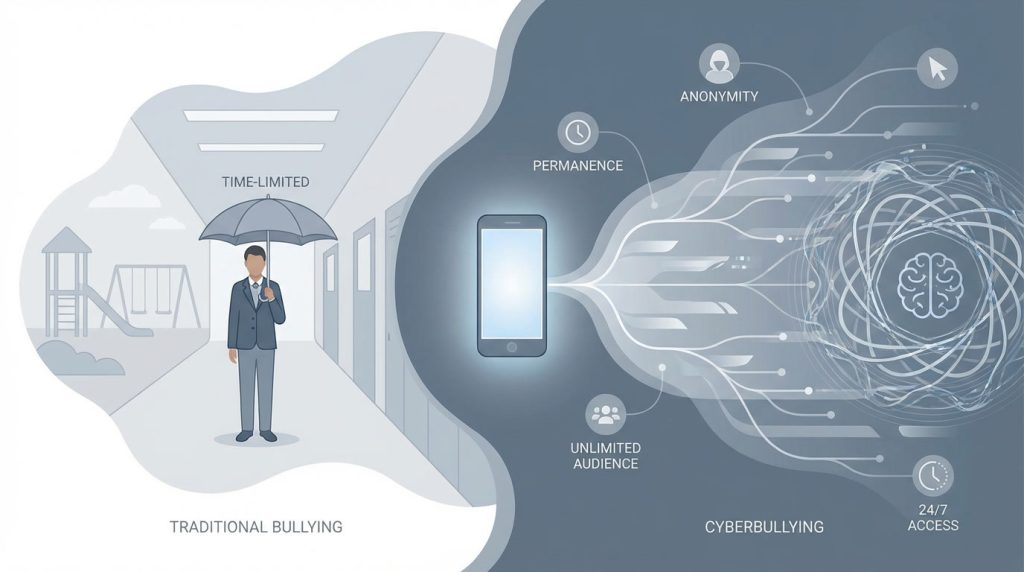
The Unique Characteristics of Cyberbullying
1. Permanence and the "Digital Footprint"
Unlike traditional bullying incidents that occur and end, cyberbullying creates a permanent record:
- Content lives forever: Posts, images, and messages can remain online indefinitely with the internet's "perpetual memory"
- Screenshots preserve everything: Even deleted content can be captured and reshared
- Search engine indexing: Humiliating content can appear in search results for years
- Impossible to escape past: The digital footprint follows victims into adulthood, potentially affecting college admissions and employment
- Repeated victimization: Content can be discovered and reshared by new people, causing repeated trauma
This permanence means victims cannot simply "move past" the incident — the evidence of their humiliation remains accessible, creating ongoing psychological distress.
2. Unlimited Audience Size
Traditional bullying typically involves a limited number of witnesses. Cyberbullying, however:
- Reaches vast audiences: A single post can be seen by hundreds or thousands of people
- Goes viral rapidly: Content can spread exponentially through shares and retweets
- Crosses geographic boundaries: Humiliation extends far beyond the victim's immediate community
- Includes strangers: Unknown people worldwide can view, comment on, and share content
- Amplifies embarrassment: The public nature of the humiliation intensifies shame and distress
The knowledge that countless people have witnessed their humiliation creates profound feelings of exposure and vulnerability.
3. 24/7 Access and Inescapability
Perhaps the most significant difference is that cyberbullying follows victims everywhere:
- No safe haven: Harassment continues at home, which was traditionally a place of refuge
- Constant connectivity: Smartphones mean bullying can occur anytime, day or night
- Sleep disruption: Late-night messages prevent victims from getting rest
- Vacation doesn't help: Bullying follows victims wherever they have internet access
- Mental exhaustion: The inability to escape creates chronic stress and hypervigilance
This inescapability is one of the most frequently cited reasons why cyberbullying victims report feeling more trapped and hopeless than those who experience only traditional bullying.
4. Anonymity and Unknown Perpetrators
The ability to bully anonymously creates unique psychological harm:
- Intensified fear: Not knowing who is attacking them creates paranoia and hypervigilance
- Trust erosion: Victims may suspect anyone, damaging all relationships
- Inability to confront: Cannot address the problem directly with the perpetrator
- More severe harassment: Anonymity emboldens bullies to be crueler than they would face-to-face
- Powerlessness: Inability to identify attacker increases feelings of helplessness
- Reporting difficulties: Harder to stop bullying when perpetrator is unknown
The anonymous nature of many cyberbullying incidents amplifies victims' psychological distress and makes intervention more challenging.
5. Reduced Empathy and Disinhibition
The online environment reduces normal social inhibitions:
- Lack of immediate feedback: Bullies don't see victims' pain, tears, or reactions
- Dehumanization: Screens create psychological distance from the human being targeted
- Reduced guilt: Not witnessing harm reduces feelings of remorse
- Online disinhibition effect: People say things online they would never say in person
- Escalation without consequence awareness: Bullies may not fully grasp the severity of their actions
- Group mentality: Pile-on effects where multiple people join the harassment
This reduced empathy often results in more extreme and cruel forms of harassment than occur in face-to-face bullying.
6. Viral Spread and Amplification
The viral nature of online content creates unique harm:
- Exponential reach: Content can reach millions through shares and algorithms
- Strangers join in: People who don't know the victim may add cruel comments
- Loss of control: Victim has no ability to stop the spread
- Trending negativity: Content may be algorithmically promoted, increasing exposure
- Media coverage: Severe cases may attract news attention, further amplifying humiliation
7. Multiple Forms and Multimedia
Cyberbullying can take more varied and impactful forms:
- Altered images: Photos manipulated to humiliate (now including AI deepfakes)
- Videos: More impactful and shareable than text alone
- Audio recordings: Private conversations shared publicly
- Memes: Victim's image used in widely shared mocking content
- Rating sites: Platforms specifically designed to rank or rate people
- Fake accounts: Impersonation that damages reputation

Research Comparing Impact of Cyberbullying vs Traditional Bullying
Direct comparisons between cyberbullying and traditional bullying consistently find that cyberbullying produces more severe and persistent harm. Victims of cyberbullying are twice as likely to attempt suicide or engage in self-harm compared to victims of traditional bullying alone. They report higher levels of both depression and anxiety, with outcomes that are more difficult to resolve and that tend to persist longer after the bullying ends. Self-esteem is more severely damaged, and feelings of helplessness are more profound — findings that align with the unique features of online harassment, particularly its permanence, anonymity, and inescapability.
Why Traditional Bullying is Sometimes "Better"
This comparison isn't intended to minimize traditional bullying, which causes serious harm in its own right. But it's clinically useful to understand what traditional bullying contains that cyberbullying does not. In face-to-face bullying, the victim typically knows who the perpetrator is — enabling concrete avoidance strategies and targeted adult intervention. The harassment is time-limited, ending when school ends or the victim leaves the location. The audience is physically constrained, and the incident fades without a permanent record. School staff can intervene in ways that are harder to replicate in digital spaces. None of this makes traditional bullying acceptable, but it does explain why cyberbullying victims — facing an anonymous, permanent, 24/7, potentially global form of harassment — so frequently present with more severe clinical symptoms and more complex treatment needs.
Clinical Implications
For clinicians, this research has direct implications for how cyberbullying cases should be conceptualized and prioritized. When a young client discloses being cyberbullied, the intensity of their reaction — anxiety, social withdrawal, suicidal ideation — is not disproportionate. It is appropriate to the severity of the harm. Clinicians who understand why cyberbullying is so uniquely damaging are better positioned to validate their clients accurately, anticipate longer treatment timelines, and address the specific features driving the distress — whether that's the permanence of content, the anonymity of the perpetrator, the feeling of constant exposure, or the viral spread of humiliating material.
While both traditional bullying and cyberbullying cause serious harm, the unique characteristics of digital harassment — permanence, unlimited audience, inescapability, anonymity, and viral spread — combine to create a particularly damaging form of victimization that often requires more intensive and specialized treatment approaches.
Evidence-Based Therapeutic Strategies for Addressing Cyberbullying
As behavioral health clinicians, we play a crucial role in helping children, teens, and their families address the devastating effects of cyberbullying. The following evidence-based strategies can be integrated into your clinical practice to support recovery and build resilience.
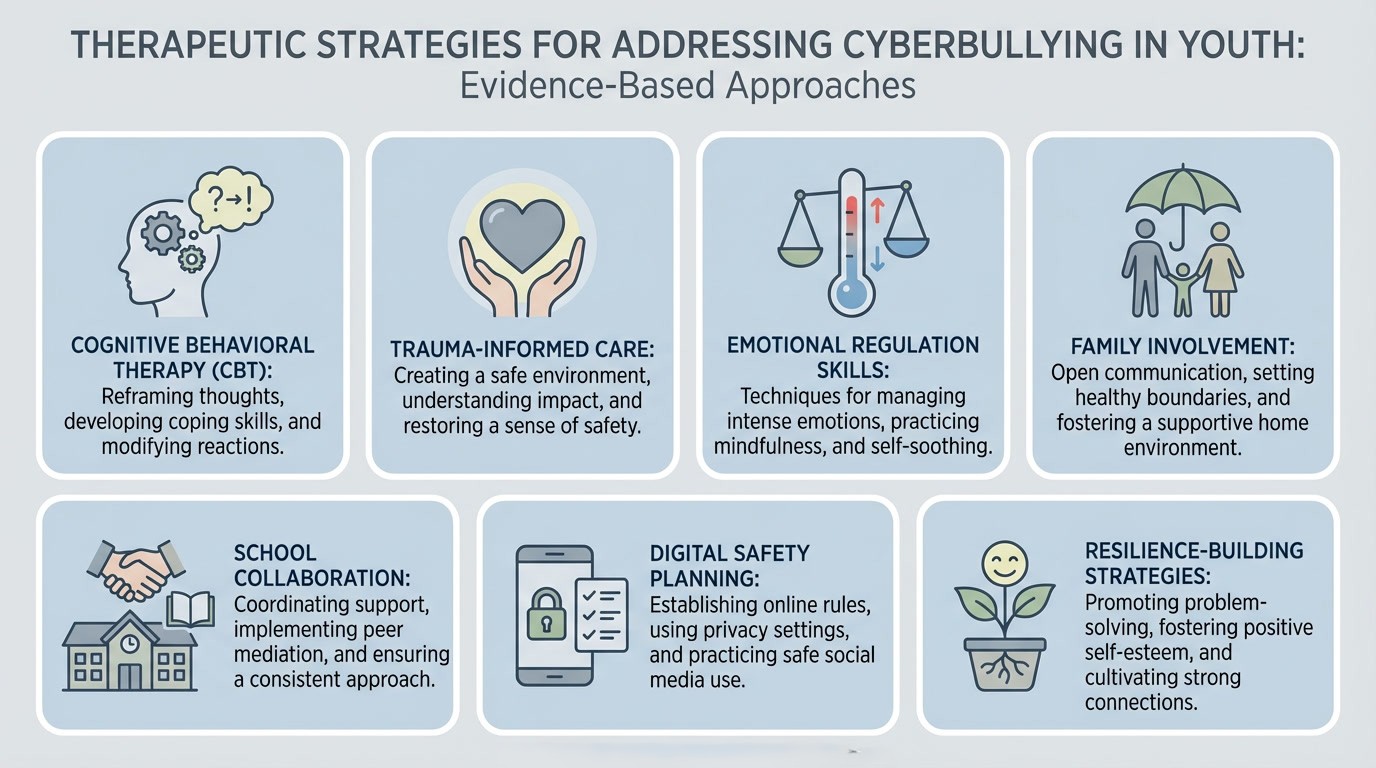
1. Trauma-Informed Care Approach
Cyberbullying is a form of psychological trauma that requires trauma-informed treatment approaches.
A trauma-informed approach begins with safety — ensuring that the therapeutic environment is one in which the client feels physically and emotionally secure, particularly when that security has been fundamentally violated in a space that should have been social and benign. From there, validation is essential: the clinician's role includes accurately acknowledging what the client has endured, without minimizing, normalizing, or moving past the severity of the harm too quickly.
Clinically, this means screening for and recognizing PTSD symptoms — hypervigilance, re-experiencing, avoidance behaviors — that clients may not connect to the cyberbullying itself. Identifying specific trauma triggers, whether particular types of notifications, certain platforms, or even the sound of a phone, allows for targeted management work. Narrative therapy techniques can help clients process and make meaning of their experiences in ways that restore a sense of agency and identity beyond victimhood.
2. Cognitive Behavioral Therapy (CBT)
CBT is among the most well-evidenced treatments for the depression and anxiety that cyberbullying commonly produces. The central therapeutic work involves identifying and restructuring the cognitive distortions that tend to develop in victims — beliefs like "everyone hates me," "this will never stop," or "I must have deserved this." These distortions are not irrational given the experience; they are understandable adaptations to genuine threat. The task is helping clients examine them with more precision: "Some specific people behaved cruelly toward me" is both more accurate and more therapeutically useful than "everyone hates me."
Alongside cognitive restructuring, CBT with cyberbullying victims typically involves behavioral activation — gradually re-engaging clients in activities and social contexts they have withdrawn from — and, where appropriate, careful exposure work to reintroduce avoided online spaces or in-person situations. Addressing the internalized messages from bullies' comments is often a central thread throughout, particularly when those comments targeted identity, appearance, or worth.
3. Building Resilience and Coping Strategies
Teaching healthy coping strategies is one of the most durable investments a clinician can make with a cyberbullying client, because the skills extend well beyond the immediate situation. Coping interventions generally fall into two categories — emotion-focused strategies that help clients manage their internal response to distress, and problem-focused strategies that support concrete action on the situation itself. Both are needed. Neither alone is sufficient.
Emotion-Focused Coping
- Deep breathing exercises: Teach diaphragmatic breathing for anxiety management
- Progressive muscle relaxation: Reduce physical tension from stress
- Mindfulness practices: Help clients stay present rather than ruminating
- Journaling: Provide an outlet for processing emotions
- Creative expression: Use art, music, or movement to process feelings
- Physical activity: Encourage exercise to reduce stress and improve mood
Problem-Focused Coping
- Digital safety planning: Develop strategies to increase online safety
- Blocking and reporting: Teach how to use platform tools effectively
- Evidence collection: Guide appropriate documentation of harassment
- Communication scripts: Practice assertive responses when appropriate
- Seeking help strategies: Identify trusted adults and resources
Building Assertiveness
Running through both categories is the development of assertiveness — the capacity to communicate confidently, set limits, and advocate for oneself. Many cyberbullying victims have had their sense of personal agency significantly eroded. Rebuilding it through role-play, communication skills practice, and graduated real-world application is an important and often underemphasized component of recovery.
4. Teach Responsible and Safe Online Usage
One of the most practical contributions a clinician can make is supporting clients and families in navigating online environments more safely. This isn't about restricting internet access — an approach that frequently backfires and further isolates adolescents — but about building digital literacy: the skills to protect privacy, recognize and respond to harassment, and make deliberate choices about online engagement.
For Clients and Their Parents
- Privacy settings: Maximize privacy on all social media accounts
- Selective sharing: Think carefully before posting personal information
- Blocking functions: How to block users who harass them
- Reporting mechanisms: Use platform reporting tools for violations
- Screenshot evidence: Document harassment before blocking (if emotionally safe)
- Time limits: Set healthy boundaries on screen time
- No retaliation: Understand why responding to bullies often escalates situations
Parental Monitoring and Support
Working with parents on digital safety requires balancing two legitimate concerns: keeping young people safe online and preserving the privacy that adolescents need in order to trust their parents with disclosures. The goal is open communication, not surveillance. Clinicians can help parents understand the platforms their children are using, establish expectations around screen time and device use, identify age-appropriate monitoring approaches, and — most importantly — position themselves as a safe and non-reactive person their child can turn to when something goes wrong online.
5. Highlight the Necessity of Social Support
Social support is one of the most consistently identified protective factors against the negative effects of cyberbullying — and one of the first things cyberbullying tends to erode. The therapeutic task is rebuilding it, and that work happens at multiple levels: strengthening family connections, helping clients identify and re-engage with existing supportive friendships, connecting them with mentors or trusted adults in their community, and where appropriate, linking them with peer support groups that offer belonging without the risks that drove the original harm. Schools offer an underused resource here — a supportive teacher, coach, or counselor who knows what a student is going through can make a significant difference in day-to-day functioning. The broader message clinicians can offer is that isolation, however understandable as a protective response, perpetuates rather than resolves the harm.
6. Encourage Speaking Up and Seeking Help
Silence is common in cyberbullying cases, sustained by a predictable cluster of barriers: shame and self-blame, fear that speaking up will invite retaliation or result in device confiscation, and reasonable doubt that adults can actually help with something that happens in spaces they don't fully understand. Clinicians addressing this need to work through these barriers explicitly rather than assuming that encouragement alone will be enough.
Normalizing help-seeking, directly challenging self-blame, and problem-solving specific fears in session reduces the practical obstacles to disclosure. Role-playing the conversation with a trusted adult — what to say, how to say it, what to do if the first disclosure doesn't feel safe — builds both the language and the confidence to follow through. Part of the work is also helping clients expand their mental map of who they can turn to, so that if one avenue feels blocked, others remain available.
7. Rebuilding Self-Esteem and Identity
The damage cyberbullying does to self-esteem and identity is often deep and slow to reverse. Repeated harassment — particularly when it targets appearance, intelligence, worth, or belonging — can fundamentally reshape how a young person sees themselves. The therapeutic work involves helping clients develop a sense of self that exists independently of what was said about them online.
Strengths-based exploration, values clarification, and success experiences — structured opportunities to achieve something and register it — all contribute to building a more stable internal foundation. Self-compassion work is frequently essential, particularly for clients who have internalized bullies' messages and turned them into internal self-criticism. Identity work matters here too: adolescents who have been targeted for a specific aspect of who they are — appearance, sexuality, ethnicity, or other dimensions of identity — may need space to explore and reclaim that part of themselves on their own terms.
8. Family Therapy and Systemic Interventions
Cyberbullying doesn't affect only the individual child — it affects the family system, and recovery is typically more durable when treatment involves the family. Psychoeducation is often the starting point: many parents have a limited understanding of how cyberbullying actually operates, which platforms are involved, and why their child's reaction may seem disproportionate to what they can see on a screen. Bridging that gap reduces minimization, reduces conflict, and creates more space for the child to feel genuinely supported at home.
From there, family therapy addresses communication patterns, parental response training (including how to respond to disclosures without reacting in ways that discourage future ones), and the development of a whole-family approach to online safety. Where conflict within the family is exacerbating the child's distress — as it frequently is when cyberbullying adds pressure to relationships already under strain — that conflict becomes a focus of treatment in its own right.
For perpetrators especially, family therapy is often not just beneficial but necessary. Addressing the family dynamics that contributed to the bullying behavior, establishing appropriate monitoring, and strengthening the parent-child relationship are foundational to lasting change.
9. Offer Comprehensive Resources
Connect clients and families with additional support:
Crisis Resources
- 988 Suicide & Crisis Lifeline: Call or text 988 (24/7, free, confidential)
- Crisis Text Line: Text HOME to 741741
- National Child Traumatic Stress Network: Resources for trauma support
Cyberbullying-Specific Resources
- StopBullying.gov: Comprehensive information and resources
- Cyberbullying Research Center: Latest research and statistics
- Cybersmile Foundation: Digital wellbeing and support resources
- STOMP Out Bullying: Anti-bullying organization with helpline
- Common Sense Media: Age-appropriate guidance for online safety
Platform-Specific Reporting
- Instagram: Settings → Privacy → Report
- TikTok: Long press on comment or video → Report
- Snapchat: Press and hold on snap or message → Report
- Facebook: Click three dots → Find support or report
Legal Resources
- StopBullying.gov: Federal and state laws related to bullying
- Local law enforcement for severe cases involving threats or criminal behavior
- School district policies and procedures
10. School-Based Interventions
Schools are the primary setting in which cyberbullying's effects are felt during the day, making school collaboration an important component of comprehensive care. With appropriate consent, coordinating with school counselors ensures that the adults who see a child most frequently are aware of the clinical picture and positioned to support. For clients whose cyberbullying has significantly affected academic functioning, formal accommodations — a 504 plan or IEP — may be warranted, and clinicians play a meaningful role in advocating for these. Where the school's own disciplinary or restorative processes are underway, coordinating with those processes rather than working in parallel helps ensure that the child's therapeutic progress isn't undermined by school-level dynamics that pull in the other direction.
11. Treatment for Co-Occurring Issues
Cyberbullying rarely presents in clinical isolation. Assessment and treatment planning for a young cyberbullying victim should routinely consider the full range of co-occurring conditions that frequently accompany this form of trauma. Substance use, as discussed above, is a common maladaptive coping response. Self-harm behaviors require safety planning and, frequently, the structured emotion-regulation work of DBT. Eating disorders — particularly when the cyberbullying targeted appearance or body size — need to be specifically assessed, since appearance-based harassment is among the more potent predictors of disordered eating in adolescents. Sleep disturbances, academic difficulties, attention problems, and prior trauma history should all be factored into the clinical formulation. A treatment plan that addresses only the cyberbullying without accounting for these co-occurring presentations is unlikely to produce durable recovery.
Clinical Documentation and Progress Monitoring
Maintain thorough clinical records:
- Document nature and severity of cyberbullying experienced
- Track symptoms over time using standardized measures
- Monitor suicidal ideation at every session
- Record safety planning interventions
- Document coordination with schools and other providers
- Note improvement in functioning across domains
At ICANotes, our comprehensive EHR system makes it easy to document these complex cases with customizable templates specifically designed for behavioral health professionals. Our system includes built-in assessment tools and progress tracking features that help you provide the highest quality care.
Case Studies: Applying Interventions in Clinical Practice
These composite case examples illustrate how to apply cyberbullying interventions in real clinical scenarios. All identifying information has been changed to protect confidentiality.

Case Study 1: Emma, Age 14 - Severe Depression Following Image-Based Cyberbullying
Presentation
Emma was referred by her school counselor after a three-week absence from school. A former friend had posted an unflattering photo of Emma changing in the locker room, which spread rapidly across multiple platforms. The photo received hundreds of mocking comments and was shared by classmates and strangers alike.
Symptoms
- Severe depression with suicidal ideation (without plan)
- Social isolation and refusal to leave home
- Panic attacks when checking phone or social media
- Complete withdrawal from all previously enjoyed activities
- Sleep disturbances and loss of appetite
Intervention Approach
- Safety assessment and planning: Conducted thorough suicide risk assessment; developed safety plan with parents
- Trauma-informed stabilization: Established safe therapeutic relationship; validated severity of trauma
- Digital detox period: Temporarily removed from all social media with parental support
- CBT for depression: Challenged beliefs like "Everyone has seen it and thinks I'm disgusting"
- Gradual exposure: Slowly reintroduced social activities, starting with one trusted friend
- Family therapy: Strengthened parent-child communication and support
- School collaboration: Worked with school to address bullies and create re-entry plan
- Self-esteem rebuilding: Focused on values and identity beyond appearance
Outcome
After six months of weekly therapy, Emma returned to school, reconnected with supportive friends, and reported significant improvement in depressive symptoms. She developed healthy boundaries with social media and learned to seek support when needed.
Case Study 2: Marcus, Age 16 - Perpetrator with Victim History
Presentation
Marcus was mandated to treatment after being suspended for cyberbullying multiple classmates. Assessment revealed he had been severely bullied in middle school and was using aggression to avoid being victimized again.
Symptoms
- Anxiety and hypervigilance in social situations
- Poor impulse control and anger management issues
- Difficulty with empathy and perspective-taking
- Unprocessed trauma from previous victimization
- Substance use (marijuana) as coping mechanism
Intervention Approach
- Trauma assessment: Identified and validated his previous victimization
- Responsibility without shame: Held him accountable while addressing underlying trauma
- Empathy building: Used perspective-taking exercises to understand impact on victims
- Anger management: Taught healthy emotional regulation skills
- Substance abuse treatment: Addressed maladaptive coping patterns
- Family therapy: Improved home environment and established monitoring
- Restorative justice: Facilitated apology and amends process
- Positive identity development: Helped build identity not based on power/dominance
Outcome
Marcus completed treatment successfully and reported no further bullying incidents. He joined a peer mentoring program where he helps younger students avoid the mistakes he made.
Case Study 3: Aisha, Age 13 - Anxiety and School Avoidance
Presentation
Aisha experienced ongoing harassment on Instagram from an anonymous account making racist comments. She developed severe social anxiety and refused to attend school for fear of facing the unknown perpetrator.
Symptoms
- Panic disorder with frequent panic attacks
- School refusal behavior
- Hypervigilance and trust issues
- Sleep disturbances
- Physical symptoms (stomachaches, headaches)
Intervention Approach
- Anxiety management: Taught grounding techniques and breathing exercises
- Exposure hierarchy: Gradually reintroduced school attendance (starting with 1 hour/day)
- Platform reporting: Assisted in reporting anonymous account to Instagram
- Identity affirmation: Explored and strengthened cultural identity
- Support network: Connected with school diversity club and supportive peers
- School collaboration: Worked with administration to investigate perpetrator
- Parent empowerment: Taught parents how to support without accommodating avoidance
Outcome
Within three months, Aisha returned to full-time school attendance. The anonymous account was traced and shut down. She continues to manage anxiety effectively and actively participates in anti-bullying initiatives.
These cases demonstrate that individualized, comprehensive treatment approaches that address both the cyberbullying trauma and underlying vulnerability factors can lead to significant improvement in functioning and quality of life.
Why Trust ICANotes for Your Behavioral Health Documentation?
Cyberbullying cases often involve complex clinical presentations, heightened safety concerns, and the need for careful coordination with families, schools, and other professionals. When working with children and adolescents affected by cyberbullying, clinicians must document emotional symptoms, risk factors, safety planning, academic impact, and treatment progress with clarity and consistency — often across multiple sessions and care settings.
That level of documentation matters. Clear, structured clinical records support accurate assessment, continuity of care, ethical decision-making, and appropriate intervention when risk escalates. They also protect clinicians by ensuring notes reflect clinical judgment, medical necessity, and compliance with regulatory standards.
At ICANotes, we help behavioral health clinicians document complex cases — like cyberbullying-related trauma — without sacrificing presence, compassion, or clinical depth. Our EHR was designed by mental health professionals who understand the realities of working with vulnerable youth and the importance of accurate, defensible documentation.
Features That Support Clinical Work with Cyberbullied Youth
-
Comprehensive behavioral health templates
Create thorough, compliant notes that capture presenting concerns, psychosocial stressors, risk factors, and clinical impressions relevant to cyberbullying cases. -
Treatment plan tracking
Document goals related to emotional regulation, trauma recovery, school functioning, and safety planning while tracking symptom changes over time. -
Cyberbullying-specific documentation support
Clearly record the nature, duration, and severity of cyberbullying experiences, associated symptoms, and protective factors across sessions. -
Built-in assessment tools
Access standardized measures for depression, anxiety, trauma, and suicidal ideation to support clinical decision-making and ongoing monitoring. -
Secure, HIPAA-compliant infrastructure
Protect sensitive information related to minors, family dynamics, and school involvement with enterprise-grade security. -
Collaboration-ready records
Maintain organized documentation that supports appropriate communication with parents, schools, and other providers when consent allows.
Spend Less Time Documenting — and More Time Supporting Healing
When documentation is disorganized or incomplete, critical details can be lost — especially in cases involving ongoing cyberbullying, fluctuating risk, or multiple stakeholders. ICANotes’ structured, preconfigured templates reduce documentation burden while helping clinicians maintain accurate, defensible records.
With less time spent navigating charts and rewriting notes, you can stay focused on what matters most: providing steady, informed, and compassionate care to children and adolescents working to recover from the psychological impact of cyberbullying.
Clinicians who want to reduce documentation burden while supporting youth affected by cyberbullying can explore ICANotes through a free trial.

Start Your 30-Day Free Trial
Experience the most intuitive, clinically robust EHR designed for behavioral health professionals, built to streamline documentation, improve compliance, and enhance patient care.
- Complete Notes in Minutes - Purpose-built for behavioral health charting
- Always Audit-Ready – Structured documentation that meets payer requirements
- Keep Your Schedule Full – Automated reminders reduce costly no-shows
- Engage Clients Seamlessly – Secure portal for forms, messages, and payments
- HIPAA-Compliant Telehealth built into your workflow

Related Posts







About the Author
Sara Blevins-Ranes graduated with her BA in Art Therapy and Psychology from Converse University and with her MA in Art Therapy from the George Washington University. Located in Texas, Sara is a trauma-informed clinician who specializes in child and adolescent crisis care and has experience with active duty and veteran populations, school-based therapy, as well as within hospice care for children and adults.