
Blog > Treatment Strategies > PTSD Criteria and Grief: A Clinician's Guide to Diagnosis
PTSD Criteria and Grief: A Clinician's Guide to Diagnosis, Differentiation, and Treatment
Post-traumatic stress disorder (PTSD) and grief often overlap but require careful clinical differentiation for accurate diagnosis and treatment. This guide explains the DSM-5 criteria for PTSD, explores how PTSD differs from normal grief, traumatic grief, and prolonged grief disorder, and outlines when bereavement may meet criteria for trauma. Clinicians will also find validated assessment tools and evidence-based treatment approaches to support accurate diagnosis, improve documentation, and deliver targeted care for clients experiencing trauma and loss.


Last Updated: April 30, 2026
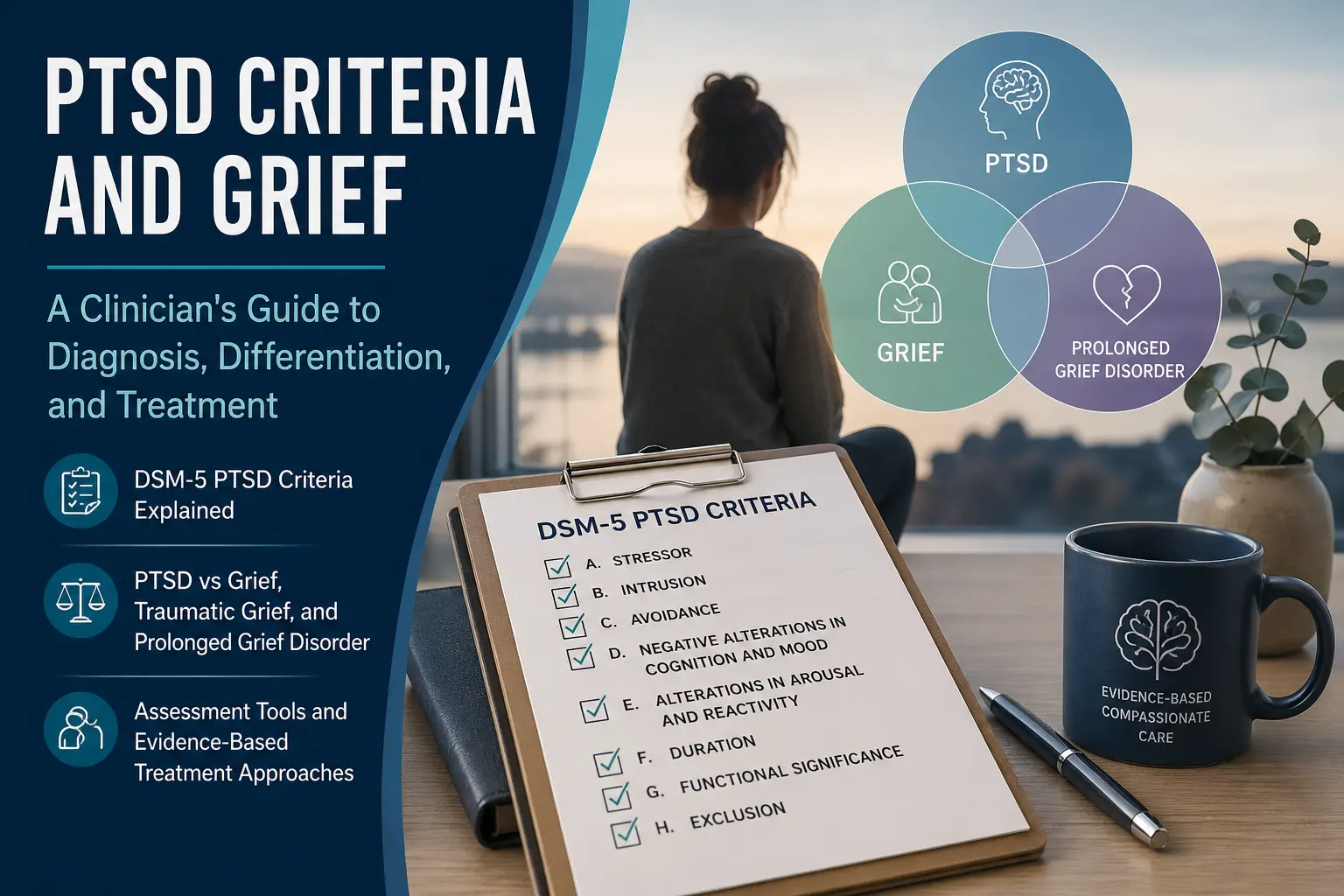

What You'll Learn
- The DSM-5 criteria for PTSD, including a clear breakdown of Criteria A–H
- How to differentiate PTSD vs grief, including traumatic grief and prolonged grief disorder
- When bereavement can meet criteria for PTSD, and key risk factors after a traumatic loss
- The core symptom differences between PTSD and grief across cognition, mood, and arousal
- How prolonged grief disorder (PGD) is defined in the DSM-5-TR and how it differs from PTSD
- The most effective assessment tools for PTSD and grief, including PCL-5, CAPS-5, and PG-13
- Evidence-based treatment approaches for PTSD and grief, and how to sequence care when they co-occur
- Best practices for accurate diagnosis and clinical documentation in complex trauma and bereavement cases
Contents
- PTSD Symptoms and Clinical Presentation
- Common Causes of PTSD
- PTSD Effects on the Brain
- What is Grief?
- Traumatic Grief and Prolonged Grief Disorder
- PTSD vs Grief: Key Differences
- Can Grief Cause PTSD? Bereavement and Traumatic Loss
- Assessment Tools for PTSD and Grief
- PTSD and Grief Treatment: Evidence-Based Approaches
- Documenting PTSD and Grief Treatment in Clinical Practice
Post-traumatic stress disorder (PTSD) and grief are two of the most clinically complex experiences clinicians encounter — and two of the most easily confused. They can co-occur, overlap in presentation, and respond to overlapping treatment modalities. But they are not the same condition, and the distinction matters: misdiagnosis leads to ineffective interventions, while accurate differentiation opens the door to targeted, evidence-based care.
This guide walks through the DSM-5 diagnostic criteria for PTSD, the clinical features of grief and prolonged grief disorder, the overlap and key differences between the two, and the validated assessment tools and treatment approaches behavioral health clinicians can rely on in practice.
DSM-5 Diagnostic Criteria for PTSD
The DSM-5 (and current DSM-5-TR) classifies post-traumatic stress disorder under Trauma- and Stressor-Related Disorders. A PTSD diagnosis requires the presence of symptoms across eight criteria, designated Criterion A through Criterion H. The summaries below are paraphrased for clinical reference; refer to the DSM-5-TR for the authoritative diagnostic text.
Criterion A: Trauma Exposure (Stressor)
The individual must have been exposed to actual or threatened death, serious injury, or sexual violence in one or more ways, including directly experiencing the event, witnessing it in person, learning it occurred to a close family member or friend, or repeated professional exposure to traumatic details.
Criterion B: Intrusion Symptoms
The individual experiences one or more intrusion symptoms after the traumatic event, such as distressing memories, trauma-related dreams, flashbacks, intense psychological distress, or physiological reactions to trauma reminders.
Criterion C: Avoidance
The individual persistently avoids trauma-related stimuli, including distressing memories, thoughts, feelings, conversations, people, places, activities, objects, or situations that trigger reminders of the event.
Criterion D: Negative Changes in Cognition and Mood
Two or more negative changes in cognition or mood develop or worsen after the trauma, such as memory gaps, negative beliefs, self-blame, persistent fear or guilt, reduced interest, detachment, or difficulty experiencing positive emotions.
Criterion E: Arousal and Reactivity Symptoms
Two or more arousal or reactivity symptoms develop or worsen after the trauma, including irritability, anger outbursts, reckless behavior, hypervigilance, exaggerated startle response, concentration problems, or sleep disturbance.
Criterion F: Duration of Symptoms
Symptoms described in Criteria B, C, D, and E persist for more than one month.
Criterion G: Functional Impairment
The disturbance causes clinically significant distress or impairment in social, occupational, or other important areas of functioning.
Criterion H: Exclusion Criteria
The disturbance is not attributable to the physiological effects of a substance, such as medication or alcohol, or another medical condition.
PTSD Diagnostic Criteria Checklist
Use the following as a clinical quick-reference when reviewing a possible PTSD diagnosis:
Specifiers
The DSM-5 includes two specifiers for PTSD: with dissociative symptoms (depersonalization or derealization) and with delayed expression (full diagnostic criteria not met until at least six months after the event).
PTSD Symptoms and Clinical Presentation
While the diagnostic criteria above provide the formal structure for diagnosis, day-to-day clinical work requires recognizing how these symptoms actually present. PTSD symptoms typically cluster into four functional categories.
Re-experiencing Symptoms (Flashbacks and Nightmares)
Re-experiencing is the symptom cluster most familiar to clinicians and clients alike. It manifests through:
- Flashbacks, in which the individual feels as though the traumatic event is recurring in the present
- Nightmares involving the traumatic event or related themes
- Repetitive intrusive images, sounds, or sensations
- Physical reactions such as sweating, racing heart, pain, or trembling when reminded of the event
Examples of PTSD Nightmares
PTSD nightmares are typically vivid, recurring, and may directly replay the traumatic event or reflect distorted, threat-laden themes. Common examples include reliving the event from the original perspective, dreams of being chased or unable to escape, dreams of being unable to protect oneself or others, and dreams that recreate the sensory details of the trauma (sounds, smells, physical sensations). Unlike ordinary bad dreams, PTSD nightmares often cause sleep avoidance, repeated awakenings in distress, and can occur multiple nights per week.
Avoidance Symptoms in PTSD
Individuals with PTSD persistently avoid reminders of the trauma. This may include avoiding thoughts, feelings, or conversations associated with the event, as well as people, places, or activities that serve as triggers. Avoidance can be explicit (refusing to drive after a serious motor vehicle accident) or subtle (drifting away from relationships that involve emotional intimacy).
Arousal and Reactivity Symptoms
Hyperarousal is one of the most disruptive symptom clusters because it permeates daily life. Common presentations include:
- Irritability and angry or aggressive outbursts disproportionate to the situation
- A persistent sense of being “on guard” or hypervigilant
- Exaggerated startle response to ordinary stimuli (a car backfiring, a slammed door, raised voices)
- Difficulty falling asleep or staying asleep
- Reckless or self-destructive behavior
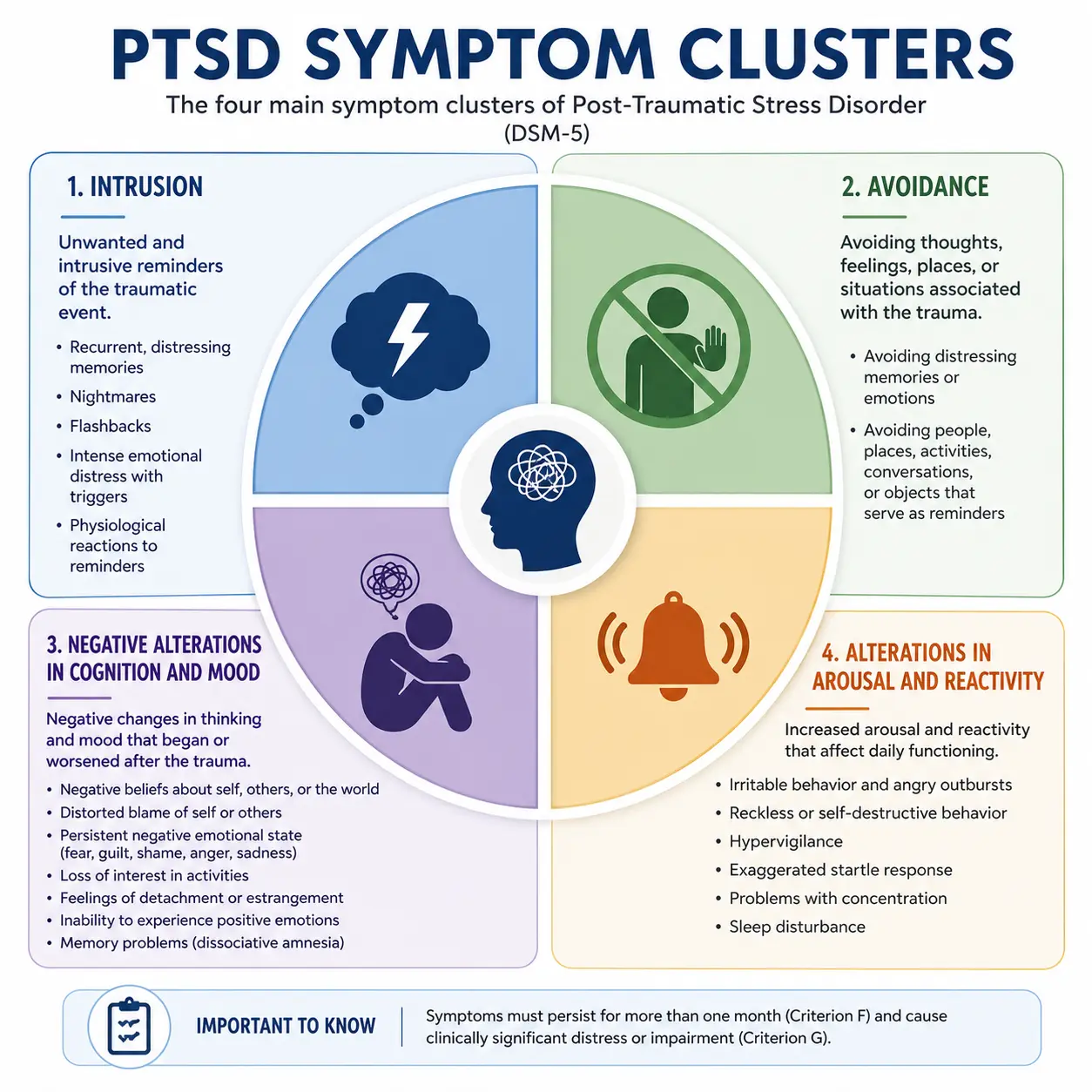
Cognitive and Mood Symptoms
Cognitive and mood symptoms are easy to overlook because they often resemble depression. Look for:
- Difficulty concentrating
- Trouble remembering key elements of the traumatic event
- Persistent feelings of guilt, shame, or self-blame
- Distorted beliefs about oneself (“I am damaged”), others (“No one can be trusted”), or the world (“Nowhere is safe”)
- Diminished interest in previously meaningful activities
- Emotional numbing or feelings of detachment from loved ones
Common Causes of PTSD
For PTSD to be diagnosed, the individual must have experienced or witnessed a qualifying traumatic event. What constitutes “traumatic” varies among individuals — two people exposed to the same event may have different responses based on prior history, support systems, neurobiology, and meaning-making — but the DSM-5 specifies that the event must involve actual or threatened death, serious injury, or sexual violence.
Common precipitating events include:
- Combat and military service
- Sexual assault, sexual abuse, and childhood sexual abuse
- Physical assault and intimate partner violence
- Serious accidents, including motor vehicle and workplace accidents
- Sudden, violent, or accidental death of a close family member or friend
- Witnessing death or serious injury
- Natural disasters
- Medical trauma, including life-threatening illness, complicated pregnancy and miscarriage, ICU stays, and serious diagnoses
- Repeated occupational exposure (first responders, healthcare workers, journalists, child protection workers)
- Childhood physical or emotional abuse and neglect
For a deeper look at trauma-specific clinical response, see our guide to Sexual Trauma Therapy: How to Respond, Treat, and Document.
How PTSD Affects the Brain
PTSD is more than a psychological response — it produces measurable changes in brain structure and function. Brain imaging studies have shown alterations in regions implicated in memory, emotional regulation, and decision-making, including the amygdala, hippocampus, and medial prefrontal/anterior cingulate cortex. These changes help explain why PTSD often manifests as heightened threat detection, fragmented memory of the event, and difficulty with emotional regulation that does not resolve with willpower or time alone.
What is Grief?
Grief is a natural, expected response to loss. It is the internal experience — the thoughts, feelings, and physical sensations — that arise when something or someone we cared about is gone. Mourning, by contrast, refers to the outward expression of grief: ritual, language, behavior, and the public dimensions of loss.
Because grief is a universal human experience rather than a pathology, general grief is not classified as a mental disorder in the DSM-5. However, a related condition — Prolonged Grief Disorder — was added to the DSM-5-TR in 2022. We discuss it in detail below.
Common Causes of Grief
Grief is most often associated with loss through death, but contemporary clinical understanding has expanded to include a much wider range of losses:
- Death of a loved one (anticipated or sudden)
- End of a significant relationship, divorce, or estrangement
- Job loss or career-ending injury
- Infertility, pregnancy loss, and miscarriage
- Diagnosis of chronic, terminal, or life-limiting illness
- Loss of physical or cognitive function
- Loss of identity, role, or community
- Anticipatory grief related to a loved one’s terminal illness
Grief can also accompany positive transitions — graduation, retirement, a child leaving home — which is what gives the experience its “bittersweet” quality.
Grief Symptoms
Grief presents across physical, emotional, and cognitive domains.
Physical Symptoms of Grief
- Appetite changes (loss of appetite or comfort eating)
- Lethargy, fatigue, and physical heaviness
- Sleep disturbance, including difficulty falling asleep or early waking
- Tightness in the chest, throat, or stomach
- Weakened immune response
Emotional and Cognitive Symptoms of Grief
- Shock and disbelief
- Sadness, longing, and yearning
- Anger toward the deceased, the self, healthcare providers, or a higher power
- Guilt or regret
- Anxiety about the future
- “Grief brain” or “grief fog” — difficulty concentrating, remembering, and making decisions
How Grief Affects the Brain
Grief produces neurological effects of its own. Neuropsychological studies have documented changes in cognitive performance and brain structure in individuals experiencing grief, particularly those with complicated grief. The phenomenon clinicians and clients refer to as “grief brain” or “grief fog” — difficulty thinking clearly, retaining information, and making decisions — typically appears in the days and weeks following a significant loss and reflects measurable, time-limited cognitive changes.
For more information on grief, read our related post on Assessing and Treating Grief.
Traumatic Grief and Prolonged Grief Disorder
The intersection of grief and trauma is where many clinicians encounter the most diagnostic ambiguity. Two related concepts help clarify the territory: traumatic grief and Prolonged Grief Disorder.
What is Traumatic Grief?
Traumatic grief, sometimes used interchangeably with “complicated grief,” refers to grief that has become maladaptive — typically in the context of a sudden, violent, or otherwise traumatic loss. Traumatic grief blends features of normal grief with intrusive, trauma-like symptoms: distressing images of the death, avoidance of reminders, hyperarousal, and persistent functional impairment that does not improve with time. It is most often associated with deaths by suicide, homicide, accident, sudden medical emergency, or any death the bereaved perceives as preventable.
Prolonged Grief Disorder (DSM-5-TR Criteria)
In March 2022, the American Psychiatric Association added Prolonged Grief Disorder (PGD) to the DSM-5-TR. PGD applies when:
- The death of someone close occurred at least 12 months ago (six months for children and adolescents)
- The bereaved experiences intense yearning, longing, or preoccupation with the deceased nearly every day for at least the past month
- Three or more associated symptoms are present (identity disruption, marked sense of disbelief, avoidance of reminders, intense emotional pain, difficulty reintegrating into life, emotional numbness, feeling life is meaningless, intense loneliness)
- The grief reaction exceeds expected social, cultural, or religious norms
- The disturbance causes clinically significant distress or functional impairment
PGD is the formal diagnostic category most likely to capture what was previously described as “complicated grief.”
Differences Between PTSD and Prolonged Grief Disorder
PGD and PTSD can co-occur, particularly after a sudden or traumatic loss, but they are diagnostically distinct. PGD is centered on persistent, painful longing and identity disruption tied specifically to the deceased; PTSD is centered on a fear-based response to a traumatic event and its associated triggers. Some bereaved individuals will meet criteria for one, both, or neither.
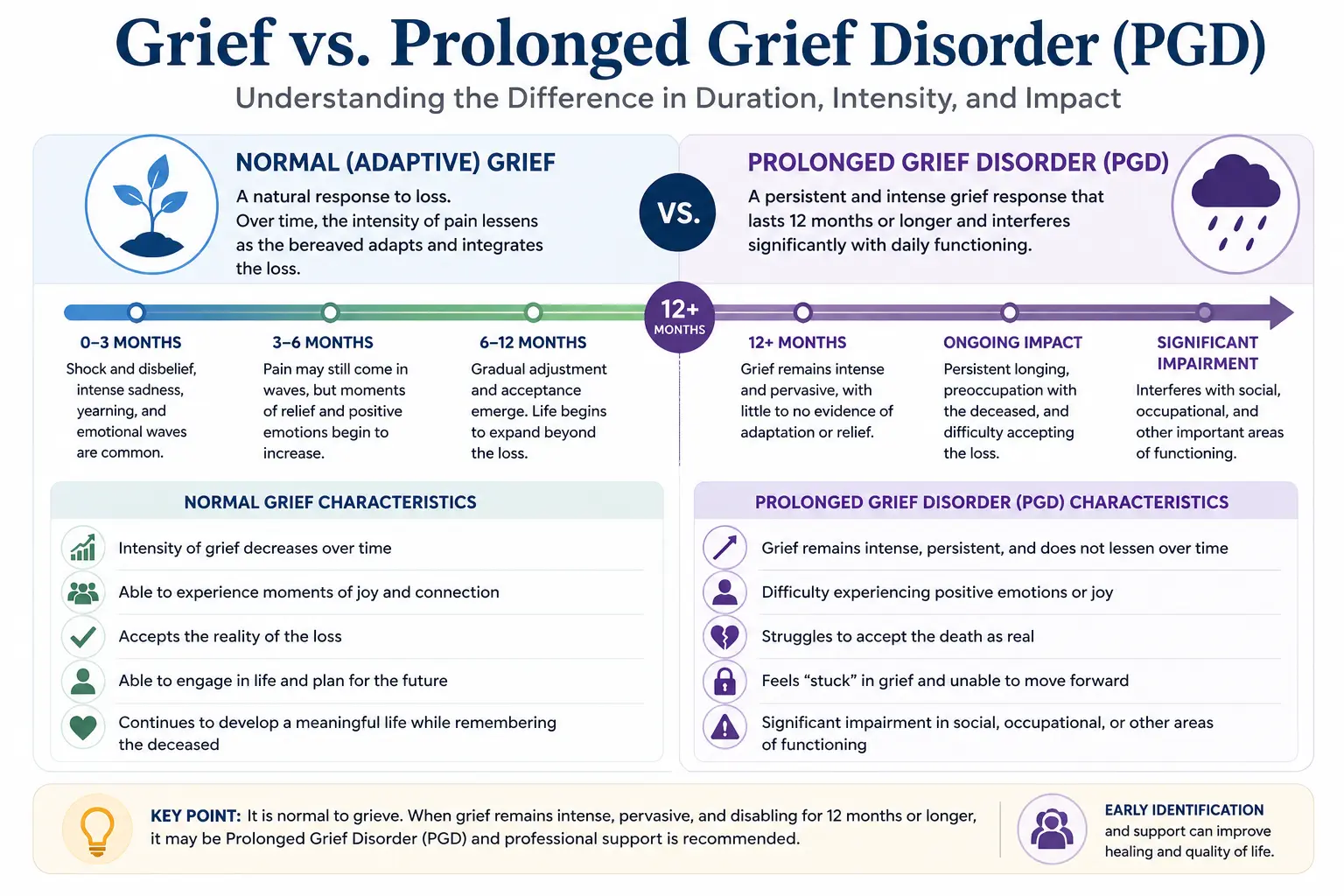
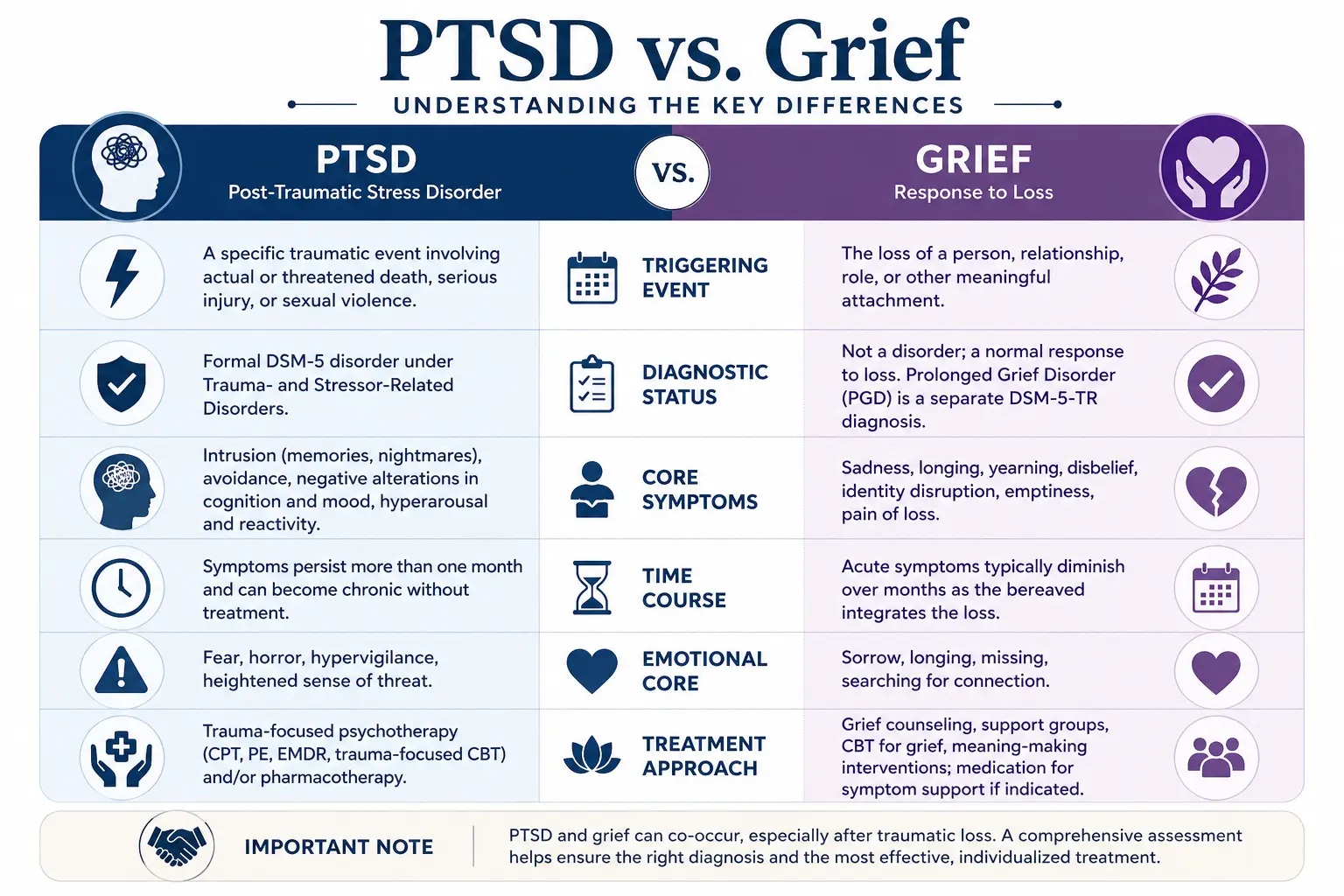
PTSD vs. Grief: Key Differences
Both PTSD and grief can include sadness, anger, anxiety, sleep disturbance, intrusive memories, and impaired functioning. The differences become clearer when examined across the dimensions clinicians use to diagnose and treat:
Can Grief Cause PTSD? Bereavement and Traumatic Loss
One of the most common questions clinicians and bereaved individuals ask is whether grief alone can cause PTSD. The answer depends on the nature of the loss.
Grief in the context of an expected death — a loved one with a terminal illness who passes after time for goodbyes — does not typically meet Criterion A for PTSD, even when grief is intense, prolonged, or disabling. In those cases, the diagnostic question is more often whether the bereaved meets criteria for Prolonged Grief Disorder.
Loss can cause PTSD when the death itself is traumatic. The DSM-5 explicitly recognizes that learning of the violent or accidental death of a close family member or friend can satisfy Criterion A. Examples include:
- Sudden cardiac death or unexpected medical emergencies
- Death by suicide
- Death by homicide
- Fatal accidents (motor vehicle, workplace, recreational)
- Witnessing the death of a loved one
- Death following a prolonged ICU course or medical complication
Risk factors for developing PTSD after a traumatic loss include the suddenness of the death, the bereaved’s proximity to or witnessing of the event, prior trauma history, lack of social support, and how preventable the death is perceived to be.
Individuals who experience traumatic loss may meet criteria for PTSD, Prolonged Grief Disorder, both, or neither. Comprehensive assessment is essential — and a single instrument is rarely sufficient.
Can Grief Cause PTSD?
Use this decision flowchart to help distinguish grief, traumatic bereavement, PTSD, and prolonged grief disorder.
Has the client experienced the death of someone close?
Begin by identifying the nature of the loss and the client’s current symptom presentation.
Was the death sudden, violent, accidental, witnessed, or perceived as preventable?
Examples may include suicide, homicide, fatal accident, sudden medical emergency, or witnessing the death.
Assess for possible PTSD
The loss may meet PTSD Criterion A if it involved actual or threatened death, serious injury, or violent or accidental death of a close family member or friend.
Assess for grief or prolonged grief disorder
Intense grief after an expected or non-traumatic death may not meet PTSD criteria, but persistent impairment may suggest prolonged grief disorder.
Are trauma symptoms present for more than one month?
Look for intrusion symptoms, avoidance, negative mood or cognition changes, hyperarousal, and functional impairment.
Consider PTSD
A comprehensive PTSD assessment may be appropriate, especially when fear-based symptoms, trauma reminders, avoidance, and hyperarousal are prominent.
Monitor grief response
Acute grief may include sadness, longing, sleep disturbance, and distress without meeting PTSD criteria.
Important Clinical Note
A client may meet criteria for PTSD, prolonged grief disorder, both, or neither. Use validated assessment tools and clinical judgment to guide diagnosis, documentation, and treatment planning.
Assessment Tools for PTSD and Grief
Validated assessment tools are essential for differentiating PTSD, grief, and prolonged grief disorder, particularly when both may be present. Tool selection should be guided by the clinical question, the client’s presentation, and the time available in session.
Assessment Tools for PTSD
- PTSD Checklist for DSM-5 (PCL-5) — a 20-item self-report measure aligned with the DSM-5 criteria
- Clinician-Administered PTSD Scale for DSM-5 (CAPS-5) — the gold-standard structured clinical interview
- PTSD Symptom Scale Interview (PSS-I and PSS-I-5)
- Structured Clinical Interview for DSM-5 — PTSD Module (SCID-5)
- Treatment-Outcome PTSD Scale (TOP-8)
Assessment Tools for Grief and Prolonged Grief Disorder
ICANotes includes a library of validated behavioral health assessment instruments built directly into the EHR, allowing clinicians to administer, score, and document these measures within the same workflow as their progress notes. See our assessment tools page for the full list.
PTSD and Grief Treatment: Evidence-Based Approaches for Clinicians
Although PTSD and grief share certain treatment elements — such as cognitive behavioral techniques and the importance of social support — their core treatment approaches differ. When the two co-occur, treatment must be sequenced and individualized.
Evidence-Based PTSD Treatment Approaches
Treatment for post-traumatic stress disorder focuses on reducing trauma-related symptoms, improving emotional regulation, and helping clients safely process traumatic experiences.
Evidence-based PTSD treatments include:
- Trauma-focused psychotherapy, such as Cognitive Processing Therapy (CPT), Prolonged Exposure (PE) therapy, and trauma-focused cognitive behavioral therapy (TF-CBT)
- Eye Movement Desensitization and Reprocessing (EMDR) for processing traumatic memories
- Pharmacotherapy, including SSRIs and SNRIs for mood and anxiety symptoms, and prazosin for trauma-related nightmares
- Adjunctive approaches, such as mindfulness-based interventions and emerging treatments like virtual-reality exposure therapy and ketamine-assisted psychotherapy in research settings
These interventions target the core PTSD symptom clusters — intrusion, avoidance, negative alterations in cognition and mood, and hyperarousal.
Grief and Prolonged Grief Disorder Treatment Approaches
Grief treatment focuses on helping clients process loss, adapt to life without the deceased, and reintegrate meaning and connection over time.
Common approaches include:
- Grief counseling which supports emotional expression, meaning-making, and adaptation
- Complicated Grief Treatment (CGT) — a structured, evidence-based intervention for prolonged grief disorder
- Cognitive behavioral therapy adapted for grief, targeting maladaptive thought patterns and avoidance
- Support groups, which provide normalization, connection, and shared experience
- Medication, when clinically indicated for co-occurring depression, anxiety, or sleep disturbance
Unlike PTSD, grief treatment is not centered on fear reduction, but on integration of the loss and restoration of functioning.
Treating Co-Occurring PTSD and Grief
PTSD and grief frequently co-occur following traumatic loss, such as sudden, violent, or unexpected death. In these cases, treatment must be sequenced and individualized.
In many clinical presentations:
- Acute PTSD symptoms — especially intrusion and hyperarousal — must be stabilized first
- Once trauma symptoms are more manageable, grief-focused work can become more effective
- Clients may move between trauma processing and grief work across sessions, rather than following a strictly linear path
Because symptom overlap can obscure diagnosis, ongoing assessment is essential throughout treatment.
A Flexible, Phased Treatment Approach for PTSD and Grief
Effective treatment for PTSD and grief often follows a flexible, phased approach that adapts to symptom severity, trauma exposure, and the presence of co-occurring conditions. The visual below outlines how clinicians can sequence trauma-focused and grief-focused care.
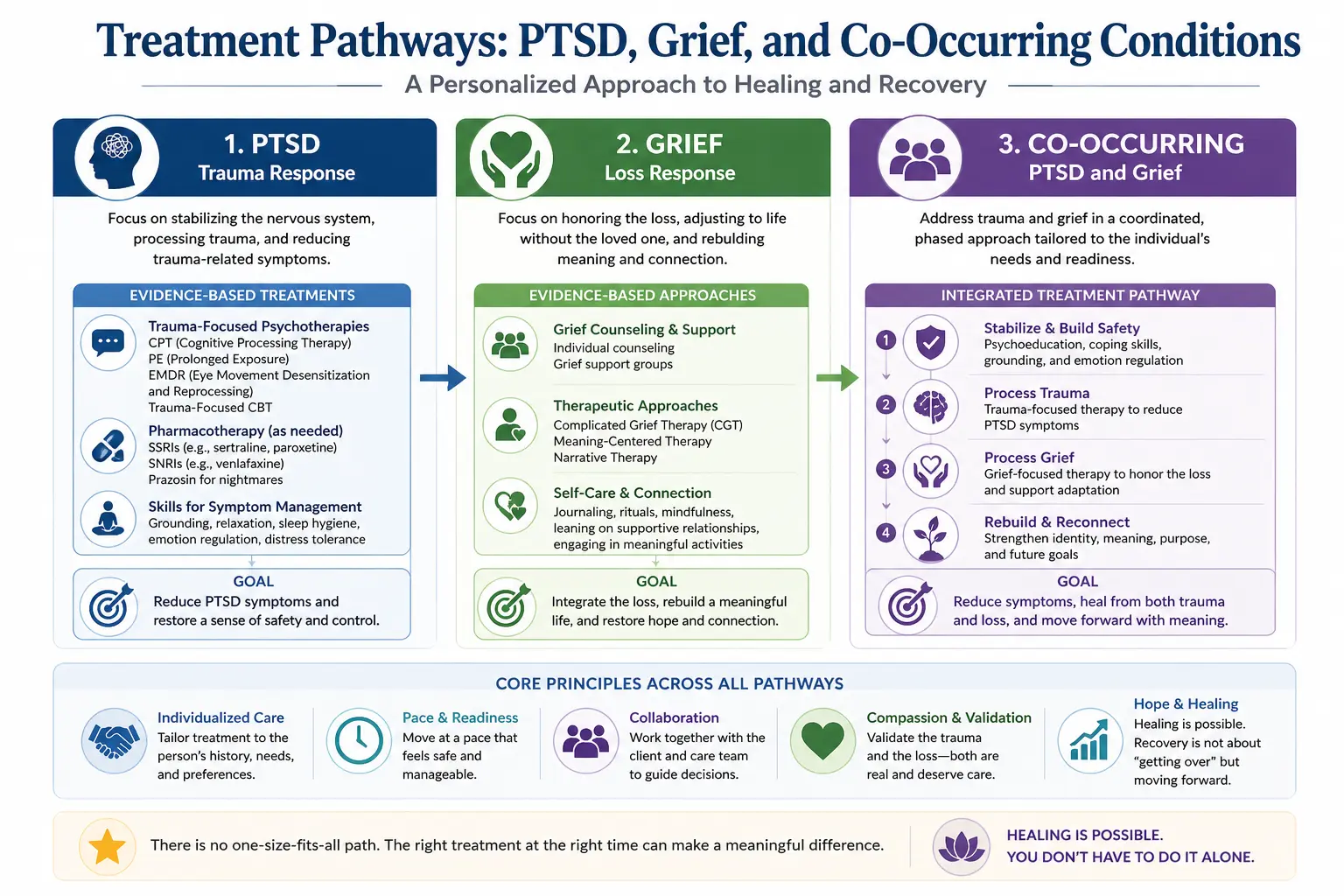
There is no single pathway that fits every client. Effective care typically includes:
- Stabilization and safety-building (coping skills, grounding, emotional regulation)
- Trauma processing and/or grief work, depending on presentation
- Reintegration, including rebuilding identity, meaning, and future orientation
This flexible approach allows clinicians to respond to the client’s most pressing symptoms while supporting long-term recovery.
Documenting PTSD and Grief Treatment in Clinical Practice
Accurate documentation is essential when treating PTSD, grief, and prolonged grief disorder. Because these conditions often overlap in presentation, clinical notes must clearly support diagnostic decision-making, medical necessity, and treatment progression over time.
Clinicians should:
- Link symptoms directly to DSM-5 criteria for PTSD when applicable
- Differentiate between trauma-related symptoms and grief responses
- Document the nature of the triggering event, including whether it meets Criterion A
- Clarify when symptoms align more closely with prolonged grief disorder vs PTSD
Clear diagnostic language reduces ambiguity and supports compliance in audits and utilization reviews.
Capture Diagnostic Specificity
When PTSD and grief symptoms co-occur, documentation should reflect how diagnostic criteria are being met — or ruled out.
Clinicians should:
- Link symptoms directly to DSM-5 criteria for PTSD when applicable
- Differentiate between trauma-related symptoms and grief responses
- Document the nature of the triggering event, including whether it meets Criterion A
- Clarify when symptoms align more closely with prolonged grief disorder vs PTSD
Clear diagnostic language reduces ambiguity and supports compliance in audits and utilization reviews.
Track Symptom Progression Across Domains
Both PTSD and grief affect multiple areas of functioning, so documentation should reflect changes over time across symptom domains.
This may include:
- Intrusion, avoidance, hyperarousal, and cognitive symptoms (PTSD)
- Emotional, physical, and cognitive symptoms of grief
- Functional impact on work, relationships, and daily living
- Shifts in symptom intensity, frequency, and triggers
Consistent tracking helps demonstrate treatment effectiveness and ongoing clinical need.
Incorporate Validated Assessment Tools
Using standardized measures strengthens documentation and supports objective clinical decision-making.
Best practices include:
- Recording baseline and follow-up scores from tools like the PCL-5 or PG-13
- Referencing assessment results in progress notes and treatment plans
- Using assessment data to guide treatment adjustments over time
Structured data provides measurable evidence of symptom severity and change.
Document Treatment Approach and Rationale
Because PTSD and grief often require different interventions, documentation should clearly explain why a specific treatment approach is being used. Include:
- The selected modality (e.g., trauma-focused CBT, EMDR, grief counseling)
- The clinical rationale based on the client’s presentation
- Adjustments to treatment when symptoms evolve or co-occur
- The sequencing of trauma-focused and grief-focused interventions
This level of detail supports both clinical clarity and payer requirements.
Support Medical Necessity and Compliance
Thorough documentation is critical for demonstrating medical necessity, particularly when symptoms are complex or overlapping. Ensure notes include:
- Functional impairment tied to symptoms
- Ongoing need for treatment
- Response to interventions
- Risk factors, when applicable
Clear, structured documentation reduces the risk of denials and supports continuity of care.
Frequently Asked Questions About PTSD and Grief
Related Resources
Using ICANotes for PTSD and Grief Documentation
ICANotes is designed to support the level of clinical detail required when treating trauma and grief-related conditions.
With ICANotes, clinicians can:
- Use DSM-5- and DSM-5-TR-aligned templates for PTSD and prolonged grief disorder
- Integrate validated assessment tools directly into their workflow
- Track symptom progression across sessions with structured note formats
- Document evolving treatment plans for co-occurring conditions
This allows clinicians to focus on care delivery while maintaining accurate, compliant, and defensible documentation.
Recent Posts






Kaylee Kron
LMSW, CG-C
About the Author
Kaylee, a certified grief counselor and social worker, has dedicated the past decade to reshaping our understanding and support of grief. With experience at a nonprofit hospice, she has empowered individuals to navigate their grief journeys, recognizing that loss extends beyond death. As an author, speaker, and event organizer, Kaylee fosters spaces for acknowledging and embracing life’s most challenging moments. Her work has been featured across various media, amplifying voices and broadening awareness of the diverse sources of grief in our lives.