Blog > Treatment Strategies > 12 Effective Couples Therapy Activities for Stronger Relationships
12 Couples Therapy Activities and Exercises for Better Communication
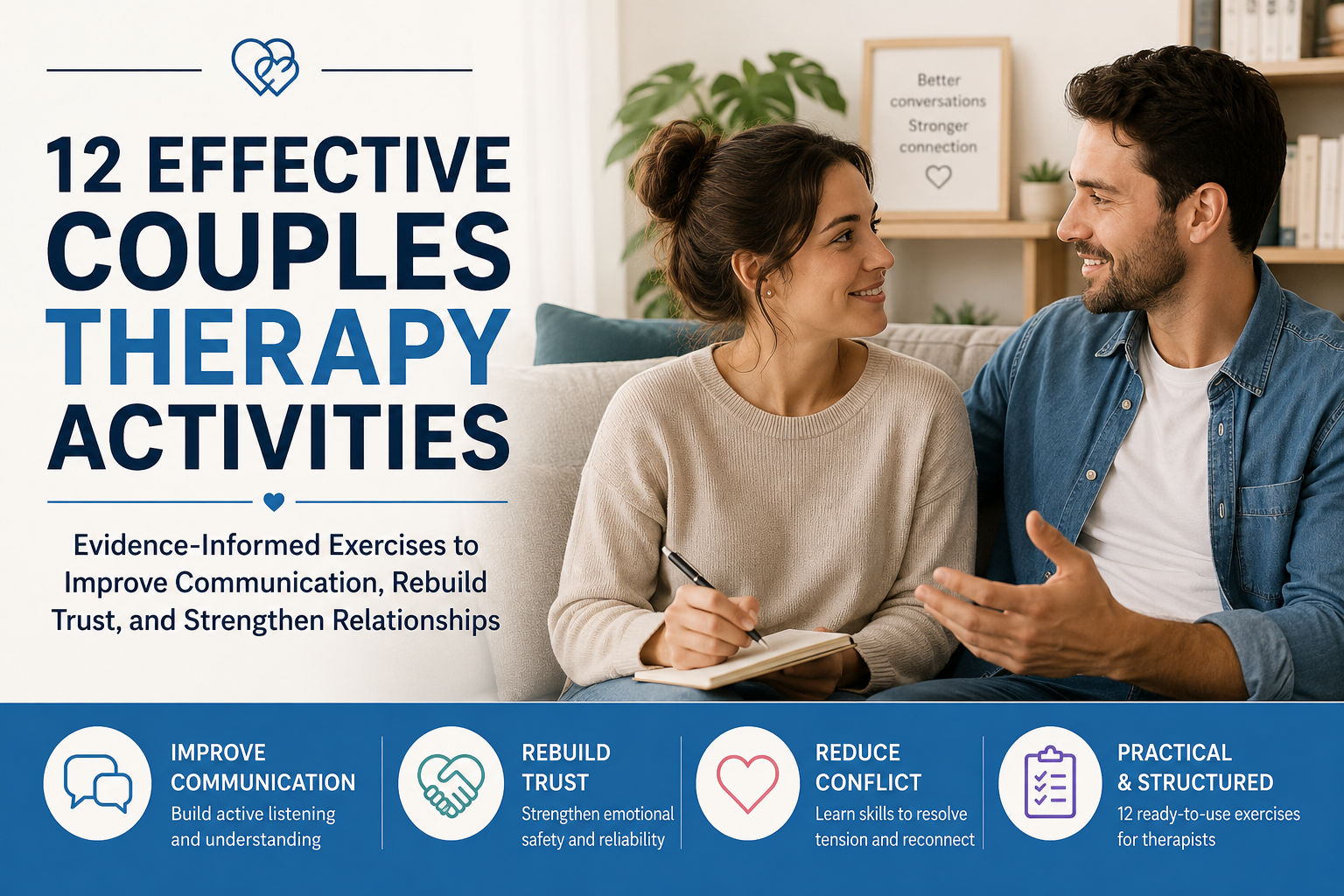
Couples therapy activities give clinicians practical, structured ways to help partners improve communication, rebuild trust, reduce defensiveness, and strengthen emotional connection. From active listening and conflict repair exercises to attachment-focused and CBT-informed interventions, these couples therapy exercises can be used in-session or assigned as homework to reinforce healthier relationship patterns between visits. In this guide, you’ll find 12 evidence-informed couples counseling activities designed to support trust-building, emotional safety, conflict resolution, and long-term relationship growth for couples in outpatient or telehealth settings.


Last Updated: May 11, 2026

What You'll Learn
- How to use structured couples therapy activities to improve communication and emotional safety
- Couples therapy exercises that help reduce defensiveness and prevent conflict escalation
- Trust-building interventions for couples recovering from repeated conflict or relationship injuries
- CBT-, attachment-, and Gottman-informed couples counseling activities clinicians can use in session or as homework
- Telehealth-friendly relationship exercises that adapt well to virtual therapy settings
- Ways to facilitate repair attempts, active listening, emotional validation, and perspective-taking
- How to document couples therapy interventions, homework assignments, and treatment progress effectively
- Practical strategies for helping couples build healthier communication patterns between sessions
Contents
What Are Couples Therapy Activities?
Why Trust and Communication Matter in Couples Therapy
How Therapists Use Couples Therapy Exercises In Session and at Home
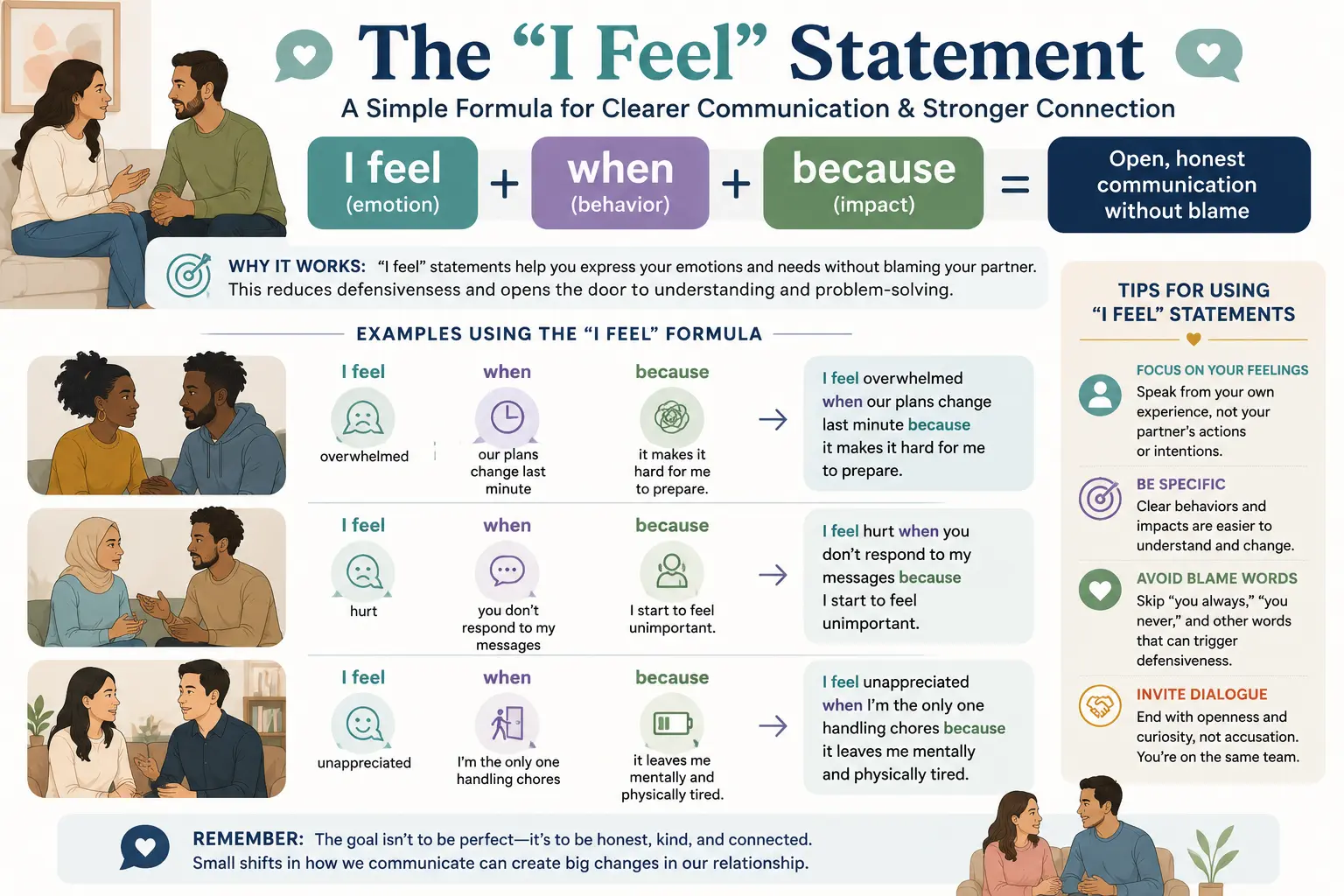
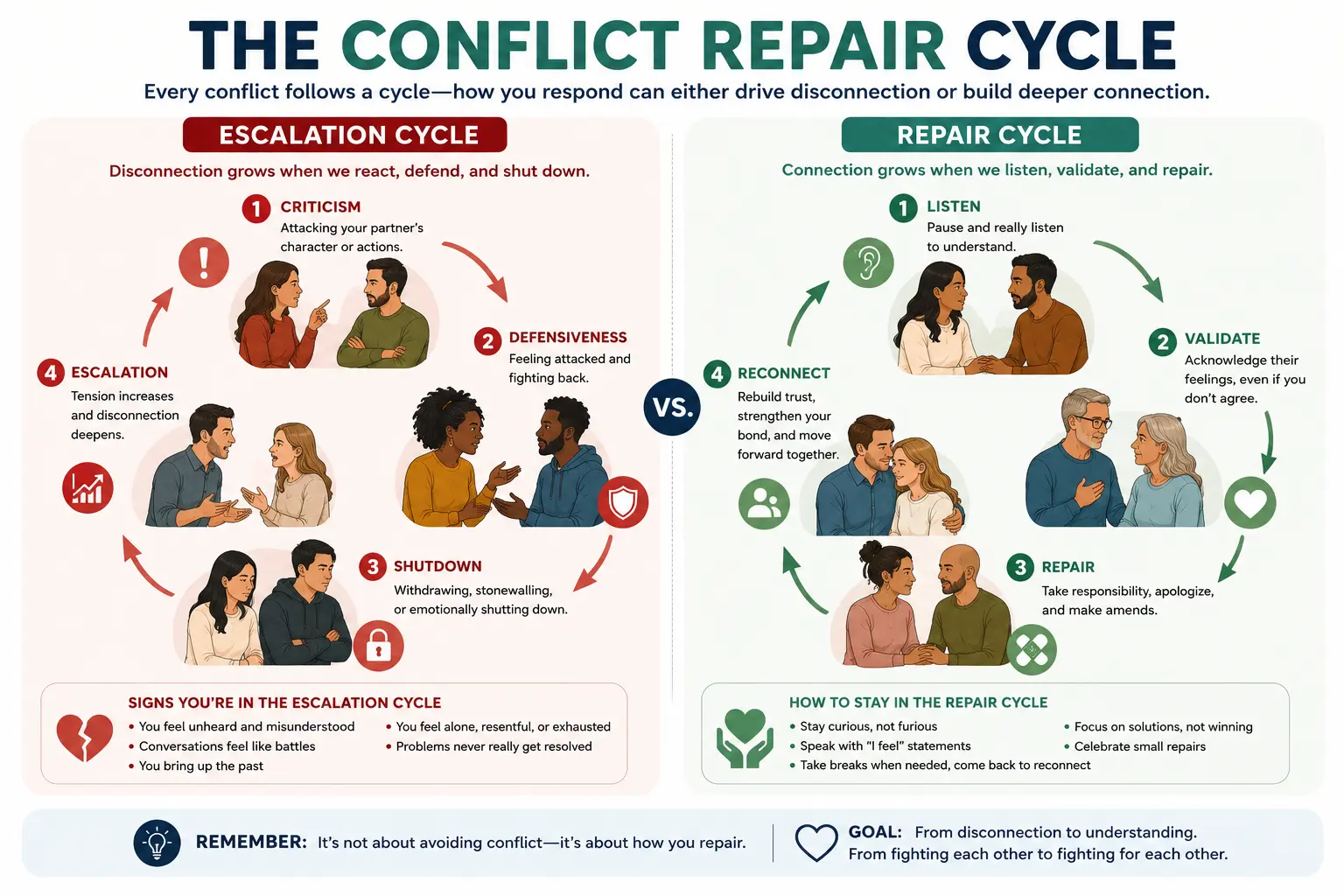
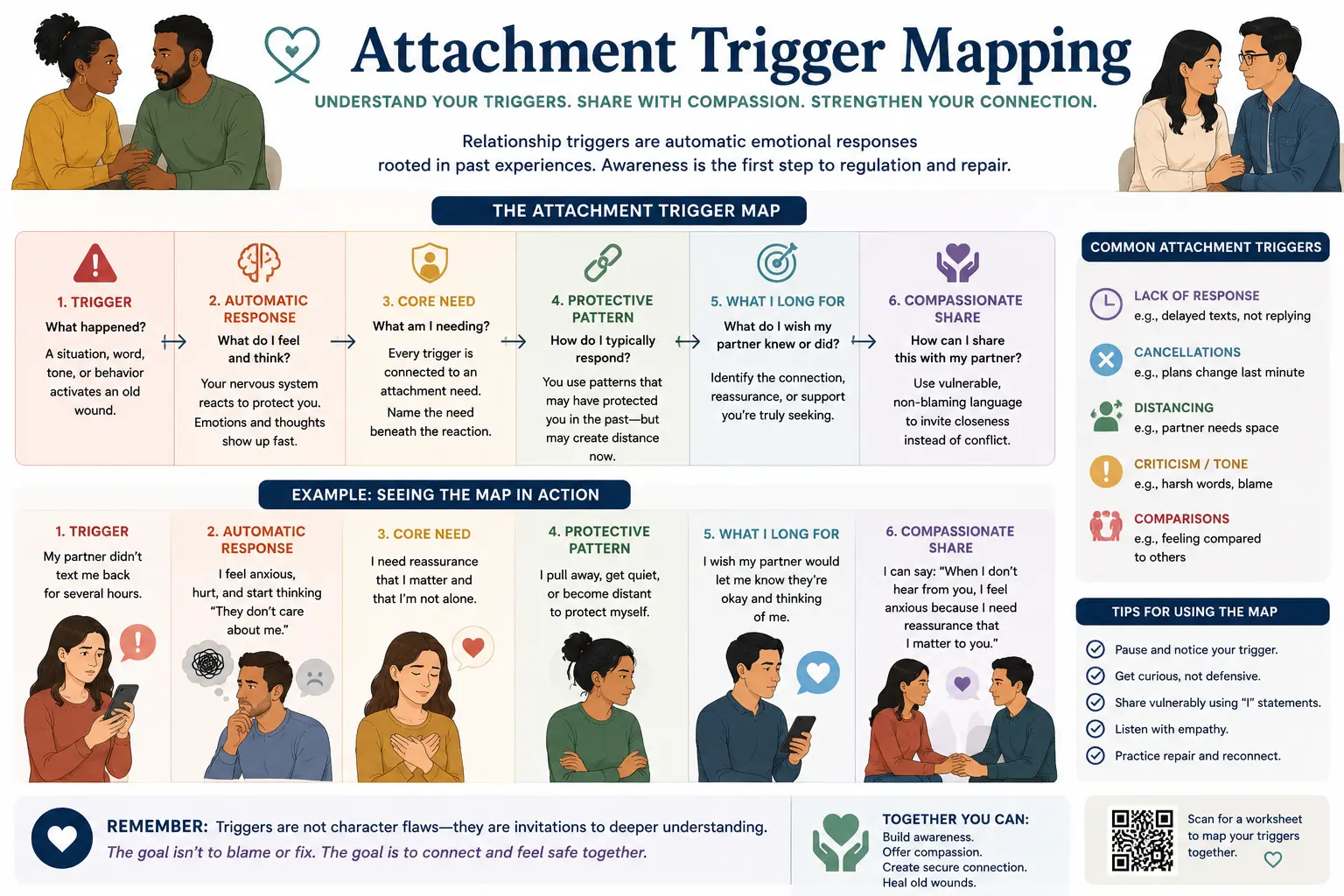
12 Couples Therapy Exercises and Counseling Activities
Couples Therapy Activities Couples Can Practice at Home
How to Document Couples Therapy Interventions and Progress Notes
Frequently Asked Questions About Couples Therapy Activities
Trust and communication sit at the core of every healthy relationship — and at the center of effective couples therapy. When trust erodes, couples often fall into predictable cycles: defensiveness spikes, emotional withdrawal deepens, and conflict repeats without resolution.
Structured couples therapy activities give clinicians a reliable framework for interrupting these cycles. Rather than open-ended conversation that can quickly become reactive, structured couples counseling activities provide a defined process — one that slows interaction, builds emotional safety, and gives both partners a shared experience of being heard. Structured activities work best when paired with broader strategies for conducting effective couples therapy sessions that balance emotional safety with accountability.
This guide covers 12 evidence-informed couples therapy exercises you can use in-session or assign as between-session practice. Each activity includes a clinical goal, step-by-step instructions, processing questions to deepen insight, and safety considerations for high-conflict or avoidant partners. Clinicians can strengthen outcomes by aligning these exercises with clearly defined couples therapy treatment goals tailored to each relationship's needs.
What Are Couples Therapy Activities?
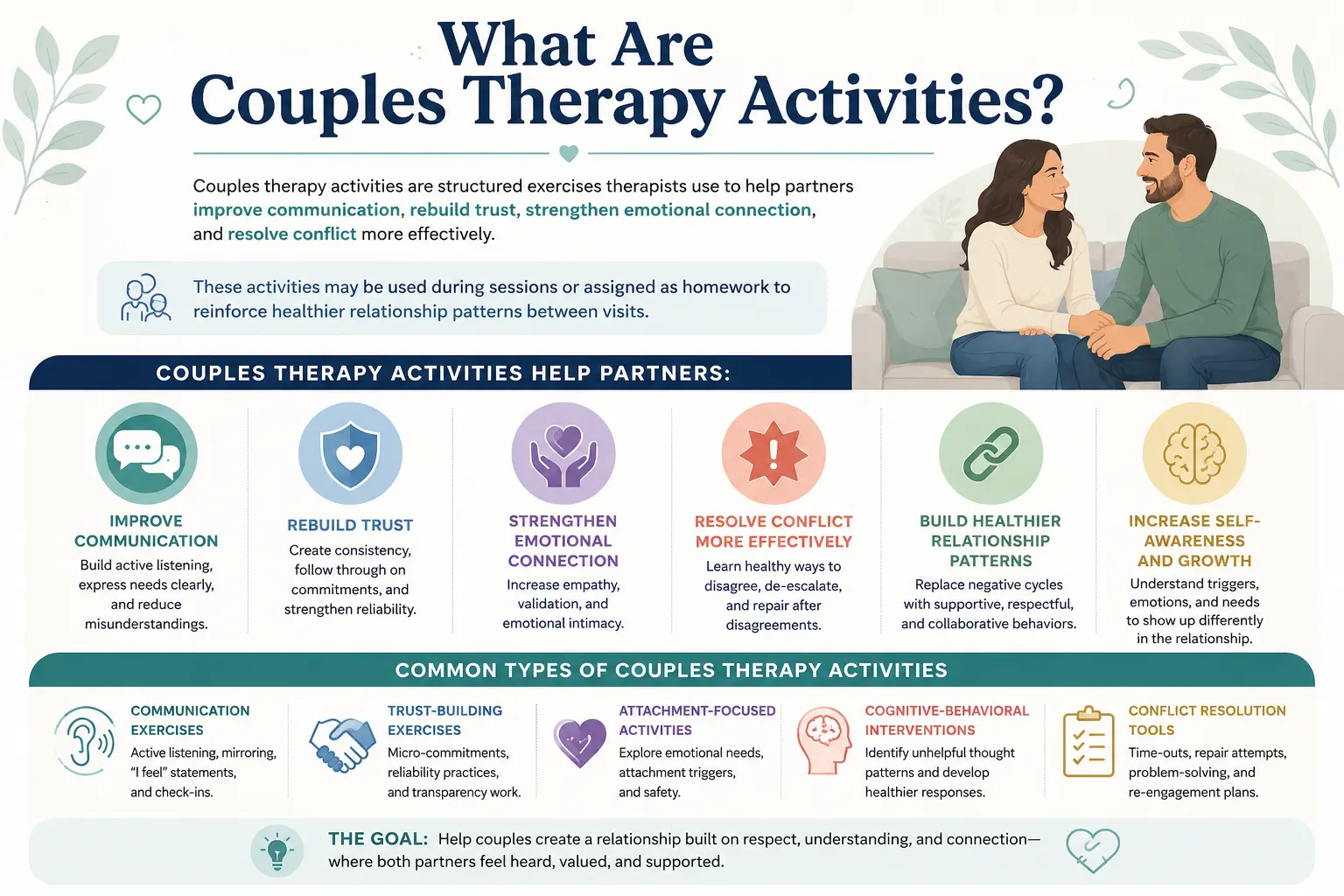
Couples therapy activities are structured exercises therapists use to help partners improve communication, rebuild trust, strengthen emotional connection, and resolve conflict more effectively. These couples therapy exercises may be used during sessions or assigned as homework to reinforce healthier relationship patterns between visits.
Why Trust and Communication Matter in Couples Therapy
Trust rarely collapses all at once. It erodes gradually — through missed commitments, poor repair after conflict, and a growing sense that one’s partner isn’t reliably “there.” In couples presenting for therapy, low trust commonly shows up as:
- Hypervigilance and defensiveness
- Emotional shutdown or stonewalling
- Repeated arguments that cycle back to the same unresolved injury
- Difficulty accepting repair attempts
Structured couples therapy exercises address trust indirectly but powerfully — by creating repeated experiences of being heard, validated, and responded to predictably. When partners experience small moments of attunement within a structured exercise, the nervous system registers safety, and openness becomes possible. Many of these communication exercises can also help couples navigating desire discrepancy in couples therapy by improving emotional safety and connection.
How Therapists Use Couples Therapy Exercises in Session and At Home
Each of the 12 couples counseling activities below is designed to be flexible. You can introduce them in-session, assign them as homework, or use them in a hybrid format where partners begin the exercise in session and continue it at home.
Every activity in this guide includes:
- Goal — the clinical objective the exercise targets
- Steps — clear, sequenced instructions for facilitating the exercise
- Processing Questions — prompts to deepen reflection and consolidate insight after the exercise
- Clinical Considerations — guidance on contraindications, adaptations for telehealth, and managing partner reactivity

12 Couples Therapy Exercises and Counseling Activities
Couples Therapy Activities Couples Can Practice At Home
Therapy gains are consolidated between sessions. Clinicians can support generalization by assigning structured home practices. The following four activities translate well to independent use:
- Structured weekly check-in (Activity 10): same day, same time, using the appreciations/concerns/requests format.
- Daily appreciation exchange (Activity 9): one specific, behavioral appreciation per day.
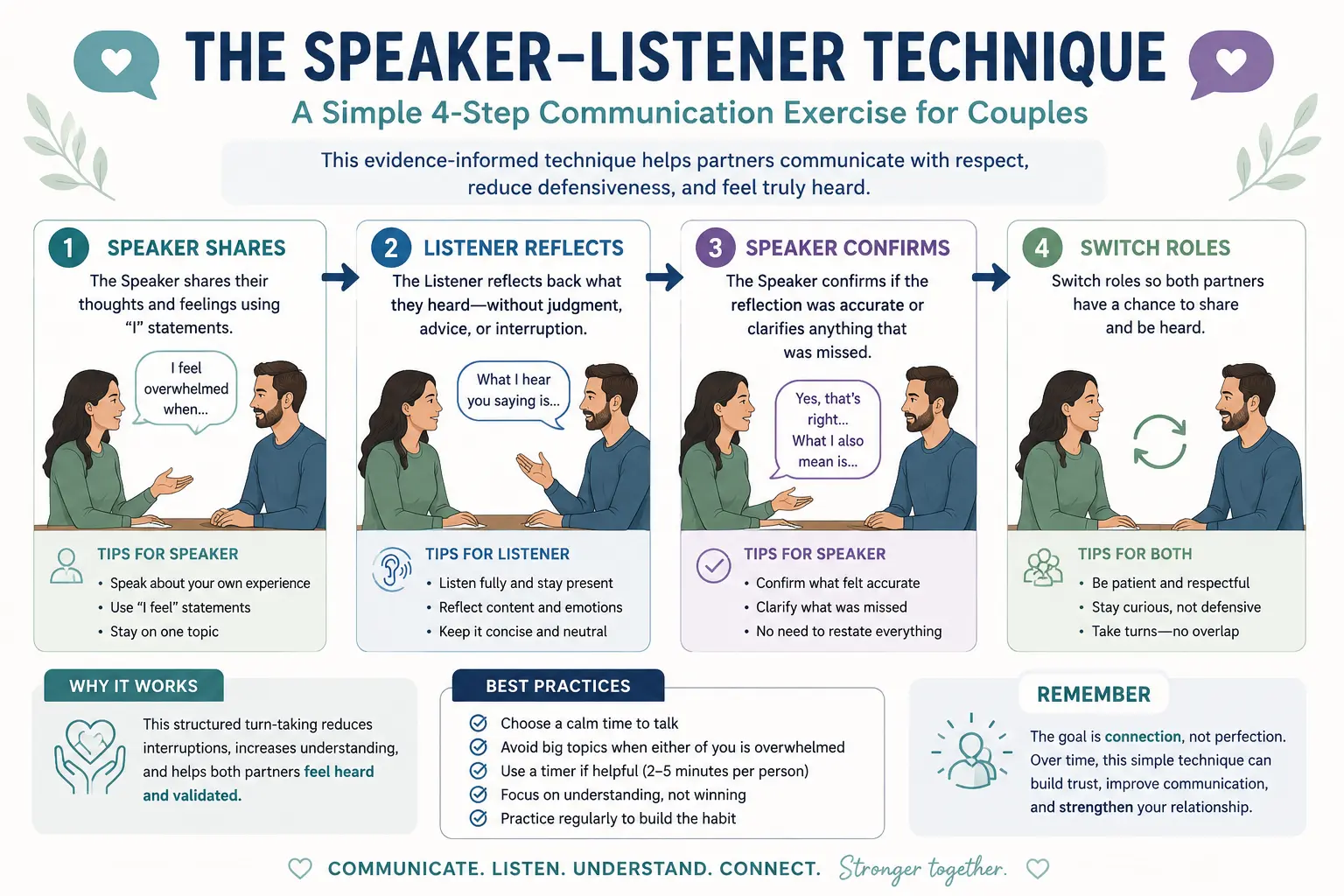
- "I Feel" statement practice (Activity 3): commit to using one "I Feel" statement per week when raising a concern.
- Rehearse the time-out plan when calm (Activity 7): review and role-play the plan periodically — not only when conflict arises.
Remind couples that between-session practice is where skill development happens. In-session work lays the groundwork; home practice builds the neural pathways.
How to Document Couples Therapy Interventions and Progress Notes
Clear, structured documentation supports continuity of care, demonstrates clinical decision-making, and protects clinicians from liability. For couples therapy specifically, session notes should capture:
- Presenting issue: the primary concern or conflict the couple brought to the session
- Intervention used: the specific activity or technique introduced, and in what format (in-session demonstration, psychoeducation, practice)
- Partner participation and affect: how each partner engaged with the exercise — their affect, level of participation, and any notable reactions
- Homework assigned: the specific between-session activity, including any instructions or modifications
- Progress toward treatment goals: how the session’s content relates to the couple’s overall treatment plan
Clinicians using EHR systems with structured note templates can streamline this documentation significantly. Behavioral health-specific platforms like ICANotes offer customizable note templates that allow clinicians to document couples session content consistently across providers and visits — reducing administrative burden while supporting compliance. Therapists using structured interventions should also understand how to bill for couples therapy appropriately to support accurate documentation and reimbursement.
Frequently Asked Questions About Couples Therapy Activities
Answers to common questions about couples therapy activities, communication exercises, conflict resolution, telehealth adaptations, and documentation.
Helping Couples Build Healthier Communication Patterns
Healthy relationships are not built on the absence of conflict — they are built on the ability to navigate conflict with safety, repair, and emotional responsiveness. Structured couples therapy activities help partners move out of reactive communication cycles and into more intentional patterns of listening, validation, empathy, and accountability. Over time, these repeated interactions can strengthen trust, increase emotional security, and improve each partner’s capacity to stay connected during difficult conversations.
For clinicians, structured couples counseling activities also provide a practical framework for guiding sessions, assigning between-session homework, and tracking treatment progress over time. Whether you are helping couples rebuild trust after repeated conflict, strengthen emotional connection, or improve communication skills, evidence-informed couples therapy exercises can create meaningful opportunities for insight, regulation, and lasting behavioral change.
Consistent documentation remains an important part of effective couples therapy care. Behavioral health EHR platforms like ICANotes can help clinicians streamline couples therapy documentation with structured templates designed to support compliance, treatment planning, and continuity of care — allowing providers to spend less time charting and more time focused on the therapeutic relationship.
Recent Posts





Dr. October Boyles
DNP, MSN, BSN, RN
About the Author
Dr. October Boyles is a behavioral health expert and clinical leader with extensive expertise in nursing, compliance, and healthcare operations. With a Doctor of Nursing Practice (DNP) and advanced degrees in nursing, she specializes in evidence-based practices, EHR optimization, and improving outcomes in behavioral health settings. Dr. Boyles is passionate about empowering clinicians with the tools and strategies needed to deliver high-quality, patient-centered care.