Blog > Treatment Strategies > 8 Narcissistic Abuse Tactics & Abuse Syndrome Signs
8 Narcissistic Abuse Tactics in Intimate Partner Violence: A Clinician's Guide to Recognizing Narcissistic Abuse Syndrome
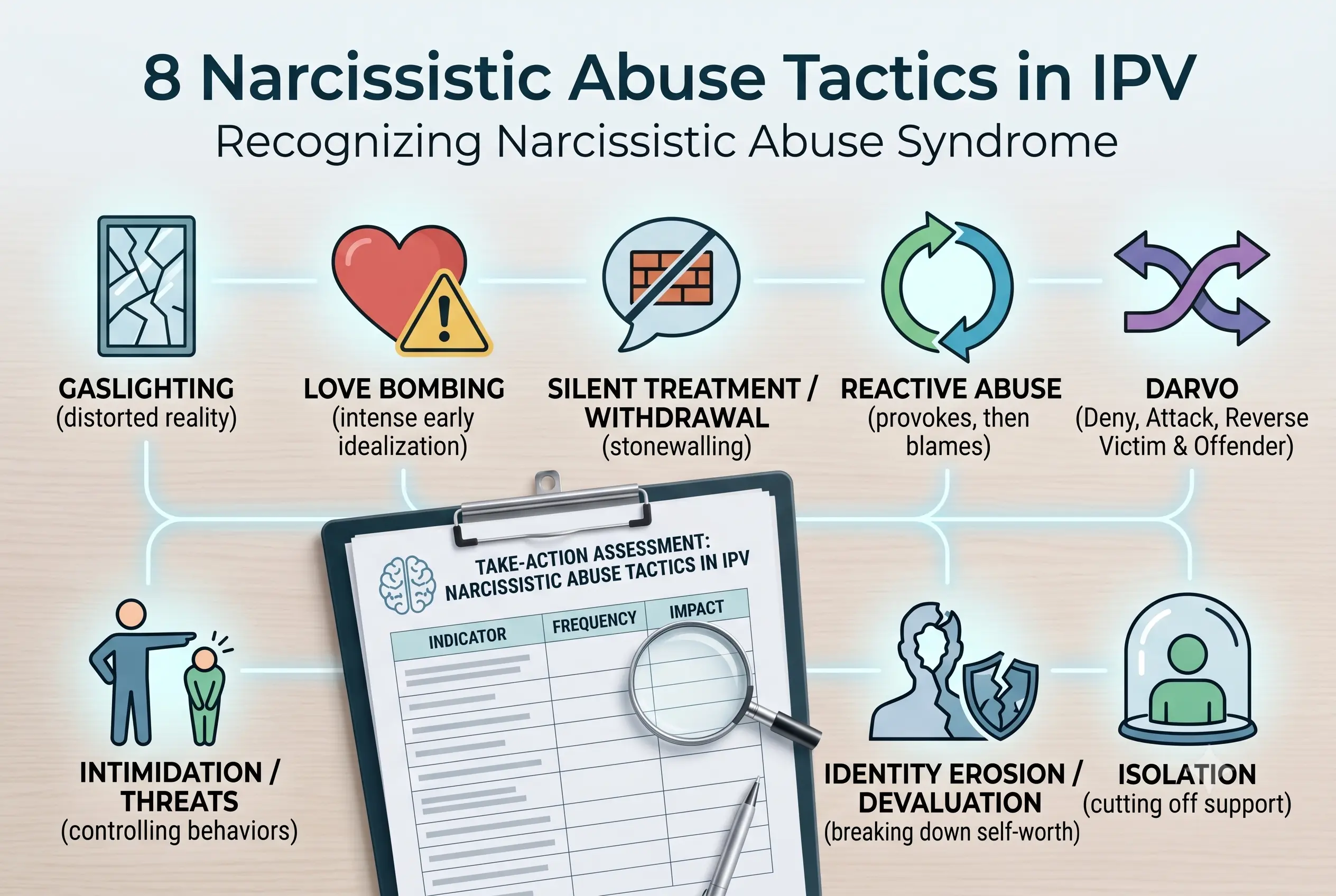
Mental health clinicians working with survivors of intimate partner violence (IPV) must be able to recognize the subtle and often confusing dynamics of narcissistic abuse. This guide explores eight common narcissistic abuse tactics — including gaslighting, love bombing, narcissistic withdrawal, reactive abuse, and DARVO — while outlining the key signs of narcissistic abuse that may appear in clinical practice. Learn how these manipulation strategies can contribute to Narcissistic Abuse Syndrome (NAS), the psychological and emotional effects clients may experience, and practical approaches for assessment, treatment planning, and trauma-informed care.


Last Updated: June 10, 2026

What You'll Learn
- How to identify eight common narcissistic abuse tactics used in intimate partner violence (IPV)
- The difference between gaslighting, love bombing, projection, reactive abuse, and DARVO
- Why victims of narcissistic abuse often struggle with self-doubt, guilt, and confusion
- The most common signs of narcissistic abuse clinicians may observe during assessment and treatment
- How Narcissistic Abuse Syndrome (NAS) can affect a client's emotional, psychological, and physical well-being
- The relationship between narcissistic abuse, trauma, and symptoms that may overlap with Complex PTSD
- Clinical strategies for assessing, documenting, and supporting clients affected by narcissistic abuse
- How to use a structured Narcissistic Abuse Syndrome Clinical Assessment Checklist during intake and treatment planning
Contents
- 4 Stages of the Narcissistic Abuse Cycle
- 8 Narcissistic Abuse Tactics Clinicians Should Recognize
- How Narcissistic Abuse Appears in Clinical Practice
- Signs of Narcissistic Abuse in a Relationship
- Psychological and Emotional Impact of Narcissistic Abuse Tactics
- Narcissistic Abuse Syndrome: Recognizing the Signs and Symptoms
- Clinical Strategies for Supporting Clients Experiencing Narcissistic Abuse
- How ICANotes Supports Clinicians Treating Narcissistic Abuse
- FAQs: Narcissistic Abuse
Narcissistic abuse is a form of psychological and emotional abuse that can occur in intimate partner violence (IPV) relationships. Unlike more overt forms of abuse, narcissistic abuse often relies on manipulation tactics such as gaslighting, love bombing, projection, reactive abuse, and DARVO to gain control, undermine a partner's confidence, and distort their sense of reality.
For mental health clinicians, recognizing the signs of narcissistic abuse is essential. Clients may present with chronic self-doubt, hypervigilance, shame, anxiety, trauma symptoms, or confusion about their relationship experiences without realizing they have been subjected to a pattern of abuse. Over time, prolonged exposure to these dynamics may contribute to Narcissistic Abuse Syndrome (NAS), a cluster of psychological and emotional symptoms frequently observed in survivors of narcissistic relationships.
Intimate partner violence remains a widespread public health concern. Research suggests that psychological abuse is among the most common forms of partner violence and often co-occurs with other forms of abuse. Because narcissistic abuse frequently involves subtle manipulation rather than visible injuries, it can go unrecognized by both survivors and professionals for years.
This guide explores eight common narcissistic abuse tactics, the warning signs clinicians should look for during assessment, and practical considerations for supporting clients recovering from narcissistic abuse.
What Is Narcissistic Abuse?
Quick Definition
Narcissistic Abuse
Narcissistic abuse is a pattern of psychological, emotional, relational, and sometimes financial manipulation used to gain control within a relationship. Common tactics include gaslighting, love bombing, projection, isolation, financial control, narcissistic withdrawal, reactive abuse, and DARVO.
Quick Definition
Narcissistic Abuse Syndrome
Narcissistic Abuse Syndrome, or NAS, is a term used to describe a cluster of emotional and psychological symptoms that may develop after prolonged exposure to narcissistic abuse. While NAS is not a formal diagnosis, clients may present with chronic self-doubt, shame, hypervigilance, emotional dysregulation, trauma symptoms, and difficulty trusting their own perceptions.
Narcissistic abuse is a pattern of emotional, psychological, and sometimes financial or interpersonal manipulation used by individuals with pronounced narcissistic traits to maintain control, influence, or dominance within a relationship. Common narcissistic abuse tactics include gaslighting, love bombing, projection, silent treatment (sometimes called narcissistic withdrawal), reactive abuse, isolation, and DARVO (Deny, Attack, Reverse Victim and Offender).
Unlike healthy relationship conflict, narcissistic abuse is characterized by recurring patterns that erode a person's self-confidence, autonomy, and ability to trust their own perceptions. Victims often report feeling confused, emotionally exhausted, isolated from support systems, and increasingly dependent on the abusive partner's version of reality.
Because these tactics can be subtle and cumulative, many survivors do not initially recognize their experiences as abuse. As a result, clinicians may encounter clients presenting with anxiety, depression, trauma symptoms, chronic self-doubt, or relationship distress before the underlying pattern of narcissistic abuse is identified.
The 4 Stages of the Narcissistic Abuse Cycle
Before examining individual narcissistic abuse tactics, it is helpful for clinicians to understand the broader cycle in which these behaviors often occur. Narcissistic abuse rarely appears as a single isolated incident. Instead, clients may describe a repeating pattern of idealization, devaluation, discard, and re-engagement that leaves them confused, emotionally dependent, and unsure how to interpret the relationship.

The four stages below provide a closer look at how this pattern may unfold in clients’ relationship histories and why the cycle can be difficult for clients to identify while they are still emotionally engaged in the relationship.
1. Idealization
In the idealization stage, the abusive partner may use intense affection, rapid commitment, constant attention, or excessive praise to create emotional closeness quickly. This stage is often experienced by the client as unusually validating or exciting, which can make the later abuse more difficult to reconcile.
2. Devaluation
During devaluation, the partner’s behavior begins to shift. Affection may be replaced by criticism, withdrawal, blame, gaslighting, or emotional unpredictability. Clients may begin working harder to regain the approval and closeness they experienced earlier in the relationship.
3. Discard
The discard stage may involve emotional abandonment, stonewalling, threats to leave, sudden withdrawal, infidelity, or abrupt rejection. For the client, this stage can intensify fear, shame, grief, and urgency to repair the relationship, even when the relationship has become harmful.
4. Re-Engagement
Re-engagement occurs when the abusive partner attempts to pull the client back into the relationship through apologies, promises to change, renewed affection, crisis, guilt, or love bombing. This stage can restart the cycle and reinforce the client’s hope that the relationship can return to the idealized version they first experienced.
Clinical Note
Clients may not describe these stages in a linear way. Instead, they may present with confusion about why the relationship alternates between intense closeness and emotional harm. Helping clients identify the pattern can support assessment, safety planning, and trauma-informed treatment.
This narcissistic abuse cycle creates a pattern of emotional highs and lows that confuses and entraps the victim, making it difficult for them to break free. Recognizing these steps is crucial for clinicians working with survivors to help them understand the manipulation at play and support their healing process.

Free Clinical Resource
Download the Narcissistic Abuse Syndrome Clinical Assessment Checklist
Use this structured intake tool to help assess relationship dynamics, manipulation tactics, trauma-related symptoms, safety concerns, and clinical next steps when working with clients affected by narcissistic abuse.
- Screen for common narcissistic abuse indicators
- Organize client presentation across clinical domains
- Support trauma-informed assessment and documentation
- Use during intake, assessment, or treatment planning
Get the Free Checklist
Complete the form below to access the downloadable clinical assessment checklist.
8 Narcissistic Abuse Tactics Clinicians Should Recognize
Narcissistic abuse is not defined by a single behavior. Rather, it involves a collection of manipulation tactics that work together to create confusion, dependency, self-doubt, and emotional control. While individual tactics may appear subtle or even harmless when viewed in isolation, their cumulative impact can significantly affect a client's psychological well-being and sense of self.
For clinicians, recognizing these patterns is critical. Clients rarely enter therapy describing "narcissistic abuse." Instead, they may present with symptoms such as anxiety, hypervigilance, chronic guilt, relationship confusion, low self-esteem, or trauma-related distress. Understanding the tactics commonly used in narcissistic relationships can help clinicians identify underlying dynamics that might otherwise remain hidden.
The infographic below provides a high-level overview of the most common narcissistic abuse tactics, the ways clients may experience them, and important clinical considerations during assessment and treatment.
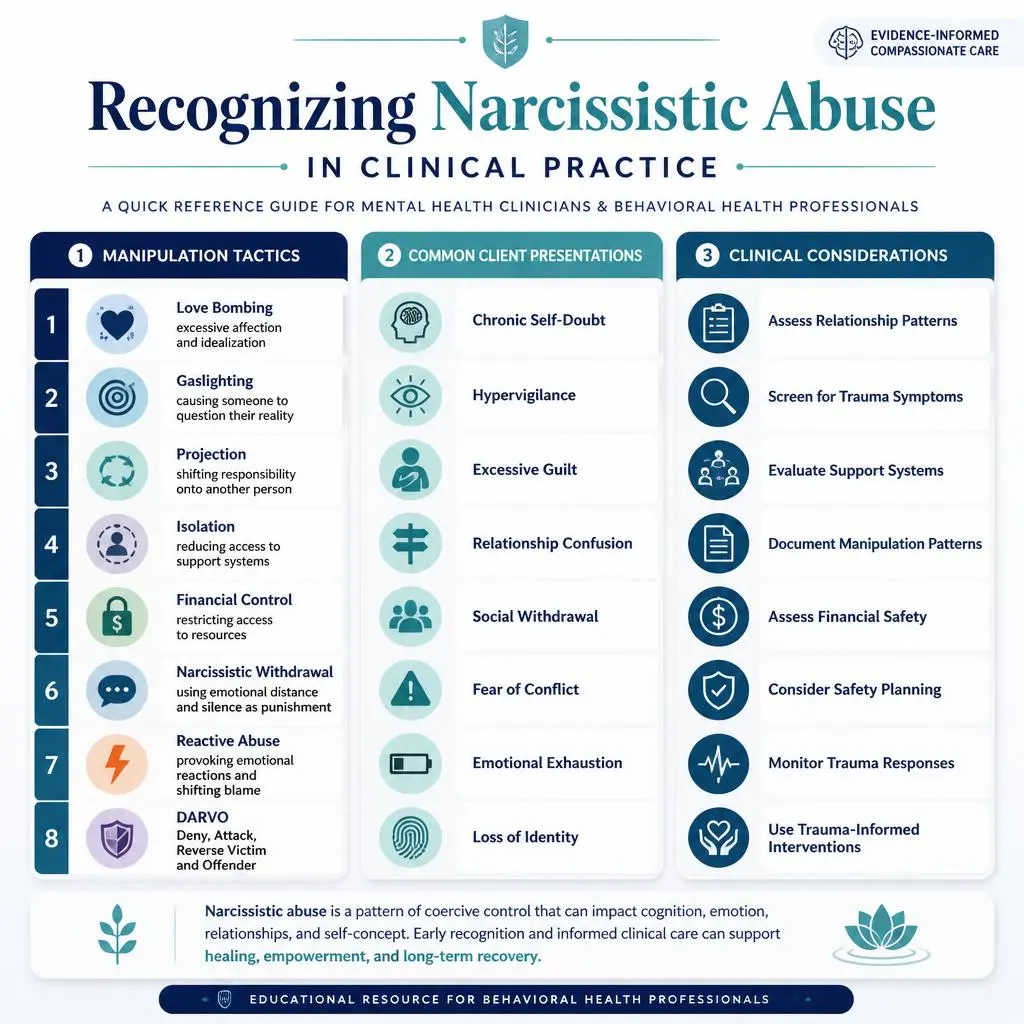
Narcissistic Abuse Tactics at a Glance
The following table summarizes the most common narcissistic abuse tactics and their primary psychological function within the relationship. While every abusive relationship is unique, these patterns frequently appear across client histories and may occur simultaneously or in recurring cycles.
Clinicians should view these tactics not as isolated incidents, but as components of a broader pattern of coercive control and emotional manipulation. Identifying multiple tactics within a client's relationship history may help clarify treatment goals, improve case conceptualization, and inform trauma-informed interventions.
| Narcissistic Abuse Tactic | Primary Function in the Relationship |
|---|---|
| Love Bombing | Creates rapid emotional attachment, trust, and dependency through intense affection and idealization. |
| Gaslighting | Undermines the client’s confidence in their memory, perception, and sense of reality. |
| Projection | Shifts blame by attributing the abusive partner’s behaviors, motives, or flaws to the client. |
| Isolation | Reduces access to outside perspectives, emotional support, and potential sources of help. |
| Financial Control | Creates dependence by limiting access to money, employment, or independent financial decision-making. |
| Narcissistic Withdrawal | Uses silence, emotional distance, or stonewalling as punishment and control. |
| Reactive Abuse | Provokes an emotional reaction and then uses that reaction to blame or discredit the client. |
| DARVO | Denies harm, attacks the client’s credibility, and reverses the roles of victim and offender. |
A Closer Look at Each Narcissistic Abuse Tactic
While summary tools can help clinicians quickly identify common patterns, effective assessment requires a deeper understanding of how these tactics operate within relationships and how they may present in clinical settings.
The sections below examine each tactic in greater detail, including examples of how the behavior functions, common client presentations, key clinical indicators, and reasons these patterns may be overlooked during assessment. Together, these insights can help clinicians recognize narcissistic abuse earlier, validate clients' experiences, and develop more effective treatment plans.
Love Bombing
Love bombing involves overwhelming a partner with excessive affection, attention, gifts, praise, or rapid declarations of commitment early in the relationship. This intense idealization can create emotional dependency before abusive patterns emerge.
Clients may describe an unusually intense early relationship marked by rapid commitment, constant contact, or feeling that they had found their “perfect partner.”
Clients may initially frame the early relationship as romantic or meaningful, making it harder to identify as part of a manipulation cycle.
Gaslighting
Gaslighting occurs when an abuser causes a partner to question their memory, perception, or reality. Over time, this tactic can erode confidence and increase dependence on the abuser’s version of events.
Clients may frequently second-guess themselves, seek reassurance about their perceptions, or say things like, “Maybe I’m remembering it wrong.”
Clients affected by gaslighting may appear uncertain or inconsistent when they have actually been conditioned to distrust their own experiences.
Projection
Projection involves accusing the victim of behaviors, motives, or character flaws that the abuser may be engaging in themselves. This tactic shifts blame and keeps the victim in a defensive posture.
Clients may report repeated accusations that seem inconsistent with their own behavior but closely mirror the partner’s actions.
Clients may present as preoccupied with proving they are not the problem rather than describing the broader pattern of blame-shifting.
Isolation
Isolation occurs when an abusive partner gradually separates the victim from friends, family, colleagues, or other support systems. This may happen through criticism, jealousy, control, or subtle discouragement.
Clients may describe shrinking social networks, reduced contact with loved ones, or a belief that others would not understand or believe them.
Isolation may be presented as the client’s own “choice” or as a practical relationship adjustment rather than coercive control.
Financial Control
Financial control involves restricting access to money, monitoring spending, interfering with employment, creating debt, or making the victim financially dependent on the abusive partner.
Clients may express anxiety about spending decisions, lack independent access to funds, or report that their partner monitors, restricts, or controls financial activity.
Financial control may be minimized as “budgeting,” “shared decision-making,” or relationship conflict unless assessed directly.
Silent Treatment / Narcissistic Withdrawal
Silent treatment, sometimes described as narcissistic withdrawal, involves prolonged ignoring, emotional withholding, or stonewalling as a form of punishment or control.
Clients may describe heightened anxiety around interpersonal conflict and a strong urge to “fix” situations quickly to avoid prolonged periods of silence or withdrawal.
Clients may describe the partner as “needing space,” even when the withdrawal functions as punishment or coercive control.
Reactive Abuse
Reactive abuse occurs when an abuser deliberately provokes their partner through criticism, ridicule, silent treatment, or other forms of emotional manipulation until the victim reacts. That reaction is then used as evidence that the victim is unstable or abusive.
A client who presents with disproportionate guilt about their own reactions, or who frames themselves as the aggressor while describing extended periods of being ignored, criticized, or belittled, may be experiencing reactive abuse.
Clients often focus on their own reaction rather than the prolonged provocation that preceded it, which can obscure the underlying abusive pattern.
DARVO (Deny, Attack, Reverse Victim and Offender)
DARVO is a behavioral pattern in which the abuser denies harmful behavior, attacks the credibility or character of the person raising concern, and then repositions themselves as the victim of the exchange.
Clients may hesitate to raise concerns or assert needs because previous attempts resulted in being blamed, attacked, or portrayed as the aggressor.
Clients may describe conflicts as confusing or “hard to explain,” especially if they have been conditioned to expect punishment for naming harm.
How Narcissistic Abuse Appears in Clinical Practice
Understanding the tactics themselves is only part of the assessment process. Clients experiencing narcissistic abuse may not recognize the manipulation strategies being used against them, particularly when gaslighting, reactive abuse, or DARVO have distorted their perception of the relationship.
Instead, clinicians are more likely to encounter the effects of these tactics through the client's thoughts, emotions, behaviors, and physical symptoms. The following signs can help clinicians identify narcissistic abuse even when clients do not explicitly label their experiences as abusive.
Signs of Narcissistic Abuse in a Relationship
Understanding the specific tactics narcissists use is essential, but clinicians also need to recognize how those tactics manifest in a client's presentation. Victims of narcissistic abuse may not identify their experience as abuse — particularly if they have been subjected to sustained gaslighting and reactive abuse that has distorted their perception of what is normal. The following signs, taken together, can help clinicians identify narcissistic abuse in a client's relationship history or current situation.
A client experiencing narcissistic abuse may present with some or all of the following:
- Chronic self-doubt and second-guessing — frequently questioning their own memory, feelings, or perception of events, often using phrases like "maybe I'm overreacting" or "I'm probably being too sensitive"
- Disproportionate guilt about their own behavior — expressing intense shame about their reactions (e.g., yelling or crying) while minimizing or excusing the partner's behavior that preceded them
- Hypervigilance and walking on eggshells — describing a constant need to anticipate or manage their partner's moods to avoid a negative response
- Isolation from support systems — gradual withdrawal from friendships and family, often framed as the partner's preference or as the client's own "choice"
- Financial dependence or control — limited or no access to financial resources, or a partner who monitors and controls spending
- Confusion about the relationship's reality — alternating between describing the relationship as loving and describing distressing episodes, with difficulty reconciling the two
- Fear of leaving — expressing a sense that they cannot leave, often citing financial dependence, fear of escalation, or a belief that no one would understand or believe them
- Loss of identity — difficulty articulating their own preferences, values, or sense of self outside of the relationship
- Physical symptoms — sleep disruption, appetite changes, chronic tension headaches, or gastrointestinal complaints that may be somatic expressions of chronic stress
- History of returning after attempts to leave — describing previous attempts to end the relationship followed by re-engagement, often triggered by a period of love bombing from the partner
Clinical note: No single sign on this list is diagnostic on its own. The presence of multiple signs, particularly in the context of a relationship the client describes as confusing or "hard to explain," warrants a deeper trauma-informed assessment. See our Narcissistic Abuse Syndrome Clinical Assessment Checklist for a structured intake tool.
Psychological and Emotional Impact of Narcissistic Abuse Tactics
Narcissistic abuse in intimate relationships can profoundly affect a client’s sense of self, emotional regulation, relationships, and overall functioning. Because these tactics often occur gradually and repeatedly, clients may not immediately identify their experiences as abuse. Instead, they may present in therapy with anxiety, depression, trauma symptoms, chronic self-doubt, relational distress, or confusion about why the relationship feels so difficult to explain.
Over time, exposure to manipulation tactics such as gaslighting, devaluation, isolation, reactive abuse, and narcissistic withdrawal can reshape how clients view themselves and others. Many survivors internalize the abusive partner’s criticisms, blame, or distortions of reality, leading to changes in self-esteem, trust, boundaries, and emotional safety. These effects may continue long after the relationship has ended and may overlap with symptoms associated with trauma, Complex PTSD, and Narcissistic Abuse Syndrome.
Clinicians assessing clients with suspected histories of narcissistic abuse should consider the following potential long-term effects:
Low Self Esteem and Chronic Self Doubt
Because narcissistic abuse frequently targets a client’s confidence, competence, memory, and sense of worth, survivors may present with persistent low self-esteem and difficulty trusting their own perceptions. Clients may minimize their experiences, blame themselves for the abuse, or describe feeling “too sensitive,” “dramatic,” or “hard to love.”
In clinical work, this may appear as repeated reassurance-seeking, difficulty making decisions, fear of being judged, or a tendency to defer to others’ interpretations of events. These patterns often reflect the long-term impact of gaslighting, devaluation, and blame-shifting rather than a lack of insight.
Relationship Difficulties
Narcissistic abuse can disrupt a client’s relationships both during and after the abusive relationship. Abusive partners may isolate the client from family, friends, colleagues, or other support systems, creating distance that can be difficult to repair. Survivors may also feel shame about what occurred, fear they will not be believed, or struggle to explain why they stayed or returned to the relationship.
After the relationship ends, clients may experience difficulty trusting new partners, setting boundaries, identifying healthy relationship dynamics, or believing they are worthy of consistent care and respect. Some clients may become highly guarded, while others may remain vulnerable to familiar patterns of idealization, devaluation, and re-engagement.
Mental Health and Trauma Symptoms
Clients who have experienced narcissistic abuse may present with symptoms of anxiety, depression, trauma-related distress, emotional dysregulation, and persistent shame. They may report intrusive thoughts, hypervigilance, emotional numbing, irritability, anger outbursts, mood swings, or difficulty identifying and expressing their own needs.
These symptoms may be especially pronounced when the abuse involved repeated gaslighting, DARVO, reactive abuse, or threats of abandonment. In these cases, clients may have learned to monitor the partner’s moods closely, suppress their own concerns, or assume responsibility for the partner’s emotional state. A trauma-informed approach can help clinicians distinguish these survival responses from personality traits or “relationship drama.”
Physical and Somatic Symptoms
The chronic stress associated with narcissistic abuse can also affect physical health. Clients may describe sleep disruption, muscle tension, headaches, gastrointestinal distress, fatigue, appetite changes, or other somatic complaints. These symptoms may reflect the body’s prolonged exposure to fear, uncertainty, emotional activation, or hypervigilance.
Some clients may also report changes in health behaviors, such as increased alcohol or substance use, emotional eating, appetite loss, missed medical appointments, or neglect of self-care. These concerns should be assessed with sensitivity and without blame, especially when they developed as coping strategies during or after the abusive relationship.
Clinical note: The effects of narcissistic abuse may appear across emotional, cognitive, relational, behavioral, and physical domains. When multiple symptoms are present, particularly in the context of a confusing or controlling relationship history, clinicians should consider a deeper trauma-informed assessment and appropriate safety planning.
Narcissistic Abuse Syndrome: Recognizing the Signs and Symptoms
Narcissistic Abuse Syndrome (NAS) is a cluster of psychological and emotional symptoms that develop in individuals who have experienced prolonged exposure to narcissistic abuse — particularly in intimate relationships characterized by manipulation, gaslighting, and emotional exploitation. While it is not a formal diagnosis, NAS is widely recognized among clinicians and mental health professionals as a complex set of symptoms that arise from prolonged exposure to narcissistic abuse tactics such as gaslighting, manipulation, and emotional exploitation.
Common Symptoms of Narcissistic Abuse Syndrome
Victims of narcissistic abuse tactics may present with symptoms similar to trauma-related conditions like PTSD, but with distinct characteristics tied to the unique dynamics of narcissistic relationships. Some common symptoms include:
- Chronic Self-Doubt and Confusion: Victims may frequently question their reality, emotions, and perceptions, often feeling confused about their experiences. This is largely due to the gaslighting and manipulation that undermine their sense of trust in themselves.
- Hypervigilance: Victims can become excessively alert and on guard, constantly anticipating the next form of abuse or manipulation. This heightened state of alertness often interferes with their ability to relax or feel safe, even in otherwise secure environments.
- Low Self-Esteem and Worthlessness: Narcissistic abuse systematically dismantles a person’s sense of self-worth. Through repeated emotional assaults, victims may internalize the belief that they are not worthy of love, respect, or kindness, which can perpetuate their cycle of victimization.
- Emotional Numbing and Detachment: Over time, some victims may develop a form of emotional numbness or dissociation as a coping mechanism to shield themselves from the emotional pain caused by the abuse. They may struggle to connect with others or experience joy.
- Intrusive Thoughts and Flashbacks: Just like other forms of trauma, victims of narcissistic abuse often experience intrusive thoughts or vivid flashbacks that replay moments of abuse, making it difficult to move forward and heal.
- Difficulty Trusting Others: Trust issues are common among victims of narcissistic abuse. After being manipulated and exploited by a partner, they may find it difficult to trust friends, family members, or future partners, leading to feelings of isolation.
- People-Pleasing Tendencies: Having been conditioned to prioritize the narcissist's needs above their own, victims may struggle with asserting themselves and fall into patterns of people-pleasing to avoid conflict.
The Long-Term Impact of Narcissistic Abuse Syndrome
Narcissistic Abuse Syndrome can have profound and lasting effects on victims, often shaping their interpersonal relationships and overall mental health. Left untreated, these symptoms can escalate into more severe mental health conditions like depression, anxiety disorders, and complex PTSD (C-PTSD).
It’s crucial for clinicians to recognize these symptoms early, provide appropriate interventions, and foster an environment where victims can rebuild their sense of self-worth and autonomy. Key interventions may include trauma-informed therapeutic approaches, cognitive behavioral therapy (CBT), and eye movement desensitization and reprocessing (EMDR), all tailored to help victims regain their sense of self and navigate the healing process.
Clinical Strategies for Supporting Clients Experiencing Narcissistic Abuse
Working with clients who have experienced narcissistic abuse requires a trauma-informed, validating, and carefully paced approach. Many clients enter therapy feeling confused, ashamed, or uncertain about whether their experiences “count” as abuse. They may minimize the abusive partner’s behavior, focus heavily on their own reactions, or struggle to describe the relationship in a clear, linear way.
Clinicians can support these clients by helping them identify patterns, restore trust in their own perceptions, assess safety concerns, and build skills for emotional regulation, boundary-setting, and recovery.
Validate the Client’s Experience Without Forcing Labels
Clients affected by narcissistic abuse may not initially identify their relationship as abusive. Instead, they may describe feeling anxious, confused, guilty, or emotionally exhausted. Some may defend the partner, minimize harmful behaviors, or blame themselves for the relationship dynamics.
Rather than pressuring the client to accept a specific label, clinicians can validate the client’s emotional reality and gently reflect patterns over time. For example, a clinician might say, “It sounds like you often leave these interactions feeling confused and responsible for repairing the relationship, even when you were the one who felt hurt.”
This approach can help clients develop insight without feeling judged, rushed, or pushed beyond their readiness.
Assess for Safety and Coercive Control
If the client is currently in the relationship, safety assessment should come before intensive trauma processing. Narcissistic abuse can overlap with coercive control, emotional abuse, financial abuse, stalking, threats, and escalating intimate partner violence.
Clinicians should assess whether the client has safe access to money, transportation, communication devices, housing, social support, and emergency resources. If there are concerns about physical safety, stalking, threats, child custody, or retaliation, safety planning should be individualized and revisited regularly.
Safety planning may include identifying trusted contacts, securing important documents, creating a private communication plan, documenting concerning incidents, and connecting the client with local intimate partner violence resources when appropriate.
Help Clients Identify Patterns Over Isolated Incidents
Clients may present with individual stories that seem confusing or contradictory. One week, they may describe the partner as loving and remorseful; another week, they may describe manipulation, withdrawal, blame, or intimidation.
Mapping the broader relationship pattern can help clients understand the cycle of idealization, devaluation, discard, and re-engagement. Clinicians can also help clients identify specific tactics such as gaslighting, DARVO, reactive abuse, narcissistic withdrawal, isolation, or financial control.
This pattern-based approach can reduce self-blame and help clients recognize that the harm is not limited to one argument, misunderstanding, or emotional reaction.
Support Reality Testing and Self-Trust
Gaslighting and repeated invalidation can leave clients doubting their memory, judgment, and emotional responses. Clinicians can help rebuild self-trust by encouraging clients to notice patterns, record events safely when appropriate, identify emotional cues, and distinguish facts from the abusive partner’s interpretations.
Therapeutic work may include grounding techniques, journaling, cognitive restructuring, values clarification, and exercises that help clients reconnect with their own preferences, boundaries, and internal sense of reality.
The goal is not to convince the client what to believe, but to help them regain confidence in their own observations and decision-making.
Address Shame, Guilt, and Reactive Responses
Clients who have experienced reactive abuse may feel intense shame about yelling, crying, retaliating, or becoming emotionally dysregulated after prolonged provocation. They may enter therapy believing they are the “real problem” because the abusive partner has used their reactions as evidence against them.
Clinicians can help clients contextualize these reactions without excusing harmful behavior. This includes exploring what happened before the reaction, identifying patterns of provocation, and supporting healthier coping and regulation strategies.
A balanced response might sound like: “We can work on how you want to respond in those moments while also recognizing that your reaction happened in the context of repeated emotional provocation.”
Strengthen Boundaries and Support Systems
Narcissistic abuse often erodes boundaries and isolates clients from outside perspectives. Treatment may involve helping clients identify their limits, practice saying no, rebuild social support, and reconnect with values, interests, and relationships that existed outside the abusive dynamic.
Boundary work should be paced carefully. If the client is still in the relationship, sudden boundary-setting may increase risk depending on the partner’s behavior. Clinicians should consider safety, readiness, and support systems when helping clients plan changes.
Treat Trauma Symptoms at the Client’s Pace
Some clients may benefit from trauma-focused interventions, but trauma processing should be timed carefully. Stabilization, safety, emotional regulation, and therapeutic alliance often need to come first, especially when the client is still exposed to manipulation or is experiencing dissociation, severe anxiety, or ongoing crisis.
Depending on the client’s presentation, treatment may include trauma-focused CBT, EMDR, somatic approaches, grounding skills, mindfulness-based interventions, or other evidence-informed modalities. Clinicians should also assess for symptoms that overlap with PTSD or Complex PTSD, including hypervigilance, intrusive memories, emotional flashbacks, avoidance, negative self-beliefs, and relational difficulties.
Document Patterns Clearly and Objectively
Clear clinical documentation is especially important when working with clients affected by narcissistic abuse, intimate partner violence, or coercive control. Notes should avoid conclusory or inflammatory language and instead document the client’s reported experiences, observed symptoms, functional impact, safety concerns, interventions used, and treatment plan.
For example, rather than writing “client is being narcissistically abused,” a clinician might document: “Client reports repeated episodes of partner denying prior statements, blaming client for emotional reactions, restricting access to finances, and using prolonged silence after conflict. Client presents with hypervigilance, sleep disruption, guilt, and difficulty trusting own perception of events.”
This approach supports clinical clarity, continuity of care, and ethical documentation.
Use Structured Assessment Tools
Because narcissistic abuse can be difficult for clients to identify and describe, structured screening tools can help clinicians organize intake information, identify patterns across domains, and determine appropriate next steps.
The Narcissistic Abuse Syndrome Clinical Assessment Checklist can be used to review relationship history, manipulation tactics, psychological presentation, physical and behavioral indicators, and trauma-related symptoms. It should not be used as a diagnostic instrument, but it can support clinical judgment, treatment planning, and documentation.
Clinical note: Clients recovering from narcissistic abuse often need both validation and pacing. Moving too quickly into labels, confrontation, trauma processing, or major life decisions can feel destabilizing. A steady, trauma-informed approach helps clients rebuild safety, self-trust, and autonomy over time.
How ICANotes Supports Clinicians Treating Narcissistic Abuse
Treating clients affected by narcissistic abuse often requires careful assessment, trauma-informed documentation, safety planning, and ongoing tracking of symptoms over time. Because these clients may present with complex emotional, relational, behavioral, and somatic concerns, clinicians need documentation tools that help them organize information clearly while maintaining efficient workflows.
ICANotes is designed specifically for behavioral health clinicians and can support providers working with clients who have experienced narcissistic abuse, intimate partner violence, trauma, and related mental health concerns.
Streamlined Assessment Documentation
Clients affected by narcissistic abuse may present with chronic self-doubt, hypervigilance, shame, emotional dysregulation, trauma symptoms, relationship confusion, or concerns related to safety and coercive control. ICANotes helps clinicians document these concerns in a structured, clinically appropriate format during intake, assessment, and ongoing treatment.
Providers can use ICANotes to capture presenting problems, psychosocial history, risk factors, trauma-related symptoms, mental status findings, diagnosis considerations, and treatment recommendations in one organized record.
Trauma-Informed Treatment Planning
Because narcissistic abuse can affect emotional regulation, self-esteem, relationships, boundaries, and physical well-being, treatment planning often involves multiple areas of focus. ICANotes makes it easier to create individualized treatment plans that reflect the client’s clinical presentation and recovery goals.
Clinicians can document goals related to emotional regulation, safety, boundary-setting, self-trust, trauma recovery, relationship patterns, coping skills, and reduction of anxiety, depression, or trauma-related symptoms.
Clear Progress Notes for Complex Clinical Presentations
Narcissistic abuse cases often involve nuanced clinical details. Clients may describe confusing relationship patterns, shifting levels of insight, trauma responses, safety concerns, or difficulty trusting their own perceptions. ICANotes supports clear, consistent progress note documentation so clinicians can track symptoms, interventions, client responses, and progress over time.
This can be especially helpful when documenting patterns such as gaslighting, DARVO, reactive abuse, narcissistic withdrawal, isolation, emotional dysregulation, or changes in client functioning.
Support for Risk, Safety, and Care Coordination
Unlike general medical software, ICANotes is built for behavioral health documentation. Clinicians can create assessments, treatment plans, progress notes, discharge summaries, and other clinical records in a platform designed around mental health practice needs.
For therapists, counselors, psychologists, psychiatrists, psychiatric nurse practitioners, social workers, and other behavioral health professionals, ICANotes can help reduce documentation burden while supporting thorough, clinically meaningful records.
Built for Behavioral Health Workflows
When narcissistic abuse overlaps with intimate partner violence, coercive control, stalking, threats, financial abuse, or child custody concerns, clinicians may need to document safety planning, referrals, care coordination, and risk-related discussions carefully. ICANotes helps providers maintain organized records of clinical observations, reported concerns, interventions, referrals, and follow-up plans.
Clear documentation can support continuity of care and help clinicians respond consistently as safety needs change.
Built for Behavioral Health Documentation
Document Complex Trauma-Informed Care with ICANotes
Clients recovering from narcissistic abuse may present with complex relationship histories, trauma symptoms, safety concerns, emotional dysregulation, and difficulty trusting their own perceptions. ICANotes helps clinicians document assessments, treatment plans, progress notes, and safety-related concerns in one behavioral health EHR.
- Create structured intake assessments and treatment plans
- Document trauma symptoms, risk factors, and clinical interventions
- Track client progress across emotional, relational, behavioral, and physical domains
- Support clear, consistent notes for complex behavioral health cases
Start your free 30-day trial today. No credit card required.
Try ICANotes Free
See how purpose-built behavioral health documentation software can support your clinical workflow.
Free 30-day trial. No credit card required.
Related Resources
Additional Clinical Assessment and Trauma-Informed Care Resources
Explore these additional ICANotes resources for assessing common mental health symptoms, supporting trauma-informed treatment, and documenting care for clients with complex clinical presentations.
Depression Assessment Tools
Review common tools clinicians can use to assess depressive symptoms and support treatment planning.
Anxiety Assessment Tools
Explore anxiety screening and assessment tools for evaluating client symptoms and tracking progress.
Trauma-Informed Therapy Techniques
Learn trauma-informed therapy approaches that can help clinicians support safety, trust, and recovery.
EMDR Effectiveness in Trauma Therapy
Explore how EMDR may support trauma treatment and recovery for clients with trauma-related symptoms.
Frequently Asked Questions About Narcissistic Abuse
Recent Posts






Kaylee Kron
LMSW, GC-C
About the Author
Kaylee Kron, LMSW, GC-C, is a certified grief counselor with over a decade of experience. She has worked extensively in nonprofit hospice care, helping individuals navigate their grief journeys. As an author, speaker, and advocate, Kaylee brings a wealth of knowledge and compassion to her work, creating spaces for acknowledgment and healing.