Blog > Treatment Strategies > Health Anxiety Symptoms, Signs, and Treatment
Health Anxiety Symptoms, Signs, and Treatment: Breaking the Cycle of Fear
What is health anxiety, and how do you know when it has become a clinical concern? This guide explores common health anxiety symptoms, signs of severe health anxiety, causes, assessment strategies, and evidence-based health anxiety treatment options, including CBT, ACT, mindfulness techniques, exposure therapy, and medication.


Last Updated: June 4, 2026

What You'll Learn
- What health anxiety is and how it differs from Illness Anxiety Disorder and other anxiety disorders
- The most common health anxiety symptoms, including cognitive, emotional, behavioral, and physical signs
- How to recognize severe health anxiety and when professional treatment may be needed
- Why health anxiety can cause real physical symptoms such as chest tightness, dizziness, headaches, and heart palpitations
- The underlying causes of health anxiety, including anxiety sensitivity, intolerance of uncertainty, trauma, and learned behaviors
- How reassurance-seeking, body checking, and symptom Googling reinforce the health anxiety cycle
- What cyberchondria is and why online symptom searches often make medical anxiety worse
- How clinicians assess health anxiety using validated screening and assessment tools
- Evidence-based health anxiety treatment approaches, including CBT, ACT, mindfulness, exposure therapy, and medication
- Practical strategies for reducing health anxiety and helping clients build tolerance for uncertainty
Contents
What Does Health Anxiety Feel Like?
Health Anxiety vs. Illness Anxiety Disorder
Health Anxiety vs. Generalized Anxiety Disorder
What Causes Health Anxiety?
Common Health Anxiety Symptoms
Can Health Anxiety Cause Physical Symptoms?
Signs of Health Anxiety Clinicians Should Recognize
Severe Health Anxiety
How the Health Anxiety Cycle Works
Why Reassurance Doesn't Work
How Is Health Anxiety Assessed?
Health Anxiety Treatment
Health Anxiety Meditation and Mindfulness
Health Anxiety Medication
Practical Strategies for Clinicians
Frequently Asked Questions About Health Anxiety
Health anxiety can leave people trapped in a cycle of symptom monitoring, reassurance-seeking, and fear. Whether you’re a clinician working with anxious clients or someone struggling with persistent worries about illness, understanding how health anxiety develops — and how it can be treated — is the first step toward breaking the cycle.
Clients with health anxiety may arrive in your office after their third normal EKG this year, or after spending hours the night before Googling a headache. Their labs are clear. Their physicians have found nothing concerning. And yet the fear persists, often shifting from one symptom to the next, resistant to reassurance, and increasingly impairing their daily life.
This guide covers everything clinicians and clients need to understand about health anxiety: what it is, what causes it, how to recognize it, and the evidence-based treatments that actually work.
What is Health Anxiety?
Health anxiety, sometimes called medical anxiety, is the experience of thinking that there is, or may be, a threat to one’s health, which consequently triggers an anxiety response. It exists on a spectrum from mild, occasional worry to severe, functionally impairing preoccupation with illness.
It is normal to feel some concern about health, especially following a new symptom or a frightening diagnosis. Health anxiety becomes a clinical problem when the worry is excessive, persistent despite negative medical findings, and drives behaviors — like compulsive symptom checking, repeated reassurance-seeking, and avoidance—that maintain and intensify the fear.
Common feared illnesses include cancer, heart disease, multiple sclerosis, neurological conditions like Alzheimer’s disease, autoimmune disorders, and thyroid conditions. Clients often shift from one health fear to another after receiving reassurance, a hallmark pattern that distinguishes health anxiety from genuine medical concern.
What Does Health Anxiety Feel Like?
People with health anxiety often describe feeling as though they are constantly waiting for bad news about their health. Even minor physical sensations can trigger intense worry, and reassurance from doctors or loved ones rarely lasts long.
Health anxiety may feel like:
- Constant monitoring of your body for signs of illness
- Difficulty trusting normal test results
- Repeated urges to search symptoms online
- Feeling convinced that something serious has been missed
- Persistent "what if" thoughts about disease or medical conditions
- Temporary relief after reassurance followed by renewed fear
- Difficulty focusing on work, relationships, or daily activities because of health concerns
Many clients recognize intellectually that their fears may be excessive but still feel emotionally convinced that a serious illness is present. This disconnect between what they know logically and what they feel emotionally is one of the hallmarks of health anxiety.
Because health anxiety exists on a spectrum, the experience can range from occasional intrusive worries to severe preoccupation that significantly interferes with daily life.
Free Health Anxiety Clinical Toolkit
Save time and strengthen your clinical work with practical, evidence-based resources designed to help you assess, treat, and document health anxiety more effectively.
What's Included
- Health anxiety assessment questions and intake prompts
- CBT worksheets for challenging catastrophic health-related thoughts
- Exposure planning and behavioral experiment worksheets
- Response prevention and symptom-checking tracking tools
- Client psychoeducation handouts on health anxiety, reassurance-seeking, and cyberchondria
- Treatment plan goals, objectives, and intervention examples
- Sample progress note language for documenting health anxiety treatment
Designed for therapists, counselors, psychologists, social workers, psychiatrists, and psychiatric nurse practitioners working with clients experiencing health anxiety, illness anxiety disorder, reassurance-seeking behaviors, and symptom-checking concerns.
Download Your Free Toolkit
Complete the form below to get instant access to all worksheets, client handouts, assessment tools, treatment planning resources, and documentation templates.
Health Anxiety vs. Illness Anxiety Disorder
The terms “health anxiety” and “Illness Anxiety Disorder” are often used interchangeably, but they describe different things.
| Health Anxiety | Illness Anxiety Disorder |
|---|---|
| A broad term for persistent worry or fear about health, illness, or bodily sensations. | A formal DSM-5-TR diagnosis under Somatic Symptom and Related Disorders. |
| Can range from mild and occasional to severe and impairing. | Involves clinically significant distress, impairment, or excessive health-related behaviors. |
| May include symptom checking, reassurance-seeking, medical anxiety, and fear of developing illness. | Typically involves preoccupation with having or acquiring a serious illness despite minimal or absent symptoms. |
| Does not always meet criteria for a mental health diagnosis. | Requires symptoms to persist over time and meet specific diagnostic criteria. |
Illness Anxiety Disorder is characterized by persistent preoccupation with having or developing a serious illness, despite medical reassurance and absence of significant somatic symptoms. The diagnosis requires that the anxiety be present for at least six months and cause clinically significant distress or functional impairment. Clinicians should also rule out Somatic Symptom Disorder (where significant physical symptoms are present alongside the anxiety) and other anxiety disorders as primary diagnoses.
Health Anxiety vs. Generalized Anxiety Disorder
Because worry is central to both, health anxiety is frequently confused with Generalized Anxiety Disorder (GAD). The distinction is important for treatment planning.
GAD is characterized by excessive, difficult-to-control worry across multiple domains — work, finances, relationships, safety, the future. Health anxiety, by contrast, is worry that is concentrated specifically on illness and physical symptoms. That said, the two commonly co-occur: clients with GAD may have health as one prominent worry domain among several, while clients with primary health anxiety may also develop generalized worry as their anxiety expands.
The clinical focus differs too. GAD treatment targets general worry processes and intolerance of uncertainty across domains. CBT for health anxiety targets the specific cognitive distortions, bodily hypervigilance, and behavioral patterns (checking, avoidance, reassurance-seeking) that are unique to the health domain. When both are present, treatment typically prioritizes health anxiety first if it is the more impairing presentation.
What Causes Health Anxiety?
Health anxiety rarely emerges from a single cause. It typically develops through an interaction of biological vulnerabilities, life experiences, and learned patterns of thinking and behavior.
Prior Medical Experiences
A history of serious illness — either personally or in a close family member — can sensitize people to health threats and create a template of catastrophic health events. Someone who watched a parent receive a late-stage cancer diagnosis may become hypervigilant to any physical symptom as a potential sign of something being missed.
Anxiety Sensitivity and Biological Predisposition
Anxiety sensitivity — the tendency to interpret anxious arousal itself as dangerous — is a significant vulnerability factor. People with high anxiety sensitivity are more likely to notice physical sensations, assign them threatening meaning, and react with further anxiety. There is also a heritable component to anxiety disorders generally, meaning that a family history of anxiety or health preoccupation increases risk.
Intolerance of Uncertainty
Health anxiety is fundamentally a disorder of uncertainty. Clients often hold an implicit belief that certainty about health is both achievable and necessary before they can feel safe. Because certainty is never fully available — medicine cannot guarantee that any given test ruled out every possibility — the search for reassurance becomes endless. Intolerance of uncertainty is one of the most important treatment targets.
Learned Behavior from Caregivers
Children raised in households where health was frequently discussed with alarm, or where parents modeled excessive medical vigilance, may internalize those patterns. Conversely, households where illness led to significant secondary gains — increased care, relief from responsibilities — may also reinforce health-focused behavior.
Trauma and Loss
Experiences of loss, trauma, or major illness during childhood or adulthood can increase health vigilance as a form of threat monitoring. In some cases, health anxiety functions as a displaced expression of broader existential fears.
The Role of the Internet
Online symptom searching deserves special mention as a maintaining rather than causing factor — but it often accelerates development. Search engines algorithmically surface serious diagnoses (because they generate more engagement), meaning that a search for “right-sided headache” returns results about brain tumors alongside more mundane causes. The intermittent reinforcement of occasionally finding a reassuring result mixed with frequent alarming ones creates a compulsive search pattern that mirrors slot-machine dynamics.
What Is Cyberchondria?
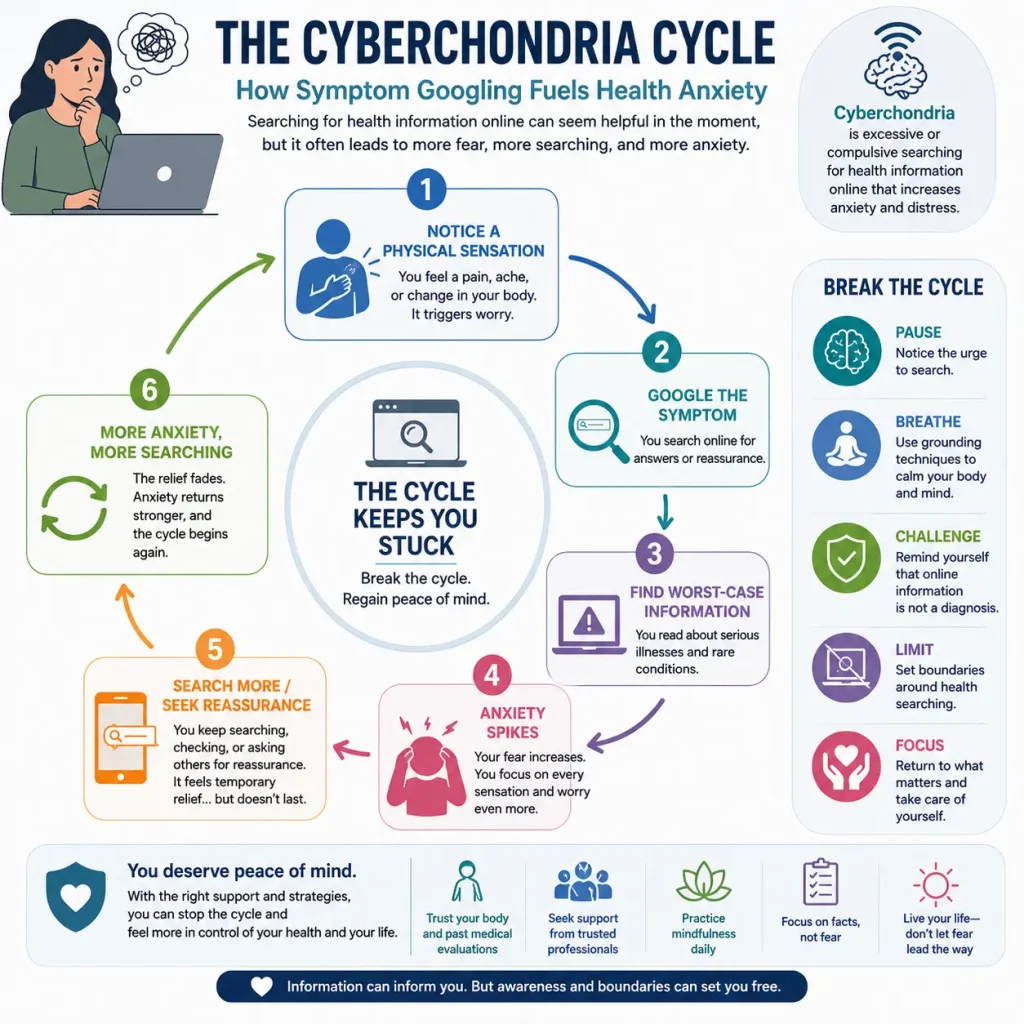
Cyberchondria is a term used to describe excessive online searching for health information that increases anxiety rather than reducing it.
Many people with health anxiety turn to search engines hoping to find reassurance about a symptom. Instead, they often encounter worst-case scenarios, rare diseases, and alarming medical content that intensifies fear.
A person who searches "headache causes", for example, may quickly encounter information about brain tumors, neurological disorders, or life-threatening conditions despite the fact that tension headaches, dehydration, and stress are far more common explanations.
Cyberchondria contributes to health anxiety by:
- Reinforcing catastrophic thinking
- Increasing body vigilance
- Encouraging reassurance-seeking behaviors
- Creating new health fears
- Strengthening the anxiety cycle
Research suggests that repeated symptom searching can become compulsive, functioning similarly to other reassurance-seeking behaviors. Effective treatment often includes reducing or eliminating online symptom searches and helping clients build tolerance for uncertainty.
Health Anxiety Symptoms: What Clients Experience
Health anxiety symptoms span cognitive, behavioral, emotional, and physical domains. Understanding the full picture helps clinicians identify the presentation accurately and explains to clients why the disorder feels so all-consuming.
Cognitive Symptoms
- Persistent preoccupation with having or developing a serious illness
- Misinterpretation of normal bodily sensations as signs of severe disease (e.g., a headache as a brain tumor, palpitations as a cardiac event)
- Catastrophic thinking: jumping to worst-case health scenarios
- Selective attention to health-related information that confirms fears
- Difficulty tolerating uncertainty about health
- Intrusive, difficult-to-control health-related thoughts
Behavioral Symptoms
- Frequent reassurance-seeking from physicians, family, friends, or therapists
- Repetitive body checking: monitoring pulse, feeling for lumps, checking skin, taking blood pressure
- Compulsive online symptom searching (“Dr. Google”)
- Avoidance of activities that might trigger physical sensations (e.g., avoiding exercise to prevent an elevated heart rate)
- Avoidance of medical settings or health information due to fear of bad news
- Frequent medical appointments or, conversely, complete avoidance of medical care
Emotional Symptoms
- Persistent anxiety, dread, or apprehension about health
- Irritability and frustration
- Brief relief after reassurance, quickly replaced by renewed anxiety
- Shame or embarrassment about health fears
Physical Symptoms
Health anxiety can produce the very physical sensations clients fear. Anxiety activates the sympathetic nervous system, generating physiological changes that are real and measurable — but not indicative of disease. This is addressed in detail in the next section.
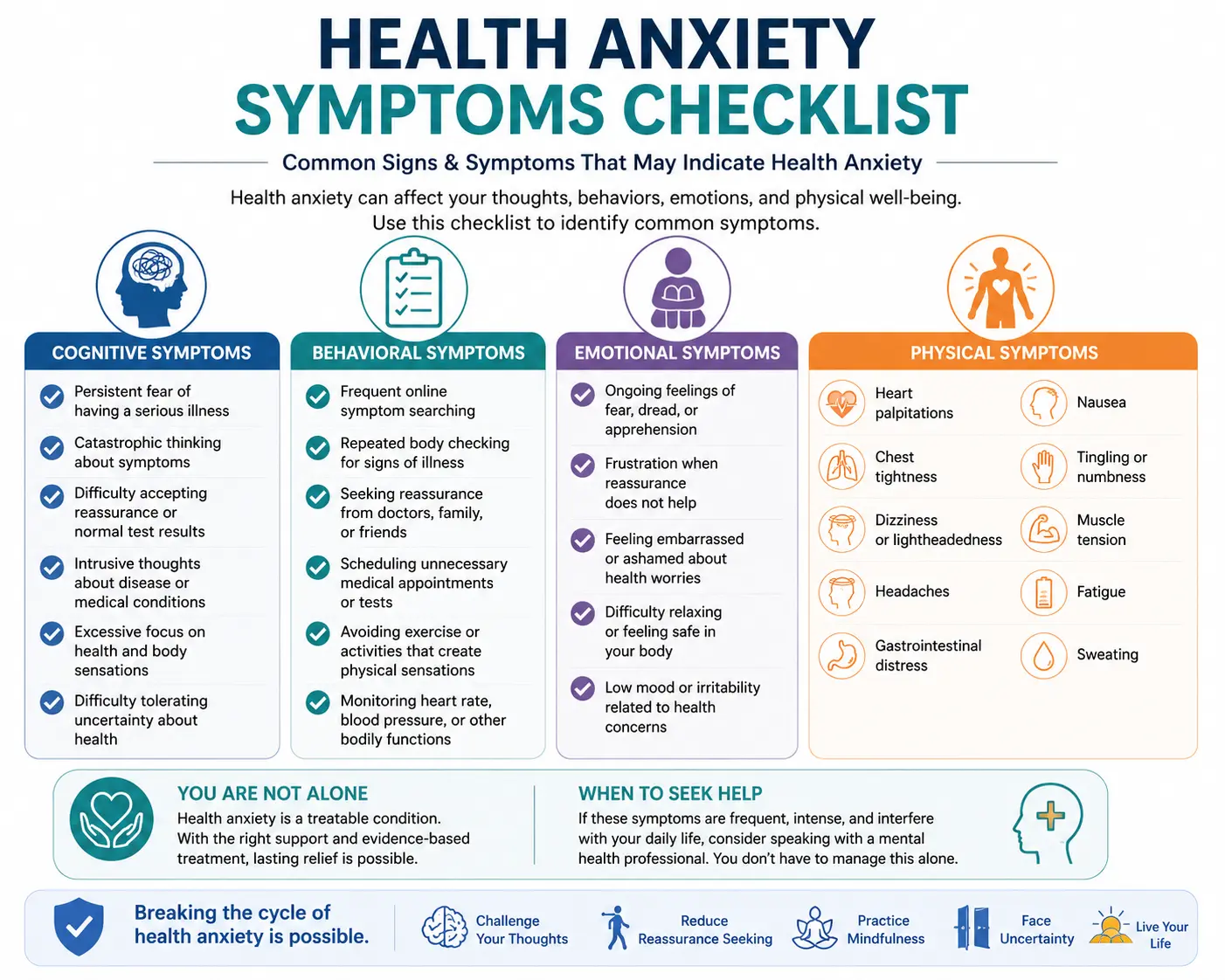
If these symptoms persist despite normal medical evaluations and begin interfering with daily life, a comprehensive health anxiety assessment may be appropriate.
Can Health Anxiety Cause Physical Symptoms?
Yes — and this is one of the most clinically important concepts for clients to understand. The anxiety response is a whole-body phenomenon. When health anxiety triggers the stress response, the physiological changes that follow are genuine. Clients are not imagining their symptoms. They are experiencing real physical sensations produced by anxiety itself.
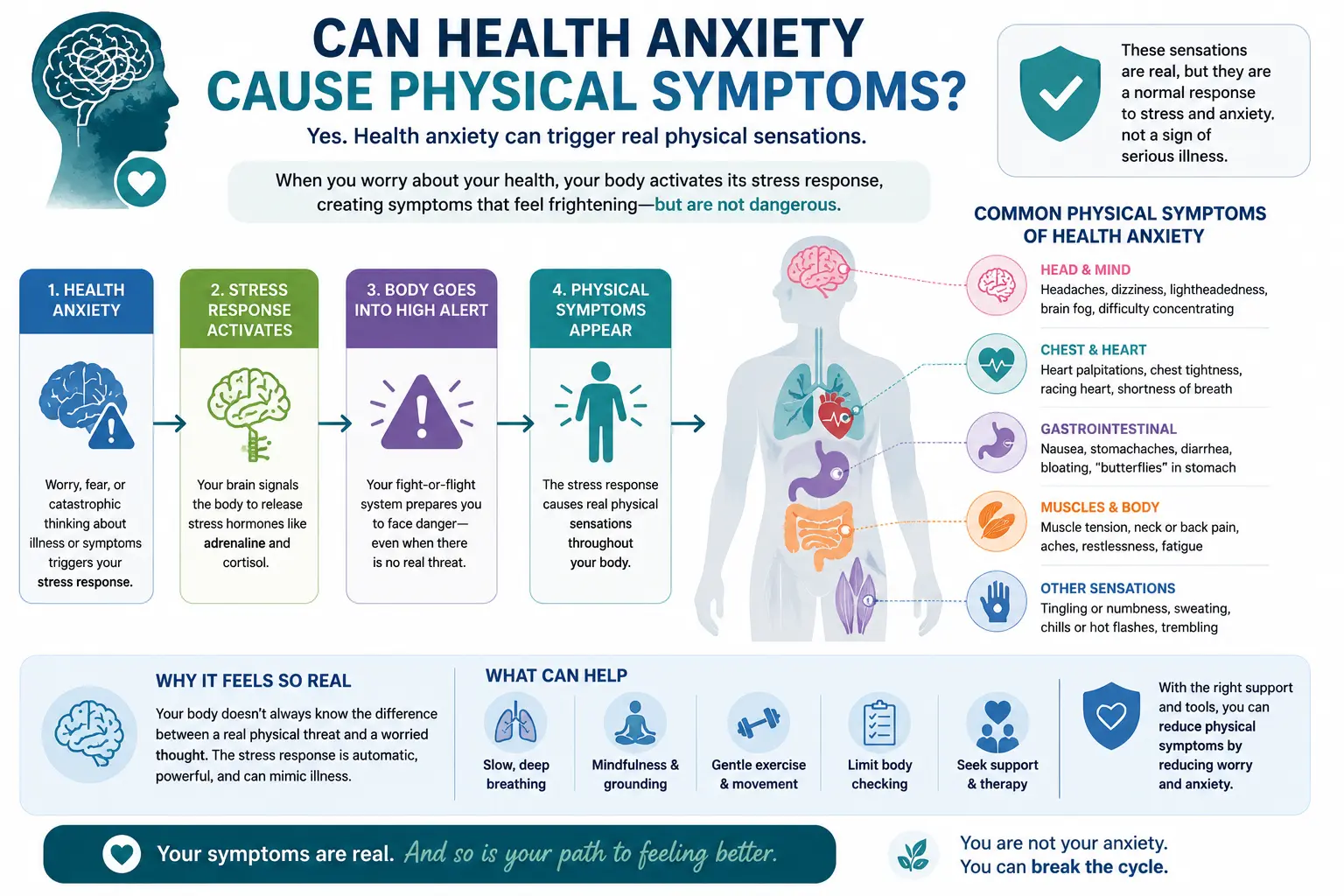
Common physical symptoms associated with health anxiety include:
- Heart palpitations and irregular heartbeat
- Chest tightness or pressure
- Dizziness or lightheadedness
- Headaches and tension in the neck and shoulders
- Nausea and gastrointestinal distress
- Tingling or numbness in the extremities
- Fatigue and difficulty concentrating
- Muscle weakness or trembling
- Shortness of breath
The problem is that these are also symptoms associated with the illnesses clients fear. A person afraid of cardiac disease notices palpitations — which were caused by anxiety — and interprets them as evidence of heart trouble. This interpretation increases anxiety, which intensifies the physical symptoms, which increases the perceived threat. This is the core mechanism of the health anxiety cycle.
Helping clients understand the mind-body connection is often one of the most liberating psychoeducational interventions in treatment. It validates their physical experience while offering an alternative interpretation that breaks the catastrophizing loop.
Signs of Health Anxiety: Recognizing the Pattern in the Room
Not every health concern signals health anxiety. Several patterns help clinicians distinguish clinical health anxiety from appropriate health monitoring.
The reassurance cycle is the defining sign: the client seeks reassurance, experiences brief relief, and then — often within hours — a new symptom or fear emerges. This differs from the sustained relief a person with a genuine medical concern typically experiences after receiving a clear diagnosis.
Symptom migration is a hallmark. Clients do not sustain a single health fear over time; rather, once reassured about the heart, they become preoccupied with the lymph nodes. Once that fear passes, a neurological symptom takes its place. The anxiety travels.
Functional impairment distinguishes clinical health anxiety from ordinary worry. Common indicators include reduced work attendance, withdrawal from social activities, inability to exercise, avoidance of medical appointments, sleep disruption from health rumination, and significant time spent on symptom research.
Insight without control is characteristic. Most clients with health anxiety recognize intellectually that their fears may be excessive. They say “I know it’s probably nothing, but…” and then proceed to describe behavior that suggests they do not believe it. This gap between intellectual knowledge and felt conviction is an important treatment target.
Assessment tools such as the Health Anxiety Inventory (HAI) and the Illness Attitude Scales can support clinical assessment and provide a baseline for measuring treatment progress.
Severe Health Anxiety: When Fear Becomes Debilitating
Severe health anxiety significantly disrupts every domain of daily life. Clients may reduce or stop working, avoid travel, limit their diet to prevent perceived health risks, withdraw from relationships, or become functionally housebound. In these presentations, the anxiety has colonized the client’s life.
Severe health anxiety is also associated with high healthcare utilization and significant financial and emotional burden — repeated urgent care visits, specialist consultations, and medical tests that yield normal results but provide no lasting relief.
These clients have often been told by medical providers that nothing is wrong, and they may feel dismissed, misunderstood, or embarrassed. By the time they arrive in a therapist’s office, some are frustrated with medical settings; others are terrified of them. Building a strong therapeutic alliance that holds the client’s distress as genuine — while clearly declining to provide reassurance — is foundational before any other intervention can gain traction.
How the Health Anxiety Cycle Works
Understanding the health anxiety maintenance cycle is essential for both clinicians and clients. Health anxiety is not simply “worry” — it is a self-reinforcing feedback loop in which each step strengthens the next.
Health anxiety is often maintained by a predictable cycle that turns ordinary physical sensations into ongoing fear. The infographic below illustrates how catastrophic interpretations, body scanning, and reassurance-seeking behaviors can reinforce anxiety over time.
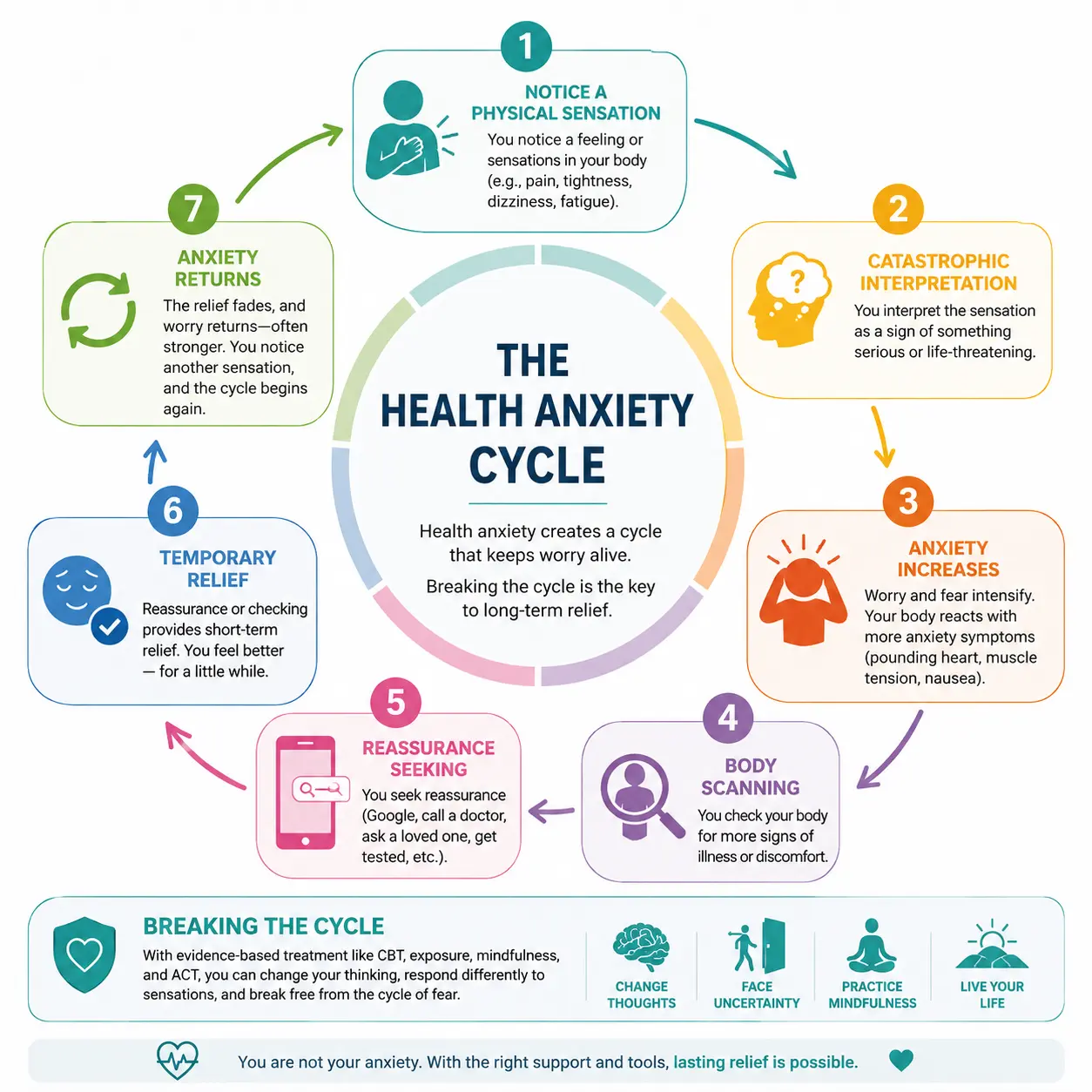
While the cycle may seem automatic, understanding each step can help clients recognize where intervention is possible. The table below breaks down the health anxiety cycle and explains how each stage contributes to ongoing worry.
| Step | What Happens | How It Maintains Health Anxiety |
|---|---|---|
| 1. Notice a physical sensation | The client becomes aware of a sensation such as pain, tightness, dizziness, fatigue, or a racing heart. | Normal bodily sensations become the focus of attention and are treated as possible warning signs. |
| 2. Interpret it catastrophically | The sensation is interpreted as evidence of a serious or life-threatening illness. | Catastrophic thinking increases fear and reinforces the belief that uncertainty is dangerous. |
| 3. Anxiety increases | Worry intensifies, and the body responds with more anxiety symptoms such as tension, nausea, sweating, or palpitations. | The stress response creates additional sensations that may be misread as further proof of illness. |
| 4. Body scanning begins | The client monitors the body closely for more symptoms or changes. | Increased attention makes ordinary sensations more noticeable and keeps the client hypervigilant. |
| 5. Seek reassurance | The client may Google symptoms, ask loved ones, contact a doctor, check vitals, or seek repeated testing. | Reassurance becomes a safety behavior that prevents the client from learning to tolerate uncertainty. |
| 6. Feel temporary relief | Anxiety decreases briefly after reassurance, checking, or receiving normal test results. | Short-term relief teaches the brain that reassurance is necessary to feel safe. |
| 7. Anxiety returns | The relief fades, a new symptom appears, or doubt returns: “What if they missed something?” | The cycle starts again, often with stronger fear and more frequent reassurance-seeking. |
The cycle is maintained by reassurance-seeking and avoidance, both of which prevent the client from learning two critical lessons: that uncertainty is tolerable, and that anxiety — including the physical symptoms it produces — will subside without catastrophe. Breaking the cycle requires interrupting both.
A useful metaphor: health anxiety functions like a faulty smoke alarm. It fires at the slightest hint of steam, not just real fire. The goal is not to remove the alarm, but to help clients learn when it’s giving a false signal, tolerate the noise without panicking, and gradually retrain their response.
Why Reassurance Doesn't Work
One of the most challenging aspects of health anxiety is that reassurance often feels helpful in the moment but ultimately makes the problem worse.
When a person with health anxiety seeks reassurance — whether from a doctor, therapist, family member, friend, or search engine — their anxiety typically decreases for a short period of time. They may feel relieved after receiving normal test results, hearing that a symptom is probably harmless, or reading information that appears reassuring.
Unfortunately, the relief rarely lasts.
Soon, doubt begins to creep back in. A new physical sensation appears, a symptom changes slightly, or a thought emerges: "What if they missed something?" The individual then seeks reassurance again, creating a cycle that repeats itself over and over.
From a behavioral perspective, reassurance acts as a safety behavior. Each time reassurance temporarily reduces anxiety, the brain learns that reassurance is necessary to feel safe. Rather than building confidence in their ability to tolerate uncertainty, the individual becomes increasingly dependent on external confirmation.
This is why health anxiety often involves:
- Repeated doctor visits
- Frequent requests for reassurance from loved ones
- Online symptom searching
- Monitoring vital signs
- Repeated body checking
The goal of treatment is not to eliminate all reassurance but to help clients gradually reduce reassurance-seeking behaviors and build tolerance for uncertainty. Over time, clients learn that anxiety naturally rises and falls on its own and that they can cope with uncertainty without constantly seeking confirmation that they are healthy.
This shift is one of the most powerful steps toward breaking the health anxiety cycle.
How is Health Anxiety Assessed?
Accurate assessment is essential because health anxiety can overlap with several other mental health conditions, including Generalized Anxiety Disorder, Obsessive-Compulsive Disorder, Panic Disorder, and Somatic Symptom Disorder.
A comprehensive health anxiety assessment typically includes:
Clinical Interview
Clinicians explore:
- Current health concerns
- Medical history
- Symptom-checking behaviors
- Reassurance-seeking patterns
- Functional impairment
- Previous mental health treatment
Health Anxiety Assessment Tools
Several validated measures can help assess symptom severity:
- Health Anxiety Inventory (HAI)
- Short Health Anxiety Inventory (SHAI)
- Whiteley Index
- Illness Attitude Scales (IAS)
These tools can help establish a baseline and track treatment progress over time.
Differential Diagnosis
Clinicians must carefully distinguish health anxiety from:
- Illness Anxiety Disorder
- Somatic Symptom Disorder
- Generalized Anxiety Disorder
- Obsessive-Compulsive Disorder
- Panic Disorder
- Genuine medical conditions
Because physical symptoms should never automatically be assumed to be anxiety-related, appropriate medical evaluation remains an important part of the assessment process.
Health Anxiety Treatment: Evidence-Based Approaches
Health anxiety responds well to treatment. The evidence base is anchored in cognitive behavioral therapy, with growing support for acceptance-based approaches. Medication and mindfulness-based interventions also play important roles for many clients.
CBT for Health Anxiety
Cognitive behavioral therapy is the most well-researched treatment for health anxiety and should be considered first-line. It works by directly targeting the cognitive distortions, body hypervigilance, and behavioral patterns that maintain the disorder. Effective CBT for health anxiety includes four core components.
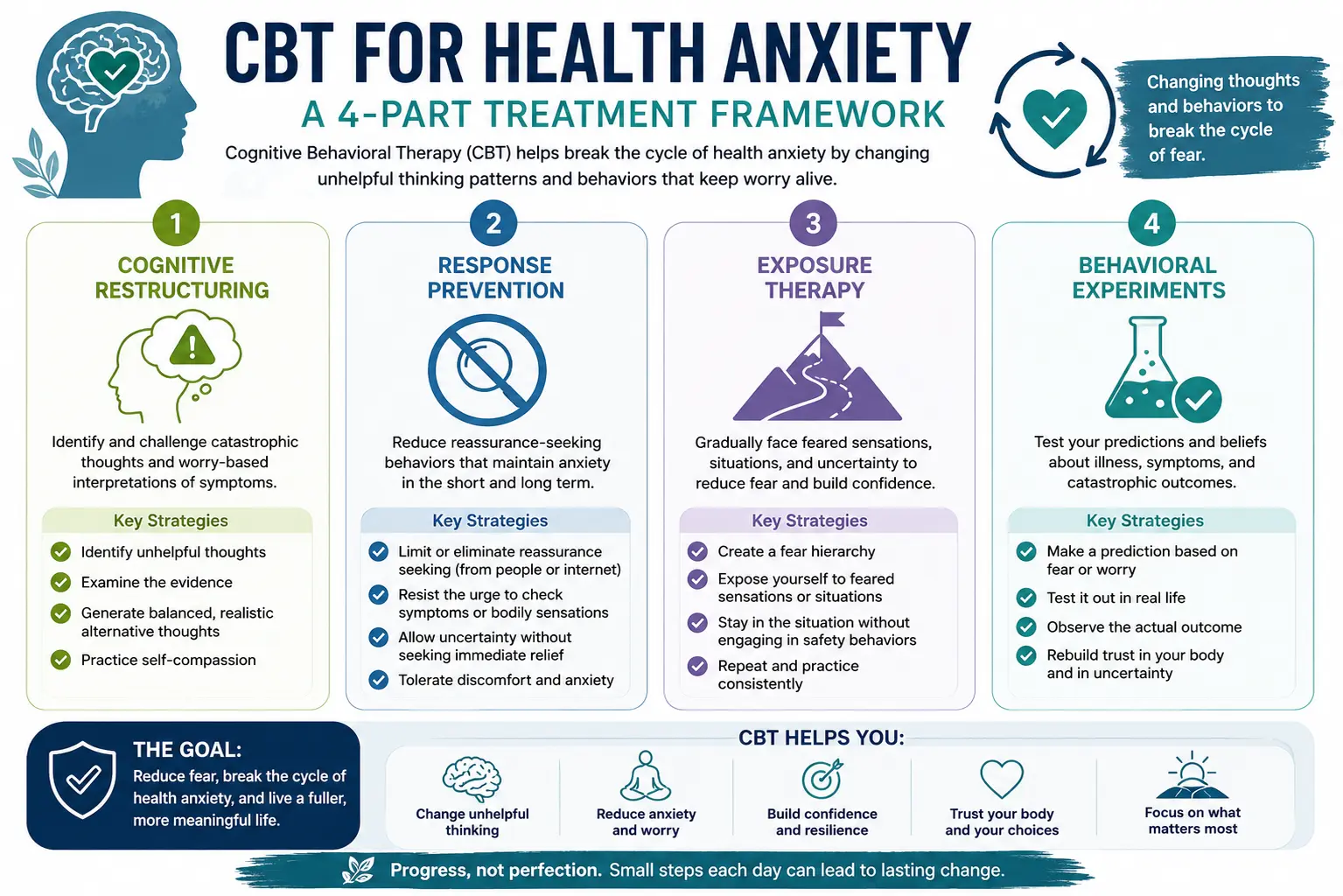
1. Cognitive Restructuring
Clients with health anxiety hold deeply held beliefs about illness that operate below conscious scrutiny: “Any unexplained symptom could be cancer,” “If I don’t get checked, I’ll miss something serious,” “Certainty about my health is necessary before I can relax.” Cognitive restructuring helps clients surface these beliefs, examine the evidence for and against them, and develop more accurate, balanced alternatives.
In session, this might sound like: “What evidence supports that this headache is life-threatening? What evidence suggests it might be something more common, like tension or stress? If a friend described this symptom to you, what would you tell them?”
Cognitive restructuring also targets the specific distortions common in health anxiety: catastrophizing, probability overestimation, and selective attention to threatening information while discounting reassuring evidence.
2. Response Prevention
Response prevention targets the reassurance-seeking and checking behaviors that maintain the anxiety cycle. The therapist psychoeducates clients on why these behaviors feel helpful in the moment but strengthen the disorder over time, and then works collaboratively to reduce them.
This does not mean sudden, complete elimination of checking behaviors. A gradual approach — delaying a symptom search by 15 minutes, then 30, then an hour; reducing doctor calls from daily to weekly — allows clients to build distress tolerance progressively. The therapist’s role in session is to decline to answer direct reassurance-seeking questions while validating the client’s distress and redirecting toward the anxiety driving the request.
3. Exposure Therapy
Interoceptive exposure involves deliberately inducing feared bodily sensations in a controlled context. A client afraid that an elevated heart rate signals cardiac disease might engage in one minute of light exercise in session, observe what happens, and notice that the sensation, though uncomfortable, does not lead to the feared outcome. Repeated exposure extinguishes the conditioned fear response.
Situational exposure applies the same principle to avoided contexts: driving past a hospital, reading a health article, attending a medical appointment. Exposure is built hierarchically, beginning with lower-distress situations and progressing as tolerance builds.
4. Behavioral Experiments
Behavioral experiments test feared predictions directly, providing experiential evidence that verbal reassurance cannot. Rather than debating whether a symptom is dangerous, the client and therapist formulate a specific, testable prediction: “If I don’t check my pulse for three hours, my anxiety will become unmanageable and something bad will happen.” The client runs the experiment, observes the actual outcome, and discusses what was learned.
Because the evidence comes from the client’s own experience rather than the therapist’s authority, behavioral experiments are often more persuasive than any amount of cognitive discussion. They are particularly powerful for clients who have strong insight but struggle to translate it into felt belief.
Acceptance and Commitment Therapy (ACT) for Health Anxiety
ACT offers a complementary framework to CBT that many clients find transformative. Rather than challenging catastrophic beliefs directly, ACT focuses on changing the client’s relationship to their thoughts and sensations — and on redirecting their energy toward values-based living.
1. Acceptance and Psychological Flexibility
A central ACT concept is psychological flexibility: the ability to experience difficult thoughts and feelings without being controlled by them. Clients with health anxiety have typically tried hard to eliminate or control their anxiety, often through checking and avoidance — strategies that paradoxically intensify it. ACT invites a different stance: the willingness to have the discomfort while continuing to move in a valued direction.
For health anxiety specifically, this means clients practice accepting uncertainty rather than seeking certainty. The therapeutic message is not “your symptoms are not dangerous” but rather “uncertainty is an inescapable feature of being alive, and you can build a meaningful life without resolving it.”
2. Values-Based Action
A key ACT question is: what has health anxiety cost this client in terms of their values and their life? Identifying what the client has stopped doing — exercising, traveling, connecting with family, pursuing career goals — creates motivation for change that pure symptom reduction does not. The therapist helps clients take small, deliberate steps toward their values despite the discomfort, shifting the therapeutic goal from anxiety elimination to life expansion.
3. Defusion and Self-Compassion
Cognitive defusion techniques help clients create distance from their health-related thoughts, observing them as mental events rather than facts. “I notice I’m having the thought that this headache means something serious” is a different psychological stance than “This headache means something serious.”
Self-compassion is also an important component, particularly for clients who carry shame about their fears. Understanding that health anxiety is a learned response, not a character flaw or sign of weakness, reduces the secondary suffering that often compounds the primary anxiety.
Health Anxiety Meditation and Mindfulness
Mindfulness-based approaches reduce health anxiety by helping clients change their relationship with physical sensations. The goal is not to stop noticing the body — that is neither possible nor desirable — but to shift from alarmed monitoring to neutral observation.
Clients learn to observe sensations with curiosity rather than dread: noting temperature, pressure, movement, and intensity without immediately assigning threatening meaning. In session, a therapist might guide: “Notice the sensation in your chest and describe it neutrally — temperature, movement, intensity — without labeling it as dangerous.”
Grounding techniques and present-moment focus interrupt the catastrophic spiral that health anxiety triggers. Mindfulness must be introduced carefully with health anxiety clients, however. If framed as a way to “check in with the body,” it can inadvertently increase hypervigilance. The emphasis should be on non-judgmental awareness and present-moment engagement, explicitly decoupled from symptom monitoring.
Health Anxiety Medication
For clients with moderate-to-severe health anxiety, medication can be a useful adjunct to therapy. SSRIs (selective serotonin reuptake inhibitors) have the strongest evidence base and are typically first-line when pharmacological treatment is indicated. SNRIs are also used in some presentations.
Short-term anxiolytics (e.g., benzodiazepines) are generally avoided as a primary treatment due to dependence risk and their inability to address the underlying cognitive and behavioral patterns. They may have a limited role in specific situations, such as acute distress before a feared medical procedure.
Clients with health anxiety are often apprehensive about medication — sometimes due to fears about side effects, sometimes due to concerns about what “needing” medication means. A non-judgmental, psychoeducational framing is helpful: medication reduces the volume of the anxiety signal while therapy addresses the underlying pattern that generates it. Behavioral health clinicians should work collaboratively with prescribing providers, particularly given that these clients often have concurrent relationships with primary care physicians and psychiatrists.
Practical Strategies for Clinicians
Beyond specific interventions, several clinical principles make a consistent difference when working with health anxiety.
Avoid reassurance in session. This is the single most important clinical rule and the most counterintuitive. Responding to reassurance-seeking questions — even with gentle, hedged answers — reinforces the cycle. Instead, validate the distress and redirect: “I hear how frightening this feels. Rather than trying to answer whether the symptom is dangerous, let’s look at what’s driving the fear and what we can do about it.”
Use solution-focused questions to build awareness of client strengths and existing coping. “Can you tell me about a recent time when you noticed a physical symptom but didn’t feel as anxious as usual? What was different in that moment?” These questions surface resilience, identify what the client is already doing well, and build hope.
Collaborate on an anxiety management plan. Structured between-session work — specifying response prevention goals, identifying triggers, recording behavioral experiments, and tracking patterns — maintains momentum between appointments. Handouts, worksheets, and structured self-monitoring tools all support this process.
Acknowledge the reality of physical symptoms. Clients who feel their physical experience is being dismissed will disengage. Affirming that the sensations are real, while offering an alternative explanation for their cause, is both accurate and therapeutically essential.
How to Stop Health Anxiety
There is no instant cure for health anxiety, but several evidence-based strategies can significantly reduce symptoms and improve quality of life.
Limit Symptom Googling
Repeated online searches often increase anxiety rather than resolve it. Delaying or eliminating symptom searches is one of the most effective ways to interrupt the health anxiety cycle.
Reduce Reassurance-Seeking
Repeatedly asking doctors, family members, or friends for reassurance may provide temporary relief but ultimately strengthens health anxiety over time.
Challenge Catastrophic Thinking
Learn to identify worst-case interpretations and evaluate more realistic explanations for physical sensations and health-related concerns.
Practice Tolerating Uncertainty
Complete certainty about health is impossible. Recovery involves learning to tolerate uncertainty rather than trying to eliminate it.
Use Mindfulness Skills
Mindfulness helps clients observe bodily sensations, thoughts, and emotions without immediately interpreting them as signs of danger.
Stay Engaged in Valued Activities
Avoidance allows health anxiety to grow. Continuing to engage in work, relationships, exercise, hobbies, and meaningful activities helps weaken anxiety's influence.
Seek Professional Treatment
CBT remains the gold-standard treatment for health anxiety, with growing evidence supporting ACT, exposure-based approaches, and mindfulness-based interventions.
Recovery Is Possible
There is no instant cure for health anxiety, but consistent use of evidence-based strategies can significantly reduce symptoms, improve daily functioning, and help clients regain confidence in their ability to live with uncertainty.
How ICANotes Helps Clinicians Document Health Anxiety
Treating health anxiety requires more than clinical expertise — it also requires clear, defensible documentation that accurately reflects symptom presentation, treatment interventions, medical necessity, and client progress over time.
Clinicians working with health anxiety often need to document complex patterns such as reassurance-seeking behaviors, symptom checking, catastrophic interpretations of bodily sensations, avoidance, functional impairment, and response to interventions like cognitive restructuring, exposure therapy, and mindfulness training. Thorough documentation is essential for continuity of care, treatment planning, utilization review, and payer audits.
ICANotes helps simplify this process with behavioral health-specific documentation tools designed to support evidence-based care.
Efficient Progress Notes
ICANotes' point-and-click note templates make it easy to document common health anxiety presentations without starting from a blank page. Clinicians can quickly capture symptoms, client statements, mental status findings, risk assessments, and therapeutic interventions while maintaining individualized clinical documentation.
Treatment Planning Support
Creating treatment plans for health anxiety often involves goals related to reducing reassurance-seeking, increasing tolerance of uncertainty, challenging catastrophic thinking, and improving daily functioning. ICANotes helps clinicians build comprehensive treatment plans with customizable goals, objectives, and interventions that align with CBT, ACT, mindfulness-based approaches, and other evidence-based treatment modalities.
Documenting Medical Necessity
Health anxiety frequently affects occupational functioning, social relationships, sleep, concentration, and quality of life. ICANotes provides structured documentation tools that help clinicians clearly demonstrate symptom severity, functional impairment, treatment rationale, and progress toward goals—important elements when supporting medical necessity.
Tracking Progress Over Time
Recovery from health anxiety is often gradual. Clients may experience reductions in symptom checking, fewer reassurance-seeking behaviors, improved engagement in valued activities, and greater tolerance for uncertainty long before anxiety disappears completely. ICANotes helps clinicians track these meaningful changes across sessions and maintain a clear record of treatment progress.
By streamlining documentation, treatment planning, and progress tracking, ICANotes allows clinicians to spend less time on paperwork and more time helping clients break free from the cycle of health anxiety.
Spend Less Time Documenting Health Anxiety Sessions
Whether you're documenting CBT interventions, exposure exercises, reassurance-seeking behaviors, treatment plan updates, or progress toward uncertainty tolerance goals, ICANotes helps you create thorough clinical documentation in a fraction of the time.
With ICANotes You Can:
- Document health anxiety symptoms and functional impairment quickly
- Create treatment plans with goals, objectives, and interventions
- Capture CBT, ACT, mindfulness, and exposure-based interventions
- Demonstrate medical necessity with structured documentation
- Track client progress over time with less administrative burden
- Reduce time spent writing progress notes after sessions
Join thousands of behavioral health professionals who use ICANotes to streamline documentation, improve compliance, and spend more time focused on client care.
Start Your Free Trial
See how ICANotes can help you document health anxiety treatment faster and more efficiently.
Related Resources
Looking for additional resources on anxiety assessment, treatment planning, evidence-based interventions, and clinical documentation? Explore these related articles from the ICANotes blog.
Frequently Asked Questions About Health Anxiety
What is health anxiety?
Health anxiety is persistent, excessive fear of having or developing a serious illness, even when medical evaluations are normal. It is driven by misinterpretation of physical sensations, catastrophic thinking, and behaviors like reassurance-seeking and symptom checking that temporarily reduce anxiety but strengthen it over time.
Can health anxiety cause physical symptoms?
Yes. The anxiety response triggers real physiological changes—heart palpitations, chest tightness, dizziness, headaches, nausea, fatigue, and tingling—that clients may interpret as signs of illness, creating a self-reinforcing cycle. The symptoms are real; their cause is anxiety, not disease.
How do I know if I have health anxiety?
Key signs include persistent worry about illness despite normal test results, repeated reassurance-seeking that provides only temporary relief, compulsive symptom checking or Googling, avoidance of activities that trigger physical sensations, and significant disruption to daily life. A mental health clinician can provide a formal assessment.
What is the difference between health anxiety and illness anxiety disorder?
Health anxiety is a descriptive term for a pattern of excessive illness worry. Illness Anxiety Disorder is a formal DSM-5-TR diagnosis applied when the anxiety meets specific clinical criteria for severity, duration, and functional impairment.
Does CBT help health anxiety?
Yes. CBT is the most well-supported treatment for health anxiety. It includes cognitive restructuring, response prevention, exposure therapy, and behavioral experiments. Most people show meaningful improvement with a focused course of CBT.
What medication is used for health anxiety?
SSRIs are the most commonly prescribed medications for health anxiety, with SNRIs used in some cases. Medication is typically most effective when combined with therapy. A psychiatrist or prescribing primary care provider can discuss options based on individual presentation.
Can health anxiety go away?
Yes. With appropriate treatment, health anxiety is highly treatable. Many clients experience substantial reduction in symptoms and a return to full functioning. Even without complete elimination of anxiety, treatment can significantly reduce the disorder’s grip on daily life.
How long does treatment take?
A focused CBT course for health anxiety typically runs 12–20 sessions, though more severe presentations may require longer treatment. Some clients benefit from ongoing maintenance sessions after initial improvement. Progress depends on engagement with between-session practice, particularly response prevention and exposure work.
Is health anxiety the same as hypochondria?
Hypochondria is an older term that is no longer used as a formal diagnosis in the DSM-5-TR. Today, clinicians typically use the terms health anxiety, Illness Anxiety Disorder, or Somatic Symptom Disorder depending on the presentation and severity.
Can health anxiety develop after a serious illness?
Yes. Experiencing a serious illness personally or witnessing a significant illness in a loved one can increase sensitivity to physical symptoms and contribute to the development of health anxiety.
Why doesn't reassurance help health anxiety?
Reassurance often provides short-term relief but does not address the underlying fear. Over time, repeated reassurance teaches the brain that anxiety can only be managed through checking, testing, or seeking confirmation from others.
Can children and teenagers experience health anxiety?
Yes. Health anxiety can occur at any age. Children and adolescents may become excessively concerned about physical symptoms, illnesses, or medical conditions, particularly following exposure to illness, medical events, or health-related information.
Is health anxiety a form of OCD?
Health anxiety and OCD share some similarities, including intrusive thoughts and compulsive behaviors. However, they are distinct conditions. Some individuals may meet criteria for both disorders, making careful assessment important.
Recent Posts






Diane Bigler
LCSW, LSCSW
About the Author
Diane Bigler, LCSW, LSCSW, is a Licensed Clinical Social Worker in Missouri and Kansas with over 25 years of experience in the mental health field. She has held clinical positions as an outpatient and in-home therapist and clinical supervisor in diverse settings. Diane was an Adjunct Professor of Social Work for 10 years at The University of Kansas, School of Social Welfare and a Field Liaison and Field Instructor. She has also held administrative positions as a Program Director and Coordinator. Diane is a popular local and national trainer on a wide variety of mental health and workplace development topics for clinicians and corporations and has facilitated over 500 training courses in the last few years. Visit her website http://www.