
Blog > Treatment Strategies > Complex Trauma & CPTSD Treatment: A Clinician's Guide
Complex Trauma and CPTSD: A Clinician's Guide to Diagnosis and Treatment
Complex post-traumatic stress disorder (CPTSD) is a trauma-related condition that develops after prolonged or repeated interpersonal trauma, requiring a more nuanced and phased treatment approach than traditional PTSD. This clinician-focused guide explores the key differences between CPTSD and PTSD, outlines core symptoms including disturbances in self-organization, and reviews evidence-based treatment modalities such as EMDR, trauma-focused CBT, DBT, and STAIR. Designed for behavioral health professionals, this resource also covers diagnostic considerations, the four F trauma responses, and best practices for documenting and managing complex trauma cases in clinical settings.


Last Updated: April 29, 2026

What You'll Learn
- How to differentiate CPTSD vs PTSD, including ICD-11 diagnostic criteria and key clinical distinctions
- The core symptoms of complex trauma, including disturbances in self-organization (DSO)
- How to recognize and work with the four F trauma responses: fight, flight, freeze, and fawn
- Evidence-based treatment approaches for CPTSD, including EMDR, trauma-focused CBT, DBT, and STAIR
- How to apply the three-phase treatment model for complex trauma (stabilization, processing, integration)
- Best practices for diagnosing CPTSD in DSM-5 vs ICD-11 settings
- How to differentiate CPTSD from borderline personality disorder and other comorbid conditions
- Practical strategies for treatment planning, documentation, and managing long-term trauma care
Contents
-
What is Complex Trauma? Definitions, Causes & Clinical Impact
- CPTSD vs PTSD: Key Diagnostic Differences
- Recognizing CPTSD Symptoms in Clinical Practice
- Evidence-Based Treatment Approaches for Complex Trauma and CPTSD
- Building Resilience in Clients with Complex Trauma and CPTSD
- Helping Clients with Complex Trauma in Therapy: Practical Strategies
- Addressing Common Misconceptions about Complex Trauma & CPTSD
- FAQ: Complex Trauma and CPTSD
- The Long Arc of Complex Trauma Work
Quick Definition
What is complex trauma (CPTSD)?
Complex post-traumatic stress disorder (CPTSD) is a trauma-related mental health condition that develops in response to prolonged or repeated traumatic experiences — most often interpersonal in nature, such as childhood abuse, domestic violence, captivity, or chronic neglect. Recognized in the ICD-11 as distinct from PTSD, CPTSD includes the core PTSD symptoms plus disturbances in self-organization: persistent emotional dysregulation, negative self-concept, and difficulty maintaining relationships.
For behavioral health clinicians, working with complex trauma is some of the most demanding — and most rewarding — work in the field. It requires accurate differential diagnosis, a phased treatment approach, and a sustained therapeutic relationship that itself can be reparative. This guide walks through what complex trauma is, how to recognize CPTSD in clients, and the evidence-based treatment approaches that work, with practical considerations for documentation, treatment planning, and clinician self-care.
What is Complex Trauma? Definition, Causes, and Clinical Impact
Complex trauma refers to exposure to multiple, prolonged, or repeated traumatic events — typically of an interpersonal nature — and the wide-ranging clinical consequences of that exposure. Unlike a single discrete trauma, complex trauma occurs in contexts where escape is difficult or impossible, often during developmental periods, and frequently at the hands of caregivers or others with whom the survivor has an ongoing relationship. The cumulative impact reaches beyond classic PTSD symptomatology to affect identity, attachment, affect regulation, and meaning-making.
Common contexts in which complex trauma develops include:
- Abuse — ongoing physical, sexual, emotional, or psychological abuse, particularly in childhood
- Scarcity and neglect — chronic deprivation of physical, emotional, or relational needs during developmental years
- Intergenerational trauma — trauma transmitted across generations through family systems, parenting patterns, and cultural inheritance
- Domestic and interpersonal violence — repeated exposure to violence within intimate or family relationships, including coercive control
- Systemic and structural trauma — ongoing exposure to discrimination, displacement, community violence, war, or oppression
The clinical impact of complex trauma is broad. Survivors frequently present with co-occurring conditions including major depression, anxiety disorders, dissociative disorders, eating disorders, substance use disorders, and somatic conditions. Complex trauma often shapes attachment patterns, sense of self, and capacity to trust — elements that show up not only in symptom presentation but in the therapy relationship itself. Effective treatment requires recognizing this breadth rather than narrowing the focus to PTSD symptoms alone.
CPTSD vs PTSD: Key Diagnostic Differences
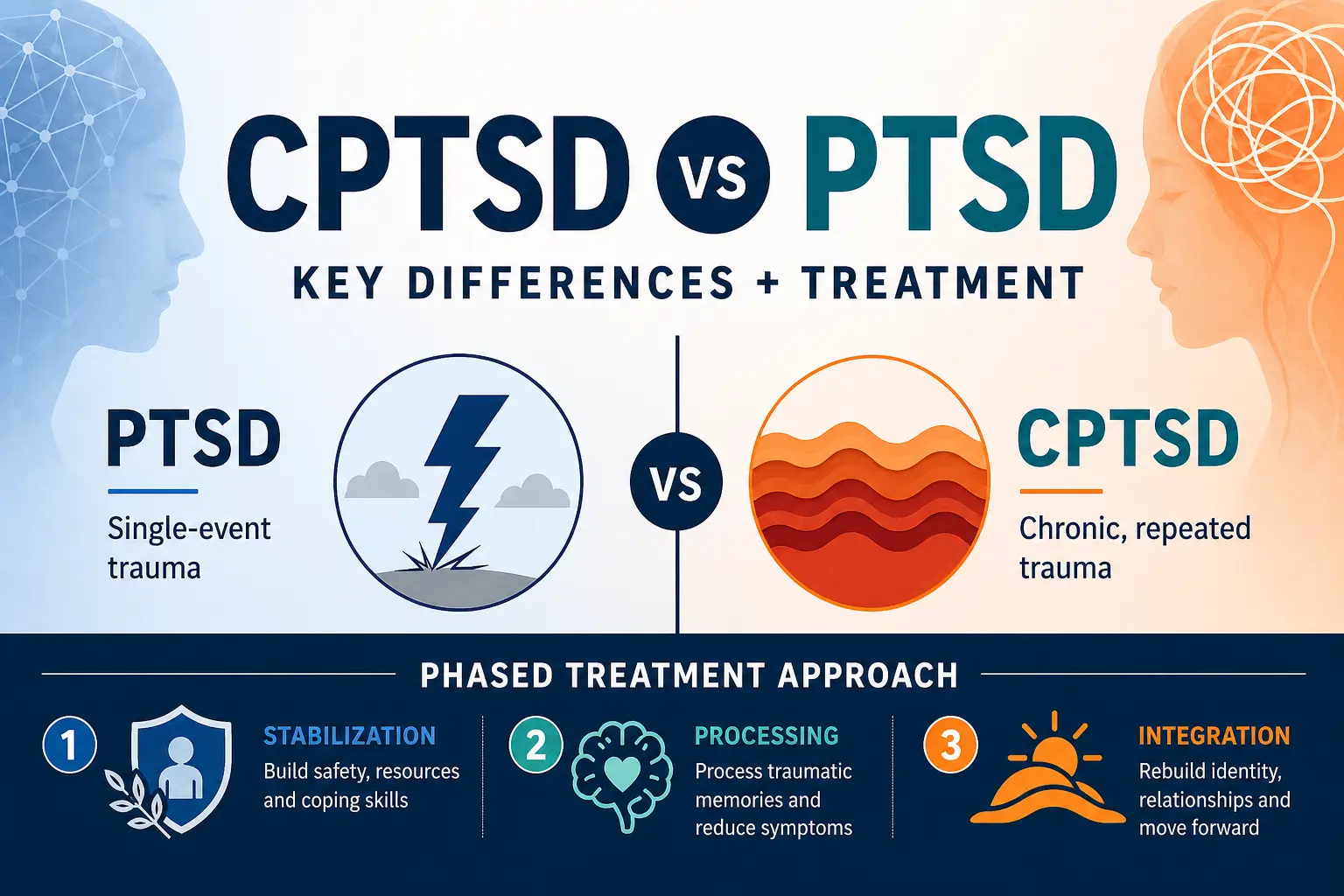
While complex PTSD shares the core features of PTSD, it is recognized in the ICD-11[1] as a distinct diagnosis with its own clinical profile. Understanding the differences is essential for accurate diagnosis and treatment planning.
CPTSD vs PTSD Comparison
| PTSD | CPTSD | |
|---|---|---|
| ICD-11 classification | 6B40 | 6B41 |
| Typical cause | Single discrete traumatic event (e.g., assault, accident, combat exposure) | Prolonged or repeated trauma, often interpersonal — childhood abuse, intimate partner violence, captivity, ongoing neglect |
| Core symptom clusters | Re-experiencing, avoidance, persistent threat perception | All PTSD symptoms plus disturbances in self-organization (DSO) |
| Self-concept | Generally intact pre-trauma identity | Persistent negative self-concept; pervasive feelings of worthlessness, guilt, or shame |
| Emotional regulation | Episodic dysregulation tied to specific triggers | Chronic difficulty regulating emotions across contexts |
| Relational functioning | Variable; relationships often preserved | Persistent difficulty feeling close to or trusting others |
| Treatment duration | Often shorter, protocol-driven (e.g., 12–16 sessions of PE or CPT) | Typically longer; phased treatment over months to years |
| DSM-5 status | Recognized diagnosis (309.81) | Not a separate DSM-5 diagnosis; may present with PTSD + comorbid features |
A clinical note on DSM vs ICD: The DSM-5 does not currently recognize CPTSD as a separate diagnosis. Clinicians working in DSM-aligned settings often capture the full clinical picture by diagnosing PTSD with relevant comorbid features (e.g., persistent depressive disorder, dissociative symptoms) and documenting the chronicity and interpersonal nature of the trauma. ICD-11 adoption is making the differential more straightforward in jurisdictions and systems that have transitioned.
Recognizing CPTSD Symptoms in Clinical Practice
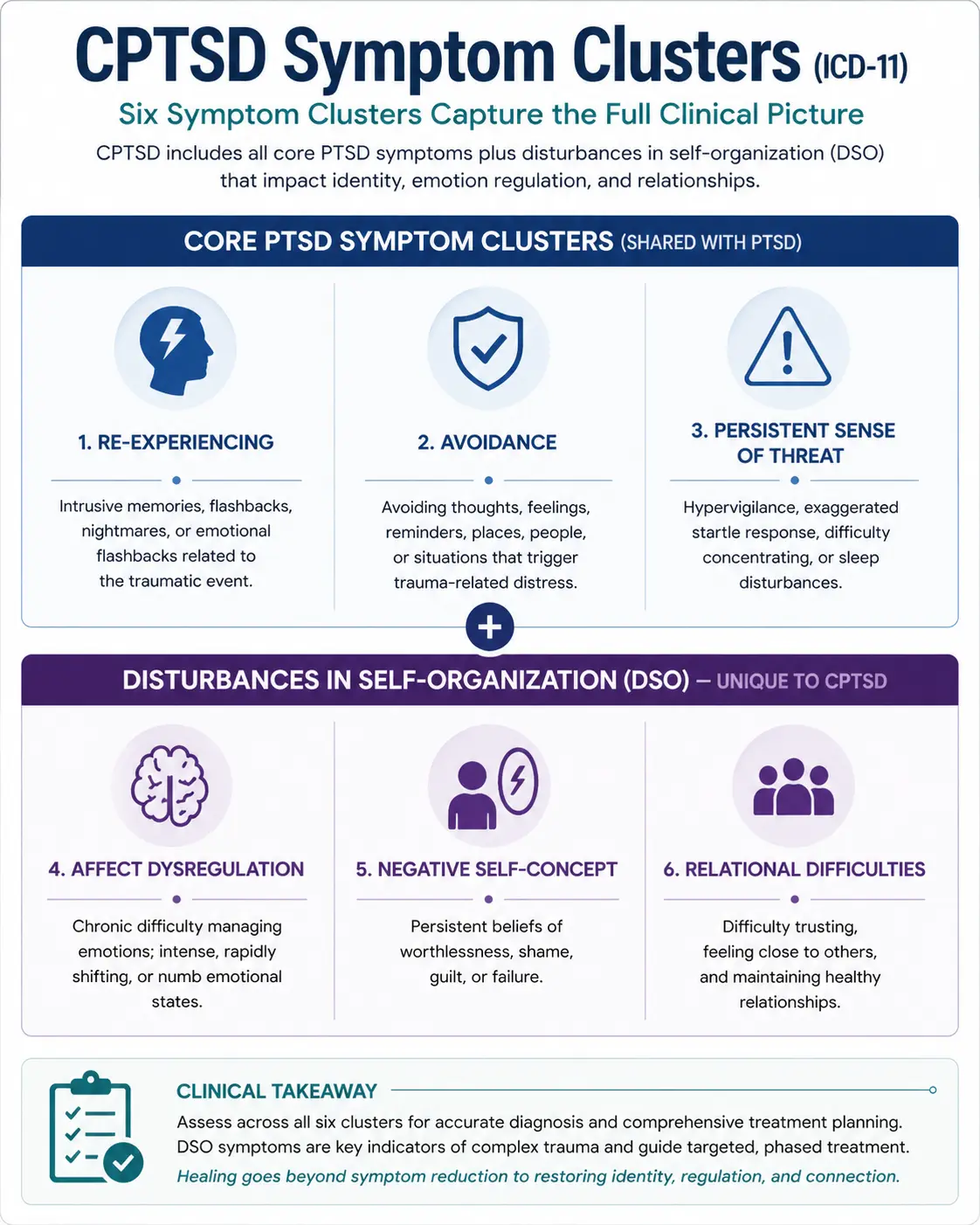
CPTSD presents across six symptom clusters: the three core PTSD clusters plus three disturbances in self-organization (DSO) that are unique to the complex presentation. A complete clinical picture requires assessment across all six.
Core PTSD Symptom Clusters:
- Re-experiencing — intrusive memories, flashbacks, nightmares; in CPTSD, these often present as emotional flashbacks rather than discrete sensory replays
- Avoidance — active avoidance of trauma reminders, including thoughts, feelings, places, people, and conversations
- Persistent sense of current threat — hypervigilance, exaggerated startle response, sleep disturbance, irritability
Disturbances in Self-Organization (CPTSD-Specific):
- Affective dysregulation — difficulty regulating emotions; may present as heightened reactivity, emotional numbing, or both
- Negative self-concept — persistent beliefs of being diminished, defeated, or worthless; pervasive shame and guilt linked to the traumatic experiences
- Disturbances in relationships — persistent difficulties feeling close to others, sustaining relationships, or trusting others’ intentions
In addition to these core clusters, clients with CPTSD frequently present with somatic symptoms (chronic pain, gastrointestinal issues, headaches), dissociative phenomena ranging from mild depersonalization to more pronounced dissociative experiences, and disturbances in systems of meaning — a sense that the world is unsafe, that other people cannot be trusted, or that life has lost coherence.
The Four Defense Mechanisms of CPTSD
The four F responses, originally articulated by Pete Walker[2], describe survival-based defense patterns commonly observed in clients with complex trauma. Recognizing a client’s dominant pattern can inform treatment planning and help clinicians make sense of in-session dynamics.
- Fight — aggression, irritability, confrontation, controlling behaviors; the survivor learned that pushing back, even pre-emptively, was protective
- Flight — avoidance, busyness, perfectionism, workaholism; the survivor learned that staying ahead of threat or out of reach was protective
- Freeze — dissociation, numbness, immobility, withdrawal; the survivor learned that disappearing internally or behaviorally reduced harm
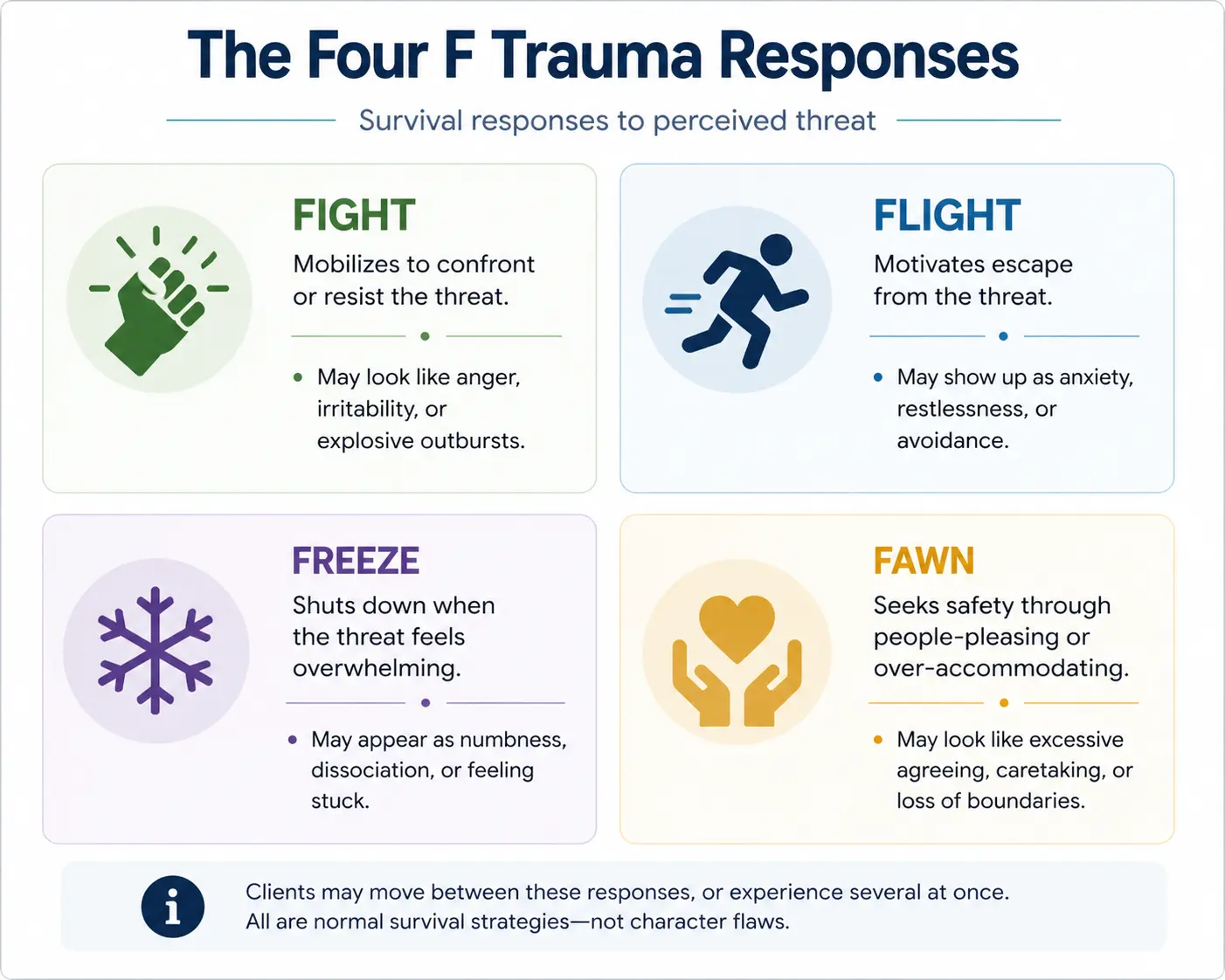
- Fawn — people-pleasing, appeasement, loss of self in relationships; the survivor learned that meeting others’ needs and suppressing their own was the safest position
Most clients show a primary pattern with secondary features, and patterns may shift over the course of treatment. The therapeutic goal is not to eliminate these responses but to expand the client’s repertoire so that the response is chosen rather than automatic.
The Critical Role of Therapists in Diagnosis
Accurate diagnosis of CPTSD is one of the most clinically consequential decisions in trauma work. The differential is genuinely complex: CPTSD overlaps significantly with borderline personality disorder, dissociative disorders, persistent depressive disorder, and several anxiety disorders. Misdiagnosis can lead to treatment that misses the trauma etiology entirely, or to interventions that re-traumatize.
Best practices in CPTSD assessment include: a careful, paced trauma history that does not push for detail beyond what the client can tolerate; use of validated screening instruments such as the International Trauma Questionnaire (ITQ)[3]; assessment for comorbid conditions and dissociative experiences; and consideration of cultural, social, and structural context. Diagnosis should be a collaborative formulation, not a label imposed.
A documentation note for clinicians
Trauma work generates dense documentation: phase transitions, evolving risk assessments, integrative treatment plans, and progress notes that capture non-linear clinical arcs. Behavioral-health-specific EHR systems with trauma-informed templates significantly reduce documentation burden — particularly for clinicians carrying mixed caseloads of acute and complex trauma presentations.
Evidence-Based Treatment Approaches for Complex Trauma and CPTSD
There is no single best treatment for complex PTSD. Decades of clinical research and consensus guidelines from organizations including the International Society for Traumatic Stress Studies (ISTSS)[5] point to a phased, integrative approach that prioritizes safety and stabilization before engaging in trauma processing. The treatment pathway should be tailored to each client’s symptom profile, comorbidities, attachment history, and capacity for affect regulation.
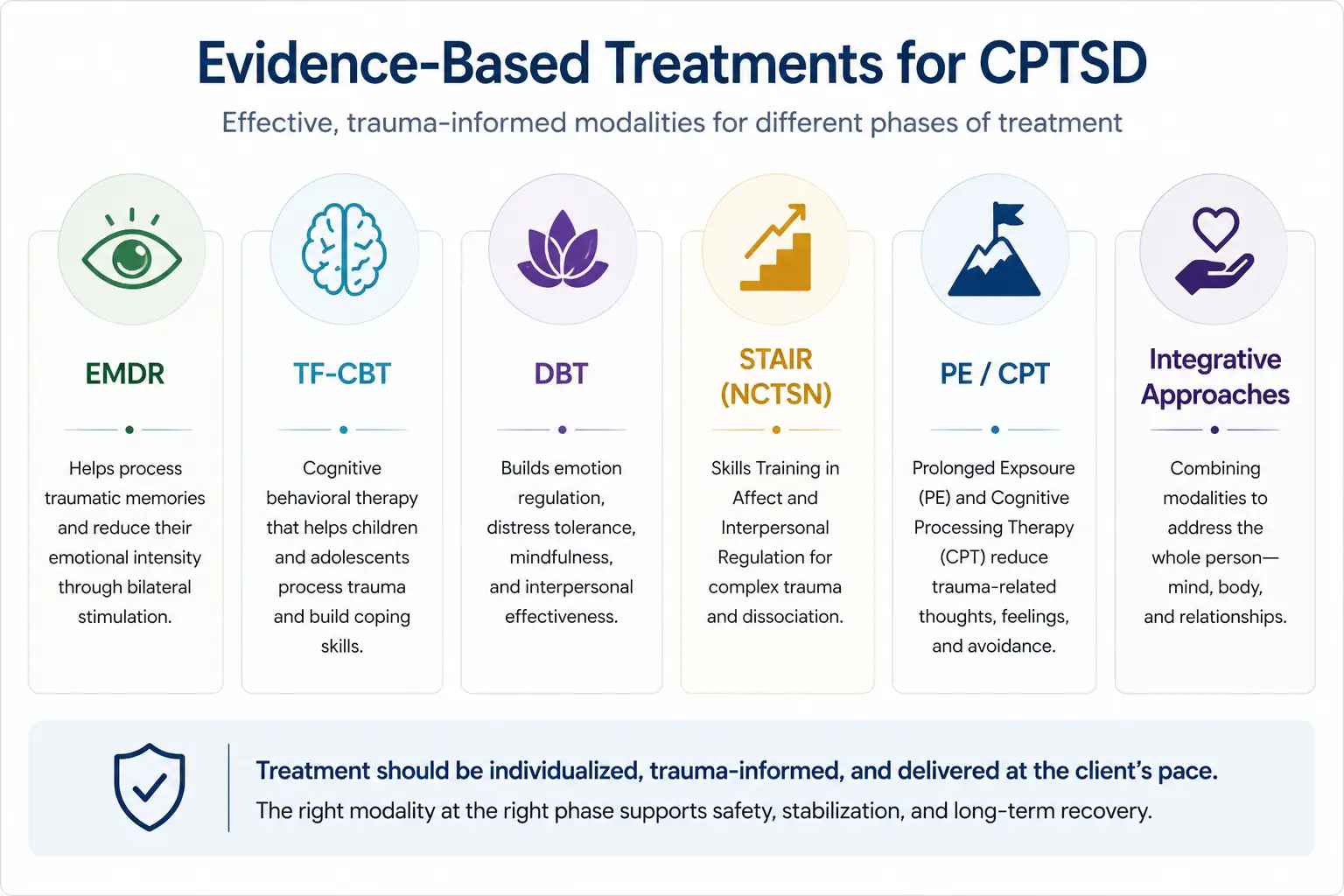
The following evidence-based modalities are commonly used in phased CPTSD treatment.
The Three-Phase Treatment Model
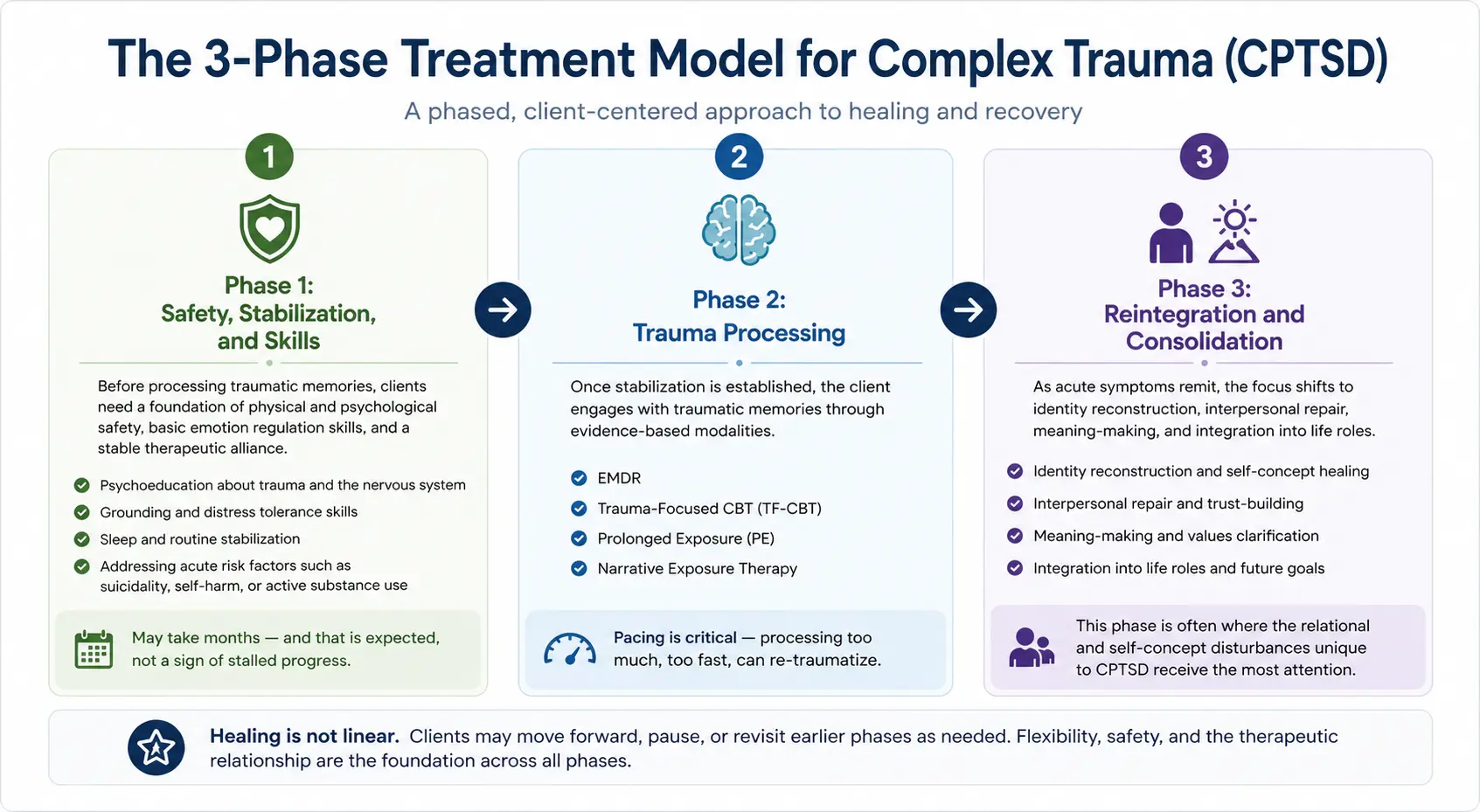
The phased approach to complex trauma treatment, originally articulated by Judith Herman[4] and refined in the ISTSS expert consensus guidelines, organizes care into three sequential but flexible phases.
Phase 1: Safety, Stabilization, and Skills
Before processing traumatic memories, clients need a foundation of physical and psychological safety, basic emotion regulation skills, and a stable therapeutic alliance. This phase often includes psychoeducation about trauma and the nervous system, grounding and distress tolerance skills, sleep and routine stabilization, and addressing acute risk factors such as suicidality, self-harm, or active substance use. For many clients with complex presentations, this phase can take months — and that is expected, not a sign of stalled progress.
Phase 2: Trauma Processing
Once stabilization is established, the client engages with traumatic memories through evidence-based modalities such as EMDR, trauma-focused CBT, prolonged exposure, or narrative exposure therapy. Pacing is critical — processing too much, too fast, can re-traumatize.
Phase 3: Reintegration and Consolidation
As acute symptoms remit, the focus shifts to identity reconstruction, interpersonal repair, meaning-making, and integration into life roles. This phase is often where the relational and self-concept disturbances unique to CPTSD receive the most direct attention.
Eye Movement Desensitization and Reprocessing (EMDR)
EMDR is one of the most extensively researched modalities for trauma and is recommended in international guidelines including those from the World Health Organization[6]. For complex trauma, EMDR is typically delivered with extended Phase 1 preparation — resourcing, ego-state work, and stabilization — before bilateral stimulation and memory processing begin. Many clinicians working with CPTSD use modifications such as the EMDR Integrative Group Treatment Protocol or the Attachment-Focused EMDR approach, which emphasize earlier developmental wounds and attachment ruptures alongside discrete traumatic memories. For more detail on this modality, read our related post: EMDR Effectiveness: How EMDR Trauma Therapy Works for Trauma Recovery.
Trauma-Focused Cognitive Behavioral Therapy (TF-CBT)
TF-CBT is a structured, evidence-based protocol that integrates cognitive-behavioral techniques with trauma-sensitive principles. Originally developed for children and adolescents[7], TF-CBT has been adapted for adult survivors of complex trauma. Core components include psychoeducation, parenting and relational skills (where applicable), relaxation, affective expression and modulation, cognitive coping, trauma narrative development, in vivo mastery of trauma reminders, and conjoint family work as appropriate.
Prolonged Exposure (PE) and Cognitive Processing Therapy (CPT)
PE and CPT are first-line treatments for PTSD with strong evidence bases. For clients with complex presentations, both protocols may be modified — typically with extended preparation, additional sessions, and integrated emotion regulation skills — to make trauma processing tolerable. Some clients with severe CPTSD may not be ready for either modality without significant Phase 1 work first.
Skills Training in Affective and Interpersonal Regulation (STAIR)
STAIR is a phase-based treatment specifically designed for survivors of childhood and complex trauma[8]. The STAIR phase teaches emotion regulation and interpersonal skills before any trauma narrative work begins. STAIR is often paired with a subsequent narrative therapy phase (STAIR Narrative Therapy) and is one of the better-validated approaches developed specifically with CPTSD populations in mind.
Dialectical Behavior Therapy (DBT) for Emotion Regulation
DBT, originally developed for borderline personality disorder, has substantial overlap with the emotion regulation and interpersonal effectiveness needs of clients with CPTSD. While DBT is not a trauma-processing modality on its own, its skills modules — mindfulness, distress tolerance, emotion regulation, and interpersonal effectiveness — can serve as a strong Phase 1 foundation for clients whose dysregulation makes other trauma work premature.
Pharmacotherapy
There is no FDA-approved medication specifically for CPTSD. Pharmacological treatment generally targets PTSD symptoms and comorbid presentations:
- SSRIs (sertraline, paroxetine) are first-line for PTSD[9] and may help with depressive and anxiety symptoms common in CPTSD
- SNRIs (venlafaxine) are an alternative when SSRIs are not tolerated or effective
- Mood stabilizers and second-generation antipsychotics may be considered for severe affective dysregulation, though evidence specific to CPTSD is limited
Pharmacotherapy is typically most effective as an adjunct to psychotherapy, not a replacement.
Emerging and Adjunctive Approaches
Several modalities are gaining empirical support and clinical attention for trauma work:
- Internal Family Systems (IFS) — a parts-based approach with a growing evidence base in trauma populations
- Somatic Experiencing and Sensorimotor Psychotherapy — body-oriented approaches that address trauma stored in the nervous system
- Accelerated Resolution Therapy (ART) — a brief eye-movement-based protocol with promising trauma outcomes data
- Ketamine-assisted psychotherapy — currently used in specialty clinics, with emerging research for treatment-resistant PTSD
These approaches are most appropriately delivered by clinicians with specialized training and within an integrative treatment frame.
A documentation note for clinicians
Phased treatment for complex trauma generates substantial documentation requirements: detailed treatment plans, frequent updates as the phase shifts, careful tracking of symptom severity and risk, and progress notes that capture the slow, non-linear arc of the work. Clinicians working with this population benefit significantly from EHR systems designed for behavioral health workflows, with templates and pre-built language that reduce documentation burden without sacrificing clinical specificity.
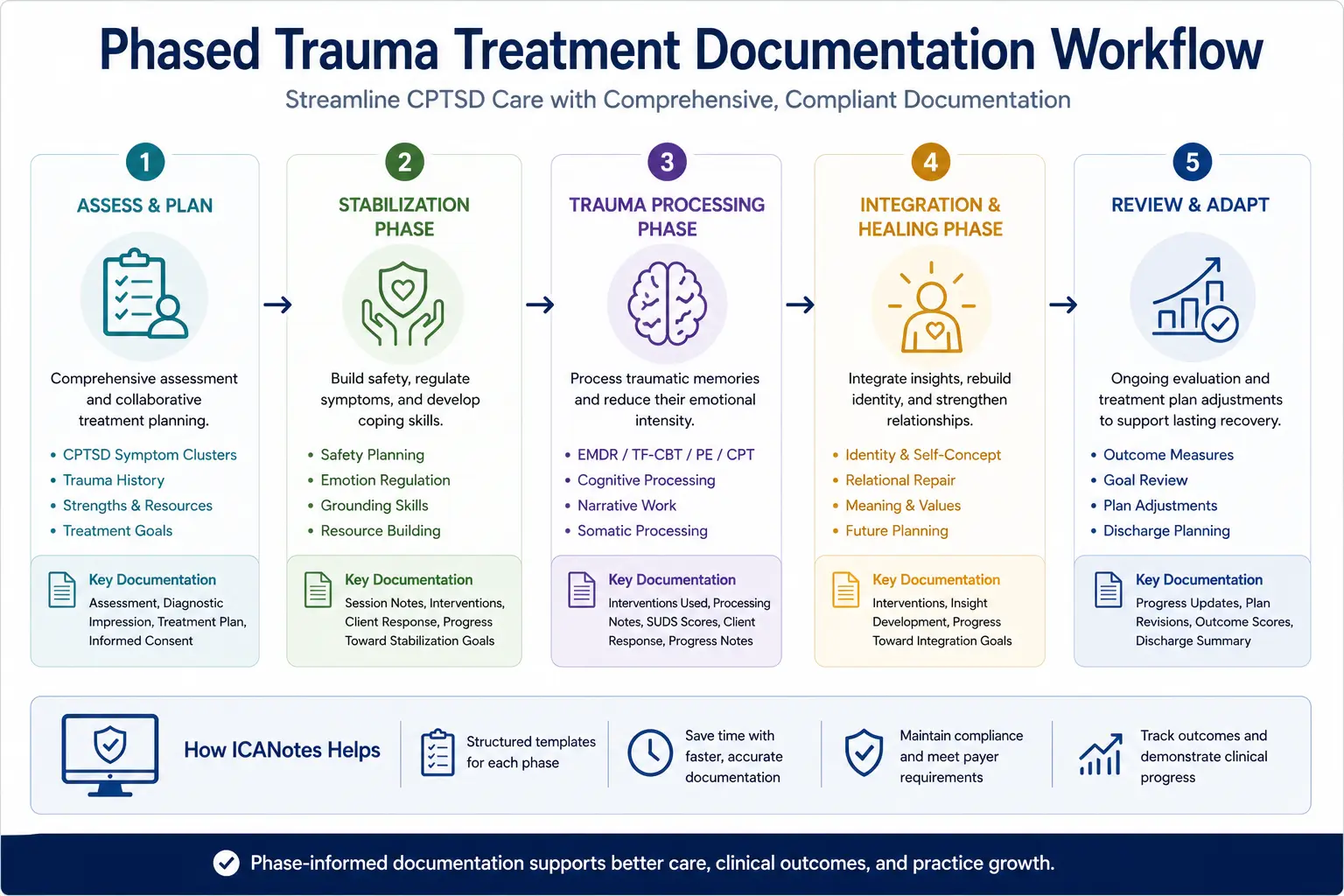
Documenting phased trauma treatment is paperwork-heavy.
Multiphase treatment plans, evolving risk assessments, and detailed progress notes are part of the work — they shouldn’t slow it down. ICANotes is built for the documentation realities of behavioral health.
Book a Demo →Building Resilience in Clients with Complex Trauma and CPTSD
Resilience-building is woven throughout phased trauma treatment rather than confined to a single phase. The goal is not to bypass the work of processing trauma but to expand the client’s internal and external resources so that processing becomes tolerable and integration becomes possible. Several approaches have substantive research support:
- Building stable social support — identifying safe people, repairing or replacing harmful relationships, and reducing isolation
- Mindfulness and present-moment skills — attentional anchoring, breath-based regulation, and noticing without judgment
- Body-based regulation — grounding practices, somatic awareness, and movement-based interventions that reach the autonomic nervous system
- Self-compassion practices — addressing the shame and self-criticism that are core features of CPTSD
- Meaning-making and narrative integration — supporting the client in constructing a coherent narrative that includes the trauma without being defined by it
- Lifestyle stabilization — sleep, nutrition, exercise, and routine as foundational supports for nervous system regulation
- Peer and group support — trauma-informed groups can reduce isolation and provide vicarious resilience
- Creative and expressive modalities — art, writing, and movement as adjunctive paths to processing and integration
- Cultivating agency — supporting clients in making and acting on choices, rebuilding the sense of self-direction that prolonged trauma erodes
Building Trust and Support in the Therapeutic Relationship
For clients whose trauma was relational, the therapeutic relationship is itself a primary intervention. Predictability, transparency, attunement, and the consistent repair of inevitable ruptures all contribute to the relational learning that supports recovery. Clinicians working with this population benefit from sustained supervision and consultation, both for clinical complexity and for the vicarious load of the work.
Helping Clients With Complex Trauma in Therapy: Practical Strategies
Beyond modality selection, several practical principles support effective work with complex trauma in the therapy room:
- Pace to the client’s window of tolerance — processing outside the window, on either end, is rarely productive and can be harmful
- Make the implicit explicit — name dynamics in the room, including ruptures, before they accumulate
- Use psychoeducation generously — clients benefit from understanding what is happening in their nervous systems and why
- Anticipate and normalize non-linearity — regression, plateaus, and unexpected resurfacing of material are part of the process
- Address the therapeutic relationship as data — attachment patterns will appear in the room; that is a feature of the work, not an obstacle to it
- Plan for risk — safety planning is a continuous part of complex trauma work, not a one-time intake task
- Coordinate care — psychiatry, primary care, body-based providers, and community supports are often part of the treatment system
Addressing Common Misconceptions About Complex Trauma and CPTSD
Several persistent misconceptions about complex trauma and CPTSD continue to circulate — in popular culture, in some clinical settings, and even among clients themselves. Clinicians have a meaningful role in offering accurate information.
Misconception: Trauma only refers to life-threatening events.
In fact, trauma is defined by the impact on the individual’s nervous system and meaning-making, not by the objective severity of the event. Chronic emotional neglect, coercive control, and ongoing relational harm can produce profound trauma responses without involving overt physical danger.
Misconception: Everyone exposed to complex trauma develops CPTSD.
Many people exposed to prolonged trauma do not develop CPTSD. Outcomes are shaped by many factors: developmental timing, the presence of supportive relationships, individual neurobiological factors, access to resources, and the specific nature of the trauma. CPTSD is one possible outcome, not an inevitability.
Misconception: Complex trauma permanently destroys a person’s functioning.
Recovery from complex trauma is possible, and many people achieve substantial healing. The trajectory is rarely linear and the work is typically extended, but the clinical literature is clear that meaningful recovery is achievable with appropriate, sustained treatment.
Misconception: CPTSD and BPD are essentially the same thing.
There is meaningful overlap, and the two can co-occur, but they are distinct clinical entities with different etiological framing and different implications for treatment. Conflating the two can lead to interventions that miss the trauma origin or that pathologize trauma responses as personality features.
The Therapist’s Role in Disseminating Accurate Information
Clinicians treating clients with complex trauma frequently find themselves correcting misinformation — from media, from prior providers, and from the survivor’s own internalized narratives. Accurate psychoeducation is part of the intervention, not an aside. It helps clients make sense of their experience, reduces shame, and supports informed engagement with treatment.
Frequently Asked Questions About Complex Trauma and CPTSD
+ What is the difference between CPTSD and PTSD?
+ How is complex PTSD diagnosed?
+ What is the most effective treatment for complex PTSD?
+ How long does CPTSD treatment typically take?
+ Can complex PTSD be cured?
+ What are the four F responses in CPTSD?
+ How is CPTSD different from borderline personality disorder?
+ Is CPTSD recognized in the DSM-5?
Related Resources
Explore additional guides and clinical resources on trauma-informed care, treatment approaches, and behavioral health best practices:
Closing Thoughts: The Long Arc of Complex Trauma Work
Complex trauma is among the most demanding work in behavioral health — and among the most consequential. Clients arriving with CPTSD have often spent years navigating systems that didn’t have a name for what they were experiencing. The clinician who provides accurate diagnosis, evidence-based treatment, and a stable therapeutic relationship is offering something that can shift the entire trajectory of a life.
A few principles worth holding onto across complex trauma work:
- Pacing is clinical. Slow Phase 1 work is not stalled progress. Stabilization is the foundation, not the warm-up.
- The relationship is the intervention. For clients whose trauma was relational, the consistency, attunement, and reliability of the therapeutic relationship is itself reparative — and itself part of the protocol.
- Diagnosis informs treatment, but the person is not the diagnosis. CPTSD is a useful clinical frame; it is not a definition of the client.
- Clinician self-care is part of the work. Vicarious trauma is real. Supervision, peer consultation, and your own care are not optional add-ons; they are how you stay capable of doing this work over the long arc of a career.
The clinical literature on complex trauma continues to evolve. Staying current with guideline updates, new modalities, and the broader research base is part of ethical practice in this area.
How ICANotes Supports Behavioral Health Clinicians
ICANotes is an electronic health record platform purpose-built for behavioral health. Our software is designed around the documentation realities of mental health practice — including the phased, longitudinal, and detail-heavy work involved in treating complex trauma and CPTSD. Features that matter for trauma-informed clinicians include behavioral-health-specific assessment templates, treatment plan tools that support multiphase work, structured progress note templates that capture clinical complexity without slowing the clinician down, and a documentation workflow built to reduce administrative burden.
To see how ICANotes can fit into your trauma-informed practice, request a free trial or schedule a live demonstration. We’d be glad to walk you through it.
Recent Posts






Dr. October Boyles
DNP, MSN, BSN, RN
About the Author
Dr. October Boyles is a behavioral health expert and clinical leader with extensive expertise in nursing, compliance, and healthcare operations. With a Doctor of Nursing Practice (DNP) and advanced degrees in nursing, she specializes in evidence-based practices, EHR optimization, and improving outcomes in behavioral health settings. Dr. Boyles is passionate about empowering clinicians with the tools and strategies needed to deliver high-quality, patient-centered care.