Blog > Treatment Strategies > Executive Dysfunction Therapy: CBT Strategies for Clinicians
Executive Dysfunction Therapy: Evidence-Based Approaches and CBT Strategies for Clinicians
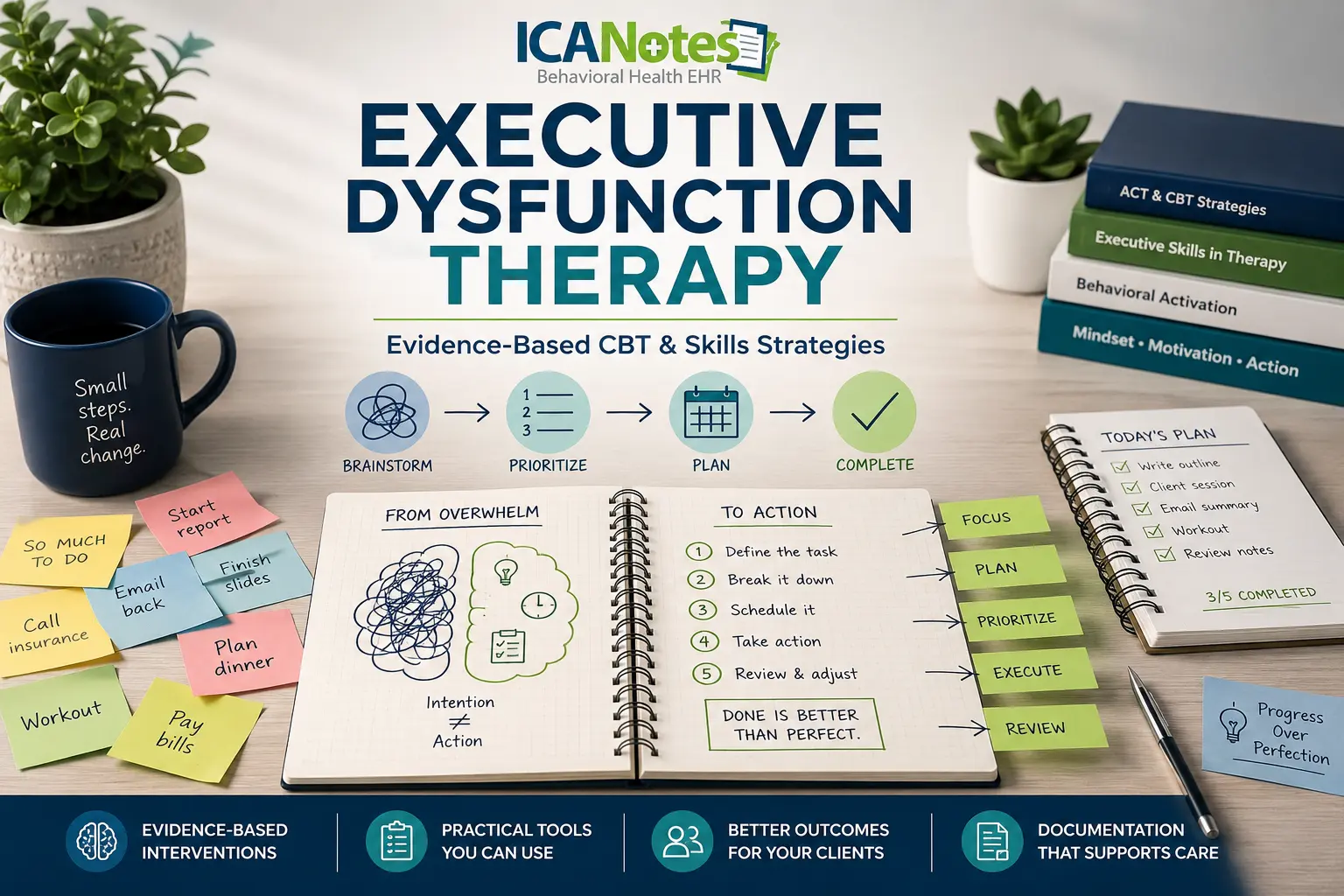
Executive dysfunction can make it difficult for clients to plan, prioritize, start tasks, manage time, and follow through on responsibilities. Commonly seen in ADHD, depression, anxiety, trauma, and autism spectrum disorder, executive dysfunction often contributes to significant impairment in work, school, and daily life. This guide explores evidence-based executive dysfunction therapy approaches, including CBT, behavioral activation, coaching strategies, environmental supports, and practical interventions clinicians can use to help clients move from intention to action.


Last Updated: June 2, 2026

What You'll Learn
- What executive dysfunction is and how executive dysfunction symptoms affect planning, organization, task initiation, working memory, and emotional regulation.
- Common causes of executive function disorder and executive function disorder in adults, including ADHD, depression, anxiety, trauma, and autism spectrum disorder.
- How executive dysfunction therapy helps clients overcome avoidance, time blindness, overwhelm, and follow-through difficulties.
- Evidence-based approaches including CBT for executive dysfunction, behavioral activation, coaching models, environmental modifications, and DBT-informed skills.
- Ten practical therapy techniques, including task chunking, implementation intentions, body doubling, time blocking, and cognitive reframing.
- How to adapt therapy for executive dysfunction across different populations, including adults with ADHD, college students, teens, and neurodivergent clients.
- Real-world executive dysfunction examples that help clients and clinicians identify executive function challenges in everyday life.
- Documentation strategies, progress note examples, and measurable treatment goals that support continuity of care and medical necessity.
Contents
- What is Executive Dysfunction?
- Common Executive Dysfunction Symptoms
- Executive Dysfunction Examples
- What Causes Executive Dysfunction?
- How Therapy Helps Executive Dysfunction
- CBT for Executive Dysfunction
- Other Therapy Approaches
- Therapy Interventions for Executive Dysfunction
- Matching Interventions to the Underlying Cause of Executive Dysfunction
- Common Mistakes When Treating Executive Dysfunction
- Adapting Therapy for Different Populations
- Session Structure for Executive Dysfunction Therapy
- How to Document Executive Dysfunction Therapy
- How ICANotes Supports Documentation for Executive Dysfunction Treatment
- FAQs: Executive Dysfunction Therapy
Executive dysfunction is one of the most common — and most under-recognized — drivers of clinical presentations in behavioral health. Whether the client is a 32-year-old project manager who can’t seem to start the report due Monday, a college student missing deadlines despite obvious intelligence, or a parent with depression who describes their day as “stuck in molasses,” the underlying mechanism is often the same: a breakdown in the cognitive processes that translate intention into action.
For behavioral health clinicians, executive dysfunction therapy is rarely a stand-alone treatment. It is a layer woven through work with ADHD, depression, anxiety, trauma, and autism spectrum disorder — and one that benefits from a clear, skills-based framework. This guide walks through the most effective therapy approaches for executive dysfunction, including CBT for executive dysfunction, behavioral activation, environmental structuring, coaching-style supports, and emotional regulation skills. We also cover practical session structures, intervention examples, and documentation considerations that help clinicians build defensible, measurable notes.
What Is Executive Dysfunction?
What Is Executive Dysfunction?
Executive dysfunction refers to difficulty using the mental skills that help people plan, prioritize, start tasks, manage time, stay organized, regulate emotions, and follow through on responsibilities. In therapy, it is often addressed through structured, skills-based strategies that help clients move from intention to action.
Executive functions are the brain’s management system — a cluster of processes housed largely in the prefrontal cortex that govern planning, prioritization, working memory, impulse control, cognitive flexibility, and emotional regulation. When these processes are impaired, clients experience what researchers refer to as executive function disorder or, more often in everyday clinical language, executive dysfunction.
Importantly, executive dysfunction is a description of a functional pattern, not a stand-alone DSM-5 diagnosis. It appears across many conditions and is one of the strongest predictors of real-world impairment in adults — often more predictive of work, school, and relationship outcomes than IQ or symptom severity alone (Diamond, 2013; Barkley, 2012).
Common Executive Dysfunction Symptoms
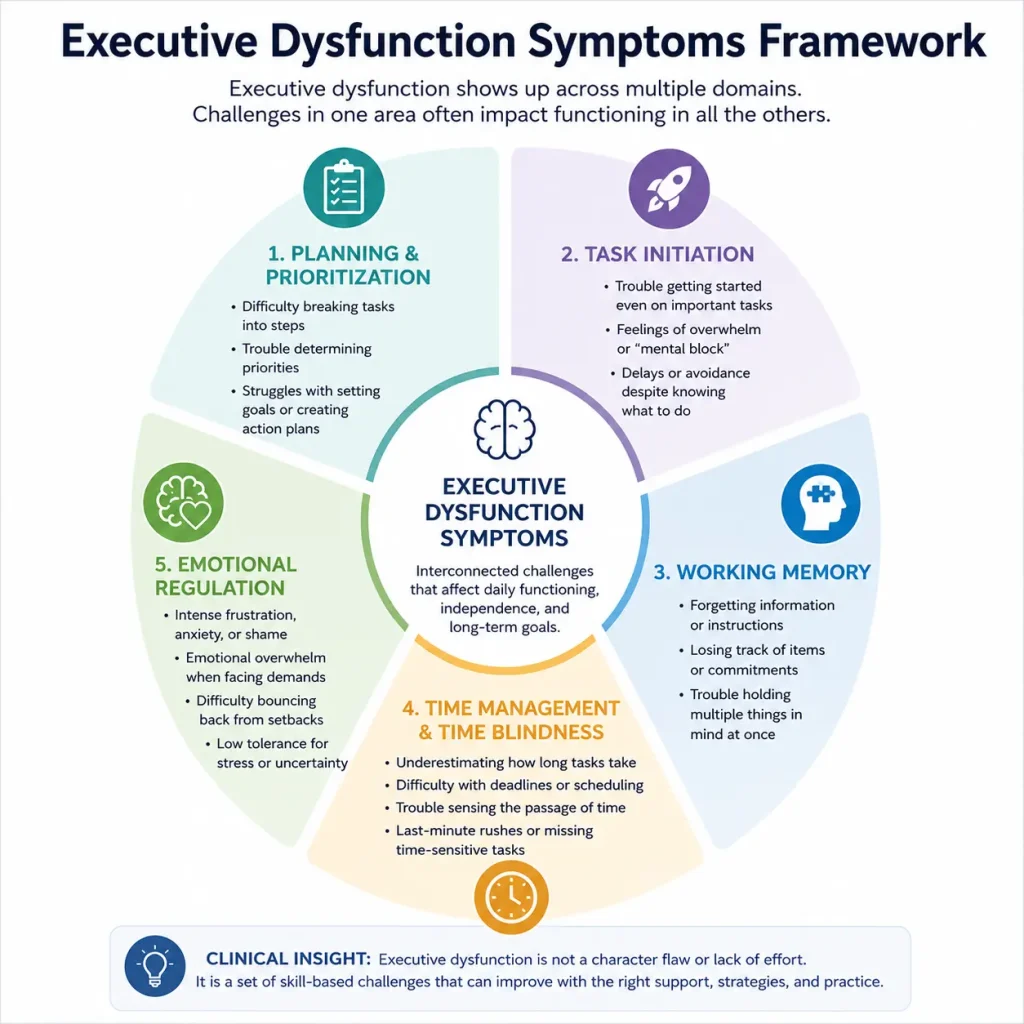
Executive dysfunction symptoms can appear in many different ways, but most challenges fall into a handful of core functional domains. Clients may struggle with planning, task initiation, working memory, time management, or emotional regulation. Understanding which domain is most affected can help clinicians identify appropriate interventions and explain executive dysfunction in a way that reduces shame and increases self-awareness.
Five Core Domains of Executive Dysfunction
The infographic above provides a high-level overview of executive dysfunction symptoms. The sections below explore each domain in greater detail and highlight how these challenges commonly appear in clinical practice.
Planning & Prioritization
Difficulty breaking large goals into manageable steps, determining what should be done first, and organizing tasks in a logical sequence.
Task Initiation
The gap between knowing what needs to be done and being able to start. Clients often describe feeling stuck, frozen, or overwhelmed despite understanding the task.
Working Memory
Difficulty holding and manipulating information mentally, leading to forgotten instructions, lost train of thought, and challenges completing multi-step activities.
Time Management & Time Blindness
Chronic underestimation of task duration, difficulty sensing the passage of time, frequent lateness, and challenges managing competing deadlines.
Emotional Regulation
Strong emotional responses to tasks, including overwhelm, frustration, shame, avoidance, perfectionism, and rejection sensitivity that interfere with follow-through.
While executive dysfunction symptoms often look similar across clients, the underlying causes can vary significantly. ADHD, depression, anxiety, trauma, autism spectrum disorder, and chronic stress can all contribute to executive functioning difficulties, which is why accurate assessment and case formulation are essential.
Executive Dysfunction Examples in Real Life
Translating clinical concepts into everyday behavior helps clients (and supervisors) recognize what we are treating. Common executive dysfunction examples clinicians encounter include:
- A graduate student who has read the assignment three times but cannot start writing.
- A working parent who keeps forgetting to send back permission slips, despite caring deeply about their child’s school.
- An adult with ADHD who buys planners but stops using them within two weeks.
- A trauma survivor who freezes in front of a routine email reply.
- A client with depression who describes basic tasks — showering, paying bills — as “physically heavy.”
Download the Executive Dysfunction Clinician’s Toolkit
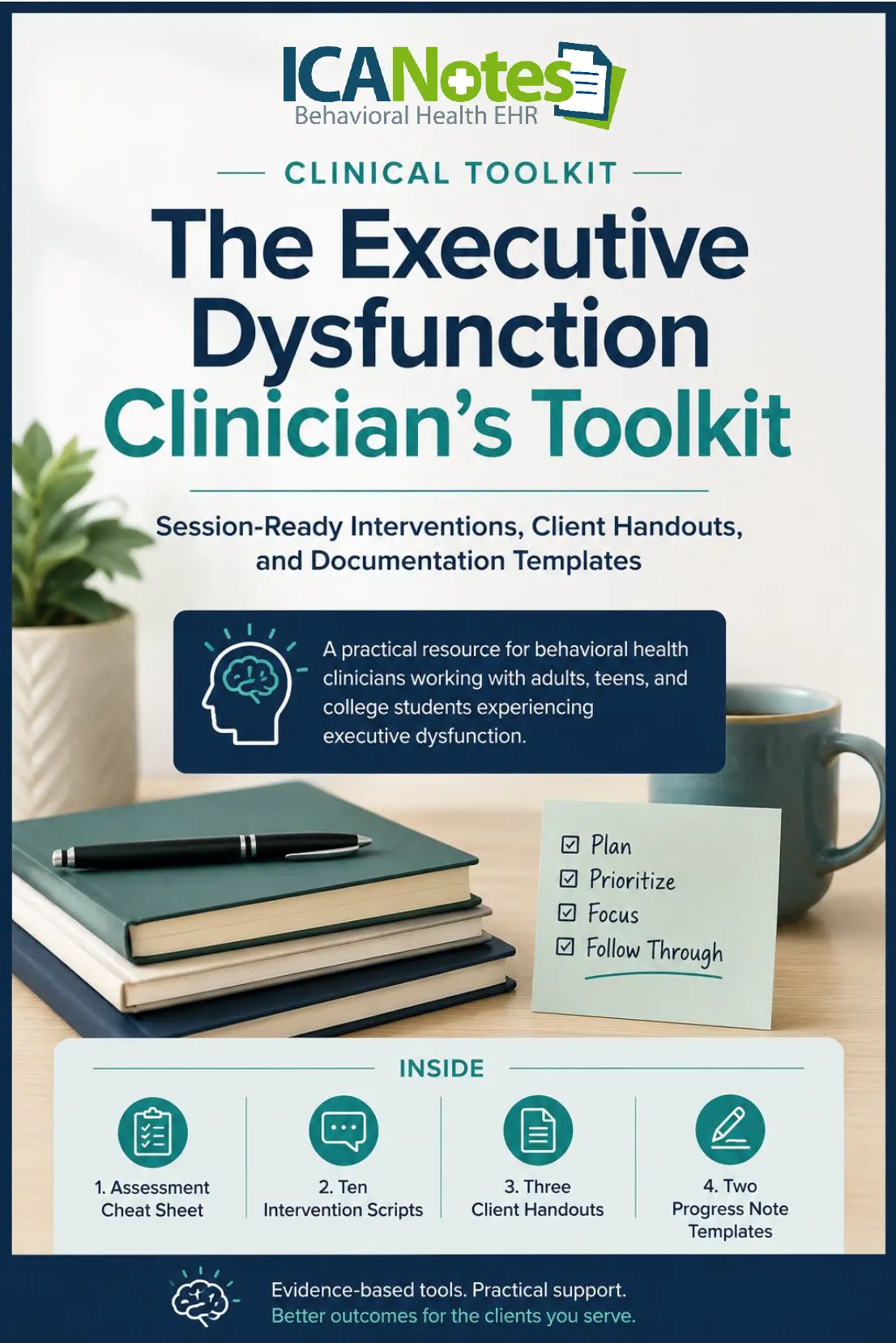
Get session-ready resources for assessing and treating executive dysfunction, including intervention scripts, client handouts, planning worksheets, and documentation templates for behavioral health clinicians.
- Executive dysfunction assessment cheat sheet
- Ten practical intervention scripts
- Three client-facing handouts and worksheets
- Two progress note templates with measurable goal language
What Causes Executive Dysfunction?
Effective therapy for executive dysfunction starts with case formulation. The same surface symptom can stem from very different mechanisms, and the right intervention depends on knowing which engine is sputtering.
- ADHD and other neurodevelopmental conditions. ADHD is the most well-known cause; executive function differences are central to the diagnosis. Autism spectrum disorder is another common driver, often with strengths in some EF domains and challenges in others.
- Depression. Slowed cognition, reduced motivation, and ruminative thinking interfere with initiation and follow-through.
- Anxiety. Avoidance protects from short-term distress but worsens executive performance over time as tasks pile up.
- Trauma and chronic stress. Hyperarousal and dissociation pull cognitive resources away from prefrontal-mediated tasks.
- Sleep, medical, and lifestyle factors. Poor sleep, undertreated thyroid disorders, perimenopausal hormonal shifts, substance use, and concussions can mimic or exacerbate executive function disorder.
Clinical Insight: One of the most common formulation errors is assuming executive dysfunction is always ADHD-related. In practice, the same presentation — missed deadlines, chronic procrastination, difficulty initiating tasks — may stem from depression, anxiety, trauma, burnout, sleep disruption, or a combination of factors. Effective treatment begins with identifying the underlying driver rather than focusing solely on the behavior itself.
How Therapy Helps Executive Dysfunction
Therapy for executive dysfunction is most effective when it is targeted, structured, and skills-forward.
Clinical Insight: Clients often arrive in therapy believing they have a motivation problem when they actually have an execution problem. Reframing executive dysfunction as a difficulty translating intention into action can reduce shame and increase engagement in treatment.
Across modalities, evidence-based approaches address five common breakdowns:
- Cognitive distortions — thoughts like “I’ll never finish this” or “if I can’t do it perfectly, why bother” that fuel paralysis.
- Avoidance patterns — short-term relief that reinforces long-term impairment.
- Emotional overwhelm — the affective spike that often precedes a freeze or shutdown.
- Skill deficits — gaps in planning, time estimation, or task analysis.
- Environmental barriers — clutter, digital distractions, lack of cues, and poorly designed schedules.
Most clients benefit from a hybrid approach that addresses all five layers. Structured sessions, predictable homework, and frequent feedback loops also help compensate for the very executive deficits clients are working on.
Executive dysfunction often becomes self-reinforcing. A difficult task triggers overwhelm, which leads to avoidance, temporary relief, and ultimately even greater stress when the task remains unfinished.
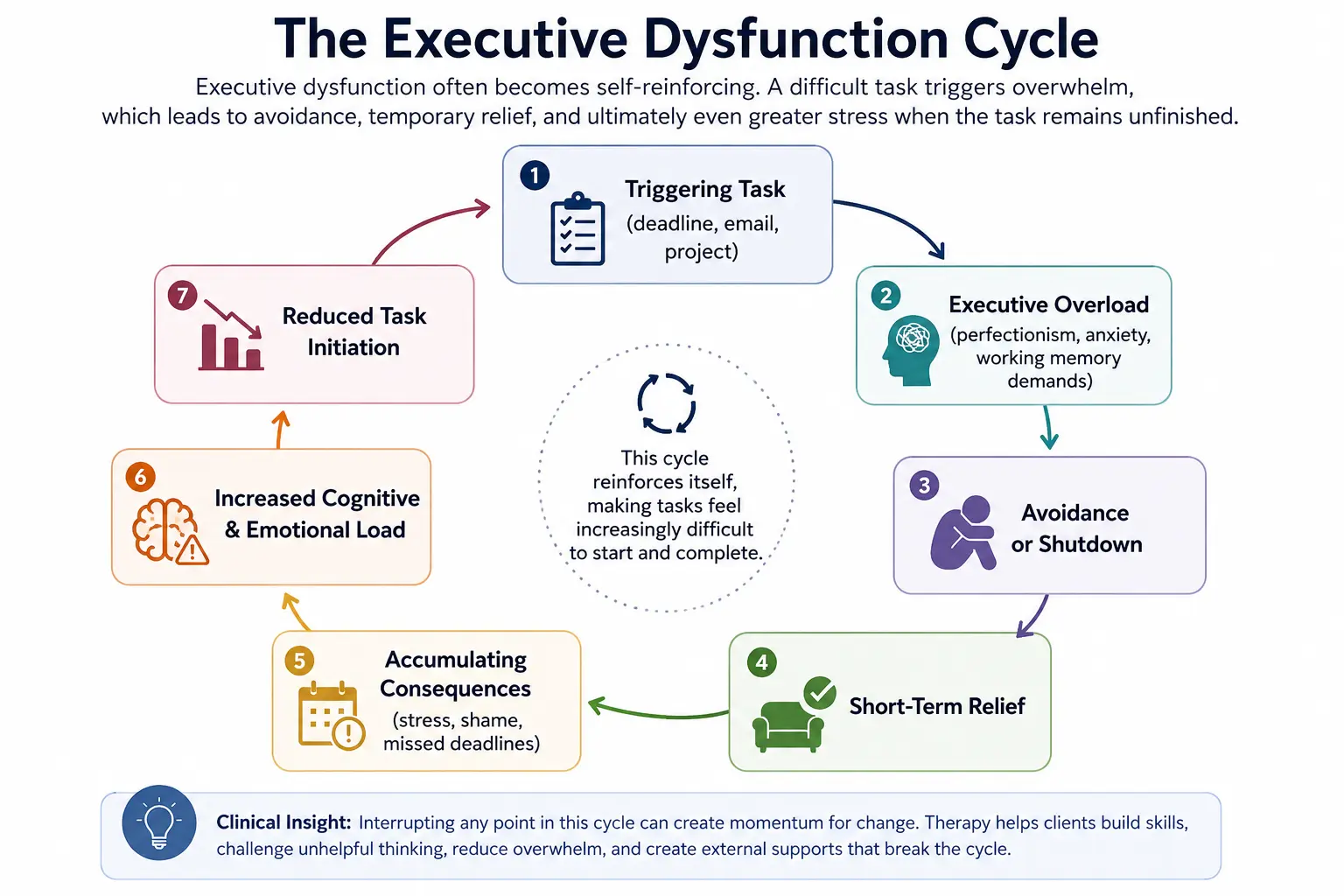
Many evidence-based executive dysfunction therapy interventions are designed to interrupt this cycle. Behavioral activation targets avoidance, cognitive restructuring addresses catastrophic thinking, and executive functioning strategies reduce the cognitive load associated with starting and completing tasks.
Cognitive Behavioral Therapy for Executive Dysfunction
Cognitive Behavioral Therapy (CBT) is one of the most effective and widely researched approaches for executive dysfunction because it addresses both the cognitive and behavioral patterns that contribute to avoidance, overwhelm, and difficulty following through. Many of the same evidence-based cognitive behavioral therapy techniques used for anxiety, depression, and trauma can also be adapted to help clients improve task initiation, planning, emotional regulation, and executive functioning skills.
CBT for executive dysfunction is among the best-supported approaches in the literature, particularly for adults with ADHD. Programs developed by Steven Safren, Mary Solanto, and Russell Ramsay have shown meaningful improvements in functioning when CBT is delivered alongside or instead of medication (Knouse & Safren, 2010; Solanto, 2011; Safren et al., 2017).
Core CBT Components
A typical CBT-for-executive-dysfunction session weaves cognitive and behavioral interventions:
- Identifying avoidance thoughts — clients learn to spot the precise thought (“this will take forever”) that triggers shutdown.
- Behavioral activation — particularly important when depression is in the picture; action precedes motivation, not the other way around.
- Task chunking — breaking projects into the smallest meaningful unit (“open the document” rather than “write the report”).
- Scheduling and time-blocking — externalizing time onto a calendar so clients can see, not just feel, their commitments.
- Exposure to avoided tasks — graded, planned engagement with previously avoided activities.
- Reward systems — short-loop reinforcement that compensates for delayed-reward processing differences.
Clinical Insight: CBT interventions are most effective when they combine a cognitive shift with an observable behavioral action. Many clients can identify distorted thinking but still struggle to act. The goal is not simply changing thoughts — it is creating enough psychological flexibility to take the next concrete step.
Example: A CBT Reframe for Task Paralysis
A client describes feeling paralyzed by a 30-page workbook chapter due in two days.
Initial thought: “I can’t do this. I’m going to fail.”
Cognitive component: Identify the all-or-nothing distortion. What evidence supports or contradicts this? What is the realistic worst case?
Reframed thought: “I haven’t started yet. I can read for ten minutes today and decide what to do next.”
Behavioral component: Open the workbook. Set a 10-minute timer. Read until the timer rings, then pause and choose to continue or stop.
Skills layer: Add an implementation intention (“If it is 7pm Tuesday, then I open the workbook at the kitchen table”) and pair with a small reward.
The reframe alone rarely produces change. It is the pairing of the cognitive shift with a concrete, low-bar behavioral plan that moves the needle.
Clinical Insight: When clients repeatedly say, “I know what I should do, I just can't do it,” the problem is often not knowledge. It is task initiation. Focusing treatment on the mechanics of starting is frequently more productive than spending additional time increasing awareness.
Other Therapy Approaches for Executive Dysfunction
CBT is rarely the only tool clinicians use. The following modalities complement and extend CBT-based work.
Skills-Based Coaching Model
Coaching-style work—popular among ADHD specialists—emphasizes external structure, accountability, and weekly planning. Sessions often include a planning ritual (“What are your top three priorities this week?”), troubleshooting around obstacles, and explicit teaching of executive skills. The therapist functions as an externalized prefrontal cortex while the client builds internal capacity.
Behavioral Activation
Particularly effective for depression-related executive dysfunction, behavioral activation rests on the principle that action precedes motivation. Activity scheduling, mastery and pleasure tracking, and gentle exposure to previously avoided activities help clients re-engage with life and rebuild self-efficacy.
Clinical Insight: Clinicians frequently underestimate how small an initial goal should be. For clients experiencing severe executive dysfunction, success may begin with opening the document, putting on the gym shoes, or standing in the shower rather than completing the entire task.
Environmental Modification
Sometimes the highest-leverage intervention is not internal at all. Reducing friction (laying out gym clothes the night before), creating external reminders (visible whiteboards, recurring phone alarms), and building visual systems (kanban boards, color-coded calendars) compensate for working memory and time blindness.
Clinical Insight: Environmental supports are often viewed as “workarounds,” but for many clients they are primary interventions. A visible cue or external reminder can be more effective than extensive insight-oriented work when working memory and task initiation are the primary barriers.
Emotional Regulation Skills (DBT-Informed)
Many clients with executive dysfunction also struggle with emotional intensity around tasks. DBT-informed skills—including distress tolerance for task overwhelm, opposite action, mindfulness of current activity, and the PLEASE skills—are powerful adjuncts that help clients manage emotions while building executive functioning skills.
ACT and Values-Based Work
Acceptance and Commitment Therapy (ACT) adds a values-based perspective to executive dysfunction treatment. Rather than fighting the discomfort of starting a task, clients learn to take meaningful action in service of their values—even when motivation, confidence, or emotions are not cooperating. This approach helps build psychological flexibility and long-term behavior change.
Therapy Interventions for Executive Dysfunction
The ten techniques below can be deployed across modalities. Most can be introduced in a single session and refined as homework. These executive dysfunction therapy techniques are grouped by the clinical problem they target: task initiation, planning and organization, time management, or perfectionism and avoidance.
Clinical Insight: New clinicians sometimes make the mistake of introducing multiple executive functioning systems simultaneously. Most clients benefit from selecting a single strategy, practicing it consistently, and refining it over time before adding additional tools.
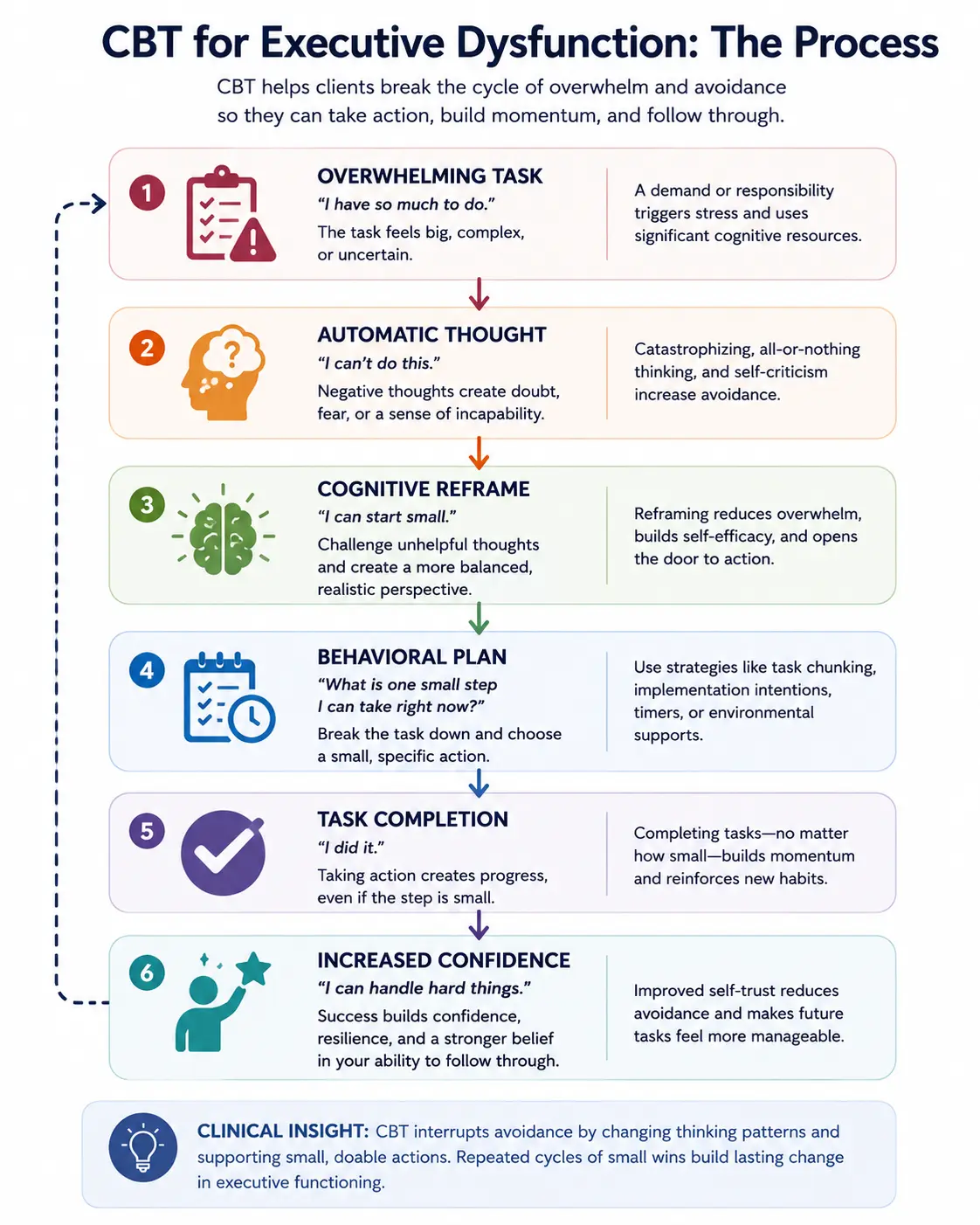
The CBT process shown above illustrates why executive dysfunction is rarely resolved through insight alone. While cognitive restructuring helps clients challenge unhelpful beliefs, lasting change occurs when new thinking is paired with concrete behavioral actions. The interventions below are designed to help clients move from understanding their challenges to consistently taking action.
Task Initiation Strategies
The 5-Minute Rule
Goal: Dissolve task-initiation paralysis by reducing the perceived cost of starting.
Steps: Choose one avoided task, define what “starting” means, set a five-minute timer, and let the client decide whether to continue or stop when the timer ends.
Implementation Intentions (“If–Then” Planning)
Goal: Connect a desired behavior to a specific situational cue.
Steps: Identify the behavior, choose a reliable cue, write an “If [cue], then I will [behavior]” statement, rehearse it aloud, and troubleshoot likely obstacles.
Body Doubling
Goal: Reduce initiation friction through co-regulated parallel work.
Steps: Identify a suitable task, choose an in-person or virtual body-doubling option, schedule the session, set ground rules, and review the outcome.
Planning & Organization Strategies
Task Chunking & Micro-Goals
Goal: Convert overwhelming projects into small, observable units.
Steps: Write the project at the top of the page, list every sub-step, order the steps, identify the smallest first action, and schedule when it will happen.
Visual Task Mapping
Goal: Externalize task structure to reduce working memory load.
Steps: Place each task or step on a sticky note, cluster related tasks, sequence what comes first, next, and last, and save the map for client reference.
Priority Matrix
Goal: Reduce reactive task-switching by separating urgent tasks from important ones.
Steps: Create an urgent/important grid, sort current tasks into quadrants, identify where effort is going, and schedule protected time for important-but-not-urgent work.
Time Management Strategies
Time Blocking with Buffer Zones
Goal: Address time blindness and chronic overscheduling.
Steps: List tasks, estimate time required, add a buffer, schedule tasks into calendar blocks, and review estimated versus actual time.
End-of-Day Reset Routine
Goal: Reduce next-day initiation friction.
Steps: Choose a fixed end-of-day cue, identify three to five reset actions, keep the routine under 10 minutes, and review weekly for friction points.
Perfectionism & Avoidance Interventions
Cognitive Reframing for Perfectionism
Goal: Loosen rigid standards that drive avoidance.
Steps: Identify the perfectionist thought, examine evidence, generate a “good enough” alternative, and design a behavioral experiment to test it.
“Done Is Better Than Perfect” Exposure
Goal: Build tolerance for imperfect work and test catastrophic predictions.
Steps: Choose a low-to-moderate stakes task, predict the feared outcome, complete it at a “good enough” standard, track what happens, and compare prediction with reality.
Matching Interventions to the Underlying Cause of Executive Dysfunction
One of the biggest mistakes clinicians make when treating executive dysfunction is assuming that the same intervention will work for every client. While executive dysfunction symptoms may look similar on the surface—missed deadlines, chronic procrastination, difficulty starting tasks, or disorganization — the underlying causes often differ significantly.
A client with ADHD may need external structure and environmental supports. A client with depression may benefit more from behavioral activation. A trauma survivor may require nervous system regulation before executive functioning skills can take hold.
For this reason, treatment planning should begin with case formulation rather than symptom reduction alone. Matching interventions to the primary driver of executive dysfunction often improves engagement and increases the likelihood of meaningful behavioral change.
| Underlying Driver | Common Presentation | First-Line Interventions |
|---|---|---|
| ADHD | Lifelong disorganization, inconsistent follow-through, time blindness, and hyperfocus on preferred activities. | CBT for executive dysfunction, coaching strategies, body doubling, environmental supports, implementation intentions, medication collaboration. |
| Depression | Low motivation, slowed cognition, avoidance, and tasks that feel physically heavy. | Behavioral activation, activity scheduling, mastery tracking, task chunking, and very small behavioral goals. |
| Anxiety | Perfectionism, overthinking, fear of mistakes, and avoidance of uncertain outcomes. | Cognitive restructuring, exposure-based interventions, implementation intentions, and “done is better than perfect” experiments. |
| Trauma & Chronic Stress | Freeze responses, overwhelm, dissociation, and nervous system dysregulation. | Stabilization, emotional regulation skills, somatic interventions, titrated task exposure, and environmental supports. |
| Autism Spectrum Disorder | Difficulty with transitions, executive overload during sensory stress, and challenges shifting attention. | Strengths-based planning, visual systems, predictable routines, transition supports, and sensory accommodations. |
| Sleep, Medical, or Lifestyle Factors | Recent onset of symptoms, fluctuating functioning, and worsening with fatigue or health changes. | Sleep interventions, medical evaluation, lifestyle modification, environmental supports, and symptom monitoring. |
Clinical Insight: Although clinicians often focus on teaching executive functioning skills, clients frequently make the greatest progress when the intervention targets the condition driving the dysfunction. A client whose executive difficulties stem primarily from depression may respond poorly to productivity systems alone, while a client with ADHD may struggle if treatment focuses exclusively on mood. Understanding why executive dysfunction is occurring is often more important than choosing the perfect intervention.
Common Mistakes When Treating Executive Dysfunction
Executive dysfunction can be frustrating for both clients and clinicians. Because symptoms often resemble procrastination, lack of motivation, or poor follow-through, it is easy to apply interventions that unintentionally miss the underlying problem. Recognizing these common pitfalls can improve treatment effectiveness and reduce client discouragement.
1. Mistaking Executive Dysfunction for Laziness
Clients usually know what they need to do. The challenge is translating intention into action. Focusing only on motivation can increase shame instead of improving planning, initiation, or follow-through.
2. Assigning Goals That Are Too Large
Goals like “clean the kitchen” or “work on your resume” may still be overwhelming. Smaller goals—opening the document, gathering materials, or working for five minutes—are often more effective starting points.
3. Assuming Insight Will Lead to Action
Insight matters, but awareness alone rarely produces behavior change. Effective treatment pairs insight with concrete behavioral strategies, environmental supports, and repeated practice.
4. Overlooking Emotional Drivers
Anxiety, shame, perfectionism, rejection sensitivity, and fear of failure often intensify executive difficulties. Emotional responses to tasks may need treatment alongside planning and organization skills.
5. Introducing Too Many Systems at Once
Multiple planners, apps, routines, and productivity strategies can overwhelm clients. Managing several new systems requires executive functioning skills in itself.
6. Using the Same Intervention Regardless of Cause
The best intervention depends on whether executive dysfunction is driven by ADHD, depression, anxiety, trauma, or another factor. Strong treatment planning starts with formulation.
Clinical Insight: One of the most reliable indicators that treatment is moving in the right direction is not increased motivation—it is increased action. Clients often begin completing more tasks, meeting more deadlines, and following through on routines before they report feeling more motivated, organized, or confident. Tracking behavioral progress helps both clinicians and clients recognize meaningful improvement that might otherwise be overlooked.
Adapting Therapy for Different Populations
Executive dysfunction presents differently across the lifespan and across diagnoses. Tailoring approach matters as much as the technique itself.
Adults with ADHD
Treatment often combines CBT for executive dysfunction with coaching, environmental supports, and pharmacotherapy collaboration. Be alert for co-occurring rejection sensitivity, sleep disruption, and substance use.
College Students
Anchor interventions to academic structures: syllabi as project plans, weekly review of due dates, and concrete strategies for office hours and accommodations conversations.
Teens with Academic Struggles
Engage parents as scaffolding partners while preserving teen autonomy; involve school counselors when appropriate.
Depression-Related Executive Dysfunction
Lead with behavioral activation; use very small initial behavioral goals; expect motivation to follow action.
Clients with Trauma Histories
Address nervous system regulation first; executive function often returns as safety is restored.
Neurodivergent Clients
For clients with ASD, ADHD, or learning differences, lead with strengths-based framing, respect sensory needs, and co-create routines rather than impose neurotypical templates.
A Session Structure for Executive Dysfunction Therapy
A consistent session arc reduces cognitive load for clients and makes progress easier to document.
- Check-in (5 minutes): mood, sleep, key wins or struggles since last session.
- Homework review (10 minutes): what worked, what did not, what got in the way.
- Targeted intervention (25 minutes): one teaching or practice activity tied to a current goal.
- Planning and homework (10 minutes): a specific, measurable, realistic between-session experiment.
- Wrap-up (5 minutes): summary, next appointment, follow-up reminders.
How to Document Executive Dysfunction Therapy
Strong documentation makes treatment defensible, supports continuity of care, and meets payer expectations.
Clinical Insight: Executive dysfunction interventions can be difficult to defend in documentation when notes focus only on insight or discussion. Strong notes connect interventions directly to measurable functional outcomes, such as improved task completion, reduced avoidance, or increased adherence to routines.
For executive dysfunction work, your notes should capture:
- Presenting executive challenges in functional terms — for example, “Client missed three deadlines this week despite accurate awareness of due dates.”
- Interventions used, named specifically — for example, “task chunking, implementation intention, cognitive reframe targeting all-or-nothing thinking.”
- Client insight and engagement — for example, “Identified the avoidance thought independently; collaborated on reframe.”
- Measurable goals and progress — for example, “Goal: complete 4 of 5 morning routine steps daily; client reported 3 of 5 this week, up from 1 of 5.”
- Homework assigned with specifics and a follow-up plan.
- Risk and clinical context as applicable.
Tying interventions to measurable, observable progress also makes it easier to demonstrate medical necessity. EHR templates that prompt for these elements — and let clinicians point-and-click common interventions — cut documentation time and improve consistency. ICANotes’ behavioral health note templates are designed around this kind of structured clinical reasoning, with built-in language for common interventions and goal tracking.
Clinical Insight: Progress in executive dysfunction treatment is often gradual and highly behavioral. Clinicians may notice meaningful improvement in missed deadlines, routine completion, appointment attendance, or task initiation long before clients report feeling more motivated or organized.
How ICANotes Supports Documentation for Executive Dysfunction Treatment
Documenting executive dysfunction treatment can be challenging because progress is often measured through functional improvements rather than symptom reduction alone. Clinicians need to clearly connect interventions, client responses, and measurable outcomes to demonstrate medical necessity and support continuity of care.
ICANotes helps streamline this process with behavioral health-specific documentation tools designed to make note writing faster, more consistent, and more clinically meaningful.
Document Interventions Efficiently
ICANotes' customizable note templates allow clinicians to quickly document common executive dysfunction interventions such as:
- Cognitive restructuring
- Behavioral activation
- Task chunking
- Implementation intentions
- Environmental modification
- Time management strategies
- Emotional regulation skills
Rather than starting from a blank page, clinicians can select clinically relevant interventions and customize the note to reflect the unique needs of each client.
Connect Treatment to Functional Outcomes
Executive dysfunction treatment often focuses on improvements in daily functioning, including:
- Task initiation
- Appointment attendance
- Time management
- Academic performance
- Workplace functioning
- Completion of daily routines
ICANotes makes it easier to document these functional gains over time, helping clinicians demonstrate progress toward treatment goals and support medical necessity requirements.
Create Consistent Treatment Documentation
Because executive dysfunction frequently occurs alongside ADHD, depression, anxiety, trauma, and autism spectrum disorder, treatment plans often involve multiple interventions and evolving goals. ICANotes helps clinicians maintain consistency across sessions by linking treatment plans, progress notes, and outcome tracking within a single workflow.
Reduce Documentation Time
Many clinicians spend valuable clinical hours completing notes after sessions. ICANotes' structured behavioral health templates help reduce documentation burden while maintaining the level of specificity needed for quality care, compliance, audits, and payer reviews.
Simplify Executive Dysfunction Documentation with ICANotes
Strong documentation does more than satisfy compliance requirements—it creates a clear record of how executive dysfunction affects daily functioning and how treatment is helping clients build skills over time. When interventions, client responses, and functional outcomes are documented consistently, clinicians can more easily demonstrate progress, support medical necessity, and make informed treatment decisions.
Clinical Insight: Executive dysfunction treatment often focuses on subtle but meaningful functional improvements such as increased task initiation, better follow-through, improved time management, and reduced avoidance. Clear documentation helps demonstrate these gains over time and supports quality care.
See how ICANotes can help. Start a free trial and explore behavioral health-specific note templates, treatment planning tools, and documentation workflows designed to help you spend less time charting and more time with clients.
Start Your Free Trial
Experience faster documentation, customizable behavioral health templates, and treatment planning tools built specifically for mental health clinicians.
Frequently Asked Questions About Executive Dysfunction Therapy
+
What is the best therapy for executive dysfunction?
There is no single best therapy for executive dysfunction because treatment depends on the underlying cause. Research most strongly supports CBT-based interventions for executive dysfunction associated with adult ADHD, often combined with coaching strategies, behavioral activation, environmental supports, and skills practice. Clinicians should tailor treatment to the client’s diagnosis, functional impairment, and readiness for change.
+
How does CBT help executive dysfunction?
CBT for executive dysfunction helps clients identify the thoughts, avoidance patterns, and behavioral barriers that interfere with follow-through. Effective CBT usually combines cognitive restructuring with concrete skills such as task chunking, scheduling, time blocking, behavioral activation, implementation intentions, and graded exposure to avoided tasks.
+
Is executive dysfunction only related to ADHD?
No. ADHD is one of the most common conditions associated with executive dysfunction, but executive function challenges can also appear with depression, anxiety, trauma-related disorders, autism spectrum disorder, traumatic brain injury, sleep disorders, substance use, medical conditions, and periods of chronic stress. Assessment should focus on identifying the primary driver of impairment.
+
Can executive dysfunction improve with therapy?
Many clients can improve their daily functioning with structured therapy that combines skills training, cognitive work, emotional regulation strategies, and environmental supports. Progress is often seen first in observable behaviors, such as starting tasks more consistently, completing routines, meeting deadlines, or reducing avoidance, rather than in feeling fully organized or motivated.
+
What are quick strategies therapists can teach clients?
Brief executive dysfunction strategies include the 5-minute rule, task chunking, visual task mapping, implementation intentions, body doubling, time blocking with buffer zones, and end-of-day reset routines. The most effective approach is usually to introduce one strategy at a time, practice it consistently, and refine it before adding additional tools.
+
What does executive function disorder in adults look like?
Executive function disorder in adults often appears as chronic lateness, missed deadlines, difficulty starting or finishing tasks, disorganization, impulsive decisions, forgotten commitments, emotional reactivity to demands, and underperformance relative to ability. Many adults seek therapy after a major life transition exposes executive functioning gaps.
+
What executive dysfunction symptoms should clinicians screen for?
Clinicians should screen for difficulty with task initiation, planning, prioritization, time management, working memory, organization, cognitive flexibility, and emotional regulation around demands. Functional examples, such as missed appointments, incomplete tasks, avoidance, or difficulty maintaining routines, are often more clinically useful than symptom labels alone.
+
What are examples of executive dysfunction clinicians can share with clients?
Executive dysfunction examples include knowing a task matters but feeling unable to start, repeatedly buying planners that go unused, freezing in front of an email reply, underestimating how long tasks will take, forgetting important commitments, or feeling intense shame after avoiding a responsibility. Concrete examples help reduce stigma and improve client engagement.
+
How long does therapy for executive dysfunction usually take?
Treatment length varies based on diagnosis, severity, co-occurring conditions, and functional goals. Some clients benefit from brief, skills-focused work over 8 to 16 sessions, while others need longer-term support, periodic booster sessions, or renewed treatment during major life transitions.
Related Resources
Looking to deepen your understanding of executive dysfunction, ADHD, CBT, ACT, and related treatment approaches? Explore these evidence-based resources for behavioral health clinicians.
ADHD Recovery Without Medication
Explore non-medication approaches for managing ADHD symptoms, improving executive functioning, and supporting long-term success.
Digital Resources and Interventions for Children and Adolescents with ADHD
Discover technology-based supports, interventions, and digital tools that can help young people manage ADHD-related challenges.
Identifying Undiagnosed Adult ADHD in Patients
Learn how adult ADHD commonly presents in clinical settings and how to recognize overlooked executive functioning difficulties.
ABA Therapy for ADHD
Understand how Applied Behavior Analysis techniques may support attention, behavior management, and executive functioning goals.
Cognitive Behavioral Therapy Techniques
Review practical CBT techniques that can be adapted for executive dysfunction, anxiety, depression, and behavioral change.
Interventions for Depression
Explore evidence-based interventions for depression, including behavioral activation approaches relevant to executive dysfunction.
ACT for Anxiety Disorders: A Clinician's Guide
Learn how Acceptance and Commitment Therapy can help clients take action despite anxiety, avoidance, and emotional discomfort.
Recent Posts






Dr. October Boyles
DNP, MSN, BSN, RN
About the Author
Dr. October Boyles is a behavioral health expert and clinical leader with extensive expertise in nursing, compliance, and healthcare operations. With a Doctor of Nursing Practice (DNP) and advanced degrees in nursing, she specializes in evidence-based practices, EHR optimization, and improving outcomes in behavioral health settings. Dr. Boyles is passionate about empowering clinicians with the tools and strategies needed to deliver high-quality, patient-centered care.