Domestic Violence Interventions: A Clinical Guide for Therapists and Social Workers
Practical screening, safety planning, trauma-informed treatment, and documentation strategies for behavioral health clinicians.


Quick Answer: What are interventions for domestic violence?
Interventions for domestic violence include clinical, advocacy, and safety-focused strategies that help survivors reduce risk, access support, and recover from abuse. In behavioral health settings, evidence-informed domestic violence interventions typically involve screening and risk assessment, collaborative safety planning, trauma-informed therapy, referral and advocacy, and specialized interventions for people who use violence. Effective domestic violence treatment begins with understanding the client's immediate safety needs, respecting their autonomy, and selecting interventions appropriate to their circumstances. These principles also guide intimate partner violence interventions, whether a client chooses to remain in the relationship, leave, or has not yet decided.
The need is large. According to the U.S. Preventive Services Task Force, nearly half of U.S. adult women (47%) and men (44%) report sexual violence, physical violence, or stalking by an intimate partner in their lifetime.
If you or a client is in immediate danger, call 911. The National Domestic Violence Hotline is available 24/7 at 1-800-799-7233.
Key Takeaways
- Domestic violence extends beyond physical harm to coercive, financial, digital, medical, and other forms of abuse.
- Assess privately, recognize immediate safety risks, and use screening tools that fit the client and setting.
- Collaborative safety planning should support clients who stay, leave, or remain undecided; storing the plan must not increase risk.
- Trauma-informed care, motivational interviewing, advocacy, and specialized referrals should be tailored to client priorities.
- Treatment plans and progress notes should connect measurable goals to interventions while protecting confidentiality and record access.
- Treatment should prioritize autonomy and empowerment. Use trauma-informed approaches, including motivational interviewing, to help survivors explore options, strengthen coping skills, and make decisions without pressure.
- Documentation and coordination are essential to effective care. Connect treatment goals to clinical interventions, document safety concerns carefully, and collaborate with community resources while protecting client confidentiality.
Before choosing a screening tool or treatment strategy, clinicians need a clear understanding of what domestic violence can involve. Abuse may be visible as physical injury, but it may also appear as restrictions on money, medical care, communication, or personal decisions. Recognizing these patterns is the foundation for asking better questions and responding without assumptions.
Recognizing Domestic Violence: Types, Signs, and Examples
Domestic violence (DV) is a pattern of power and control, and most of it is not physical. Assessment should cover every way a partner or family member can dominate another person, not just hitting. Clients often don't recognize non-physical abuse as abuse, so naming the categories is itself an intervention.
DV also isn't limited to romantic partners. It can happen between siblings or other family members, and it can come from an adult child or caregiver of an older adult.
| Type of abuse | What it can look like in session |
|---|---|
| Physical | Hitting, shoving, choking, restraining, throwing objects, using weapons, destroying property |
| Emotional and psychological | Humiliation, insults, gaslighting, threats, intimidation, jealousy, making the partner feel "crazy" |
| Sexual | Coercion, non-consensual acts, threats of assault, withholding affection as punishment, reproductive coercion |
| Financial and economic | Controlling all money, monitoring spending, blocking employment, refusing court-ordered payments |
| Technology-facilitated | Checking the partner's phone, demanding their location, GPS tracking, online harassment |
| Social isolation | Cutting off friends and family, monitoring contacts, restricting transportation |
| Medical | Withholding medications, blocking medical appointments, preventing treatment of injuries |
| Legal | Using family court and custody proceedings to harass or punish |
| Immigration-related | Threatening to withdraw sponsorship or report an undocumented partner |
| Spiritual and religious | Telling the partner that leaving is a sin, or that their faith community will reject them |
| Using children, pets, and family | Threatening to call the partner an "unfit parent," harming or threatening pets, showering adult children with gifts to win their loyalty |
| Identity-based | Threatening to out a partner's sexual orientation or gender identity |
Medical abuse like withholding medication or blocking medical care is abuse even when the client doesn't call it that, and it is especially common when the survivor depends on the abuser for care. For a closer look at psychological tactics such as gaslighting, love bombing, and DARVO, see our guide to narcissistic abuse tactics in intimate partner violence (IPV).
Identifying individual abusive behaviors is only part of the assessment. Clinicians also need to understand how those behaviors function over time and how periods of apparent calm may shape a survivor's decisions. The cycle-of-abuse model can provide one way to explore these dynamics, provided it is not treated as a universal explanation.
Understanding the Cycle of Abuse (and Its Limitations)
The cycle-of-abuse model describes a pattern that can occur in some abusive relationships: rising tension, an incident of harm, and a period of apparent reconciliation. It can help clinicians recognize patterns of coercion and renewed hope, but not every abusive relationship follows these phases, and violence can occur without a predictable cycle. Do not use this model to determine whether a client is experiencing abuse or to predict safety.
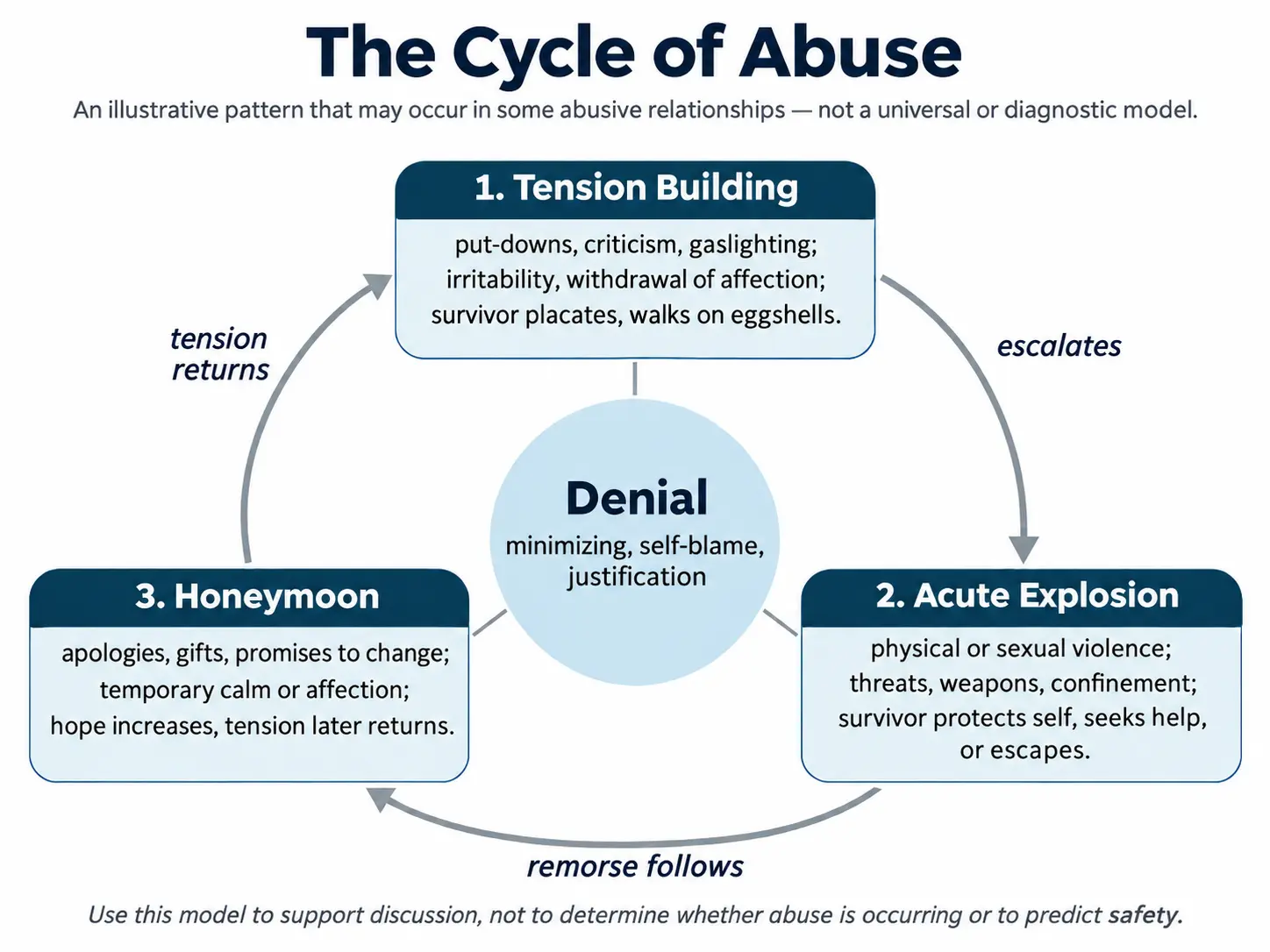
- Tension building. The abuser becomes more irritable and critical, withdraws affection, and starts gaslighting. The household feels the shift, which is where the phrase "walking on eggshells" comes from. Survivors try to calm, placate, or nurture the abuser, but this rarely prevents what comes next.
- Acute explosion. The most dangerous behavior peaks here: hitting, choking, confinement, sexual assault, or weapons. Survivors may protect themselves, call for help, fight back, or try to escape.
- Honeymoon. The abuser apologizes, cries, begs forgiveness, and gives gifts. In one example case, a client's husband bought her a new car in the color she'd always wanted, and she stayed. The calm is usually brief, and tension builds again.
- Denial at the center. Survivors may minimize, justify, or blame themselves. It's not the clinician's job to convince a client that they're being abused. Denial is often a form of psychological protection, and it deserves validation rather than confrontation.
Recognizing patterns of control creates an opening for a more direct conversation about safety. Screening helps clinicians move from general observations to a private, structured assessment of the client's experiences and current concerns. The purpose is not to force a disclosure or a decision, but to identify risks and determine what support may be appropriate.
Support Safer Assessments and More Effective Treatment Planning
Access practical screening tools, safety-planning guidance, motivational interviewing examples, and treatment-planning resources — all in one convenient clinical reference.
- Screening and risk assessment tools to help identify abuse patterns and potential safety concerns.
- Motivational interviewing phrase card with example questions and responses for sensitive conversations.
- Safety planning checklist with strategies for protecting survivors and addressing ongoing risks.
- Treatment plan goals and documentation guidance with measurable objectives, clinical interventions, and coding references.
Domestic Violence Screening and Risk Assessment
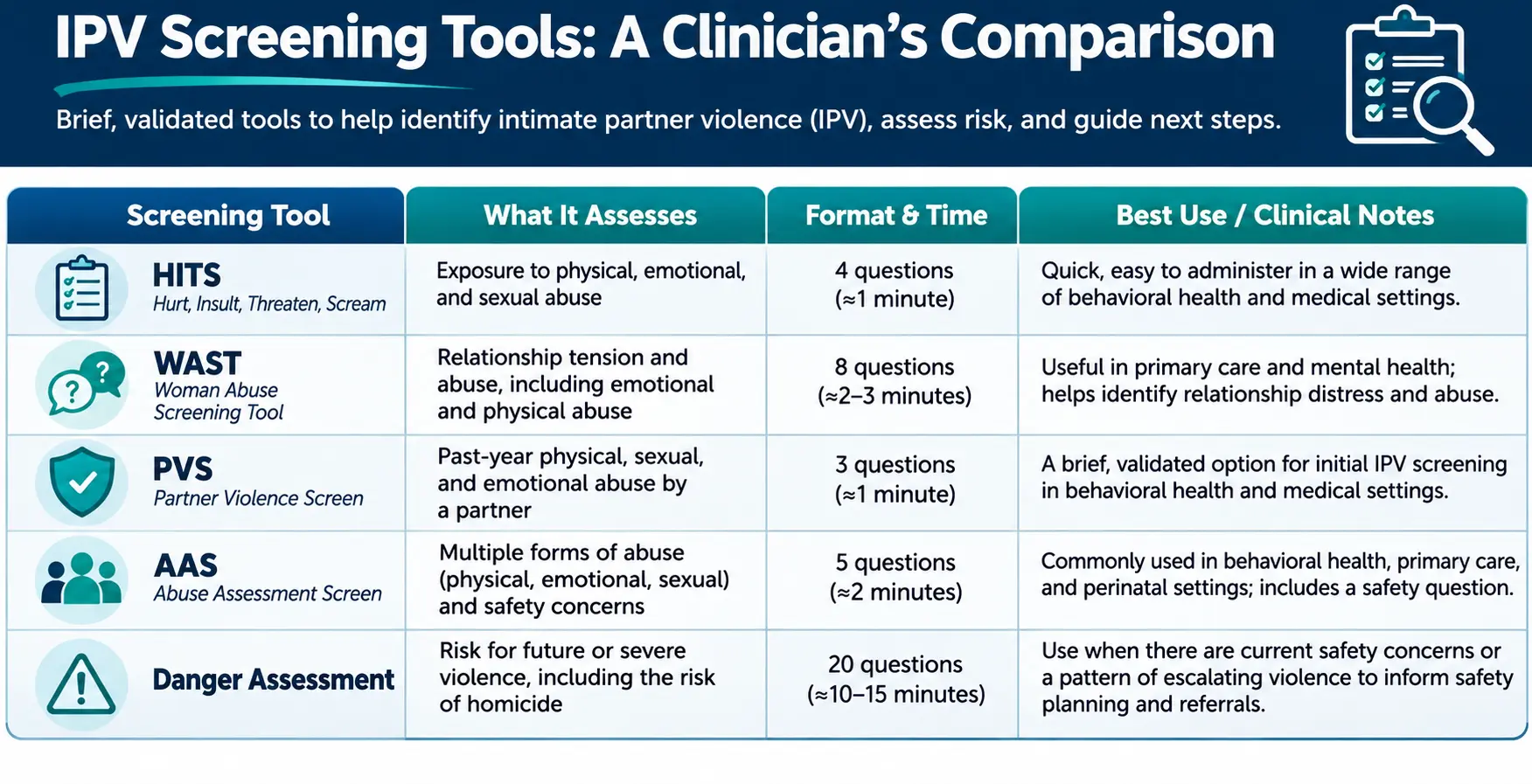
Common IPV screening tools include HITS, WAST, and PVS. A positive screen should prompt private, individualized evaluation of risk and support needs, with appropriate referral. The USPSTF's June 2025 Grade B recommendation specifically applies to screening women of reproductive age, including pregnant and postpartum women, and connecting those who screen positive with evaluation and, when appropriate, multicomponent interventions and ongoing support. The USPSTF found insufficient evidence to recommend for or against screening for caregiver abuse and neglect in older or vulnerable adults. Screen privately, without the partner or suspected person causing harm present.
Screening tools for survivors
| Tool | Length | What it covers | Best fit |
|---|---|---|---|
| HITS (Hurt, Insult, Threaten, Scream) | 4 items | How often a partner hurts, insults, threatens, or screams at the client | A fast first screen in any setting |
| WAST (Woman Abuse Screening Tool) | 8 items | Relationship tension plus emotional and physical abuse | When you need more than physical abuse |
| PVS (Partner Violence Screen) | 3 items | Physical violence and perceived safety ("Do you feel safe at home?") | Primary care and intake |
| AAS (Abuse Assessment Screen) | Brief | Abuse with attention to pregnancy | Prenatal and reproductive health settings |
| Danger Assessment (DA) | Longer | Lethality risk factors | After a positive screen, to gauge danger |
| CTS2, CAS, PMWI, ISA | Longer | Conflict tactics, composite abuse, psychological maltreatment, severity indexes | In-depth assessment and research |
Clinicians should discuss safety with teens, men, young adults, and older adults when clinically appropriate. Screening tools, validation, and recommendations can differ by population; the USPSTF Grade B recommendation above should not be interpreted as applying equally to every age or gender group.
Tools for people who may be using violence
Assessments also exist for people who cause harm. They are:
- Modified HITS reverses the questions, for example: are you hurting, insulting, threatening, or screaming at your partner?
- RVUES (Relationship Violence Use and Experience Screener) is a 10-item tool covering both perpetration and victimization.
- SARA (Spousal Assault Risk Assessment Guide) is a structured risk assessment for people who have used violence against a partner.
"Open the door" questions
When a formal screen isn't appropriate, these person-centered questions from the webinar let you explore the relationship without naming domestic violence. They move from general to specific:
- "How are things feeling for you in your relationship right now?"
- "When disagreements happen between you and your partner, what typically happens?"
- "Have there been times when you've felt afraid of your partner or worried about how they might react?"
- "How does your partner usually respond when you spend time with friends, family, or do things independently?"
- "Are there times when you feel pressured, controlled, or unable to make your own choices in the relationship?"
- "Has your partner ever said or done things that made you feel unsafe, threatened, or hurt physically or emotionally?"
- "What kinds of support or resources feel helpful to you right now, if any?"
- "What would feeling safer or more supported in your life look like for you?"
A screening questionnaire is only the beginning of a meaningful assessment. The same question can carry different implications for a young adult whose partner monitors their phone, a parent facing financial threats, or an older adult dependent on a caregiver. Clinicians therefore need to interpret screening results in the context of each client's relationships, resources, and barriers to disclosure.
Domestic Violence Assessment Across the Lifespan
Domestic violence affects every age and gender, and each life stage has its own disclosure barriers. These three composite cases show what to listen for.
Maya, 22: dating violence
Her girlfriend checks her phone, demands her location, and gets angry when Maya sees friends. She's been shoved during arguments.
Technology monitoring, isolation, physical abuse
Minimizes it because "it's never been bad enough to leave marks"
Screen young adults and teens directly, and probe for emotional and digital control, not just injuries.
David, 46: coercive control
His wife controls all the household money, monitors his spending, and threatens to call him an "unfit father" if he leaves. He describes humiliation and objects thrown at him.
Financial abuse, using children, intimidation
Believes no one will take a male victim seriously
Ask men about safety as routinely as women, and name coercive control as abuse.
Evelyn, 71: abuse and dependency
Her husband withholds her phone, medications, and transportation when angry, and grabs her during arguments.
Medical abuse, isolation, physical abuse
Fears that reporting will leave her with no one to care for her
Screen older adults privately, and plan for care alternatives before asking a dependent survivor to act.
Evelyn's case shows why dependency changes the safety calculation. When the abuser is also the caregiver, disclosure can feel like trading one danger for another.
Age and dependency are not the only factors that affect disclosure and treatment. Cultural expectations, language access, identity-related threats, and prior experiences with institutions can influence which options feel possible or safe. A responsive assessment explores these realities without assuming that clients from the same community have the same needs.
Culturally Responsive Domestic Violence Interventions
Culture changes how abuse is defined, whether it gets disclosed, and which interventions feel safe, so a culturally responsive clinician adapts the approach without lowering the priority on safety. The table below combines cultural considerations with culturally responsive approaches.
| Cultural consideration | Clinical example | Culturally responsive approach |
|---|---|---|
| Stigma and family privacy | The survivor won't disclose for fear of bringing "shame" on the family or the marriage. | Validate the cultural context while exploring safety and personal values. Discuss options that respect cultural identity. |
| Gender role expectations | Family members say it's the survivor's job to "keep the marriage together." | Offer psychoeducation on healthy relationships while affirming the client's values and autonomy. |
| Language barriers | A recent immigrant relies on the partner to translate at appointments. | Use professional interpreters, never the partner. Create private time to talk, for example by asking the partner to step out. |
| Immigration-related vulnerability | The partner threatens to withdraw sponsorship or report the survivor's status. | Explain legal protections when appropriate, and connect the client with immigration and DV advocacy services. |
| Mistrust of systems | The survivor avoids police after discriminatory experiences. | Acknowledge systemic concerns, don't push the client to contact authorities, and explore alternative supports. |
| Religious or spiritual beliefs | The faith community tells the survivor to pray, be patient, and preserve the marriage. | Explore how beliefs shape decisions, and help identify faith leaders who prioritize safety. |
| Community interconnectedness | In a small or rural community, the survivor fears gossip and losing support. | Discuss confidentiality limits clearly and identify supports outside the immediate community. |
| LGBTQ+ identity and stigma | The partner threatens to out the survivor to family or church. | Provide affirming care, assess outing-related risks, and refer to LGBTQ+-affirming DV resources. |
| Disability and caregiving | The partner controls transportation, medication, mobility, or daily care. | Build an adaptive safety plan and connect the client with disability advocacy services. |
| Financial dependence and family roles | A survivor who hasn't worked outside the home fears losing housing and income. | Assess financial resources and discuss practical steps toward economic stability. |
Once concerns have been identified, assessment should lead to something practical and collaborative. For many survivors, the most useful immediate intervention is not a directive to leave, but an opportunity to think through risk, available support, and safer choices. Safety planning translates the information gathered during screening into options the client can use in daily life.
How to Create a Domestic Violence Safety Plan
A domestic violence safety plan is a collaborative, survivor-led set of strategies for staying as safe as possible, whether the client stays, leaves, or has not decided. It is not simply a plan to leave. The client's priorities and safety concerns should shape every step, including whether any plan is written down or shared.
Domestic Violence Safety Planning Script for Therapists
"As part of our work together, I want to make sure we talk about your safety. Safety planning is about thinking ahead and identifying ways to protect yourself if you ever feel unsafe with your partner or anyone else. It's not about pressuring you to leave, but about giving you strategies and resources so you have options… This is about giving you control and information, so you feel prepared, not trapped."
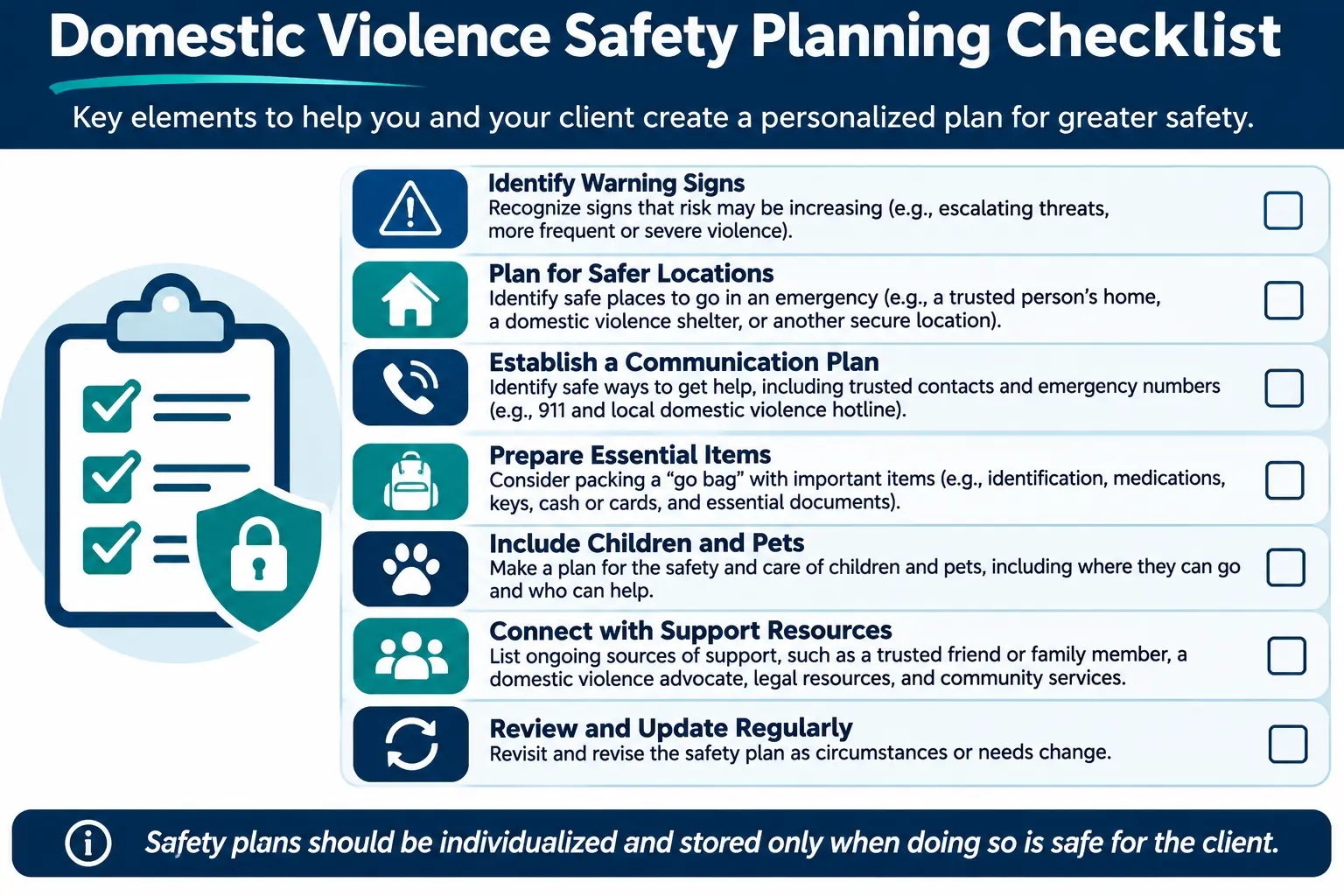
Domestic Violence Safety Plan Checklist
A domestic violence safety plan should address immediate risks, warning signs, safe locations, trusted contacts, communication options, and the needs of children or dependents. Develop the plan collaboratively and reassess whether keeping a written or digital copy could increase danger.
- Warning signs of escalation: threats, increased jealousy, property destruction, and the client's own early cues
- Safe exits and locations: safer rooms with exits, escape routes, a backup route, and places to go
- Essential items (a "go bag"): ID, financial and legal documents, keys, medications, and money
- Communication plan: safe contacts, code words, and discreet ways to ask for help
- Children, dependents, and pets: where they go, who picks children up from school, and who can foster pets
- Resources: hotlines, shelters, advocates, and protective-order information
- Review schedule: update the plan as risk changes, especially for clients still in the relationship
How to Store a Domestic Violence Safety Plan Safely
A safety plan that the abuser finds can increase danger. Clinicians now hand out paper safety plans less often for exactly this reason.
- Use a neutral title, such as "Notes," "Appointments," or "Wellness Plan."
- Consider a disguised safety app. Some safety apps are built to look like something else on the phone. Consider myPlan and Aspire News and see DomesticShelters.org's list of mobile apps for survivors.
- Protect digital copies with a password and two-factor authentication.
- Memorize the essentials, such as one phone number and one safe location, in case the phone is taken.
- Share a copy with a trusted person, and save emergency contacts under neutral names.
- Keep a prepaid backup phone charged and hidden, in case the main phone is taken or destroyed.
- Consider digital traces, including browsing history, call logs, and messages, only when doing so is safe. Device use may be monitored, and browser history cannot always be completely erased; using a safer device or speaking with a trained domestic violence advocate may be preferable.
The National Domestic Violence Hotline's interactive safety-plan guide is a good resource to share with clients.
Safety planning can reduce exposure to immediate danger, but many clients also need support for the psychological, relational, and practical effects of abuse. The next step is to match interventions to the client's goals and circumstances. A comprehensive response may involve therapy, advocacy, community coordination, or specialized services for someone who has used violence; these approaches serve different purposes and should not be treated as interchangeable.
Evidence-Based Domestic Violence Interventions and Treatment Approaches
Effective domestic violence interventions require a comprehensive, individualized approach that addresses immediate safety, the psychological effects of abuse, and the practical barriers survivors may face. For therapists, counselors, and social workers, treatment often combines evidence-based clinical techniques with collaborative safety planning, advocacy, and community resources. Interventions for people who use violence require a different approach, emphasizing accountability, risk reduction, and behavioral change. Understanding these complementary strategies helps behavioral health professionals select appropriate interventions, coordinate care, and develop treatment plans that reflect each client's circumstances, needs, and goals.
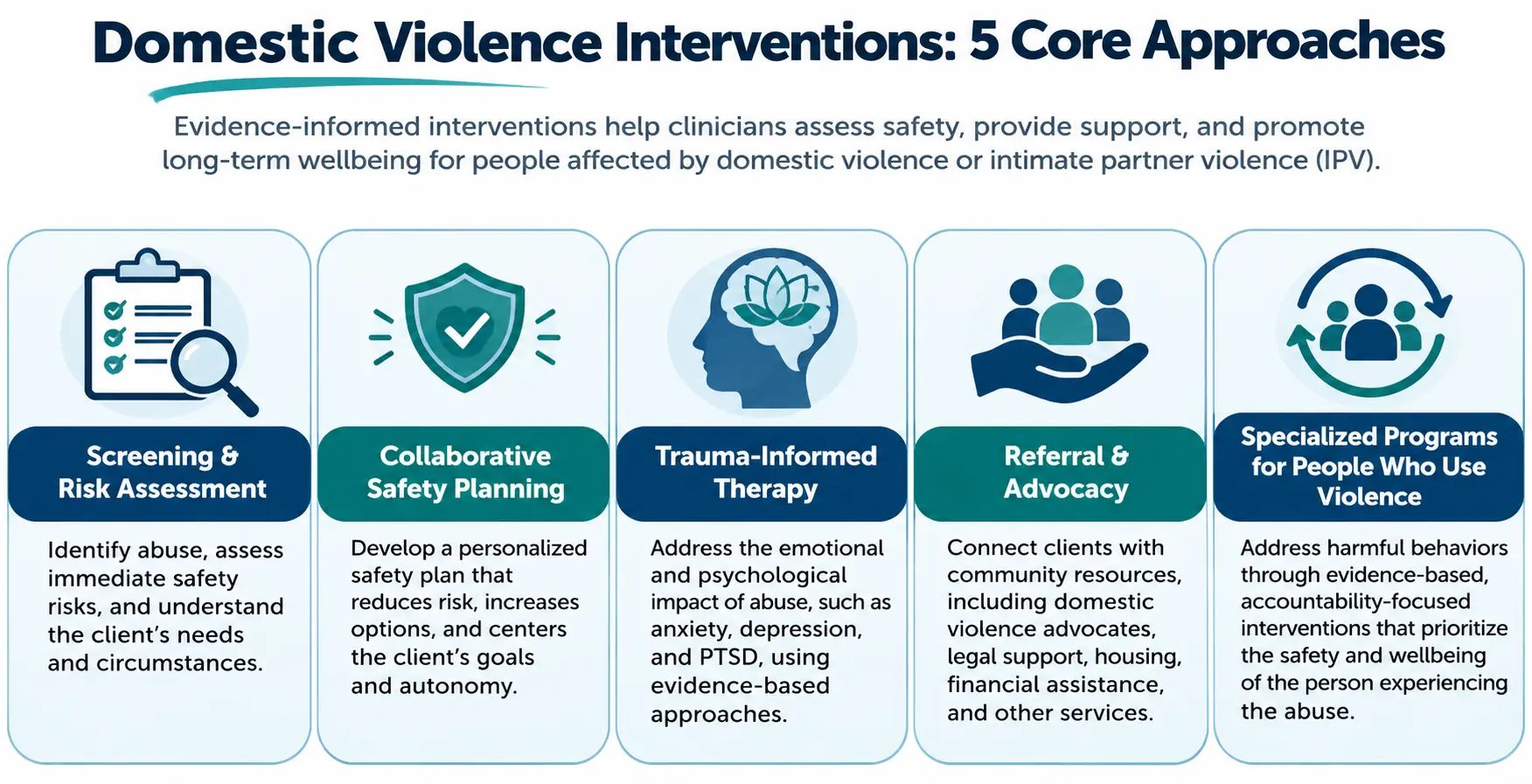
What Are the 5 Core Approaches to Domestic Violence Interventions?
Effective domestic violence care extends beyond responding to individual incidents. Five complementary approaches provide a framework for identifying risk, helping survivors make informed decisions, and addressing behavior that puts others at risk. These approaches are not necessarily sequential; clinicians may use several together and revisit them as circumstances change.
Screening and risk assessment
Recognize abuse, assess coercive control and immediate danger, and select appropriate screening or risk-assessment tools.
Collaborative safety planning
Identify warning signs, safe contacts, emergency options, and survivor-directed strategies that do not assume a client must leave.
Trauma-informed therapeutic interventions
Address psychological distress and support autonomy through approaches such as CBT, trauma-focused care, and motivational interviewing.
Advocacy and resource coordination
Connect clients with specialized advocates, housing, legal assistance, financial supports, and community services.
Specialized interventions for people who use violence
Use appropriate referrals and accountability-focused programs to address coercive behavior and reduce risk of further harm.
These five approaches provide the organizing framework for the clinical, accountability-focused, and community-based interventions discussed below.
Clinical Interventions for Survivors
Clinical interventions for survivors focus on restoring safety, reducing trauma-related distress, strengthening autonomy, and supporting long-term recovery. Treatment should be individualized rather than organized around an assumed expectation that the client will leave the relationship. Clinicians can help clients identify goals that are safe and feasible within their circumstances.
- Trauma-informed CBT: Helps address self-blame, shame, trauma-related beliefs, anxiety, and emotional regulation difficulties.
- Trauma-focused interventions: May reduce post-traumatic stress symptoms when current safety, stabilization, and readiness have been considered.
- Motivational interviewing: Uses collaborative exploration of ambivalence and reflective listening to support self-directed decisions.
- Empowerment- and strengths-based counseling: Builds on existing coping abilities, restores confidence, and helps clients identify priorities and boundaries.
- Solution-focused brief therapy: Supports achievable goals and practical near-term steps when clients face immediate obstacles.
- Somatic and body-based strategies: May support grounding, regulation, and management of physical manifestations of distress.
One trauma-focused option has strong research behind it in shelters. In a randomized trial with 172 women living in DV shelters, both HOPE (Helping to Overcome PTSD through Empowerment, a CBT-based treatment) and present-centered therapy adapted to include safety planning substantially reduced IPV-related PTSD symptoms.
Therapeutic work should remain integrated with ongoing risk assessment and survivor-directed safety planning. When coercive control or danger is active, stabilization and advocacy may take priority over intensive trauma processing. Co-occurring mental health or substance use concerns deserve care without implying that those concerns caused the abuse.
Successful domestic violence treatment is not measured solely by whether a survivor leaves an abusive relationship. Progress may include improved safety awareness, reduced trauma symptoms, greater confidence in decision-making, stronger support networks, and an increased sense of personal control.
Interventions for People Who Use Violence
Interventions for people who use violence must address accountability, coercive control, and the risk of further harm. Their goals differ from survivor-focused treatment: reducing abusive behavior and challenging beliefs that justify intimidation or domination. Clinicians should not treat a pattern of abuse simply as a mutual communication problem or a matter of anger management.
- Specialized batterer intervention programs (BIPs): Address patterns of power and control, responsibility for harm, and nonviolent choices. Program models and outcomes vary, so participation alone does not establish that risk has decreased.
- Cognitive behavioral interventions: Examine entitlement, blame, behavioral choices, and rationalizations that contribute to abusive conduct.
- Motivational interviewing: Can help explore discrepancies between stated values and behavior while maintaining accountability.
- Psychoeducation and skills development: Addresses consent, respectful communication, emotional regulation, and the consequences of coercion.
- Structured risk assessment and monitoring: Uses qualified assessment and continued review when threats, stalking, strangulation, weapons, or escalating behavior are present.
Balancing Accountability With a Nonjudgmental Approach
A respectful therapeutic relationship does not require minimizing abuse. Clinicians can identify harmful actions clearly, support responsibility, and explore alternatives without suggesting the survivor caused the behavior. For example: "You've described feeling overwhelmed during arguments, and you've also acknowledged threatening your partner. What choices did you make, and what could you do differently to prevent further harm?"
Co-occurring trauma, mental health symptoms, or substance use may require treatment, but they do not remove responsibility for abusive conduct. A specialist referral may be necessary alongside individual clinical care.
Interventions for people who use violence should prioritize accountability, risk reduction, and measurable behavioral change. Individual therapy may be appropriate for co-occurring clinical needs, but it should not automatically replace a specialized domestic violence intervention program.
Coordinated Community and Advocacy Interventions
Domestic violence can disrupt housing, financial security, healthcare, parenting, employment, and access to legal protection. These practical challenges can shape both immediate safety and therapeutic progress, so clinical treatment alone may not meet a survivor's needs. Coordinated community and advocacy interventions connect psychological care with services that address these barriers.
Advocacy-Based Domestic Violence Interventions
- Housing and shelter: Help clients explore emergency accommodation, transitional housing, and longer-term options.
- Legal advocacy: Connect clients with information about protective orders, custody, and immigration-related concerns.
- Financial and employment support: Identify benefits, financial assistance, and opportunities for economic stability.
- Healthcare coordination: Facilitate medical evaluation, reproductive care, and other health services as appropriate.
- Family and dependent support: Consider the safety and care of children, older adults, disabled dependents, and pets.
- Community-based supports: Identify culturally responsive, accessible, and affirming advocacy and peer resources.
Advocacy must remain survivor-directed. Providers can explain options without requiring contact with police, legal action, or a decision to leave.
Coordinated Community Response Models
A coordinated community response (CCR) brings behavioral health professionals, domestic violence advocates, health systems, social services, housing programs, and sometimes law enforcement or courts into a more connected response. For example, a clinician addressing trauma symptoms may work with an advocate to help a client consider safer housing and transportation options.
Coordination also introduces confidentiality and retaliation risks. Before sharing information, clinicians should explain confidentiality limits, obtain appropriate consent where required, and evaluate whether interagency communication could increase danger.
The Role of Clinical Social Workers in Coordinated Care
Clinical social workers can connect therapy with case management, benefits navigation, referrals, and systems advocacy. This is particularly valuable when financial dependence, caregiving, disability-related barriers, immigration concerns, or limited transportation complicate a survivor's options.
Coordinated intervention expands domestic violence treatment beyond the therapy session. By connecting clinical support with advocacy and community resources, providers can help survivors address both the psychological effects of abuse and the practical conditions that influence safety and recovery.
These complementary interventions illustrate why good domestic violence care requires both therapeutic skill and practical coordination. The following section translates this framework into the day-to-day responsibilities of clinical social workers.
Social Work Interventions for Domestic Violence
Social work interventions for domestic violence focus on immediate safety, emotional support, access to resources, and long-term empowerment. Clinical social workers may combine trauma-informed counseling with case management, advocacy, and collaborative safety planning to help survivors navigate emotional, financial, and practical barriers.
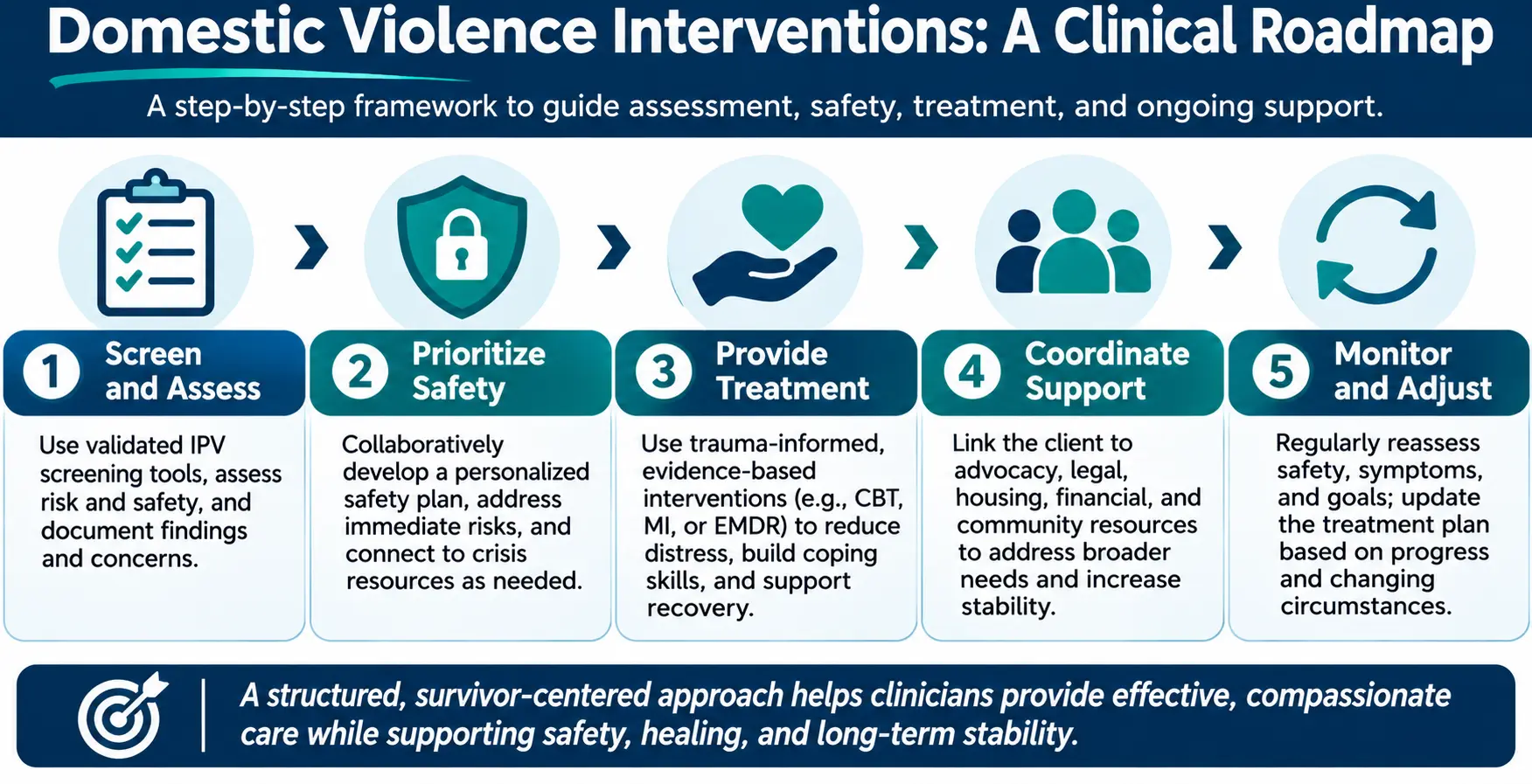
- Safety and risk assessment: Assess immediate danger, coercive control, protective factors, and the need for specialized risk assessment.
- Crisis intervention: Support stabilization, discuss immediate options, and connect clients with emergency services or advocates when appropriate.
- Case management and resource coordination: Help clients access housing, financial assistance, legal advocacy, transportation, and community resources.
- Trauma-informed counseling: Address trauma-related distress, self-blame, anxiety, and other symptoms while affirming self-determination.
- Motivational interviewing: Explore ambivalence and identify realistic, client-directed next steps.
- Multidisciplinary collaboration: Coordinate with advocates, medical teams, and other supports while protecting confidentiality and obtaining appropriate consent.
Tailor these interventions to the client's circumstances and priorities rather than assuming that leaving the relationship is the immediate treatment goal.
Across these clinical and community interventions, the way a therapist conducts the conversation matters. Survivors may feel conflicted about what to do next, particularly when leaving could affect their housing, finances, children, or personal safety. Motivational interviewing offers a collaborative way to explore that uncertainty while preserving the client's sense of control.
Motivational Interviewing for Domestic Violence: Techniques and Examples
Motivational interviewing (MI) fits domestic violence work because it targets ambivalence and protects autonomy, which a controlled client has already lost. Survivors often feel torn between reasons to stay and reasons to leave. MI meets that ambivalence instead of arguing with it. The last thing you want to do is exert control over somebody that is being controlled already. MI works with both survivors and people who have used violence, and it builds the trust that later interventions depend on.
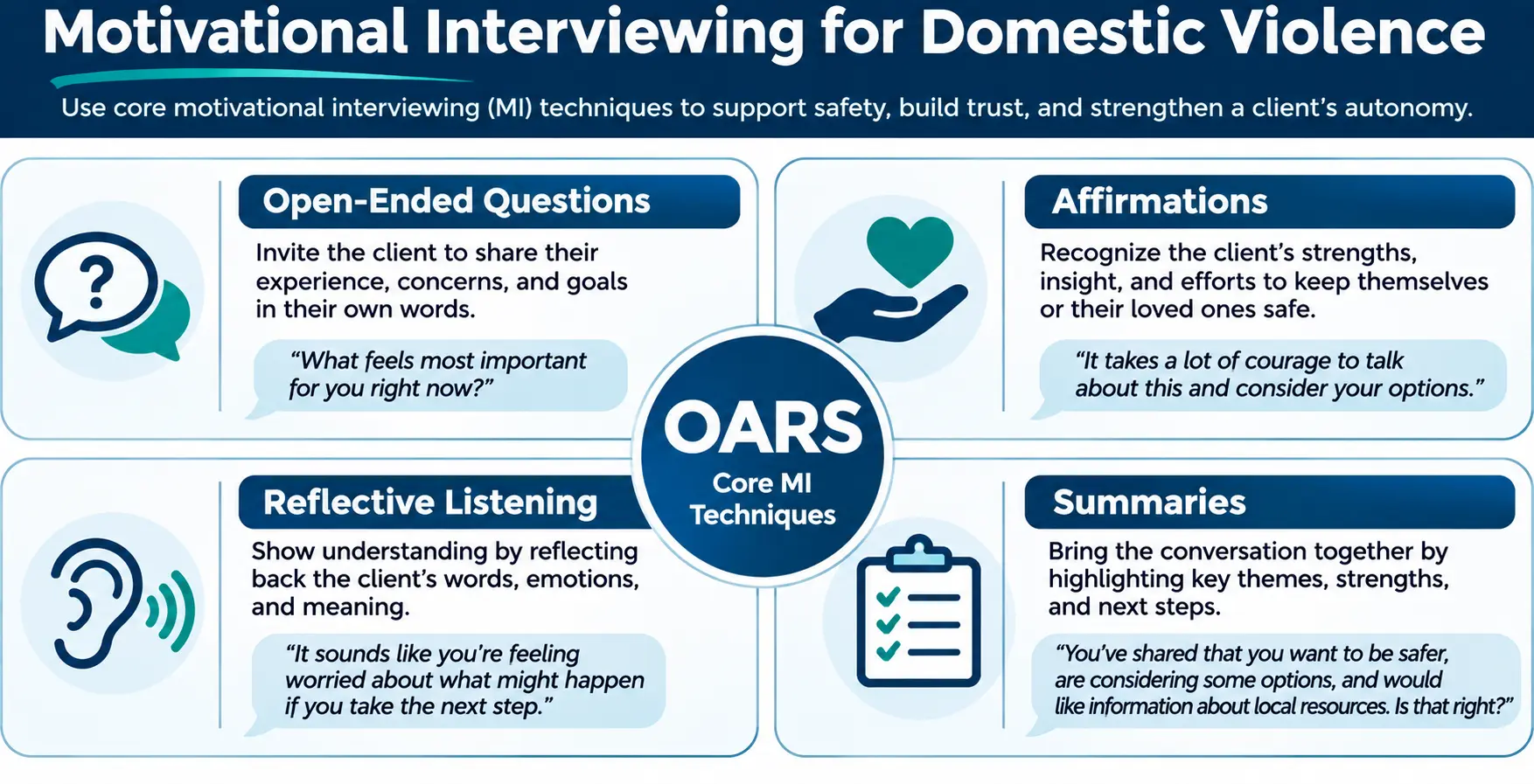
Core clinical recommendations:
- Use open-ended questions and reflective listening.
- Let the client define what "change" or "safety" means.
- Explore ambivalence gently, without pushing a decision.
- Affirm strengths and past coping.
- Combine MI with concrete safety planning.
- Match your approach to the client's stage of change, from precontemplation to action.
Motivational Interviewing Techniques With Example Phrases
| MI skill | Purpose in DV work | Example |
|---|---|---|
| Open-ended questions | Explore feelings, safety concerns, and dynamics | "What concerns do you have about how conflict happens in your relationship?" |
| Reflective listening | Validate the client's experience and reduce defensiveness | "It sounds like part of you wants things to change, but another part of you feels unsure about what that might look like." |
| Affirmations | Reinforce strength and steps toward safety or accountability | "It took courage to talk about this today and consider your options." |
| Summarizing | Organize thoughts and highlight ambivalence | "You've shared that you care about the relationship, but you're also feeling increasingly unsafe and isolated." |
| Exploring ambivalence | Examine mixed feelings about leaving, seeking help, or changing | "What are some things that make it hard to consider making changes right now?" |
| Eliciting change talk | Draw out the client's own reasons for change | "What might be different in your life if the relationship felt safer or more respectful?" |
| Developing discrepancy | Contrast behavior with stated values (useful with people who use violence) | "You've said being a supportive partner is important to you. How do you see that fitting with the arguments that sometimes become aggressive?" |
| Rolling with resistance | Lower defensiveness when a client minimizes | "You're not sure that the behavior is a serious problem right now." |
| Supporting self-efficacy | Build confidence in the client's ability to act | "You've handled difficult situations before and found ways to protect yourself." |
| Collaborative goal setting | Turn the conversation into a small, client-chosen step | "What small step would feel realistic for you this week to increase safety or reduce conflict?" |
Scripts for working with people who have used violence
Accountability and nonjudgment can coexist. Consider these scripts:
- Introducing accountability: "My role is not to judge you, but I do want to be clear that behaviors that harm or control a partner are serious and can have lasting effects."
- Addressing minimization: "You've shared that the argument 'got out of hand,' and at the same time you mentioned pushing your partner… Can we talk about what led up to that and what other options might have been possible?"
- Referral: "There are specialized programs designed to help people understand patterns of control and learn safer ways of handling conflict."
A supportive therapeutic conversation becomes more clinically useful when it is translated into specific, observable treatment goals. Documentation should show not only what the client disclosed, but also how the clinician assessed safety, selected interventions, and adapted the plan over time. This is especially important when care involves multiple providers or changing levels of risk.
Domestic Violence Treatment Planning and Documentation
Organize DV treatment plans in phases: safety first, then symptom reduction, then empowerment and reconnection. Write each goal so it ties to an intervention you can document every session. Treat safety assessment as ongoing, not a one-time intake item.
Treatment plan goals and interventions by phase
| Phase | Example goals | Example interventions |
|---|---|---|
| 1. Safety and stabilization | Increase physical and emotional safety; identify warning signs of escalation; reduce immediate risk | Collaborative safety planning; identifying safe spaces and contacts; a technology-safety review |
| 2. Trauma symptom reduction | Decrease anxiety, hypervigilance, and distress; improve sleep and emotion regulation | Grounding; psychoeducation on trauma responses; mindfulness and body regulation; cognitive restructuring of self-blame |
| 3. Self-efficacy and empowerment | Increase confidence in decisions; restore autonomy and identity | Strengths identification; values clarification; problem-solving; MI to explore options |
| 4. Cognitive and emotional impact | Reduce shame and self-blame; challenge internalized messages from the abuse | CBT; narrative therapy; compassion-focused exercises |
| 5. Social support and connection | Reduce isolation; strengthen support networks and boundaries | Identifying safe supports; boundary-setting skills; referral to DV advocacy or support groups |
| 6. Long-term healing | Process trauma; build resilience; support safe future relationships | Trauma-focused therapy (such as TF-CBT or somatic regulation) once the client is stable; relationship-pattern exploration |
To make a goal measurable, add an individualized target and timeframe. For example: "Within four sessions, client will identify three warning signs of escalation and two safe contacts, and will select a preferred approach to remembering safety strategies." Do not require the client to create or keep a written or app-based plan if this could increase risk.
Examples of Measurable Domestic Violence Treatment Plan Goals
Domestic violence treatment plan goals should reflect a client's individual safety concerns, symptoms, and priorities. These examples are illustrative and require clinical adaptation.
01 Improve Safety Awareness and Preparedness
Objective: Within four sessions, the client will identify three warning signs of escalating danger and two safe sources of support.
Interventions: Ongoing risk assessment, collaborative safety planning, and psychoeducation about coercive control.
02 Reduce Trauma-Related Distress
Objective: Over eight sessions, the client will identify and practice three coping strategies for trauma-related anxiety, hypervigilance, or emotional distress.
Interventions: Grounding techniques, trauma-informed CBT strategies, and emotion-regulation skills as clinically appropriate.
03 Strengthen Autonomy and Decision-Making
Objective: Within six sessions, the client will identify three personal priorities and two feasible, self-directed steps to improve safety or access support.
Interventions: Motivational interviewing, strengths-based counseling, and collaborative problem-solving.
When a client chooses to stay
Keep the plan active and nonjudgmental. Include safety strategies for both staying and leaving, keep reassessing risk (threats, weapons, strangulation history), and revisit resources periodically without pressure. Normalizing ambivalence is part of the treatment, not a barrier to it.
Documentation essentials
- Record objectively: disclosures in the client's own words, observed or reported injuries, threats, risk factors, and every safety-plan update.
- Know your obligations: mandated reporting rules for children and vulnerable adults, duty to warn or protect where it applies, and the limits of confidentiality. Discuss those limits with the client early.
- Consider who can read the record. A note accessed by a person causing harm through a shared patient portal or device can raise danger. Federal information-blocking rules include a Preventing Harm exception under defined conditions; use it only after checking applicable requirements, institutional policies, and individual circumstances. Document any decision and consult privacy or legal specialists when needed (Health Affairs; Futures Without Violence).
ICD-10-CM codes often used in DV-related behavioral health care
Code the treated condition, such as PTSD or depression, alongside the applicable Z-code, and confirm with your payer and the current code set.
| Code | Description |
|---|---|
| Z69.11 | Encounter for mental health services for victim of spousal or partner abuse |
| Z69.12 | Encounter for mental health services for perpetrator of spousal or partner abuse |
| T74.11- / T76.11- | Adult physical abuse, confirmed / suspected (7th character required) |
| Z91.41- | Personal history of adult abuse (for example, Z91.414, personal history of adult intimate partner abuse) |
| Z63.0 | Problems in relationship with spouse or partner (excludes counseling for partner abuse, which is coded to Z69.1-) |
The preceding assessment, treatment, and documentation guidance can feel complex when applied to real clinical encounters. The following checklist brings the essential practices together as a quick reference. It is intended to support clinical judgment, not replace individualized safety assessment or supervision.
Domestic Violence Intervention Checklist for Clinicians
Several principles connect every stage of domestic violence care: reassess safety over time, respond without judgment, and distinguish patterns of abuse from ordinary relationship disagreement. These ten practices help clinicians carry those principles through assessment, treatment, consultation, and documentation.
- Make safety ongoing. Reassess risk and update the safety plan throughout treatment, not just at intake.
- Stay nonjudgmental and trauma-informed. Check your own biases, especially if you have lived experience with DV.
- Avoid couples or conjoint sessions when there is active or recent violence. Couples therapy is generally contraindicated until safety issues are addressed. Do individual work first.
- Hold people who use violence accountable for patterns of control, minimization, and responsibility, without shaming them.
- Assess for non-physical abuse: emotional, financial, technological, medical, and legal.
- Never pressure a survivor to leave. Respect self-determination and plan for both staying and leaving.
- Collaborate across systems, including advocates, attorneys, law enforcement, and medical providers, while maintaining appropriate confidentiality.
- Assess for co-occurring issues such as substance use and mental health conditions, without attributing the violence to them.
- Document carefully, and consider who could access the record.
- Use supervision and consultation to manage countertransference, ethical complexity, and your own safety.
A script for the couples boundary: "When there are concerns about violence or fear in a relationship, it is generally not safe or appropriate to conduct joint therapy until those safety issues are addressed. My priority is ensuring that everyone involved is safe before considering any form of couples work."
Consistent documentation can be difficult when clinicians must track safety concerns, therapeutic goals, referrals, and changes across multiple visits. A structured clinical workflow can help teams connect these elements without reducing a sensitive experience to a checklist. The following examples show how ICANotes can support the recording and follow-up of care, while still requiring careful decisions about privacy and portal access.
Supporting Domestic Violence Treatment and Documentation with ICANotes
Providing effective domestic violence interventions requires more than selecting the right therapeutic techniques. Clinicians must also document risk assessments, develop individualized treatment plans, monitor progress, and maintain accurate records while protecting sensitive client information. An electronic health record (EHR) designed for behavioral health can help organize these responsibilities and support continuity of care.
ICANotes offers documentation and practice management tools that help therapists, counselors, and clinical social workers manage the ongoing clinical work involved in treating individuals affected by domestic violence.
Document Assessments and Clinical Interventions
Domestic violence treatment often involves reassessing safety, monitoring trauma-related symptoms, and documenting changes in a client's circumstances over time.
ICANotes supports structured behavioral health documentation through customizable, menu-driven progress notes. Clinicians can record relevant symptoms, clinical observations, interventions delivered, and client responses while maintaining a consistent documentation process.
Standardized assessments can also support clinical evaluation and ongoing symptom monitoring. When using sensitive domestic violence screening tools, clinicians should carefully consider whether sharing assessments electronically could create safety risks.
Connect Treatment Plans to Progress Notes
Domestic violence treatment plans often address several interconnected goals, including safety awareness, trauma symptom reduction, emotional regulation, self-efficacy, and access to supportive resources.
ICANotes allows clinicians to develop individualized treatment plans and link treatment goals and interventions to progress notes. This helps demonstrate how each session contributes to the client's broader treatment objectives.
For example, a clinician working with a survivor experiencing trauma-related anxiety might document the use of grounding exercises, cognitive restructuring, or motivational interviewing and connect those interventions to measurable treatment goals.
This continuity between treatment planning and session documentation can help clinicians monitor progress and maintain organized records throughout the course of care.
Support Consistent, Thoughtful Clinical Documentation
Domestic violence cases can involve particularly sensitive information, including disclosures of abuse, threats, safety concerns, and details about family relationships.
Accurate documentation is essential, but so is considering how clinical records may be accessed or shared. Clinicians should document objectively, follow applicable confidentiality and reporting requirements, and evaluate potential risks before sending sensitive assessments or safety-planning materials through a patient portal.
ICANotes provides structured tools for maintaining clinical documentation, while decisions about what to record, disclose, or share remain matters of professional judgment and applicable privacy requirements.
When documentation is organized around the client's needs and treatment goals, clinicians can spend less time managing administrative details and more time providing trauma-informed, individualized care.
See How ICANotes Supports Behavioral Health Documentation
From intake assessments and individualized treatment plans to progress notes and ongoing care, ICANotes helps behavioral health professionals manage the documentation requirements of clinical practice.
Document DV care with confidence
ICANotes helps clinicians connect safety assessments, measurable goals, and progress notes while protecting sensitive client information. Start your free trial to see it in your own workflow.
- Menu-driven progress notes for trauma-informed care
- Link measurable safety goals to each session's interventions
- Built-in Z-code and diagnosis coding support
- Structured records with privacy-aware documentation
See how ICANotes can support your clinical workflows for domestic violence interventions. Start your free 30-day trial, no credit card required.
Start Your Free 30-Day Trial
Frequently Asked Questions About Domestic Violence Interventions
What are the main types of interventions for domestic violence?
What is the most effective intervention for domestic violence survivors?
Why is motivational interviewing used for domestic violence?
What screening tools are used for intimate partner violence?
Should therapists do couples therapy when there is domestic violence?
What should a domestic violence safety plan include?
Are therapists required to report domestic violence?
What should a clinician do if a client chooses to stay in an abusive relationship?
What ICD-10 code is used for counseling a victim of partner abuse?
Domestic Violence Resources for Clinicians and Clients
Therapists do not have to provide every form of support themselves. Referral relationships with advocates, crisis services, and specialized clinical programs can help clients access options that extend beyond an individual session. The resources below offer starting points for safety planning, assessment, and population-specific support.
Crisis and safety planning
- National Domestic Violence Hotline: Create a Personal Safety Plan, 1-800-799-7233
- DV Safety Plan template (Shelter for Help in Emergency)
- DV Safety Checklist (Life Crisis Center)
- Mobile apps for victims and survivors (DomesticShelters.org)
- DV resources by state (DOJ Office on Violence Against Women)
Clinical guides and assessment
- Risk assessment tools (DomesticShelters.org)
- APA guide: Treating women who have experienced IPV
- [CBT for IPV guide with handouts](https://www.dshs.wa.gov/sites/default/files/ESA/csd/documents/dv/CBT for IPV Guide with Handouts UW Harborview Curriculum.pdf) (UW Harborview curriculum)
- Mental health care in the context of IPV: survivor perspectives (PMC)
- National Resource Center on Domestic Violence
- Video: MI with an IPV survivor (demonstration) · Working with a client in a DV situation
Specific populations
- Supporting LGBTQ survivors (VAWnet) · DVA Foundation
- Domestic violence against men (HelpGuide)
- Teen dating violence prevention resources (NSVRC)
References
- U.S. Preventive Services Task Force. Intimate Partner Violence and Caregiver Abuse of Older or Vulnerable Adults: Screening. Final recommendation, June 24, 2025.
- Johnson, D. M., et al. A randomized controlled trial comparing HOPE treatment and present-centered therapy in women residing in shelter with PTSD from intimate partner violence. Psychology of Women Quarterly, 2020. Summary.
- Potential implications of federal regulations for survivors of intimate partner violence. Health Affairs Forefront, 2024.
- Futures Without Violence. 21st Century Cures Act: summary and recommendations to promote patient privacy for survivors. 2025.
- AAPC: ICD-10-CM code Z69.11
- Bigler, D. Understanding and Responding to Domestic Violence Webinar. ICANotes.
- National Domestic Violence Hotline. Internet Safety for Survivors. https://www.thehotline.org/plan-for-safety/internet-safety/
Diane Bigler
Diane Bigler, LCSW, LSCSW, is a Licensed Clinical Social Worker in Missouri and Kansas with over 25 years of experience in the mental health field. She has held clinical positions as an outpatient and in-home therapist and clinical supervisor in diverse settings. Diane was an Adjunct Professor of Social Work for 10 years at The University of Kansas, School of Social Welfare and a Field Liaison and Field Instructor. She has also held administrative positions as a Program Director and Coordinator. Diane is a popular local and national trainer on a wide variety of mental health and workplace development topics for clinicians and corporations and has facilitated over 500 training courses in the last few years.