
Anticipatory Grief: Symptoms, Stages & Treatment
Anticipatory grief is the emotional, cognitive, and behavioral response to a loss that has not yet happened but is expected — most often a terminal diagnosis, but also dementia, incarceration, retirement, or any other foreseen ending. It can include sadness, anxiety, guilt, anger, and denial, often alongside the ordinary demands of caregiving, and it does not require a death to be valid or treatable.


What You'll Learn
- What anticipatory grief means and how it differs from grief after a loss
- Common emotional, cognitive, physical, and behavioral symptoms
- Examples involving terminal illness, dementia, life transitions, and pets
- Why the five stages of grief should not be treated as a fixed sequence
- How to assess and treat anticipatory grief using practical clinical interventions
- When grief-related distress may require additional support or a higher level of care
If you carry a caseload of caregivers, family members of patients with a life-limiting illness, or clients quietly bracing for a loss that hasn't arrived yet, you have already met anticipatory grief — even if the chart says "adjustment disorder" or "generalized anxiety." It is one of the more commonly missed presentations in outpatient behavioral health, in part because clients themselves rarely name it. They describe guilt, exhaustion, irritability, or a strange numbness toward someone who is still very much alive, and they often assume something is wrong with them rather than recognizing a well-documented grief response.
This guide walks through what anticipatory grief is, how it shows up across a range of client situations — not only terminal illness — and what the research and clinical literature support as effective ways to assess and treat it.
What Is Anticipatory Grief?
Anticipatory grief is grief that begins before a loss occurs rather than after it. The term was coined by psychiatrist Erich Lindemann in 1944, describing the dread and emotional preparation of military families who understood, well before any telegram arrived, that a loved one's death in combat was a real possibility 1]. Grief researcher [Therese Rando later expanded the concept in her foundational text Loss and Anticipatory Grief, describing it as the "total set of cognitive, affective, cultural, and social reactions to expected death" experienced by patients and their families alike [2].
Clinically, anticipatory grief is distinct from post-death grief in one important way: the loss is still unfolding. A client can be actively caregiving, planning, and hoping in one moment, and grieving in the next. This is why clinicians sometimes describe it as "living in two worlds" — one foot in the present relationship, one foot already rehearsing its absence.
A metaphor that resonates with many clients: anticipatory grief is like watching a storm roll in over the ocean. The sun still warms your skin and the loss hasn't landed yet, but you can feel the weight of what's coming, and you start bracing — and grieving — before a single drop falls.
What Anticipatory Grief Means Beyond a Terminal Diagnosis
Anticipatory grief is often discussed only in the context of a terminal illness, but the anticipatory grief meaning clinicians should work from is broader: it applies to any foreseen, significant loss — not only death. Clients can present with the same emotional and cognitive signature — separation anxiety, existential aloneness, denial, sadness, disappointment, anger, resentment, guilt, exhaustion, and even relief-driven guilt — in response to a wide range of anticipated endings.
| Category | Examples clinicians commonly see |
|---|---|
| Health and end-of-life | A loved one's terminal diagnosis, a progressive neurocognitive disorder (dementia, ALS), a client's own life-limiting diagnosis, a pet's terminal illness |
| Caregiving transitions | A parent or spouse moving into a nursing facility, hospice admission, loss of a loved one's independence |
| Life-stage and identity transitions | Retirement, a child leaving for college, an "empty nest," aging out of a caregiving or professional role |
| Relational and circumstantial loss | Divorce or a planned separation, a loved one's incarceration, immigration or forced relocation, an impending layoff |
| Collective or public loss | Anticipated community-wide disruption (a base closure, a lockdown, a natural disaster forecast) |
Recognizing this broader scope matters diagnostically: a client who is inconsolable about an upcoming retirement or a pending prison sentence for a family member is not "overreacting" — they are grieving a real, foreseeable loss, and the same clinical frameworks that apply to caregivers of the terminally ill apply here too.
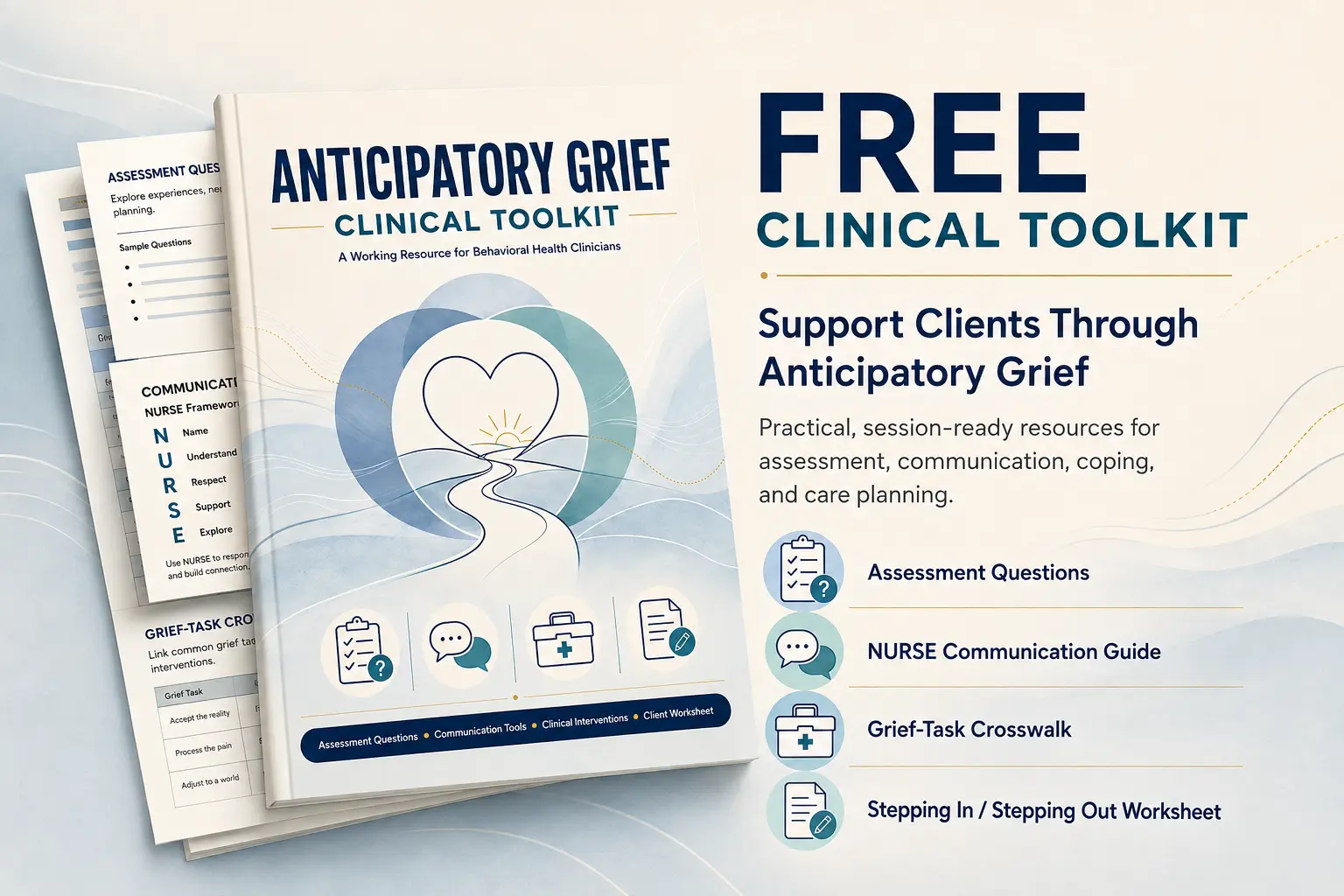
Free Anticipatory Grief Clinical Toolkit
Turn the concepts in this guide into practical tools you can use in session. Download the free toolkit and use it to help clients name their experience, explore conflicting emotions, build restorative coping strategies, and adapt gradually to an expected loss.
- Structured assessment questions
- Grief-risk quick guide
- NURSE communication framework
- Tasks-of-grief crosswalk
- Stepping in/stepping out worksheet
Recognizing Anticipatory Grief Symptoms in Session
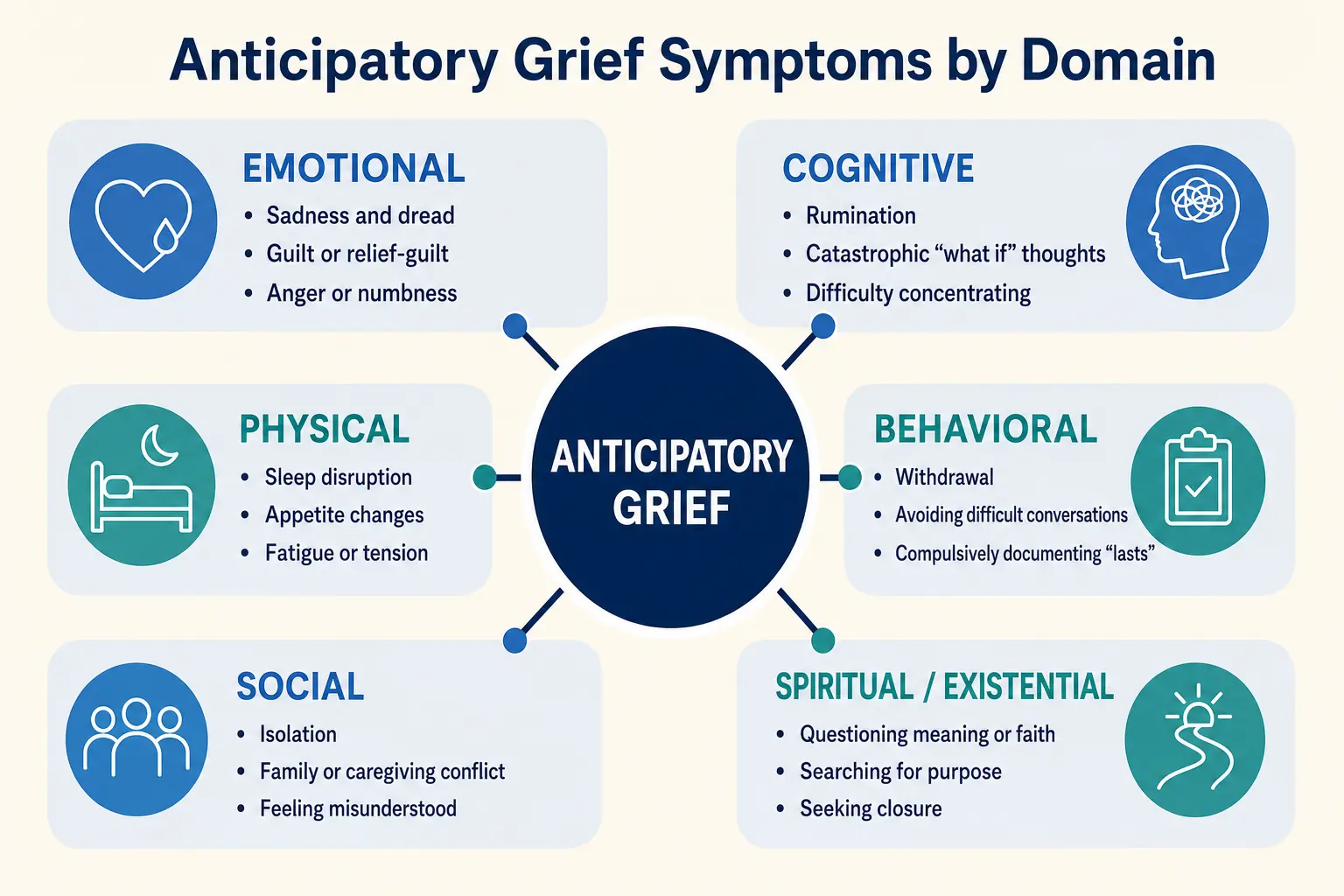
Anticipatory grief symptoms cluster across the same domains you already assess for in a biopsychosocial intake — they just show up in relation to a loss that hasn't happened yet. A useful screening approach is to move through each domain deliberately, since clients rarely volunteer all of them unprompted.
| Domain | What you may observe | A question that opens the door |
|---|---|---|
| Emotional | Sadness, dread, guilt, anger, relief-guilt, numbness, mixed or contradictory feelings | "Do you ever feel two conflicting things about this at once — like sadness and relief, or love and resentment?" |
| Cognitive | Preoccupation or rumination, catastrophic "what if" thinking, difficulty concentrating, intrusive rehearsals of the future | "Do you find yourself imagining how things will be afterward, even though you don't want to?" |
| Physical | Sleep disruption, appetite change, fatigue, tension-related complaints | "Have you noticed changes in your sleep or energy since this began?" |
| Behavioral | Withdrawal from usual activities, avoidance of the topic with the person who is ill, or the opposite — compulsively documenting time together | "Are you finding it harder to talk about this with [person], or to be around other people right now?" |
| Social | Isolation, friction with family over caregiving roles, feeling that others "don't get it" because the person is still alive | "Do you feel like the people around you understand what you're going through?" |
| Spiritual/existential | Questioning meaning, purpose, or faith; searching for closure before the loss has occurred | "Has this brought up any bigger questions for you about meaning, faith, or what matters?" |
Clinically, this pattern of caregiver distress is well documented in the dementia caregiving literature in particular, where anticipatory grief has been linked to depressive symptoms and caregiver burden independent of the eventual bereavement [4,7,8].
Anticipatory Grief Examples in Clinical Practice
Seeing the pattern across a few different client situations makes it easier to recognize in your own caseload.
A spousal caregiver. A 58-year-old client has been caring for her husband since his stage IV cancer diagnosis. She reports deep sadness even though he is still alive, catches herself emotionally withdrawing "to prepare," feels guilty for the moments of relief she gets when she has time to herself, and grieves the retirement and travel plans the couple will now never share.
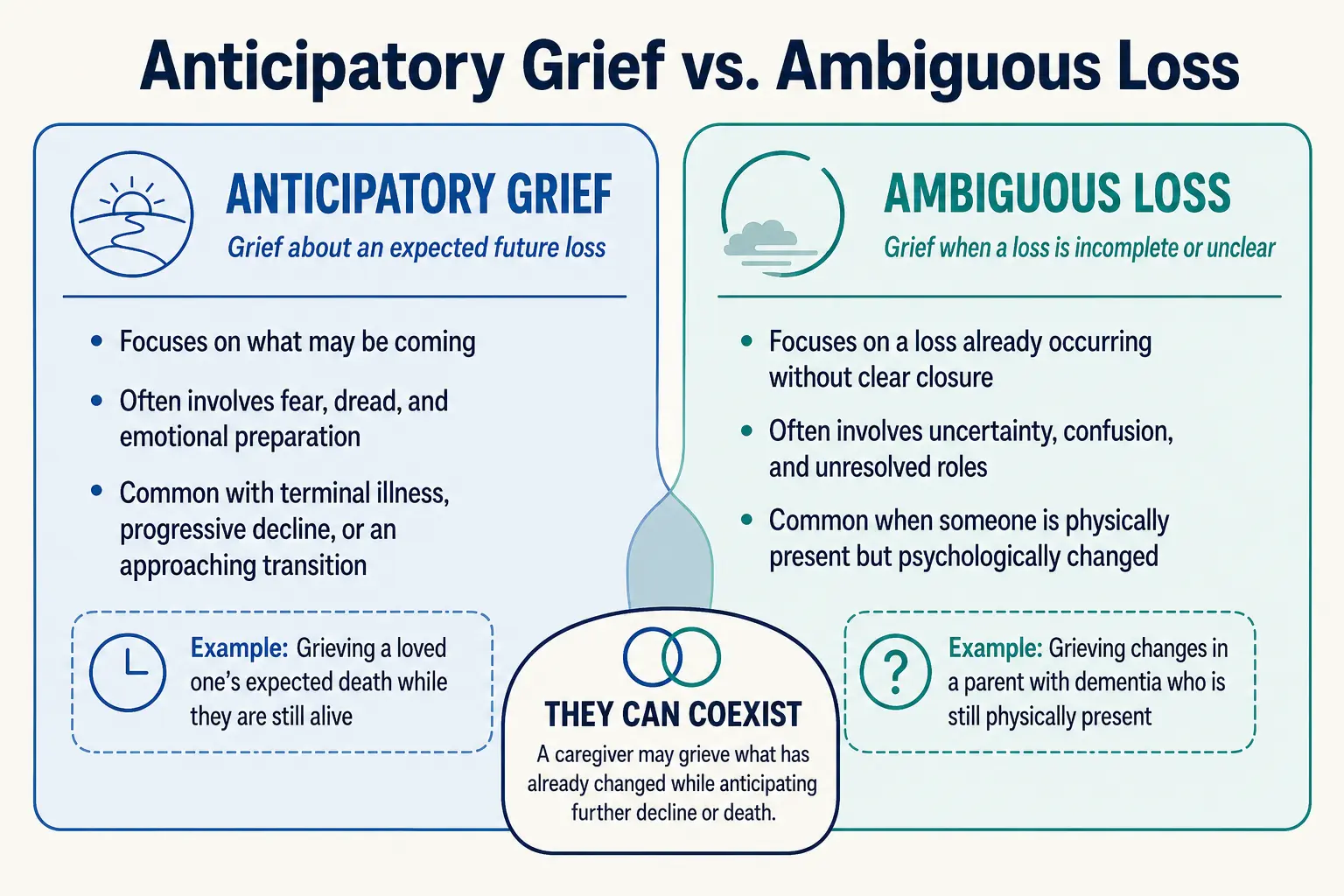
An adult child of a parent with dementia. A 35-year-old client watches his mother gradually lose her memory and personality. He grieves "the mother he knew" even though she is physically present, feels helpless and frustrated when she doesn't recognize him, and misses the closeness and shared routines that are slipping away — a pattern sometimes called ambiguous loss, since the person is physically present but psychologically changed.
Anticipatory grief and ambiguous loss frequently overlap, particularly when a loved one has dementia or another progressive condition. Anticipatory grief centers on a loss a person expects will occur in the future. Ambiguous loss describes a loss that is already occurring but remains incomplete or unclear — for example, when a loved one is physically present but psychologically or relationally changed. A caregiver may therefore experience both at once: grieving the person and relationship that have already changed while anticipating further decline and eventual death.
A parent of a child with a terminal diagnosis. A 29-year-old client's four-year-old daughter has a rare, untreatable genetic disorder with an estimated life expectancy of less than a year. She cries frequently, obsessively documents every moment with her daughter out of fear that time is slipping away, swings between denial and intense sorrow, and feels guilty for the moments she catches herself imagining life afterward.
A composite case for illustration
Maria, 47, is the primary caregiver for her 75-year-old father, who has end-stage metastatic lung cancer.
She was referred for overwhelming sadness, sleep disturbance, tearfulness, and difficulty concentrating at work.
On assessment, she screens in the moderate range on both the PHQ-9 and GAD-7, reports intrusive thoughts about her father's decline, avoids conversations about his end-of-life wishes, and states, "I'm grieving him while he's still here." She also carries guilt about "letting him go" and worries about how her own children will cope.
A multidisciplinary plan for a client like Maria typically combines individual therapy (cognitive reframing of guilt-laden thoughts, emotion-focused validation of her grief), grief education normalizing anticipatory grief as a legitimate and common response, legacy-building activities with her father, a family meeting to resolve caregiving conflict with a sibling, and a referral to the hospice social work and chaplaincy team already involved in her father's care.
The 5 Stages of Anticipatory Grief — and Why "Stages" Can Be Misleading
Clients (and clinicians) often search for the "5 stages of anticipatory grief," borrowing Elisabeth Kübler-Ross's five stages of dying — denial, anger, bargaining, depression, and acceptance — and applying them to the grief experienced before a loss rather than after one [9]. Used loosely as a map of common reactions, this framework can help normalize what a client is feeling.
| Stage | How it may appear in anticipatory grief |
|---|---|
| Denial | Minimizing the prognosis, avoiding planning conversations, "they'll be fine" |
| Anger | Frustration at the illness, the medical system, or even at the person who is declining |
| Bargaining | "If I just do everything right, maybe this won't happen" — over-functioning, seeking second and third opinions |
| Depression | Sadness, withdrawal, hopelessness about the future |
| Acceptance | Beginning to plan realistically, finding moments of peace alongside grief |
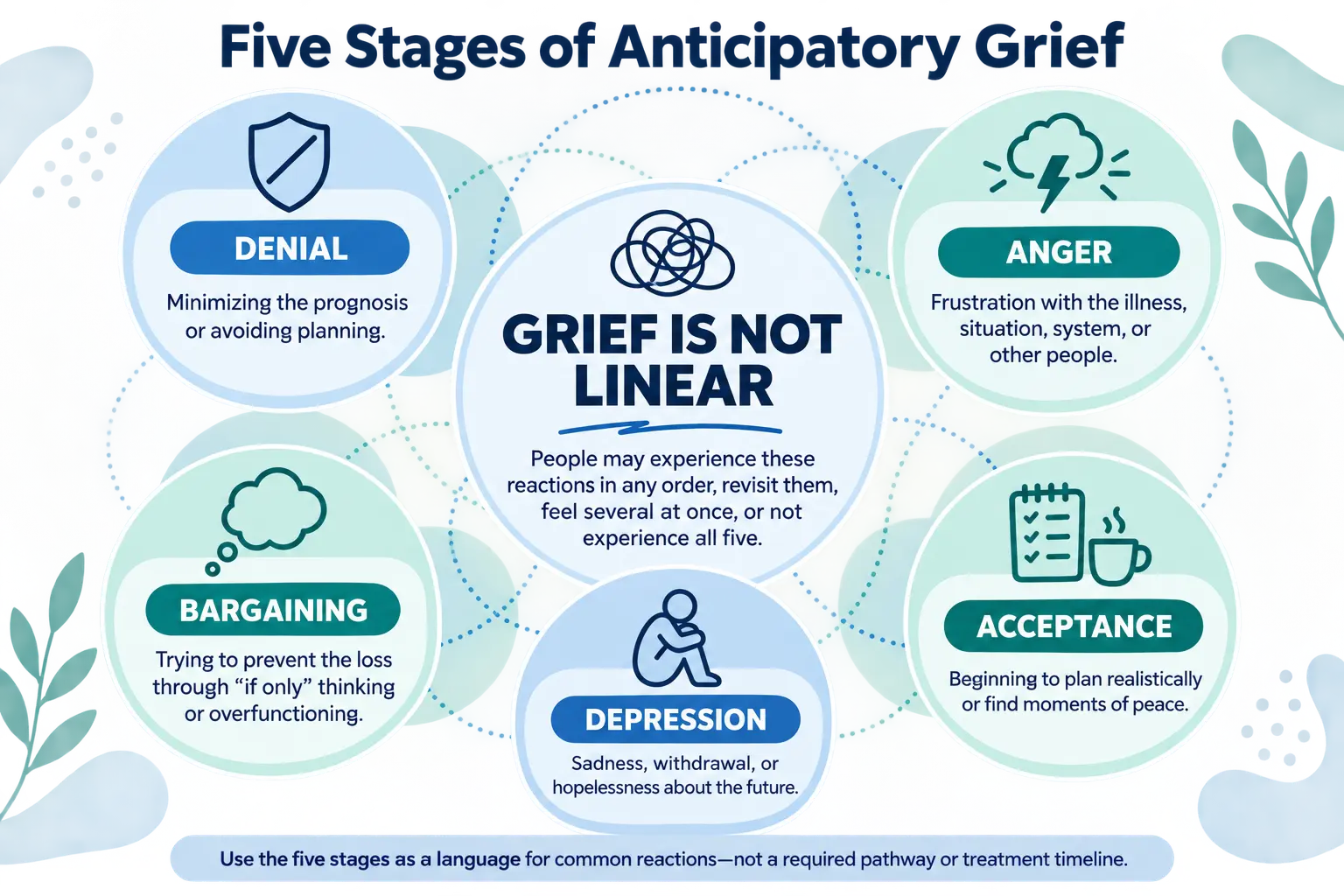
The important clinical caveat: research on grief consistently shows that people do not move through stages in a fixed, linear order, and imposing that expectation can leave clients feeling like they are "grieving wrong" when their emotions don't arrive on schedule. Grief researcher J. William Worden's Four Tasks of Mourning — accepting the reality of the loss, working through the pain, adjusting to a changed environment, and finding a way to emotionally relocate the relationship — describes the same territory without the fixed sequence, and maps just as well onto a loss that hasn't happened yet as one that has [3]. Social work researcher Gerda Lebow's six tasks for facilitating adaptation in anticipatory mourning add detail specific to this type of grief: staying involved with the dying person, simultaneously building a separate sense of self for the future, adapting to new role responsibilities, tolerating the emotional weight of the loss, coming to terms with its reality, and eventually saying goodbye [5].
In session, it's often more useful to validate wherever a client actually is emotionally than to walk them through a stage sequence. For a deeper look at non-stage-based grief models, see our companion piece on Wolfelt's companioning model of grief.
Anticipatory Grief in Pets: An Often-Overlooked Presentation
Anticipatory grief for a pet is a real and increasingly common presenting concern — and one that's easy to underestimate if you're only listening for human loss. Clients caring for an aging or terminally ill dog or cat frequently describe the identical symptom cluster seen in human caregiving: guilt over considering euthanasia, obsessive documentation of "lasts," withdrawal from friends who don't understand the depth of the attachment, and grief that begins well before the pet has died [10,11].
Because pet loss is a form of disenfranchised grief — a loss that isn't always socially validated as "real" grief — clients may minimize their own distress or avoid bringing it up in session at all. Treating it seriously matters: the emotional and behavioral presentation (sleep disruption, anticipatory sadness, decision-making paralysis around euthanasia timing, guilt) responds to the same interventions used for anticipatory grief in human caregiving, and normalizing it explicitly — "grieving a pet before they've died is a completely real, well-documented experience" — is often itself therapeutic.
How to Deal With Anticipatory Grief: Evidence-Based Interventions
The goal of anticipatory grief treatment is not to eliminate grief, force acceptance, or prepare the client to "move on." It is to create enough emotional safety for the client to understand the experience, express conflicting feelings, remain connected to the present, and adapt gradually to what is changing. A person-centered approach follows the client's pace rather than imposing a predetermined grief timeline.
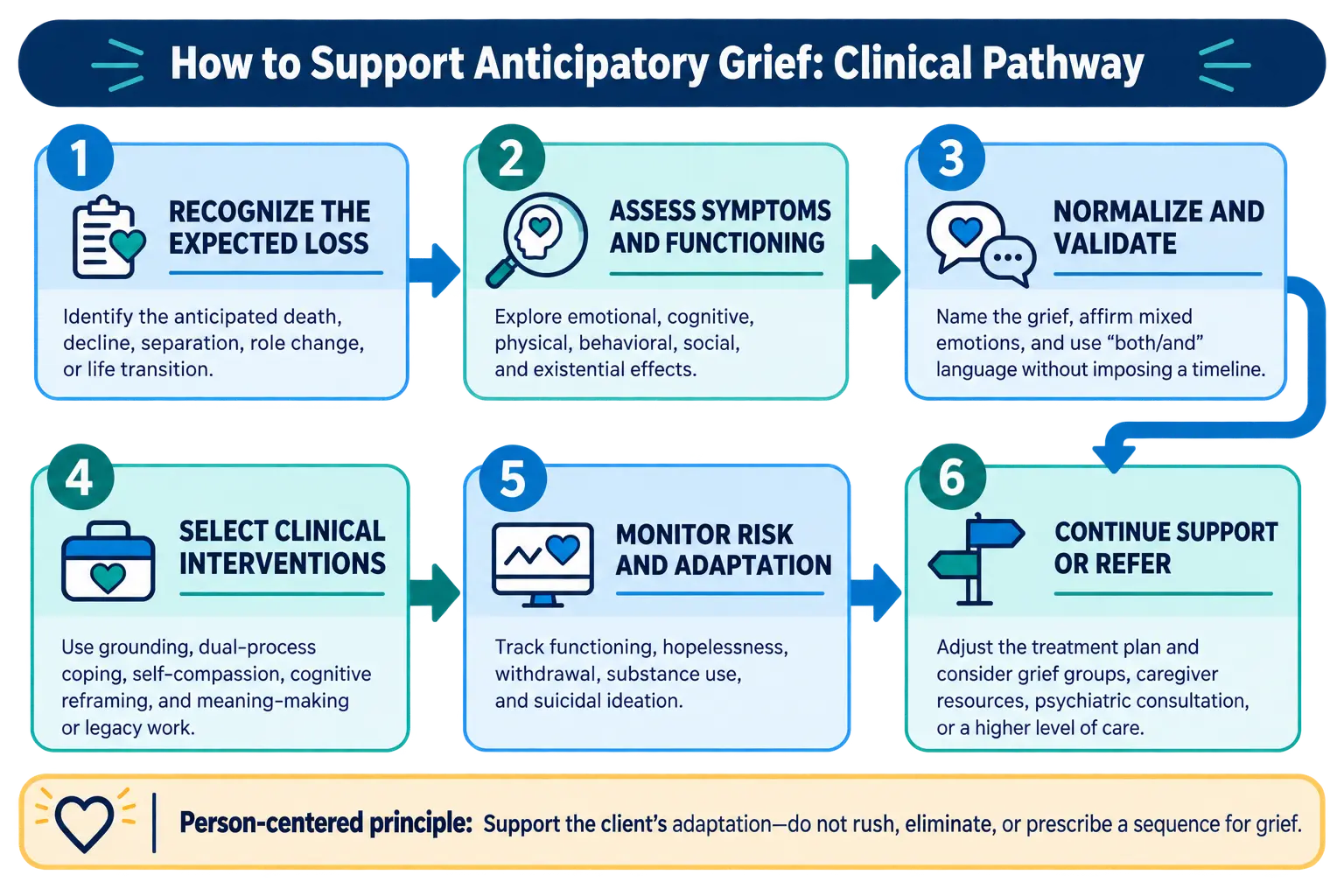
Communicate with a validated framework
The NURSE model — Name the emotion, Understand it, Respect what the client shares, Support them, and Explore their concerns — gives clinicians (and the family caregivers they coach) concrete language for these conversations [6]:
| Skill | Example clinician language |
|---|---|
| Name | "It sounds like you're carrying a lot of sadness about this." |
| Understand | "This has been a long, exhausting road for you and your family." |
| Respect | "The devotion you've shown your father through all of this has been clear." |
| Support | "You don't have to carry this alone — we're going to figure this out together." |
| Explore | "Tell me more about what worries you most right now." |
Use the dual-process model rather than pushing constant processing
Clients don't need to be immersed in grief work at every moment to be coping well. The dual-process model of coping with bereavement describes healthy oscillation between loss-oriented coping (processing the emotional weight of what's happening) and restoration-oriented coping (attending to daily life, work, and moments of genuine enjoyment) [12]. In practice, this means helping clients build both: a way to "step into" their grief when it needs attention, and a way to "step out" of it — an absorbing task, a walk, time with a friend — without guilt.
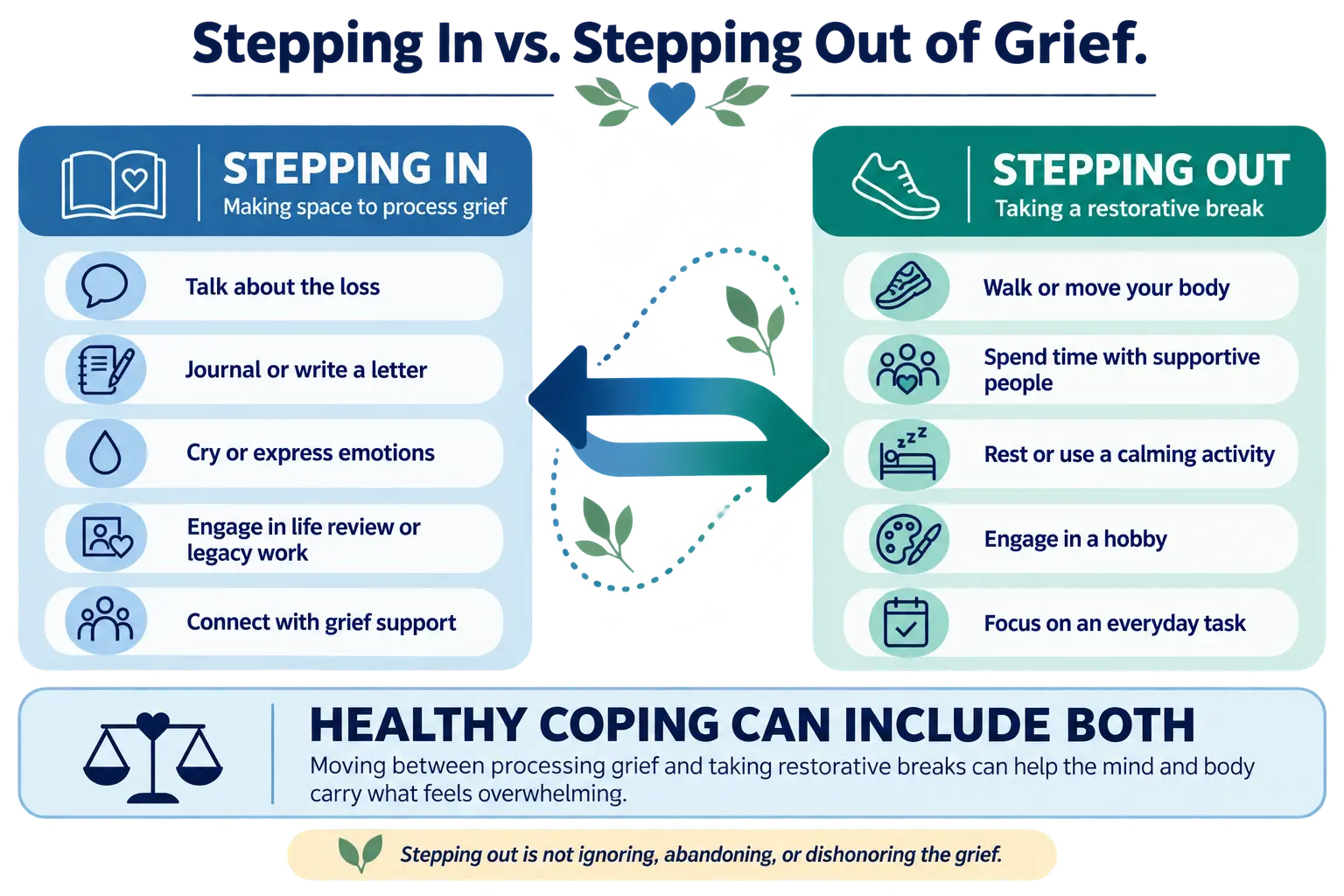
Ground future-focused "what if" thoughts
Anticipatory grief can pull clients repeatedly into imagined future scenarios. When catastrophic "what if" thoughts become overwhelming, grounding can help the nervous system return to the present. Clinicians might guide the client to slow their breathing, identify five things they can see, notice physical contact with the chair or floor, and then choose one meaningful action available in the current moment. The objective is not to deny what is coming, but to keep fear about the future from consuming all of the time that remains.
Encourage self-compassion
Caregivers and family members frequently judge themselves for exhaustion, irritability, emotional withdrawal, or moments of relief. Self-compassion interventions can help clients respond to these experiences with the same understanding they would offer someone else in the same situation. A useful prompt is: "If another caregiver described feeling exactly what you are feeling, what would you say to them?" The clinician can then help the client direct that language inward.
Build in legacy and meaning-making work
Structured life review, legacy letters, memory books, and recorded messages give clients (and the person who is dying, when appropriate) a sense of purpose and continuity rather than pure loss. Clinicians consistently report that this kind of work — helping someone articulate what they want to pass on to the people they'll leave behind — lifts a genuine weight, even when the underlying prognosis hasn't changed. Life review is not limited to end-of-life care. A retiring client might create a professional timeline, someone preparing to relocate might document the relationships and experiences connected to a former home, and a family preparing for a child to leave for college might reflect on the transition from one stage of family life to another.
Address self-blame directly
Cognitive reframing is particularly useful for the guilt that saturates anticipatory grief — guilt about withdrawing emotionally, guilt about moments of relief, guilt about imagining life afterward. Helping a client move from "I'm failing him" to "I'm doing my best in an extraordinarily difficult situation" is often more clinically productive than simply validating the sadness alone.
Make space for "both/and" experiences
Anticipatory grief is often dialectical: two seemingly opposing feelings can both be true. A caregiver may desperately want a loved one to continue living and also wish for the caregiving ordeal to end. A client may feel devoted to the person and resentful of what the illness has taken from their own life. They may experience hope and grief, closeness and withdrawal, or love and relief at the same time.
Helping clients replace "either/or" thinking with "both/and" statements can reduce guilt and emotional isolation. Examples include:
- "I can care deeply for this person and need time for myself."
- "I can wish this were over and wish my loved one could remain with me."
- "I can be present today and feel afraid of what is coming."
- "I can grieve what is changing and still experience meaningful moments."
For some caregivers, simply hearing that these conflicting experiences can coexist is profoundly validating.
Screen formally when you need more structure
A handful of validated and semi-structured tools can help you assess severity and track change over time:
| Tool | What it measures | Best used for |
|---|---|---|
| Anticipatory Grief Scale (Theut) | Global anticipatory grief intensity in caregivers of relatives with dementia | Caregivers of a person with a progressive illness |
| Marwit-Meuser Caregiver Grief Inventory–Short Form | Personal sacrifice burden, heartfelt sadness/longing, and worry/isolation subscales | Dementia and chronic-illness caregivers; tracks change over time |
| Patient Dignity Inventory | Dignity-related distress across physical, psychological, and existential domains | Patients themselves, in palliative and serious-illness settings [13] |
| Structured anticipatory grief interview questions | Open-ended prompts across emotional, cognitive, physical, behavioral, social, and spiritual domains | Any client facing a foreseen loss; useful when a formal instrument isn't a fit |
A widely cited population-based framework for triaging caregiver and bereavement support found that roughly 60% of people navigating loss cope well with existing informal supports, about 30% benefit from some additional support such as a peer group, and roughly 10% are at risk for a complicated course and warrant referral to a mental health professional [14]. The same rough stratification is a useful lens for anticipatory grief: most caregivers will do fine with education and validation; a meaningful minority need more structured intervention.
Anticipatory Grief in Children and Families
Children experience anticipatory grief too, though it often looks different — regression, acting out, somatic complaints, or reluctance to talk about the illness directly. Age-appropriate bibliotherapy (such as illustrated books written specifically to help children name and process a parent's or grandparent's terminal illness) and structured family conversations, guided by the treating clinician, can help caregivers know what and how much to share. Depending on the child's developmental level, clinicians can also use drawing, play, stories, memory projects, and simple emotion-labeling activities to help the child communicate experiences that may be difficult to describe directly. When working with a family system rather than an individual client, it's worth building in a session (or a portion of one) focused specifically on how the adults in the household plan to talk to the children as the illness progresses — waiting until after a death has occurred is often too late to prevent confusion or a sense of being shut out.
Documenting Anticipatory Grief in ICANotes
Anticipatory grief cases are rarely a single-session issue — they typically unfold over months as a prognosis changes, a caregiving burden shifts, or a family moves through the tasks described above. That makes longitudinal, goal-linked documentation especially valuable. In ICANotes, treatment plan goals connect directly to your diagnosis and flow automatically into each session's progress note, so as a client moves from "acute distress and avoidance" toward "engaging in legacy work and tolerating difficult conversations," that shift is reflected in the chart rather than buried in free text — supporting medical necessity and making the clinical picture easy to follow for anyone else on a client's care team.
ICANotes also supports the practical components of grief documentation demonstrated during the webinar. Clinicians can document emotional, physical, and behavioral grief symptoms; record session goals such as coping-skills development or distress reduction; select relevant interventions; incorporate rating-scale results such as the PHQ-9 or GAD-7; justify the continued level of care; and connect treatment plan goals and interventions to the progress note. Clinicians can use menu-driven content, type narrative text, or use the ambient AI scribe according to their preferred documentation workflow. If you'd like to see how ICANotes supports treatment planning for grief and other longitudinal presentations, you can explore the Treatment Plan feature or schedule a live demo.
Spend Less Time Documenting Grief Care
Anticipatory grief treatment often unfolds over time, requiring clinicians to track changing symptoms, functional impairment, interventions, risk, and progress toward treatment goals. ICANotes helps keep that clinical story connected with behavioral health-specific templates, integrated treatment planning, rating scales, and flexible documentation workflows. Start your free 30-day trial — no credit card required — and see how ICANotes can simplify documentation while supporting clear, consistent, and audit-ready records.
- Notes completed in under 3 minutes
- 30-day free trial, no credit card required
- HIPAA compliant and ONC Cures certified
- Live support from behavioral health specialists
Frequently Asked Questions About Anticipatory Grief
What is anticipatory grief, in simple terms?
Is anticipatory grief the same thing as regular grief, just early?
How long does anticipatory grief typically last?
Can someone experience anticipatory grief without an impending death?
Does anticipatory grief make the grief after the loss easier?
How is anticipatory grief different from Prolonged Grief Disorder?
When should anticipatory grief prompt a referral or a higher level of care?
References
- Lindemann E. Symptomatology and management of acute grief. Am J Psychiatry. 1944;101(2):141-148.
- Rando TA. Loss and Anticipatory Grief. Lexington, MA: Lexington Books; 1986.
- Worden JW. Grief Counseling and Grief Therapy: A Handbook for the Mental Health Practitioner. 5th ed. New York: Springer; 2018.
- Garand L, Lingler JH, Deardorf KE, DeKosky ST, Schulz R, Reynolds CF 3rd, Dew MA. Anticipatory grief in new family caregivers of persons with mild cognitive impairment and dementia. Alzheimer Dis Assoc Disord. 2012;26(2):159-165.
- Lebow G. Facilitating adaptation in anticipatory mourning. Soc Casework. 1976;57(7):458-465.
- Back AL, Arnold RM, Tulsky JA. Mastering Communication With Seriously Ill Patients: Balancing Honesty With Empathy and Hope. New York: Cambridge University Press; 2010.
- Johansson AK, Sundh V, Wijk H, Grimby A. Anticipatory grief among close relatives of persons with dementia in comparison with close relatives of persons with cancer. Am J Hosp Palliat Care. 2013;30(1):29-34.
- Holley CK, Mast BT. Predictors of anticipatory grief in dementia caregivers. Gerontologist. 2009;49(3):388-396.
- Kübler-Ross E. On Death and Dying. New York: Macmillan; 1969.
- Carmack T. Understanding anticipatory grief in pet owners. dvm360. February 2025.
- McCutcheon KA, Fleming SJ. Grief resulting from euthanasia and natural death of companion animals. Omega (Westport). 2002;44(2):169-188.
- Stroebe M, Schut H. The dual process model of coping with bereavement: rationale and description. Death Stud. 1999;23(3):197-224.
- Chochinov HM, Hassard T, McClement S, et al. The patient dignity inventory: a novel way of measuring dignity-related distress in palliative care. J Pain Symptom Manage. 2008;36(6):559-571.
- Aoun SM, Breen LJ, Howting DA, Rumbold B, McNamara B, Hegney D. Who needs bereavement support? A population based survey of bereavement risk and support need. PLoS One. 2015;10(3):e0121101.
- American Psychiatric Association. Diagnostic and Statistical Manual of Mental Disorders, Fifth Edition, Text Revision (DSM-5-TR). Washington, DC: American Psychiatric Association; 2022.
Diane Bigler
Diane Bigler, LCSW, LSCSW, is a Licensed Clinical Social Worker in Missouri and Kansas with over 25 years of experience in the mental health field. She has held clinical positions as an outpatient and in-home therapist and clinical supervisor in diverse settings. Diane was an Adjunct Professor of Social Work for 10 years at The University of Kansas, School of Social Welfare and a Field Liaison and Field Instructor. She has also held administrative positions as a Program Director and Coordinator. Diane is a popular local and national trainer on a wide variety of mental health and workplace development topics for clinicians and corporations and has facilitated over 500 training courses in the last few years.