Blog > Treatment Strategies > Technology Addiction Assessment & Treatment: Tools for Clinicians
Technology Addiction Assessment and Treatment: Tools, Red Flags, and Clinical Frameworks
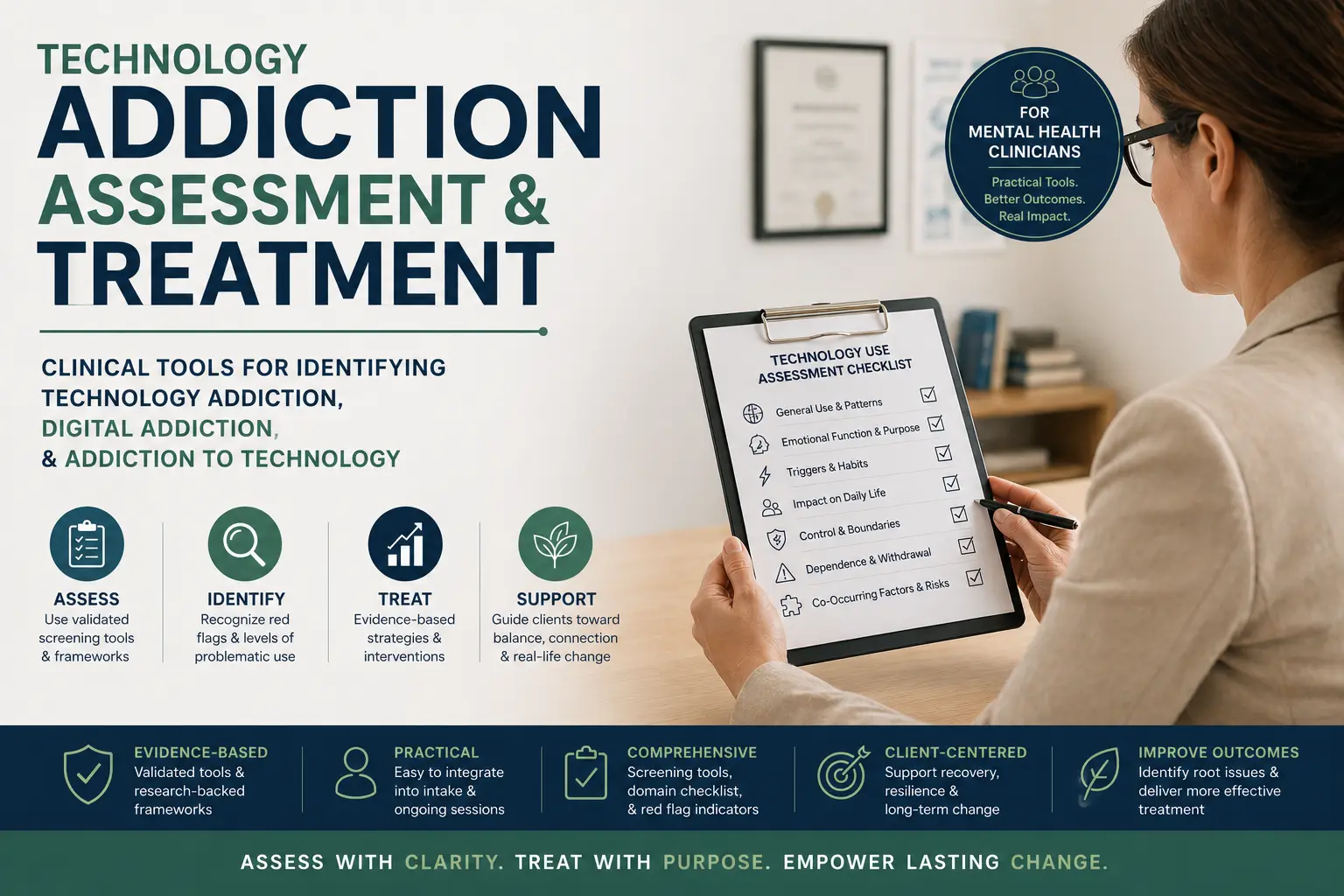
Technology addiction is becoming an increasingly common clinical concern, affecting sleep, mood, relationships, and daily functioning. This guide equips mental health clinicians with practical tools for internet addiction assessment, helping distinguish high engagement from digital addiction and addiction to technology. You’ll learn how to use validated screening instruments, identify red flags, and apply structured frameworks to support accurate diagnosis and effective technology addiction treatment — including when to introduce digital detox strategies as part of care. This guide bridges the gap between technology addiction assessment and treatment, giving clinicians a clear, actionable framework they can use in intake and ongoing sessions.


Last Updated: May 4, 2026
What You'll Learn
- How to conduct a structured internet addiction assessment using validated screening tools
- How to differentiate high engagement, tech addiction, and digital addiction using a clinical continuum
- The most widely used tools for assessing technology addiction, including IAT, PIUQ, and SAS
- Key red flags that signal problematic addiction to technology and the need for deeper evaluation
- How to assess functional impact across sleep, mood, relationships, and daily life
- Practical frameworks for identifying patterns, triggers, and reinforcing factors
- How assessment findings guide technology addiction treatment planning and intervention selection
- When to incorporate technology detox strategies and digital wellness planning into care
Contents
- The 6 Core ACT Processes
- 2 ACT Psychoeducation Tools Clients Actually Remember
- ACT Techniques for Depression You Can Use Right Away
- Case Vignettes: ACT Interventions for Depression in Context
- ACT Metaphors That Work Especially Well for Depression
- ACT and Suicidal Thoughts
- FAQ: ACT for Depression
- How ICANotes Supports ACT-Informed Depression Care
Technology addiction treatment starts with accurate, structured assessment — but many clinicians still don’t routinely assess for technology overuse, even when the signs are present. As clients increasingly present with sleep disruption, emotional dysregulation, relationship conflict, and reduced functioning tied to excessive screen use, it’s critical to identify when technology use has crossed the line into digital addiction or addiction to technology. Without a clear framework for internet addiction assessment, treatment may overlook a key driver of symptoms. This guide provides clinicians with practical tools, validated screening instruments, and structured assessment strategies to support effective technology addiction treatment — including when to incorporate digital detox and behavioral interventions into care.
Why Technology Addiction Assessment Is Essential for Effective Treatment
Technology use intersects with nearly every area of mental health. Clients use screens to self-soothe, avoid distress, regulate emotions, and manage boredom or loneliness. Social media impacts self-concept, identity, and shame. Screens affect attachment dynamics and relational expectations. For trauma survivors, technology may function as a dissociative tool. Excessive or poorly timed screen use can worsen symptoms that are often mistaken for primary mental health disorders — an adult referred for ADHD due to poor focus and irritability may actually be experiencing chronic late-night scrolling and blue-light exposure that’s disrupting sleep.
Without structured internet addiction assessment, these patterns can go unidentified, and treatment may miss a significant contributing factor.
The Technology Addiction Continuum: From High Engagement to Digital Addiction
A clinically useful framework for assessment is the technology use continuum. This model helps clinicians move beyond simply counting screen hours and instead evaluate the functional impact of a client’s technology use across multiple domains.
| Domain | High Engagement | Problematic Use | Behavioral Addiction |
|---|---|---|---|
| Time Spent | Frequent, but balanced with daily responsibilities | Excessive; begins to interfere with work, school, or social life | Compulsive, uncontrolled use; dominates most waking hours |
| Control | Can stop or limit use easily | Attempts to cut back sometimes fail | Inability to reduce use despite negative consequences |
| Impact on Functioning | Minimal or no negative effects | Noticeable effects on sleep, productivity, or relationships | Significant impairment in multiple life areas |
| Motivation / Emotions | Enjoyment, entertainment, or productivity | Stress relief, avoidance, or mild mood regulation | Strong cravings, anxiety, or irritability when unable to use |
| Behavioral Patterns | Structured or purposeful use | Spontaneous or habit-driven; may procrastinate | Repetitive, automatic, persistent; compulsive checking |
| Awareness | Recognizes use and can self-regulate | Some insight but continues despite negative effects | Limited insight; rationalization or denial may be present |
| Social & Relational Effects | Maintains healthy offline relationships | Occasional conflicts or missed opportunities due to technology use | Social isolation, conflict, or withdrawal from offline life |
Technology Addiction Continuum
Technology use exists on a continuum. The goal of assessment is to determine whether use is balanced, highly engaged, problematic, or consistent with behavioral addiction.
Balanced Use
Technology supports work, connection, or recreation without interfering with sleep, relationships, responsibilities, or mood.
High Engagement
Use is frequent or intense, but the client can still stop, set limits, and maintain daily functioning.
Problematic Use
Technology begins to interfere with sleep, productivity, relationships, emotional regulation, or responsibilities.
Behavioral Addiction
Use becomes compulsive, difficult to control, and continues despite significant negative consequences.
The technology addiction continuum helps clinicians move beyond simple screen-time metrics and instead evaluate the functional impact of technology use. Clients who fall in the high engagement range may not require formal intervention, while those demonstrating patterns of digital addiction or addiction to technology often benefit from structured treatment approaches. Identifying where a client falls on this continuum allows clinicians to match the level of care — whether that’s psychoeducation, behavioral strategies, or more intensive technology addiction treatment.
In practice, most clients do not fit neatly into a single category. A client may demonstrate high engagement in one domain (such as work-related screen use) while showing problematic or compulsive patterns in another (such as late-night social media or gaming). This makes it essential to assess both context and function when evaluating technology use.
How to Use the Continuum in Practice:
- Use it during intake to quickly categorize severity
- Revisit it over time to track changes in behavior
- Pair it with screening tools (IAT, PIUQ, SAS) for validation
- Use it to guide technology addiction treatment planning
- Share it with clients as a psychoeducation tool to build insight

Free Download: Technology Use Assessment Toolkit for Clinicians
Assess technology addiction, internet overuse, digital addiction, and problematic screen use with a structured, clinician-ready toolkit designed for intake, ongoing sessions, and treatment planning.
- Clinical continuum: high engagement → behavioral addiction
- Seven-domain technology use assessment checklist
- Validated screening instruments quick-reference guide
- Red flag indicators, special considerations, and session scripts
Takes less than 60 seconds to access.
Validated Tools for Internet Addiction Assessment
Several validated screening tools are available for clinicians conducting internet addiction assessment. Each targets a specific area of technology overuse:
Internet Addiction Test (IAT)
Developed by Kimberly Young, the IAT is one of the earliest and most widely used measures for internet overuse. It evaluates compulsive use, dependence, and the impact of internet use on daily functioning. It is appropriate for adolescents and adults.
Problematic Internet Use Questionnaire (PIUQ)
The PIUQ assesses three dimensions of problematic internet use: obsession, neglect, and control disorder. It provides a nuanced view of how internet behavior is affecting a client’s functioning and self-regulation.
Social Media Disorder Scale (SMD-9)
This brief nine-item scale is specifically designed to assess problematic social media use based on criteria adapted from the DSM-5 framework for behavioral addictions. It screens for preoccupation, tolerance, withdrawal, displacement, escape, problems, deception, conflict, and relapse related to social media use.
Smartphone Addiction Scale (SAS & SAS-SF)
Available in both full and short-form versions, the SAS evaluates problematic smartphone use including daily-life disturbance, withdrawal, cyberspace-oriented relationships, overuse, and tolerance. The short form (SAS-SF) is practical for clinical settings where time is limited.
Game Addiction Scale (GAS)
The GAS is designed to screen for problematic gaming behavior, measuring salience, tolerance, mood modification, relapse, withdrawal, conflict, and problems. With internet gaming disorder under consideration for future DSM editions, this tool is increasingly relevant for clinicians working with youth and adults who game excessively.
The comparison below provides a quick reference for selecting the most appropriate technology addiction assessment tool based on clinical needs.
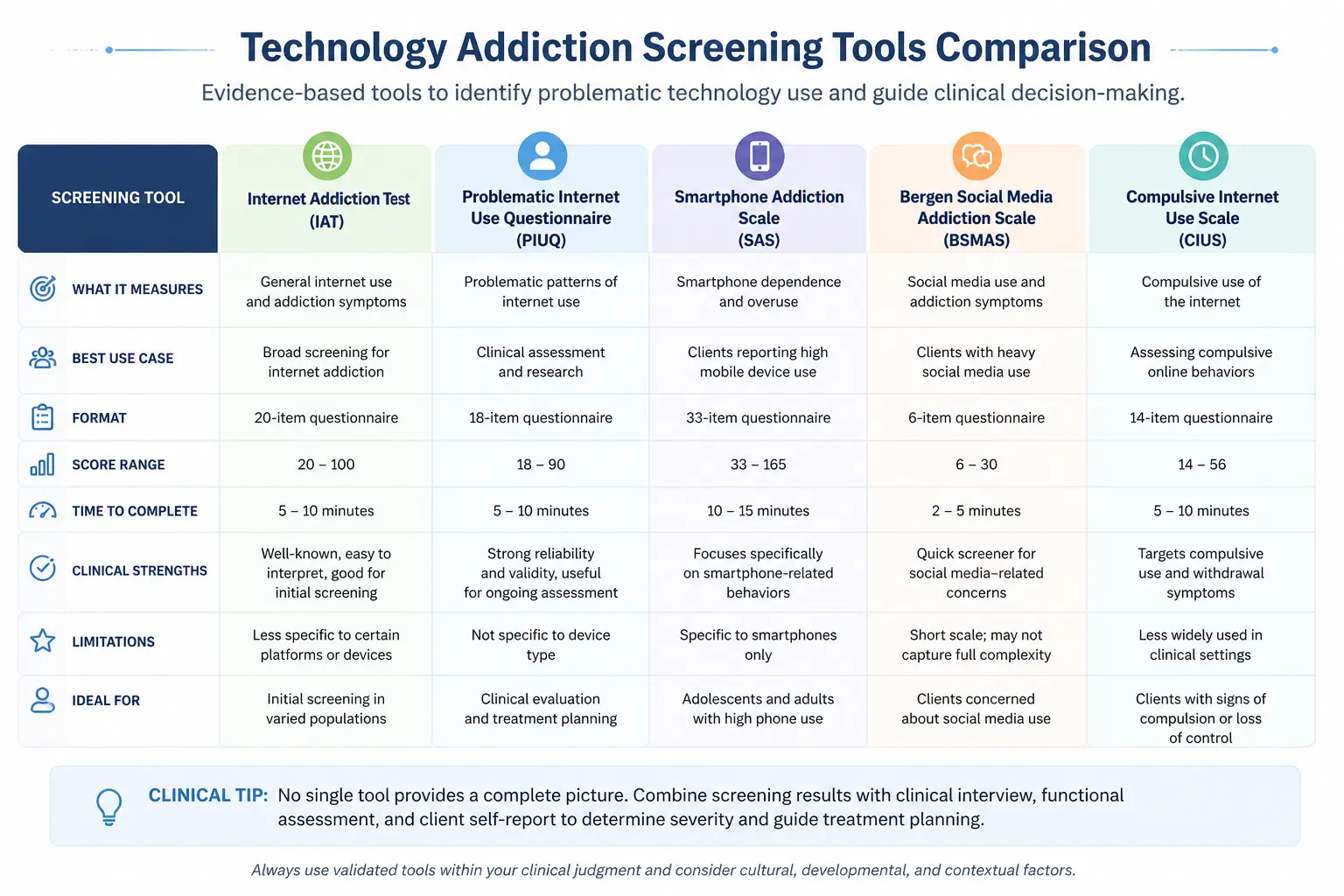
Several of these instruments are available online or through published research. For a comprehensive list of digital screening and assessment tools with direct links, the Alberta Health Services compilation is a useful starting point.
How to Assess Technology Addiction: A Structured Clinical Framework
Assessing technology addiction requires more than estimating screen time — it involves understanding how, why, and with what impact a client uses technology. While validated tools like the Internet Addiction Test (IAT) and Problematic Internet Use Questionnaire (PIUQ) can provide valuable baseline data, a comprehensive internet addiction assessment should also explore behavioral patterns, emotional drivers, and functional impairment.
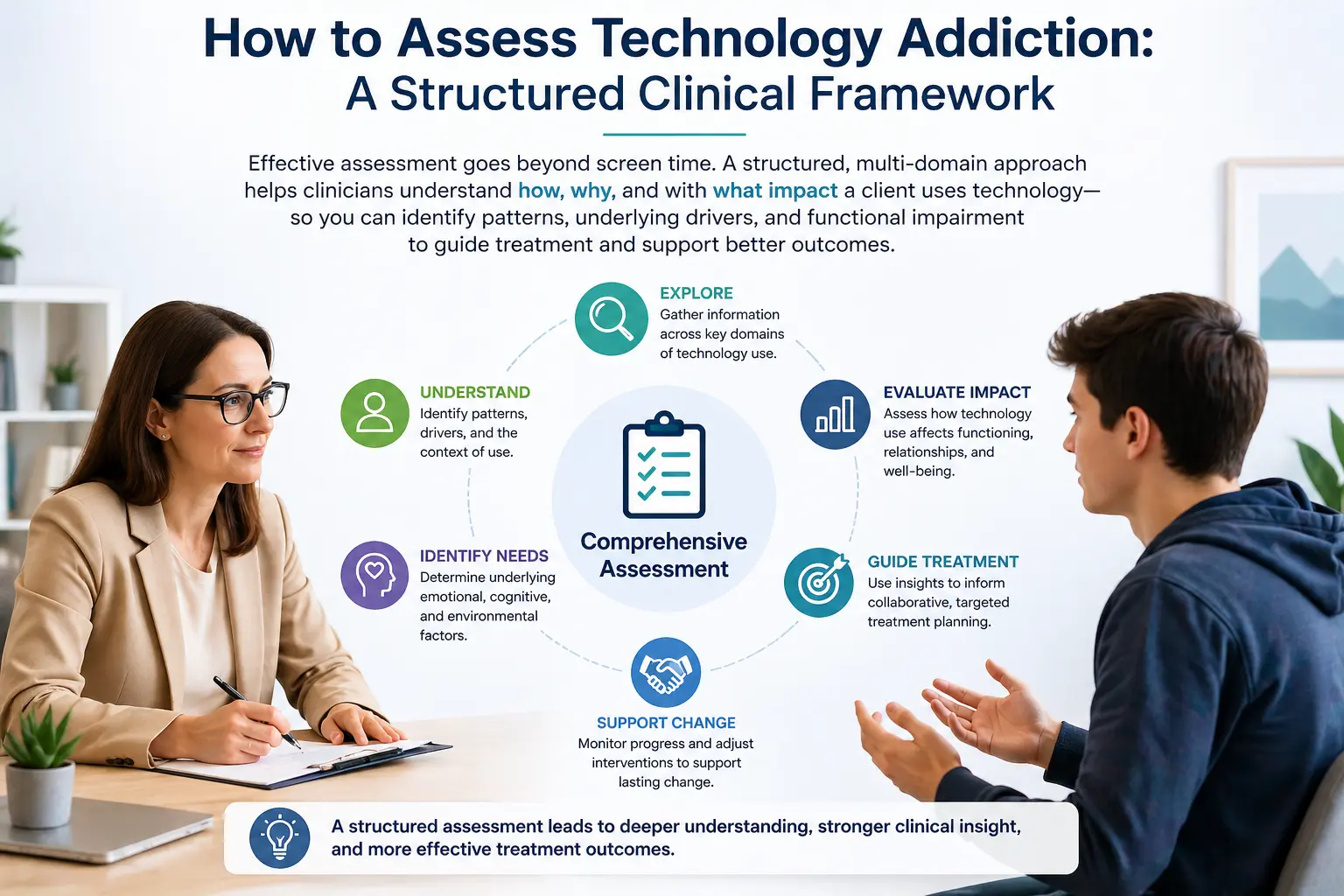
Clinicians should evaluate technology use through a structured, multi-domain framework that captures both frequency and function. This approach helps differentiate high engagement from digital addiction and addiction to technology, ensuring that assessment findings translate directly into effective technology addiction treatment planning.
Rather than focusing solely on how much time a client spends online, the goal is to understand:
- What role technology plays in their daily life
- How it affects mood, relationships, sleep, and functioning
- Whether the client can regulate or reduce use when needed
- What emotional or environmental factors reinforce the behavior
This broader lens allows clinicians to identify not just problematic use, but the underlying mechanisms driving it — whether that’s avoidance, emotional regulation, loneliness, or habit loops shaped by platform design.
The following section describes the domains which provide a practical framework for conducting a structured technology addiction assessment in both intake and ongoing sessions.
Seven Domains for Structured Technology Addiction Assessment
To conduct a comprehensive internet addiction assessment, clinicians should evaluate technology use across seven key domains. Together, these domains provide a structured framework for identifying patterns of technology addiction, understanding underlying drivers, and guiding effective treatment planning.
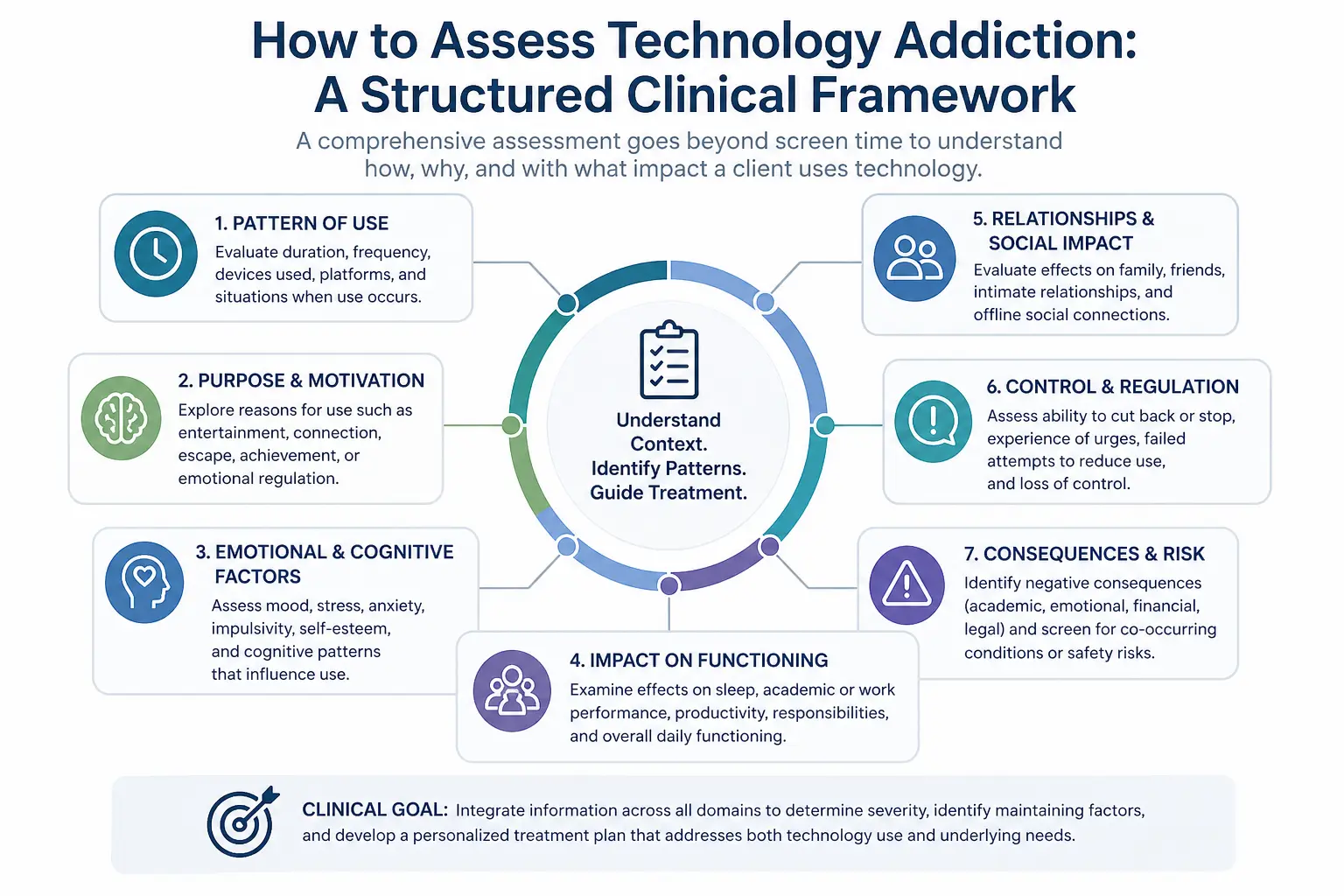
1. Patterns of Use
Assess how and when technology is used across the day, including frequency, duration, timing, preferred devices, platforms, and activities. Explore situational patterns such as late-night use, stress-related use, boredom, or automatic checking.
2. Purpose of Use
Understand what needs technology is fulfilling, such as entertainment, connection, distraction, achievement, emotional regulation, or avoidance. Determine whether use is intentional and goal-directed or automatic and habit-driven.
3. Emotional Factors
Evaluate the emotional and cognitive processes tied to use, including mood before and after use, anxiety, depression, stress, loneliness, impulsivity, self-esteem, and whether technology helps the client manage or escape difficult emotions.
4. Functional Impact
Examine how technology use affects daily functioning, including sleep, work, school, productivity, responsibilities, attention, concentration, decision-making, and the client’s ability to maintain routines and meet obligations.
5. Relationships
Assess the impact of technology use on family, friendships, intimate relationships, and offline connection. Explore whether use contributes to conflict, withdrawal, secrecy, reduced in-person engagement, or concerns from others.
6. Control and Regulation
Determine the client’s ability to manage and limit use. Ask about attempts to cut back, boundary-setting, failed efforts to reduce use, compulsive patterns, cravings, and emotional reactions when unable to access technology.
7. Consequences
Identify negative outcomes and broader risks, including academic, occupational, financial, legal, relational, health, or safety consequences. Screen for co-occurring concerns such as anxiety, ADHD, depression, sleep disruption, or harmful online exposure.
Assessing technology addiction across these domains allows clinicians to move beyond surface-level behaviors and develop targeted, effective technology addiction treatment plans. A comprehensive technology use assessment checklist covering these domains — with specific questions for each — can serve as a structured clinical tool during intake and as a framework for tracking changes across treatment.
How to Interpret Screening Results and Identify Patterns
Screening tools can help clinicians identify signs of technology addiction, digital addiction, or problematic internet use, but scores should not be interpreted in isolation. A high score may indicate compulsive use, functional impairment, or emotional dependence, but the clinical meaning depends on context: why the client uses technology, what consequences have emerged, and whether the client can regulate use when needed.
When reviewing results from tools such as the IAT, PIUQ, SMD-9, SAS, or GAS, clinicians should look for patterns across four key areas: frequency, functional impact, control, and reinforcement. These patterns help determine whether technology use reflects high engagement, problematic use, or behavioral addiction.
1. Patterns and Frequency
Start by identifying when, where, and how often technology use occurs. Look at daily screen time, preferred platforms, device-switching, late-night use, multitasking, and triggers such as boredom, loneliness, stress, conflict, or avoidance.
Frequency alone does not confirm technology addiction, but repeated patterns of unplanned or escalating use may signal the need for deeper assessment.
2. Functional Impact
Assess whether technology use is interfering with daily life, including sleep, work, school, relationships, responsibilities, physical health, and emotional well-being.
Technology use becomes clinically significant when it contributes to measurable impairment such as missed obligations, declining performance, or increased conflict.
3. Control and Compulsivity
Evaluate whether the client can reduce, delay, or stop use when they intend to. Failed attempts to cut back, compulsive checking, and distress when offline may indicate loss of control.
This helps determine whether use has moved from problematic behavior into a more addiction-like pattern.
4. Reinforcing Factors
Identify what maintains the behavior. Technology may provide emotional relief, stimulation, validation, distraction, escape, or connection, while environmental cues reinforce repeated use.
Understanding these factors helps guide interventions such as CBT, motivational interviewing, digital wellness planning, or technology detox strategies.
The visual below highlights the most common psychological drivers that reinforce technology addiction and digital overuse.
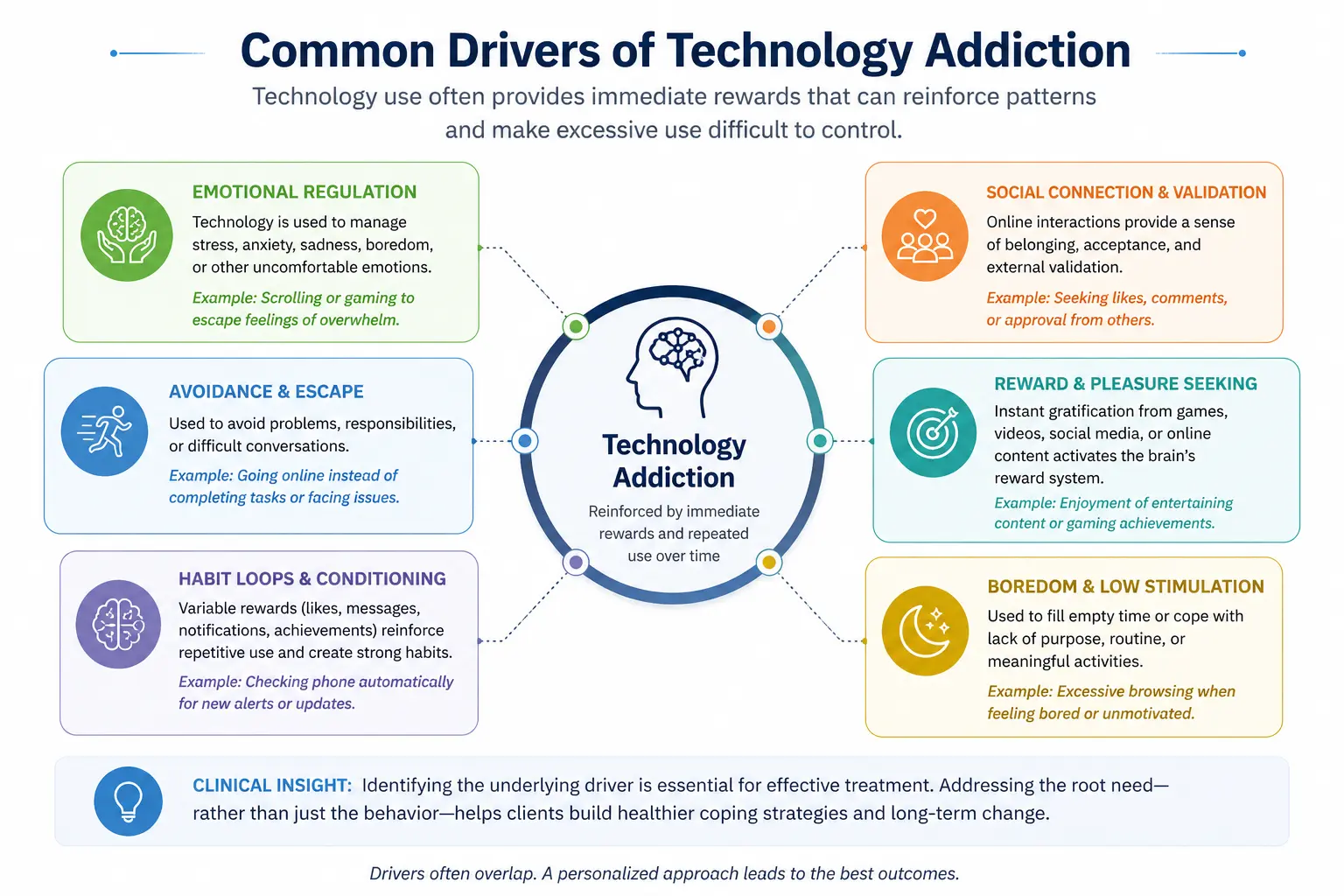
Identifying the primary driver is critical, as effective technology addiction treatment targets the function of the behavior — not just the behavior itself.
Interpreting screening results through this lens helps clinicians move from score-based assessment to meaningful clinical formulation. The goal is not simply to label a client’s technology use as “too much,” but to understand the pattern, function, consequences, and level of control so treatment can be tailored to the client’s needs. This approach supports more accurate internet addiction assessment and more effective technology addiction treatment planning.
Red Flags of Technology Addiction That Require Deeper Assessment
Red flags do not automatically confirm technology addiction, but they signal that a more thorough assessment is needed. When these indicators appear alongside functional impairment, failed attempts to cut back, or emotional distress when offline, clinicians should explore whether the client’s technology use has shifted from high engagement into problematic use or behavioral addiction.
⚠ Interference With Daily Life
Missed work, school, or household responsibilities due to technology use.
⚠ Sleep Disruption
Difficulty falling asleep, staying asleep, or feeling rested due to late-night screen use.
⚠ Emotional Dysregulation
Irritability, anxiety, restlessness, or mood swings when unable to access technology.
⚠ Neglected Relationships
Reduced in-person connection, social withdrawal, or conflict related to technology use.
⚠ Loss of Control
Difficulty limiting use despite awareness of negative consequences or repeated attempts to cut back.
⚠ Escalation of Use
Increasing time spent online or seeking more intense stimulation over time.
⚠ Physical Signs
Eye strain, headaches, poor posture, or other health issues related to prolonged screen use.
⚠ Safety Concerns
Exposure to harmful content, unsafe online interactions, or risky behaviors linked to technology use.
Special Considerations in Technology Addiction Assessment
Certain areas require additional clinical attention during internet addiction assessment:
Youth and parenting: Children and teens are more vulnerable to impacts on sleep, attention, social skills, and emotional regulation. Assess both the young person’s use and the family environment, since parental modeling strongly shapes youth habits. It’s important to monitor developmental impacts alongside screen time.
Pornography: Assess whether use interferes with intimacy, sexual functioning, work performance, or personal responsibilities. Screen for secrecy, escalating use, and compulsive patterns that create distress or relational conflict. Clinicians should be aware that both men and women may develop problematic pornography use.
Online gambling: The availability of smartphone gambling apps has significantly lowered the barrier to compulsive gambling. Screen for financial consequences, risk-taking, and cognitive distortions. Identify triggers such as stress, boredom, or excitement-seeking.
Online shopping: With 24/7 availability through apps and retailers, compulsive online shopping is increasingly common. Ask about emotional drivers (mood boosts, avoidance, loneliness), financial strain, hidden spending, and the urge-relief cycle characteristic of compulsive buying.
Safety: Technology can expose vulnerable individuals — particularly youth, individuals on the autism spectrum, and adults with cognitive vulnerabilities — to exploitation, harmful content, or unsafe connections. Online spaces can also increase exposure to self-harm content or substance use normalization.
How Assessment Informs Technology Addiction Treatment
A thorough technology addiction assessment does more than identify problematic use — it provides the clinical foundation for effective treatment planning. By evaluating patterns of use, functional impact, emotional drivers, and level of control, clinicians can determine not only whether technology use is problematic, but what type of intervention is most appropriate.
Assessment findings help clinicians match treatment intensity to severity. Clients demonstrating high engagement with minimal impairment may benefit from psychoeducation and boundary-setting strategies, while those showing signs of digital addiction or addiction to technology often require more structured interventions.
A thorough internet addiction assessment also guides clinicians in selecting the right type of intervention based on the client’s presentation. For example, psychoeducation may be appropriate for a client with high engagement, while CBT-IA may be more effective for problematic social media use. Motivational interviewing can support clients who feel ambivalent about change, and family-based interventions may be necessary for teens experiencing conflict with caregivers over device use.
Understanding the function of technology use is especially critical in guiding treatment. A client who relies on technology for emotional regulation may benefit from skills-based interventions that target distress tolerance and coping, while a client whose use is driven by habit loops and environmental cues may respond better to behavioral modification strategies such as stimulus control, app limits, or digital wellness planning. When technology use is tied to underlying concerns — such as anxiety, trauma, loneliness, or ADHD — treatment should also address these co-occurring factors.
Assessment also informs decisions about when to introduce technology detox strategies. For some clients, gradual reduction and boundary-setting are more appropriate, while others may benefit from structured periods of reduced or restricted use to interrupt compulsive patterns and reset behavioral expectations. The goal is not necessarily complete abstinence, but developing a healthier, more intentional relationship with technology.
Importantly, assessment is not a one-time event. Integrating a structured technology use assessment into intake and ongoing treatment is one of the highest-impact changes clinicians can make in their practice. Ongoing evaluation allows clinicians to track changes in patterns of use, monitor progress, and adjust interventions as needed.
For a deeper dive into evidence-based approaches — including CBT-IA, motivational interviewing, exposure therapy, ACT, and digital wellness planning — see our companion article, Social Media Addiction Therapy: Evidence-Based Clinical Strategies for Treatment.
Use this decision tree to translate technology addiction assessment findings into targeted treatment strategies.
1. Start With a Comprehensive Assessment
Evaluate patterns of use, functional impact, control, emotional drivers, co-occurring concerns, and client readiness for change.
2. What Is the Level of Impact on the Client’s Daily Life?
Consider impairment in work or school, relationships, sleep, responsibilities, physical health, and emotional well-being.
Low Impact
High engagement but minimal impairment.
Recommended Approach
Psychoeducation & Prevention-Focused Interventions
- Education on healthy technology use
- Screen time awareness
- Boundary-setting strategies
- Digital wellness planning
- Monitor and reassess periodically
Moderate Impact
Noticeable interference in some areas of life.
Recommended Approach
Targeted, Evidence-Based Interventions
- Cognitive Behavioral Therapy for Internet Addiction (CBT-IA)
- Motivational Interviewing
- Skills-based coping strategies
- Stimulus control and behavior modification
- Address underlying emotional drivers
High Impact
Severe interference or loss of control.
Recommended Approach
Intensive or Specialized Interventions
- CBT-IA with higher intensity
- Family-based interventions, especially for adolescents
- Address co-occurring disorders such as anxiety, depression, or ADHD
- Consider referral for a higher level of care when indicated
- Technology detox or structured reduction plan
3. What Is Maintaining the Technology Use?
Identify the primary function or drivers, such as emotional regulation, escape, stimulation, social connection, boredom, or habit. Tailor interventions to address these underlying factors.
4. What Is the Client’s Readiness for Change?
High readiness:
Move forward with active treatment.
Ambivalent:
Use Motivational Interviewing to build readiness.
Low readiness:
Focus on engagement, education, and rapport.
5. Reassess and Adjust
Continuously monitor progress, review patterns of use, and adapt the treatment plan as needed.
Clinical tip: Assessment is an ongoing process. Regularly revisit key domains to ensure treatment remains aligned with the client’s evolving needs.
When to Use Digital Detox in Technology Addiction Treatment
Digital detox strategies can be a useful component of technology addiction treatment, but they are not appropriate for every client or situation. The decision to incorporate a technology detox — whether brief, partial, or more structured — should be guided by assessment findings, particularly the client’s level of impairment, degree of control, and the function of their technology use.
In general, digital detox approaches are most appropriate when a client demonstrates patterns of compulsive use, significant functional impairment, or difficulty regulating behavior despite repeated attempts to cut back. Clients who experience strong cravings, emotional distress when offline, or escalating use over time may benefit from a temporary reduction or structured break from specific platforms or devices to interrupt habitual patterns and restore a sense of control.
The type of detox should be tailored to the client. For many individuals, a full abstinence-based approach is neither realistic nor clinically necessary. Instead, clinicians may recommend targeted or partial detox strategies, such as removing specific high-risk apps, implementing device-free periods (e.g., evenings or weekends), or creating boundaries around use in certain environments, such as the bedroom or during meals. These approaches allow clients to reduce problematic use while maintaining necessary or functional engagement with technology.
Digital detox may also be helpful when technology use is strongly reinforced by environmental cues or habit loops. In these cases, temporarily removing access can create space for clients to develop alternative coping strategies and increase awareness of triggers. However, detox strategies should be paired with skills-based interventions, such as emotional regulation, distress tolerance, and behavioral planning, to ensure that gains are sustainable once technology is reintroduced.
Clinicians should also consider readiness for change when recommending a technology detox. Clients who are highly motivated may engage well with structured reduction plans, while those who are ambivalent or resistant may benefit more from gradual changes and motivational interviewing before attempting more restrictive interventions. Forcing a detox too early can lead to disengagement or relapse.
Importantly, the goal of a digital detox is not necessarily to eliminate technology use, but to reset patterns and support a healthier, more intentional relationship with technology. For most clients, long-term treatment focuses on developing sustainable boundaries, increasing self-regulation, and aligning technology use with personal values and functioning.
When used thoughtfully and in the context of a broader treatment plan, digital detox strategies can be a powerful tool for helping clients regain control and reduce the negative impact of technology use.
Technology Addiction Treatment Approaches: What Clinicians Should Know
Technology addiction treatment should be tailored to the client’s level of impairment, underlying drivers of use, and readiness for change. While no single approach is universally effective, several evidence-based modalities have shown strong clinical utility when applied thoughtfully and in combination with structured assessment.
Cognitive Behavioral Therapy for Internet Addiction (CBT-IA)
Cognitive Behavioral Therapy is one of the most widely used approaches for treating technology addiction and digital addiction. CBT-IA focuses on identifying maladaptive thought patterns, interrupting compulsive behaviors, and developing healthier coping strategies. Clinicians may work with clients to restructure beliefs about technology use, increase awareness of triggers, and implement behavioral interventions such as scheduling, stimulus control, and replacement activities.
CBT-IA is particularly effective for clients whose technology use is driven by habit loops, avoidance, or distorted thinking patterns.
Motivational Interviewing (MI)
Motivational Interviewing is especially useful for clients who feel ambivalent about changing their technology use. Rather than pushing for immediate behavior change, MI helps clients explore the pros and cons of their current patterns, clarify values, and build intrinsic motivation.
This approach is often a critical early step in technology addiction treatment, particularly for adolescents, gamers, or clients who do not yet view their use as problematic.
Behavioral and Environmental Interventions
Many patterns of technology addiction are reinforced by environmental cues and automatic behaviors. Behavioral interventions focus on modifying these patterns through practical strategies such as:
- Stimulus control (removing apps, disabling notifications)
- Time-blocking or scheduled use
- Device-free zones or times
- Habit reversal and replacement behaviors
These strategies are particularly effective when paired with awareness-building and accountability.
Acceptance and Commitment Therapy (ACT)
Acceptance and Commitment Therapy can be helpful for clients whose technology use is linked to emotional avoidance. ACT focuses on increasing psychological flexibility, helping clients tolerate discomfort without escaping into technology, and reconnecting with values-based action.
This approach is especially relevant when technology use functions as a way to avoid difficult emotions such as anxiety, loneliness, or distress.
Family-Based Interventions
For children and adolescents, technology addiction treatment often requires family involvement. Family-based approaches focus on improving communication, establishing consistent boundaries, and addressing patterns within the home environment that contribute to problematic use.
Parental modeling, limit-setting, and collaborative problem-solving are key components of these interventions.
Addressing Co-Occurring Conditions
Technology addiction rarely occurs in isolation. Many clients present with co-occurring concerns such as anxiety, depression, ADHD, trauma, or social isolation. Effective treatment should address these underlying or contributing factors, as reducing symptoms in these areas often leads to improvements in technology use patterns.
Digital Detox and Structured Reduction
In some cases, structured reduction or temporary digital detox strategies may be incorporated into treatment to interrupt compulsive patterns and help clients regain control. These approaches are most effective when used as part of a broader plan that includes skills development and relapse prevention, rather than as a standalone intervention.
Integrating Approaches for Individualized Care
In practice, technology addiction treatment is rarely limited to a single modality. Clinicians often integrate multiple approaches based on the client’s needs — for example, combining CBT-IA with motivational interviewing and behavioral strategies, or pairing family work with individual therapy.
Assessment findings should continue to guide treatment decisions throughout care, ensuring that interventions remain aligned with the client’s evolving patterns, goals, and level of functioning.
The table below summarizes how to match common technology addiction treatment approaches to specific client presentations.
Quick Reference: Matching Treatment Approaches to Client Needs
| Approach | Best For | Clinical Focus |
|---|---|---|
| CBT-IA | Compulsive use, habit loops, avoidance patterns | Cognitive restructuring, behavior change, trigger awareness |
| Motivational Interviewing | Ambivalence about change, low readiness | Building motivation, resolving resistance, values alignment |
| Behavioral Interventions | Automatic use, environmental triggers | Stimulus control, scheduling, habit replacement |
| ACT | Emotional avoidance, distress-driven use | Distress tolerance, values-based behavior, psychological flexibility |
| Family-Based Approaches | Children/adolescents, family conflict | Communication, boundary-setting, parent involvement |
| Treatment of Co-Occurring Conditions | Anxiety, depression, ADHD, trauma | Address underlying drivers of technology use |
| Digital Detox / Structured Reduction | Loss of control, compulsive patterns | Interrupting use patterns, resetting habits, restoring control |
Integrating Technology Addiction Assessment Into Clinical Practice
For many clinicians, technology use is discussed informally, if at all, during intake or treatment. Yet given the pervasive role of digital devices in daily life, failing to assess for technology addiction can mean missing a key factor contributing to a client’s symptoms, functioning, and overall treatment progress.
Integrating technology addiction assessment into clinical practice does not require a complete overhaul of your workflow. Instead, it can be incorporated into existing processes in a structured and intentional way, beginning at intake and continuing throughout treatment.
Start With Intake and Initial Assessment
Technology use should be treated as a standard domain of assessment, similar to sleep, substance use, and social functioning. Clinicians can begin by asking targeted questions about daily screen time, primary platforms, patterns of use, and any perceived concerns. Brief screening tools such as the Internet Addiction Test (IAT) or Problematic Internet Use Questionnaire (PIUQ) can provide additional structure and baseline data.
Even a few focused questions can help identify whether deeper assessment is needed.
Use a Structured Framework During Sessions
Rather than relying on general impressions, clinicians can use a structured framework — such as the seven domains outlined earlier — to guide more in-depth exploration. This ensures that assessment goes beyond surface-level behaviors and captures the full clinical picture, including emotional drivers, functional impact, and level of control.
This approach is especially helpful when technology use is not the presenting concern but may still be contributing to symptoms such as anxiety, depression, attention difficulties, or relationship strain.
Revisit and Monitor Over Time
Technology use patterns are not static. They can shift based on stress, life transitions, treatment progress, or changes in environment. For this reason, assessment should be ongoing rather than limited to intake.
Clinicians can periodically revisit key domains — such as control, functional impact, and emotional response — to track changes over time and evaluate whether interventions are effective. This also creates opportunities to adjust treatment strategies, introduce new interventions, or reinforce progress.
Integrate Findings Into Treatment Planning
Assessment is most valuable when it directly informs treatment decisions. Clinicians should use assessment findings to guide intervention selection, determine treatment intensity, and identify when additional supports may be needed.
For example:
- A client with mild overuse may benefit from psychoeducation and boundary-setting
- A client with compulsive patterns may require CBT-IA or behavioral interventions
- A client with co-occurring anxiety or trauma may need integrated treatment targeting underlying drivers
Embedding these insights into treatment planning ensures that technology use is addressed in a meaningful and clinically relevant way.
Normalize the Conversation
Many clients do not initially view their technology use as a clinical concern. Others may feel defensive or ashamed when the topic is raised. Framing technology use as a common and understandable behavior, while still exploring its impact, can help reduce resistance and increase engagement.
Using neutral, nonjudgmental language and focusing on function rather than “overuse” allows clients to reflect more openly on their patterns and goals.
Build Small, Sustainable Changes
Finally, integrating technology addiction assessment into practice is not about adding complexity — it’s about increasing awareness and consistency. Small changes, such as adding a few intake questions, incorporating brief screening tools, or revisiting patterns during sessions, can have a significant impact on treatment outcomes.
As technology continues to shape how clients live, work, and relate to others, clinicians who routinely assess for technology addiction will be better positioned to deliver targeted, effective care.

Frequently Asked Questions About Technology Addiction Assessment and Treatment
Related Resources for Technology Addiction Assessment and Treatment
Anxiety Assessment Tools
Explore validated screening tools and how to interpret results in clinical practice.
Depression Assessment Tools
Learn how to assess depression using structured tools and clinical frameworks.
How to Write a Biopsychosocial Assessment
Build comprehensive intake assessments that support diagnosis and treatment planning.
Strength-Based Assessment in Mental Health
Learn how to incorporate strengths into your clinical assessment process.
Identifying and Treating Gaming Addiction
Understand assessment and treatment strategies for gaming-related behavioral addiction.
Treating Co-Occurring Disorders
Explore how to address underlying conditions that drive technology addiction.
Behavioral Health Documentation Best Practices
Improve documentation quality, compliance, and clinical clarity in your notes.
Social Media Addiction Therapy
Understand evidence-based clinical strategies for treating social media addiction.
How ICANotes Supports Technology Addiction Assessment and Treatment
As technology addiction becomes an increasingly relevant concern in behavioral health, clinicians need tools that support thorough assessment, structured documentation, and efficient treatment planning. ICANotes is designed to streamline these processes, helping clinicians integrate technology addiction assessment and treatment into their workflow without adding administrative burden.
Structured Assessments Built Into Your Workflow
ICANotes makes it easy to incorporate technology use into intake and ongoing assessments. Clinicians can document patterns of use, functional impact, emotional drivers, and co-occurring concerns directly within structured evaluation templates. This ensures that technology addiction is assessed consistently alongside other key clinical domains, rather than being overlooked or addressed informally.
Faster, More Comprehensive Clinical Documentation
With ICANotes’ pre-configured templates and point-and-click functionality, clinicians can quickly capture detailed information about technology use without spending excessive time on documentation. This allows for more thorough clinical notes that reflect the complexity of digital addiction, including behavioral patterns, triggers, and treatment interventions.
Efficient documentation also supports compliance, continuity of care, and communication across providers.
Treatment Planning That Reflects Real Clinical Needs
ICANotes helps clinicians translate assessment findings into actionable treatment plans. Providers can document goals, interventions, and progress related to technology addiction treatment, whether that includes CBT-based strategies, motivational interviewing, behavioral interventions, or digital detox planning.
Because treatment plans are structured and easy to update, clinicians can adjust interventions over time as patterns of use and client needs evolve.
Progress Tracking and Outcome Monitoring
Ongoing assessment is essential in technology addiction treatment. ICANotes allows clinicians to track changes in behavior, monitor functional improvement, and document progress over time. This supports data-informed decision-making and helps ensure that treatment remains aligned with the client’s goals and clinical presentation.
Supporting Efficiency Without Sacrificing Clinical Depth
One of the biggest barriers to expanding assessment is time. ICANotes is designed to reduce documentation burden while still supporting clinically rich, individualized care. By streamlining note-taking and treatment planning, clinicians can spend more time focusing on the therapeutic process and less time on administrative tasks.
Integrating Technology Addiction Into Everyday Practice
Technology addiction is rarely a standalone issue — it often intersects with anxiety, depression, trauma, and attention-related concerns. ICANotes supports a holistic approach to care, allowing clinicians to document and treat technology use as part of the broader clinical picture.
By making assessment and documentation more efficient, ICANotes helps clinicians consistently identify and address technology addiction, leading to more targeted interventions and improved client outcomes.
From Technology Addiction Treatment to Audit-Ready Notes — In Minutes
Treating technology addiction, internet addiction, and digital addiction is only part of the work. Clear documentation is what supports reimbursement, compliance, and continuity of care.
ICANotes helps you translate technology addiction assessment findings, CBT-IA, ACT, motivational interviewing, and digital detox strategies into structured, defensible documentation in minutes.
- Pre-built templates for technology addiction treatment
- Structured notes that support medical necessity
- Tools to track patterns of use and behavioral progress
- Faster documentation with clinically relevant language built in
Start your free 30-day trial — no credit card required.
Takes less than 60 seconds to get started
Recent Posts






Diane Bigler
LCSW, LSCSW
About the Author
Diane Bigler, LCSW, LSCSW, is a Licensed Clinical Social Worker in Missouri and Kansas with over 25 years of experience in the mental health field. She has held clinical positions as an outpatient and in-home therapist and clinical supervisor in diverse settings. Diane was an Adjunct Professor of Social Work for 10 years at The University of Kansas, School of Social Welfare and a Field Liaison and Field Instructor. She has also held administrative positions as a Program Director and Coordinator. Diane is a popular local and national trainer on a wide variety of mental health and workplace development topics for clinicians and corporations and has facilitated over 500 training courses in the last few years. Visit her website http://www.