Blog > Treatment Strategies > Teen Group Therapy: How to Run Effective Therapy Groups for Teens
Teen Group Therapy: Best Practices for Running Therapy Groups for Adolescents
Teen group therapy offers powerful clinical benefits by combining evidence-based treatment with peer connection and skill building. In well-structured therapy groups for teens, adolescents learn emotional regulation, coping skills, and social problem-solving while realizing they are not alone in their struggles. Research shows that group therapy for teenagers can be highly effective for depression, anxiety, substance use, and self-harm when groups are carefully structured and documented. This guide explains the evidence behind group therapy for adolescents, how therapeutic groups for teens differ from adult groups, and how clinicians can structure and document teen therapy groups to improve outcomes and reduce risk.


Last Updated: March 20, 2026


What You'll Learn
-
Why teen group therapy requires a different structure than adult therapy groups
-
The research behind group therapy for adolescents and when it is most effective
-
How therapeutic groups for teens help treat depression, anxiety, substance use, and self-harm
-
Engagement strategies that keep teen therapy groups active and productive
-
Documentation practices that strengthen clinical records for therapy groups for teenagers
-
How structured EMR tools support risk assessment and treatment planning in group therapy for teens
Contents
- Types of Teen Group Therapy Clinicians Typically Run
- Why Teen Group Therapy is Different Than Adult Group Therapy
- How Teen Group Therapy Sessions Are Structured
- How Research Guides Documentation for Therapy Groups for Teens
- How EMR Systems Support Teen Group Therapy Documentation
- Frequently Asked Questions About Teen Group Therapy
- Bringing Evidence-Based Teen Group Therapy Into Practice
Group therapy is one of the most powerful interventions available in behavioral health. When facilitated well, therapy groups for teens create a shared space where young people learn coping skills, practice emotional regulation, and experience the profound therapeutic benefit of realizing they are not alone.
But teen group therapy is not simply adult group therapy with younger participants.
Clinicians who successfully run adult groups often assume the same techniques will translate to adolescent populations. In practice, that assumption quickly breaks down. Group therapy for teenagers requires different structure, different documentation, different engagement strategies, and heightened attention to risk.
Research has repeatedly demonstrated that group therapy for adolescents is highly effective for depression, anxiety, self-harm behaviors, and substance use — yet those outcomes depend heavily on how the group is structured and documented (Clarke et al., 2001; Wergeland et al., 2014; Wood et al., 2001; Pothiphet et al., 2022; Tolin et al., 2024).
For clinicians facilitating adolescent mental health or substance use groups, understanding these differences is critical. It also means having tools inside the electronic medical record that support teen-specific documentation and treatment planning.
That is where systems like ICANotes become especially valuable.
ICANotes includes structured documentation and content within the group therapy software module designed specifically for adolescents, helping clinicians align their documentation with evidence-based treatment models and risk-management best practices.
This article explores why teen group therapy is different, what the research tells us about therapeutic groups for teens, and how clinicians can structure and document adolescent groups effectively.
The Evidence Behind Group Therapy for Adolescents
The clinical effectiveness of group therapy for teens is well supported in the literature.
One large randomized trial examined a brief cognitive behavioral group intervention for adolescents at high risk of depression — specifically teens whose parents had a history of depressive disorders (Clarke et al., 2001). Researchers found that teens who participated in the structured CBT group had significantly lower rates of developing major depression compared to those receiving usual care.
This study reinforced something clinicians already see in practice: structured teen group therapy can act not only as treatment but also as prevention for high-risk youth.
Another randomized controlled trial evaluated group psychotherapy combined with medication versus medication alone for adolescents with depression (Liu et al., 2022). The group therapy participants experienced greater reductions in both depression and anxiety scores, along with improved quality of life outcomes.
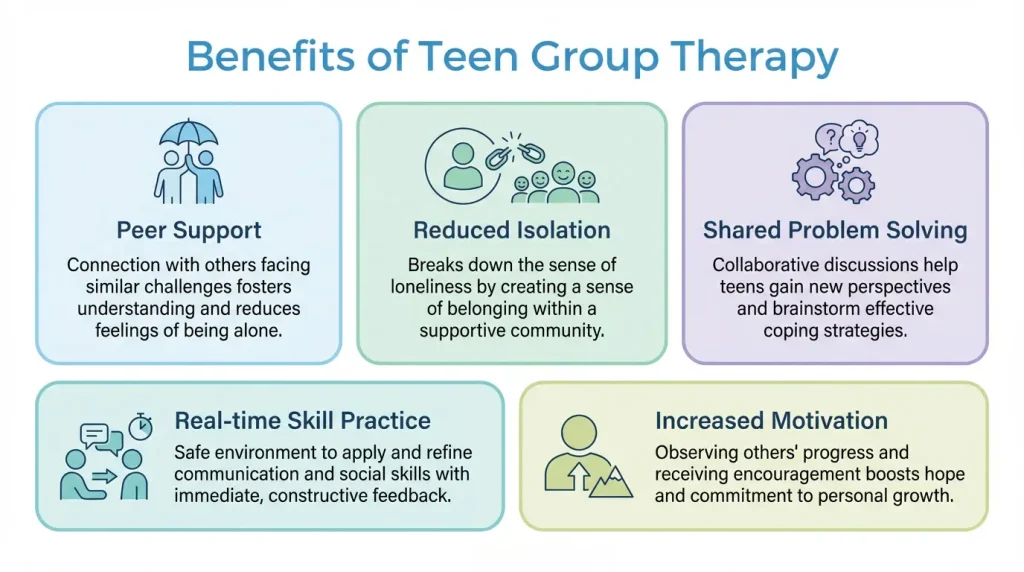
These results highlight the unique therapeutic elements that occur in group therapy for teenagers, including:
- universality
- peer validation
- shared problem solving
- increased motivation through group accountability
For teens, these group factors can be especially powerful because peer influence strongly shapes adolescent development.
Additional studies reinforce these findings. Research comparing individual CBT and group CBT for youth anxiety disorders found that both treatments were superior to a waitlist condition, and group CBT was roughly equivalent to individual therapy in terms of diagnostic recovery and symptom reduction after one year (Wergeland et al., 2014; Ginsburg et al., 2010).
From a systems perspective, this is important. Therapy groups for teenagers can deliver comparable outcomes while serving multiple youth simultaneously — expanding access to care.
Types of Teen Group Therapy Clinicians Commonly Run
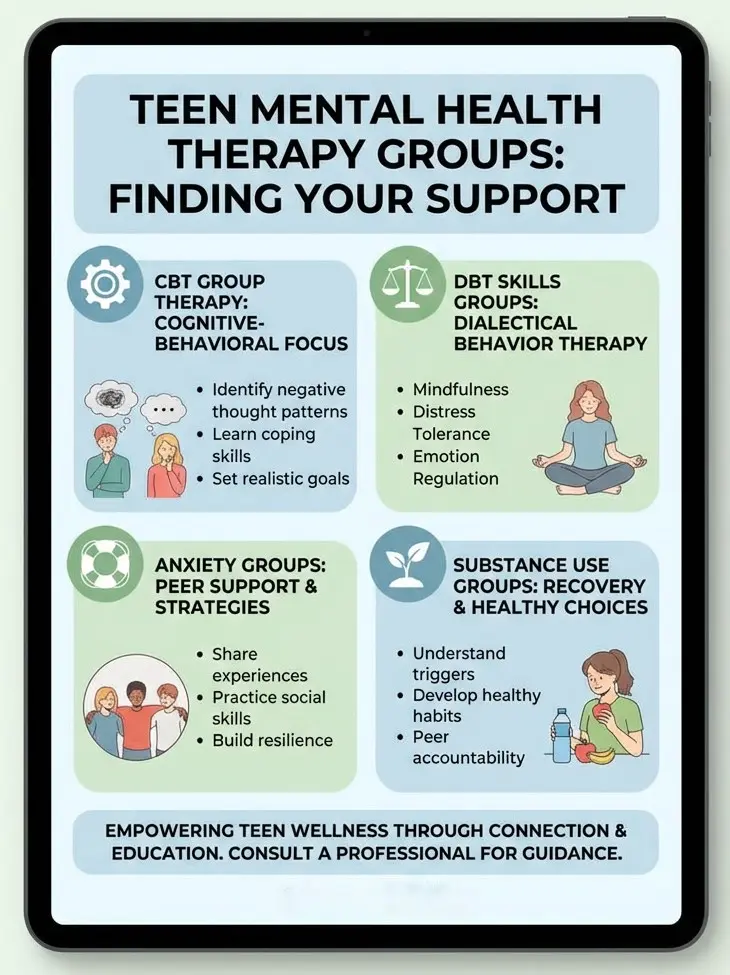
Teen group therapy can take many forms depending on the clinical population, treatment goals, and treatment setting. In practice, therapy groups for teens are often structured around specific presenting concerns, developmental needs, or evidence-based treatment models. Schools, outpatient clinics, community mental health centers, and substance use treatment programs frequently organize group therapy for adolescents into targeted formats designed to address common behavioral health challenges such as anxiety, depression, self-harm behaviors, and substance use. Because adolescents learn strongly through peer interaction, therapeutic groups for teens can provide an environment where participants not only learn coping skills but also observe how others manage similar struggles.
Clinicians designing teen therapy groups often consider factors such as the age range of participants, symptom severity, treatment goals, and the therapeutic approach guiding the group. Some therapy groups for teenagers focus on structured skill-building models like Cognitive Behavioral Therapy (CBT) or Dialectical Behavior Therapy (DBT), while others emphasize psychoeducation, emotional regulation, or social skills development. Regardless of the specific model used, most group therapy for teens is designed to provide both clinical guidance and opportunities for peer connection, which can strengthen engagement and reinforce the therapeutic process. Understanding the most common types of adolescent therapy groups can help clinicians structure programs that align with evidence-based care while meeting the developmental needs of the teens they serve.
Common Types of Teen Group Therapy
| Type of Teen Group Therapy | Common Focus | Typical Population |
|---|---|---|
| CBT Groups | Anxiety, depression, negative thinking patterns | Teens with mood or anxiety disorders |
| DBT Skills Groups | Emotional regulation, distress tolerance, interpersonal skills | Teens experiencing self-harm behaviors or emotional dysregulation |
| Social Skills Groups | Communication, peer relationships, conflict resolution | Teens with social anxiety or interpersonal difficulties |
| Substance Use Groups | Relapse prevention, peer accountability, coping skills | Adolescents recovering from substance use |
| Psychoeducational Groups | Stress management, resilience, emotional awareness | School-based programs or early intervention groups |
Self-Harm and Risk-Reduction Groups for Teens
Some teen group therapy programs focus specifically on adolescents who struggle with self-harm behaviors, suicidal ideation, or other high-risk coping strategies. These groups often incorporate elements of Dialectical Behavior Therapy (DBT), including skills training in emotional regulation, distress tolerance, and interpersonal effectiveness.
A randomized trial examining adolescents aged 12 to 16 with repeated deliberate self-harm found that adding structured group therapy to routine care reduced the likelihood that participants would engage in repeated self-harm episodes (Wood et al., 2001). These findings highlight the potential role of group therapy for teenagers as part of a broader safety and stabilization plan.
In these therapy groups for teens, clinicians typically focus on helping participants:
-
recognize emotional triggers for self-harm
-
develop alternative coping strategies
-
practice distress tolerance skills
-
build peer support and accountability
Because these groups often involve high-risk disclosures, careful monitoring and documentation of safety concerns is essential during group therapy for adolescents.
Anxiety Therapy Groups for Teenagers
Anxiety disorders are among the most common mental health conditions in adolescence, making anxiety-focused teen group therapy one of the most widely implemented group formats. Cognitive Behavioral Therapy (CBT) groups are particularly common for treating adolescent anxiety.
Research on school-based and community-based CBT group therapy for adolescents has demonstrated significant reductions in anxiety symptoms along with improvements in emotional regulation and coping skills (Pothiphet et al., 2022). Group therapy for teens can be especially effective for social anxiety because the group environment itself provides opportunities to practice social interaction in a supportive setting.
Anxiety-focused therapy groups for teenagers typically include:
-
psychoeducation about anxiety and avoidance
-
cognitive restructuring exercises
-
gradual exposure to feared situations
-
relaxation and mindfulness techniques
-
peer feedback and encouragement
For many adolescents, practicing these skills alongside peers helps normalize anxiety and reduces feelings of isolation.
A network meta-analysis and broader treatment reviews of youth anxiety interventions have found CBT — often delivered in group formats — to be especially effective compared to control conditions and many alternative psychotherapies (James et al., 2013; Tolin et al., 2024). This is likely due to exposure to social stimuli and opportunities for real-time feedback from peers.
This is particularly important because many adolescent anxiety disorders involve social avoidance. Therapeutic groups for teens provide natural opportunities for practicing communication, managing social discomfort, and receiving supportive peer feedback — elements that are difficult to replicate in individual therapy alone.
Depression and Mood Disorder Groups for Adolescents
Another common type of teen group therapy focuses on depression prevention and treatment. Structured cognitive behavioral group programs have been shown to significantly reduce the likelihood of developing major depressive episodes among high-risk adolescents, particularly those with a family history of depression (Clarke et al., 2001).
In depression-focused therapy groups for teens, clinicians often emphasize behavioral activation, cognitive restructuring, and problem-solving strategies. Group members may work together to identify negative thinking patterns, develop healthier coping skills, and build routines that support mood stability.
Because adolescence is a developmental period when peer relationships are highly influential, group therapy for adolescents can provide powerful reinforcement for positive behavior change and emotional expression.
Substance Use Recovery Groups for Teens
Adolescents experiencing substance use challenges may also benefit from structured therapy groups for teenagers focused on relapse prevention and motivation for change. These groups often integrate motivational interviewing approaches with psychoeducation about substance use and its effects on the developing brain.
Teen therapy groups addressing substance use typically include discussions about:
-
peer pressure and social influence
-
triggers for substance use
-
coping strategies for cravings and stress
-
decision-making and goal setting
The group environment can be particularly valuable for teens who feel isolated in their recovery process. Hearing peers share similar experiences can reduce stigma and strengthen commitment to change.
Psychoeducational and Skills-Based Groups
Not all therapy groups for teens focus on a specific diagnosis. Many programs offer psychoeducational or skills-based groups that help adolescents develop general emotional regulation, communication, and coping skills.
These groups are often used in school settings, early intervention programs, or outpatient clinics serving teens with a range of mild to moderate mental health concerns. Topics may include:
-
stress management and resilience
-
healthy relationships and communication
-
emotional awareness and regulation
-
conflict resolution and problem-solving
Because these therapeutic groups for teens emphasize skill building and peer interaction, they can serve as an accessible entry point for adolescents who may feel hesitant about individual therapy.
Although these therapy groups for teens may focus on different clinical concerns, they share several important characteristics shaped by adolescent development. The dynamics that emerge in teen group therapy are often very different from those seen in adult groups. Peer influence, attention span, emotional regulation, and family involvement all affect how group therapy for adolescents must be structured and facilitated. Understanding these developmental differences is essential for clinicians who want their teen therapy groups to remain safe, engaging, and therapeutically effective.
Turn Teen Group Activities Into Structured, Documented Sessions
Great activities are only part of a successful teen group. This free toolkit helps you prepare with confidence, track progress across sessions, manage safety concerns, and document the clinical work clearly.
Download the Teen Group Therapy Session Planner & Toolkit to get practical tools you can use right away.
- 5-Minute Pre-Session Checklist
- 8-Week Group Progress Tracker
- Group Note Documentation Cheat Sheet
- Modality Quick-Reference Card
- Crisis Protocol Pocket Guide
Get the Free Toolkit
Designed for therapists, counselors, LCSWs, LPCs, and behavioral health clinicians working with teens.
Practical tools to help you run better teen groups.
Why Teen Group Therapy Is Different Than Adult Group Therapy
While group therapy principles apply across age groups, the developmental stage of adolescence fundamentally changes how groups for teens must be conducted. Running a teen therapy group the same way you run an adult group almost always leads to problems.
There are several key differences clinicians must consider.
1. Developmental Stage
Adolescents are still developing executive functioning skills. Impulse control, emotional regulation, and abstract reasoning are still maturing. Because of this, group therapy for teens requires more structure and guidance than adult groups.
Adult groups may allow open discussion for long periods, while therapeutic groups for teenagers often benefit from:
- structured activities
- defined discussion prompts
- skill practice exercises
- experiential learning
Without structure, teen group therapy can easily become chaotic or disengaged.
2. Peer Influence
Peers play a central role in adolescent development. Teens are often more influenced by their peers than by authority figures, including therapists. This dynamic can be both therapeutic and risky within a teen therapy group.
Positive peer modeling can accelerate behavior change, but negative dynamics can also spread unhealthy behaviors or attitudes.
Research on group CBT for youth anxiety suggests that group cohesion and therapeutic alliance are distinct but important predictors of long-term outcomes, even up to four years post-treatment (Fjermestad et al., 2024). Clinicians must actively monitor group interactions and document:
- group cohesion
- participation patterns
- conflict between members
- supportive behaviors between peers
These factors can significantly affect treatment outcomes in adolescent group therapy.
3. Engagement Strategies
Adults often seek therapy voluntarily and arrive motivated to participate. Teens may attend group therapy for teenagers because:
- parents required it
- schools referred them
- courts mandated treatment
- clinicians recommended additional care
This means engagement strategies are critical in any teen group therapy setting.
Successful therapeutic groups for teens often include:
- interactive exercises
- role-plays
- collaborative problem solving
- multimedia or visual content
- short segments with frequent transitions
Traditional lecture-style psychoeducation rarely holds adolescent attention.
4. Family and Systems Involvement
Unlike adult clients, adolescent treatment rarely occurs in isolation. Family systems, schools, and community environments play significant roles in teen mental health outcomes.
Documentation for group therapy for adolescents often includes coordination with:
- parents or guardians
- school counselors
- pediatricians or primary care providers
- case managers
- substance use treatment programs
Clear documentation of these collaborations is essential for continuity of care (Dowdy et al., 2019).
5. Risk Management
Adolescent groups frequently involve discussions of self-harm, suicidal ideation, substance use, bullying, and trauma exposure. Because of this, clinicians facilitating group therapy for teens must maintain clear documentation of risk assessment and safety planning.
If a teen discloses suicidal ideation during a therapy group for teenagers, documentation must include:
- the content of the disclosure
- risk assessment tools used
- clinical judgment regarding risk level
- actions taken (safety plan, parent notification, referrals)
School and community mental health implementation guides emphasize documenting screening, risk assessments, referrals, and follow-up contacts for at-risk youth (Dowdy et al., 2019). Risk documentation is especially important when treating adolescents in group settings where disclosures occur in front of peers.
How Teen Group Therapy Sessions Are Structured
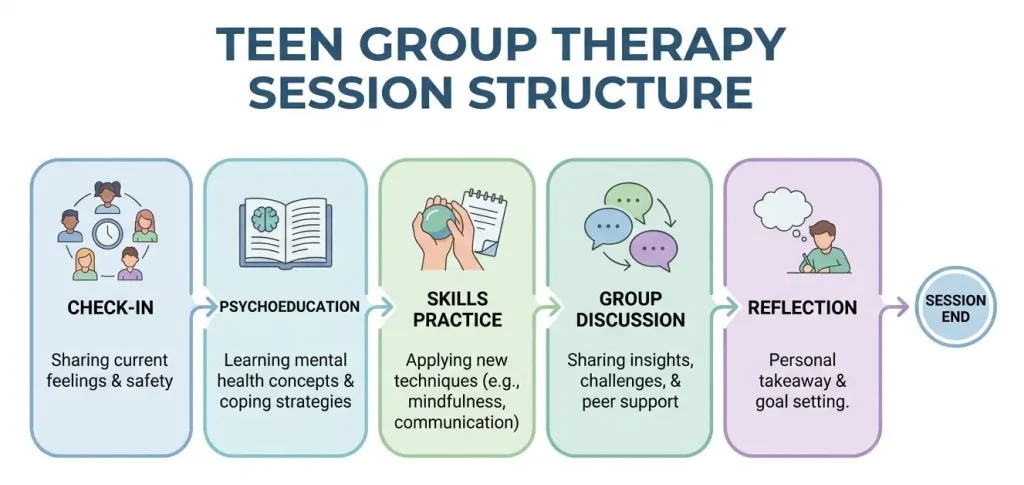
Successful teen group therapy sessions typically follow a structured format that balances clinical intervention, peer interaction, and skills practice. Because adolescents often benefit from clear expectations and guided activities, therapy groups for teens generally work best when sessions are organized into predictable segments rather than open-ended discussion.
Research on group therapy for adolescents frequently uses time-limited, structured group models in which each session builds on previously introduced skills. This structure helps teens stay engaged while ensuring that important therapeutic concepts are reinforced across multiple sessions.
Although the exact format may vary depending on the therapeutic model being used, most teen therapy groups include several core components.
Check-In and Emotional Temperature
Many therapy groups for teens begin with a brief check-in period where participants share how they have been feeling since the previous session. This portion of the group allows the clinician to assess emotional functioning, identify emerging concerns, and gauge the overall mood of the group.
Check-ins may include questions such as:
-
What was one challenge you faced this week?
-
Did you use any coping skills we discussed last session?
-
How are you feeling coming into group today?
This opening segment helps establish connection among participants while giving clinicians an opportunity to monitor risk factors such as worsening mood, self-harm behaviors, or escalating anxiety.
Psychoeducation and Skill Introduction
After the check-in, the facilitator typically introduces the main theme or skill for the session. In structured teen group therapy programs, each session often focuses on a specific therapeutic concept such as cognitive restructuring, emotional regulation, distress tolerance, or behavioral activation.
During this portion of the group, clinicians may provide short psychoeducational explanations, worksheets, or examples that help adolescents understand how the skill works. Because attention spans vary widely in adolescence, many therapy groups for teenagers keep this segment brief and interactive rather than lecture-based.
Skill Practice and Experiential Activities
Skill practice is one of the most important components of effective group therapy for teens. Adolescents learn best when they actively engage with the material, so therapy groups for adolescents often include experiential activities that allow participants to practice new skills in real time.
Common activities in teen therapy groups may include:
-
role-playing difficult conversations
-
practicing coping strategies for anxiety or distress
-
identifying cognitive distortions
-
group problem-solving exercises
-
behavioral rehearsal or exposure exercises
These activities allow participants to experiment with new behaviors while receiving supportive feedback from both the therapist and their peers.
Group Discussion and Peer Feedback
Peer interaction is one of the most powerful therapeutic elements of group therapy for teenagers. After skill practice activities, clinicians often facilitate a group discussion where participants reflect on their experiences, share insights, and provide feedback to one another.
This portion of the session reinforces several key therapeutic factors, including universality, peer validation, and collaborative problem solving. Many adolescents report that hearing others describe similar challenges helps normalize their experiences and reduces feelings of isolation.
Reflection, Homework, and Closing
Most teen group therapy sessions conclude with a short reflection period and a review of the skills covered during the meeting. Clinicians may ask participants to identify one concept they plan to apply during the coming week.
Some therapy groups for teens also assign brief homework exercises such as:
-
tracking thoughts and emotions
-
practicing a coping skill during stressful situations
-
completing a worksheet or journaling exercise
Ending the session with a clear summary helps reinforce learning and ensures that participants leave with concrete strategies they can practice between sessions.
Typical Length and Duration of Teen Therapy Groups
Many group therapy programs for adolescents run in structured cycles lasting between 8 and 12 sessions. Individual meetings typically last between 60 and 90 minutes depending on the setting and the complexity of the group’s treatment goals.
Time-limited formats allow clinicians to introduce and reinforce a series of therapeutic skills while maintaining group cohesion. Some programs offer additional follow-up or advanced groups for teens who benefit from ongoing support after the initial cycle is complete.
How Research Guides Documentation for Therapy Groups for Teens
The research on teen group therapy suggests several core documentation elements clinicians should include in their records. These elements mirror the structure used in clinical trials and evidence-based treatment models (Clarke et al., 2001; Wergeland et al., 2014; Wood et al., 2001; Pothiphet et al., 2022).
Population and Indication
Documentation for group therapy for adolescents should clearly describe the population being treated, including:
- age range of participants
- presenting problems or diagnoses
- referral sources
- comorbid conditions
- group purpose (preventive vs. treatment)
Examples include a CBT group for adolescent depression, a DBT skills group for self-harm, or a substance use relapse prevention group for teens. These details help demonstrate that treatment is appropriate and medically necessary.
Treatment Model
Documentation for teen therapy groups should specify the therapeutic model being used. Evidence-based models for group therapy for teenagers often include:
- Cognitive Behavioral Therapy (CBT)
- Dialectical Behavior Therapy (DBT)
- motivational interviewing approaches for substance use
- psychoeducation and coping skills training
Consistent documentation of the treatment model helps demonstrate adherence to evidence-based care.
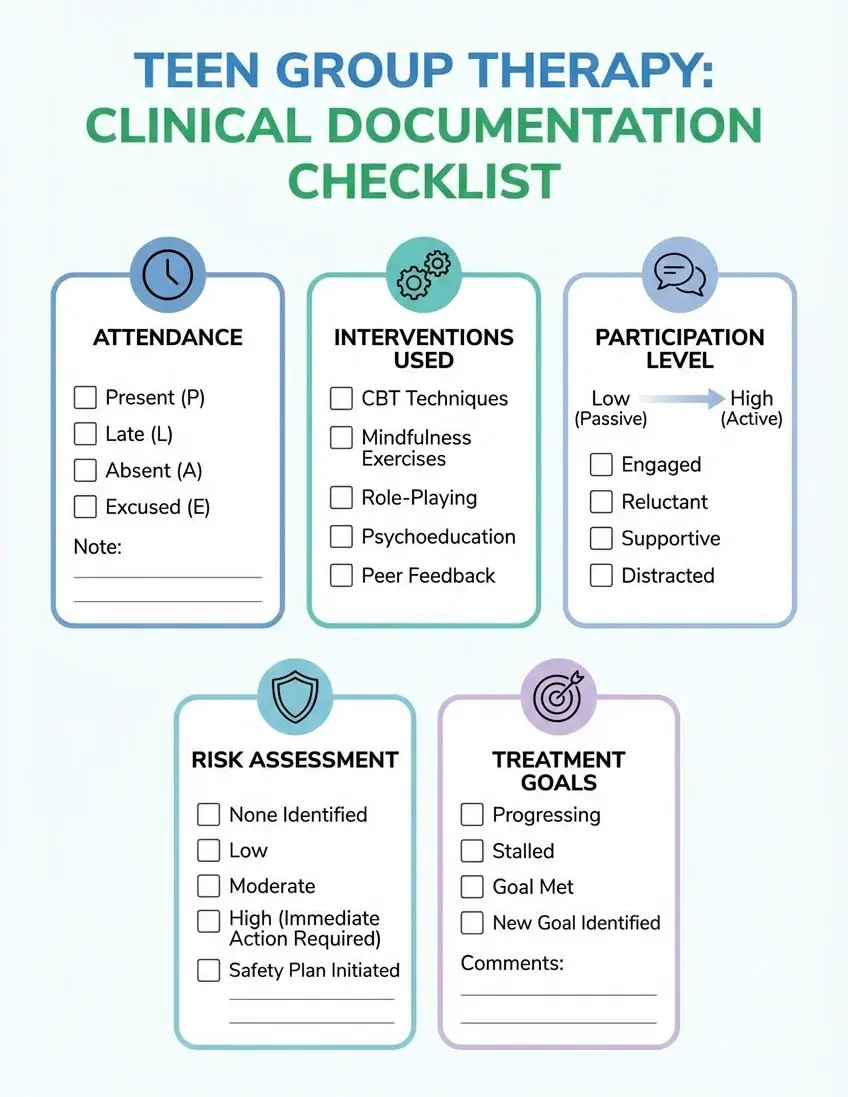
Measurable Treatment Goals
Research studies on therapeutic groups for teens typically measure outcomes using standardized tools. Clinicians can align their treatment plans with these outcomes, for example:
- Reduce PHQ-A score by 50 percent
- Decrease self-harm behaviors
- Reduce GAD-7 or SCARED anxiety scores
- Increase use of coping skills during distress
When treatment goals match validated measures, documentation becomes much stronger from both a clinical and compliance standpoint.
Session Structure
Evidence-based teen group therapy is typically time-limited and structured. Common formats include 8 to 12 weekly sessions of 60 to 90 minutes, with specific topics for each session.
Documentation for therapy groups for teenagers should identify the session focus, such as:
- cognitive restructuring
- emotion regulation
- behavioral activation
- relapse prevention
- exposure planning
This level of specificity demonstrates that the group is following a structured therapeutic model.
Attendance and Participation
Group notes for teen group therapy should record total number of participants, attendance patterns, level of engagement, and participation in exercises. Group cohesion and engagement have been shown to predict better outcomes in adolescent CBT groups (Fjermestad et al., 2024). Documenting these factors strengthens clinical records and treatment justification.
Screening and Assessment
Documentation for group therapy for adolescents should also include standardized screening tools when possible:
- PHQ-A for depression
- GAD-7 for anxiety
- SCARED for childhood anxiety
- Columbia Suicide Severity Rating Scale
- substance use screening tools
Documenting scores and changes over time helps demonstrate treatment effectiveness and aligns with school mental health quality guidelines that emphasize structured screening and monitoring (Dowdy et al., 2019).
Risk Documentation
Because group therapy for teens often involves safety concerns, documentation must include suicide risk assessments, history of self-harm, trauma exposure, bullying experiences, and substance use risk factors. These elements should appear in the clinical formulation and problem list, with updated risk assessments documented whenever significant events or disclosures occur (Wood et al., 2001; Dowdy et al., 2019).
How EMR Systems Support Teen Group Therapy Documentation
The complexity of therapeutic groups for teenagers makes structured documentation extremely helpful. An electronic medical record can support clinicians by providing:
- standardized templates
- built-in screening tools
- structured group therapy notes
- risk assessment documentation
- treatment plan integration
When documentation is organized within the EMR, clinicians facilitating group therapy for teens can focus more on the therapeutic work rather than administrative tasks.
How ICANotes Supports Teen Group Therapy
ICANotes includes a group therapy module designed specifically to support behavioral health clinicians, including those running therapy groups for teens and adolescents.
Within ICANotes, clinicians can document group sessions using structured templates that capture the elements required for evidence-based teen group therapy documentation. The system allows providers to record:
- group session topics
- therapeutic interventions
- attendance and participation
- individual responses within the group
- risk disclosures and safety planning
- outcome measures and treatment goals
Because the templates are aligned with behavioral health documentation standards, clinicians can easily demonstrate that their therapeutic groups for teens follow structured, evidence-based protocols (Dowdy et al., 2019).
For adolescent groups in particular, ICANotes provides content that reflects the types of interventions commonly used in youth mental health treatment, including CBT and skills-based approaches. This helps clinicians maintain consistent documentation across sessions and ensures that key treatment elements are not overlooked.
See How ICANotes Supports Teen Group Therapy Documentation
Running teen group therapy requires structure, consistency, and documentation that supports both clinical care and compliance. ICANotes helps behavioral health clinicians document adolescent group sessions efficiently with structured templates, treatment planning tools, and built-in support for risk assessment, participation tracking, and evidence-based interventions.
Start your free 30-day trial to explore how ICANotes can help you streamline teen group therapy notes, improve documentation quality, and spend more time focusing on the adolescents in your care.
- Structured group therapy documentation
- Behavioral health-specific templates
- Treatment planning and progress note support
- Built for mental health clinicians
Start Your Free Trial
No credit card required.
Why Documentation Matters for Group Therapy for Teenagers
In adolescent mental health and substance use treatment, documentation serves several critical functions. It supports:
- continuity of care
- communication between providers
- legal and compliance protection
- demonstration of medical necessity
- outcome tracking
When teen group therapy involves high-risk youth, documentation also becomes essential for risk management and safety planning (Wood et al., 2001; Dowdy et al., 2019). Structured documentation ensures that important clinical details are consistently captured.

Frequently Asked Questions About Teen Group Therapy
Bringing Evidence-Based Teen Group Therapy Into Practice
Group therapy for adolescents has a strong research foundation, and clinicians are increasingly using these interventions to address depression, anxiety, substance use, and self-harm behaviors (Clarke et al., 2001; Wergeland et al., 2014; Wood et al., 2001; Pothiphet et al., 2022).
But successful therapeutic groups for teens require careful attention to:
- developmental differences
- peer dynamics
- engagement strategies
- risk assessment
- structured treatment models
Documentation must reflect these complexities.
By aligning clinical documentation with research-supported practices and using structured tools within the EMR, clinicians can deliver effective group therapy for teenagers while maintaining strong clinical records.
ICANotes helps make this process easier by providing documentation support tailored to behavioral health providers and the unique needs of adolescent group treatment.
For clinicians working with teens, having the right tools in place can make a meaningful difference in both clinical care and documentation quality.
And ultimately, better documentation supports the goal that matters most — helping adolescents develop the skills and resilience they need to thrive.
Related Posts





Dr. October Boyles
DNP, MSN, BSN, RN
About the Author
Dr. October Boyles is a behavioral health expert and clinical leader with extensive expertise in nursing, compliance, and healthcare operations. With a Doctor of Nursing Practice (DNP) and advanced degrees in nursing, she specializes in evidence-based practices, EHR optimization, and improving outcomes in behavioral health settings. Dr. Boyles is passionate about empowering clinicians with the tools and strategies needed to deliver high-quality, patient-centered care.