Blog > Treatment Strategies > Anxiety Treatment Plan Template: SMART Goals & Examples
How to Write a Treatment Plan for Anxiety: Goals, Objectives and Real Examples
A well-structured anxiety treatment plan is the foundation of effective clinical care — and the key to demonstrating medical necessity, setting measurable goals, and guiding evidence-based interventions. Whether you're writing your first treatment plan for anxiety or refining your documentation process, this guide covers everything from diagnosis selection to SMART goals, practical interventions, and real-world examples you can adapt for your clients. Sometimes called an anxiety care plan in nursing or integrated care settings, an effective anxiety treatment plan connects diagnosis to goals, goals to interventions, and interventions to measurable outcomes. You'll also learn documentation best practices and how tools like ICANotes streamline the entire planning process.


Last Updated: September 9, 2026

What You'll Learn
-
How to choose the correct ICD-10 diagnosis for anxiety disorders and document symptoms clearly
-
The essential components of an effective anxiety treatment plan
-
How to write measurable treatment plan goals and objectives for anxiety
-
Real-world SMART goals for anxiety you can copy or adapt
-
A full anxiety treatment plan example with goals, interventions, and outcomes
-
Evidence-based therapeutic approaches, including CBT, exposure therapy, and mindfulness
-
How to track progress using standardized assessments like the GAD-7
-
Best practices for maintaining compliance, medical necessity, and the “Golden Thread”
-
How ICANotes helps automate goals, interventions, and treatment plan updates
Contents
- Choosing the Right Diagnosis and ICD-10 Code
- How to Structure an Anxiety Treatment Plan
- Setting SMART Goals for Anxiety Treatment
- Examples of Treatment Goals and Objectives for Anxiety
- Generalized Anxiety Disorder (GAD) Treatment Plan
- Social Anxiety Treatment Plan
- Treatment Goals for Anxiety and Depression
- Using Tools and Templates to Streamline Planning
- Real-World Example: Sample Treatment Plan for Anxiety
- Conclusion
- FAQs: Anxiety Treatment Plans
Did you know anxiety disorders affect approximately 40 million adults in the United States each year? They represent the most common category of mental health conditions.
Your clients need professional help if anxiety symptoms disrupt their daily functioning and quality of life. A detailed treatment plan serves as the critical first step to help patients manage their symptoms effectively. Many clinicians find it challenging to develop structured, goal-oriented plans that satisfy insurance requirements and guide treatment properly.
Clear, measurable anxiety treatment goals drive successful outcomes. On top of that, it takes more than reimbursement to code accurately — you need to show medical necessity while retaining control of your professional integrity. Using anxiety disorder ICD-10 codes correctly helps ensure insurance coverage for therapy sessions or medications.
This guide walks you through the process of creating effective treatment plans for anxiety. You'll learn about selecting appropriate diagnoses, setting SMART goals, and implementing evidence-based interventions. You'll find practical examples of treatment objectives for anxiety that fit your practice, along with documentation best practices that ensure compliance and quality care.
What is an Anxiety Treatment Plan?
An anxiety treatment plan provides a clear, organized framework for delivering and documenting care. It ensures that every intervention is directly tied to the patient’s diagnosis, symptoms, and functional impairments — a requirement for both effective treatment and insurance reimbursement. A well-structured plan also helps clinicians track progress over time, adjust interventions when needed, and maintain consistency across sessions and providers.
A comprehensive treatment plan for anxiety typically includes:
- A specific anxiety diagnosis with the corresponding ICD-10 code
- A clear description of presenting problems and functional impairments
- Measurable short-term objectives and long-term treatment goals
- Evidence-based interventions matched to the diagnosis (e.g., CBT, exposure therapy, mindfulness)
- A defined treatment timeline, including session frequency and review intervals
- Standardized outcome measures (such as the GAD-7) to track progress
Treatment plans also play a critical compliance role. Insurers and regulatory bodies require documentation that connects every intervention to the patient's diagnosis and presenting problems — a concept known as the "Golden Thread." Without this link, claims may be denied and audits become problematic.
Understanding Anxiety and Its Clinical Presentation
Anxiety disorders go beyond normal nervousness. They develop when fear and worry become persistent, difficult to control, and significantly disrupt everyday functioning.
Anxiety manifests across four symptom domains — physical (elevated heart rate, muscle tension, sleep disturbance, digestive issues), cognitive (racing thoughts, difficulty concentrating, catastrophic thinking), emotional (persistent dread, irritability, feeling overwhelmed), and behavioral (avoidance, safety behaviors, social withdrawal). Patients frequently present first to primary care or emergency departments, believing physical symptoms indicate a serious medical condition.
Anxiety often involves anticipatory fear and intolerance of uncertainty, leading patients to overestimate threat and underestimate their ability to cope. Many patients rely on safety behaviors such as reassurance-seeking, avoidance, or over-preparation, which reduce distress in the short term but reinforce anxiety over time. Physiological hyperarousal — including heightened sympathetic nervous system activation — contributes to persistent fatigue, irritability, and difficulty regulating emotions.
The functional impact is substantial. Anxiety impairs work productivity, decision-making, and interpersonal relationships. Nearly 20% of U.S. adults carry an anxiety disorder diagnosis [6], yet only 43% receive appropriate treatment [7]. Comorbidity is the norm rather than the exception — approximately 67% of people with depression also have anxiety, while 63% of those with anxiety experience co-occurring depression [9].
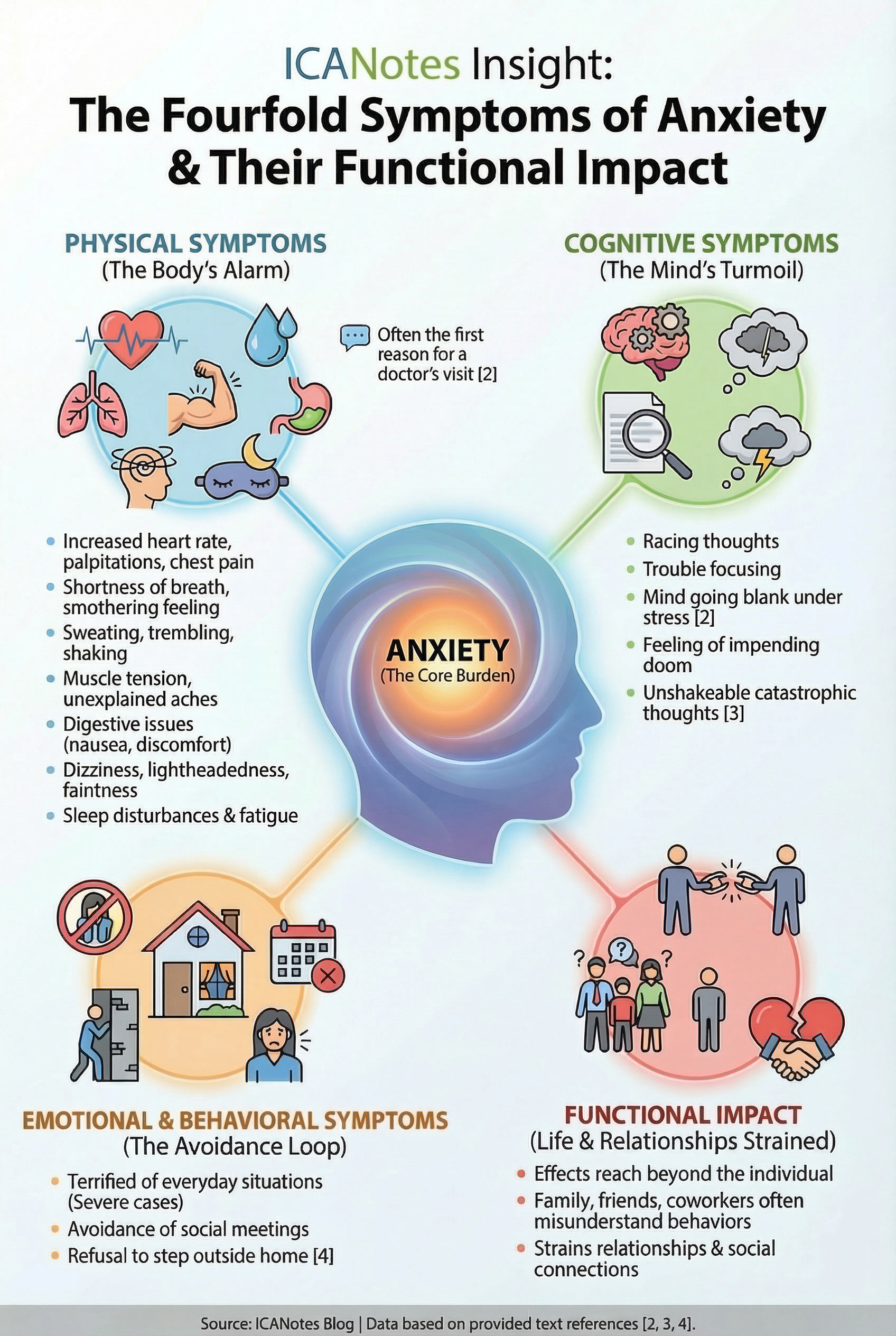
Without treatment, anxiety often leads to progressive functional impairment, including reduced occupational performance, social withdrawal, and decreased quality of life.
Effective treatment plans for anxiety must therefore target both symptom reduction and functional restoration, addressing physical symptoms, cognitive patterns, behavioral avoidance, and impairments across work, relationships, and daily activities.
Choosing the Right Diagnosis and ICD-10 Code
A proper diagnosis is the foundation of successful anxiety treatment planning. The right ICD-10 code shapes your treatment approach, ensures insurance reimbursement, and guides targeted interventions.
F41.1 – Generalized Anxiety Disorder (GAD)
The most commonly used anxiety diagnosis in behavioral health. F41.1 applies when patients present with persistent, "free-floating" worry not tied to specific situations. Documentation must show anxiety and worry occurring more days than not for at least six months, difficulty controlling the worry, and at least three associated symptoms: restlessness, fatigue, concentration problems, irritability, muscle tension, or sleep disturbance.
Other Common Anxiety Diagnoses
Tools like ICANotes streamline the diagnostic and treatment planning process with built-in libraries of goals, objectives, and interventions matched to each anxiety diagnosis. After selecting the right ICD-10 code, you can quickly generate customized treatment plan content.
Anxiety Treatment Plan Template (With Completed Example)
Stop writing treatment plans from scratch. Download a clinician-ready anxiety treatment plan template that includes a completed Generalized Anxiety Disorder (GAD) example and a fully customizable version you can use immediately.
This resource helps you document diagnosis, SMART goals, measurable objectives, interventions, and outcomes — all while maintaining medical necessity and audit-ready documentation.
See exactly how a full treatment plan is structured.
Customize for your own clients instantly.
Built-in measurable objectives and outcomes.
Supports medical necessity and compliance.
How to Structure an Anxiety Treatment Plan
A structured anxiety treatment plan gives both clinician and patient a clear path through the therapeutic experience. Research shows that plans that work best follow a specific framework with core elements of care.
Diagnosis and Presenting Problems
Your treatment plan must state the specific anxiety diagnosis and ICD-10 code (e.g., Generalized Anxiety Disorder, F41.1) with a brief summary of the patient's main concerns. Document physical symptoms, cognitive symptoms, behavioral signs, and functional impairments — and show how anxiety affects your patient's daily life. For instance, note if they have panic attacks that send them to emergency care or if constant worry hurts their work performance.
Treatment Goals and Objectives
Treatment goals define the broader outcomes you and your patient want to achieve. Objectives are specific, measurable steps to reach those goals. Research shows that SMART goals (Specific, Measurable, Achievable, Relevant, Time-bound) improve treatment outcomes significantly [16].
Common goal categories for anxiety treatment include symptom reduction, cognitive restructuring, functional restoration, avoidance reduction, and quality of life improvement. Each objective should spell out what the patient will do and how you'll measure it. Instead of "reduce anxiety," a SMART objective might read: "Client will reduce GAD-7 score from 15 to 10 within 8 weeks".
Clear therapy goals for anxiety do more than satisfy documentation requirements. When a clinician and client agree on specific, measurable goals, it strengthens the therapeutic alliance — both parties are working from the same roadmap, which reduces misunderstandings about what “progress” looks like and keeps sessions focused. Goal-setting also drives skill development: each objective typically requires the client to practice a specific coping strategy — cognitive restructuring, exposure, relaxation training — repeatedly enough to internalize it, so the skills built while pursuing treatment goals often outlast the treatment episode itself. Involving clients in setting their own goals has a motivational benefit, too. Clients who help define what “better” looks like for them tend to feel more ownership over their therapy goals for anxiety and stay more engaged session to session, compared to being handed a generic plan.
Interventions and Therapeutic Approaches
This section outlines specific techniques you'll use. Cognitive-Behavioral Therapy (CBT) remains the most evidence-supported intervention for anxiety disorders [18]. Key interventions include cognitive restructuring, exposure therapy, mindfulness techniques, relaxation training, and psychoeducation about anxiety physiology. Medications — particularly SSRIs/SNRIs, buspirone, or short-term benzodiazepines — may also be documented as part of the plan.
Related: Top Interventions for Anxiety: Tools and Techniques for Clinicians
Timeline and Frequency of Sessions
Research shows mild anxiety typically requires 8–12 sessions, moderate anxiety 15–20 sessions, and severe or chronic anxiety may need several months or more [20]. Standard CBT involves weekly 30–60-minute sessions over 12–20 weeks [21].
Identify outcome measures to track progress throughout treatment. Standardized tools like the GAD-7, Beck Anxiety Inventory (BAI), Hamilton Anxiety Rating Scale (HAM-A), and Penn State Worry Questionnaire (PSWQ) provide objective data. Research confirms that measurement-based care produces better clinical outcomes than treatment without standardized assessments [22].
Compliance: Linking Goals to Diagnosis and Updating Plans
Regulatory bodies expect every treatment goal to connect directly to the patient's identified diagnosis and presenting problems — the "Golden Thread." Treatment plans should be reviewed at least every 90 days, or sooner if the patient's condition changes. Updates should document progress toward existing goals, add new goals when previous ones are achieved, adjust approaches when progress stalls, and note any changes in diagnosis or symptoms. Patient consent should also be documented, showing the patient understands and agrees with their treatment plan.
Digital tools like ICANotes automate much of this process. The system provides built-in libraries of goals, objectives, and interventions for anxiety disorders, integrates standardized assessments like the GAD-7, and sends reminders when treatment plans need review.
Setting SMART Goals for Anxiety Treatment
Anxiety treatment works best with clear direction and measurable progress. SMART goals turn vague intentions into actionable steps that guide both therapist and client throughout treatment.
What Makes a Goal SMART?
- Specific: Spells out exactly what needs to be accomplished
- Measurable: Tracked through observable data or standardized tools
- Achievable: Challenging but realistic given the patient's situation
- Relevant: Aligned with the patient's values and treatment needs
- Time-bound: Includes a deadline for accountability
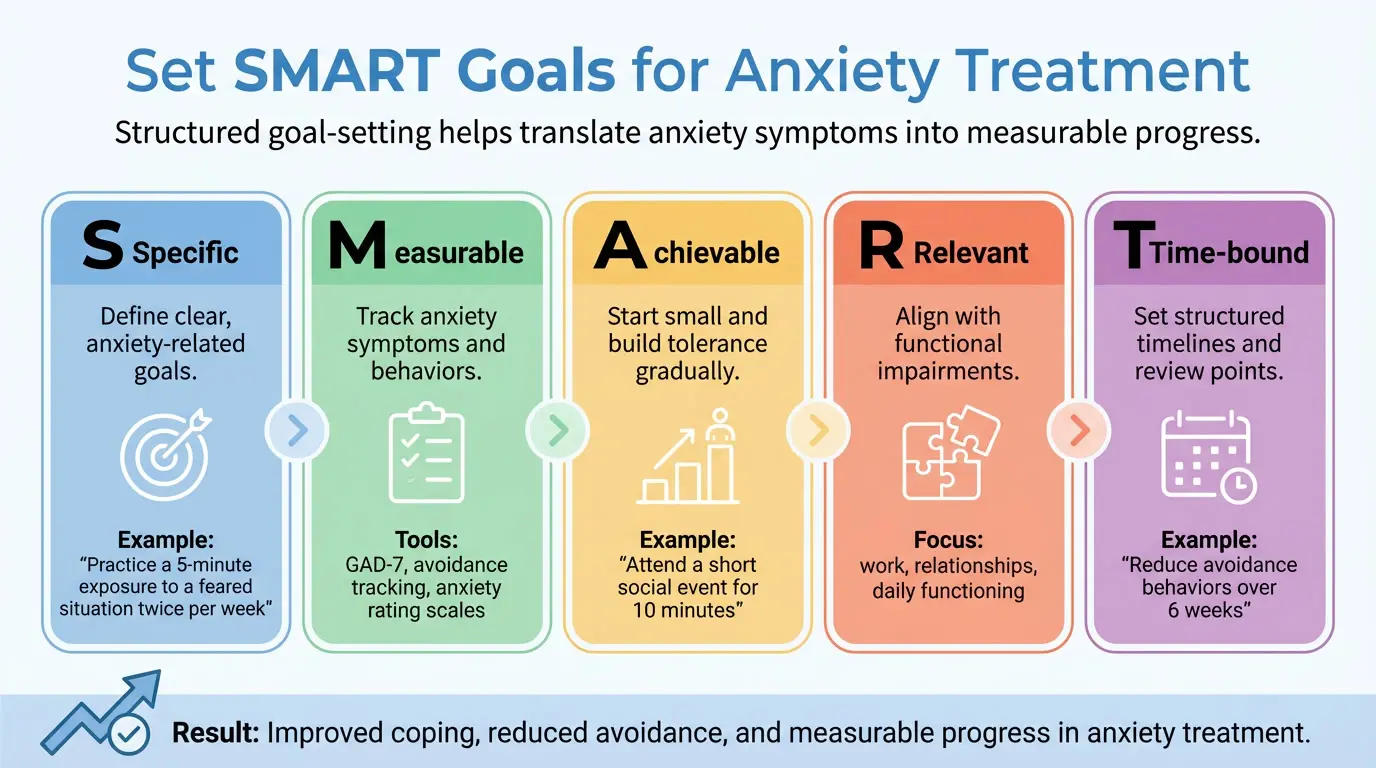
Most anxiety treatment plans work with two goal horizons. Long-term goals describe the overall outcome a client is working toward — returning to full-time work, or attending social events without significant distress — and are typically reviewed every 8–12 weeks. Short-term goals for anxiety break that outcome into smaller, session-to-session steps, such as practicing a breathing exercise daily for two weeks or attending one social event this month. Short-term goals are usually what actually show up as SMART objectives in the chart, since they're the pieces a clinician can measure and update most often.
Examples of SMART Goals for Anxiety
The smart goals for anxiety examples below show how the SMART framework translates into real chart language across common presentations.
Aligning Goals with Patient Values
The best SMART goals connect directly to your patient's life priorities. A patient who values education but avoids classes due to panic attacks might work toward: "Client will attend all scheduled classes for two consecutive weeks using breathing techniques when anxiety symptoms emerge."
Short-term goals focus on building skills and managing immediate symptoms. Long-term goals target broader life changes. A comprehensive treatment plan typically includes 2–3 long-term goals supported by several short-term targets.
ICANotes makes this process easier with customizable templates that help therapists match evidence-based treatments with individual patient goals. The software suggests goals based on diagnosis while letting you adjust them for each patient's unique situation.
Are SMART Goals Always the Right Fit? Potential Drawbacks?
SMART goals are a useful structure, but they aren't without critics. Because the format rewards what can be measured, clinicians sometimes overemphasize outcomes — a lower GAD-7 score, more social events attended — at the expense of process: how a client is coping emotionally along the way. The framework can also create a binary sense of success or failure. A client who reduces panic attacks from five to three per week technically didn't “meet” a goal written as “zero to one per week,” even though that's meaningful progress. And a rigid weekly cadence doesn't fit every presentation; a client with severe agoraphobia may need goals that flex around bad weeks rather than count against them. None of this means SMART goals should be abandoned — it means they work best as a living document. Goals should stay specific and measurable, but be revisited often enough that “didn't meet the goal” doesn't become the whole story.
Reviewing and Adjusting Goals Over Time
SMART goal-setting isn't a one-time exercise completed at intake. Goals should be reviewed collaboratively at each reassessment point — typically every 4–8 weeks, depending on severity — using the same standardized tools (GAD-7, session progress notes) that were used to set the original targets. If a client is consistently meeting a goal ahead of schedule, tighten the target or add a new one. If a goal is consistently unmet, ask whether the timeline was unrealistic, the intervention needs to change, or the goal no longer reflects what the client values. Documenting this review — not just the original goal — is what keeps the treatment plan an active clinical tool instead of a form that's filled out once and forgotten.
Examples of Treatment Goals and Objectives for Anxiety
Converting clinical theory into practical treatment goals is a critical step in anxiety management. Here are evidence-based examples by treatment focus area.
Symptom Reduction Goals
- Client will decrease anxiety attacks from 5 to 2 per week within 3 months by implementing daily relaxation techniques and cognitive restructuring"
- "Client will reduce GAD-7 score from 15 to below 10 within 6 weeks through daily mindfulness practice"
- "Patient will decrease reported physical symptoms (heart palpitations, sweating) by practicing deep breathing exercises for 5 minutes each morning and evening"
Research shows psychological interventions like relaxation exercises and psychoeducation can reduce anxiety by up to 20.3% in experimental groups compared to just 1.4% in control groups [24].
Cognitive Restructuring Goals
- "Client will identify three cognitive distortions daily using thought recording for four weeks"
- "Patient will challenge catastrophic thinking using the 5-step cognitive restructuring process during anxiety-provoking situations"
- "Client will develop three alternative explanations for anxiety-provoking situations within 8 weeks"
Cognitive restructuring helps patients examine their thinking during distress, assess the accuracy of troubling thoughts, and develop more balanced perspectives.
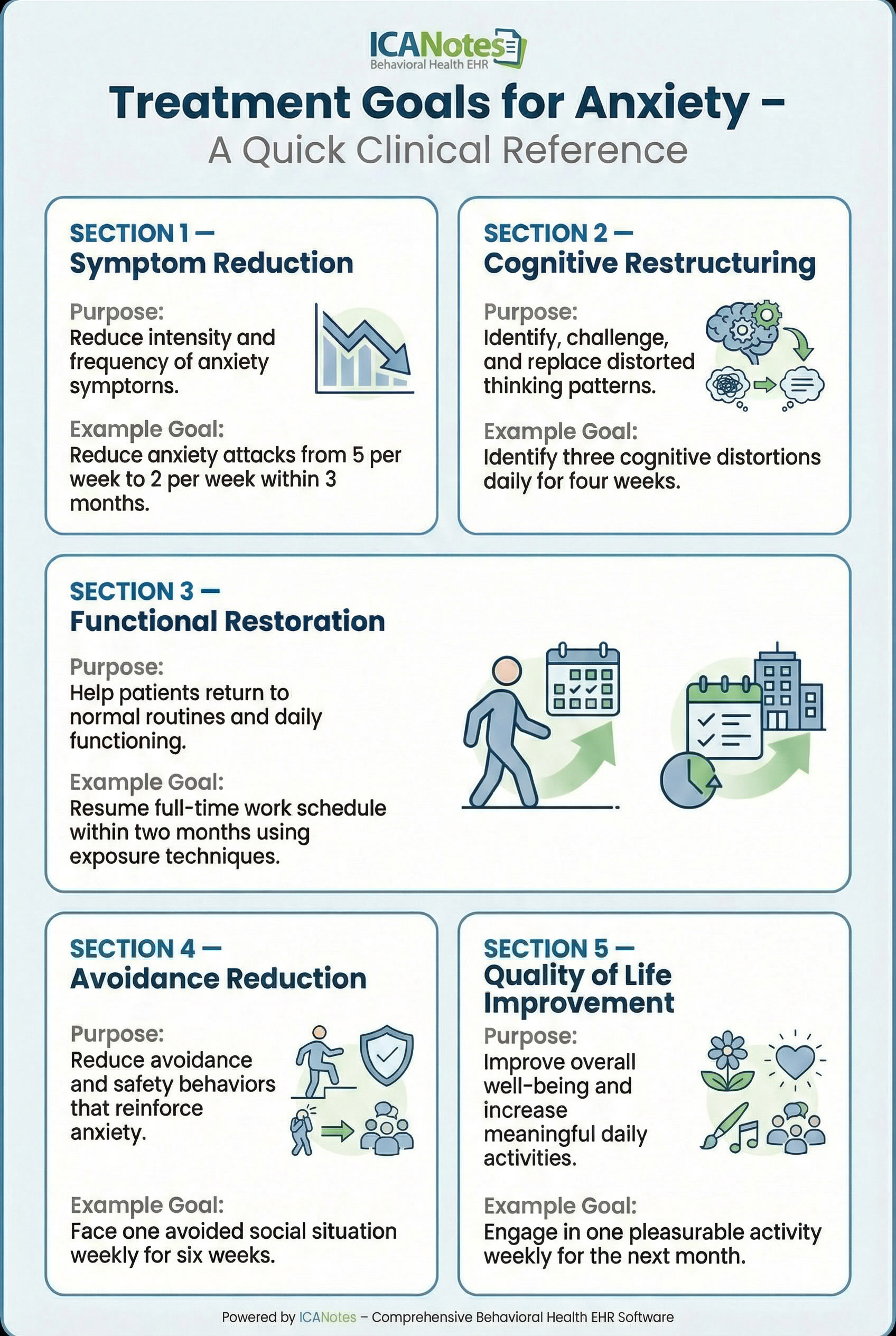
Functional Restoration Goals
- "Client will return to full-time work schedule within 2 months using graduated exposure techniques"
- "Patient will resume academic coursework with accommodations, attending 90% of scheduled classes over the next semester"
- "Client will restore pre-anxiety sleep patterns, achieving 7 hours of uninterrupted sleep 5 nights weekly"
Studies show functional restoration programs lead to improved self-efficacy, reduced depression and anxiety scores, and better physical function compared to standard management [8].
Avoidance Reduction Goals
- "Client will face one previously avoided social situation weekly for 6 weeks using learned coping skills"
- "Patient will gradually reduce safety behaviors during public speaking, eliminating 2 behaviors every 2 weeks"
- "Client will complete a hierarchy of feared situations and successfully engage in 3 moderate-anxiety activities by treatment midpoint"
Avoidance is a hallmark feature of anxiety disorders that maintains fear cycles through negative reinforcement. Breaking this pattern through graduated exposure is central to effective anxiety treatment.
Quality of Life Improvement Goals
Relationship and communication goals deserve their own attention, since anxiety often erodes closeness with partners, family, and friends well before it visibly affects work performance.
- "Client will engage in one pleasurable activity weekly for the next month to reduce anxiety-related withdrawal"
- "Patient will improve relationship satisfaction by using communication skills learned in therapy during two family conversations weekly"
- "Client will develop and implement a wellness routine incorporating exercise, social connection, and relaxation techniques"
Research shows psychological interventions for anxiety can improve wellness scores by 23.0% compared to just 2.4% in control groups [24].
ICANotes streamlines documentation with its comprehensive library of anxiety-specific goals that adapt quickly to each patient's needs while meeting documentation requirements.
Self-Esteem and Confidence-Building Goals
- Client will identify and record 3 personal strengths or accomplishments weekly for 6 weeks to counter anxiety-driven self-criticism.
- Client will complete one values-aligned task previously avoided due to fear of failure or judgment, weekly for 4 weeks.
- Patient will practice self-compassionate self-talk in response to a perceived mistake at least 3 times per week, tracked via journal.
Goal Examples by Anxiety Severity
The right treatment goals for anxiety often depend as much on severity as on diagnosis. A goal that's appropriately challenging for a client with mild, situational anxiety may be unrealistic — or insufficiently ambitious — for a client with severe, panic-level symptoms. The examples below are grouped by severity tier rather than by diagnosis, so they can be adapted to whichever anxiety disorder a client presents with.
Mild Anxiety Symptoms Goals
Clients with mild anxiety typically retain most day-to-day functioning, so goals can focus on prevention and skill-building rather than crisis management.
- Client will practice diaphragmatic breathing for 5 minutes daily for 4 weeks to build a baseline relaxation skill.
- Client will identify and log one anxious thought per day using a thought record for 3 weeks.
- Client will maintain a GAD-7 score below 5 through the next reassessment period.
Moderate Anxiety Symptoms Goals
Moderate anxiety typically involves noticeable interference with work, school, or relationships, so goals combine symptom reduction with functional steps.
- Client will reduce GAD-7 score from 12 to below 8 within 8 weeks through weekly CBT and daily mindfulness practice.
- Client will apply cognitive restructuring to at least 3 anxiety-provoking situations per week for 6 weeks.
- Client will attend 90% of scheduled work meetings without leaving early due to anxiety for 4 consecutive weeks.
Severe Anxiety with Panic Attacks Goals
Severe anxiety, particularly with panic attacks, calls for goals that prioritize immediate safety and stabilization before broader functional targets.
- Client will use a grounding technique (5-4-3-2-1 sensory check) within 60 seconds of panic-attack onset, tracked across the next 4 weeks.
- Client will reduce panic attack frequency from daily to 2–3 per week within 6 weeks using paced breathing and interoceptive exposure.
- Client will reduce avoidance of one identified trigger location (e.g., grocery store, highway) by completing one graduated exposure session weekly for 8 weeks.
Generalized Anxiety Disorder (GAD) Treatment Plan: Goals & Example
Treatment goals for generalized anxiety disorder typically center on reducing the frequency and intensity of chronic worry, since GAD's hallmark symptom — persistent, hard-to-control worry across multiple domains — doesn't respond as predictably to single-trigger exposure work the way phobias or panic disorder often do.
GAD-Specific SMART Goals
- Worry reduction: "Client will reduce daily worry episodes from 5+ to 2 or fewer within 8 weeks by applying stimulus control techniques (designated 'worry time') and cognitive restructuring skills"
- GAD-7 score improvement: "Patient will lower GAD-7 score from 16 (severe) to below 10 (moderate) within 12 weeks through weekly CBT sessions and daily relaxation practice"
- Sleep restoration: "Client will reduce sleep-onset latency from 60+ minutes to under 30 minutes within 6 weeks by implementing sleep hygiene protocols and progressive muscle relaxation"
- Functional improvement: "Patient will complete daily work responsibilities without anxiety-related avoidance or leave for 4 consecutive weeks, using coping skills practiced in session"
GAD Treatment Plan Example
Social Anxiety Treatment Plan: Goals, Objectives & Interventions
A social anxiety treatment plan typically centers on graded exposure — working through feared situations in order of difficulty, from lower-stakes interactions up to the client's most avoided scenarios — paired with cognitive work on the beliefs that drive avoidance.
Setting the right treatment goals for social anxiety starts with identifying which specific situations — public speaking, group settings, one-on-one conversations — trigger the most distress, since exposure-based objectives work best when they're built around a client's actual avoidance pattern.
Social Anxiety SMART Goals
-
Exposure-based: "Client will initiate one conversation with an unfamiliar person per week for 6 weeks, using cognitive coping statements, and rate post-interaction anxiety below 5/10"
-
Safety behavior reduction: "Patient will reduce reliance on safety behaviors (e.g., excessive rehearsal, avoiding eye contact, holding a drink to hide trembling) by eliminating 2 behaviors every 2 weeks over 8 weeks"
-
Functional restoration: "Client will attend and actively participate in 3 work meetings per week without avoidance for 4 consecutive weeks, using in-session exposure rehearsal skills"
Social Anxiety Treatment Plan Example
Treatment Goals for Anxiety and Depression
Because anxiety and depression frequently co-occur, many treatment plans need smart goals for anxiety and depression that address both conditions in the same objective, rather than treating them as entirely separate problems.
When documenting a treatment plan for anxiety and depression, clinicians must address both conditions with goals that account for their interaction. For example, depressive withdrawal can reinforce anxiety-driven avoidance, while anxiety-related sleep disruption can worsen depressive fatigue.
Dual-Diagnosis SMART Goals
- Behavioral activation + exposure: "Client will engage in one avoided social activity and one pleasurable activity per week for 6 weeks, tracking mood and anxiety ratings before and after each activity"
- Integrated symptom reduction: "Patient will reduce both PHQ-9 and GAD-7 scores by at least 5 points within 10 weeks through combined CBT addressing cognitive distortions common to both conditions"
- Sleep improvement: "Client will implement a consistent sleep-wake schedule (within 30 minutes of target times) for 4 consecutive weeks, reducing both anxious rumination and depressive fatigue"
When treating comorbid anxiety and depression, document both diagnoses (e.g., F41.1 and F33.1) and ensure each treatment goal clearly links to one or both conditions. ICANotes supports multi-diagnosis treatment plans with goals and interventions that map to each identified condition.
Managing Challenges During Anxiety Therapy
Even well-written therapy goals for anxiety don't guarantee smooth progress. Clinicians should expect — and plan for — a few predictable obstacles.
Resistance to Change
Fear of Failure
Lack of Motivation
Using Tools and Templates to Streamline Planning
Documentation for anxiety treatment plans takes valuable time away from patient care. Modern digital tools can reduce paperwork significantly and improve treatment quality.
How EHRs Like ICANotes Can Help
ICANotes, a specialized behavioral health EHR, optimizes treatment planning through pre-populated forms and customizable templates. The system centralizes all clinical data, streamlines workflow, and helps you maintain HIPAA compliance through reliable security measures. Benefits include less documentation time, consistent treatment plan updates, and streamlined workflows.
Many clinicians like to keep a smart goals for anxiety PDF on hand for quick reference during intake or treatment planning. In ICANotes, treatment plan content — including the SMART goals and objectives sections — can be printed or saved as a PDF directly from the chart, making it easy to attach a goal-tracking sheet to a paper file or share a summary with a client.
Auto-Suggested Goals and Interventions
ICANotes' Treatment Plan module includes content for over 90 common mental health problems, with specialized material for 32 mental health issues, 43 nursing concerns, and 18 social problems. When you enter a diagnosis like Generalized Anxiety Disorder, the system suggests appropriate long-term and short-term goals, evidence-based interventions, and role-specific content for each treatment team member. These suggestions serve as starting points you can customize to match each patient's unique needs.
Tracking Progress with Built-In Assessments
ICANotes integrates standardized assessment tools including the GAD-7 for anxiety. This allows you to set baselines at intake, monitor symptom changes during therapy, document progress toward specific goals, and generate reports showing treatment effectiveness. The system maintains the "Golden Thread" linking assessment findings, treatment goals, and progress notes — ensuring documentation consistency throughout treatment.
Create Anxiety Treatment Plans Faster — Without Sacrificing Clinical Quality
Build individualized anxiety treatment plans with less manual work. ICANotes helps clinicians document diagnoses, SMART goals, measurable objectives, and evidence-based interventions while maintaining the “Golden Thread” required for medical necessity.
Create plans for generalized anxiety disorder, social anxiety, panic symptoms, and more — with built-in content designed specifically for behavioral health workflows.
Prewritten anxiety goals, objectives, and interventions.
Keep diagnosis, goals, and notes aligned.
Designed for mental health clinicians.
Easily revise plans as symptoms evolve.
Real-World Example: Sample Treatment Plan for Anxiety
Documentation forms the foundations of ethical and effective anxiety treatment. Professional standards and regulatory requirements depend on proper documentation that leads to better patient care.
Case Overview and Diagnosis
Fred, a 28-year-old graduate student, presented to a university psychological clinic with relationship and anxiety concerns. He reported symptoms persisting for over a year: excessive, uncontrollable worry, restlessness, poor concentration, muscle tension, and sleep problems. He was diagnosed with Generalized Anxiety Disorder (F41.1) under DSM-5 criteria. Fred's anxiety symptoms began in childhood and worsened recently due to relationship challenges.
Goals and Objectives
The treatment plan included clear goals:
- Lower anxiety symptoms, especially those affecting intimate relationships
- Build healthy intimate relationships without excessive anxiety
- Recognize and accept catastrophizing thought patterns without self-judgment
These broader goals were supported by measurable objectives: Fred was expected to practice cognitive restructuring skills daily to identify and challenge anxious thoughts, and to engage with anxiety-triggering situations while using at least one learned coping skill.
Interventions and Outcomes
Treatment combined the "Mastery of Your Anxiety and Worry" manual with mindfulness and acceptance-based approaches from Acceptance and Commitment Therapy (ACT). Over 29 sessions across 10 months, Fred learned cognitive restructuring, cued recall relaxation, mindfulness techniques, and new response patterns for anxiety-triggering situations.
Fred's anxiety decreased as treatment progressed, and he developed effective strategies for managing remaining symptoms.
ICANotes helps clinicians create customized treatment plans like this through its built-in libraries of evidence-based goals, objectives, and interventions for anxiety disorders.
Conclusion
The success of anxiety management depends on creating effective treatment plans that connect accurate diagnosis, thoughtful goal-setting, and evidence-based interventions. SMART goals transform vague intentions into concrete, measurable objectives that guide you and your client through the therapeutic process.
Your anxiety treatment plans should tackle both symptom reduction and functional improvement — targeting physical symptoms, cognitive patterns, behavioral avoidance, and functional impairments across work, relationships, and daily activities. The "Golden Thread" connecting diagnoses, goals, and interventions demonstrates medical necessity and guides effective care. Quality treatment planning transforms anxiety management from reactive symptom control to proactive, goal-oriented therapy that restores patients' ability to function in work, relationships, and daily life.
ICANotes simplifies this process with pre-developed SMART goals for anxiety treatment, auto-suggested interventions matched to diagnoses like GAD and social anxiety disorder, and built-in assessment tools like the GAD-7 to track progress objectively. Sign up for a free 30-day trial to see how streamlined treatment planning can transform your practice.
Related Resources for Clinicians
Continue building your anxiety treatment toolkit with these in-depth clinical guides on assessment, treatment planning, and specialized interventions:
- → Anxiety Assessment Tools for Clinicians: GAD-7, BAI, & More
- → ACT for Anxiety Disorders: A Practical Guide for Clinicians
- → Interventions for Anxiety: Evidence-Based Techniques for Anxiety Disorders
- → Anxiety and Substance Use: Breaking the Cycle
- → Understanding the Relationship Between Anxiety and Trauma
- → Treating Clients with Climate Anxiety: Integrating Eco-Therapy into Practice

FAQs: Anxiety Treatment Plans
Recent Posts




Dr. October Boyles
DNP, MSN, BSN, RN
About the Author
Dr. October Boyles is a behavioral health expert and clinical leader with extensive expertise in nursing, compliance, and healthcare operations. With a Doctor of Nursing Practice (DNP) and advanced degrees in nursing, she specializes in evidence-based practices, EHR optimization, and improving outcomes in behavioral health settings. Dr. Boyles is passionate about empowering clinicians with the tools and strategies needed to deliver high-quality, patient-centered care.