
Blog

Grief Assessment Tools & Evidence-Based Interventions: A Clinician’s Guide
Grief Assessment Tools: How to Assess, Document, and Treat Grief Effectively This guide helps behavioral health clinicians use validated grief assessment tools to evaluate loss,…

Intergenerational Trauma: Examples, Symptoms & Healing Strategies
Intergenerational Trauma: Examples, Symptoms, and Healing Strategies Intergenerational trauma – also called generational trauma or transgenerational trauma – occurs when the effects of unresolved trauma…

Improve Compliance with Behavioral Health Chart Audits
Behavioral Health Chart Audit Tool: A Complete Guide to Mental Health Audits A behavioral health chart audit tool helps practices improve documentation quality, reduce compliance…

Diagnosing Eating Disorders: Treatment Options and Referrals
Diagnosing and Treating Eating Disorders: What All Clinicians Need to Know Diagnosing eating disorders is often tricky and treating eating disorders can be even trickier.…

The Top Skills a Group Therapist Needs
The Top Skills a Group Therapist Needs and How to Develop Them A successful group therapist needs a unique blend of clinical expertise, facilitation ability,…

Facilitating a Therapy Group for Special Populations
Facilitating a Therapy Group for Special Populations A therapy group tends to be organized by the diagnosis or set of symptoms it is designed to…

Becoming a Group Therapy Facilitator
Becoming a Group Therapy Facilitator: Making the Leap to Therapy Groups Maybe you’re a new therapist looking to expand their skill base as a group…

How to Start a Therapy Group
How to Start a Therapy Group: Picking Topics and Modalities Now that you’ve decided to start a therapy group, the hard work really begins.…

How to Run a Group Therapy Session: Outline, Stages & Free Template
Treatment Strategies How to Run a Group Therapy Session: Outline, Stages & Free Template A minute-by-minute session outline, the five stages every group moves through,…
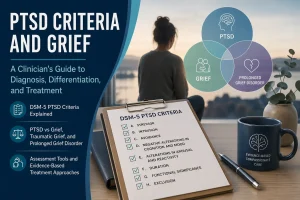
PTSD Criteria and Grief: A Clinician’s Guide to Diagnosis
PTSD Criteria and Grief: A Clinician’s Guide to Diagnosis, Differentiation, and Treatment Post-traumatic stress disorder (PTSD) and grief often overlap but require careful clinical differentiation…

Benefits of Outsourcing Mental Health Billing Services
Benefits of Outsourcing Mental Health Billing Services As a mental health provider, you likely know how stressful and time-consuming it can be to spend hours…

Resistance in Group Therapy: 9 Clinical Strategies to Increase Participation
Resistance in Group Therapy: 9 Effective Ways to Increase Participation Resistance in group therapy is common and can disrupt the therapeutic process for all participants.…

Highly Sensitive Person (HSP): Traits & Clinical Guide
Highly Sensitive Person (HSP): Traits, Characteristics & How Clinicians Can Support HSP Clients A highly sensitive person (HSP) experiences sensory processing sensitivity (SPS) – a…
Navigating Diagnostic Challenges: Borderline Personality Disorder vs Bipolar Disorder
Navigating Diagnostic Challenges: Borderline Personality Disorder vs Bipolar Disorder Borderline personality disorder (BPD) and bipolar disorder (BD) can be easily confused with one another. Not…
Transference and Countertransference in Therapy: Examples & Tips
Transference and Countertransference in Therapy: Definition, Examples, and How to Manage It Transference and countertransference in therapy refer to the relational dynamics between client and…