Blog > Treatment Strategies > Harm Reduction and Alcohol: 8 Evidence-Based Strategies for Clinicians
Harm Reduction Strategies for Alcohol Use: A Clinician's Guide

Last Updated: June 13, 2026

Key Takeaways
- Understand the core principles of harm reduction and their role in alcohol use treatment.
- Compare harm reduction and abstinence-based approaches to determine which may best fit a client's needs, goals, and stage of change.
- Explore evidence-based harm reduction strategies that behavioral health clinicians can use to reduce alcohol-related risks and improve treatment engagement.
- Learn how to assess client readiness, screen for alcohol-related concerns, and develop individualized harm reduction plans that support sustainable change.
Mental health professionals know that there is no one-size-fits-all approach for substance use conditions and other psychological disorders. Each person requires an individualized treatment plan that incorporates the unique needs, stressors, supports, and goals of the person being impacted. Too often, though, with substance use disorders, abstinence is the only recommended target, which limits the recovery path for many.
Instead, therapists and the clients they treat should consider an alternative approach called harm reduction. Although harm reduction may not be the best course for all, it offers another treatment plan that may produce good outcomes without an overly rigid set of expectations. If abstinence seems too restrictive, harm reduction could be an option to consider.
Issues with Abstinence-Only Models
Before understanding the principles of harm reduction, it is paramount to grasp the impact of the alternative — abstinence. In an abstinence-centered position to substance use, the client can never drink alcohol again if they wish to accomplish their goal. Any use of alcohol is discouraged with any drinking being associated with negative and unwanted terms like: relapse, regression, failure, slip, setback, and falling off the wagon.
Drinking alcohol or having cravings to drink in an abstinence model creates fear, shame, guilt, and disappointment. The client could feel these internally or worry that others are standing in judgment. These unwanted feelings can lead to people hiding their thoughts or actions and actively lying to others to maintain the impression of sobriety and “staying clean,” which signifies the duration of their recovery.
Clearly, abstinence is a method that works well for many people and has been historically helpful. For more than 70 years, abstinence has been the basis for recovery models like Alcoholics Anonymous (AA), but in the 2020s, other models may feel more realistic and contemporary.

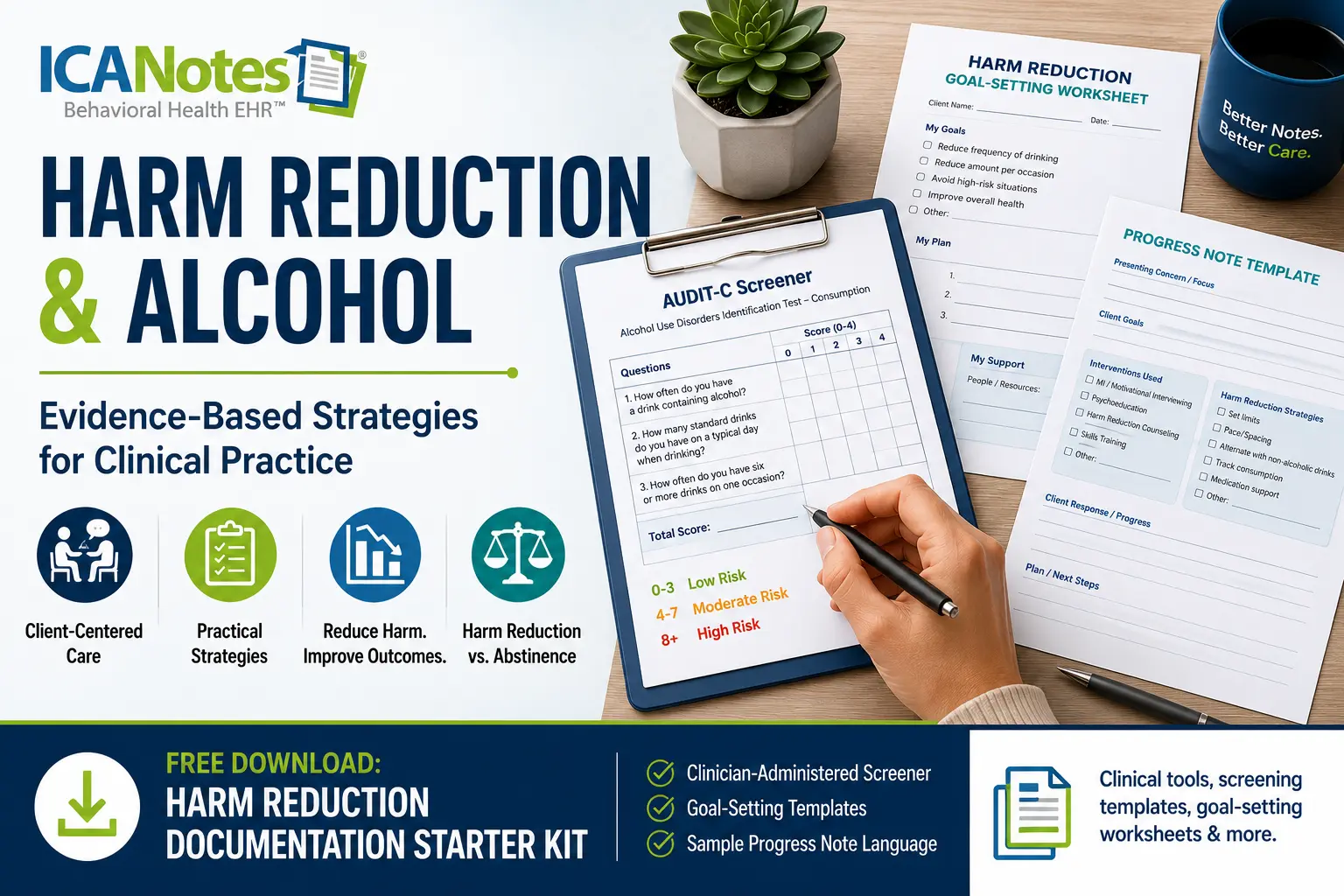
Free Clinical Resource
Download the Harm Reduction Documentation Starter Kit
Get clinician-ready tools to support alcohol use treatment planning, harm reduction goal-setting, progress note documentation, and clinical decision-making.
- Clinician-administered harm reduction screener
- Collaborative goal-setting template
- Sample progress note language
- Harm reduction vs. abstinence decision guide
Principles of Harm Reduction in Alcohol Use
Harm reduction presents as one of those alternatives. Rather than supporting the polarized view that all alcohol is bad and all abstinence is good, harm reduction is a nuanced concept that recognizes the shades of grey in alcohol use.
SAMHSA (Substance Abuse and Mental Health Services Administration) includes harm reduction as a core pillar of its behavioral health framework, emphasizing that effective substance use treatment should be person-centered, evidence-based, and flexible enough to meet clients at their current stage of readiness. Clinicians working within SAMHSA-aligned programs or community mental health settings will find that harm reduction principles integrate naturally with the recovery support model, particularly for clients with co-occurring disorders or limited prior treatment engagement.
When using a harm reduction perspective, clients can drink alcohol. The amount and frequency of consumption will be discussed and analyzed based on past history, current trends, and future goals.
In harm reduction, therapists are more concerned with reducing the negative impact of alcohol on a client's life than simply eliminating alcohol use altogether. The approach is guided by a set of core principles that emphasize collaboration, autonomy, education, and realistic behavior change.
These principles help clinicians develop treatment plans that are flexible, client-centered, and responsive to each person's unique circumstances. While specific interventions may vary, the six core principles below form the foundation of effective harm reduction practice.
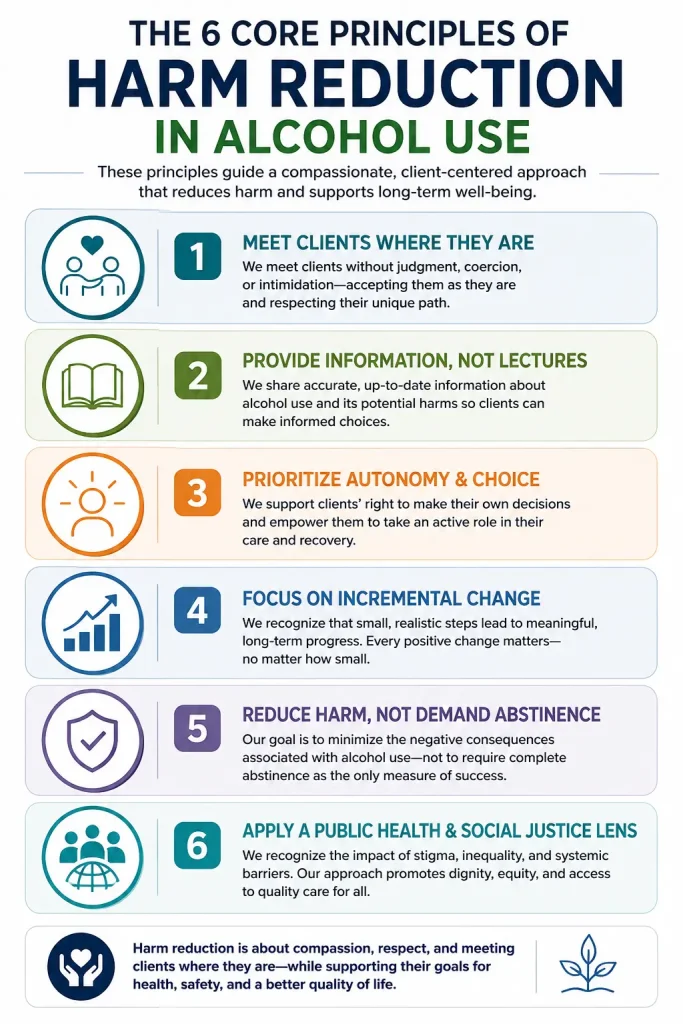
Taken together, these principles recognize that meaningful change rarely occurs in a straight line. Instead of defining success solely as abstinence, harm reduction encourages clinicians and clients to focus on reducing risk, improving quality of life, and building sustainable habits over time.
Because harm reduction emphasizes flexibility and informed choice, clients may pursue a variety of outcomes. Some may determine that moderate alcohol use is consistent with their goals and values, while others may ultimately decide that abstinence is the best path forward. What matters most is that the decision is made collaboratively, based on clinical needs, personal goals, and ongoing evaluation rather than external pressure or stigma.
Freedom of choice is a cornerstone of harm reduction and one of the reasons the approach can remain effective over months and years. When one strategy is not working, clinicians and clients can reassess, adapt, and continue moving toward healthier outcomes without framing setbacks as failures.
8 Evidence-Based Harm Reduction Strategies for Alcohol Use
The most effective harm reduction strategies for alcohol use begin with a clear and honest understanding of a client's relationship with alcohol. Before implementing interventions, therapists should complete a comprehensive assessment to identify both the perceived benefits and the negative consequences associated with drinking.
This assessment should explore:
- When drinking began
- The early benefits alcohol provided
- The later risks and harms associated with alcohol use
- The relationship between consumption patterns and unwanted consequences
- The client's perceived risks or concerns regarding abstinence or reducing alcohol use
Understanding these factors helps clinicians develop individualized harm reduction plans that align with each client's goals, readiness for change, and unique clinical circumstances.
Before establishing a harm reduction plan, clinicians may use a validated screening tool such as the AUDIT-C (Alcohol Use Disorders Identification Test-Concise) to establish a clear baseline. The AUDIT-C is a brief three-item screener that assesses frequency, quantity, and binge drinking behavior, providing measurable starting data for tracking progress against harm reduction goals. A baseline score also supports documentation and helps justify treatment approach decisions for insurance and compliance purposes.
After completing a thorough assessment, the next step is selecting interventions that align with the client's goals and stage of change. Harm reduction is not a single technique but a flexible framework that allows clinicians to tailor treatment to each individual's circumstances.
The following eight evidence-based harm reduction strategies for alcohol use represent some of the most effective approaches clinicians can use to help clients reduce alcohol-related harms, strengthen motivation for change, and build healthier relationships with alcohol over time. The infographic below summarizes eight core approaches that behavioral health clinicians can incorporate into alcohol use treatment planning. While every client's treatment plan should be individualized, these evidence-based harm reduction strategies consistently help reduce alcohol-related risks and improve treatment engagement.
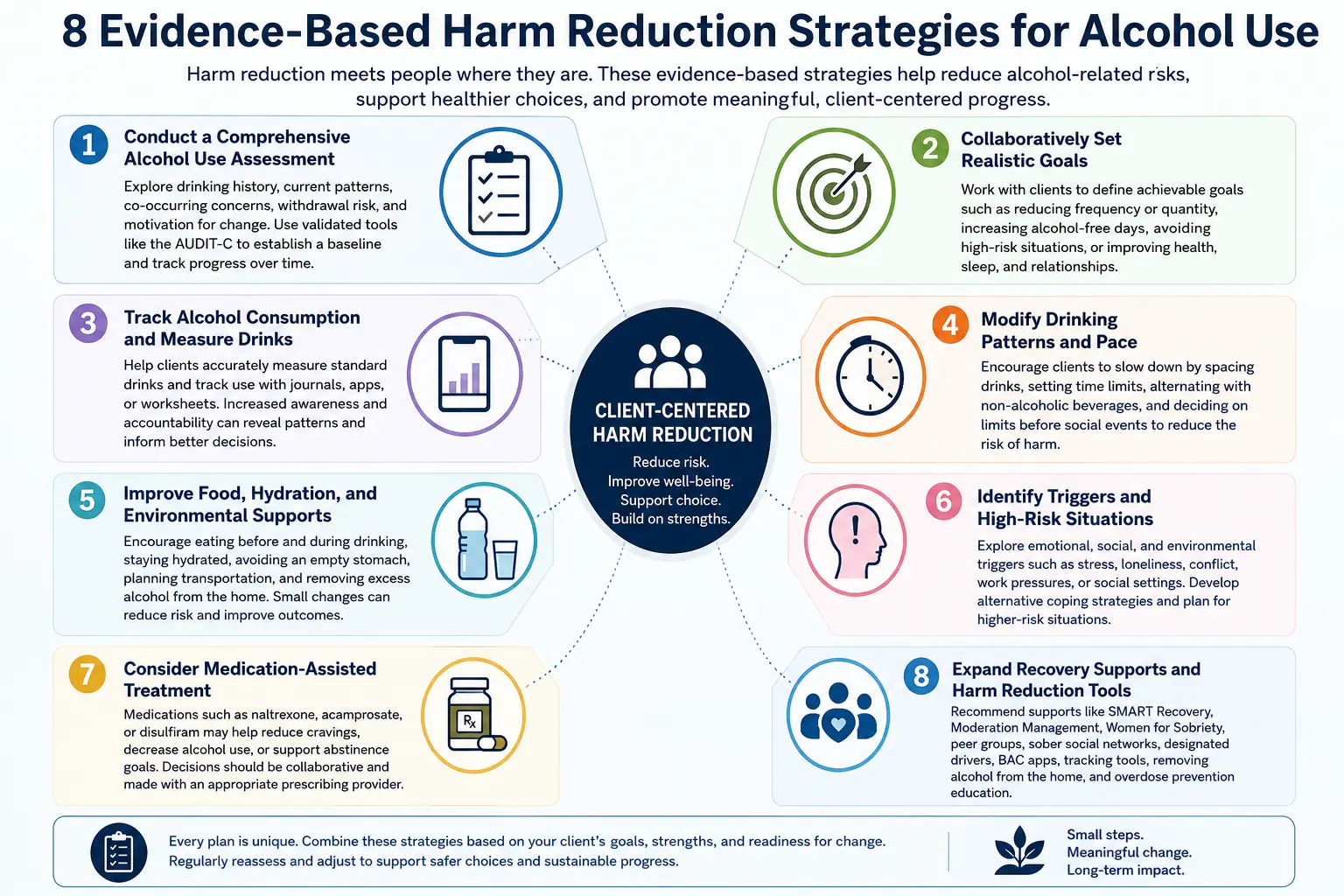
These strategies are most effective when implemented collaboratively and tailored to each client's goals, level of risk, and readiness for change. The sections below explore each strategy in greater detail and provide practical considerations for clinical implementation.
1. Conduct a Comprehensive Alcohol Use Assessment
A thorough assessment provides the foundation for effective harm reduction treatment. In addition to exploring the client’s history with alcohol, clinicians should evaluate current drinking patterns, co-occurring mental health concerns, withdrawal risk, and motivation for change.
Validated screening tools such as the AUDIT-C can help establish a measurable baseline and provide objective data for tracking progress throughout treatment.
2. Collaboratively Set Realistic Harm Reduction Goals
Unlike abstinence-only approaches, harm reduction recognizes that clients may have different goals for treatment. Some may wish to stop drinking entirely, while others may be focused on reducing alcohol-related harms.
Collaborative goal setting may include reducing drinking frequency, lowering the number of drinks consumed per occasion, increasing alcohol-free days, avoiding drinking in high-risk situations, or improving physical health, sleep, or relationships affected by alcohol use.
When clients actively participate in creating treatment goals, they are often more engaged and invested in the therapeutic process.
3. Track Alcohol Consumption and Measure Drinks
One of the simplest and most effective harm reduction strategies is helping clients accurately monitor their alcohol use.
Many individuals underestimate how much alcohol they consume because they are unfamiliar with standard drink sizes or the alcohol content of mixed drinks. Measuring drinks and tracking consumption can increase awareness, improve accountability, and provide valuable information for treatment planning.
Whether clients use journals, mobile apps, or simple tracking worksheets, consistent monitoring often reveals patterns that would otherwise go unnoticed.
4. Modify Drinking Patterns and Pace
For clients who engage in binge drinking or consume large amounts of alcohol in short periods, adjusting the pace of drinking can significantly reduce risk.
Strategies may include spacing drinks farther apart, setting time limits for drinking occasions, alternating alcoholic and non-alcoholic beverages, or establishing a maximum number of drinks before social events.
These interventions help clients become more intentional about their alcohol use while reducing the likelihood of harmful outcomes.
5. Improve Food, Hydration, and Environmental Supports
Simple behavioral changes can have a meaningful impact on alcohol-related outcomes.
Clinicians may encourage clients to eat before and during drinking occasions, stay hydrated throughout the evening, avoid drinking on an empty stomach, plan transportation in advance, or remove excess alcohol from the home environment.
For example, committing to drinking two glasses of water for every alcoholic beverage may help reduce overall consumption while minimizing some of the negative effects associated with drinking.
6. Identify Triggers and High-Risk Situations
Helping clients identify emotional, social, and environmental triggers is a critical component of harm reduction treatment.
Common triggers may include stress and anxiety, depression or loneliness, conflict in relationships, workplace pressures, or social gatherings where alcohol is readily available.
Once triggers are identified, clinicians and clients can work together to develop alternative coping strategies and reduce exposure to situations that increase the likelihood of excessive alcohol use.
7. Consider Medication-Assisted Treatment
For some individuals, medication-assisted treatment can be a valuable component of a harm reduction plan.
Medications such as naltrexone, acamprosate, or disulfiram may help reduce cravings, decrease alcohol consumption, or support behavior change goals.
Medication decisions should always be made collaboratively and in consultation with an appropriate prescribing provider. For clients who are interested in reducing harm but are not pursuing abstinence, medication-assisted treatment may provide additional support and improve outcomes.
8. Expand Recovery Supports and Harm Reduction Tools
Therapy is often most effective when combined with additional sources of support.
Clients may benefit from SMART Recovery, Moderation Management, Women for Sobriety, peer support programs, sober social networks, designated driver plans, BAC monitoring apps, alcohol tracking applications, removing alcohol from the home, or education on overdose and safety risks.
The goal is not to create a one-size-fits-all treatment plan but to build a network of resources that supports safer choices and sustainable progress.
Like so many other situations, harm reduction strategies for alcohol are not universal. Most clients will benefit from a blended, personalized path. Establish expectations, study the effectiveness, and reassess as needed. Staying flexible and responsive will help to decrease the feelings of shame and guilt common with abstinence-only plans.
Harm Reduction vs. Abstinence: A Clinical Comparison
On the surface, abstinence-based treatment appears to offer the most straightforward solution to problematic alcohol use because it eliminates alcohol-related risks entirely. For some individuals — particularly those with severe alcohol use disorder, significant medical complications, or a history of repeated alcohol-related harms — abstinence may be the safest and most appropriate treatment goal.
In practice, however, abstinence-only models can create an all-or-nothing mindset that may not align with every client's readiness for change, treatment goals, or lived experience. When clients feel pressured into a treatment approach they are not prepared to pursue, engagement and retention may suffer.
Harm reduction offers an alternative pathway that focuses on reducing alcohol-related harms rather than requiring immediate cessation. While the safest approach is not drinking alcohol at all, research suggests that harm reduction strategies can produce meaningful benefits for many individuals, including:
- Reduced frequency and quantity of alcohol consumption
- Lower risk of developing more severe alcohol use disorder
- Improvements in depression and anxiety symptoms
- Better physical health outcomes, including improved blood pressure and liver function
- Reduced healthcare utilization and costs
- Improved effectiveness of prescribed medications and treatment interventions
- Greater treatment engagement and retention among individuals unwilling to pursue abstinence
Both harm reduction and abstinence-based treatment can be effective approaches to addressing problematic alcohol use. While the two models share the goal of improving health and well-being, they differ in how success is defined, how relapse is viewed, and the level of readiness required from the client. The comparison below highlights the key distinctions clinicians should consider when developing individualized treatment plans.
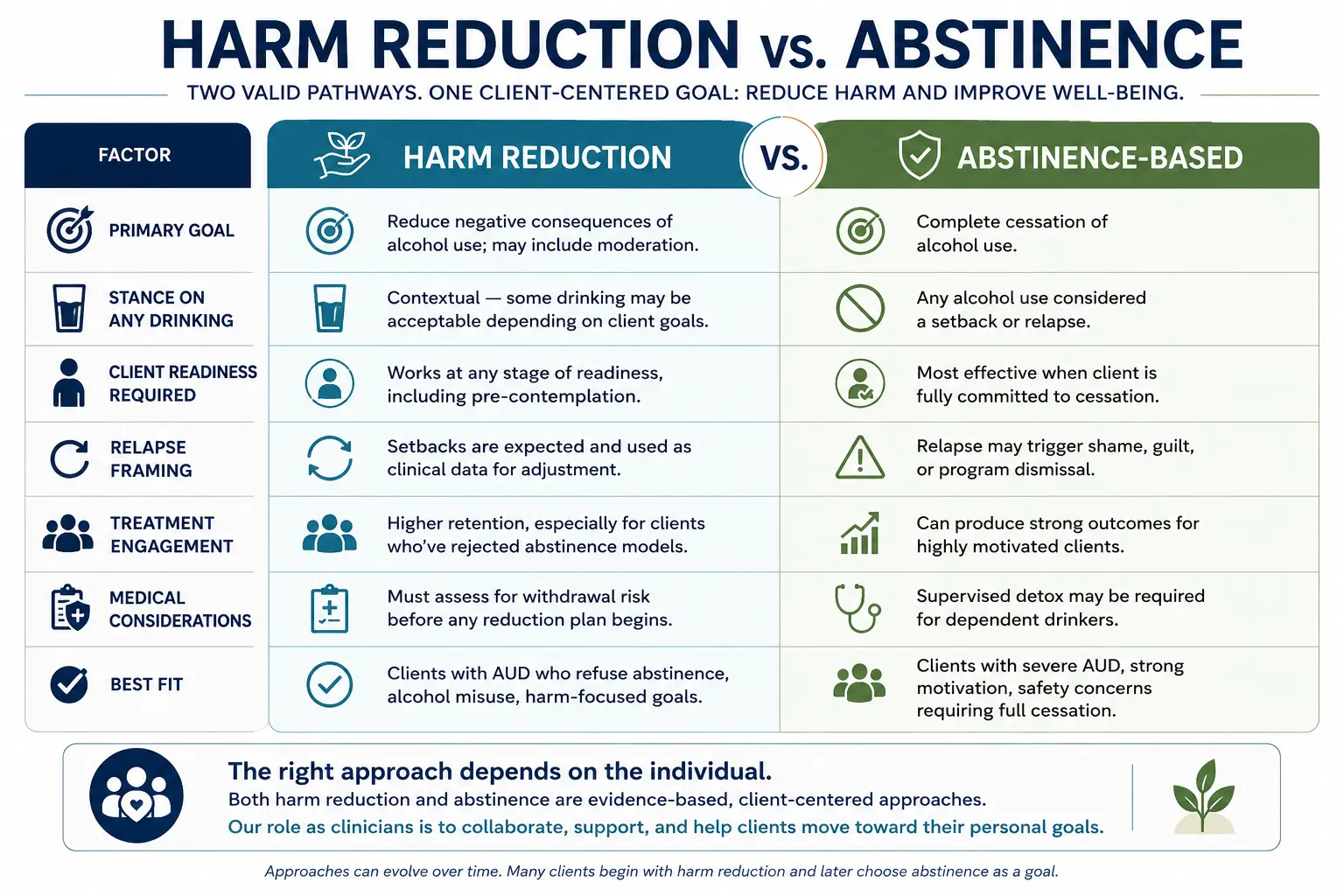
Although comparison charts can help clarify the differences between these approaches, treatment decisions are rarely this simple in practice. The table below provides a more detailed clinical comparison and highlights situations where one approach may be more appropriate than the other.
Practical Considerations for Clinicians
For clinicians, the more important question is often not which approach is "better," but which approach is most appropriate for a particular client at a particular point in time.
At the beginning of treatment, clients should be informed of their options and encouraged to participate actively in treatment planning. Ethical concerns can arise when clinicians recommend a treatment path based primarily on personal beliefs rather than the client's needs, preferences, and clinical presentation.
Harm Reduction for Alcohol Misuse vs. Alcohol Use Disorder
Harm reduction applies across a spectrum of alcohol-related presentations, but the specific strategies and goals will differ depending on severity.
For clients with alcohol misuse—occasional problematic drinking without physiological dependence—psychoeducation, self-monitoring, and collaborative goal-setting may be sufficient to reduce risks and improve outcomes.
For clients with diagnosed alcohol use disorder (AUD), harm reduction may additionally require medication-assisted treatment, more intensive monitoring, coordination with a prescribing provider, and careful attention to withdrawal risk.
Clinicians should conduct a thorough assessment before initiating any harm reduction plan for clients with suspected or confirmed AUD to ensure that treatment goals, interventions, and safety considerations are appropriately matched to the individual's clinical needs.
When evaluating whether harm reduction, abstinence, or a combination of both approaches may be most appropriate, clinicians should consider:
- Current alcohol consumption patterns
- Severity of alcohol-related consequences
- Risk of withdrawal or medical complications
- Current and future physical health concerns
- Personal views regarding abstinence and moderation
- Previous treatment successes and setbacks
- Family, social, and cultural influences related to alcohol use
- Ability to regulate alcohol consumption once drinking begins
- Short-term and long-term treatment goals
- Readiness and motivation for change
Neither approach is inherently superior, and choosing one does not permanently close the door on the other. Clinicians who offer both pathways and engage clients in genuinely collaborative decision-making tend to see stronger treatment engagement and retention. Many clients who begin with harm reduction later elect full cessation as a goal — and arrive there with greater agency and fewer feelings of shame than those pushed toward abstinence before they were ready.
Whatever the approach, frequent reassessment is essential. What works in the first three months of treatment may need adjustment at six months, following a major life change, or after a significant drinking episode. Staying responsive to each client's evolving relationship with alcohol is the cornerstone of effective harm reduction practice.
Documenting Harm Reduction Treatment with ICANotes
Implementing a harm reduction approach requires thoughtful assessment, collaborative treatment planning, ongoing progress monitoring, and clear clinical documentation. The ICANotes Behavioral Health EHR helps clinicians document harm reduction strategies for alcohol use while maintaining a complete, compliance-ready clinical record.
With ICANotes, behavioral health clinicians can:
- Document individualized harm reduction treatment goals that align with each client's readiness for change, including measurable objectives such as reducing drinking frequency, lowering alcohol consumption, increasing alcohol-free days, or minimizing alcohol-related risks.
- Track alcohol use patterns and treatment progress over time using behavioral health-specific templates that support documentation of drinking behaviors, trigger identification, medication adherence, support group participation, and other harm reduction interventions.
- Record motivational interviewing interventions, psychoeducation, and collaborative decision-making to demonstrate client engagement, informed consent, and active participation in treatment planning.
- Document screening results and baseline measures, including tools such as the AUDIT-C, to establish objective benchmarks and demonstrate measurable progress throughout treatment.
- Capture risk assessments and safety planning efforts related to alcohol use, including withdrawal concerns, high-risk situations, relapse prevention strategies, and sober support planning.
- Quickly update treatment plans as client goals evolve, supporting a flexible, client-centered approach that reflects the principles of harm reduction and ongoing reassessment.
- Generate detailed, compliance-ready progress notes that accurately reflect harm reduction principles, clinical interventions, treatment outcomes, and partial goal attainment without relying on an all-or-nothing abstinence framework.
By supporting structured, flexible, and client-centered documentation, ICANotes helps clinicians document alcohol and drug abuse counseling services, treatment plans, and progress notes while supporting clients who are pursuing abstinence, moderation, or harm reduction.
Want ready-to-use harm reduction documentation tools? Download the free Harm Reduction Documentation Starter Kit, which includes a clinician-administered screener, goal-setting template, clinical decision guide, and sample progress note language.
Try ICANotes Free for 30 Days
Document Harm Reduction Treatment Plans With Confidence
ICANotes helps behavioral health clinicians create structured treatment plans, progress notes, risk assessments, and documentation that support client-centered care for alcohol use, harm reduction, moderation, and abstinence-based goals.
- Track measurable harm reduction goals and client progress over time
- Document motivational interviewing, psychoeducation, and safety planning
- Generate clear, compliance-ready notes for substance use treatment
Start a free 30-day trial and see how ICANotes supports clinical documentation for behavioral health and substance use treatment.
Frequently Asked Questions About Harm Reduction and Alcohol
Final Thoughts on Harm Reduction and Alcohol
In the end, the best a therapist can do is offer a client-centered, flexible approach. For therapists using a predominantly, abstinence-only practice, considering more harm reduction strategies can empower clients to view themselves and their drinking in different ways. It can also open up therapy to many people who see abstinence as the only step forward.
When abstinence does not seem realistic, harm reduction could be the best option.
Related Posts






Eric Patterson
MSCP, NCC, LPC
About the Author
Eric Patterson is a professional counselor who has been working for over a decade to help children, adolescents, and adults in western Pennsylvania reach their goals and improve their well-being.
Along the way, Eric worked as a collaborating investigator for the field trials of the DSM-5 and completed an agreement to provide mental health treatment to underserved communities with the National Health Service Corp.