Blog > Documentation > Psychiatric SOAP Note Examples: Templates & Documentation Guide

How to Write a Psychiatric SOAP Note (with Examples and Templates)

Psychiatric SOAP notes are structured clinical documentation used by psychiatrists and psychiatric nurse practitioners to record patient encounters. The SOAP format — Subjective, Objective, Assessment, and Plan — helps clinicians organize patient-reported symptoms, clinical observations, diagnostic impressions, and treatment recommendations in a clear and consistent way. In this guide, you'll learn what a psychiatric SOAP note is, what information each section should include, and how to write one efficiently. We also provide several psychiatric SOAP note examples and a practical template clinicians can use to document psychiatric evaluations, medication management visits, and follow-up appointments.

october (3)

Last Updated: March 17, 2026

fav (10)

What You'll Learn

  • What a psychiatric SOAP note is and why it is widely used in psychiatric documentation

  • The purpose of the Subjective, Objective, Assessment, and Plan (SOAP) structure

  • What information should be included in each section of a psychiatric SOAP note

  • How psychiatric SOAP notes differ from therapy SOAP notes

  • Real-world psychiatric SOAP note examples for common mental health conditions

  • A psychiatric SOAP note template clinicians can use during documentation

  • Tips for writing clear, compliant notes that support clinical care and billing requirements

For any psychiatrist or PMHNP, a SOAP note is a fundamental part of consultations.

They are not just paperwork, but clinical documentation that helps clinicians document patient symptoms, review medication side effects, record key vitals, assess risk(s), and create a clear treatment plan.

If you already use an EHR for appointments, ePrescribing, and psychiatry charting, the same system should also support psychiatrist-specific SOAP notes.

Using clear note-taking templates can reduce time spent on documentation and keep patient care at the center of your work.

What Is a Psychiatric SOAP Note?

A psychiatric SOAP note is a structured document format clinicians use to document patient visits, medication management appointments, and psychiatric evaluations. Psychiatrists use them to support patients with conditions such as anxiety, bipolar disorder, OCD, ADHD, and major depressive disorder. By organizing information into Subjective, Objective, Assessment, and Plan sections, clinicians can document patient symptoms, clinical observations, diagnoses, and treatment recommendations clearly and efficiently.

SOAP is an acronym for: Subjective, Objective, Assessment, and Plan. 

Psychiatric SOAP notes differ slightly from therapy SOAP notes. While both use the Subjective, Objective, Assessment, and Plan structure, psychiatric notes typically include medication review, diagnostic considerations, lab monitoring, and risk assessment. Therapy notes, by contrast, often emphasize behavioral interventions, emotional processing, and psychotherapy techniques.

In this guide, we’ll walk through what a psychiatric SOAP note is, how to structure one correctly, and review several psychiatric SOAP note examples that clinicians can use as documentation references.

Related: How to Write Psychiatric Progress Notes Efficiently and Effectively

What Should be Included in a Psychiatric SOAP Note?

SOAP notes help clinicians document patient care clearly, with psychiatrist-specific templates helping to reduce time spent on paperwork.

They should be written after every appointment to support clinical decision-making, continuity of care, and billing requirements.

Psychiatric SOAP notes follow a structured format that organizes documentation into four core sections:
1. Subjective
2. Objective
3. Assessment
4. Plan

1. Subjective Section

The Subjective section captures the patient’s feelings in their own words. This information is based on what the patient reports rather than what is observed. Make sure to pay close attention to their wording, tone, and behavior, including:

  • Reason for the visit (follow-up, referrals, etc)
  • Current symptoms (insomnia, anxiety, mood swings, aggression)
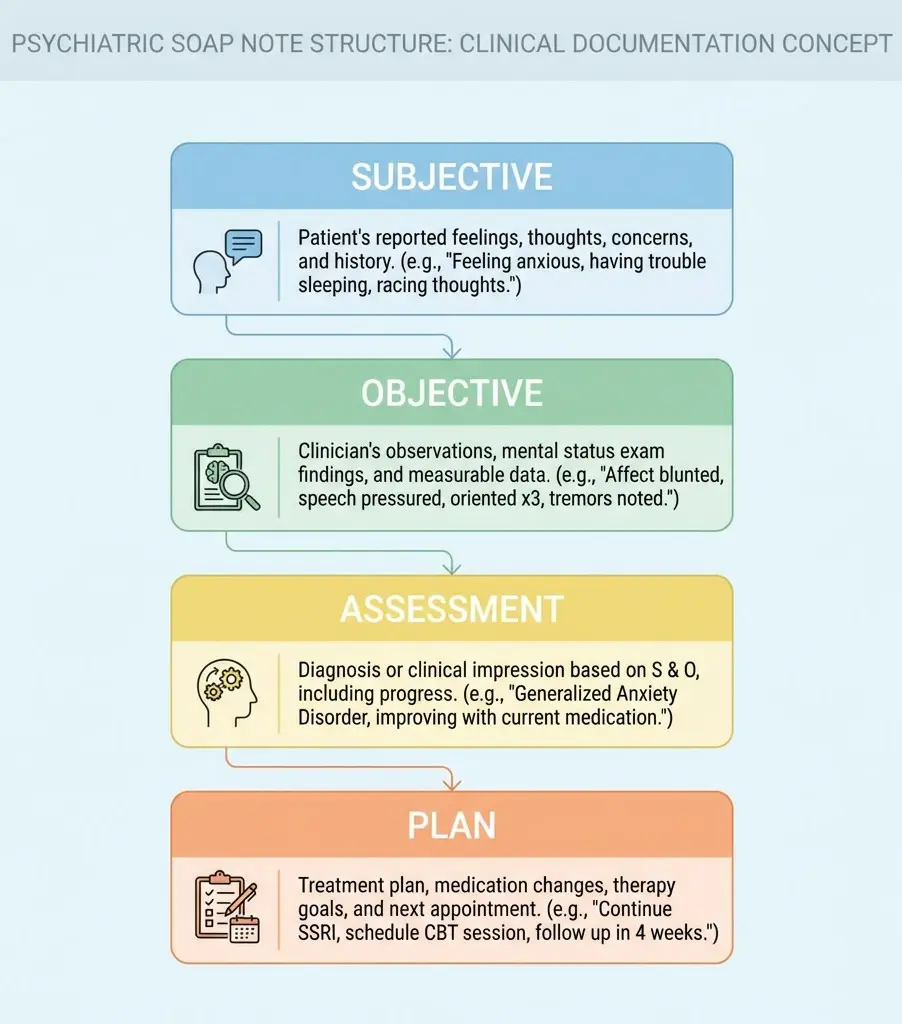
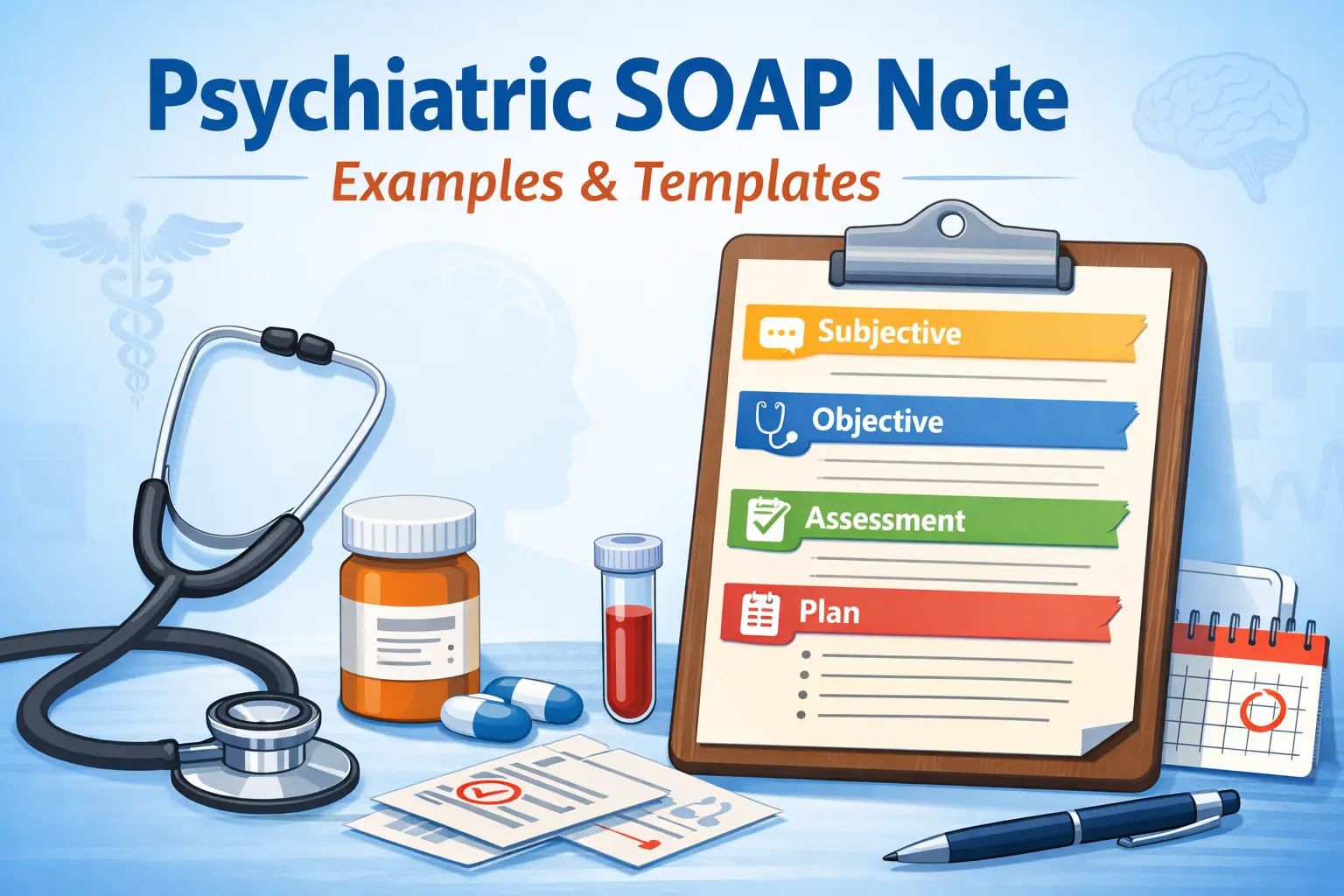
diagram showing psychiatric SOAP note structure with subjective objective assessment and plan sections
  • Medication side effects (migraines, sickness, rashes)
  • Functional changes (work, relationships, daily activities)
  • Direct quotes.

Direct Quote Example: “I’ve had a better week, but I'm struggling to sleep as I keep forgetting to take my meds.”

2. Objective Section

The Objective is used to explain the patient's mood, cognition, and thought process. This often overlaps with key elements of the Mental Status Exam (MSE). Important factors to consider are:

  • Vitals (blood pressure, heart rate, weight, and temperature)
  • MSE results (mood, thought process, insight)
  • Appearance and behavior (avoiding eye contact, shaking, or sweating)
  • Lab results (blood tests)
  • Screening scores (PHQ-9, or GAD-7)

Screening Score Example: “PHQ-9: 13 (was 8), reports of low moods affecting this. Review in a week's time.”

Appearance Example: “Jan appears agitated, constantly intertwining her hands and avoiding eye contact.”

3. Assessment Section

The Assessment is your clinical interpretation of the session. It includes findings from the subjective and objective sections to explain diagnosis, response to treatment, and risks. This can be broken down further:

  • Diagnostic impression (their current diagnosis)
  • Symptom trajectory (improving, or showing concerning symptoms)
  • Risk level (low, medium, high, dangerous)
  • Clinical reasoning (reasons behind risk).

Diagnosis Example: “Anxiety Disorder: Showing strong signs of health and social anxiety.”

4. Plan Section

The Plan uses all three previous formulas to help psychiatrists outline the next steps you and the patient need to take. This can include:

  • Medication changes (with rationale)
  • Lab monitoring (if additional tests are needed and when)
  • Referrals (why they have been referred and who to)
  • Appointment plan (when to next see the patient).

Example of Psychiatric SOAP note: Increase SSRI dose due to persistent low moods, insomnia, and migraines. Schedule a follow-up appointment in a week.

5/5

Download our Mental Health
SOAP Notes Guide

Enhance your clinical documentation skills with a comprehensive guide to writing clear, effective, and compliant SOAP notes for therapy, psychiatry, and group sessions.

This field is for validation purposes and should be left unchanged.
Name(Required)
This field is hidden when viewing the form

Key Elements of a Psychiatric SOAP Note

A well-written psychiatric SOAP note should clearly document the patient’s symptoms, clinical observations, diagnostic interpretation, and treatment plan. The goal is to create documentation that supports clinical decision-making, continuity of care, and insurance requirements while remaining concise and organized.

The table below summarizes the key elements clinicians typically include in each section of a psychiatric SOAP note.

Documentation Guide

What Should a Psychiatric SOAP Note Include?

Psychiatric SOAP notes organize patient documentation into four structured sections that summarize symptoms, clinical findings, diagnosis, and treatment planning.

SOAP Section What It Includes Example Documentation
Subjective Patient-reported symptoms, concerns, medication side effects, and functional changes. “Patient reports worsening anxiety over the past two weeks with difficulty sleeping.”
Objective Clinical observations including vitals, mental status exam findings, screening scores, and behavioral observations. “PHQ-9 score: 11. Patient appears tense but cooperative.”
Assessment Clinical interpretation of symptoms including diagnosis, symptom trajectory, and risk assessment. “Generalized Anxiety Disorder with moderate symptom severity.”
Plan Treatment recommendations including medication changes, therapeutic interventions, referrals, and follow-up care. “Continue sertraline 50 mg daily and schedule follow-up in four weeks.”

Psychiatric SOAP Note Template

Many clinicians prefer to start with a structured psychiatric SOAP note template to ensure documentation is consistent and meets billing and clinical standards. The following psychiatric SOAP note template provides a simple framework clinicians can use to structure their documentation during psychiatric visits.

Psychiatric Documentation Template

Psychiatric SOAP Note Template

Use this structured template to document psychiatric evaluations, medication management visits, and follow-up appointments.

Subjective

  • Reason for visit: ______________________
  • Symptoms reported: _____________________
  • Duration / severity: _____________________
  • Medication effects: ____________________
  • Functional changes: ____________________
  • Patient quote: “______________________”

Objective

  • Vitals: __________________________
  • Appearance/behavior: ______________
  • Mental status findings: _____________
  • Mood / affect: ____________________
  • Screening scores: _________________
  • Labs / data: ______________________

Assessment

  • Diagnosis: ________________________
  • Symptom trajectory: ________________
  • Clinical interpretation: ____________
  • Risk assessment: __________________
  • Protective factors: ________________

Plan

  • Medication changes: ________________
  • Therapy interventions: _____________
  • Labs / monitoring: ________________
  • Referrals: _______________________
  • Follow-up plan: __________________
Documentation Tip: Effective psychiatric SOAP notes summarize patient symptoms, clinical observations, and treatment decisions in a structured format that supports both clinical care and insurance documentation requirements.

Psychiatric Progress Notes vs Psychiatric SOAP Notes

Psychiatric progress notes and psychiatric SOAP notes are closely related forms of clinical documentation, but they serve slightly different purposes in mental health care. Both are used to document patient encounters, track symptom changes, and support treatment decisions. However, SOAP notes provide a more structured framework for organizing information during a visit.

A psychiatric progress note is a general term for documentation that summarizes a patient’s status and treatment during an appointment. Progress notes may follow different formats depending on the clinician’s preference or the EHR system being used. Some common formats include SOAP notes, DAP notes (Data, Assessment, Plan), and BIRP notes (Behavior, Intervention, Response, Plan).

A psychiatric SOAP note, on the other hand, is a specific type of progress note that organizes clinical documentation into four sections: Subjective, Objective, Assessment, and Plan. This format helps clinicians clearly document patient-reported symptoms, clinical observations, diagnostic impressions, and treatment recommendations.

Many psychiatrists and psychiatric nurse practitioners prefer SOAP notes because the structured format makes documentation easier to review, improves communication among providers, and supports medical necessity when submitting claims or undergoing audits.

In practice, a psychiatric SOAP note is simply one structured way of writing a psychiatric progress note. The format clinicians choose often depends on workflow preferences, training, and the documentation tools available in their EHR system.

Documentation Comparison

Psychiatric Progress Notes vs Psychiatric SOAP Notes

While psychiatric SOAP notes are commonly used in mental health documentation, they are actually one structured type of psychiatric progress note.

Feature Psychiatric Progress Note Psychiatric SOAP Note
Definition General documentation summarizing a patient encounter and treatment progress. A specific structured format used to write psychiatric progress notes.
Structure May use multiple formats such as SOAP, DAP, BIRP, or narrative notes. Always organized into Subjective, Objective, Assessment, and Plan sections.
Purpose Track patient progress, symptoms, and treatment response over time. Provide a structured framework for documenting patient encounters.
Common Use Used across many healthcare and behavioral health settings. Commonly used in psychiatry and medication management visits.

Psychiatric Soap Note Examples

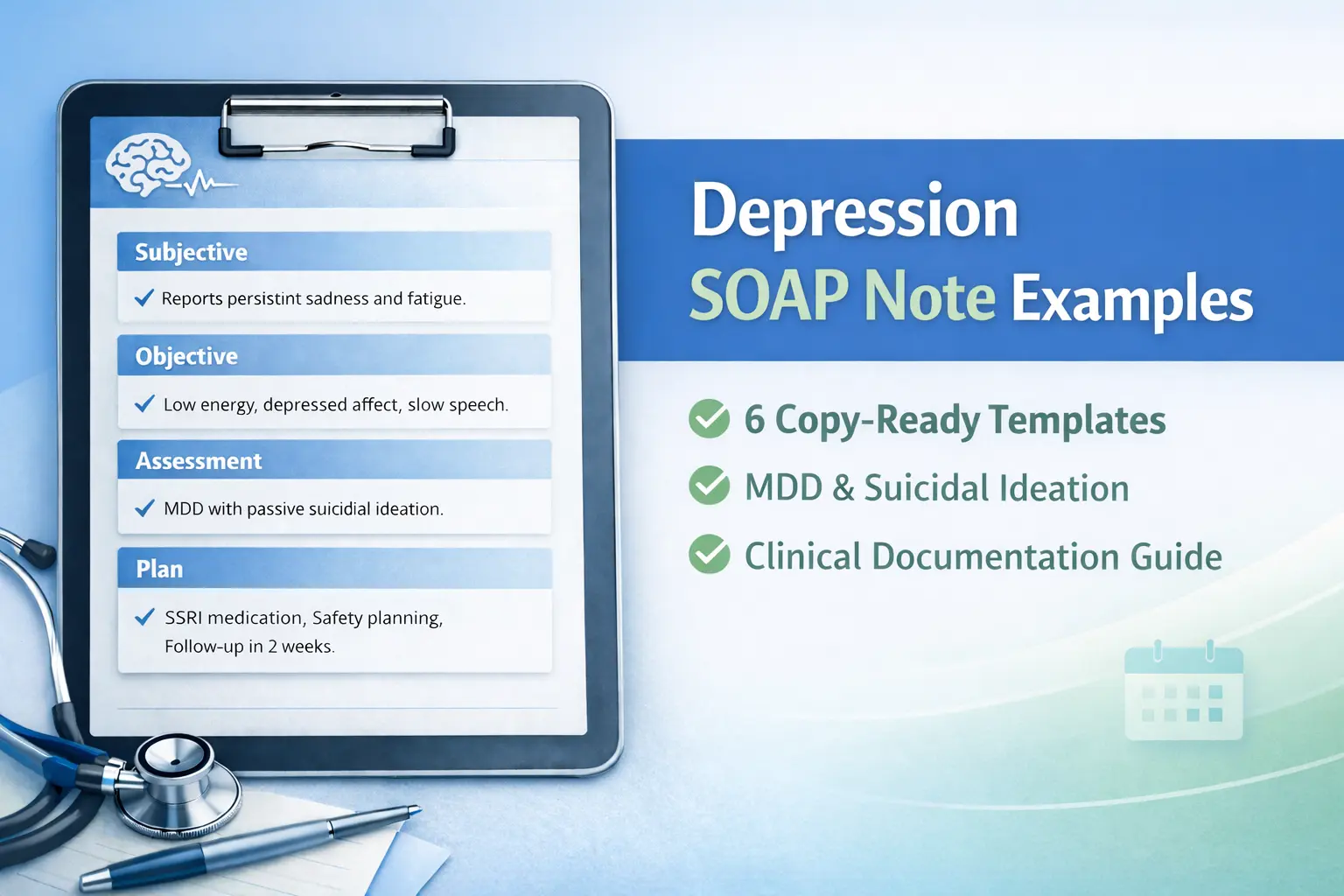
Example 1: Major Depressive Disorder (MDD)

Psychiatric SOAP Note Example

Major Depressive Disorder (MDD)

Follow-up psychiatric SOAP note example for a patient being monitored for depressive symptoms, medication response, and overall functioning.

Patient
Sarah Smith
Date of Visit
02/22/2026
Visit Type
Medication Follow-Up

Subjective

  • Patient reports mood as “stable but low” and rates mood at 6/10.
  • Continues to struggle with anhedonia, especially reduced interest in running and eating.
  • Sleep has improved from five hours of broken sleep to seven hours of continuous sleep.
  • Previous headaches and nausea associated with paroxetine have resolved.
  • Patient reports feeling more energetic overall, though intermittent low mood persists.

Objective

  • Vitals: BP 116/76 | Sitting pulse 67 | Weight 156 lbs (stable)
  • PHQ-9: 10, improved from 13 at the previous visit
  • Patient appears cooperative, maintains good eye contact, and communicates clearly.
  • Reduced interest in former hobbies remains clinically relevant and warrants continued monitoring.
  • Alternative pleasant activities such as long walks and art-based activities were discussed.

Assessment

  • Diagnosis: Major Depressive Disorder, recurrent
  • Patient demonstrates meaningful improvement in sleep and concentration since the prior visit.
  • The decrease in PHQ-9 score suggests a positive response to treatment.
  • Residual symptoms of anhedonia and intermittent low mood remain and should continue to be monitored.
  • Risk assessment: Low risk to self or others; patient is future-oriented and engaged in work and family planning.

Plan

  • Continue current dose of paroxetine.
  • Maintain present medication regimen due to reported improvement and tolerability.
  • Encourage continued engagement in alternative pleasurable activities to address lingering anhedonia.
  • Schedule follow-up appointment in four weeks to reassess mood symptoms and functional improvement.

Example 2 — ADHD Medication Follow-Up

Psychiatric SOAP Note Example

ADHD Medication Follow-Up

Follow-up visit evaluating medication effectiveness and functional improvements in attention and task completion.

Patient
Dan Johnson
Date of Visit
01/18/2026
Visit Type
Medication Review

Subjective

  • Patient reports approximately 40% improvement in productivity at work.
  • Still experiences difficulty maintaining focus during meetings and phone calls.
  • Reports mild appetite suppression, especially during breakfast hours.
  • Believes Ritalin is improving concentration but still struggles with task initiation, which leads to brain fog.

Objective

  • Vitals: BP 118/70 | Pulse 77 | Weight 230 lbs (stable)
  • Mental Status: Alert, cooperative, less fidgeting than prior visit.
  • ASRS Score: 12 (previously 18, but still above the standard threshold)

Assessment

  • Diagnosis: ADHD, Combined Presentation (F90.2)
  • Patient responding well to current stimulant therapy.
  • Residual executive function challenges remain.

Plan

  • Continue Ritalin 15 mg daily. Dan is responding well to the dosage and is overall focusing more easily. Review in two weeks, with the possibility of increaseing to 25 mg.
  • Monitor appetite changes and brain fog.
  • Risk is low. Dan appears happier. We discussed structured task planning strategies to help with focusing on meetings and phone calls.
  • Follow-up appointment scheduled in two weeks.

Example 3 — Bipolar Disorder

Psychiatric SOAP Note Example

Bipolar Disorder — Manic Episode

Psychiatric SOAP note documenting a manic episode with psychotic features requiring higher level of care.

Patient
Jan January
Date of Visit
02/01/2026
Visit Type
Acute Evaluation

Subjective

  • Patient reports severe insomnia, stating “I typically do not nap.” “I have not slept for weeks.”
  • Stopped taking lithium against medical advice, resulting in heavier emotions and worries.
  • Reports heightened energy and excessive spending behavior. She has been "shopping, shopping, shopping."

Objective

  • Vitals: BP 128/76 | Pulse 91 | Weight 200 lbs
  • Speech is poorly articulated, rapid, and loud.
  • Patient appears distracted with intrusive behaviors.
  • Mental state: Strongly denies she is a danger to self.
  • Evidence of manic symptoms and possible psychosis.

Assessment

  • Diagnosis: Bipolar I Disorder, current manic episode with psychotic features (F31.2) (Active)
  • Patient presents elevated risk due to impaired judgment and medication noncompliance.
  • Protective factors include supportive family involvement and strong social support system.

Plan

  • History of risk factors: Jan has a history of multiple psychiatric hospitalizations
  • Recommend psychiatric hospitalization for stabilization and monitoring.
  • Rationale: Jan presents a potential risk to self or others. Less intensive levels of care have been unsuccessful or are unlikely to work, indicating the need for medically monitored intervention.
  • Initiate Depakote ER 1500 mg daily for mood stabilization.
  • Start Zyprexa 10 mg daily for psychotic symptoms.
  • Continue Synthroid 100 mcg daily.
Behavioral Health EHR

Write Psychiatric SOAP Notes Faster

Trusted by behavioral health clinicians for over 25 years

ICANotes includes psychiatry-specific templates that help clinicians document psychiatric evaluations, medication management visits, and progress notes in minutes. Instead of typing lengthy notes from scratch, you can build structured documentation quickly while maintaining clinical accuracy and compliance.

  • Psychiatry-specific SOAP note templates
  • Structured documentation supporting medical necessity
  • Built-in rating scales including PHQ-9 and GAD-7
  • Integrated scheduling, billing, and ePrescribing
  • Designed specifically for behavioral health clinicians

Try ICANotes free for 30 days and see how quickly you can complete your clinical documentation. No credit card required!

icons (26)

Frequently Asked Questions: Psychiatric SOAP Note

How often should psychiatric SOAP notes be written?
How long should a psychiatric SOAP note be?
What's the main purpose and benefits of a SOAP note?
Can I use templates for psychiatric SOAP notes?

Dr. October Boyles

DNP, MSN, BSN, RN

About the Author

Dr. October Boyles is a behavioral health expert and clinical leader with extensive expertise in nursing, compliance, and healthcare operations. With a Doctor of Nursing Practice (DNP) and advanced degrees in nursing, she specializes in evidence-based practices, EHR optimization, and improving outcomes in behavioral health settings. Dr. Boyles is passionate about empowering clinicians with the tools and strategies needed to deliver high-quality, patient-centered care.