Blog > Treatment Strategies > MRT Therapy: What Is Moral Reconation Therapy & How Does It Work?
MRT Therapy: What Is Moral Reconation Therapy & How Does It Work?
Moral reconation therapy (MRT) is a cognitive-behavioral treatment that helps clients develop higher levels of moral reasoning to reduce criminal behavior, substance abuse, and recidivism. MRT therapy uses a structured, step-based approach — known as the Freedom Ladder — to challenge distorted thinking patterns and replace antisocial behaviors with more adaptive choices. Originally developed for justice-involved populations, MRT is now widely used across behavioral health settings including substance abuse treatment, domestic violence programs, and community-based counseling.


Last Updated: April 2, 2026


What You'll Learn
- What MRT therapy is, how it originated, and what "moral reconation" means
- The 12 steps of the MRT Freedom Ladder and the stages of moral reasoning behind them
- Who benefits from moral reconation therapy and in what clinical settings
- What to expect in MRT classes, including format, duration, and group structure
- How to implement MRT in your practice with proper documentation
Contents
- What Is MRT Therapy?
- The Origin of Moral Reconation Therapy
- Key Principles and Goals of MRT
- Who Benefits From MRT Therapy?
- The 12 Steps of MRT: The Freedom Ladder
- What Are MRT Classes?
- MRT Group Therapy: Format and Applications
- Benefits and Outcomes of MRT Therapy
- Challenges and Implementation of MRT
- FAQ: MRT Therapy
- Why Trust ICANotes for Your MRT Notes?
What is MRT Therapy?
MRT stands for moral reconation therapy. The term "reconation" refers to the process of reexamining and redirecting conscious decision-making — specifically, the choices a person makes when faced with moral or ethical situations. In clinical practice, MRT therapy is a structured cognitive-behavioral intervention that targets the relationship between moral reasoning, personal identity, and behavior.
In behavioral therapy settings, it is important to properly assess your clients to align them with the most effective interventions. However, some individuals may receive a number of evidence-based treatments to no avail. As a mental health professional, you understand that each individual requires a unique therapeutic approach to promote positive change in their lives.
When caring for a treatment-resistant client who has not responded well to similar therapies in the past, it can help to explore cognitive-behavioral interventions like MRT. This effective yet lesser-known approach has proven to be highly effective in reducing relapse in clients with a range of challenges, including substance abuse, criminal activity, family and social difficulties, and legal problems.
MRT works by guiding clients through structured reflection, group feedback, and progressive moral reasoning steps that support long-term behavior change.
How MRT Works
Moral Reconation Therapy uses structured reflection, workbook assignments, and group accountability to help clients challenge distorted thinking, improve moral reasoning, and make more adaptive choices over time.
Identify Distorted Thinking
Clients begin examining dishonest, impulsive, or self-serving thought patterns.
Work Through the Freedom Ladder
Participants complete structured steps focused on honesty, accountability, goals, and change.
Build Moral Reasoning
Clients learn to evaluate choices based on responsibility, values, and consequences for others.
Support Lasting Behavior Change
Over time, this process helps reduce harmful behaviors and strengthen prosocial decision-making.
The Origin of Moral Reconation Therapy
Moral reconation therapy is a behavioral therapy approach that helps clients focus on the moral aspects of their behavior to enhance moral reasoning and positive identity. MRT was created in the 1980s by Dr. Gregory Little and Dr. Kenneth Robinson, who believed this method could significantly lower recidivism in clients with addiction and criminal behavior.
Though it was initially created as a behavioral treatment to reduce the likelihood of offender populations reoffending, it has now become widely used in behavioral health settings to change thought processes associated with negative behaviors, addiction, trauma and domestic violence.
Key Principles and Goals of MRT
MRT is a form of cognitive behavioral therapy (CBT) in that it aims to assess current relationships and replace antisocial cognitions and behaviors with more adaptive choices by addressing:
- Impulsivity.
- Faulty thinking patterns.
- Distorted perceptions of right and wrong.
- A lack of empathy.
- Egocentric behaviors.
- Poor decision-making.
MRT encourages clients to reflect on the moral and social consequences of their actions that are associated with using substances or engaging in criminal behavior.
Though the general goals of MRT are to foster moral development and decision-making, therapists can also help their clients achieve:
- Pro-social values and beliefs.
- Improved quality of life.
- Improved frustration tolerance.
- Enhanced self-esteem.
- Reduction in self-indulgence.
- Positive self-identity.
The specific treatment levels of MRT can vary, especially depending on the client's level of commitment to improving their moral reasoning and diligence to not reoffend.
Who Benefits From MRT Therapy?
Moral reconation therapy is highly effective for a range of individuals across all ages and demographics. Your client may be a good candidate for MRT if they are seeking to improve adaptive skills. Potential candidates include individuals:
- With criminal histories.
- With substance abuse disorders.
- With treatment-resistant conditions.
- Who want to reduce recidivism.
- Who want to enhance their interpersonal skills.
- Looking to improve their moral decision-making.
- Who have experienced trauma or domestic violence.
MRT can also be a beneficial approach for clients who have received CBT or a similar therapy but require more effective interventions for criminal thinking and associations, including those with multiple convictions.
The 12 Steps of MRT: The Freedom Ladder
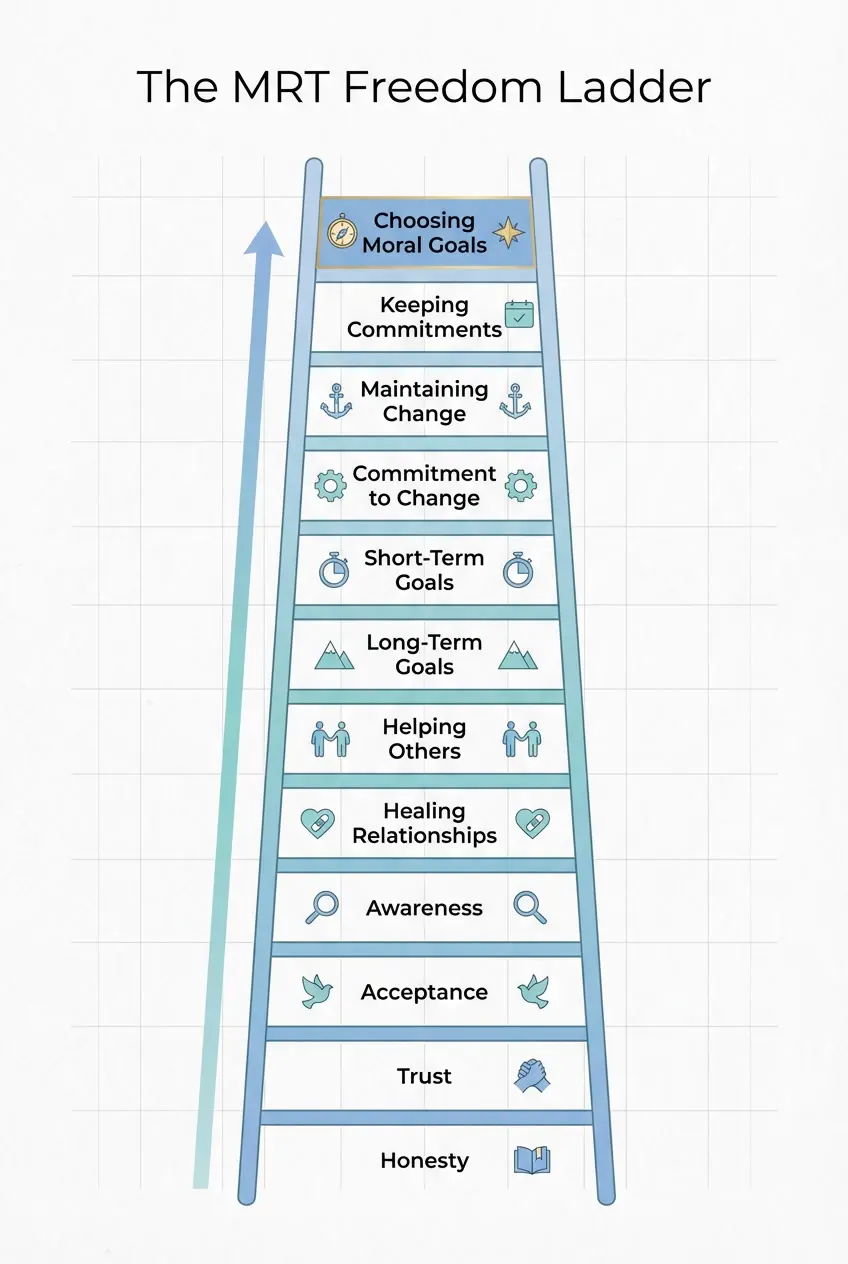
Moral Reconation Therapy (MRT) follows a structured sequence of steps — often referred to as the "Freedom Ladder" — designed to help clients progressively improve moral reasoning, accountability, and decision-making. While MRT includes 16 total steps, the first 12 are considered the core therapeutic progression. Typically, MRT is applied in a group setting where individuals can collectively work on self-reflection with open-ended assignments. Running a successful group therapy session involves clarifying your role, building structure into the routine, creating engaging content, soliciting feedback and resolving risks.
Here are the 12 core MRT steps and what each one addresses:
- Honesty — Clients begin by examining patterns of dishonesty and developing greater accountability in how they view themselves and their behavior.
- Trust — This step focuses on rebuilding trust — with oneself, the group, and others — through consistent and responsible actions.
- Acceptance — Clients work toward accepting responsibility for past behaviors without defensiveness or externalizing blame.
- Awareness — Increased self-awareness helps individuals recognize thinking errors, triggers, and behavioral patterns.
- Healing Damaged Relationships — Clients identify harmed relationships and begin exploring ways to repair or take responsibility for those impacts.
- Helping Others — This step shifts focus outward, encouraging prosocial behavior and empathy through helping others.
- Long-Term Goals and Identity — Clients begin defining a future-oriented identity aligned with positive values and long-term goals.
- Short-Term Goals and Consistency — This step emphasizes building daily habits and routines that support long-term change.
- Commitment to Change — Clients formally commit to behavioral change and begin demonstrating consistency in their actions.
- Maintaining Positive Change — Focus shifts to relapse prevention and sustaining progress over time.
- Keeping Moral Commitments — Clients reinforce integrity by following through on commitments and aligning behavior with values.
- Choosing Moral Goals — The final core step involves selecting and committing to a long-term path rooted in moral reasoning and responsible decision-making. Completing step 12 is typically the benchmark for program completion in most MRT settings.
What About Steps 13-16?
Steps 13 through 16 focus more deeply on identity development, personality structure, and long-term internal change. These steps are often completed independently or in advanced group settings, depending on the client's progress. Once an individual completes step 12, you can assess whether they should continue steps 13 to 16 on their own or in a group setting.
FREE DOWNLOAD
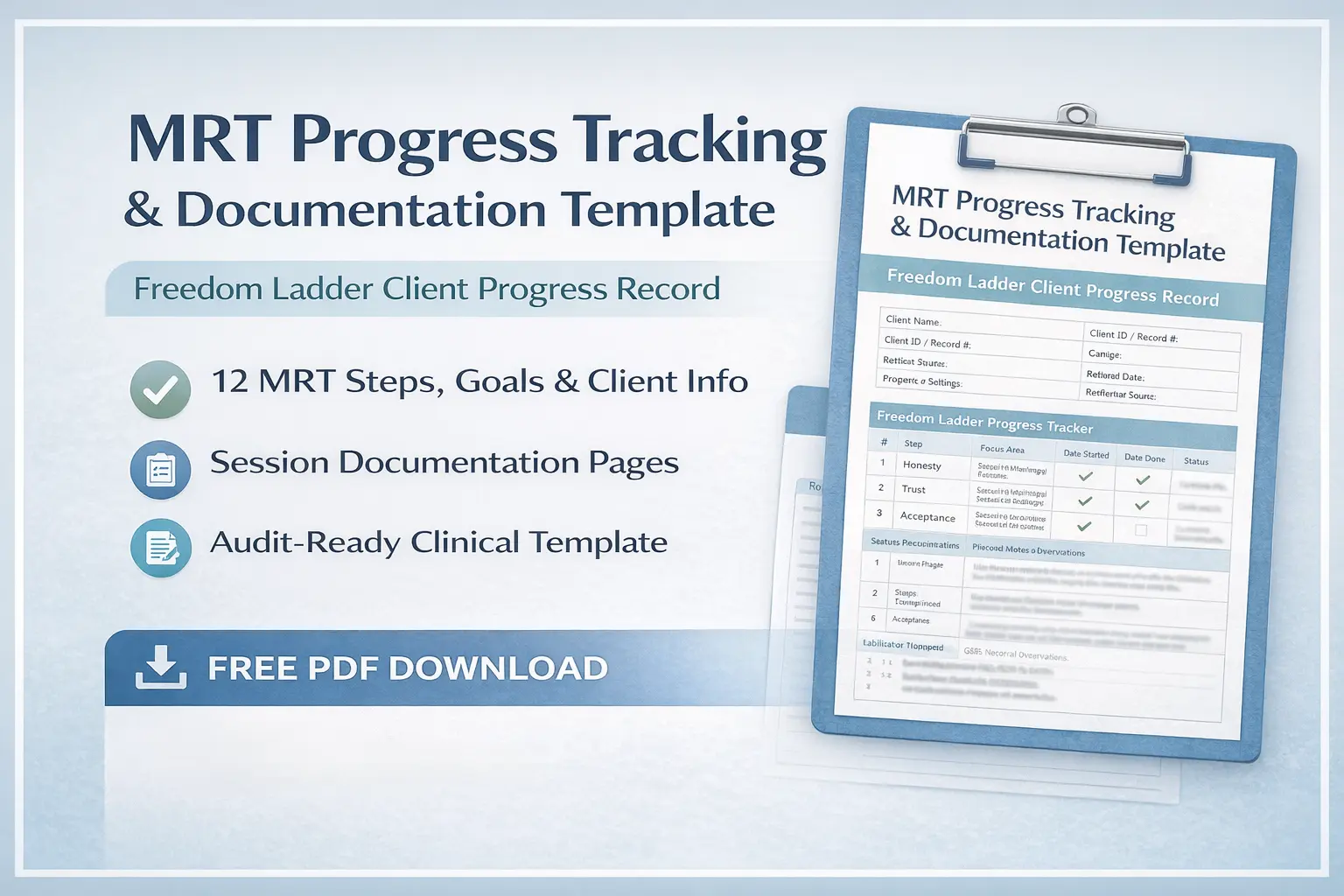
MRT Progress Tracking & Documentation Template
Struggling to track client progress across the Freedom Ladder while keeping your documentation audit-ready?
This downloadable MRT template helps you document step progression, session participation, and clinical decision-making with clarity and consistency.
- Track all 12 MRT steps (plus advanced stages)
- Structured session documentation templates
- Facilitator observation and progress notes
- Designed for audit-ready clinical documentation
Perfect for clinicians running MRT groups or integrating MRT into practice.
The Stages of Moral Reasoning
The first 12 steps of the MRT Freedom Ladder align with progressive stages of moral reasoning. These stages provide a clinical framework for understanding how clients evolve from self-centered decision-making to socially responsible, value-driven behavior.
The stages of moral reasoning below show how the MRT Freedom Ladder progresses from basic honesty and accountability toward mature, prosocial decision-making.
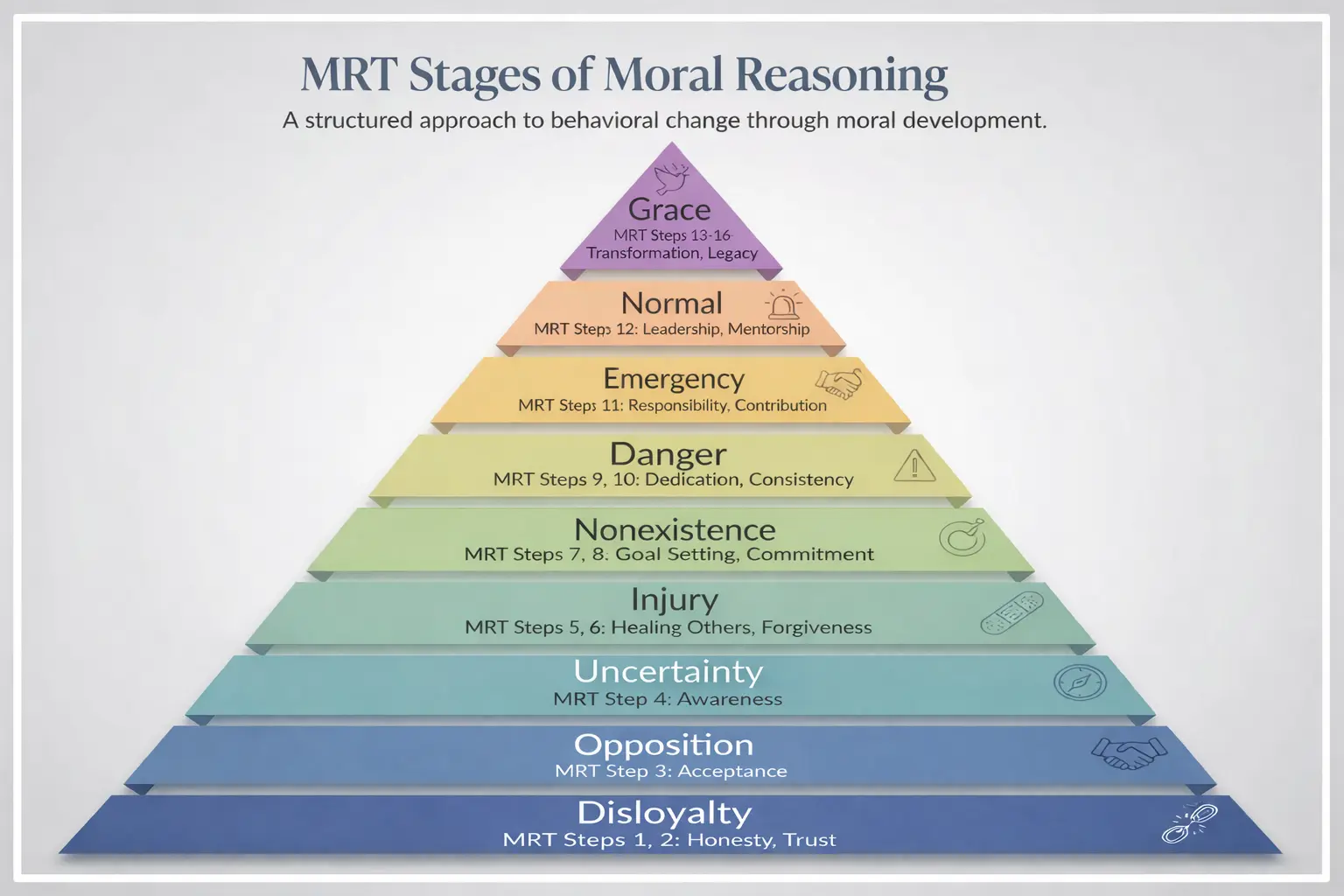
Disloyalty
Steps 1–2: Honesty, Trust
This stage focuses on self-serving behavior patterns such as lying, cheating, stealing, and exploitative relationships. Clients begin confronting dishonest thinking and actions while building a foundation for greater accountability.
Opposition
Step 3: Acceptance
Clients begin taking responsibility for their behavior and reduce the tendency to blame others. The focus shifts toward greater honesty, ownership, and recognition of personal choice.
Uncertainty
Step 4: Awareness
At this stage, clients begin questioning their reasoning and behavior, even if they are not yet fully committed to change. Increased self-awareness opens the door to deeper reflection and therapeutic progress.
Injury
Steps 5–6: Healing Damaged Relationships, Helping Others
Clients begin acknowledging the ways their actions have harmed others and explore how to repair relationships. This stage also introduces prosocial behavior and empathy through helping others.
Nonexistence
Steps 7–8: Long-Term Goals and Identity, Short-Term Goals and Consistency
Clients begin developing a more stable sense of identity and building habits that support long-term change. They also deepen their understanding of right and wrong within daily decision-making.
Danger
Steps 9–10: Commitment to Change, Maintaining Positive Change
This stage centers on actively committing to change and sustaining progress over time. Clients strengthen positive behaviors, reinforce responsibility, and work to prevent relapse into old patterns.
Emergency
Step 11: Keeping Moral Commitments
Clients are encouraged to fulfill responsibilities and follow through on commitments based on moral reasoning rather than immediate personal needs. Integrity and consistency become central themes.
Normal
Step 12: Choosing Moral Goals
At this stage, clients demonstrate more mature decision-making and choose goals that reflect personal responsibility and concern for others. Their behavior becomes more aligned with long-term values.
Grace
Advanced Stage: Steps 13–16
This final stage reflects the highest level of moral development, where individuals act with genuine concern for others and contribute to the community without expecting personal benefit. Because this level is less common, steps 13 through 16 are often more individualized and optional.
What Are MRT Classes?
MRT classes are structured group sessions where participants work through the steps of the Freedom Ladder under the guidance of a trained facilitator. The term "class" reflects the educational component of MRT — participants don't just discuss their experiences, they complete workbook exercises, written assignments, and oral presentations that are reviewed and evaluated before advancing to the next step.
How Long Are MRT Classes?
A typical MRT program runs 12 to 24 sessions, though the total duration varies based on the setting, the facilitator's assessment, and how quickly participants demonstrate genuine engagement with each step. Individual group sessions usually last 60 to 90 minutes and meet once or twice per week. Because advancement through the steps is based on demonstrated understanding rather than a fixed schedule, some participants complete the program faster than others.
In criminal justice settings — drug courts, probation programs, and correctional facilities — MRT programs often run longer, sometimes 6 to 12 months, with mandatory attendance and completion requirements tied to sentencing or supervision terms. In outpatient behavioral health settings, the timeline is typically more flexible and guided by the client's clinical needs and progress.
What to Expect in an MRT Class
Each MRT class follows a consistent structure. Participants present their completed homework assignments to the group, the group facilitator and group members provide feedback, and participants must demonstrate understanding of the step's core concepts before moving forward. The group format is intentional — peer accountability, shared experience, and collective reflection are central to MRT's therapeutic mechanism.
Typical MRT class activities include completing written workbook exercises tied to each step, presenting personal reflections and testimony to the group, receiving and giving constructive feedback, identifying connections between personal values, behaviors, and consequences, and setting specific goals aligned with each step's moral reasoning objective.
Participants are expected to be honest, engaged, and willing to accept feedback. Facilitators create a structured but supportive environment where clients can examine their thinking patterns without judgment from other group members.
MRT Group Therapy: Format and Applications
MRT is most commonly delivered in a group therapy format, though it can also include individual sessions for additional support. The group setting is a core feature of the approach — not just a convenience. Group interaction provides natural opportunities for peer accountability, perspective-taking, and practicing the interpersonal skills that MRT aims to develop.
Moral reconation therapy can be adapted across various outpatient and inpatient settings and behavioral health disciplines, including:
- Drug courts.
- Prisons.
- Parole and probation facilities.
- Substance abuse treatment.
- Anger management.
- Community-based programs.
- Domestic violence treatment.
- Psychological and behavioral health educational settings.
- Residential treatment programs.
MRT commonly involves group therapy, but it can also include individual sessions for extra support. The duration and frequency of MRT sessions depend entirely on your assessment of the client and their individual needs.
Benefits and Outcomes of MRT Therapy
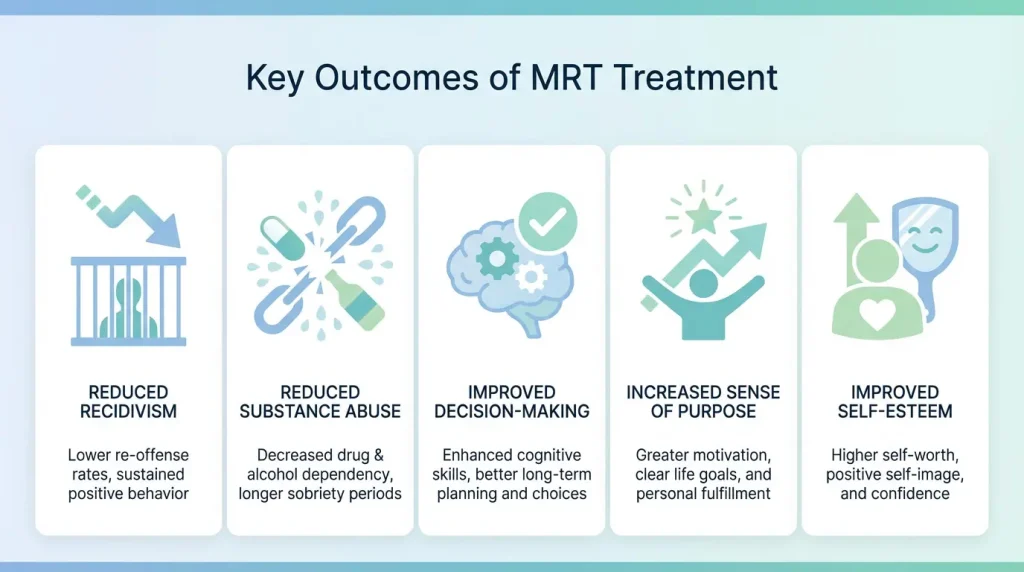
MRT aims to increase moral reasoning to reduce recidivism. Here are examples of the impact of moral reconation therapy on client behavior and cognition.
Decreased Recidivism
Recidivism is the tendency for an individual to reoffend even after experiencing negative consequences for their actions. One of the primary objectives of MRT is to reduce recidivism among clients, especially those who have a high chance of engaging in substance abuse and criminal activities.
Using the cognitive and moral practices in moral reconation therapy training, you can help reduce the behavioral factors that contribute to criminal behavior in your clients. MRT encourages individuals to improve their adaptive skills and avoid ending up back in prison or with another conviction.
Reduced Substance Abuse
Individuals released from prison who struggle with substance abuse are at a much higher risk of reincarceration. Providing high-quality behavioral health services like MRT can support clients and lower their chances of continuing substance abuse in the future.
Moral reconation therapy teaches clients to take responsibility for their actions and understand the difference between right and wrong, which can foster accountability and help reduce the recurrence of substance-related conditions.
Improved Reasoning and Decision-Making Skills
MRT challenges individuals to develop higher levels of moral reasoning and make the right choices, which can impact their decision-making. MRT treatment encourages clients to understand how their behavior affects those around them, which can help them think twice before acting and potentially result in fewer destructive and impulsive behaviors.
Increased Feeling of Purpose
Substance abuse conditions often occur with mental health disorders, including anxiety and depression. Those who experience these mental health conditions may have a decreased feeling of purpose or sense of belonging. MRT treatment can help individuals find their purpose and identify their value.
During MRT, clients can engage in cohesive group therapy to build a sense of belonging and support from other members.
Enhanced Self-Esteem and Self-Image
Like CBT, moral reconation therapy is rooted in challenging negative self-beliefs and thinking patterns. It helps clients reduce harmful behaviors and develop a more positive sense of self. Through the various steps in the Freedom Ladder, individuals can learn to make choices according to their values, which can boost their overall self-esteem and confidence.
Challenges and Implementation of MRT
As with any therapeutic intervention, moral reconation therapy may not be suitable for all clients and may vary in its effectiveness depending on implementation methods and client commitment levels. Here are some challenges you may face when engaging clients in MRT.
Common Challenges in Moral Reconation Therapy
While MRT can be beneficial for many treatment-resistant clients, you may experience potential barriers that can impact successful implementation, such as unique factors that contribute to substance abuse and criminal behavior. For instance, factors like abuse, socioeconomic status, trauma and racism can all influence an individual's likelihood of reoffending.
Additionally, some believe that MRT encourages a deficit-based view of clients with a criminal or substance abuse history, which can unintentionally undermine their self-determination.
Finally, mental health professionals in correctional and noncorrectional settings must be adequately trained in MRT to effectively deliver quality care. In some cases, therapists and behavioral health clinicians may also have to consider the challenges of overcoming client resistance to MRT and implementing a judgment-free, supportive environment.
Implementing MRT in Therapy Settings
As a therapist, counselor or psychologist, you can integrate MRT into your practice by providing workbooks and homework assignments based on the 12 to 16 steps listed above. Here are some examples of subjects to cover:
- Confronting beliefs and attitudes
- Assessing current relationships
- Repairing negative relationships
- Practicing communication and forgiveness
- Building higher levels of moral reasoning
- Improving frustration tolerance
- Developing a positive identity
- Reinforcing healthy habits
- Identifying negative consequences of past behavior
- Recognizing personal strengths and limitations
- Reducing self-destructive tendencies
- Making amends for past wrongdoings
- Identifying positive social influences

Frequently Asked Questions: MRT Therapy
Solutions and Documentation for Enhanced MRT Practice
Proper documentation and access to effective tools are critical components of any successful therapeutic intervention. The importance of accurate and thorough notes cannot be overstated, particularly because moral reconation therapy must be implemented consistently.
Using an electronic health record (EHR) solution for MRT charting and billing will help you maintain accurate records, provide continuity of care and identify areas of improvement.
Simplify MRT Documentation—Without Slowing Down Your Sessions
Documenting Moral Reconation Therapy (MRT) can be time-consuming—especially when tracking progress across the Freedom Ladder, stages of moral reasoning, and group participation.
ICANotes helps you create structured, compliant notes that reflect real clinical progress—so you can focus on guiding clients through meaningful behavioral change.
- Pre-built templates for structured, step-based interventions
- Easily document MRT stages, goals, and client progress
- Capture medical necessity with clear, defensible language
- Streamline group therapy documentation and participation notes
Start your free 30-day trial—no credit card required.
Why Trust ICANotes for Your MRT Notes?
Like CBT and other forms of behavioral therapy, MRT is an effective, evidence-based technique that can help improve moral reasoning and self-identity in clients with a substance abuse or criminal background. As a therapist, you play a vital role in guiding your client through the steps of moral reconation therapy and stages of moral reasoning to encourage positive self-identity.
Identifying negative influences, setting personal goals and building a supportive network can all contribute to your client's recovery. Accurate, complete documentation is vital during MRT treatment, as it will serve as a necessary tool to help your client examine their past thoughts and beliefs about themselves and the world.
Since 1999, ICANotes has prioritized helping behavioral health clinicians like you maintain accurate, legible and secure notes throughout treatment. Our EHR enables you to streamline documentation with personalized narrative notes and treatment plans. ICANotes software was designed by clinicians for professionals across all behavioral health disciplines and settings.
Our menu-driven behavioral health software allows you to create high-quality, compliant notes so that you can focus on delivering quality care while meeting the strict demands of mental health care.
Related Resources: Running Effective Group Therapy Sessions
MRT is most effective in a structured group setting. Explore these guides to improve participation, manage group dynamics, and strengthen your facilitation skills.
Related Posts







Lindsay Rutter
MA, NCC, LPC
About the Author
Lindsay Rutter, MA, NCC, LPC, is a Licensed Professional Counselor with a Master's Degree in Clinical Counseling. She has nearly 15 years of clinical and supervisory experience with extensive knowledge of mental health diagnoses, their etiology, and evidence-based treatments. Lindsay is the Clinical Director of a non-profit community mental health center and the owner of a private practice in Chester County, PA.