Compassion Fatigue, Vicarious Trauma & Burnout in Therapists: 10 Key Differences and Recovery Strategies
Understanding the differences between compassion fatigue, vicarious trauma, and burnout is essential for therapists and other mental health professionals working in high-empathy roles. Although these conditions are often used interchangeably, compassion fatigue vs burnout and compassion fatigue vs vicarious trauma involve distinct causes, symptoms, and recovery needs. This guide explains the 10 key differences between vicarious trauma, compassion fatigue, and burnout, helping clinicians recognize early warning signs, understand how each condition develops, and identify evidence-based prevention and recovery strategies. You’ll also learn how secondary traumatic stress fits into the conversation and how documentation burden and systemic stress can contribute to therapist burnout. By clarifying these distinctions, clinicians can better protect their well-being, maintain ethical and effective care, and build a more sustainable long-term practice — including through early self-assessment and targeted support.


Bea Sanders, LCSW
Last Updated: May 28, 2026

What You'll Learn
- The key differences between compassion fatigue, vicarious trauma, burnout, and secondary traumatic stress — and why these terms are not interchangeable
- How compassion fatigue vs burnout and compassion fatigue vs vicarious trauma differ in causes, onset, emotional impact, and recovery needs
- Common symptoms and warning signs of therapist burnout, compassion fatigue, and vicarious trauma — including how to recognize overlapping conditions
- How each condition affects clinical effectiveness, empathy, decision-making, professional satisfaction, and long-term sustainability
- Evidence-based prevention, treatment, and recovery strategies tailored to each type of occupational stress
- How documentation burden, workload, trauma exposure, and systemic stress contribute to burnout in mental health professionals
- Why recognizing these distinctions early is essential for ethical practice, clinician well-being, and sustainable client care
Contents
- Compassion Fatigue vs Burnout: What's the Difference?
- Defining the Three Conditions
- Where Does Secondary Traumatic Stress Fit In?
- Why Therapists are Vulnerable to Compassion Fatigue and Burnout
- The 10 Key Differences Between Vicarious Trauma, Compassion Fatigue and Burnout
- Symptoms of Vicarious Trauma, Compassion Fatigue, and Burnout
- Can You Experience All Three Simultaneously?
- How Common Are These Conditions Among Mental Health Professionals?
- Systemic Factors That Drive Burnout
- How Documentation Burden Contributes to Burnout
- Ethical Considerations: Why Self-Care is a Professional Obligation
- How to Prevent and Recover From Therapist Burnout and Compassion Fatigue
- Six Evidence-Based Self-Care Domains for Mental Health Professionals
As a mental health professional, you chose this work because of your capacity for empathy and your drive to help others heal. But that same openness that makes you an effective therapist also makes you vulnerable to a set of occupational hazards that rarely get enough airtime: compassion fatigue, vicarious trauma, and burnout.
These three conditions affect a striking proportion of behavioral health clinicians. The Institute for Public Health reports that between 40% and 85% of helping professionals develop vicarious trauma or compassion fatigue — and high rates of traumatic symptoms — at least once during their careers. SAMHSA (2022) found that over 50% of behavioral health providers reported experiencing burnout in the past year alone. The 2024 HRSA "State of the Behavioral Health Workforce" report identifies elevated burnout as a key barrier to providers practicing at full capacity, citing high workloads, reimbursement challenges, and limited organizational support.
Despite how commonly these terms are used — often interchangeably — compassion fatigue, vicarious trauma, and burnout describe distinct experiences with different causes, symptoms, and recovery paths. Recognizing which one you are experiencing (or whether you are experiencing all three simultaneously) is the essential first step toward protecting your well-being and sustaining your practice.
This guide covers the 10 key differences between these conditions, their warning signs, how common they are among mental health professionals, and the evidence-based strategies most effective for each.
Compassion Fatigue vs. Burnout: What's the Difference?
Compassion fatigue and burnout are the two most frequently confused terms in this conversation — and the distinction matters clinically, because the path out of each one is different.
Compassion fatigue is caused by what you absorb from clients: the empathetic engagement with their suffering, their trauma, their pain. It depletes your capacity for empathy itself. A therapist experiencing compassion fatigue may find themselves going through the motions during sessions, unable to access the emotional attunement that defines good clinical work. The source is relational and trauma-specific.
Burnout, by contrast, is caused by what your system demands of you: workload, administrative burden, lack of autonomy, organizational dysfunction, inadequate compensation. It produces emotional exhaustion, depersonalization, and a diminished sense of accomplishment. A burned-out therapist may still care deeply about their clients but find themselves too depleted — and too overwhelmed by charting, billing, and compliance demands — to show up fully.
The key practical difference: if you step away from clinical work for a week and come back feeling refreshed and reconnected, you are more likely experiencing compassion fatigue or vicarious trauma than true burnout. Burnout tends to follow you on vacation. It resurfaces the moment you think about Monday morning, because the system generating it has not changed.
Both conditions can — and frequently do — co-occur. But treating compassion fatigue as if it were burnout (or vice versa) leads to interventions that do not address the root cause. The sections that follow define each condition precisely so you can recognize which experience most closely matches your own.
Defining the Three Conditions
What is Vicarious Trauma?
Vicarious trauma is a psychological response that occurs when providers are repeatedly exposed to the traumatic experiences and stories of their patients. Unlike compassion fatigue, which affects your emotional reserves, vicarious trauma changes the way you see the world. It specifically involves developing symptoms similar to PTSD as a result of empathetic absorption of clients' trauma — including intrusive thoughts, nightmares, emotional numbness, avoidance behaviors, heightened anxiety, and disrupted core beliefs about safety, trust, and meaning.
Clinicians working in trauma-informed care environments may face increased risk of secondary trauma exposure because of repeated engagement with distressing client experiences.
The critical marker of vicarious trauma is this worldview shift: a therapist who previously felt generally safe in the world begins to perceive it as dangerous, unpredictable, or hopeless. This shift is cumulative and often insidious — it develops over months or years of trauma exposure rather than from any single client encounter.
What is Compassion Fatigue?
Compassion fatigue — sometimes called "the high cost of caring" — refers to the emotional and physical exhaustion that develops from continuous exposure to clients' suffering and trauma. It is characterized by a reduced capacity for empathy: the therapist becomes increasingly numb to their clients' distress, not from indifference, but from emotional overload.
Compassion fatigue arises when the empathetic engagement that is central to effective therapy is sustained over time without adequate recovery. Symptoms include emotional numbness, decreased ability to connect with clients, feelings of hopelessness or helplessness, diminished satisfaction in clinical work, and physical symptoms such as headaches, fatigue, and sleep disturbances. Unlike burnout, compassion fatigue is specifically tied to the emotional labor of the clinical relationship rather than to systemic work stressors.
What is Burnout?
Burnout is a psychological syndrome marked by three core features: emotional exhaustion, depersonalization (detachment and reduced empathy toward clients), and reduced personal accomplishment. It occurs when providers are persistently overwhelmed by the cumulative demands of their role — high caseloads, documentation burden, administrative complexity, inadequate support, and a sense of losing control over how they practice.
Between 21% and 67% of mental health workers report high levels of burnout at some point in their careers. One study of 151 community mental health workers in California found that 54% reported high emotional exhaustion and 38% reported high depersonalization, even while most maintained a sense of personal accomplishment. Burnout affects overall functioning — professionally and personally — in a way that extends beyond the clinical relationship itself.
Where Does Secondary Traumatic Stress Fit In?
A fourth term often appears in this conversation: secondary traumatic stress (STS). It is worth clarifying how it relates to the three conditions above.
Secondary traumatic stress describes the PTSD-like symptoms that develop from indirect exposure to traumatic events — hearing accounts of trauma rather than experiencing it firsthand. In this way, it overlaps significantly with vicarious trauma. The key distinction many researchers draw is one of timeframe: STS can develop rapidly after exposure to a single distressing case or critical incident, whereas vicarious trauma typically refers to the cumulative, identity-level transformation that occurs over sustained trauma work.
Compassion fatigue is often described as encompassing both secondary traumatic stress and burnout — it is the broader experience of cost that comes from caring. For clinical purposes, all three of these terms (STS, vicarious trauma, compassion fatigue) share common features: they are rooted in the empathetic engagement with others' trauma, and they call for similar recovery strategies centered on reducing trauma exposure, strengthening support systems, and rebuilding personal resources.
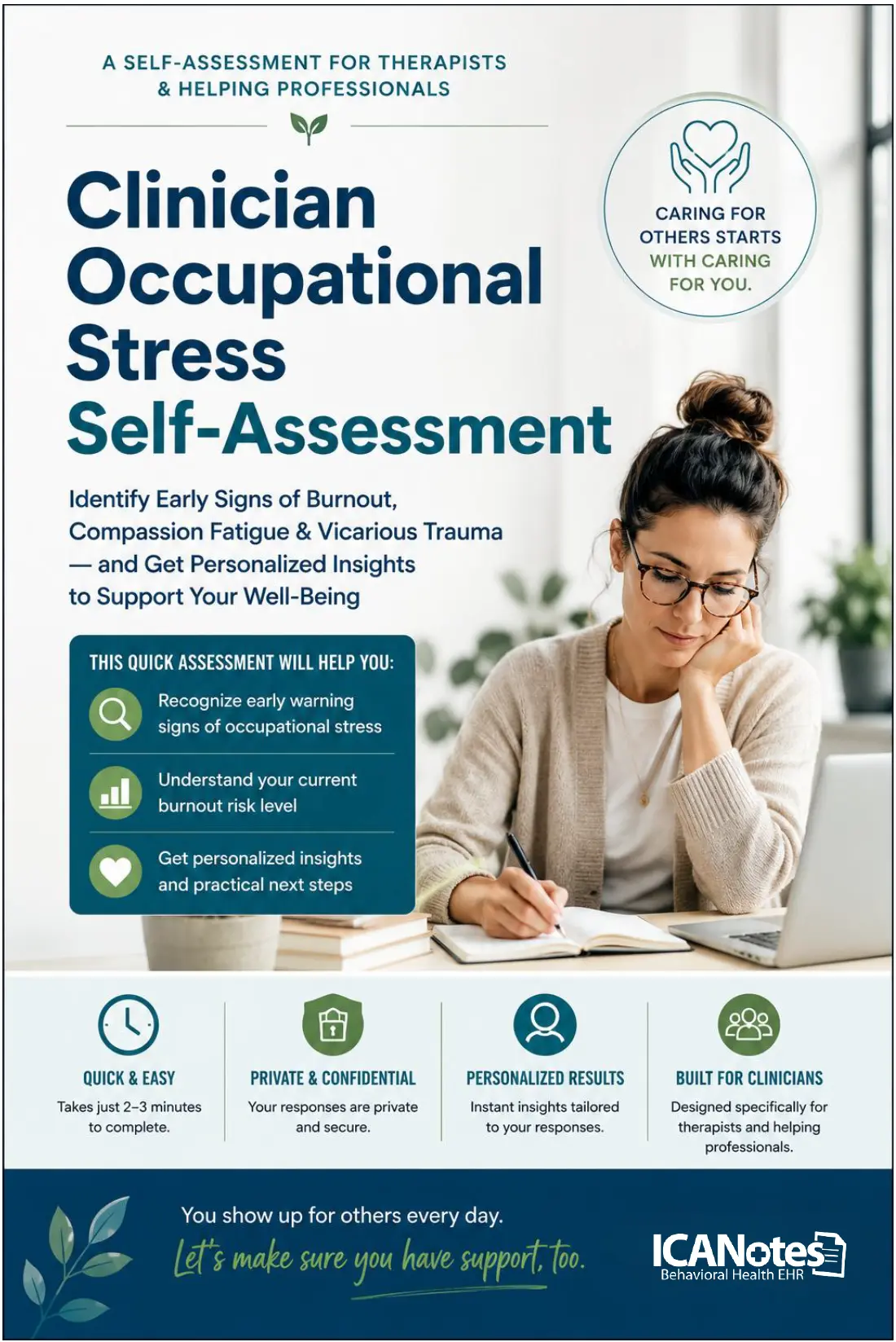
Clinician Occupational Stress Self-Assessment
Recognize early warning signs of burnout, compassion fatigue, and vicarious trauma with this quick clinician self-assessment designed specifically for therapists and behavioral health professionals.
This free resource includes symptom screening prompts, personalized reflection areas, and evidence-informed recovery recommendations to help support sustainable clinical practice and long-term well-being.
Why Therapists Are Especially Vulnerable to Compassion Fatigue and Burnout
Mental health professionals work in one of the most emotionally demanding environments of any profession. Unlike many other healthcare roles, therapists are not only responsible for clinical decision-making — they are also expected to remain emotionally present, empathic, regulated, and psychologically attuned throughout the therapeutic process. Over time, this sustained exposure to emotional intensity can create significant occupational stress, particularly when clinicians are simultaneously managing high caseloads, complex trauma presentations, administrative burden, and limited opportunities for recovery.
Therapists are especially vulnerable to compassion fatigue because empathy is central to effective clinical care. The same emotional openness that helps clients feel understood and supported can also increase a clinician’s susceptibility to absorbing distress, internalizing trauma narratives, and experiencing emotional exhaustion. Clinicians who work extensively with trauma survivors, crisis populations, substance use disorders, grief, abuse, or chronic suicidality often face even greater risk due to repeated exposure to highly distressing material. Emotional entanglement with client material can intensify occupational stress, particularly when transference and countertransference in therapy are not adequately processed through supervision or consultation.
In addition to emotional exposure, many therapists experience systemic stressors that contribute directly to burnout. Excessive documentation requirements, after-hours charting, productivity expectations, insurance pressures, staffing shortages, and emotional labor without adequate organizational support can gradually erode resilience and job satisfaction. Administrative strain often increases when clinicians manage extensive documentation requirements for assessments, mental health treatment plans, and progress notes across high caseloads. Over time, clinicians may begin to feel emotionally depleted, detached from clients, cynical about the work, or unsure whether they can continue practicing sustainably.
Certain personality traits can also increase vulnerability. Many therapists are naturally conscientious, highly empathic, achievement-oriented, and deeply invested in helping others. While these qualities strengthen therapeutic relationships, they can also make it difficult to set boundaries, reduce caseloads, or prioritize personal recovery needs. Without intentional self-awareness and support, clinicians may continue pushing through stress long after warning signs appear.
Protecting against compassion fatigue and burnout requires recognizing that these experiences are not personal failures — they are predictable occupational hazards of high-empathy clinical work. Early awareness, strong supervision, sustainable workloads, supportive professional relationships, and consistent recovery practices all play an important role in maintaining long-term well-being and ethical, effective care.
The 10 Key Differences Between Vicarious Trauma, Compassion Fatigue and Burnout
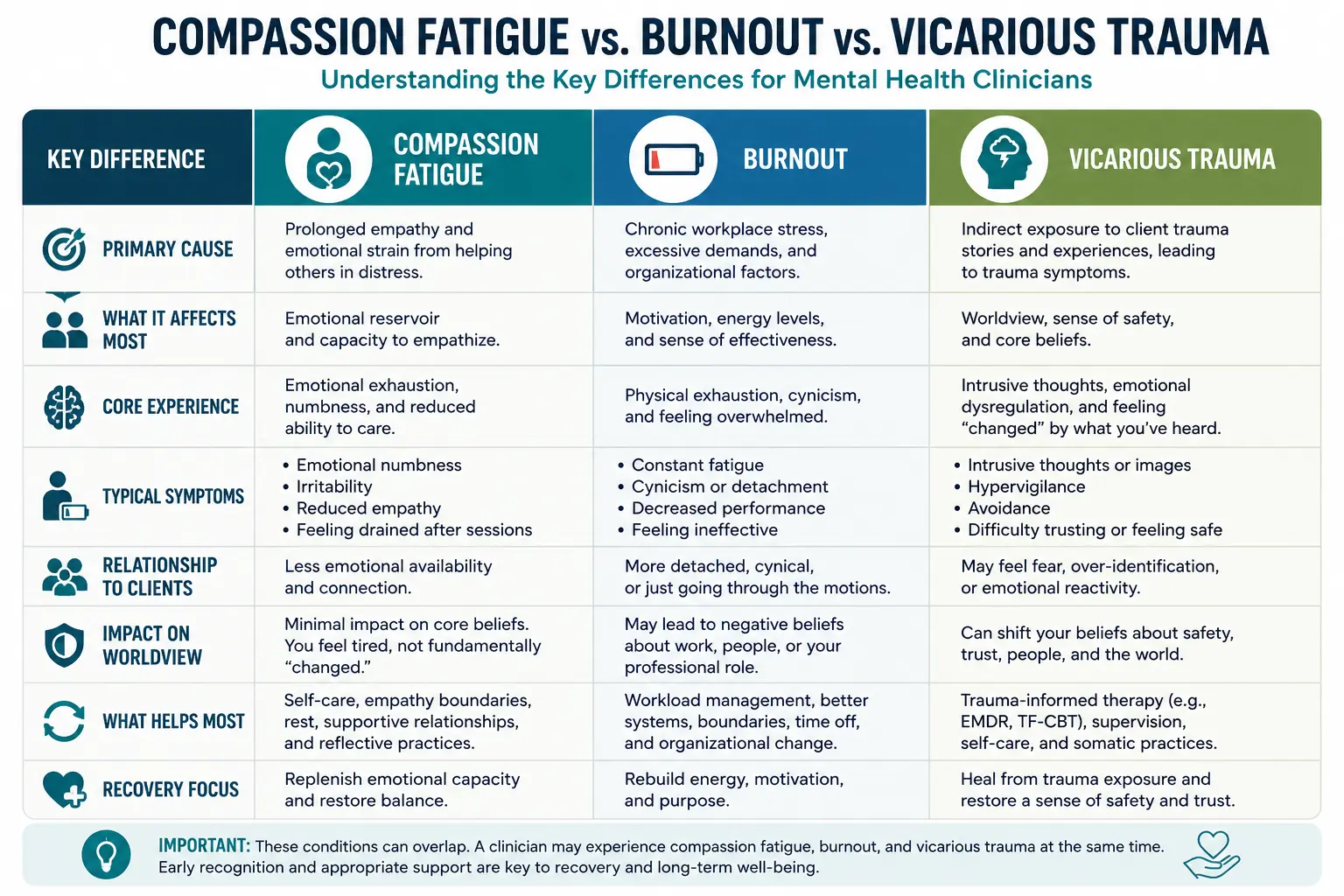
Although compassion fatigue, vicarious trauma, and burnout often overlap, they are not the same experience. Understanding the key differences can help therapists identify what is driving their distress, choose the right recovery strategies, and recognize when workplace or documentation demands may be contributing to the problem. The comparison below breaks down how each condition differs in cause, symptoms, onset, impact on empathy, and primary path to recovery.
| Key Difference | Vicarious Trauma | Compassion Fatigue | Burnout |
|---|---|---|---|
| 1. Nature of emotional response | PTSD-like symptoms from absorbing clients' trauma; worldview shifts | Depletion of empathy through sustained emotional caregiving | Emotional exhaustion and detachment not tied specifically to client trauma |
| 2. Primary cause | Empathetic absorption of traumatic content over time | Continuous empathetic engagement with suffering clients | Chronic workplace stress, workload, administrative burden, and systemic factors |
| 3. Hallmark symptom | World feels more dangerous, hopeless, or meaningless | Emotional numbness or reduced ability to connect with clients' pain | Cynicism, depersonalization, and loss of purpose |
| 4. Onset speed | Usually gradual over months or years of trauma work | Can develop more quickly with sustained high-empathy work | Typically gradual due to chronic, unresolved stress |
| 5. Effect on empathy | Empathy may remain, but is accompanied by personal distress and intrusive symptoms | Empathy is directly depleted; the clinician may feel emotionally empty | Empathy diminishes as part of broader detachment or cynicism |
| 6. Relationship to client work | Most associated with high-trauma caseloads and repeated exposure | Tied to the emotional labor of the clinical relationship | Tied to systemic factors and can occur even with low-trauma caseloads |
| 7. Physical symptoms | Sleep disturbance, hypervigilance, intrusive imagery | Fatigue, headaches, and somatic symptoms of emotional depletion | Physical symptoms resembling depression and chronic stress |
| 8. Sense of purpose | Purpose may remain, but the emotional toll becomes harder to carry | Doubts emerge about one’s ability to make a difference | Often leads to a profound loss of meaning in work and life |
| 9. Response to time off | Rest may reduce acute symptoms, but worldview changes can persist | Often improves with meaningful breaks from high-empathy work | Often returns quickly when the same systemic stressors remain |
| 10. Primary recovery focus | Reducing trauma exposure, processing traumatic material, and rebuilding worldview | Restoring empathic capacity through self-care, reduced caseload intensity, and support | Addressing workload, administrative burden, autonomy, support, and other systemic stressors |
Symptoms of Vicarious Trauma, Compassion Fatigue, and Burnout
Although compassion fatigue, burnout, and vicarious trauma can share overlapping symptoms, the underlying causes and emotional patterns are different. Recognizing the distinction is important because each condition requires a slightly different approach to prevention, recovery, and professional support. The visual guide below highlights some of the most common emotional, physical, and behavioral warning signs mental health clinicians may experience when occupational stress begins to affect well-being and clinical effectiveness.
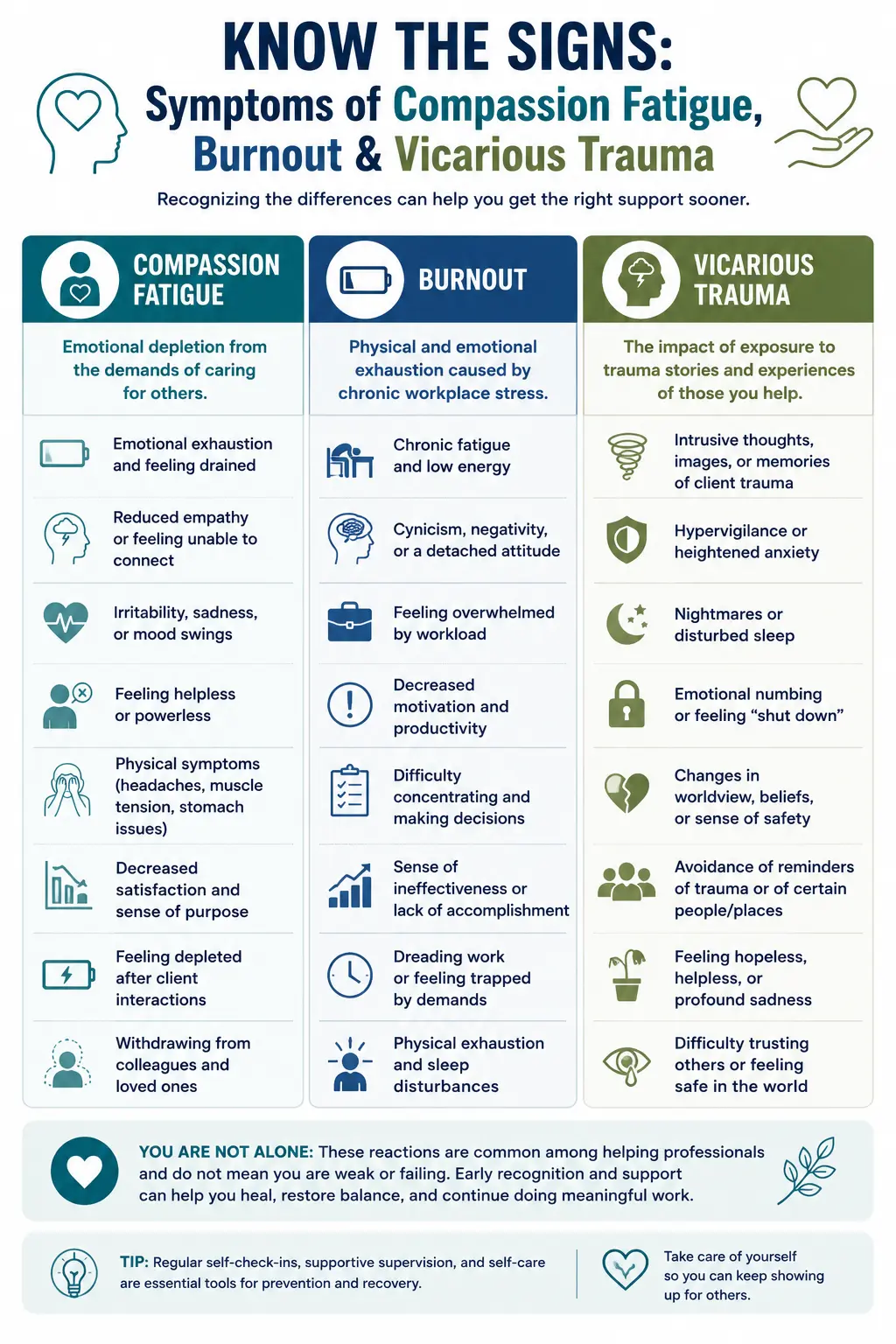
Use the checklist below to identify which symptoms you are currently experiencing. Note that symptoms from more than one column may apply — co-occurrence is common.
| Vicarious Trauma Symptoms | Compassion Fatigue Symptoms | Burnout Symptoms |
|---|---|---|
| ☐ Intrusive thoughts about clients’ traumatic experiences | ☐ Emotional numbness or flatness | ☐ Persistent dread of going to work |
| ☐ Nightmares or disturbing dreams related to clients’ stories | ☐ Reduced sense of empathy or emotional connection | ☐ Cynicism about clients, colleagues, or the profession |
| ☐ Hypervigilance or heightened startle response | ☐ Decreased satisfaction in helping others | ☐ Emotional exhaustion that does not improve with rest |
| ☐ Worldview shift — the world feels more dangerous or hopeless | ☐ Sadness, hopelessness, or despair about the work | ☐ Depersonalization or emotional detachment from clients |
| ☐ Disrupted sense of safety, trust, or meaning | ☐ Physical fatigue out of proportion to activity level | ☐ Reduced sense of professional accomplishment |
| ☐ Avoidance of trauma-related content outside work | ☐ Difficulty separating clients’ feelings from your own | ☐ Withdrawal from coworkers, peers, or social interaction |
| ☐ Changes in spiritual beliefs or existential outlook | ☐ Headaches, GI issues, or other somatic symptoms | ☐ Difficulty concentrating or making clinical decisions |
| ☐ Difficulty feeling emotionally present with loved ones | ☐ Reduced motivation to prepare for or attend sessions | ☐ Resentment toward leadership, systems, or administrative demands |
Can You Experience All Three Simultaneously?
Absolutely. Mental health professionals facing any combination of these conditions may require more comprehensive support, including therapy, self-care strategies, and adjustments to their work environment. Recognizing the complex interplay of these conditions is crucial for both individual clinicians and their organizations.
Three things to understand about co-occurring compassion fatigue, vicarious trauma, and burnout:
- Complex interplay: These conditions often interact and exacerbate each other. The emotional demands of trauma-intensive work can simultaneously deplete empathic capacity (compassion fatigue), alter worldview (vicarious trauma), and create the chronic stress that feeds burnout — especially when systemic factors like caseload size and administrative burden are not addressed.
- Amplified impact: When these conditions co-occur, their effects extend beyond work. Symptoms spill into personal relationships, physical health, and overall capacity for joy and connection — areas that are also the most important recovery resources.
- Elevated mental health risk: Co-occurrence significantly increases the risk of anxiety, depression, and PTSD-like symptoms among mental health professionals. Recognizing the pattern early and seeking appropriate support is not optional — ethically and practically, it is a professional responsibility.
How Common are These Conditions Among Mental Health Professionals?
Prevalance Rates
- Burnout: The American Psychological Association reports that 21–61% of mental health professionals experience burnout symptoms at some point in their careers. SAMHSA (2022) cites one study showing 78% of psychiatrists reporting burnout.
- Compassion Fatigue: The National Association of Social Workers reports that up to 70% of social workers will experience compassion fatigue at some point.
- Vicarious Trauma: The National Child Traumatic Stress Network reports that studies show up to 26% of therapists working with traumatized populations — and up to 50% of child welfare workers — report secondary traumatic stress.
High-Stress Environments
Mental health professionals working in crisis intervention, trauma therapy, and substance use treatment are at elevated risk across all three conditions. SAMHSA reports burnout prevalence rates of 33% among general substance abuse counselors and 65% among opioid treatment program counselors specifically.
Caseload as a Risk Factor
The size and trauma-intensity of caseloads significantly affects risk. The Institute for Public Health reports that professionals whose client bases consist of 60% or more clients with a significant trauma history are at markedly increased risk for secondary trauma. In one study of 29 directors of community mental health centers, over two-thirds reported high emotional exhaustion and low personal accomplishment.
Years of Experience
More experienced clinicians are not necessarily more protected. Cumulative stress can mean that longer tenure in trauma-intensive roles correlates with higher — not lower — rates of burnout and vicarious trauma.
Systemic Factors That Drive Burnout
SAMHSA identifies the top five organizational contributors to burnout in behavioral health settings:
- Unfair treatment at work
- Unmanageable workload and caseload demands
- Lack of role clarity
- Insufficient communication or support from leadership
- Unreasonable time pressure
Additional sector-wide pressures include growing behavioral health provider shortages (SAMHSA estimates approximately 13% of rural counties have no access to psychologists, psychiatrists, psychiatric nurse practitioners, social workers, or counselors) and increased demand following the COVID-19 pandemic, with over 50% of psychologists reporting higher volumes of clients with anxiety, depression, and trauma-related disorders.
How Documentation Burden Can Contribute to Burnout
When charting, billing, and compliance tasks extend beyond the clinical day, they can reduce recovery time and increase emotional exhaustion.
Documentation Overload
Repetitive notes, charting, billing, and compliance tasks pile up.
After-Hours Charting
Work spills into evenings, weekends, and personal recovery time.
Decision Fatigue
Clinicians spend more mental energy on admin tasks than care.
Burnout Risk
Emotional exhaustion, cynicism, and reduced effectiveness increase.
The Recovery Time Problem
Burnout becomes harder to reverse when administrative work crowds out the activities that help clinicians recover: rest, supervision, movement, connection, and time away from work.
How ICANotes Helps
Behavioral-health–specific templates, structured clinical prompts, and streamlined documentation workflows help reduce repetitive typing and make it easier to complete notes efficiently.
How to Reduce Documentation Burden
For many mental health clinicians, a significant driver of burnout is one that rarely appears in research studies but dominates the day-to-day: documentation overload. After-hours charting, repetitive note templates that do not fit behavioral health workflows, and time spent on administrative tasks rather than patient care are among the most frequently cited contributors to emotional exhaustion and disengagement.
ICANotes is designed specifically for behavioral health clinicians to reduce this burden. Structured, specialty-specific templates guide therapists and psychiatrists through progress notes, assessments, and treatment plans efficiently — minimizing decision fatigue and repetitive typing.
Built-in clinical prompts help ensure required documentation elements are captured without overdocumentation, helping clinicians spend less time charting and more time focused on recovery, supervision, exercise, rest, and connection.
Reclaim 30–60 minutes of your day from documentation.
Experience a behavioral-health-specific EHR designed to reduce after-hours charting and support clinician well-being.
Start Your Free Trial
No credit card required.
Ethical Considerations: Why Self-Care is a Professional Obligation
The impacts of burnout, vicarious trauma, and compassion fatigue extend beyond the clinician. They ripple outward to clients, organizations, and communities. SAMHSA (2022) highlights these issues across multiple professional ethics codes:
- APA Code of Conduct: Requires clinicians to take steps to stop providing services if their ability to do so is compromised.
- NASW Code of Ethics: Requires social workers to address symptoms of burnout both individually and with colleagues. In 2021, the Code was amended to formally include Professional Self-Care as an ethical standard of practice.
This framing matters. Self-care is not self-indulgence. It is a professional requirement — both for the quality of care you provide and for the sustainability of the behavioral health workforce as a whole.
How to Prevent and Recover From Therapist Burnout and Compassion Fatigue
Recovery from compassion fatigue, vicarious trauma, and burnout requires more than generic self-care advice. Although these conditions overlap, each one responds best to different prevention and treatment strategies. Effective recovery often involves a combination of individual support, workload adjustments, organizational change, and intentional restoration of emotional and physical resources. The strategies below are designed to help mental health professionals reduce occupational stress, strengthen resilience, and sustain long-term clinical effectiveness.
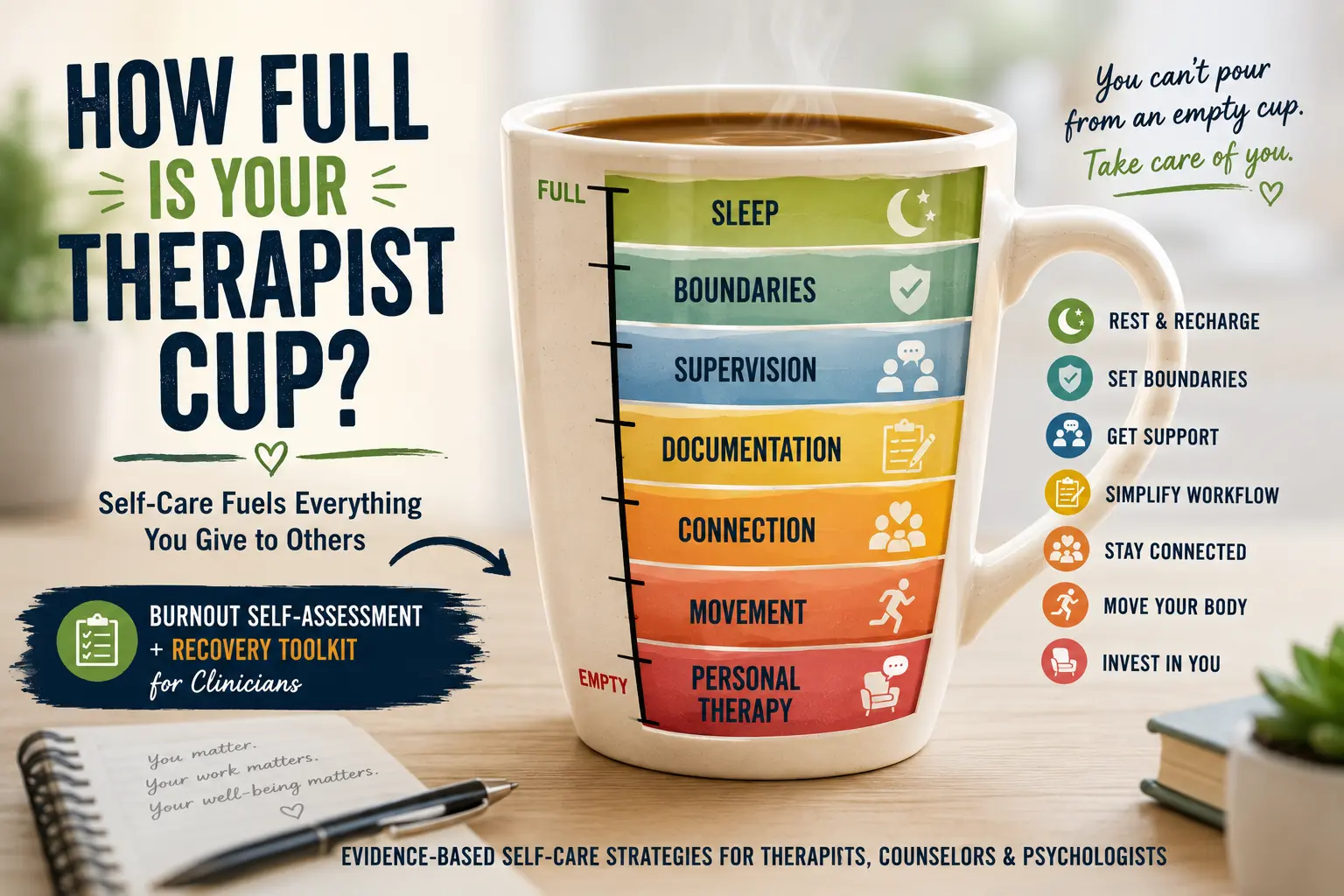
Consistent recovery practices and evidence-informed self-care strategies for behavioral health professionals can help clinicians recognize occupational stress earlier and build long-term resilience.
Prevention Strategies
- Set clear boundaries: Establish and maintain boundaries between work and personal life. Be intentional about caseload composition — especially the proportion of high-trauma clients — and do not hesitate to consult with a supervisor when caseload balance feels unsustainable. Maintaining healthy therapeutic boundaries is one of the most effective ways clinicians can reduce emotional overextension and protect against compassion fatigue.
- Engage in regular supervision and peer consultation: Research consistently shows that weekly supervision reduces compassion fatigue rates by approximately 40% compared to monthly or no supervision. Trauma-informed supervision that specifically addresses secondary exposure is particularly effective for those working with trauma survivors.
- Develop a meaningful self-care routine: Not the generic kind. A genuine self-care practice addresses your emotional, physical, social, and spiritual needs in ways that are specific to you. Brené Brown's concept of "non-doing play" — activities with no productive purpose other than enjoyment — is a research-backed buffer against overwhelm.
- Vary your caseload: Where clinically and organizationally feasible, balance high-trauma work with cases that are less emotionally intense. This is not avoidance — it is a structural protection.
Management Strategies
- Cultivate self-compassion: Experiencing compassion fatigue or burnout is not evidence of insufficient dedication or personal weakness. These are occupational risks that affect the most empathic and committed practitioners. Reframing guilt as a signal to act is more clinically useful than self-criticism.
- Delegate and collaborate: Avoid unnecessary accumulation of tasks. Identify what can be shared with colleagues, delegated, or eliminated.
- Consider role or population shifts: Temporarily or permanently shifting your caseload — from high-trauma to lower-acuity clients, or from direct service to consultation or supervision — can be an effective intervention when other strategies are not sufficient.
Treatment Strategies
- Individual therapy: EMDR and trauma-focused CBT show strong effectiveness for treating vicarious trauma and secondary traumatic stress specifically. Many clinicians benefit from somatic therapies addressing body-based trauma responses. Seek a therapist experienced in working with helping professionals.
- Organizational interventions: Evidence-based organizational policies include caseload caps, protected supervision time, flexible scheduling, reduced administrative burden, and access to free or subsidized personal therapy. Organizations with strong psychological safety cultures report significantly lower burnout rates.
- Reduce documentation burden: For burnout specifically, identifying and reducing systemic stressors — particularly administrative overload — is not optional. Self-care strategies alone will not resolve burnout if the systemic conditions generating it remain unchanged.
Learning how to prevent burnout as a healthcare professional requires more than occasional self-care — it often involves workload management, supervision, boundary-setting, and systemic support.
Six Evidence-Based Self-Care Domains for Mental Health Professionals
In their literature review "Dear Mental Health Practitioners, Take Care of Yourselves," Posluns and Gall (2020) identify six self-care domains that research consistently associates with clinician well-being:
1. Awareness
Acceptance and commitment therapy, mindfulness and meditation training, self-reflection practices, and creative writing. The foundation of effective self-care is accurate self-knowledge — recognizing your symptoms early, before they compound.
2. Balance
Leisure activities, varied work activities such as teaching or supervision, non-work passions, and time in non-work relationships. Professional and personal boundaries. Time management. Flexible work hours and realistic goal-setting.
3. Flexibility
Effective coping strategies, cognitive reappraisal, self-compassion, acceptance and commitment therapy, expressive writing, and openness to professional development. The capacity to adapt when things are not working.
4. Physical Health
Sleep hygiene, balanced nutrition and hydration, and regular exercise. Physical health is not a luxury — it is a clinical tool. The body holds stress responses; movement and rest process them.
5. Social Support
Individual sources — family, friends, personal therapy. Professional sources — individual or group supervision, peer consultation, professional associations, colleague assistance programs. Isolation amplifies every form of occupational stress.
6. Spirituality
Spiritual connection, prayer, mindfulness, time in nature, practicing gratitude, meaning-making, and engaging in work that aligns with a sense of purpose. For many clinicians, reconnecting with the “why” behind the work is an essential part of recovery.
Related Resources for Mental Health Clinicians
Explore additional resources on therapist self-care, boundaries, burnout prevention, and managing emotional dynamics in clinical work.
Boundaries in Counseling
Learn how healthy clinical boundaries protect therapists from emotional exhaustion, compassion fatigue, and ethical risk.
Self-Care for Behavioral Health Professionals
Practical strategies to support emotional resilience, reduce occupational stress, and maintain sustainable clinical work.
Managing Transference and Countertransference in Therapy
Explore how emotional dynamics in therapy can affect clinician well-being, therapeutic effectiveness, and professional boundaries.
How to Prevent Burnout as a Healthcare Professional
Discover evidence-informed strategies for reducing emotional exhaustion and preventing long-term clinician burnout.
Frequently Asked Questions About Vicarious Trauma, Compassion Fatigue, and Burnout
+
Can vicarious trauma cause physical health problems beyond emotional symptoms?
+
How long does it take to recover from compassion fatigue?
+
What are signs I should take a leave of absence from clinical work?
+
Does clinical supervision actually prevent vicarious trauma and compassion fatigue?
+
Can changing your client population reverse burnout symptoms?
+
What therapy works best for treating vicarious trauma in therapists?
+
How do I set boundaries with clients without damaging the therapeutic relationship?
+
Is it normal to feel guilty about experiencing compassion fatigue?
+
What organizational policies most effectively reduce burnout among clinical staff?
+
What is the difference between compassion fatigue and secondary traumatic stress?
Conclusion: Your Well-Being is the Foundation of Your Clinical Work
Vicarious trauma, compassion fatigue, and burnout are distinct experiences — but they often overlap in the lives of therapists working in high-demand environments. Understanding the specific differences between them is the critical first step: not because labeling what you are experiencing will resolve it, but because accurate recognition points you toward the interventions most likely to help.
If you recognized symptoms in this article, the most important next step is honest self-assessment. The free Clinician Occupational Stress Self-Assessment is designed to help you do exactly that.
Beyond self-care, lasting recovery from burnout in particular requires addressing the systemic conditions — workload, administrative burden, lack of support — that generate it. For many clinicians, reducing the time spent on documentation and administrative tasks is among the highest-leverage changes available within their practice.
Recent Posts




Bea Sanders
LCSW