Blog > Documentation > Couples Therapy Notes: Templates, Examples & Documentation Tips
How to Write Couples Therapy Notes (Templates, Examples, and Insurance Considerations)
Writing effective couples therapy notes requires balancing clinical clarity, ethical documentation, and, when applicable. insurance requirements. This guide walks clinicians through how to document couples sessions accurately, including couples therapy progress note templates, real-world note examples, and key differences between self-pay couples therapy and insurance-reimbursable sessions tied to an identified patient’s treatment plan.


Last Updated: January 9, 2026


What You'll Learn
- How to write clear, compliant couples therapy notes that support clinical care and documentation standards
- The key differences between documenting self-pay couples therapy and insurance-reimbursable sessions
- What most payers require when couples therapy is billed under one partner’s treatment plan
- Real-world couples therapy note examples and sample progress notes for couples therapy
- Best practices for linking progress notes to meaningful couples therapy treatment goals
-
How behavioral-health-specific tools like ICANotes can simplify couples therapy documentation
Contents
- Why Accurate Couples Therapy Notes Matter
- Insurance-Based vs. Self-Pay Couples Therapy: Why Documentation Matters
- Essential Elements of Couples Therapy Progress Notes
- Sample Progress Notes for Couples Therapy
- Couples Therapy Treatment Goals and Documentation
- Best Practices for Writing Couples Therapy Notes
- FAQ: Couples Therapy Notes
- How ICANotes Supports Couples Therapy Documentation
Couples therapy notes serve multiple purposes at once. They document clinical progress, support continuity of care, protect the clinician legally, and — when applicable — justify medical necessity for insurance reimbursement.
Unlike individual therapy notes, couples therapy documentation must capture the relational dynamic while still remaining clinically focused, objective, and compliant. This becomes especially important when couples therapy is billed to insurance, since most payers only reimburse sessions under very specific circumstances.
In this guide, we’ll cover:
-
What couples therapy notes should include
-
How documentation differs for self-pay vs. insurance-based couples therapy
-
A couples therapy progress note template
-
Multiple couples therapy note examples and sample progress notes for couples therapy
-
Tips for writing notes that are clear, defensible, and audit-ready
What are Couples Therapy Notes?
Couples therapy notes are clinical progress notes that document therapeutic services provided to two partners during a joint session. These notes focus on interaction patterns, communication dynamics, presenting problems, interventions used, and each partner’s response to treatment.
While both individuals are present, the note should remain clinically neutral and centered on therapeutic goals — not personal opinions or relationship judgments.
Why Accurate Couples Therapy Notes Matter
Strong documentation is essential for:
-
Tracking progress over time
-
Coordinating care across providers
-
Supporting ethical and legal standards
-
Demonstrating medical necessity when insurance reimbursement is involved
Couples therapy notes are often scrutinized more closely than individual notes because of payer restrictions, especially when sessions involve two participants but only one is the identified patient.
Insurance-Based vs. Self-Pay Couples Therapy: Why Documentation Matters
One of the most important distinctions when writing couples therapy notes is whether the sessions are self-pay or submitted for insurance reimbursement.
Couples Therapy Notes for Insurance Reimbursement
Most insurance plans do not cover couples therapy as a standalone service. Coverage is typically allowed only when:
-
One partner has a diagnosable mental health condition, and
-
The couples sessions are documented as part of that individual’s treatment plan, and
-
The therapeutic focus clearly addresses how the relationship impacts the identified patient’s symptoms, functioning, or treatment goals
Key documentation considerations for insurance-based couples therapy:
-
Identify a primary patient with a diagnosis
-
Frame the session as treatment supporting that patient’s clinical goals
-
Document how the partner’s involvement contributes to symptom reduction, stabilization, or skill-building
-
Avoid language that suggests “relationship enrichment” or general marital counseling
In these cases, the progress note should clearly reflect that the session is medically necessary for the diagnosed individual, not simply a joint relationship session.
Couples Therapy Notes for Self-Pay Clients
When couples therapy is self-pay, documentation can be more flexible. Notes may focus on:
-
Mutual relationship goals
-
Communication patterns
-
Conflict resolution
-
Emotional attunement and relational repair
While clinical rigor is still required, there is no need to justify medical necessity for reimbursement. That said, notes should still remain professional, objective, and consistent with ethical documentation standards.

Working with Couples in Conflict?
Download the Couples Therapy Intervention Guide
✅ EFT, DBT, and ACT approaches tailored for couples
✅ Interventions for emotional reactivity, communication breakdowns, and betrayal recovery
✅ Tools to deepen connection, improve regulation, and align on values
Whether you're new to couples work or want to expand your toolbox, this guide helps you deliver more impactful therapy.
Essential Elements of Couples Therapy Notes (with Examples)
Well-written couples therapy notes follow a consistent structure that documents the clinical focus of the session, observed relational dynamics, therapeutic interventions, and progress toward goals. Many clinicians use structured formats such as SOAP, DAP, or BIRP to maintain clarity and consistency. Below are the essential elements every couples therapy progress note should include, along with examples.
1. Client Identifiers and Session Details
This section establishes who was present and how the service was delivered.
Include:
-
Names of both partners
-
Date and duration of session
-
Modality (in-person or telehealth)
Example:
Clients: Partner A, Partner B
Date: 03/12/2026
Session Length: 53 minutes
Modality: Telehealth (HIPAA-compliant)
2. Presenting Concern or Session Focus
This section explains the reason for the session and anchors the clinical narrative.
For insurance-based sessions, frame the concern in relation to the identified patient’s diagnosis.
For self-pay sessions, broader relationship concerns are appropriate.
Example (Insurance-Based):
Session focused on addressing relationship conflict contributing to Partner A’s anxiety symptoms.
Example (Self-Pay):
Session focused on ongoing communication difficulties and escalation during conflict.
3. Subjective (Client-Reported Information)
The subjective section captures how each partner describes their experience, concerns, or progress since the last session.
Example:
Partner A reported feeling overwhelmed and disconnected following repeated arguments during the week. Partner B reported frustration and uncertainty about how to respond without escalating conflict.
4. Objective (Therapist Observations)
Document observable behaviors, emotional tone, and interaction patterns—without interpretation or judgment.
Example:
Partner A avoided eye contact during discussion of recent conflict. Partner B interrupted frequently early in session. Both demonstrated improved turn-taking following therapist intervention.
5. Interventions Used
Clearly document the therapeutic techniques applied during the session. This is critical for demonstrating clinical skill and, when applicable, medical necessity.
Example:
Therapist facilitated structured communication exercise, modeled reflective listening, and guided emotion identification to reduce escalation.
6. Client Response to Interventions
This element shows whether the interventions were effective and how each partner engaged with the process.
Example:
Both partners were able to slow the conversation, reflect each other’s statements accurately, and reported feeling more understood by the end of the session.
7. Assessment (Clinical Interpretation)
The assessment integrates subjective and objective data into a clinical summary of progress and remaining concerns.
Insurance-Based Example:
Relationship stress continues to exacerbate Partner A’s anxiety symptoms. Couples sessions support treatment goals related to emotional regulation and interpersonal effectiveness.
Self-Pay Example:
Couple demonstrates increased insight into conflict patterns and is beginning to apply communication skills with therapist support.
8. Plan and Next Steps
Outline what will happen next, including ongoing interventions, homework, or referrals.
Example:
Continue couples therapy focusing on conflict de-escalation skills. Assign weekly check-in exercise. Reassess communication patterns next session.
9. Diagnosis (If Applicable)
When billing insurance, include the diagnosis for the identified patient and ensure alignment with the session focus.
Example:
Diagnosis (Partner A): Generalized Anxiety Disorder (F41.1)
(For self-pay couples therapy, a diagnosis may not be required.)
Why These Elements Matter
Including each of these components ensures your couples therapy notes:
-
Clearly reflect clinical reasoning
-
Support ethical and legal documentation standards
-
Distinguish between self-pay and insurance-based sessions
-
Provide defensible sample progress notes for couples therapy
Sample Progress Notes for Couples Therapy
The examples below show how couples therapy progress notes can be structured depending on whether sessions are insurance-based or self-pay. While both notes document relational dynamics, therapeutic interventions, and client response, insurance-submitted notes must clearly support medical necessity for an identified patient, whereas self-pay documentation allows broader focus on shared relationship goals. Reviewing side-by-side sample progress notes for couples therapy can help clinicians align their documentation with clinical intent, ethical standards, and payer requirements.
Use the same core structure in both notes, but adjust the clinical framing. Insurance-based documentation should clearly tie the session to the identified patient’s diagnosis and treatment plan.
Insurance-Based Couples Therapy Progress Note Example
Focus: session supports an identified patient’s treatment plan and medical necessity.
Self-Pay Couples Therapy Progress Note Example
Focus: relationship goals, dynamics, and skills-building (no reimbursement framing required).
Applying Documentation Principles to Different Couples Therapy Scenarios
While the side-by-side examples above highlight how documentation differs for insurance-based versus self-pay couples therapy, the same core principles apply across a wide range of presenting issues. Regardless of whether sessions focus on conflict management, trust repair, parenting stress, or emotional intimacy, couples therapy notes should clearly document the session focus, interventions used, client response, and next steps. The following sample progress notes for couples therapy illustrate how those principles can be applied to common clinical scenarios, with wording adapted to the therapeutic goals and documentation requirements of each case.
Below are sample progress notes for couples therapy that reflect common presenting concerns. Each example shows objective documentation of dynamics, interventions used, and next steps. Adjust wording as needed to match your modality (e.g., EFT, Gottman, CBT) and payer requirements.
Sample: Conflict Management & De-escalation
Focus: reducing escalation, improving communication, and building repair skills.
Sample: Trust Building After a Rupture
Focus: rebuilding trust, transparency agreements, and emotional safety.
Sample: Parenting Stress Supporting Anxiety Treatment
Focus: conjoint session documented as part of identified patient’s treatment plan.
Sample: Intimacy & Emotional Connection
Focus: increasing emotional responsiveness, attachment needs, and connection rituals.
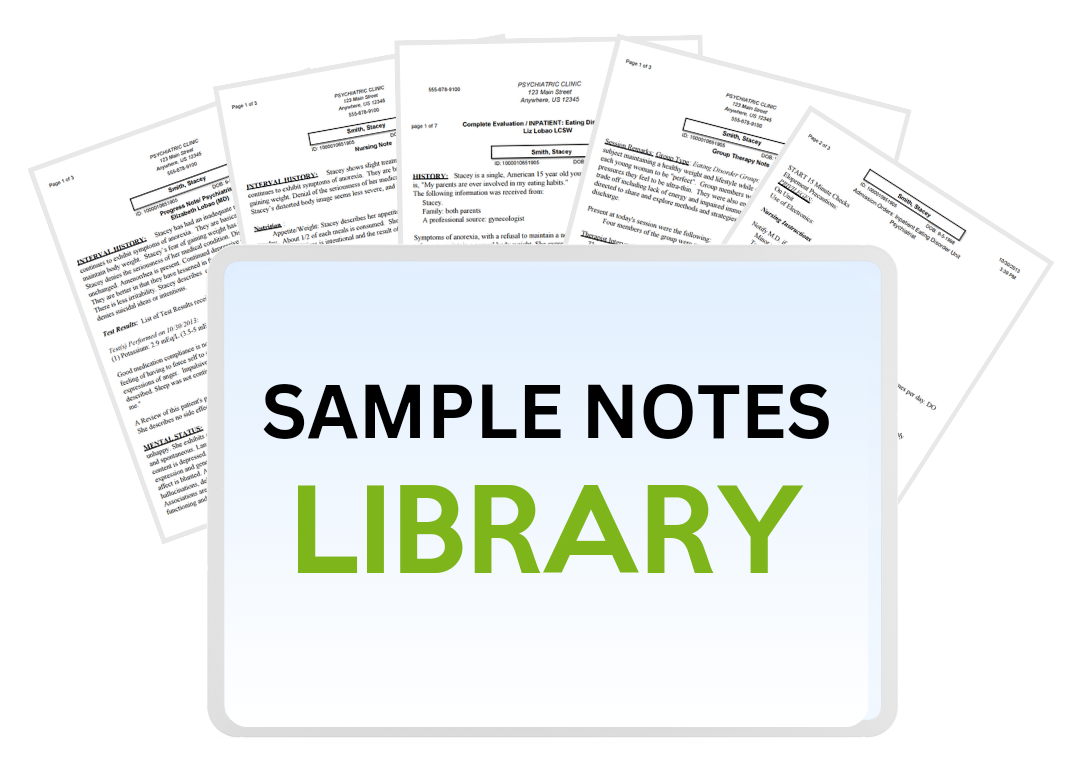
Access Our Sample Notes Library
Get instant access to our full library of sample behavioral health notes, including Initial Evaluations, Progress Notes, Treatment Plans, and Discharge Summaries. We have note samples for psychiatry, therapy, case management, PRP, substance abuse, group therapy, couples therapy, and more!
Couples Therapy Treatment Goals and Documentation
Well-defined couples therapy treatment goals provide the foundation for meaningful progress notes. While this article focuses on documentation, it’s important to understand how treatment goals inform what, and how, you document each session.
Common Couples Therapy Treatment Goals May Include:
-
Improving communication and conflict resolution
-
Reducing escalation during disagreements
-
Increasing emotional attunement and empathy
-
Rebuilding trust after relational ruptures
-
Supporting symptom reduction for an identified partner
These goals should be:
-
Specific and observable
-
Referenced regularly in progress notes
-
Updated as the couple progresses through treatment
Documenting Progress Toward Couples Therapy Treatment Goals
In each session note, clinicians should document:
-
Which treatment goals were addressed
-
Interventions used to support those goals
-
How each partner responded
-
Any measurable change in behavior, insight, or skill use
For example:
“Session focused on treatment goal of reducing conflict escalation. Couple practiced structured communication exercise; both partners demonstrated improved turn-taking and reduced interruption compared to prior session.”
This approach strengthens clinical clarity and supports ethical documentation standards.
Linking Documentation to Insurance Requirements
When couples therapy is part of an insurance-covered treatment plan, goals should align with the identified patient’s diagnosis and functional impairments. Notes should clearly show how couples sessions contribute to symptom improvement or stabilization for that individual.

Best Practices for Writing Couples Therapy Notes
Writing effective couples therapy notes requires more than summarizing what was said in session. High-quality documentation should reflect clinical reasoning, therapeutic intent, and measurable progress — while remaining clear, objective, and defensible.
1. Maintain Clinical Neutrality
Couples therapy notes should avoid language that assigns blame or takes sides. Document observable behaviors, reported experiences, and therapeutic interventions rather than personal interpretations of who is “right” or “wrong.”
Instead of:
“Partner B was dismissive and emotionally unavailable.”
Use:
“Partner B responded minimally to emotional disclosures and avoided eye contact during discussion of conflict.”
This protects both the clinician and the therapeutic alliance.
2. Focus on Interactions, Not Just Individuals
Unlike individual therapy notes, couples therapy progress notes should emphasize interaction patterns:
-
Communication styles
-
Escalation or de-escalation during conflict
-
Responsiveness to partner disclosures
-
Ability to use skills in session
Documenting relational dynamics helps demonstrate clinical value and treatment progress over time.
3. Clearly Document Interventions Used
Strong couples therapy notes specify what the therapist did, not just what the couple discussed. Examples include:
-
Communication skills training
-
Emotion regulation techniques
-
Structured dialogue exercises
-
Psychoeducation related to attachment or conflict cycles
This level of detail supports clinical accountability and, when applicable, insurance requirements.
4. Link Notes to Treatment Goals
Every progress note should tie back to clearly defined couples therapy treatment goals. This is especially important for:
-
Demonstrating progress
-
Supporting continuity of care
-
Justifying medical necessity for insurance-based sessions
Even in self-pay therapy, linking notes to goals creates a clear treatment narrative.
5. Adjust Language Based on Payment Model
When sessions are billed to insurance, documentation should:
-
Identify the primary patient
-
Connect relational work to symptom reduction or functional improvement
-
Avoid language that suggests general relationship enrichment
For self-pay couples therapy, documentation can reflect broader relational goals while maintaining professional and ethical standards.
6. Be Concise but Complete
Progress notes should be thorough without being overly verbose. Using structured formats and templates helps clinicians document consistently while minimizing documentation burden.

Frequently Asked Questions
How ICANotes Supports Couples Therapy Documentation
ICANotes provides structured templates, diagnosis-driven workflows, and clinically aligned language that help therapists document couples sessions accurately — whether sessions are self-pay or billed as part of an individual treatment plan.
With built-in safeguards and behavioral health-specific design, ICANotes helps clinicians stay efficient while maintaining compliance.
Start Your 30-Day Free Trial
Experience the most intuitive, clinically robust EHR designed for behavioral health professionals, built to streamline documentation, improve compliance, and enhance patient care.
- Complete Notes in Minutes - Purpose-built for behavioral health charting
- Always Audit-Ready – Structured documentation that meets payer requirements
- Keep Your Schedule Full – Automated reminders reduce costly no-shows
- Engage Clients Seamlessly – Secure portal for forms, messages, and payments
- HIPAA-Compliant Telehealth built into your workflow

Related Posts






Dr. October Boyles
DNP, MSN, BSN, RN
About the Author
Dr. October Boyles is a behavioral health expert and clinical leader with extensive expertise in nursing, compliance, and healthcare operations. With a Doctor of Nursing Practice (DNP) and advanced degrees in nursing, she specializes in evidence-based practices, EHR optimization, and improving outcomes in behavioral health settings. Dr. Boyles is passionate about empowering clinicians with the tools and strategies needed to deliver high-quality, patient-centered care.