Blog > Documentation > Substance Abuse Treatment Plan: Template, Examples, Goals & Interventions
How to Write a Substance Abuse Treatment Plan (Template & Examples for Clinicians)
A substance abuse or addiction treatment plan outlines the clinical goals, therapeutic interventions, and measurable outcomes used to support recovery from substance use disorders. In this guide, behavioral health clinicians will learn how to write an effective substance abuse treatment plan, see real documentation examples, and review common treatment goals, objectives, and interventions used in SUD care.


Last Updated: March 16, 2026

What You'll Learn
-
How to create a clear and effective substance abuse treatment plan that supports recovery and clinical documentation
-
The key components every addiction treatment plan should include, from problem statements to measurable objectives
-
Practical examples of treatment goals, objectives, and evidence-based interventions used in substance use disorder care
-
A step-by-step workflow clinicians can follow when developing treatment plans for alcohol, opioid, or stimulant use disorders
-
Best practices for writing collaborative, client-centered treatment plans that evolve as recovery progresses
-
How treatment plans integrate with other clinical documentation such as psychiatric evaluations and progress notes
Contents
- How to Write a Substance Abuse Treatment Plan Step by Step
- Goals and Objectives in a Substance Abuse Treatment Plan
- Common Interventions Used in Substance Abuse Treatment Plans
- Substance Abuse Treatment Plan Template
- Example Substance Abuse & Addiction Treatment Plans
- Best Practices for Writing Effective Substance Abuse Treatment Plans
- Substance Abuse Treatment Plan Cheat Sheet
- FAQs: Substance Abuse Treatment Plans
- How ICANotes Helps Clinicians Write Substance Abuse Treatment Plans Faster
A well-structured substance abuse treatment plan is essential for guiding recovery from addiction. Clinicians, whether behavioral therapists, counselors, or psychiatrists, use these plans to outline personalized goals, track progress, and document care for individuals with substance use disorders.
In 2022, nearly 49 million Americans aged 12 or older were living with a substance use disorder, according to the National Survey on Drug Use and Health. These numbers have continued to rise in recent years. With millions of people affected, treatment cannot be uniform for every individual. Substance abuse impacts people across all demographics, each with unique habits and experiences. As a result, substance abuse treatment plans need to be personalized to reflect each person's background, co-occurring conditions, and specific recovery goals.
What Is a Substance Abuse Treatment Plan?
A substance abuse or addiction treatment plan is a structured clinical document used by behavioral health professionals to guide addiction treatment. It outlines the client’s presenting problems, recovery goals, measurable objectives, therapeutic interventions, and the frequency and duration of care. Treatment plans help clinicians organize care, monitor progress, and ensure treatment supports long-term recovery from substance use disorders.
A substance abuse treatment plan is a clinical tool used to organize the therapeutic approach for clients experiencing substance use disorder. It outlines the problems identified during assessment and defines the goals, objectives, and interventions that will guide treatment.
These plans serve several important purposes in behavioral health care. They help clinicians deliver structured, goal-oriented treatment while ensuring that documentation supports medical necessity and measurable progress.
Substance abuse treatment plans are commonly used in:
-
outpatient addiction counseling
-
residential treatment programs
-
medication-assisted treatment (MAT) programs
-
integrated behavioral health settings
Why Treatment Plans Are Important in Substance Use Disorder Care
Treatment plans provide clarity and direction for both clinicians and clients. By defining the goals of therapy and the strategies used to achieve them, treatment plans help maintain focus throughout the recovery process.
They also support continuity of care by ensuring that treatment decisions are clearly documented and aligned with the client’s needs.
Additional benefits include:
-
establishing measurable recovery goals
-
guiding evidence-based interventions
-
supporting insurance documentation requirements
-
helping clinicians track progress over time
Creating an effective substance abuse treatment plan starts with understanding the individual. While some elements are universal, the most impactful plans are tailored to the client’s specific history, severity of use, and co-occurring challenges.
Without a formal substance abuse treatment plan, therapy may feel vague or misaligned with the client’s needs. Plans not only clarify what success looks like, they make treatment more intentional and effective. With each session, both parties can return to the plan to assess challenges, track progress, and revise as needed.
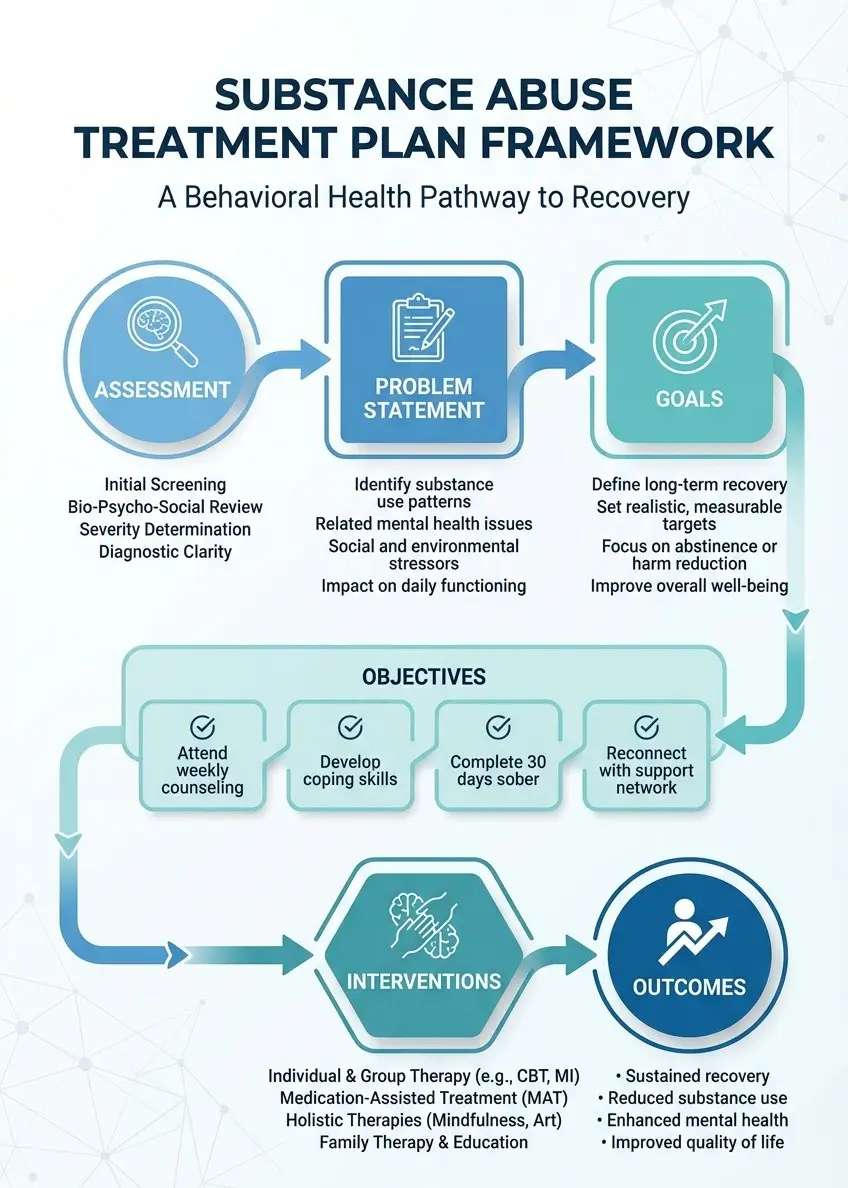
Core Components of a Substance Abuse Treatment Plan
Although treatment plans may vary slightly between organizations, most include the same foundational elements. Each component plays a specific role in helping clinicians organize care, document medical necessity, and guide the client’s progress through recovery.
Problem Statement
A concise description of the client’s substance use problem, including how it affects functioning, relationships, health, safety, or daily responsibilities.
Treatment Goals
Broad recovery outcomes that define what the client and clinician are working toward, such as maintaining sobriety, reducing relapse risk, or improving coping skills.
Objectives
Specific, measurable actions that help the client move toward each treatment goal, such as attending support meetings, identifying triggers, or practicing coping strategies.
Clinical Interventions
The therapeutic methods the clinician uses to support recovery, such as motivational interviewing, cognitive behavioral therapy, relapse prevention, or medication-assisted treatment.
Outcome Monitoring
A plan for tracking progress over time, reviewing whether goals are being met, and updating the treatment plan when the client’s needs or level of care changes.
Collaborative, Personalized, and Measurable
A patient’s willingness to engage in treatment planning often reflects their motivation for recovery. Clinicians use the plan to:
-
Align care with the patient’s readiness, preferences, and co-occurring conditions
-
Monitor outcomes across treatment phases
-
Adjust services based on progress and evolving needs
For individuals with co-occurring mental health and substance use disorders, a treatment plan can highlight areas needing integrated attention, supporting more holistic care.
Why These Core Elements Matter
A patient’s willingness to engage in treatment planning often reflects their motivation for recovery. Clinicians use the plan to:
-
Align care with the patient’s readiness, preferences, and co-occurring conditions
-
Monitor outcomes across treatment phases
-
Adjust services based on progress and evolving needs
For individuals with co-occurring mental health and substance use disorders, a treatment plan can highlight areas needing integrated attention, supporting more holistic care.

How to Write a Substance Abuse Treatment Plan Step by Step
Creating an effective substance abuse treatment plan requires a structured process that translates assessment findings into clear clinical goals and actionable interventions. By following a step-by-step approach, clinicians can ensure that treatment plans address the client’s specific substance use challenges while supporting measurable progress in recovery. The steps below outline how behavioral health professionals typically develop comprehensive treatment plans, from conducting a thorough assessment to monitoring outcomes and updating the plan as treatment progresses.
Step 1: Conduct a Comprehensive Substance Use Assessment
The treatment planning process begins with a detailed clinical assessment. Many clinicians use a biopsychosocial assessment to evaluate substance use patterns, mental health symptoms, and environmental factors influencing the client's recovery. This evaluation helps clinicians understand the severity of substance use, the client’s history of addiction, and the psychosocial factors influencing their behavior.
Important assessment areas include:
-
substance use history
-
frequency and quantity of use
-
withdrawal symptoms
-
previous treatment attempts
-
co-occurring mental health conditions
-
family and social supports
This information helps identify the key problems that the treatment plan must address.
Step 2: Identify the Client’s Substance Use Problems
After completing the assessment, the clinician identifies the primary problems related to substance use.
Examples may include:
-
alcohol dependence impacting work performance
-
opioid misuse leading to legal or medical consequences
-
stimulant use contributing to anxiety or sleep disturbance
Clearly defining the problem helps guide the development of meaningful treatment goals.
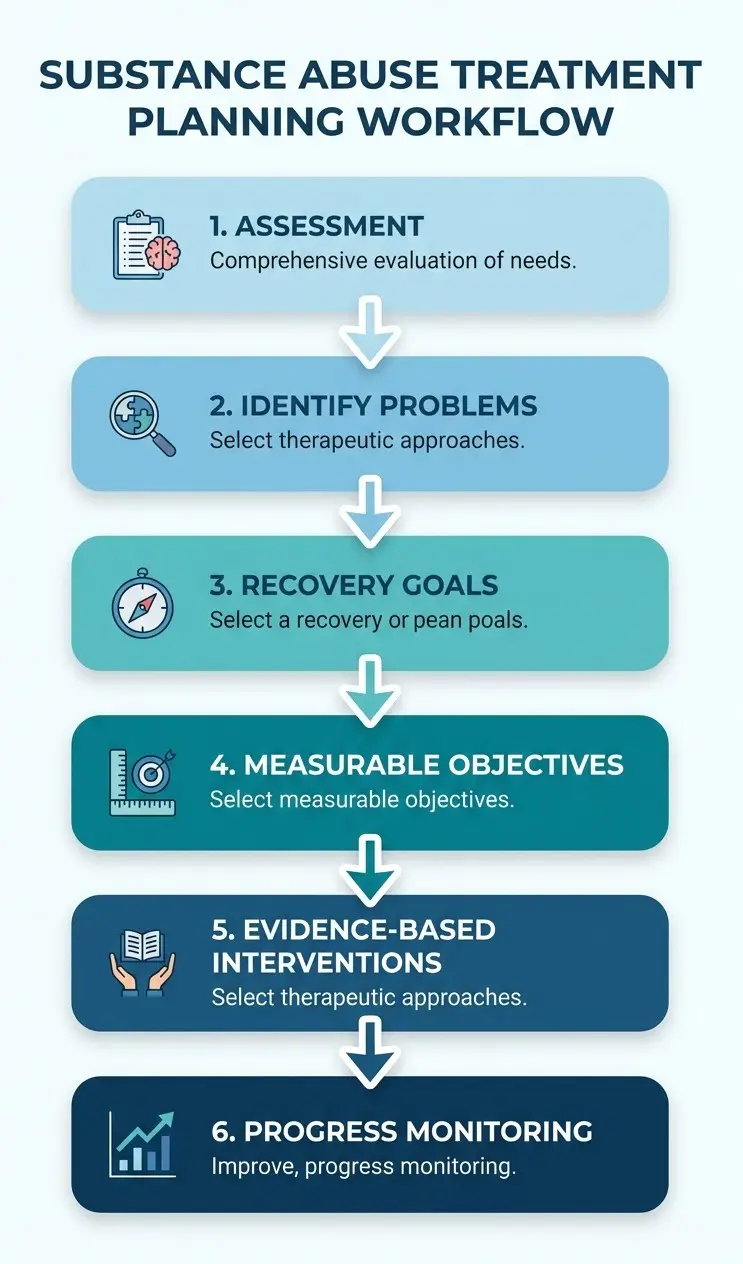
Step 3: Establish Recovery Goals
Treatment goals represent the broader outcomes the client hopes to achieve during treatment.
Examples of recovery goals include:
-
achieving and maintaining sobriety
-
reducing relapse risk
-
improving emotional regulation
-
rebuilding relationships damaged by substance use
Goals should reflect the client’s priorities while remaining clinically appropriate.
Step 4: Create Measurable Objectives
Objectives translate treatment goals into specific, measurable actions.
Well-written objectives help track progress and demonstrate treatment effectiveness.
Examples of objectives may include:
-
attend three support group meetings per week
-
identify personal relapse triggers during therapy sessions
-
develop a written relapse prevention plan
-
practice coping skills to manage cravings
Step 5: Select Evidence-Based Interventions
Interventions are the therapeutic approaches used by clinicians to help clients achieve their treatment goals.
The most effective treatment plans incorporate evidence-based practices commonly used in addiction treatment.
Step 6: Monitor Progress and Update the Treatment Plan
Treatment plans should be reviewed regularly to evaluate progress and adjust strategies as needed.
Clinicians typically update treatment plans when:
-
goals have been achieved
-
new challenges emerge
-
relapse occurs
-
the client transitions to a different level of care
Goals and Objectives in a Substance Abuse Treatment Plan
Goals and objectives are the foundation of effective treatment planning. While goals describe the overall outcomes of therapy, objectives outline the specific actions needed to achieve those outcomes.
Clear goals and objectives help clinicians track progress while providing clients with concrete steps toward recovery.
Sample Goals and Corresponding Objectives
These goals and objectives are customizable based on the client’s stage of change, motivation level, and support system.
| Maintain abstinence from substances | Attend 12-step meetings 2x/week and report on experience |
| Develop healthier coping mechanisms | Practice one new coping skill each session |
| Improve emotional regulation | Identify and document 3 emotional triggers each week |
| Rebuild interpersonal relationships | Attend family counseling biweekly |
| Increase treatment engagement | Arrive on time and participate in 90% of scheduled sessions |
Example Treatment Plan Goals
Treatment goals describe the broader outcomes the client hopes to achieve during recovery from substance use disorder.
- Maintain abstinence from alcohol or drugs
- Reduce harmful substance use behaviors
- Strengthen coping skills for managing cravings
- Improve emotional regulation and mental health
- Rebuild relationships affected by addiction
Example Measurable Objectives
Objectives are specific, measurable actions that help the client move toward achieving treatment goals.
- Attend weekly individual counseling sessions
- Participate in a recovery support group
- Identify personal triggers associated with substance use
- Develop a written relapse prevention plan
- Practice coping strategies during high-risk situations
Goal-Setting Tips for Clinicians
To make goals more effective:
-
Write a brief clinical statement outlining what the client wants to change. Frame the goal in clear, client-centered language so both the clinician and the client understand the intended outcome.
-
Choose goals that are aligned with the purpose of treatment. Goals should directly address the substance use concerns identified during assessment and support measurable recovery progress.
-
Include a mix of short- and long-term goals to reflect both early wins and lasting change. Short-term milestones help build momentum, while longer-term goals support sustained recovery.
- Ensure goals are realistic and achievable. Goals should reflect the client’s current stage of change and available supports so progress remains attainable.
-
Regularly reassess and update objectives based on progress and emerging needs. Treatment plans should evolve as the client develops new coping skills, reaches milestones, or encounters new challenges.
How Goals and Objectives Work Together in Treatment Planning
Treatment goals define the direction of therapy, while objectives provide the roadmap for achieving those goals.
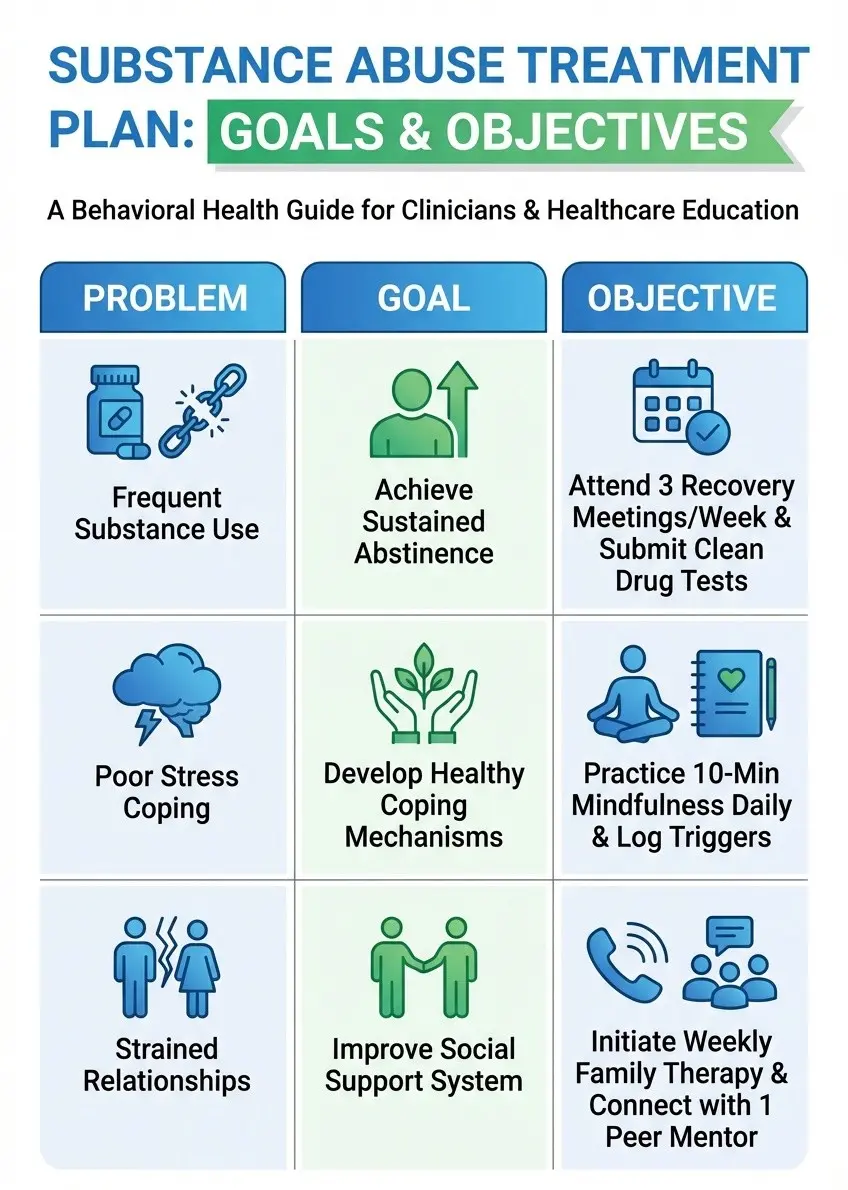
When written effectively, goals and objectives work together to create a structured plan that supports recovery and promotes long-term behavioral change.
How to Choose Which Goals to Include
Every client enters treatment with different motivations, needs, and challenges. While some goals, like maintaining sobriety or reducing cravings, are common, an effective substance abuse treatment plan requires thoughtful prioritization.
Use SMART Goals to Guide Planning
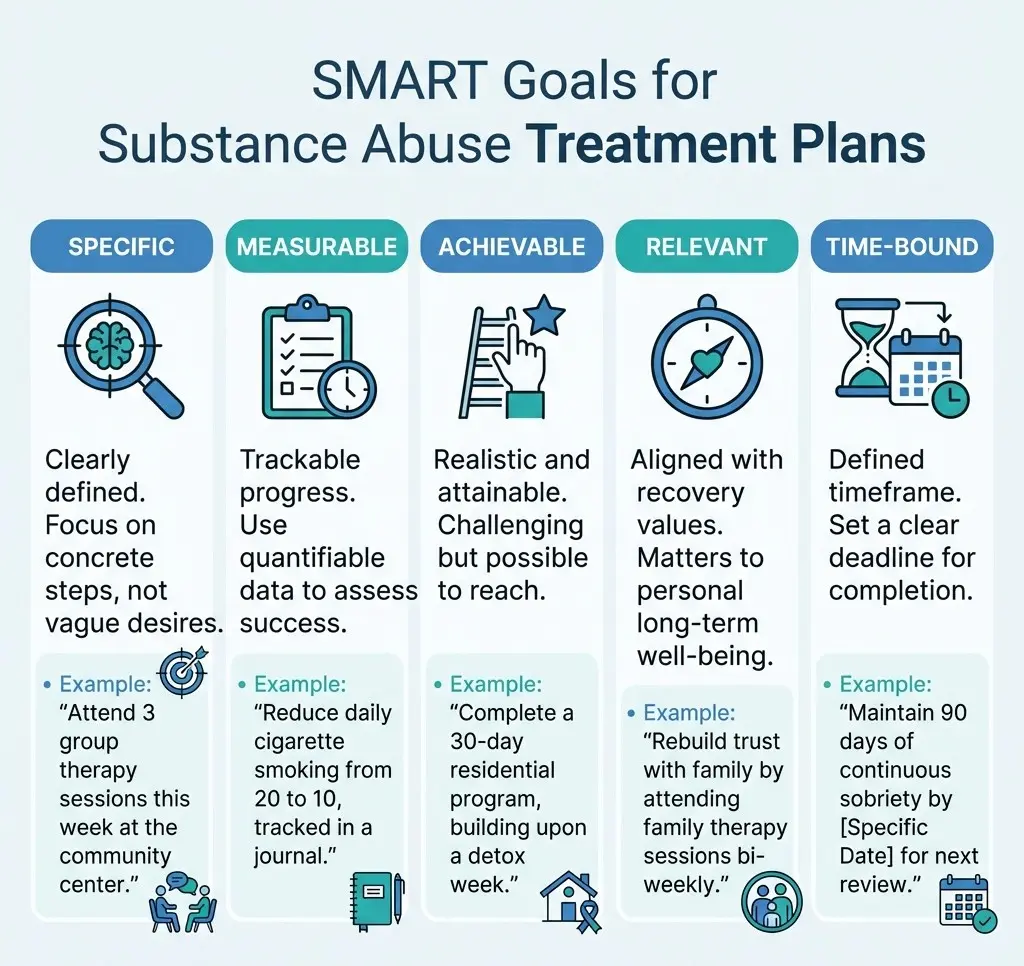
When writing both substance abuse treatment plans and broader addiction treatment plans, many clinicians use the SMART framework to ensure goals are clear, measurable, and clinically meaningful. Each goal should be:
-
Specific – Clearly describe the action or behavior the client will work on.
-
Measurable – Include a way to track or assess progress (e.g., frequency, rating scale).
-
Achievable – Set realistic expectations based on the client’s current readiness and abilities.
-
Relevant – Align with the client’s treatment priorities and lived experience.
-
Time-bound – Include a timeframe for completion, review, or re-evaluation.
Example: “Client will attend three group therapy sessions per week for the next four weeks to build social support for sobriety.”
Choosing the Right Goals for Each Client
When deciding which goals and objectives to include, consider:
-
The stage of recovery the client is in (e.g., precontemplation vs. maintenance)
-
Presence of co-occurring disorders
-
Available support systems (family, housing, employment)
-
Previous attempts at treatment or relapse history
Encourage clients to be active participants in identifying their goals. This collaboration fosters buy-in and makes the plan more motivating and personalized.
Common Interventions Used in Substance Abuse Treatment Plans
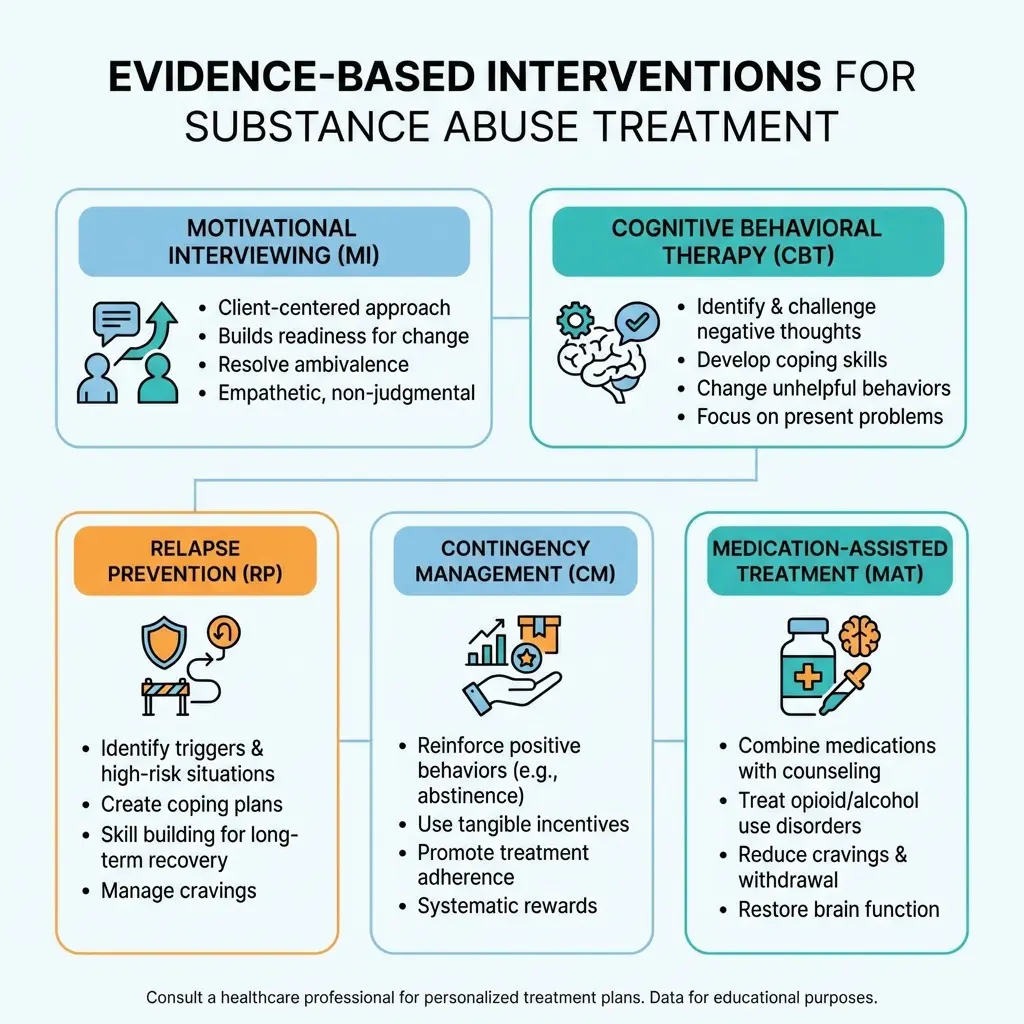
Effective substance abuse treatment plans often combine evidence-based approaches that address motivation, coping skills, relapse risk, and long-term recovery support. The following interventions are commonly used in behavioral health treatment planning.
Motivational Interviewing
Helps clients explore ambivalence about substance use, strengthen internal motivation, and build commitment to change.
Cognitive Behavioral Therapy (CBT)
Focuses on identifying thought patterns and behaviors that contribute to substance use and replacing them with healthier coping strategies.
Relapse Prevention Planning
Prepares clients to recognize triggers, manage high-risk situations, and respond effectively when cravings or setbacks occur.
Medication-Assisted Treatment (MAT)
Combines FDA-approved medications with counseling and behavioral therapies to support recovery from opioid or alcohol use disorders.
Contingency Management
Reinforces positive recovery behaviors by providing rewards or incentives for treatment participation, abstinence, or goal achievement.
Substance Abuse Treatment Plan Template
A structured template can make it easier for clinicians to organize treatment plans and ensure all key elements are documented. While every plan should be tailored to the client’s needs, most substance abuse treatment plans follow a similar format that includes the presenting problem, treatment goals, measurable objectives, clinical interventions, and a plan for monitoring progress.
Basic Substance Abuse Treatment Plan Template
The table below shows a simple substance abuse and addiction treatment plan template clinicians can use to organize the key elements of treatment, including the presenting problem, treatment goals, measurable objectives, interventions, and duration of care.
| Section | Example Entry |
|---|---|
| Problem | Alcohol use interfering with family responsibilities |
| Goal | Maintain sobriety and improve family functioning |
| Objectives | Attend weekly therapy sessions, identify relapse triggers, and develop a relapse prevention plan |
| Interventions | Cognitive behavioral therapy, motivational interviewing, and relapse prevention counseling |
| Frequency | 60-minute individual session weekly |
| Duration | Four to six months with periodic treatment plan reviews |
The examples in the following section illustrate how clinicians might apply this template when developing treatment plans for specific substance use disorders.
Example Substance Abuse and Addiction Treatment Plans
The following examples illustrate how clinicians can structure both substance abuse treatment plans and broader addiction treatment plans using clear goals, measurable objectives, and evidence-based interventions.
Every client’s treatment journey is unique, but examples can provide structure and inspiration when developing a personalized addiction treatment plan. Below are sample substance abuse treatment plans for alcohol, opioid, and stimulant use disorders to illustrate how clinicians can structure goals, objectives, and interventions.
Example Treatment Plan for Alcohol Use Disorder
The following example shows how a clinician might structure a treatment plan for a client seeking support for alcohol use disorder, with a clear problem statement, treatment goal, measurable objectives, and planned interventions.
Problem
“Alcohol has ruined my life and impeded my ability to care for my family.”
Goal #1
To stop drinking alcohol and figure out how to avoid relapse down the road.
Objectives
- Objective #1: Develop and document the history of use and any previous treatment attempts and relapses. Include the date the objective was established, as well as a date for targeted completion.
- Objective #2: Identify and list triggers that lead to desiring alcohol and could result in relapse. Include the date the objective was established, as well as a date for targeted completion.
- Objective #3: Create and write out a relapse prevention plan. Include the date the objective was established, as well as a date for targeted completion.
Interventions
The clinician will help the patient identify factors that have led to excessive and frequent drinking in the past. This process will include triggers and situations that may prompt relapse later on. The clinician will educate the patient on the risks of continuing to abuse alcohol and assist in the development of a plan to avoid and overcome trigger situations to prevent relapse. These interventions will be administered during individual therapy sessions.
Frequency
60 minutes per week
Duration
Four to six months
Example Treatment Plan for Opioid Use Disorder
The following example demonstrates how a clinician might structure a treatment plan for a client seeking recovery from opioid use disorder, including a problem statement, treatment goals, measurable objectives, and clinical interventions.
Problem
“My opioid use has taken over my life and I feel like I can’t stop on my own.”
Goal #1
Achieve and maintain recovery from opioid misuse while improving coping skills and overall functioning.
Objectives
- Objective #1: Document the client’s opioid use history, including patterns of use, previous treatment attempts, and relapse triggers. Include the date the objective was established and a target completion date.
- Objective #2: Identify high-risk situations and emotional triggers associated with opioid use and develop coping strategies to manage cravings.
- Objective #3: Participate in medication-assisted treatment (MAT) evaluation and follow recommended medical and counseling treatment plans.
Interventions
The clinician will provide education about opioid dependence and recovery options, including medication-assisted treatment when appropriate. Therapy sessions will focus on identifying relapse triggers, strengthening coping skills, and building motivation for sustained recovery. Interventions may include motivational interviewing, cognitive behavioral therapy techniques, relapse prevention planning, and coordination with medical providers overseeing medication-assisted treatment.
Frequency
60-minute individual therapy session weekly
Duration
Six months with progress reviews every 30–60 days
Example Treatment Plan for Stimulant Use Disorder
The following example illustrates how a clinician might structure a treatment plan for a client struggling with stimulant misuse such as cocaine or methamphetamine.
Problem
“My cocaine use is out of control and it's affecting my job and relationships.”
Goal #1
Achieve sustained abstinence from stimulant use and develop healthier coping strategies for stress and cravings.
Objectives
- Objective #1: Document the client’s stimulant use history, patterns of use, and previous attempts to stop using.
- Objective #2: Identify emotional triggers, stressors, and environmental factors that increase the risk of stimulant use.
- Objective #3: Develop and practice alternative coping strategies for managing cravings and high-risk situations.
Interventions
The clinician will help the client identify situations and emotional triggers that lead to stimulant use. Therapy sessions will focus on building coping skills, improving stress management, and strengthening motivation for recovery. Evidence-based interventions may include cognitive behavioral therapy, motivational interviewing, relapse prevention strategies, and contingency management techniques.
Frequency
Weekly individual therapy session (60 minutes)
Duration
Four to six months with ongoing treatment plan reviews
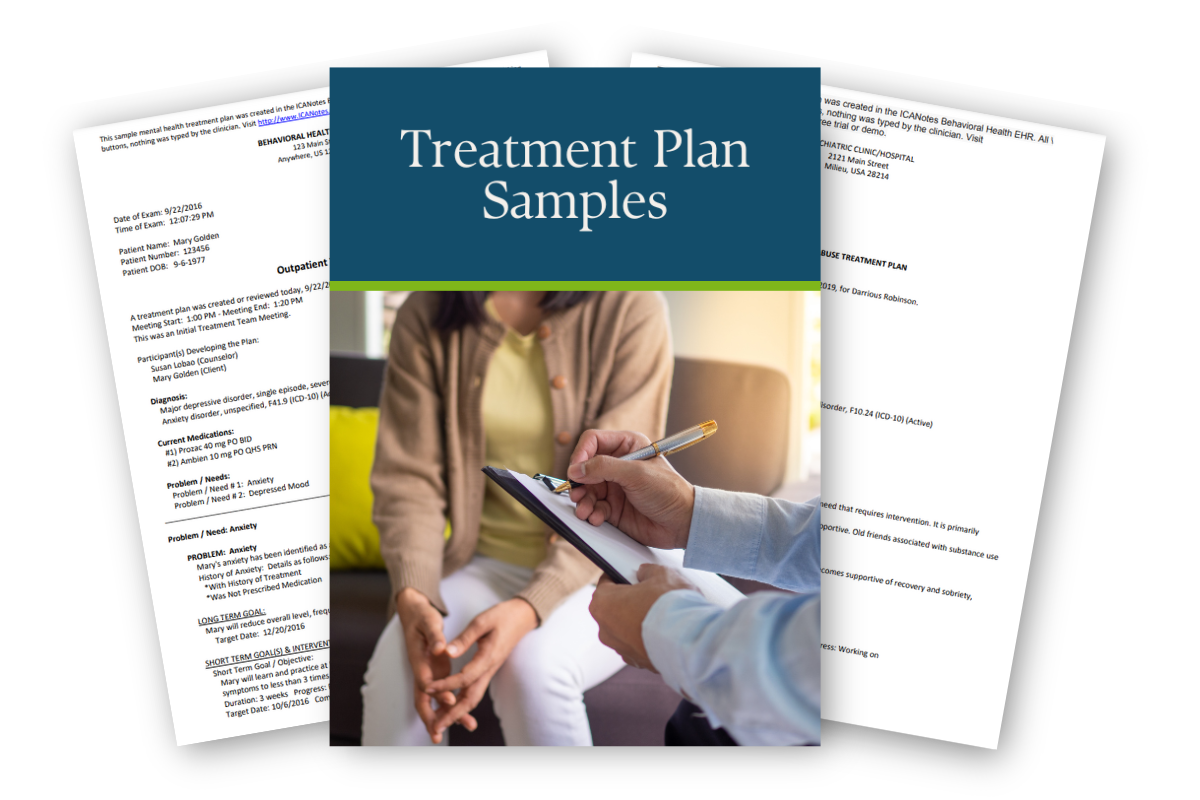
Access Our Sample Treatment Plan Library
Get instant access to our full library of sample treatment plans.
Best Practices for Writing Effective Substance Abuse Treatment Plans
Writing a strong substance abuse treatment plan is more than a documentation requirement — it’s a clinical tool that supports meaningful recovery. When treatment plans are thoughtfully developed and regularly updated, they help clinicians guide treatment decisions, measure progress, and maintain alignment between therapeutic goals and the client’s evolving needs.
The following best practices can help clinicians create treatment plans that are practical, collaborative, and responsive to the realities of addiction recovery.
Make It Collaborative and Strength-Based
Writing an addiction treatment plan shouldn’t feel like a paperwork exercise. The most effective plans reflect the client’s voice, values, and personal goals for recovery. By highlighting strengths and building on existing coping skills, clinicians can help clients feel more hopeful and invested in the treatment process. Seeing progress documented over time can also be validating and motivating—especially during setbacks.
Prioritize Patient Needs
Always begin treatment planning with what matters most to the client. Their values, priorities, and cultural background should guide the structure of the plan. When clients feel that their concerns are being heard and respected, they are more likely to remain engaged in treatment and work toward meaningful recovery goals.
Build in Flexibility
Recovery rarely follows a perfectly linear path. Treatment plans should be flexible enough to evolve as new challenges, insights, or life circumstances arise. Revisiting and adjusting goals periodically allows clinicians to keep treatment aligned with the client’s current stage of change.
Avoid Rushing the Process
Developing a thoughtful substance abuse treatment plan may require multiple sessions. Taking the time to fully understand the client’s history, motivations, and readiness for change ensures the final plan reflects the client’s real experiences rather than assumptions made too early in treatment.
Use Clear and Simple Language
Treatment plans should be written in language that both clinicians and clients can easily understand. When reviewing the plan with clients, avoid overly technical terminology and instead use clear, direct language that helps them feel connected to the recovery goals outlined in the document.
Document Emerging Concerns in Progress Notes
Not every issue needs to appear in the initial treatment plan. As therapy progresses, clinicians may identify new challenges or risk factors that should be documented in progress notes. These observations can later inform treatment plan updates when goals or objectives need to change.
Integrate the Plan with the Full Clinical Record
A well-developed treatment plan should complement other clinical documentation such as initial psychiatric evaluations , progress notes, risk assessments, and medication records. When these records work together, they support continuity of care and make it easier for clinicians to coordinate treatment across multidisciplinary teams.
Remember: Treatment plans and clinical progress notes should work hand-in-hand. While the treatment plan provides long-term structure for recovery goals, progress notes capture real-time developments and clinical observations throughout the course of treatment. Effective addiction treatment plans should remain flexible as the client progresses through different stages of recovery.
Related Clinical Documentation Resources
Treatment planning is just one part of effective behavioral health documentation. The following resources can help clinicians strengthen other parts of the clinical record, from assessments to ongoing progress notes.
Initial Psychiatric Evaluations
Learn the essential components of a comprehensive psychiatric evaluation and how to structure the initial assessment process.
Read the Guide →How to Write Progress Notes
Explore practical tips for writing clear, defensible progress notes that support clinical decision-making and insurance documentation.
Read the Guide →Writing Mental Health SOAP Notes
Understand the SOAP note format and learn strategies for writing structured mental health documentation.
Read the Guide →Biopsychosocial Assessments
Review how biopsychosocial assessments help clinicians gather comprehensive information for treatment planning.
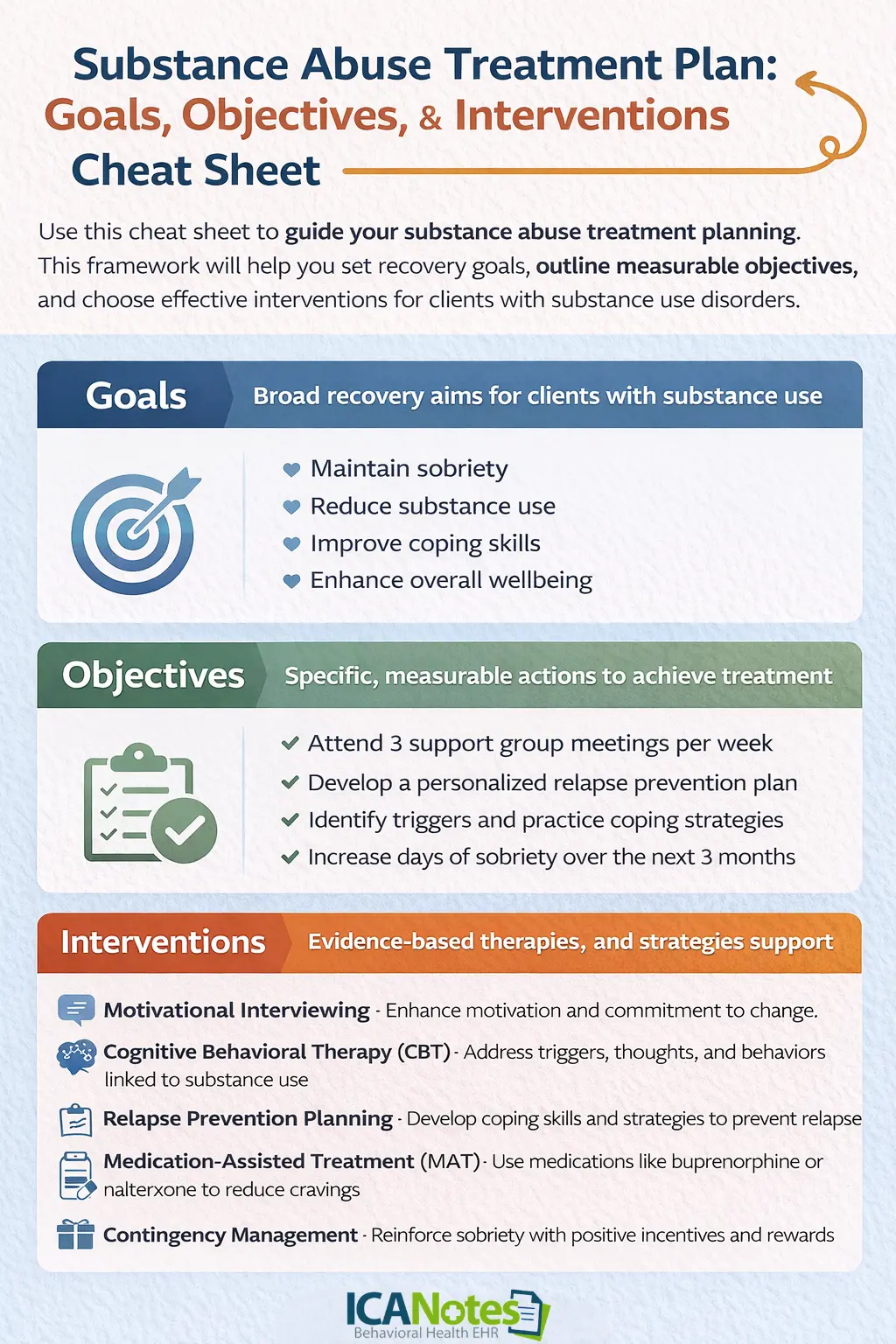
Explore Resources →Download the Substance Abuse Treatment Plan Cheat Sheet
Creating a clear and effective substance abuse treatment plan can be easier when you have a quick reference for common goals, measurable objectives, and evidence-based interventions. Use the cheat sheet below as a practical guide when developing treatment plans for clients with substance use disorders. It summarizes key elements of treatment planning to help clinicians structure recovery goals, identify actionable objectives, and select appropriate therapeutic strategies.
Download this substance abuse treatment plan template cheat sheet to quickly reference common recovery goals, measurable objectives, and clinical interventions.

Frequently Asked Questions About Substance Abuse Treatment Plans
How do treatment plans address withdrawal symptoms and high-risk behaviors?
Effective treatment plans incorporate both medical and behavioral interventions. Medically assisted detoxification can safely manage withdrawal symptoms, while behavioral therapies address high-risk behaviors by identifying triggers and developing coping strategies. Regular monitoring and adjustments to the treatment plan help ensure that both aspects are addressed throughout the recovery process.
What role do family and social support interventions play in substance abuse treatment plans?
Family and social support interventions are integral to recovery. Involving family members in therapy sessions can improve communication, rebuild trust, and address relational dynamics that may contribute to substance use. Support groups and peer networks also provide ongoing encouragement and accountability, which are vital for long-term sobriety.
How can medication-assisted treatment (MAT) be integrated into substance abuse treatment plans?
Medication-assisted treatment combines FDA-approved medications with counseling and behavioral therapies to treat substance use disorders. Medications such as buprenorphine, methadone, and naltrexone can help manage cravings and withdrawal symptoms, making it easier for clients to engage in therapy. Integrating MAT into treatment plans requires a comprehensive approach that includes medical oversight and psychosocial support to address the multifaceted nature of addiction.
What are effective methods for tracking and measuring progress in substance abuse treatment?
Tracking and measuring progress in substance abuse treatment involves regular assessments of both clinical symptoms and behavioral changes. Standardized tools, such as the Addiction Severity Index (ASI) or the Substance Use Disorder Outcome Measure, can help quantify progress in key areas such as substance use, mental health, and quality of life. Client self-reporting, regular therapy check-ins, and urine drug screenings can also help monitor engagement and improvement over time.
How do treatment plans differ based on the severity and type of substance use disorder?
Treatment plans should be tailored to the severity and type of substance use disorder to maximize effectiveness. For mild substance use disorders, outpatient therapy and counseling may be sufficient, with a focus on education, coping strategies, and behavioral interventions. For moderate to severe substance use disorders, more intensive interventions such as inpatient or residential treatment, detoxification services, and medication-assisted treatment may be necessary. Clients with specific substance use disorders, such as alcohol use disorder versus opioid use disorder, may also require different medications or behavioral therapies depending on the substance’s impact on the brain and behavior.
How often should treatment plans be updated?
Treatment plans are typically reviewed every 30 to 90 days or whenever there is a significant change in the client’s condition.
What is the difference between treatment goals and objectives?
Goals represent broad recovery outcomes, while objectives describe the measurable steps taken to achieve those outcomes.
How ICANotes Helps Clinicians Create Substance Abuse Treatment Plans Faster
Creating customized, compliant treatment plans for substance abuse doesn’t have to be time-consuming or stressful. ICANotes gives behavioral health professionals a powerful, intuitive platform designed to streamline documentation and support better client outcomes.
Built for Substance Abuse and Mental Health Professionals
Whether you're working in an outpatient therapy practice or a residential treatment center, ICANotes helps you:
-
Use pre-configured templates for substance abuse treatment plans
-
Track client goals, interventions, and progress with ease
-
Document faster using menu-based prompts and structured fields
-
Reduce errors and improve documentation consistency
-
Stay compliant with HIPAA, Medicare, Medicaid, and CARF standards
-
Integrate treatment plans with billing, scheduling, and telehealth tools
ICANotes was developed by behavioral health clinicians, so the workflows, templates, and features are all tailored to how you actually practice.
Save Time. Improve Care. Stay Compliant.
With ICANotes, you can:
-
Spend less time on paperwork and more time with clients
-
Improve your clinical documentation without starting from scratch
-
Ensure every plan supports medical necessity and reimbursement
-
Collaborate with clients using clear, structured goals and timelines
Get Started Today
Want to see how ICANotes can help your practice create effective, efficient substance abuse treatment plans? Request a free trial, schedule a live demo, or contact us for a custom quote.
Let’s connect: Learn how ICANotes supports treatment planning, note-writing, billing, and more—all in one behavioral health-first platform.
Schedule a Live Demo
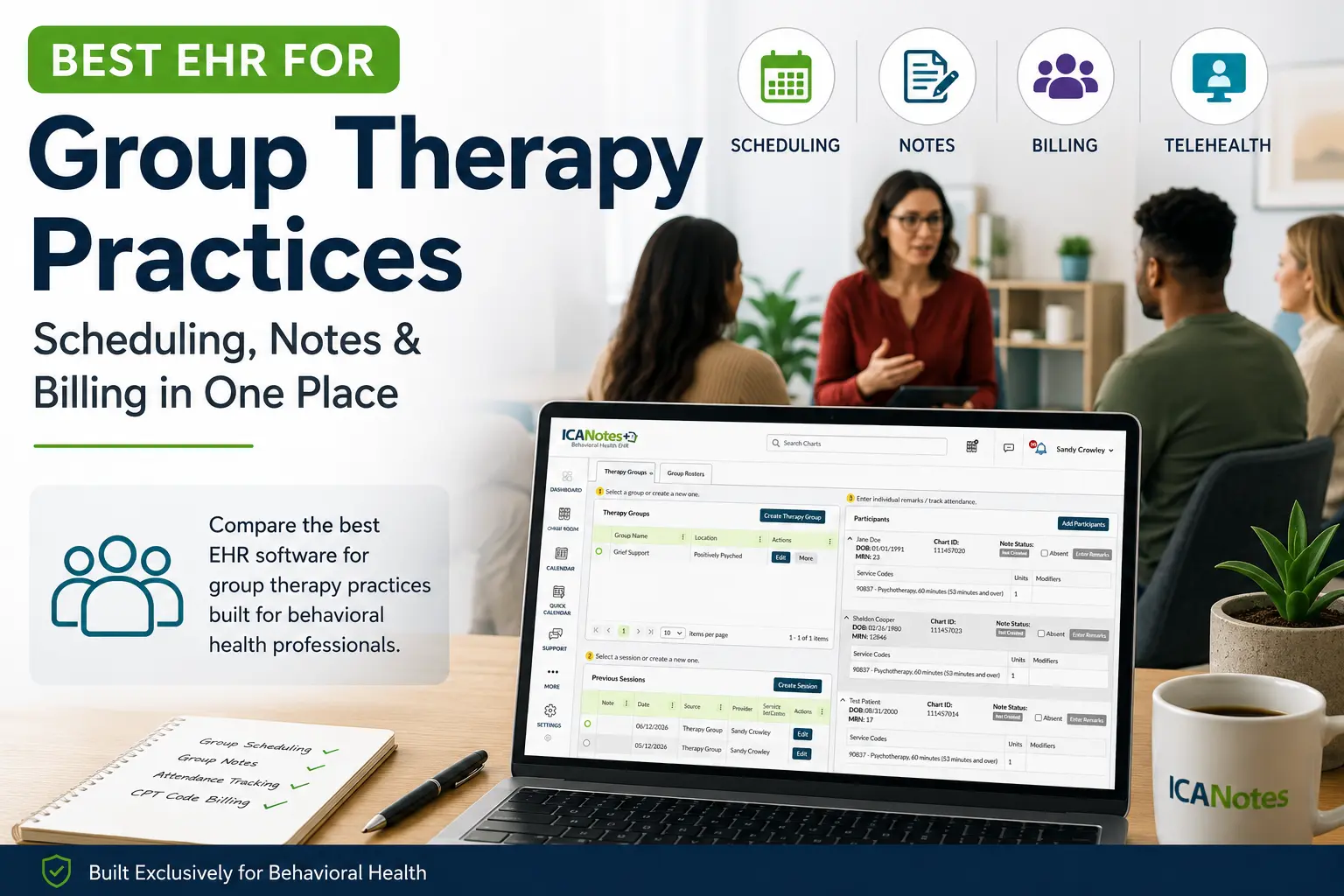
Experience ICANotes — a clinically robust EHR built specifically for behavioral health, with narrative documentation tools, compliance support, and integrated billing in one platform.
- Simplify clinical charting
- Stay organized with appointment scheduling
- Reduce no-shows with automated reminders
- Improve client engagement with a secure patient portal
- Provide flexible care with HIPAA-compliant telehealth

Simplify clinical charting
Stay organized with appointment scheduling
Reduce no-shows with automated reminders
Improve client engagement with a secure patient portal
Provide flexible care with HIPAA-compliant telehealth

Related Posts


Dr. October Boyles
DNP, MSN, BSN, RN
Dr. October Boyles is a behavioral health expert and clinical leader with extensive expertise in nursing, compliance, and healthcare operations. With a Doctor of Nursing Practice (DNP) from Aspen University and advanced degrees in nursing, she specializes in evidence-based practices, EHR optimization, and improving outcomes in behavioral health settings. Dr. Boyles is passionate about empowering clinicians with the tools and strategies needed to deliver high-quality, patient-centered care.