
Blog > Treatment Strategies > 10 Best Foods for Mental Health, Depression & Anxiety
10 Best Foods for Mental Health and Mood Support
What you put on your plate doesn’t just fuel your body — it directly impacts your brain and emotional well-being. Research consistently shows a strong link between food and mental health, highlighting how certain nutrients can regulate mood, improve concentration, and support resilience against stress. If you’ve ever wondered which foods are good for mental health or which choices truly qualify as the best foods for mental health, you’re not alone. From omega-3-rich fish to antioxidant-packed berries, science points to clear dietary patterns that act as natural foods that improve mood. In this guide, we’ll explore ten powerful foods that boost your mood and explain how they can be incorporated into both everyday meals and clinical treatment plans.


Last Updated: June 3, 2026

What You'll Learn
- The 10 best foods for mental health and the nutrients that support mood, brain health, and emotional well-being
- How certain foods may help support people experiencing depression, anxiety, chronic stress, and low mood
- The key nutrients linked to better mental health, including omega-3 fatty acids, magnesium, probiotics, folate, and antioxidants
- The best foods for depression versus the best foods for anxiety — and why they may differ
- Foods and beverages that may worsen anxiety, depression, and mood instability
- A practical 3-day mental health meal plan featuring foods that support brain health and emotional wellness
- How behavioral health clinicians can incorporate nutrition goals into treatment planning and patient education
- Evidence-based strategies for discussing nutrition with clients as part of a comprehensive mental health treatment approach
Contents
- Top Foods for Mental Health at a Glance
- Vitamins that Boost Mental Health
- 10 Best Foods for Mental Health and Mood
- Best Foods for Depression and Anxiety
- Foods That Can Worsen Anxiety and Depression
- Making Meals with Foods for Mental Health
- How Clinicians Can Incorporate Nutrition into Treatment Planning
- FAQ: Foods for Mental Health
- Turn Nutrition Conversations into Actionable Treatment Plans
Quick Answer
What are the best foods for mental health?
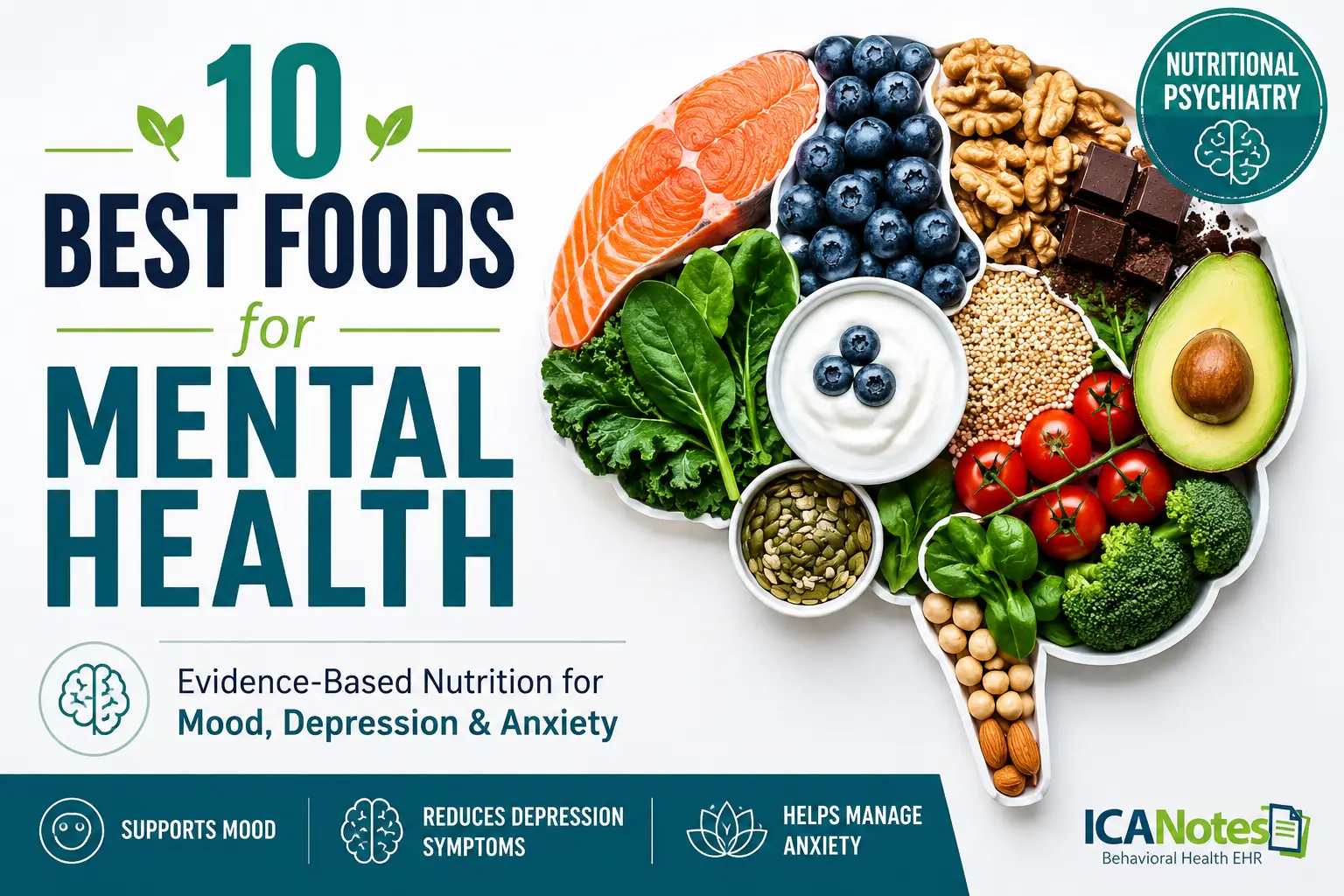
The best foods for mental health include fatty fish, leafy greens, berries, fermented foods, walnuts, avocado, whole grains, dark chocolate, tomatoes, and lean proteins. These foods provide omega-3 fatty acids, antioxidants, probiotics, folate, magnesium, and other nutrients linked to improved mood, reduced inflammation, and better brain health.
The Link Between Food and Mental Health
The connection between diet and mental well-being goes far beyond old sayings like “you are what you eat.” Modern studies confirm that specific dietary choices influence neurotransmitter production, brain inflammation, and even the gut-brain axis — all of which play a role in emotional stability and cognitive function. In fact, many clinicians now emphasize that the link between food and mental health is a critical piece of holistic care. Diets rich in whole foods, healthy fats, and probiotics are consistently associated with lower rates of depression and anxiety, while highly processed foods are linked to worsened mood and fatigue. By understanding how foods that improve mood work biologically — from boosting serotonin to reducing oxidative stress — both individuals and mental health professionals can use nutrition as a practical tool for promoting long-term well-being.
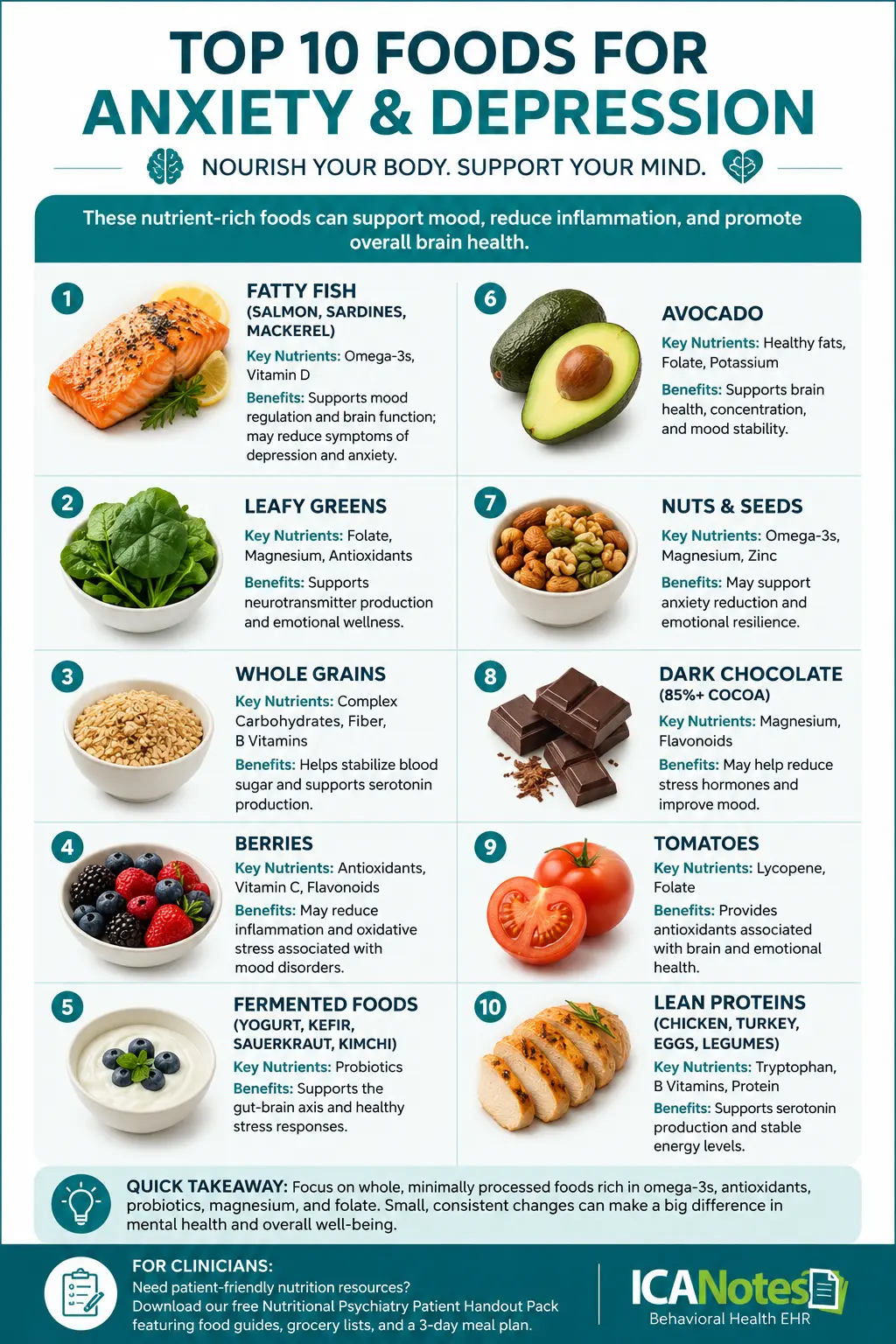
Top Foods for Mental Health at a Glance
| Food | Key Nutrients | Mental Health Benefits |
|---|---|---|
| Fatty Fish (Salmon, Sardines, Mackerel) | Omega-3 fatty acids, Vitamin D | Supports mood regulation, brain function, and may reduce symptoms of depression and anxiety. |
| Leafy Greens | Folate, Magnesium, Antioxidants | Supports neurotransmitter production and emotional wellness. |
| Whole Grains | Complex carbohydrates, Fiber, B Vitamins | Helps stabilize blood sugar and supports serotonin production. |
| Berries | Antioxidants, Vitamin C, Flavonoids | May reduce inflammation and oxidative stress associated with mood disorders. |
| Fermented Foods | Probiotics | Supports the gut-brain axis and healthy stress responses. |
| Avocado | Healthy fats, Folate, Potassium | Supports brain health, concentration, and mood stability. |
| Nuts & Seeds | Omega-3s, Magnesium, Zinc | May support anxiety reduction and emotional resilience. |
| Dark Chocolate | Magnesium, Flavonoids | May help reduce stress hormones and improve mood. |
| Tomatoes | Lycopene, Folate | Provides antioxidants associated with brain and emotional health. |
| Lean Proteins (Chicken, Turkey) | Tryptophan, B Vitamins, Protein | Supports serotonin production and stable energy levels. |

Free Clinician Resource
Get the Nutritional Psychiatry Patient Handout Pack
Get printable, patient-friendly nutrition tools you can use to support conversations about food, mood, anxiety, depression, and whole-person behavioral healthcare.
- Top 10 Foods for Mental Health quick reference guide
- Mental Health Grocery List with foods to add and limit
- 3-Day Mental Health Meal Plan sample framework
- Practical handouts for patient education and treatment planning
Vitamins That Boost Mental Health
Numerous vitamins and nutrients have been found to positively impact mental health and mood. Incorporating foods with these vitamins into a diet can help improve brain function and mental health:
- B vitamins: B12 and B9 (folate) are well-known for influencing mental health and mood. B vitamins are necessary to produce neurotransmitters like serotonin and dopamine, which contribute to pleasure and overall mood.
- Magnesium: This vitamin helps regulate the nervous system. Adding magnesium to a diet can help reduce the risk of depression.
- Omega-3: Fatty acids like omega-3 can contribute to improved mood disorders and neurotransmitter function to boost mental state.
- Vitamin C: In addition to boosting the immune system, vitamin C can impact energy levels, mood, anxiety and mental function.
- Vitamin D: Many mental health conditions have been associated with low vitamin D levels. Adding this vitamin to a diet can help improve brain function and mood.
10 Best Foods for Mental Health and Mood
While many of those vitamins can be supplemented, your patients may prefer to consume them more naturally. Along with therapy sessions, your patients can improve their mental health with these nutrient- and vitamin-rich foods.
1. Salmon and Other Fatty Fish
Salmon, mackerel, tuna, herring, and sardines are among the best foods for mental health thanks to their high levels of omega-3 fatty acids. These healthy fats support brain cell communication and have been shown to reduce symptoms of depression and anxiety. As a food good for mental health, salmon also helps stabilize mood by supporting serotonin production, making it a staple for those looking to eat foods that boost your mood.
2. Chicken
Lean proteins like chicken provide tryptophan, an amino acid your body uses to produce serotonin — the “feel-good” neurotransmitter. The brain uses serotonin to help manage mood, maintain memory and fight mental disorders like depression. This makes chicken a versatile food good for mental health that helps improve mood stability and sleep quality. Incorporating chicken into balanced meals supports clients looking for everyday foods that improve mood. Chicken also contains other valuable nutrients for the brain, like vitamin B and magnesium.
3. Whole Grains
Oats, quinoa, and brown rice are complex carbohydrates that provide steady energy and aid serotonin production. The brain and body need complex carbohydrates like these to encourage slow glucose production and provide consistent energy. More often, however, many people consume simple carbs and experience spiked blood pressure, which is associated with several mental health disorders. Whole grains are reliable foods that boost your mood, helping to prevent irritability and fatigue. Choosing them over refined carbs is a simple step toward better food for mental health. Whole grains also assist with tryptophan absorption. So, when eating whole grains with turkey or chicken, your patients set their brains up for better success in reducing depression and anxiety symptoms.
4. Avocados
Avocados are nutrient powerhouses packed with healthy fats, fiber, and nearly 20 vitamins and minerals which contribute to brain health. They help regulate neurotransmitters and reduce inflammation, which makes them a prime example of a food good for mental health. Avocados contain high amounts of lutein which has been linked to having positive brain impacts, as well as lots of folate and vitamin K which help to improve mood, memory, and concentration. As a versatile food that boosts your mood, avocados can be added to salads, smoothies, or eaten on their own.
5. Leafy Greens
Spinach, kale, and Swiss chard are packed with folate, a B vitamin essential for neurotransmitter function. Low folate levels have been linked to depression, making leafy greens an easy, nutrient-dense choice for foods that improve mood and reduce the risk of dementia. Dark leafy greens are also high in omega-3s, magnesium and other nutrients, making them a well-rounded brain food. Adding greens daily is one of the simplest ways to enjoy food good for mental health.
6. Yogurt and Other Fermented Foods
Yogurt, kefir, and other fermented foods are rich in probiotics that promote a healthy gut microbiome. Since gut health is directly linked to mood and brain function, these are some of the most impactful foods good for mental health. Regularly consuming foods that boost your mood like yogurt, kefir, and kimchi may help reduce stress and anxiety and improve emotional regulation. Yogurt also contains magnesium and potassium, which help oxygen travel to the brain. With more oxygen in the brain, it can function more effectively. Vitamin D is found in yogurts, too, further helping to support mood.
7. Nuts and Seeds
Almonds, walnuts, cashews, chia seeds, and flaxseeds provide a powerful combination of omega-3s, magnesium, and antioxidants. These nutrients lower inflammation and promote calmness, which can help to ease depression symptoms and support brain function. Many nuts also contain high doses of magnesium, which helps get oxygen to the brain. Other nuts, like almonds, contain phenylalanine, which helps the brain produce neurotransmitters like norepinephrine that can improve mood. Phenylalanine is also believed to help reduce Parkinson's Disease symptoms. This makes nuts and seeds some of the top foods that boost your mood naturally. For clients seeking snack options that double as foods that improve mental health, nuts and seeds are an easy win.
8. Berries
Blueberries, strawberries, and raspberries are antioxidant-rich foods that improve mood by reducing oxidative stress and inflammation in the brain. Studies have shown that antioxidants from foods like berries can help prevent and reduce depression symptoms. Antioxidants have also been associated with helping anxiety and other mental health issues. The natural compounds in berries also support memory and protect against cognitive decline, making them both delicious and highly effective foods good for mental health.
9. Tomatoes
Tomatoes are rich in lycopene, an antioxidant linked to reduced inflammation and improved brain function. Lycopene, the phytonutrient responsible for a tomato's red color, is extremely beneficial in many areas of health. For example, it may help the body fight brain disease, prevent cell damage associated with Alzheimer's Disease, and benefit concentration, attention, memory and logic. Tomatoes also contain beneficial amounts of folic acid and folate, which prevents homocysteine from building up in the body. Homocysteine prevents neurotransmitters like dopamine and serotonin from producing in the brain, so folic acid from tomatoes supports the brain in neurotransmitter production. Tomatoes are particularly valuable as a food good for mental health, with studies suggesting they may help protect against depression. Incorporating fresh tomatoes into salads, sauces, or snacks is a flavorful way to eat foods that improve mood.
10. Dark Chocolate
Dark chocolate is high in flavonoids that improve circulation to the brain and lower stress. Dark chocolate and flavonoids can positively affect mood, memory, attention and the ability to fight cognitive decline as your patients age. The darker the chocolate, the more cocoa, which means more antioxidants. To be most beneficial, dark chocolate should contain 85% cocoa or more. While it feels like an indulgence, it’s also a science-backed food that improves mood. A small serving can reduce anxiety, enhance focus, and provide a satisfying way to enjoy foods that boost your mood.
Best Foods for Depression and Anxiety
While every food on this list supports mental health broadly, research has identified specific foods that are particularly effective for reducing symptoms of depression and anxiety. Understanding these evidence-based connections can help behavioral health clinicians guide dietary conversations with clients more precisely.

Best Foods for Depression
Depression is closely linked to inflammation, neurotransmitter imbalances, and disrupted gut-brain communication. The most impactful foods for depression address all three mechanisms:
- Fatty fish (salmon, sardines, mackerel): Multiple meta-analyses have found omega-3 supplementation and dietary intake associated with significantly reduced depression symptoms, particularly EPA-rich sources. Aim for at least two servings per week.
- Dark leafy greens: Low folate levels are found in a disproportionate number of patients with major depressive disorder. Spinach, kale, and Swiss chard are among the richest dietary sources of folate (vitamin B9), which is required for serotonin and dopamine synthesis.
- Fermented foods (yogurt, kefir, kimchi): Emerging research in nutritional psychiatry consistently links gut microbiome diversity to depression risk and severity. Regular probiotic food consumption supports the gut-brain axis and may amplify the effect of antidepressants in some patients.
- Walnuts: Among all nuts, walnuts have the highest concentration of plant-based omega-3s (ALA) and are one of the few whole foods studied specifically in relation to depression scores. A cross-sectional study found walnut consumers reported significantly lower depression scores.
Best Foods for Anxiety
Anxiety is often driven by elevated cortisol, nervous system dysregulation, and magnesium or B-vitamin deficiencies. These foods are most directly supported by research:
- Magnesium-rich foods (dark chocolate, nuts, leafy greens, avocado): Magnesium deficiency is disproportionately prevalent in people with anxiety disorders. Dietary magnesium helps regulate the HPA axis (the body’s stress-response system), and higher intake is consistently associated with lower anxiety scores.
- Probiotic foods: Randomized controlled trials have found that probiotic consumption reduced self-reported anxiety scores in healthy individuals and in clinical populations, likely through vagal nerve signaling and reduction of pro-inflammatory cytokines.
- Whole grains: Stable blood glucose directly reduces cortisol spikes. Replacing refined carbohydrates with complex carbohydrates from oats, quinoa, and brown rice supports steady serotonin production and prevents the mood crashes that can exacerbate anxiety.
- Berries: Flavonoids in blueberries and strawberries have demonstrated anxiolytic effects in both animal models and small human trials, potentially through reducing oxidative stress in the amygdala, a key brain region involved in fear and anxiety regulation.
A note for clinicians: When discussing nutrition with patients who have anxiety or depression, frame dietary changes as one part of a comprehensive treatment plan—not a replacement for therapy or medication. Small, sustainable changes are more effective than overhauling a diet all at once.
Foods That Can Worsen Anxiety and Depression
Optimizing a mental health diet isn’t only about what to add — it’s also about recognizing what to reduce. Research consistently links several dietary patterns to worsened mood, increased anxiety, and higher rates of depression. Understanding these patterns helps clinicians provide more complete nutritional guidance.
| Food Category | Why It May Harm Mood | Better Swap |
|---|---|---|
| Ultra-processed snacks Chips, packaged cookies |
High in refined carbs and oils that may contribute to inflammation and mood instability. | Nuts, seeds, dark chocolate (85%+ cocoa) |
| Sugary drinks and sodas | Blood sugar spikes and crashes may contribute to irritability, fatigue, and low mood. | Water, herbal tea, sparkling water with lemon |
| White bread and refined grains | Rapid glucose spikes can affect energy, mood, and emotional regulation. | Oats, quinoa, brown rice, whole grain bread |
| Alcohol | Acts as a central nervous system depressant and may disrupt sleep, B vitamins, and serotonin production. | Kombucha, kefir, sparkling water with fruit |
| Excess caffeine | May elevate cortisol, worsen anxiety symptoms, and interfere with sleep quality. | Green tea or lower-caffeine beverages |
| Trans fats and hydrogenated oils (Fried foods, margarine) |
May increase systemic inflammation, which is associated with depression risk. | Olive oil, avocado, fatty fish |
Making Meals with Foods for Mental Health
The connection between diet and emotional well-being is undeniable. From omega-3-rich salmon to antioxidant-packed berries, these ten foods good for mental health are simple, evidence-based ways to help regulate mood, improve focus, and support resilience against stress. By choosing the best foods for mental health, clients can experience more balanced energy and emotional stability — proving that there really is a science-backed link between food and mental health.
Your patients can turn many of these items into well-rounded meals or include them in their favorite dishes. For example, a berry and dark chocolate parfait is a great way to give the brain valuable nutrients first thing in the morning. Or, add several ingredients on this list, like chicken or salmon, avocado, tomato and nuts, to a leafy green salad.
There are nearly limitless ways to incorporate these foods into a diet. Encourage your patients to add one or more of these foods to their grocery list. Set a goal for them to brainstorm a mental health meal plan that's feasible for them to cook, prepare and enjoy.
3-Day Mental Health Meal Plan
Knowing which foods support mental health is one thing — knowing how to actually eat them is another. This simple three-day meal plan incorporates the top foods from this list into realistic, balanced meals. Clinicians can share this as a starting framework for patients who want to integrate nutrition into their mental health care, or use it to spark a conversation about practical dietary changes.
| Meal | Day 1 | Day 2 | Day 3 |
|---|---|---|---|
| Breakfast | Oatmeal with blueberries, walnuts, and a drizzle of honey | Greek yogurt parfait with mixed berries, chia seeds, and a sprinkle of dark chocolate | Scrambled eggs with sautéed spinach and tomatoes; slice of whole grain toast |
| Lunch | Leafy green salad with grilled salmon, avocado, tomato, and lemon vinaigrette | Brown rice bowl with sliced chicken, roasted leafy greens, avocado, and sesame seeds | Whole grain wrap with canned tuna, spinach, tomato, and avocado |
| Snack | A handful of almonds and a small dark chocolate square (85%+ cocoa) | Celery with almond butter; a few walnuts | Blueberries and cashews |
| Dinner | Baked salmon with quinoa, steamed broccoli, and roasted tomatoes | Stir-fried chicken with kale, brown rice, and sesame-ginger sauce | Lentil and spinach soup with a side of whole grain bread and sliced avocado |
| Key Nutrients | Omega-3s, antioxidants, magnesium, folate | Probiotics, antioxidants, tryptophan, B vitamins | Folate, omega-3s, lycopene, magnesium, protein |
Behavioral Health Clinician? Download our free Nutritional Psychiatry Patient Handout Pack featuring a printable grocery list, food guide, and meal plan for clients.
How Clinicians Can Incorporate Nutrition Into Treatment Planning
Nutrition is increasingly recognized as an important component of whole-person behavioral healthcare. While dietary changes are not a substitute for therapy, medication, or other evidence-based interventions, they can support treatment goals related to mood regulation, energy, sleep, stress management, and overall wellness.
For behavioral health clinicians, discussing nutrition does not require becoming a dietitian. Instead, it often involves helping patients identify realistic lifestyle changes that support their mental health and documenting those goals as part of a comprehensive treatment plan.

Sample Treatment Plan Goals
Goal 1: Improve Nutritional Habits That Support Emotional Wellness and Symptom Management
Objective: Increase consumption of omega-3-rich foods from zero servings to at least two servings per week within 60 days.
Intervention: Provide psychoeducation regarding the relationship between nutrition and mental health and review progress during therapy sessions.
Goal 2: Support Anxiety Management Through Improved Nutrition and Lifestyle Habits
Objective: Replace one sugary beverage per day with water, herbal tea, or another low-sugar alternative for the next 30 days.
Intervention: Explore the relationship between blood sugar fluctuations, caffeine intake, and anxiety symptoms while reinforcing gradual behavior change.
Goal 3: Improve Overall Dietary Quality to Support Mood Stability
Objective: Incorporate at least one serving of a mental-health-supportive food (such as leafy greens, berries, fatty fish, or fermented foods) into daily meals at least five days per week.
Intervention: Collaboratively identify practical dietary changes that align with the patient's preferences, budget, cultural background, and readiness for change.
Documentation Tip
When nutrition-related goals are included in treatment planning, document measurable behaviors rather than broad intentions. Goals such as "eat healthier" are difficult to track, while objectives tied to specific foods, meal frequency, or nutritional habits are easier to monitor and discuss during follow-up visits.
Remember that even small dietary improvements can create meaningful progress over time. The most effective nutrition goals are realistic, personalized, and integrated into a larger treatment strategy that supports the patient's overall mental health.

Frequently Asked Questions About Foods for Mental Health
Turn Nutrition Conversations Into Actionable Treatment Plans
As research in nutritional psychiatry continues to grow, many behavioral health clinicians are incorporating discussions about diet, lifestyle, sleep, and wellness into treatment planning. The challenge isn't understanding the connection between nutrition and mental health — it's documenting those interventions consistently and tracking progress over time.
Whether you're helping a client increase omega-3 intake, reduce sugary beverages, improve meal consistency, or support gut health through dietary changes, nutrition-related goals are most effective when they are clearly documented, measurable, and connected to broader treatment objectives.
ICANotes Behavioral Health EHR helps clinicians:
- Build nutrition and lifestyle goals directly into treatment plans
- Document nutrition-focused interventions within progress notes
- Track measurable objectives and patient progress over time
- Create individualized plans that support whole-person care
- Maintain complete, compliant documentation without additional administrative burden
For Behavioral Health Clinicians
Support Whole-Person Behavioral Healthcare
Nutrition is only one piece of a comprehensive treatment strategy, but it can be an important one. ICANotes helps behavioral health clinicians document lifestyle and nutrition-related goals alongside therapy, medication management, and other interventions.
- Build measurable nutrition and lifestyle goals into treatment plans
- Document nutrition-focused interventions in progress notes
- Track patient progress over time
- Support whole-person care with behavioral health-specific documentation tools
Start your free trial to see how ICANotes can simplify treatment planning, streamline documentation, and support more coordinated care.
Start Your Free Trial
No credit card required.
Recent Posts






Dr. October Boyles
DNP, MSN, BSN, RN
About the Author
Dr. October Boyles is a behavioral health expert and clinical leader with extensive expertise in nursing, compliance, and healthcare operations. With a Doctor of Nursing Practice (DNP) and advanced degrees in nursing, she specializes in evidence-based practices, EHR optimization, and improving outcomes in behavioral health settings. Dr. Boyles is passionate about empowering clinicians with the tools and strategies needed to deliver high-quality, patient-centered care.
[…] love salmon. Whether fillets or smoked, this delicious fish contains Omega-3, which has been related to boosting the mind. It also contains vitamin D, which tends to give people a bit of a boost too. […]