
Metabolic Psychiatry: How Metabolic Health Can Affect Mental Health
A clinician's guide to the bidirectional and increasingly causal relationship between metabolic dysfunction and psychiatric disease.

Metabolic psychiatry examines how insulin resistance, metabolic syndrome, thyroid dysfunction, inflammation, mitochondrial dysfunction, PCOS, and other metabolic factors may contribute to psychiatric symptoms and poor treatment response. This clinical guide explains the connection between metabolic health and mental health, when broader screening may be appropriate, how to monitor antipsychotic-related metabolic risk, and what current evidence shows about dietary interventions, ketogenic therapy, and GLP-1 agonists.
Key takeaways
- Metabolic dysfunction (insulin resistance, obesity, thyroid disease, PCOS, NAFLD) can independently generate psychiatric symptoms, not just accompany them.
- Apparent treatment resistance may sometimes reflect an incomplete diagnostic picture. Consider metabolic and endocrine screening when symptoms persist despite adequate treatment, particularly when atypical features or metabolic risk factors are present.
- Second-generation antipsychotics compound, but do not fully explain, this risk; ADA/APA metabolic monitoring is standard of care and inconsistently followed.
- Emerging interventions (ketogenic therapy, GLP-1 agonists) show early promise but remain investigational; screening and monitoring are today's actionable standard.
Metabolic psychiatry examines how metabolic dysfunction — including insulin resistance, metabolic syndrome, thyroid disease, inflammation, and impaired cellular energy production — may cause, contribute to, or worsen psychiatric symptoms. It also considers how metabolic screening and treatment may improve outcomes for some patients with depression, bipolar disorder, psychosis, or treatment-resistant symptoms.
For most of modern psychiatry's history, metabolic disease has been treated as an afterthought, something that happens to psychiatric patients rather than something that drives psychiatric illness. Weight gain was a side effect. Diabetes was a comorbidity to be managed by primary care. Thyroid panels were ordered reflexively, rarely revisited, and just as rarely connected back to the patient's actual symptom picture.
Metabolic psychiatry is an emerging clinical and research field that examines the connection between metabolic health and mental health. It asks whether conditions such as insulin resistance, metabolic syndrome, thyroid dysfunction, PCOS, and impaired mitochondrial function may contribute to psychiatric symptoms, and whether identifying those contributors could change treatment decisions.
That framework is no longer defensible.
The stakes of getting this wrong are not abstract. People with serious mental illness die 10 to 20 years earlier than the general population, and the gap is driven overwhelmingly by cardiovascular and metabolic disease, not by suicide or injury.[19] That mortality gap isn't a footnote to psychiatric care; it's a measure of how completely metabolic health has been treated as someone else's problem.
People with serious mental illness face substantially elevated cardiometabolic risk and often die years earlier than the general population. For psychiatric clinicians, monitoring metabolic health is not simply a preventive-care add-on. It is part of reducing avoidable illness and mortality within psychiatric treatment.
A growing body of mechanistic and epidemiological research shows that metabolic dysfunction — insulin resistance, obesity, metabolic syndrome, thyroid disease, polycystic ovary syndrome (PCOS), non-alcoholic fatty liver disease (NAFLD) — does not merely coexist with depression, anxiety, bipolar disorder, and psychosis. It may directly contribute to, trigger, or worsen them in some patients through shared inflammatory, hormonal, and bioenergetic pathways that reach directly into the brain.[13] For the clinician sitting across from a patient who has failed three antidepressant trials, two augmentation strategies, and a course of psychotherapy, this reframing isn't academic. It changes the differential. It changes the workup. And for a subset of patients, it changes the outcome entirely.
This piece is written for psychiatric clinicians at every level of training — psychiatrists, PMHNPs, DNPs, residents, and the RNs and students working alongside them — because the metabolic-psychiatric interface has been chronically under-taught, and the consequences of that gap land squarely on our patients.
What Is Metabolic Psychiatry? From Comorbidity to Possible Causality
In short: metabolic and psychiatric disease share upstream biology, and a growing body of evidence suggests one can directly cause the other rather than merely follow it.
The traditional explanation for why metabolic and psychiatric illness travel together has three parts: patients with mental illness are less likely to exercise or eat well, psychotropic medications (particularly second-generation antipsychotics) independently cause weight gain and dysglycemia, and both conditions may simply share risk factors like poverty and trauma.
All three are true. None of them is the whole story.
A 2015 systematic review and meta-analysis in World Psychiatry found that people with schizophrenia, bipolar disorder, and major depressive disorder carry roughly 1.5 to 2 times the risk of metabolic syndrome compared with the general population, a gap that is only partially explained by antipsychotic exposure or lifestyle, and that appears even in antipsychotic-naïve, first-episode patients.[1] That last detail matters enormously: if metabolic dysfunction were purely a downstream effect of illness behavior or medication, it should not be detectable before either has had time to act. Correll and colleagues extended this picture in their review of how psychotropic medications compound (but do not create) an already-elevated baseline risk of cardiometabolic disease in people with serious mental illness.[2]
Roger McIntyre's group has been among the most influential voices arguing for a genuinely bidirectional, and in many cases causal model. Their concept of a "metabolic-mood syndrome" proposes that obesity and mood disorders share upstream biology: insulin resistance, chronic low-grade inflammation, and dysregulated adipokine signaling that independently predispose a person to both a mood episode and a metabolic one.[3] Under this model, a patient doesn't become depressed because they became diabetic, or diabetic because they became depressed, both can emerge from the same underlying metabolic failure.
The most provocative extension of this thinking comes from Harvard psychiatrist Christopher Palmer, whose "brain energy" theory of mental illness proposes that mitochondrial dysfunction — the cell's failure to metabolize fuel efficiently — is a unifying mechanism across mood disorders, psychotic disorders, and neurodegenerative disease.[4] This remains a more contested, emerging hypothesis than the insulin-resistance and inflammation literature discussed below, but it has generated enough signal, including early clinical trial data discussed later in this piece, that it deserves a place in the conversation, with appropriate epistemic humility about how far the evidence currently extends.
How Metabolic Dysfunction Affects the Brain
Insulin signaling, chronic neuroinflammation, HPA-axis dysregulation, mitochondrial bioenergetics, the gut-brain axis, and adipokine signaling are the six mechanistic pathways connecting a metabolic lab value to a psychiatric symptom.
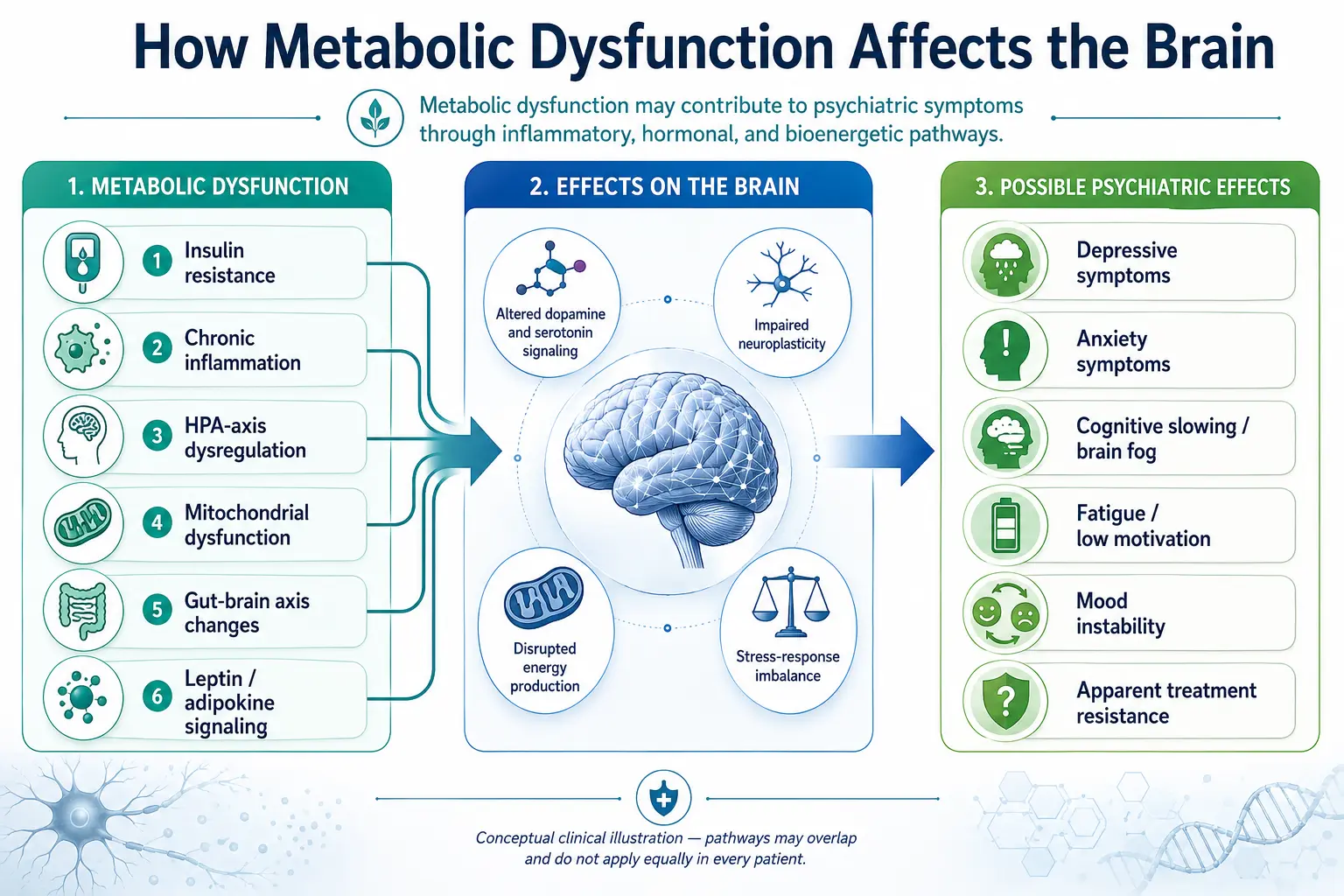
To take this seriously in clinical practice, it helps to understand the actual mechanisms connecting a metabolic lab value to a psychiatric symptom.
Insulin Resistance and Depression
Insulin receptors are densely expressed in the hippocampus, prefrontal cortex, and hypothalamus — regions central to mood regulation, motivation, and reward. Insulin isn't just a glucose-management hormone; it modulates dopamine turnover and synaptic plasticity in these circuits. In an influential PNAS study, Kleinridders and colleagues demonstrated that inducing brain-specific insulin resistance in mice altered dopamine metabolism and produced depressive- and anxiety-like behaviors, independent of peripheral blood glucose.[5] In other words, insulin resistance can generate mood symptoms through a direct neural mechanism, not merely through the downstream misery of managing a chronic illness.
Neuroinflammation and Mental Health
Obesity and insulin resistance are pro-inflammatory states — visceral adipose tissue itself secretes inflammatory cytokines like IL-6 and TNF-alpha. Miller and Raison's landmark review in Nature Reviews Immunology laid out the evidence that these same cytokines act on the brain to reduce serotonin and dopamine synthesis, impair neuroplasticity, and activate the kynurenine pathway toward neurotoxic metabolites, producing a clinical picture indistinguishable from major depression.[6] Dantzer and colleagues described this phenomenon as "sickness behavior": the same cytokine signaling that makes an infected animal withdraw, sleep more, and lose appetite can be chronically activated by metabolic disease, producing depression not as a psychological reaction to illness, but as a direct neuroimmune event.[7]
HPA-Axis and Cortisol Dysregulation
Metabolic syndrome and chronic hyperglycemia dysregulate the hypothalamic-pituitary-adrenal axis, flattening the normal cortisol curve and blunting the negative feedback loop that keeps stress reactivity in check, a pattern seen consistently in treatment-resistant depression.
Mitochondrial Dysfunction and Brain Energy
Neurons are extraordinarily energy-hungry, and impaired glucose and lipid metabolism at the cellular level, the biochemical hallmark of metabolic disease, may compromise the energy supply required for healthy neurotransmission, a mechanism central to Palmer's brain-energy hypothesis.[4]
The Gut-Brain-Metabolic Axis
Insulin resistance and obesity are associated with reduced gut microbial diversity, which in turn affects vagal signaling, short-chain fatty acid production, and systemic inflammation, a three-way loop connecting metabolic health, gut health, and mood that is an active area of ongoing research.
Leptin, Adiponectin, and Appetite-Hormone Signaling
Adipose tissue is not inert storage; it is an active endocrine organ that secretes leptin, adiponectin, and resistin, all of which cross into the central nervous system and act on mood-regulating circuits. Leptin resistance, common in obesity, blunts the hypothalamic signaling that normally supports healthy reward and motivation, and low adiponectin has been repeatedly associated with depressive symptom severity. This gives clinicians another concrete, measurable variable sitting between "obesity" as a diagnosis and "depression" as a symptom cluster, rather than treating the two as loosely associated background facts about a patient.
None of these pathways operates in isolation. In a real patient, they may overlap and reinforce one another, contributing to symptoms that appear unusually persistent or difficult to treat.
Metabolic Conditions Associated With Psychiatric Symptoms
Type 2 diabetes, obesity/metabolic syndrome, thyroid dysfunction, PCOS, and NAFLD each show a bidirectional or causal relationship with psychiatric illness, and each changes what a clinician should screen for.
Insulin Resistance, Type 2 Diabetes, and Depression
The relationship here is genuinely bidirectional, and both directions are well quantified. Anderson and colleagues' meta-analysis found the prevalence of comorbid depression in adults with diabetes is roughly double that of the general population.[9] Running the arrow the other way, Kan and colleagues' meta-analysis in Diabetes Care found that depression is independently associated with insulin resistance even in people without a diabetes diagnosis, meaning the metabolic disruption can be measurable before the psychiatric picture is fully explained by it, and vice versa.[8] A 2025 UK Biobank analysis found that insulin-resistance-related conditions — including prediabetes, type 2 diabetes, hypertension, and NAFLD — were associated with antidepressant non-response and longer treatment duration, particularly when depression preceded the metabolic diagnosis.[20] For clinicians, this argues for treating unexplained new-onset depression, particularly with atypical features like hypersomnia and increased appetite, as a reason to check a fasting insulin or HOMA-IR, not just a glucose, and for treating unexplained treatment resistance as a reason to check it too.
Metabolic Syndrome and Mental Illness
Luppino and colleagues' meta-analysis of longitudinal studies in Archives of General Psychiatry found that obesity at baseline increased the risk of developing depression over time by roughly 55%, while depression at baseline increased the risk of developing obesity by a similar margin — a genuinely bidirectional relationship rather than a one-way consequence.[10] Milaneschi and colleagues' more recent mechanistic review argues that this bidirectionality is best explained by shared biology, inflammation, HPA-axis dysfunction, and leptin resistance, rather than one condition simply causing the other through behavior alone.[11] Penninx and Lange's review further notes that metabolic syndrome components (abdominal obesity, hypertriglyceridemia, low HDL, hypertension, hyperglycemia) cluster more heavily in depressed populations even after controlling for antidepressant use, weakening the "it's just the medication" explanation.[12]
Thyroid Dysfunction and Psychiatric Symptoms
This is the metabolic-psychiatric link most clinicians already screen for, and for good reason — it's one of the clearest causal relationships in this entire domain. Both hypothyroidism and hyperthyroidism produce psychiatric symptoms (depression and cognitive slowing in the former; anxiety, irritability, and occasionally mania or psychosis in the latter) that can fully resolve with thyroid treatment alone. Bauer and Whybrow's work on the thyroid-brain interaction has documented this relationship extensively, particularly in mood disorders, where subclinical thyroid dysfunction is disproportionately common and easily missed on a single TSH check.[13]
PCOS, Depression, and Anxiety
PCOS is fundamentally a metabolic-endocrine condition — insulin resistance is present in a majority of patients regardless of body weight — and it carries a striking psychiatric burden that is still under-recognized outside of reproductive endocrinology. Cooney and colleagues' meta-analysis in Human Reproduction found significantly elevated rates of both depressive and anxiety symptoms in women with PCOS compared with controls, independent of body mass index.[14] A young woman presenting with new anxiety, irregular mood, and irregular cycles deserves a metabolic and endocrine workup as part of the psychiatric assessment, not a referral elsewhere that never quite happens.
NAFLD and Mental Health
NAFLD is an emerging and still-underappreciated piece of this picture. Soto-Angona and colleagues' review describes NAFLD as a "neglected metabolic companion" of psychiatric disorders, proposing shared inflammatory and insulin-resistance pathways linking hepatic steatosis to depression and bipolar disorder, and noting that NAFLD is dramatically more prevalent in psychiatric populations than routine screening would suggest.[15]
Metabolic Side Effects of Antipsychotics
No honest accounting of this topic can ignore psychiatry's own contribution. Second-generation antipsychotics, and to a lesser degree some antidepressants and mood stabilizers, can independently induce weight gain, dyslipidemia, and insulin resistance. Correll and colleagues' review quantifies this risk across drug classes and makes clear that once medication-induced metabolic dysfunction sets in, it can perpetuate the very symptoms the medication was meant to treat, creating a closed loop that's easy to misread as "the illness getting worse" rather than "the treatment creating a new driver of illness."[2]
A Clinical Example
A composite case illustrating how a metabolic workup changes the trajectory of a treatment-resistant presentation.
The following is a composite, illustrative vignette, not a specific patient, constructed to reflect a presentation type seen repeatedly in practice.
"Maria," 34: reframing treatment-resistant depression
"Maria," 34, presents with an eighteen-month history of depression and new-onset anxiety. She has been through sertraline, then bupropion augmentation, then a trial of duloxetine, with only partial and fading response each time. Her psychotherapist has noted good engagement and insight but describes the depression as oddly "flat" and treatment-resistant. Maria mentions, almost in passing, that her periods have become irregular and that she's gained weight despite "not really eating any differently," and that she often feels physically foggy, not just sad.
Rather than moving to a fourth antidepressant trial, her PMHNP orders a metabolic panel, HbA1c, fasting insulin, TSH, and a testosterone/androgen panel given the menstrual irregularity. The results show mild insulin resistance (HOMA-IR elevated), borderline-elevated free testosterone, and imaging consistent with polycystic ovaries, a PCOS presentation that had never been named. Maria is started on metformin and referred for nutrition counseling focused on insulin sensitivity, alongside continued psychiatric care; her antidepressant is maintained rather than escalated further.
Over the following four months, her mood and anxiety symptoms improve substantially, not instantly, and not in isolation from her existing psychiatric treatment, but in a way that finally tracks with improvement in her metabolic markers. This is not a claim that metformin is an antidepressant or that every treatment-resistant case has an undiagnosed metabolic driver. It illustrates how the treatment plan may change when metabolic dysfunction is considered part of the psychiatric differential rather than an unrelated finding.
Could Metabolic Dysfunction Contribute to Treatment-Resistant Depression?
Treatment-resistant depression is typically defined by inadequate response to at least two appropriate antidepressant trials, making consistent use of validated depression assessment tools important for documenting baseline severity and measuring response over time. Although some patients truly have difficult-to-treat depressive illness, apparent treatment resistance can also reflect an incomplete diagnostic picture. In a subset of patients, unrecognized metabolic or endocrine dysfunction may be contributing to persistent symptoms, blunted treatment response, or repeated relapse.
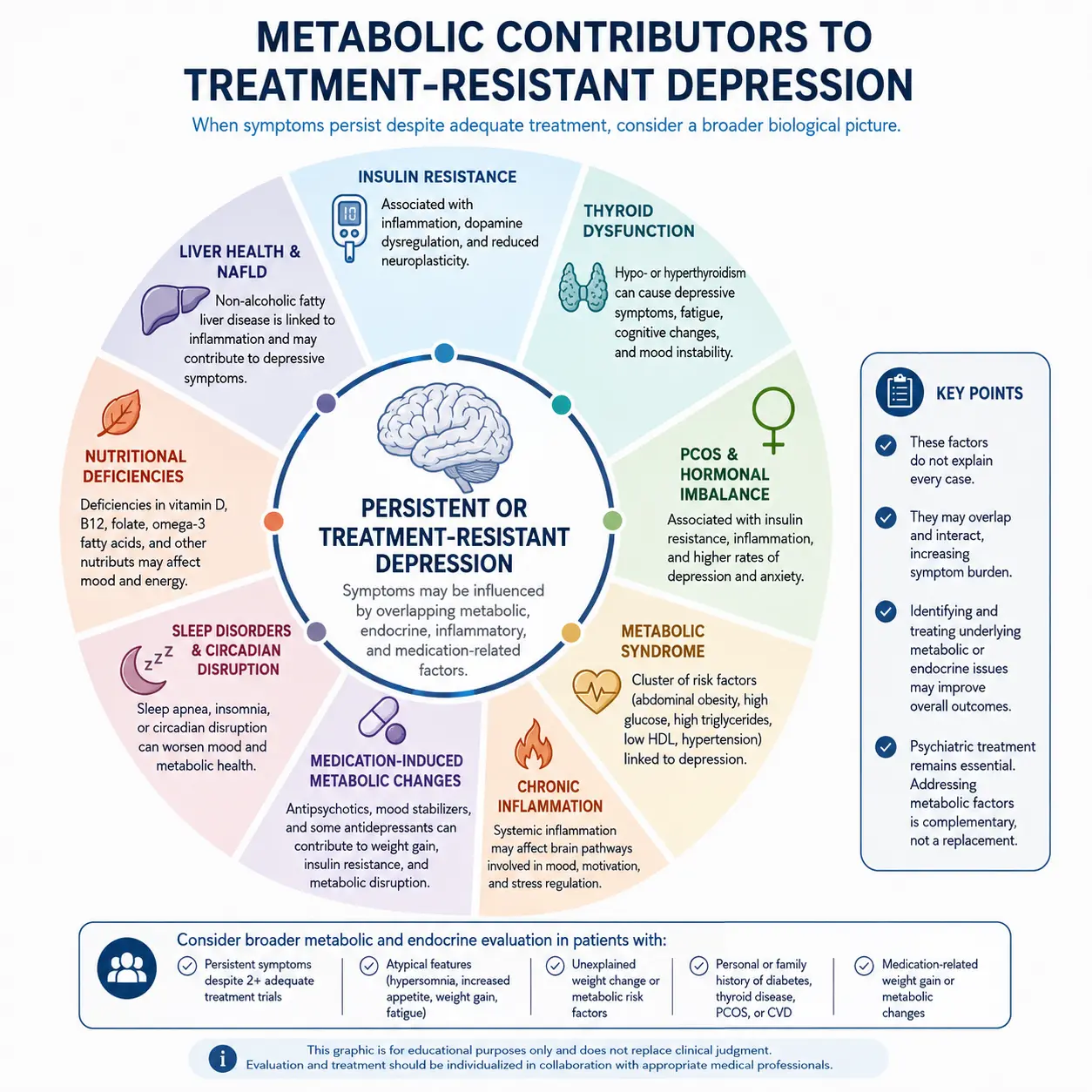
This does not mean that insulin resistance, thyroid disease, obesity, or inflammation explains every case of treatment-resistant depression. It means these conditions belong in the differential when symptoms do not improve as expected, especially when the clinical presentation includes atypical features, metabolic risk factors, or physical symptoms that are not fully accounted for by the psychiatric diagnosis.
Insulin Resistance and Antidepressant Response
Insulin resistance may affect depression through several overlapping pathways, including altered dopamine signaling, chronic inflammation, impaired neuroplasticity, and disrupted cellular energy metabolism. Research has also associated insulin-resistance-related conditions with more complex and prolonged antidepressant treatment.
Clinically, this raises an important question: when a patient has completed multiple adequate medication trials without sustained improvement, has the metabolic picture been evaluated as carefully as the psychiatric one?
A fasting glucose or HbA1c can identify dysglycemia, but these measures may remain within the normal range during earlier stages of insulin resistance. In patients with suggestive symptoms or risk factors, fasting insulin and a calculated HOMA-IR may provide additional information. These results should be interpreted in coordination with primary care or endocrinology when appropriate.
Clinical Clues That Should Prompt Metabolic Screening
Metabolic screening may be especially relevant when treatment-resistant depressive symptoms occur alongside:
- Hypersomnia, increased appetite, weight gain, or marked fatigue
- Abdominal obesity or increasing waist circumference
- A personal or family history of prediabetes or type 2 diabetes
- Elevated triglycerides, low HDL cholesterol, or hypertension
- Irregular menstrual cycles, acne, or hirsutism suggestive of PCOS
- Cognitive slowing, cold intolerance, constipation, or other possible thyroid symptoms
- Significant weight gain or dysglycemia after starting an antipsychotic, mood stabilizer, or antidepressant
- A pattern of partial, short-lived, or inconsistent response across several medication trials
These findings are not diagnostic of a metabolic cause. They are signals that a broader workup may be warranted before the case is classified as purely pharmacologically resistant.
What to Review Before Escalating Treatment
Before moving to another augmentation strategy or a more intensive intervention, clinicians may consider reviewing whether the patient has had an appropriate metabolic and endocrine assessment. Depending on the presentation, this may include:
- Fasting glucose or HbA1c
- Fasting insulin and HOMA-IR
- A fasting lipid panel
- TSH, with additional thyroid testing when clinically indicated
- Blood pressure and waist circumference
- Liver function testing when NAFLD risk is present
- An androgen panel when PCOS is suspected
- A review of psychotropic medications that may be contributing to weight gain, dyslipidemia, or insulin resistance
The goal is not to delay necessary psychiatric treatment. It is to avoid escalating treatment without first investigating potentially modifiable contributors.
Metabolic Treatment Should Complement Psychiatric Care
When a metabolic condition is identified, it should be incorporated into the patient’s broader behavioral health treatment plan alongside — not in place of — evidence-based psychiatric care. Addressing insulin resistance, thyroid dysfunction, PCOS, obesity, or medication-related metabolic effects may improve overall health and could reduce one source of ongoing psychiatric burden. However, patients may still require antidepressant medication, psychotherapy, neuromodulation, or other established interventions.
Metabolic psychiatry is therefore most useful as an expansion of the clinical framework. It encourages clinicians to ask whether the patient's symptoms reflect only a psychiatric disorder, or whether endocrine, inflammatory, medication-related, and metabolic factors are also sustaining the presentation.
For some patients, the next step after two unsuccessful antidepressant trials may not simply be another medication. It may be a more complete assessment of what is happening in the body as well as the brain.
Why This Gets Missed
The gap is structural, training, visit length, and a lingering mind-body divide in how care is organized — and it falls hardest on patients with the least access to coordinated care.
The honest answer is structural, not personal. Psychiatric training historically under-emphasizes endocrinology and metabolic medicine relative to psychopharmacology and psychotherapy. Visit lengths — fifteen to thirty minutes for many prescribers — don't naturally accommodate a metabolic history alongside a full psychiatric review of systems. Labs ordered in primary care often don't make it back into the psychiatric chart, and the reverse is just as true. And there remains a cultural residue in medicine that treats "physical" and "mental" illness as belonging to different specialists entirely, even when the underlying biology doesn't respect that boundary.
The result is a population of patients, disproportionately women — given how PCOS and thyroid disease present, and disproportionately people already carrying a psychiatric diagnosis, given how easily new symptoms get absorbed into an existing label — whose metabolic disease goes undiagnosed for years while their psychiatric treatment escalates around it.
This gap is not distributed evenly. Patients from lower-income backgrounds and communities with historically limited access to primary care carry a higher baseline burden of undiagnosed insulin resistance and metabolic syndrome, and are also more likely to receive fragmented psychiatric care across multiple providers with no single clinician holding the full picture. When metabolic screening depends on a patient having a well-coordinated primary care relationship, the patients who most need that screening are often the least likely to have it, which means the "missed diagnosis" problem described here is also, quietly, a health equity problem.
Metabolic Psychiatry in Practice: Screening and Treatment Considerations
Screen metabolically at intake and at treatment resistance, take SGA monitoring seriously, treat diet as an active intervention, and know both the promise and the limits of ketogenic and GLP-1 therapies.
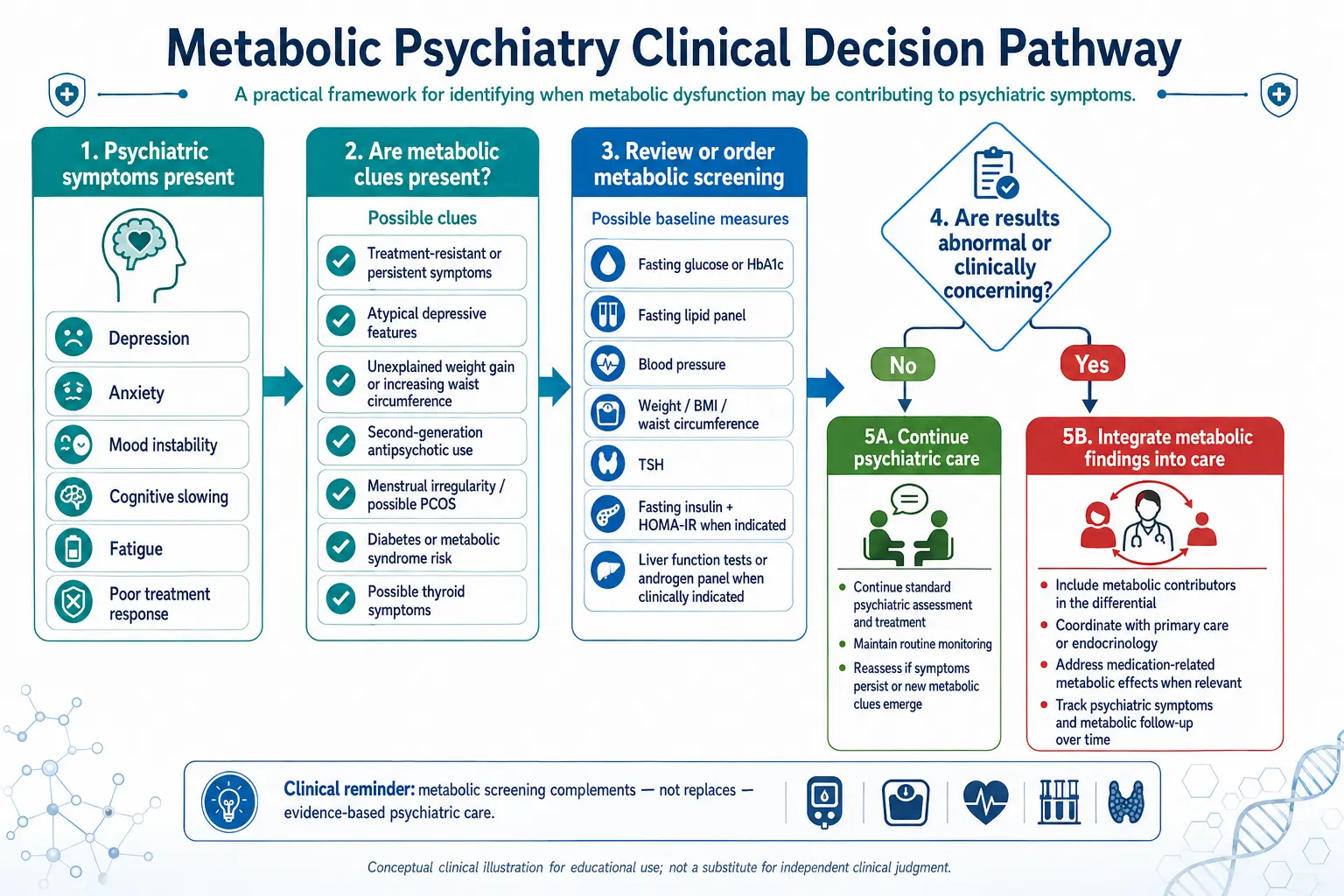
The clinical value of metabolic psychiatry lies not in replacing established psychiatric treatment, but in expanding the assessment to include biological factors that may be contributing to symptoms, treatment response, and long-term health.
For most clinicians, the most practical starting point is not an experimental intervention. It is consistent metabolic screening, careful interpretation of clinical clues, appropriate monitoring of medication-related risk, and coordination with primary care or endocrinology when abnormalities are identified.
When to Screen for Metabolic Contributors
Metabolic screening should be considered when psychiatric symptoms occur alongside clinical features that raise concern for insulin resistance, endocrine dysfunction, metabolic syndrome, or medication-related metabolic effects.
Screening may be especially appropriate when a patient has:
- New-onset depression, anxiety, cognitive changes, or mood instability without a clear explanation
- Persistent symptoms despite two or more adequate treatment trials
- Atypical depressive features such as hypersomnia, increased appetite, weight gain, or disproportionate fatigue
- Abdominal obesity or an increasing waist circumference
- A personal or family history of prediabetes, type 2 diabetes, thyroid disease, or metabolic syndrome
- Menstrual irregularity, hirsutism, acne, or other possible signs of PCOS
- Symptoms suggestive of thyroid dysfunction, including cold intolerance, constipation, cognitive slowing, tremor, palpitations, or heat intolerance
- Significant weight gain, dyslipidemia, or glucose changes after starting a psychotropic medication
- A second-generation antipsychotic prescription requiring routine metabolic monitoring
These findings do not establish that metabolic dysfunction is causing the psychiatric presentation. They indicate that metabolic and endocrine contributors should be considered as part of a complete differential diagnosis.
Which Metabolic Markers to Review
The appropriate workup should be guided by the patient's history, symptoms, medications, and existing medical conditions. A reasonable baseline assessment may include:
- Fasting glucose or HbA1c
- Fasting lipid panel
- Blood pressure
- Weight, BMI, and waist circumference
- TSH, with additional thyroid testing when clinically indicated
- Fasting insulin and calculated HOMA-IR when insulin resistance is suspected
- Liver function tests when obesity, diabetes risk, or possible NAFLD is present
- An androgen panel when PCOS is suspected
A normal fasting glucose or HbA1c does not always exclude early insulin resistance. Fasting insulin and HOMA-IR may provide additional context in selected patients, although interpretation and reference ranges vary. Abnormal results should be reviewed in collaboration with primary care, endocrinology, or another appropriate medical specialist.
The goal is not to order an indiscriminate panel for every patient. It is to use the psychiatric presentation, physical symptoms, medication history, and metabolic risk profile to determine when broader screening is warranted.
Monitoring the Metabolic Side Effects of Antipsychotics
The metabolic side effects of antipsychotics provide one of the clearest and most immediate applications of metabolic psychiatry.
Second-generation antipsychotics can contribute to weight gain, insulin resistance, dyslipidemia, hypertension, and type 2 diabetes. Although risk varies by medication and patient, these effects may increase cardiovascular morbidity and may also worsen fatigue, cognitive symptoms, self-esteem, medication adherence, and overall psychiatric recovery.
Metabolic monitoring should begin before or at the time treatment is initiated and continue throughout therapy. Depending on the medication, patient risk, and applicable guidance, monitoring may include:
- Baseline weight, BMI, waist circumference, blood pressure, glucose or HbA1c, and lipid levels
- Early follow-up of weight and BMI after treatment begins
- Repeat glucose and lipid testing after the initial treatment period
- Ongoing annual monitoring, or more frequently when abnormalities are present
- Review of appetite, activity level, sleep, and other changes that may accompany weight gain
- Reassessment of medication choice, dose, and risk-benefit balance when clinically significant metabolic changes occur
Baseline
Baseline weight, BMI, waist circumference, blood pressure, glucose or HbA1c, and lipid levels
Early follow-up
Early follow-up of weight and BMI after treatment begins
Initial period
Repeat glucose and lipid testing after the initial treatment period
Ongoing
Ongoing annual monitoring, or more frequently when abnormalities are present
Reassess
Reassessment of medication choice, dose, and risk-benefit balance when clinically significant metabolic changes occur
Monitoring should not become a documentation exercise in which abnormal findings are recorded but never addressed. Clinicians should discuss results with the patient, coordinate follow-up care, and consider whether medication changes or additional interventions are appropriate.
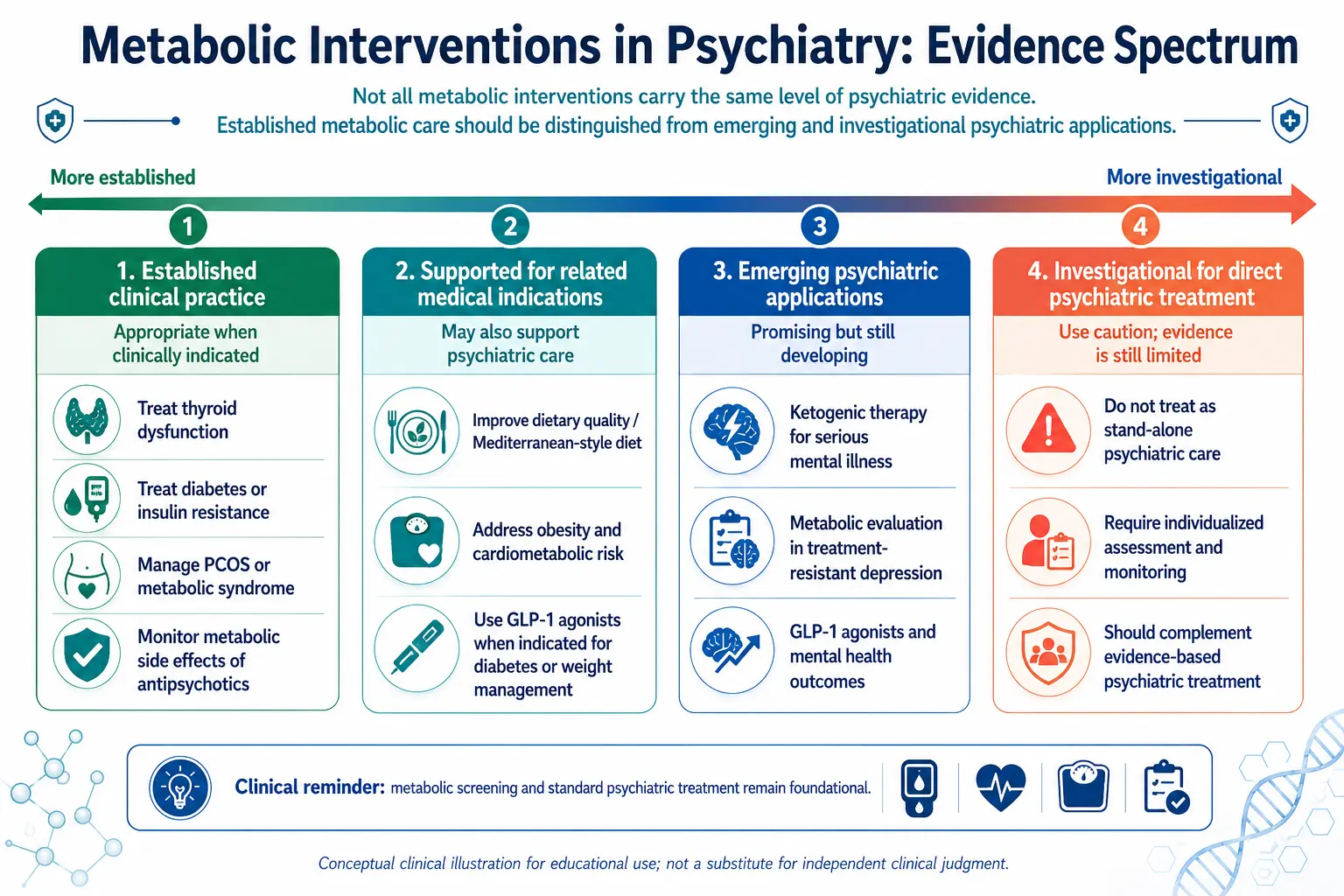
Metabolic Interventions in Psychiatry: Current Evidence at a Glance
The evidence supporting metabolic interventions varies considerably. Established medical treatment of diagnosed metabolic conditions should be distinguished from emerging approaches being studied as direct psychiatric therapies.
| Intervention | Potential psychiatric relevance | Current evidence status | Clinical caution |
|---|---|---|---|
| Mediterranean-style dietary intervention | May improve depressive symptoms and overall metabolic health | Supported by controlled nutritional-psychiatry research | Should complement established treatment |
| Ketogenic therapy | Under study for bipolar disorder, schizophrenia, and depression | Early trials and pilot data | Requires medical supervision; not standard psychiatric treatment |
| GLP-1 receptor agonists | May help address obesity or antipsychotic-related metabolic burden | Emerging psychiatric evidence | Not established as a primary psychiatric treatment |
| Treatment of thyroid disease, diabetes, or PCOS | May improve symptoms when an underlying condition contributes to the presentation | Condition-specific evidence varies | Coordinate with primary care or relevant specialists |
Nutritional Psychiatry and Dietary Interventions
Dietary intervention should be treated as a potentially meaningful component of psychiatric care rather than as generic wellness advice.
Research in nutritional psychiatry suggests that improving overall dietary quality may reduce depressive symptoms in some patients. The SMILES trial, for example, found greater improvement in depression among adults who received a structured Mediterranean-style dietary intervention than among those assigned to a social-support control condition. Techniques from motivational interviewing in therapy can help clinicians explore readiness for change, identify barriers, and support patient-directed metabolic health goals without turning the conversation into generic lifestyle advice.
Nutritional psychiatry and metabolic psychiatry overlap, but they are not identical. Nutritional psychiatry focuses primarily on foods, nutrients, and dietary patterns. Metabolic psychiatry takes a broader view of what happens after those inputs are consumed, including their effects on insulin signaling, inflammation, endocrine function, lipid metabolism, and cellular energy production.
Metabolic Psychiatry vs. Nutritional Psychiatry
Metabolic psychiatry and nutritional psychiatry overlap, but they examine different parts of the relationship between physical and mental health.
| Nutritional psychiatry | Metabolic psychiatry |
|---|---|
| Focuses on how foods, nutrients, and dietary patterns affect mental health | Focuses on how metabolic processes affect brain function and psychiatric symptoms |
| Examines what patients eat | Examines how the body processes and uses nutrients and energy |
| Often emphasizes dietary quality, deficiencies, and eating patterns | Examines insulin resistance, inflammation, endocrine function, mitochondrial energy, and medication-related metabolic effects |
| Common interventions include dietary counseling and nutrient optimization | May include laboratory screening, metabolic monitoring, medical treatment, dietary intervention, and coordinated care |
| Can be part of metabolic psychiatric care | Represents a broader clinical framework |
These approaches are complementary rather than competing. Dietary quality is one important input, while metabolic psychiatry considers the downstream biological effects of those inputs alongside endocrine conditions, medication effects, and cardiometabolic risk
Dietary recommendations should remain individualized and clinically appropriate. Patients may have medical conditions, eating disorder histories, financial limitations, cultural preferences, medication effects, or other factors that make generalized dietary advice ineffective or unsafe. When possible, clinicians should involve a registered dietitian or another qualified professional, particularly when dietary changes are being used to address a diagnosed metabolic condition.
Ketogenic Therapy and Mental Health
Ketogenic therapy has become one of the most visible and debated interventions associated with metabolic psychiatry.
The proposed rationale is that a ketogenic diet changes the brain's primary fuel environment, influences insulin signaling, alters mitochondrial energy metabolism, and may affect inflammation and neurotransmission. Early case reports and pilot studies have described improvements in metabolic measures and psychiatric symptoms among some patients with bipolar disorder, schizophrenia, and depression.
These findings are promising, but the evidence remains preliminary. Small studies, uncontrolled designs, and highly selected patient populations limit how broadly the results can be applied. Ketogenic therapy is not currently a routine or universally established treatment for psychiatric disorders.
Clinicians should also recognize that ketogenic diets can carry risks, including:
- Hypoglycemia or other glucose-related complications
- Electrolyte disturbances
- Gastrointestinal effects
- Nutritional deficiencies
- Lipid changes
- Medication interactions
- Increased risk for patients with certain medical conditions
- Potential complications for patients with current or previous eating disorders
Patients interested in ketogenic therapy should be encouraged to pursue it under appropriate medical and nutritional supervision. It should not be presented as a substitute for indicated medication, psychotherapy, or other evidence-based psychiatric treatment.
GLP-1 Agonists in Psychiatry
GLP-1 receptor agonists such as semaglutide and tirzepatide are increasingly relevant to psychiatric practice because of their effects on weight, glucose regulation, appetite, and cardiometabolic risk.
These medications may be considered by appropriate medical prescribers for patients who meet established indications for diabetes or weight management, including some patients experiencing antipsychotic-associated weight gain. Their potential role in reducing the metabolic burden of psychiatric treatment is therefore already clinically relevant.
Researchers are also investigating whether GLP-1 agonists may have direct effects on mood, reward processing, cognition, substance cravings, or inflammation. GLP-1 receptors are present in brain regions involved in appetite and reward, which gives these questions biological plausibility.
However, current evidence does not support prescribing a GLP-1 agonist primarily as an antidepressant, mood stabilizer, or treatment for another psychiatric disorder. Potential psychiatric benefits remain under investigation, and safety monitoring is still important.
When a patient is taking or considering a GLP-1 medication, psychiatric clinicians should:
- Document the medication and prescribing clinician
- Monitor changes in appetite, mood, energy, and medication adherence
- Coordinate with primary care, endocrinology, or obesity-medicine specialists
- Avoid attributing psychiatric improvement or deterioration to the medication without considering other clinical factors
- Continue indicated psychiatric treatment unless changes are clinically justified
Coordinating Care With Primary Care and Endocrinology
Metabolic psychiatry is difficult to practice effectively when psychiatric and medical care remain disconnected.
Psychiatric clinicians do not need to independently manage every abnormal metabolic finding. They do need a reliable process for identifying risk, communicating findings, documenting follow-up, and confirming that the patient receives appropriate care.
Useful collaborative-care practices include:
- Requesting and reviewing relevant laboratory results from other clinicians
- Sending concise consultation notes that explain why a metabolic abnormality may be relevant to psychiatric care
- Establishing referral relationships with primary care, endocrinology, obesity medicine, and nutrition professionals
- Documenting which clinician is responsible for follow-up testing and treatment
- Reassessing psychiatric symptoms as metabolic conditions improve or worsen
- Avoiding the assumption that another clinician is monitoring psychotropic-related metabolic risk unless that responsibility has been clearly established
When integrated care is unavailable, even a standardized referral process and shared monitoring plan can reduce the likelihood that abnormal results will be lost between visits.
Documenting Metabolic Screening in the Psychiatric Record
Metabolic screening only improves care when the findings are visible, interpretable, and connected to the treatment plan. Documentation should clearly show why screening was indicated and connect the evaluation to the patient’s symptoms, risks, and treatment plan — an important part of documenting medical necessity in mental health care.
Documentation should clearly show:
- Why screening was indicated
- Which symptoms, medications, or risk factors triggered the workup
- Which laboratory tests and physical measures were reviewed
- Whether any results were abnormal
- How those findings may affect the psychiatric differential or treatment plan
- Whether a referral or follow-up test was recommended
- Who is responsible for ongoing monitoring
- Whether the patient received education about metabolic risks and next steps
A concise documentation statement might read:
Metabolic screening was reviewed because of persistent depressive symptoms, increased appetite, recent weight gain, and limited response to two adequate antidepressant trials. HbA1c, fasting lipid panel, TSH, fasting insulin, blood pressure, and waist circumference were ordered. The patient was advised that metabolic or endocrine factors may contribute to symptoms but do not exclude a primary depressive disorder. Follow-up will occur after results are available, with primary care referral if abnormalities are identified.
Structured templates, reminders, and smart phrases can help clinicians incorporate this information into psychiatric progress notes without substantially increasing visit length.
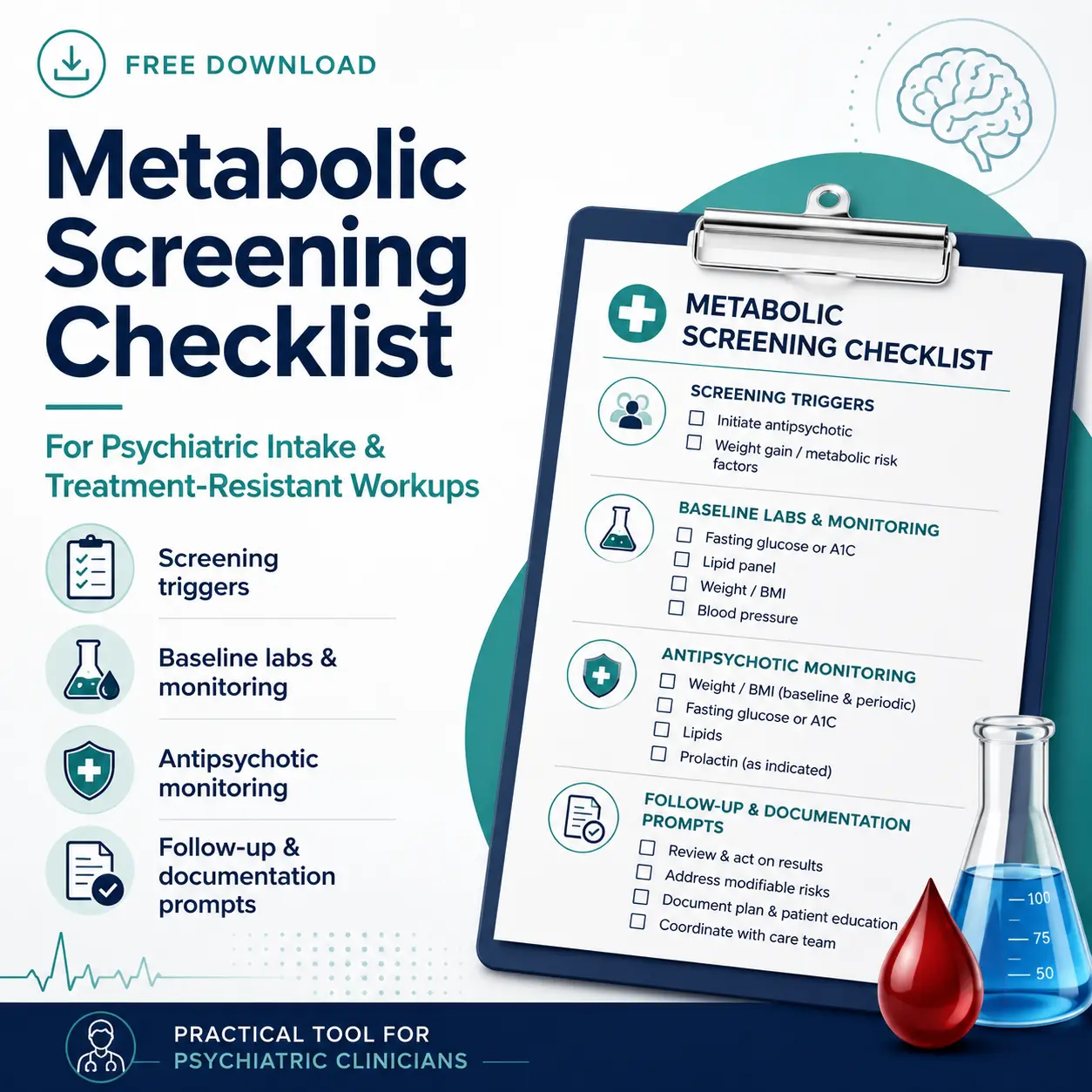
Put Metabolic Screening Into Practice
Knowing when to investigate a metabolic contributor is only useful if the screening process fits into the psychiatric workflow. Download the Metabolic Screening Checklist for Psychiatric Practice for a practical guide to screening triggers, baseline measures, medication-related risk, follow-up intervals, referrals, and documentation prompts.
Start With Screening, Not Certainty
The practical application of metabolic psychiatry does not require clinicians to accept that every mental disorder is fundamentally metabolic. It requires a willingness to consider metabolic dysfunction when the clinical picture supports it.
Routine medication monitoring, targeted laboratory assessment, careful interpretation of physical symptoms, and better coordination with medical clinicians are defensible steps based on current evidence. More specialized interventions, including ketogenic therapy and the psychiatric use of GLP-1 agonists, should be discussed with greater caution because the evidence is still developing.
The central clinical question is not whether metabolism explains every psychiatric symptom. It is whether a potentially modifiable metabolic contributor has been overlooked in the patient sitting in front of you.
Knowing when to investigate a metabolic contributor is only useful if the screening process fits into the psychiatric workflow. Download the Metabolic Screening Checklist for Psychiatric Practice for a concise list of clinical triggers, baseline measures, follow-up considerations, and documentation prompts.
Can Metabolic Psychiatry Address Root Causes of Mental Illness?
The old model, metabolic disease as a side effect of psychiatric illness or its treatment, was never wrong, exactly. It was incomplete. The evidence reviewed here supports a more demanding but more accurate picture: metabolic dysfunction may independently generate or amplify psychiatric symptoms in some patients through insulin signaling, inflammation, HPA-axis dysregulation, and bioenergetic failure, and it does so often enough that it belongs in the standard differential for depression, anxiety, and mood instability, not as an exotic zebra, but as a routine consideration.
For clinicians trained to reach first for a prescription pad or a therapy referral, this means expanding the initial workup. For a field still organized around the old mind-body divide, it means acknowledging that the divide was always somewhat artificial. And for patients who have spent years being told their treatment-resistant depression is simply treatment-resistant, it means there may be a question that hasn't been asked yet, one that starts not with "which medication next," but with "what is happening in this patient's metabolism."
Document metabolic screening without slowing down your visits
ICANotes gives psychiatric clinicians structured templates, smart phrases, and lab and vitals tracking so metabolic screening, monitoring, and follow-up are visible, interpretable, and connected to the treatment plan. Start your free trial and see how it fits into your workflow.
- Notes completed in under 3 minutes
- 30-day free trial, no credit card required
- HIPAA compliant and ONC Cures certified
- Live support from behavioral health specialists
Frequently Asked Questions About Metabolic Psychiatry
What is metabolic psychiatry?
Is metabolic psychiatry evidence-based?
What is the difference between metabolic psychiatry and nutritional psychiatry?
Do I need to screen every psychiatric patient for metabolic disease?
What labs should I order for a suspected metabolic-psychiatric presentation?
Is the ketogenic diet an approved psychiatric treatment?
Can insulin resistance cause depression?

Jacqueline Norman
Dr. Jacqueline Norman is a board-certified psychiatrist with expertise in diagnosing and treating complex psychiatric conditions. She completed her residency at the University of Virginia and has worked with diverse populations across disorders including schizophrenia, bipolar disorder, and trauma-related conditions. Her approach is evidence-based and patient-centered, with a focus on accurate diagnosis and individualized care. Dr. Norman is especially passionate about women’s mental health and improving access to psychiatric services in underserved communities.

Dr. October Boyles
Dr. October Boyles is a behavioral health expert and clinical leader with extensive expertise in nursing, compliance, and healthcare operations. With a Doctor of Nursing Practice (DNP) and advanced degrees in nursing, she specializes in evidence-based practices, EHR optimization, and improving outcomes in behavioral health settings. Dr. Boyles is passionate about empowering clinicians with the tools and strategies needed to deliver high-quality, patient-centered care.

Monique Ornelas
Monique Ornelas is a Psychiatric Mental Health Nurse Practitioner with extensive experience in acute and emergency psychiatric care. She earned her MSN from Vanderbilt University and currently practices in a psychiatric emergency department. Her background spans crisis stabilization, inpatient, and observational settings, giving her a comprehensive perspective across levels of care. Monique also serves as a clinical preceptor and brings practical, frontline insight into risk assessment and evidence-based interventions.
Sources
- Vancampfort D, Stubbs B, Mitchell AJ, et al. Risk of metabolic syndrome and its components in people with schizophrenia and related psychotic disorders, bipolar disorder and major depressive disorder: a systematic review and meta-analysis. World Psychiatry. 2015;14(3):339-347.
- Correll CU, Detraux J, De Lepeleire J, De Hert M. Effects of antipsychotics, antidepressants and mood stabilizers on risk for physical diseases in people with schizophrenia, depression and bipolar disorder. World Psychiatry. 2015;14(2):119-136.
- Mansur RB, Brietzke E, McIntyre RS. Is there a “metabolic-mood syndrome”? A review of the relationship between obesity and mood disorders. Neurosci Biobehav Rev. 2015;52:89-104.
- Palmer CM. Brain Energy: A Revolutionary Breakthrough in Understanding Mental Health—and Improving Treatment for Anxiety, Depression, OCD, PTSD, and More. BenBella Books; 2022.
- Kleinridders A, Cai W, Cappellucci L, et al. Insulin resistance in brain alters dopamine turnover and causes behavioral disorders. Proc Natl Acad Sci U S A. 2015;112(11):3463-3468.
- Miller AH, Raison CL. The role of inflammation in depression: from evolutionary imperative to modern treatment target. Nat Rev Immunol. 2016;16(1):22-34.
- Dantzer R, O’Connor JC, Freund GG, Johnson RW, Kelley KW. From inflammation to sickness and depression: when the immune system subjugates the brain. Nat Rev Neurosci. 2008;9(1):46-56.
- Kan C, Silva N, Golden SH, et al. A systematic review and meta-analysis of the association between depression and insulin resistance. Diabetes Care. 2013;36(2):480-489.
- Anderson RJ, Freedland KE, Clouse RE, Lustman PJ. The prevalence of comorbid depression in adults with diabetes: a meta-analysis. Diabetes Care. 2001;24(6):1069-1078.
- Luppino FS, de Wit LM, Bouvy PF, et al. Overweight, obesity, and depression: a systematic review and meta-analysis of longitudinal studies. Arch Gen Psychiatry. 2010;67(3):220-229.
- Milaneschi Y, Simmons WK, van Rossum EFC, Penninx BWJH. Depression and obesity: evidence of shared biological mechanisms. Mol Psychiatry. 2019;24(1):18-33.
- Penninx BWJH, Lange SMM. Metabolic syndrome in psychiatric patients: overview, mechanisms, and implications. Dialogues Clin Neurosci. 2018;20(1):63-73.
- Bauer M, Goetz T, Glenn T, Whybrow PC. The thyroid-brain interaction in thyroid disorders and mood disorders. J Neuroendocrinol. 2008;20(10):1101-1114.
- Cooney LG, Lee I, Sammel MD, Dokras A. High prevalence of moderate and severe depressive and anxiety symptoms in polycystic ovary syndrome: a systematic review and meta-analysis. Hum Reprod. 2017;32(5):1075-1091.
- Soto-Angona Ó, Anmella G, Valdés-Florido MJ, et al. Non-alcoholic fatty liver disease (NAFLD) as a neglected metabolic companion of psychiatric disorders: common pathways and future approaches. BMC Med. 2020;18(1):261.
- Jacka FN, O’Neil A, Opie R, et al. A randomised controlled trial of dietary improvement for adults with major depression (the SMILES trial). BMC Med. 2017;15(1):23.
- Palmer CM, Gilbert-Jaramillo J, Westman EC. The ketogenic diet and remission of psychotic symptoms in schizophrenia: two case studies. Schizophr Res. 2019;208:439-440.
- Sethi S, Wakeham D, Ketter T, et al. Ketogenic diet intervention on metabolic and psychiatric health in bipolar and schizophrenia: a pilot trial. Psychiatry Res. 2024;335:115866.
- Liu NH, Daumit GL, Dua T, et al. Excess mortality in persons with severe mental disorders: a multilevel intervention framework and priorities for clinical practice, policy and research agendas. World Psychiatry. 2017;16(1):30-40.
- Fanelli G, et al. Insulin resistance and poorer treatment outcomes in depression: evidence from UK Biobank primary care data. Br J Psychiatry. Published online June 23, 2025.
- Tempia Valenta S, Nicastri A, Perazza F, Marcolini F, Beghelli V, Atti AR, Petroni ML. The impact of GLP-1 receptor agonists (GLP-1 RAs) on mental health: a systematic review. Eur Psychiatry. 2025;68(Suppl 1):S982.