
Blog > Treatment Strategies > BPD vs Sociopath: Differential Diagnosis Guide for Clinicians
BPD vs Sociopath: Differential Diagnosis Guide and Misdiagnosis Prevention for Clinicians
This in-depth clinical guide explores the critical differences between BPD vs sociopathy, clarifying how borderline personality disorder (BPD) and antisocial personality disorder (ASPD) diverge in emotional processing, empathy, attachment patterns, trauma response, and behavioral motivation. Designed for mental health clinicians, this evidence-based breakdown of BPD vs sociopath presentations highlights common misdiagnosis risks, core diagnostic markers, and assessment strategies that improve differential accuracy. By clearly distinguishing ASPD vs BPD, the article supports more precise diagnosis, ethical treatment planning, and better long-term outcomes through appropriate, targeted interventions.


Last Updated: February 3, 2026


What You'll Learn
- The core psychological and emotional differences between BPD vs sociopathy and why they require fundamentally different treatment approaches
- How to distinguish BPD vs sociopath presentations using empathy patterns, attachment styles, and emotional regulation profiles
- Key diagnostic markers that differentiate ASPD vs BPD, including aggression directionality, motivation, and interpersonal functioning
- Why BPD is frequently misdiagnosed and how diagnostic errors impact treatment outcomes
- Evidence-based assessment tools and clinical strategies for accurate differential diagnosis
- The role of trauma and attachment disruption in the development of both disorders
- Which evidence-based treatments are effective for BPD — and why ASPD treatment outcomes differ
Contents
-
Understanding the Core Differences; BPD vs Sociopath Emotional Processing
- Clinical Assessment Strategies for BPD vs Sociopath Differential Diagnosis
- Common Misdiagnosis Patterns and Prevention Strategies
- Evidence-Based Treatment Approaches: BPD vs ASPD
- Clinical Recommendations for Differential Diagnosis
- How ICANotes Supports Accurate Diagnosis of BPD vs ASPD
- Conclusion: The Critical Importance of Accurate Differential Diagnosis
- Key Takeaways: BPD vs Sociopath Differential Diagnosis
- FAQ: BDP vs Sociopath
Accurate differential diagnosis between BPD and sociopathy (ASPD) can prevent years of ineffective treatment and significantly improve patient outcomes.
Borderline Personality Disorder (BPD) affects approximately 1-2% of the adult population, yet the condition remains significantly underdiagnosed, particularly in male patients. Individuals with BPD demonstrate hyperactive empathy and frequently employ emotional masking through people-pleasing behaviors, while those presenting with Antisocial Personality Disorder (ASPD, commonly referred to as sociopathy) exhibit marked emotional detachment and minimal interest in others' emotional experiences.
The diagnostic complexity of BPD vs ASPD extends beyond superficial behavioral similarities. Research indicates that BPD experiences frequent misdiagnosis, with up to 40% of cases initially confused with other psychiatric conditions. These diagnostic errors create clinically dangerous scenarios where patients receive inappropriate pharmacological and psychotherapeutic interventions.
Clinical experience demonstrates how emotional masking in BPD patients can be mistaken for the calculated manipulation characteristic of sociopathic presentation. This diagnostic distinction directly determines treatment efficacy — understanding the fundamental differences between BPD and sociopathy is essential for appropriate care planning and intervention selection.
Understanding the Core Differences: BPD vs Sociopath Emotional Processing
While BPD and ASPD may present with similar interpersonal disruptions in clinical settings, these disorders represent fundamentally different psychological mechanisms and require distinct diagnostic approaches.
Differential Emotional Regulation: ASPD vs BPD
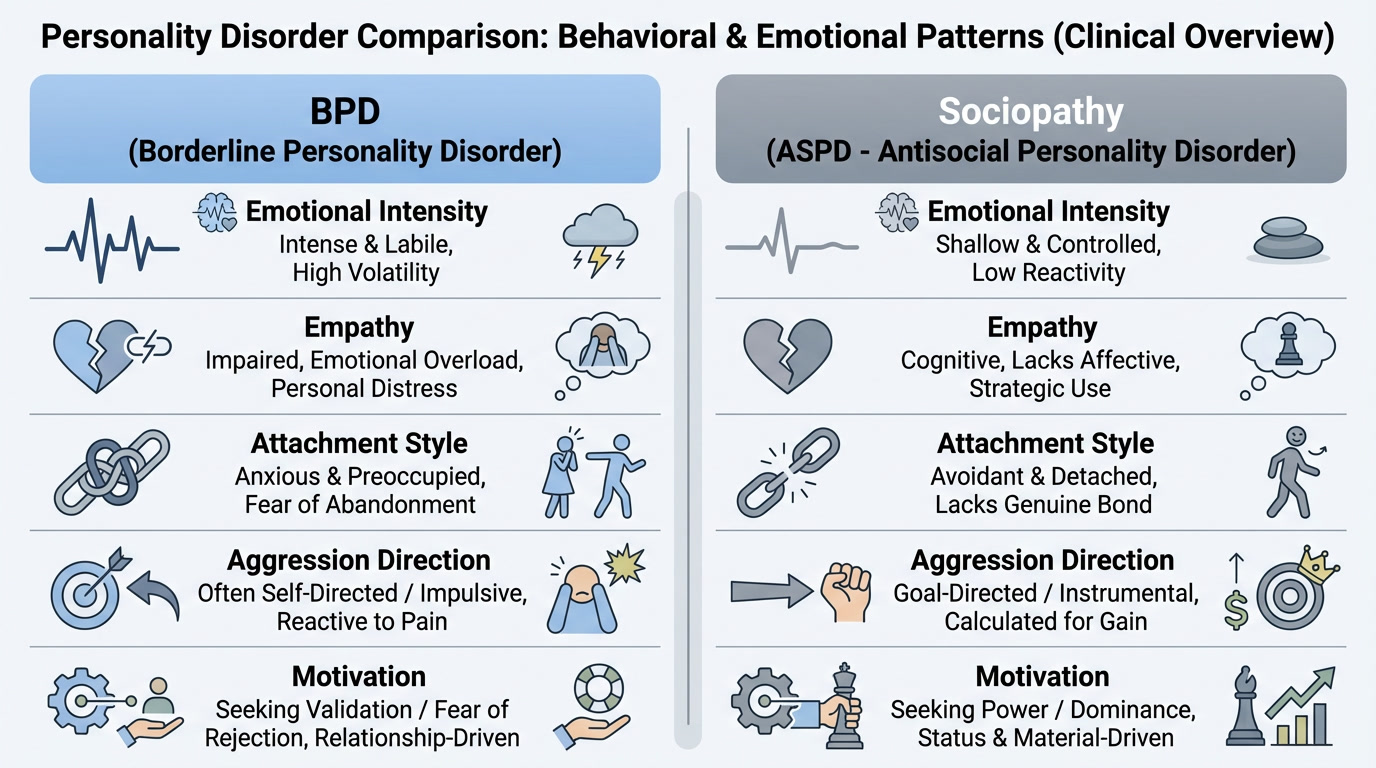
Borderline Personality Disorder and Antisocial Personality Disorder present opposing patterns of emotional processing that are critical for accurate diagnosis:
- BPD Presentation: Patients with BPD experience emotions with exceptional intensity, characterized by rapid affective shifts from euphoria to dysphoria, sometimes within minutes. This emotional dysregulation affects multiple life domains and impairs consistent psychosocial functioning.
- ASPD Presentation: Individuals with sociopathic traits demonstrate pervasive emotional detachment and shallow affect. Social interactions are primarily viewed through a utilitarian lens, with minimal genuine empathy or concern regarding the emotional impact of their behaviors on others.
In clinical assessment, a key differentiator is behavioral motivation: BPD patients engage in potentially destructive behaviors as a response to overwhelming emotional distress, while ASPD individuals calculate similar actions for strategic personal advantage.
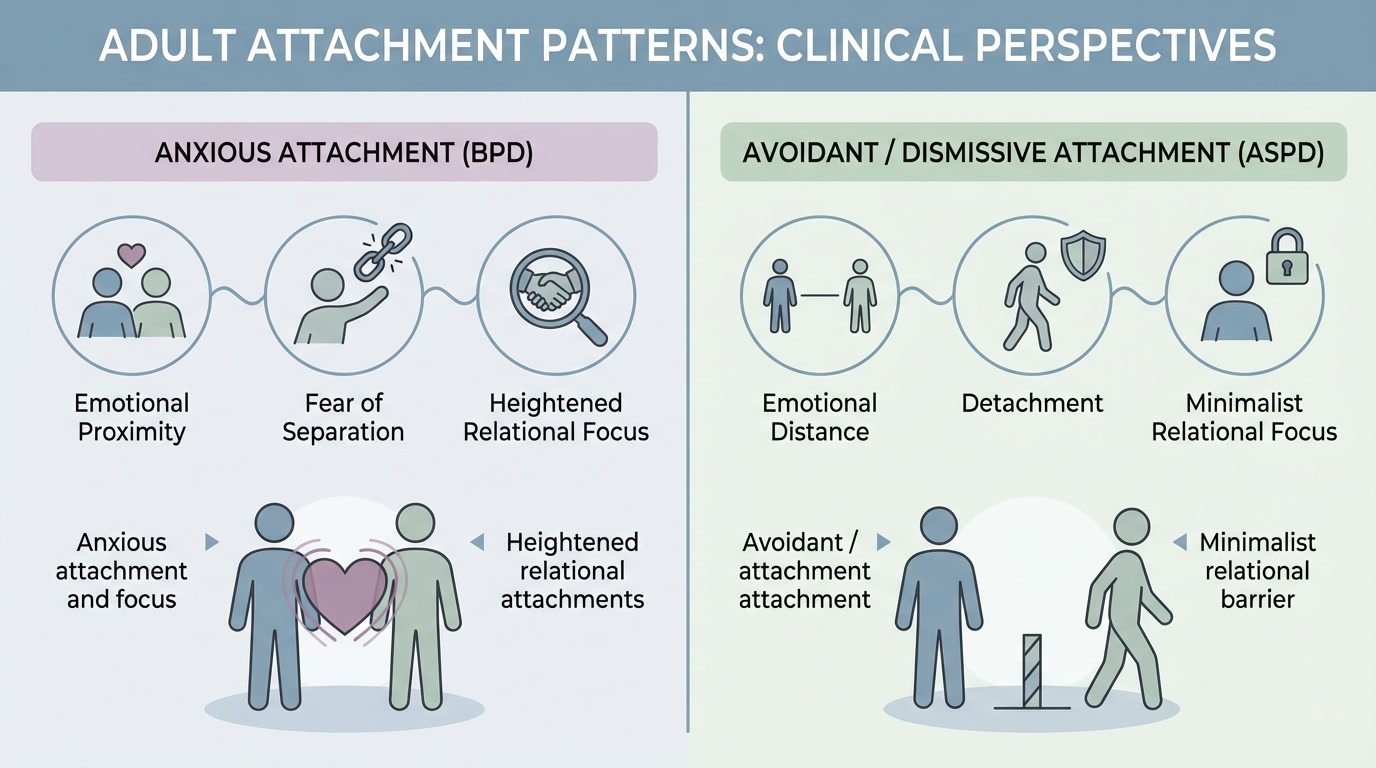
Abandonment Fears and Attachment Patterns
Fear of abandonment represents a cardinal diagnostic feature of BPD. These patients demonstrate extreme efforts to avoid real or perceived abandonment, resulting in tumultuous relationship patterns characterized by rapid cycles of idealization and devaluation. Self-perception in BPD fluctuates dramatically, oscillating between confidence and profound worthlessness.
In contrast, individuals with ASPD remain largely unconcerned with rejection or abandonment. They approach interpersonal relationships with superficial confidence and demonstrate indifference to both social approval and disapproval. Self-perception in ASPD remains relatively stable, unencumbered by the self-doubt or self-loathing that characterize BPD presentation.
Aggression Directionality as a Diagnostic Indicator
Aggression patterns provide crucial diagnostic differentiation between BPD and sociopathy:
- BPD patients predominantly direct aggression inward through self-harming behaviors, suicidal ideation, or self-sabotaging patterns, stemming from intense emotional pain and dysregulation
- ASPD individuals characteristically direct aggression outward toward others, frequently without experiencing guilt, remorse, or empathic concern for the consequences
Trauma Etiology in BPD vs ASPD Development
While both disorders demonstrate strong associations with childhood trauma, the developmental trajectories and neurobiological sequelae differ significantly:
BPD and Childhood Trauma
Research demonstrates that between 30-90% of individuals diagnosed with BPD report histories of childhood abuse and neglect — percentages significantly elevated compared to other personality disorder diagnoses. Adverse childhood experiences during critical developmental periods (particularly preschool age) substantially impact the emergence of borderline personality features.
Childhood trauma in BPD creates measurable neurobiological alterations affecting multiple biological systems, including:
- Hypothalamic-pituitary-adrenal (HPA) axis dysregulation
- Neurotransmitter system abnormalities (particularly serotonergic and dopaminergic pathways)
- Endogenous opioid system dysfunction
- Structural brain changes including reduced gray matter volume and compromised white matter connectivity
These neurobiological changes persist into adulthood and fundamentally shape emotional regulation capacity. BPD patients develop what researchers term “Pace-of-Life-Syndrome” characterized by accelerated developmental trajectories, elevated metabolic rates, and increased vulnerability to premature bodily decline.
ASPD and Developmental Trauma
Contrary to historical assumptions regarding innate sociopathy, contemporary research indicates that antisocial personality traits develop through environmental conditioning rather than genetic predetermination. Traumatic childhood experiences — including severe corporal punishment, chronic emotional invalidation, or systematic suppression of natural emotional responses — contribute significantly to sociopathic development.
The critical distinction lies in the adaptive response to trauma: while BPD develops emotional hypersensitivity and hypervigilance, ASPD results in emotional numbing, affective detachment, and diminished capacity for empathic response.
Both disorders stem from early attachment disruptions. Children experiencing aggression, neglect, or inconsistent caregiving develop compromised abilities to form realistic self-representations and accurate perceptions of others. This insecure attachment template becomes internalized, creating maladaptive expectations that future relationships will inevitably involve abuse, rejection, or exploitation.
Clinical Assessment Strategies for BPD vs Sociopath Differential Diagnosis
Accurate differentiation between BPD and ASPD requires systematic clinical assessment utilizing validated diagnostic instruments and evidence-based interview techniques.
Evidence-Based Diagnostic Tools
Mental health clinicians should employ the following validated assessment instruments:
- Structured Clinical Interview for DSM-5 Personality Disorders (SCID-5-PD): Provides comprehensive assessment of all Cluster B personality disorders with high inter-rater reliability
- Diagnostic Interview for Borderlines-Revised (DIB-R): BPD-specific instrument with demonstrated sensitivity and specificity
- Psychopathy Checklist-Revised (PCL-R): Gold standard for assessing psychopathic traits relevant to ASPD diagnosis
- McLean Screening Instrument for BPD (MSI-BPD): Efficient 10-item screening tool with high sensitivity
Critical Diagnostic Differentiators: BPD vs ASPD
When conducting differential diagnosis between BPD and sociopathy, clinicians should systematically evaluate the following domains:
These distinctions are not merely academic — they directly influence treatment selection, prognosis, and clinical outcomes. As holistic psychiatrist Sam Zand, MD, CEO and founder of Anywhere Clinic explains: "While both disorders can involve impulsivity and conflict, the underlying emotions and causes are very different. Borderline personality disorder is shown in traits like attachment insecurity, as well as fear of being abandoned. Whereas antisocial personality disorder is seen with a consistent pattern of disregard for others autonomy along with manipulation and lack of remorse. Misdiagnosis often happens when clinicians focus on face value behaviors rather than emotional capacity to exemplify empathy. These nuances matter because Borderline is highly treatable with various support and therapies, while Antisocial requires a very different informed behavioral approach. Unfortunately confusing the two can greatly worsen the effectiveness of help for the patient."
Beyond structured criteria, experienced clinicians often rely on longitudinal narrative patterns and behavioral intent to sharpen differential diagnosis.
Joel Blackstock, LCSW-S , Clinical Director at Taproot Therapy Collective , emphasizes that the most important distinction clinicians miss is intent.
“A patient with BPD may appear manipulative, but the behavior is often driven by a desperate, disorganized need to be understood, paired with emotional dysregulation and shame. In contrast, with ASPD, interpersonal influence is more likely to be goal-directed — less about being understood and more about being believed or getting a desired outcome.”
Blackstock adds that while BPD narratives can be chaotic, they often show change over time. When a person presents as fluent in the language of therapy but remains historically “static,” repeating the same victim-hero stories for years without meaningful accountability or growth, it can be a useful clinical red flag to explore further in differential diagnosis.
Not Sure You’re Differentiating BPD and ASPD Correctly?
Misdiagnosing Borderline Personality Disorder (F60.3) as Antisocial Personality Disorder (F60.2) — or vice versa — can change a treatment trajectory for years. This clinician-ready toolkit helps you clarify emotional drivers, assess intent, track patterns over time, and document defensible diagnostic conclusions.
Common Misdiagnosis Patterns and Prevention Strategies
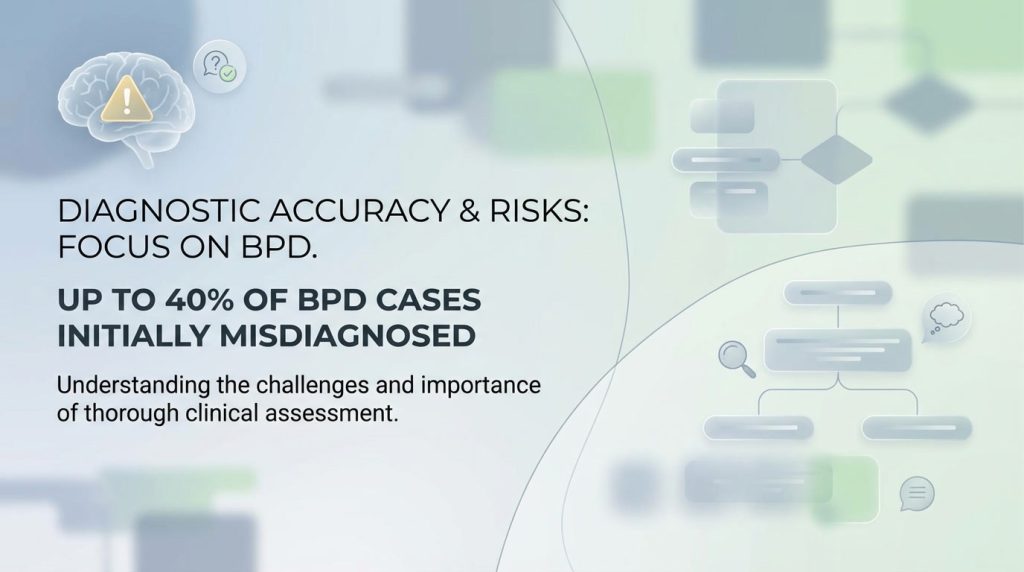
Research indicates that up to 40% of BPD cases are initially misdiagnosed, most commonly confused with bipolar disorder, major depressive disorder, or PTSD. Understanding common misdiagnosis patterns is essential for accurate differential diagnosis.
Why BPD Gets Misdiagnosed as Other Conditions
BPD vs Bipolar Disorder
Mood instability in BPD is frequently mistaken for bipolar disorder, leading to inappropriate mood stabilizer prescriptions. Key differentiators include:
- BPD mood shifts occur in response to interpersonal stressors and typically last hours to days
- Bipolar episodes are more autonomous, lasting weeks to months, with less environmental reactivity
- BPD lacks the distinct manic symptoms (decreased need for sleep, grandiosity, pressured speech) characteristic of bipolar disorder
Related: Navigating Diagnostic Challenges: Borderline Personality Disorder vs Bipolar Disorder
BPD vs Complex PTSD
Given the high trauma prevalence in BPD populations, distinguishing BPD from complex PTSD presents clinical challenges. While significant overlap exists, BPD demonstrates more prominent identity disturbance, fear of abandonment, and self-destructive behaviors extending beyond trauma responses.
Clinical Stigma as a Barrier to Accurate BPD Diagnosis
Research demonstrates high levels of diagnostic and treatment‑related stigma toward people with BPD among healthcare professionals, with some studies finding that nearly 90% of staff endorse at least one strongly negative stereotype. This stigma manifests through:
- Diagnostic hesitancy and label avoidance
- Premature diagnostic closure or reflexive alternative diagnoses
- Reduced treatment engagement and pessimistic prognosis assumptions
- Inadequate referrals to evidence-based BPD treatments
Clinicians must actively address their own potential biases and ensure that diagnostic stigma does not compromise assessment accuracy or treatment access.
Evidence-Based Treatment Approaches: BPD vs ASPD
Treatment efficacy differs substantially between BPD and ASPD, with BPD demonstrating significantly better response to specialized psychotherapeutic interventions.
First-Line Treatments for Borderline Personality Disorder
Research-supported psychotherapies for BPD include:
-
Dialectical Behavior Therapy (DBT)
DBT represents the most extensively researched treatment for BPD, demonstrating significant efficacy in reducing self-harm, suicidal behaviors, and psychiatric hospitalizations. Standard DBT comprises four treatment modes:
- Individual psychotherapy (weekly)
- Skills training group (weekly)
- Phone coaching (as needed)
- Consultation team for therapists (weekly)
- Mentalization-Based Treatment (MBT)
MBT focuses on enhancing patients’ capacity to understand their own and others’ mental states, with demonstrated effectiveness in reducing self-harm and improving interpersonal functioning.
- Schema-Focused Therapy (SFT)
SFT addresses maladaptive schemas developed in childhood, showing comparable efficacy to DBT in controlled trials with potentially higher cost-effectiveness.
- Transference-Focused Psychotherapy (TFP)
TFP utilizes psychodynamic principles to address object relations disturbances, with research supporting improvements in attachment organization and reduced suicidality.
Pharmacological Considerations
While no medications carry FDA approval specifically for BPD treatment, targeted pharmacotherapy may address comorbid conditions or specific symptom domains:
- SSRIs for affective dysregulation and impulsivity
- Second-generation antipsychotics (low-dose) for cognitive-perceptual symptoms
- Mood stabilizers for affective instability (though evidence is limited)
IMPORTANT: Pharmacotherapy should supplement, not replace, evidence-based psychotherapy for BPD. Polypharmacy should be avoided given limited empirical support and increased side effect burden.
Treatment Considerations for ASPD
Treatment outcomes for ASPD remain considerably poorer than BPD, with limited evidence supporting any specific intervention. Therapeutic approaches that show modest effectiveness include:
- Cognitive-behavioral interventions focused on reducing criminal recidivism
- Motivational interviewing for substance use treatment engagement
- Contingency management targeting specific behavioral changes
Treatment engagement represents a primary challenge in ASPD populations, as these individuals typically lack intrinsic motivation for psychological treatment and often present only when mandated by legal or social services systems.
Clinical Recommendations for Differential Diagnosis
To optimize diagnostic accuracy when evaluating BPD vs sociopath presentations, clinicians should implement the following systematic approach:
- Conduct comprehensive structured diagnostic interviews rather than relying on brief screening instruments alone
- Obtain collateral information from family members or previous treatment providers when possible
- Assess for trauma history using validated trauma screening measures
- Evaluate empathic capacity through both self-report and behavioral observation
- Systematically assess for abandonment fears versus indifference to rejection
- Examine the quality and motivation of interpersonal relationships
- Distinguish between emotional masking (BPD) and identity masking (ASPD)
- Document aggression directionality (self-directed vs. other-directed)
- Consider diagnostic consultation with colleagues specializing in personality disorders for complex presentations
How ICANotes Supports Accurate Diagnosis of BPD vs ASPD
Accurately distinguishing borderline personality disorder (BPD) from antisocial personality disorder (ASPD) requires more than symptom recognition — it depends on longitudinal insight, careful documentation, and the ability to clearly articulate clinical rationale. ICANotes is designed to support clinicians in exactly these areas.
Structured Documentation That Preserves Clinical Nuance
ICANotes’ menu-driven note structure helps clinicians document observable behaviors, emotional responses, and interpersonal patterns without relying on vague or subjective language. This is especially important when differentiating BPD vs ASPD, where intent, empathy, and relational motivation matter more than surface behavior.
By prompting clinicians to consistently document:
- Affect and emotional reactivity
- Interpersonal context and relational dynamics
- Impulsivity triggers and aftermath
- Evidence of remorse, repair attempts, or externalization
ICANotes helps ensure diagnostic impressions are grounded in patterned clinical evidence, not isolated encounters.
Longitudinal Visibility Across Sessions
Differentiating BPD from ASPD often hinges on change over time. ICANotes makes it easier to track:
- Whether narratives evolve or remain static
- Whether insight deepens or remains superficial
- Whether interpersonal patterns shift with treatment
Clear historical documentation supports more confident diagnostic refinement and helps clinicians avoid prematurely labeling behaviors without sufficient longitudinal data.
Clear Diagnostic Rationale for Supervision, Audits, and Continuity of Care
Misdiagnosis can lead to ineffective treatment plans, ethical risk, and documentation vulnerabilities. ICANotes supports defensible diagnostic reasoning by making it easier to:
- Tie diagnostic impressions directly to observed clinical indicators
- Document differential considerations (e.g., why BPD was favored over ASPD, or vice versa)
- Demonstrate ongoing diagnostic assessment rather than static labeling
This clarity is particularly valuable when notes are reviewed by supervisors, payers, auditors, or other treating clinicians.
Supports Evidence-Based Treatment Alignment
Because treatment approaches for BPD and ASPD differ significantly, accurate diagnosis must translate into appropriate care planning. ICANotes helps clinicians align documentation with evidence-based interventions by:
- Supporting detailed treatment goals linked to diagnostic features
- Reinforcing consistent documentation of skill-based interventions (e.g., DBT for BPD)
- Helping clinicians avoid documentation patterns that inadvertently reinforce misdiagnosis
When diagnosis, treatment planning, and progress notes tell the same coherent story, clinical decision-making — and patient outcomes — improve.
Built for Behavioral Health Clinical Judgment
ICANotes is not designed to replace clinical expertise or diagnostic judgment. Instead, it supports clinicians by reducing documentation friction, improving clarity, and ensuring that complex diagnostic decisions — like distinguishing BPD vs ASPD — are clearly and accurately reflected in the medical record.
Accurate diagnosis starts with accurate documentation. See how ICANotes supports clear, defensible clinical records with a free 30-day trial.

Start Your 30-Day Free Trial
Experience the most intuitive, clinically robust EHR designed for behavioral health professionals, built to streamline documentation, improve compliance, and enhance patient care.
- Complete Notes in Minutes - Purpose-built for behavioral health charting
- Always Audit-Ready – Structured documentation that meets payer requirements
- Keep Your Schedule Full – Automated reminders reduce costly no-shows
- Engage Clients Seamlessly – Secure portal for forms, messages, and payments
- HIPAA-Compliant Telehealth built into your workflow


Frequently Asked Questions: BPD vs Sociopath
Conclusion: The Critical Importance of Accurate Differential Diagnosis
Accurate differential diagnosis between BPD and sociopathy represents far more than an academic exercise — it fundamentally determines whether patients receive appropriate, potentially life-saving interventions or years of ineffective treatment.
While both disorders present with interpersonal dysfunction and impulsivity, the underlying mechanisms differ profoundly. BPD involves intense emotions, hyperactive empathy, and desperate fears of abandonment, while ASPD is characterized by emotional detachment, empathy deficits, and indifference to social consequences. These fundamental differences necessitate entirely different treatment approaches.
The consequences of misdiagnosis are severe. Patients with BPD who receive incorrect diagnoses may undergo years of inappropriate pharmacological treatment, miss opportunities for evidence-based psychotherapies with demonstrated efficacy, and experience progressive deterioration rather than recovery. The misdiagnosis rate of 40% for BPD is unacceptably high and demands systematic improvement in diagnostic practices.
Mental health clinicians bear the responsibility of conducting thorough, unbiased assessments utilizing validated diagnostic instruments. This requires addressing the substantial stigma surrounding BPD diagnosis — stigma that affects 80% of medical professionals and creates barriers to accurate diagnosis and appropriate referral.
For patients concerned about potential misdiagnosis, advocating for comprehensive evaluation using structured diagnostic interviews represents an essential self-advocacy strategy. When BPD is accurately diagnosed and treated with evidence-based interventions like DBT, MBT, or SFT, outcomes can be remarkably positive, with significant reductions in self-harm, improved relationship functioning, and enhanced quality of life.
The differential diagnosis of BPD vs ASPD ultimately saves lives. Clinicians must commit to diagnostic excellence, overcome stigma-driven biases, and ensure that every patient receives the accurate diagnosis that opens the door to effective, transformative treatment.
Key Clinical Takeaways: BPD vs Sociopath Differential Diagnosis
- BPD presents with intense emotional experiences and hyperactive empathy, while ASPD features emotional detachment and genuine empathy deficits — this represents the most critical diagnostic differentiator
- Misdiagnosis occurs in approximately 40% of BPD cases, most frequently confused with bipolar disorder, resulting in inappropriate pharmacological interventions and delayed access to effective treatments
- Key diagnostic differentiators include abandonment fears (BPD) versus indifference to rejection (ASPD), emotional masking versus identity masking, and self-directed versus other-directed aggression
- Evidence-based psychotherapies — particularly Dialectical Behavior Therapy (DBT), Mentalization-Based Treatment (MBT), and Schema-Focused Therapy (SFT) — demonstrate remarkable efficacy for BPD when accurately diagnosed
- Patients should advocate for comprehensive evaluations utilizing validated diagnostic instruments (SCID-5-PD, DIB-R) rather than accepting superficial assessments
- Clinical stigma represents a major diagnostic barrier, with research indicating approximately 80% of medical professionals acknowledge discriminatory attitudes toward BPD patients
- Treatment outcomes for BPD are significantly more favorable than ASPD when appropriate interventions are implemented, with substantial reductions in self-harm, suicidality, and improved psychosocial functioning
Related Posts





Dr. October Boyles
DNP, MSN, BSN, RN
About the Author
Dr. October Boyles is a behavioral health expert and clinical leader with extensive expertise in nursing, compliance, and healthcare operations. With a Doctor of Nursing Practice (DNP) and advanced degrees in nursing, she specializes in evidence-based practices, EHR optimization, and improving outcomes in behavioral health settings. Dr. Boyles is passionate about empowering clinicians with the tools and strategies needed to deliver high-quality, patient-centered care.