Blog > Practice Management > HL7 vs FHIR Comparison Guide
HL7 vs FHIR: What Mental Health Providers Need to Know
HL7 and FHIR are two common standards for health data exchange, but they’re built for very different needs. HL7 has been used for decades, while FHIR is designed for modern, connected care. So which one works better for mental health providers? In this guide, you'll learn the key differences between HL7 and FHIR, why they matter, and how choosing the proper standard can improve documentation, data sharing, and care delivery.


Last Updated: January 5, 2026

Mental health care depends on accurate, long-term clinical records and seamless communication between providers. From therapy notes to medication history and treatment plans, this information needs to move quickly and securely between systems. Interoperability standards like HL7 and FHIR help make this possible.
HL7 vs FHIR: A Quick Comparison
HL7 and FHIR are both standards for sharing health data, but they serve different needs. HL7 (especially versions 2 and 3) has been around for decades and is still widely used in older hospital systems. FHIR is a newer standard designed for today’s technology, including cloud-based tools, mobile apps, and real-time data exchange. Here’s how they compare:
HL7 vs FHIR: A Quick Comparison
| Category | HL7 v2/v3 | FHIR |
|---|---|---|
| Release Year | 1987 (v2), 2005 (v3) | 2014 |
| Learning Curve | Steep | Moderate to Easy |
| Implementation Cost | High | Lower |
| Modern Tech Support | Limited | Full (REST APIs, JSON) |
| Mobile / App Friendly | No | Yes |
| Government Mandated | Some use cases | CMS / ONC rules since 2020 |
Key takeaway: FHIR is designed for modern, connected care using APIs and cloud-based workflows, while HL7 remains common in legacy healthcare integrations.
FHIR is built for the future. It works well with cloud-based EHRs, supports real-time access to patient records, and meets federal interoperability requirements. HL7 still plays a role, especially in connecting older systems, but FHIR is quickly becoming the standard for mental health software moving forward.
What Is HL7?
HL7 (Health Level Seven) is a set of international standards used to exchange healthcare information electronically. It was designed to help health systems share data for core functions like admissions, discharges, lab results, and billing. Before HL7, different software systems had no shared format, making integration difficult and time-consuming.
Today, most providers still use HL7 version 2 (v2). While it successfully moves data between systems, it follows a rigid message format that often requires custom development. This can slow down implementation and make maintenance more complex. HL7 has been the backbone of healthcare interoperability for decades, but it is now showing its limitations in today’s digital, mobile-first environment.
Key Features of HL7
- Message-based structure: Sends health data in predefined messages between systems
- Custom formatting: Uses characters like pipes and carets to separate fields
- Interface engine required: Needs additional tools to manage and translate messages
- Widespread use: Still common in hospitals and older behavioral health systems.
HL7 has played a major role in enabling electronic health records, but it wasn't built for modern needs like mobile access, cloud software, or real-time data sharing. That's where FHIR comes in.
What is FHIR?
FHIR (Fast Healthcare Interoperability Resources) is a modern standard for healthcare data exchange. Developed by HL7 International, FHIR is built on the same web technologies used in apps and cloud platforms, including REST APIs, JSON, and XML. This makes it easier for systems to connect, share, and access health data in real time.
Unlike older standards, FHIR is designed to be flexible, developer-friendly, and ready for the digital tools providers use today. It supports everything from patient apps to telehealth platforms and cloud-based EHRs, making it well-suited to the evolving needs of mental health practices.
Key Features of FHIR
- Web-first design: Uses RESTful APIs for fast, secure data exchange
- Standard formats: Supports JSON, XML, and RDF for wide compatibility
- Modular structure: Organizes data into "resources" like patients, medications, or appointments
- Built for interoperability: Easily connects EHRs, mobile apps, analytics tools, and patient portals
FHIR makes it possible to access and share behavioral health data more easily across care settings. Its modern foundation supports better coordination, patient engagement, and data-driven care.
HL7 vs FHIR: Key Differences
HL7 and FHIR both support the exchange of healthcare data, but they work in very different ways. FHIR is built with newer technologies and offers more flexibility, which makes it a better fit for today’s connected, digital healthcare systems.
Here’s a side-by-side look at how they compare:
Key Differences: HL7 v2 vs FHIR
| Feature | HL7 v2 | FHIR |
|---|---|---|
| Technology | Custom messaging format | Uses RESTful APIs and web-based formats |
| Flexibility | Rigid and harder to adapt | Modular and easy to customize |
| Integration | Requires interface engines | Easier to connect across platforms |
| Scalability | Limited across devices and apps | Scales well with cloud systems and mobile tools |
| Speed of Adoption | Slower and more complex to implement | Faster for IT teams, developers, and vendors |
| Patient Access | Not designed for use with patient apps | Works well with portals, apps, and engagement |
| Use Cases | Admissions, billing, lab messages | Patient access, care coordination, telehealth |
Why FHIR is Better for Behavioral Health
Outdated systems and paper-based processes often hold behavioral health practices back. They create delays, limit access to patient information, and make collaboration more difficult.
FHIR helps solve these problems by making data easier to share, access, and integrate. It supports real-time updates across systems and adapts well to new tools and regulations. In fact, nearly 70% of organizations using FHIR report real-world improvements, from lower costs to better care outcomes.
Real-Time Data Exchange
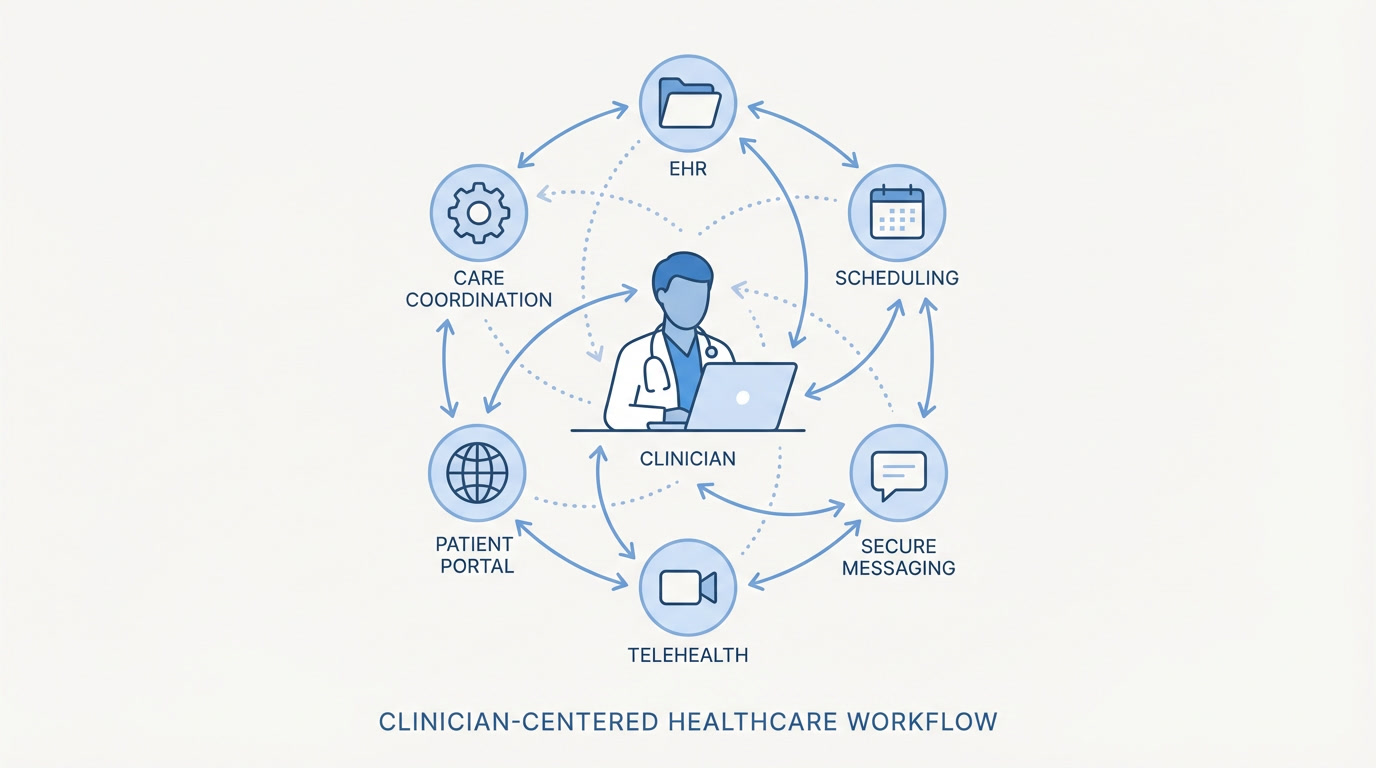
FHIR enables systems like billing platforms, labs, and pharmacies to share data instantly using EHR interoperability tools. This reduces manual data entry, helps prevent errors, and ensures that clinicians have accurate, timely information. For behavioral health providers, that means fewer delays and more informed care decisions.
Better Patient Access and Engagement
FHIR supports patient portals and mobile apps that allow individuals to view records, message providers, and manage appointments securely. This transparency helps build trust and empowers patients to take an active role in their care — especially important for those managing long-term mental health conditions.
Stronger Care Coordination
Behavioral health treatment often involves multiple professionals. FHIR helps connect them by delivering structured, consistent patient data across systems. When all providers can access the same information, it supports continuity of care and reduces the risk of miscommunication or duplicated work.
Faster Integration of New Tools
FHIR simplifies integration when adding supported tools compared to older HL7-only workflows. Unlike older standards that require custom interfaces, FHIR simplifies integration, saves time, and reduces technical complexity.
Support for National Standards
FHIR is central to federal programs like TEFCA and plays a key role in many value-based care initiatives. Behavioral health practices using FHIR are better positioned to meet interoperability requirements, connect with health information exchanges, and maintain HIPAA-compliant data sharing.
Related: EHR for Small Behavioral Health Practices: What to Look for in 2025
How ICANotes Supports HL7 and FHIR
ICANotes is built specifically for behavioral health and makes interoperability simple. It supports both HL7 and FHIR standards, offering ONC-certified solutions that simplify secure integration with other systems.
Whether you're upgrading from paper records or replacing outdated software, ICANotes helps you modernize without disruption.
Here’s how it supports your success:
FHIR-Ready APIs for Modern Integrations
ICANotes provides standards-based FHIR APIs to support secure data exchange with supported integrations, patient access workflows, and regulatory requirements. This gives you more flexibility without adding complexity.
Secure Data Exchange with HL7 and FHIR
ICANotes supports HL7 v2 messaging for traditional data sharing and FHIR for real-time, API-based connections. This means you can exchange data with labs, pharmacies, clearinghouses, and health information exchanges.
HIPAA-Compliant from End to End
Every integration and data transfer is protected by built-in security controls that meet HIPAA requirements. You can share information confidently, knowing your practice is covered.
Behavioral Health Templates Included
ICANotes comes with built-in clinical templates designed for mental health and substance use treatment. These templates are optimized for structured documentation and work well with FHIR-connected tools.
Support for Compliance and Value-Based Care
As a CEHRT-certified system, ICANotes makes it easier to meet federal reporting standards, track outcomes, and qualify for behavioral health funding. This helps your organization stay aligned with changing regulations and payer programs.
ICANotes gives you the interoperability tools you need, combined with features built for the way behavioral health professionals actually work.

Frequently Asked Questions: HL7 vs FHIR
Future-Proof Your Practice with ICANotes
Choosing the right data standard can make a real difference in how your practice shares information, connects systems, and delivers care. FHIR offers a faster and more flexible way to support modern behavioral health workflows. Whether you are upgrading your EHR or adding new tools, it helps remove technical barriers and improve care coordination.
If you are ready to simplify your data exchange and support better outcomes, explore how FHIR and ICANotes can help your team move forward.
Start your free trial, schedule a demo, or contact us for a personalized walkthrough.

Start Your 30-Day Free Trial
Experience the most intuitive, clinically robust EHR designed for behavioral health professionals, built to streamline documentation, improve compliance, and enhance patient care.
- Complete Notes in Minutes - Purpose-built for behavioral health charting
- Always Audit-Ready – Structured documentation that meets payer requirements
- Keep Your Schedule Full – Automated reminders reduce costly no-shows
- Engage Clients Seamlessly – Secure portal for forms, messages, and payments
- HIPAA-Compliant Telehealth built into your workflow

Related Posts



Sanjiv Patel
Vice President of Product
Sanjiv Patel is Vice President of Product at ICANotes, where he leads the strategic development of behavioral health EHR and billing solutions. With over 20 years of experience in healthcare technology, Sanjiv has spearheaded major product initiatives that enhance clinical efficiency and provider outcomes. He holds CSM and CSPO certifications and is a graduate of Drexel University.