Blog > Treatment Strategies > Brief Psychodynamic Therapy: Clinician Guide & Techniques
Brief Psychodynamic Therapy: Evidence-Based Interventions & Techniques for Clinicians
Brief psychodynamic therapy (BPT), also known as short-term psychodynamic therapy or time-limited dynamic psychotherapy, is a powerful, evidence-based approach that helps clinicians deliver depth-oriented treatment within a structured, time-limited framework. This comprehensive clinician guide explores the core principles, research evidence, and practical applications of brief psychodynamic therapy, including targeted interventions, transference interpretation, and insight-oriented techniques. Designed for modern behavioral health settings, the article provides actionable strategies, clinical examples, and documentation considerations to help therapists apply brief psychodynamic therapy techniques effectively with appropriate clients — while maintaining therapeutic depth, efficiency, and measurable outcomes.


Last Updated: January 30, 2026


What You'll Learn
- The defining principles of brief psychodynamic therapy and how it differs from long-term psychodynamic approaches
- Evidence-based conditions and client characteristics best suited for short-term psychodynamic therapy
- Core brief psychodynamic therapy techniques, including clarification, confrontation, transference interpretation, and affective expression
- How to structure brief psychodynamic treatment across assessment, active working-through, and termination phases
- Practical clinical scripts and examples for applying psychodynamic therapy interventions in time-limited settings
- When brief psychodynamic therapy is contraindicated and how to assess readiness and appropriateness
- How to integrate brief dynamic therapy into modern clinical practice, including telehealth and insurance-driven environments
- Documentation and treatment-planning strategies that support time-limited psychodynamic psychotherapy
Contents
- Who Benefits from Brief Psychodynamic Therapy?
- Brief Psychodynamic Therapy Techniques and Interventions
- Brief Psychodynamic Therapy vs Long-Term Psychodynamic Therapy
- What to Expect: Br5ief Psychodynamic Therapy Timeline and Process
- Integrating Brief Psychodynamic Therapy into Your Clinical Practice
- How ICANotes Supports Brief Psychodynamic Therapy
- FAQ: Brief Psychodynamic Therapy
- Getting Started with Brief Psychodynamic Therapy
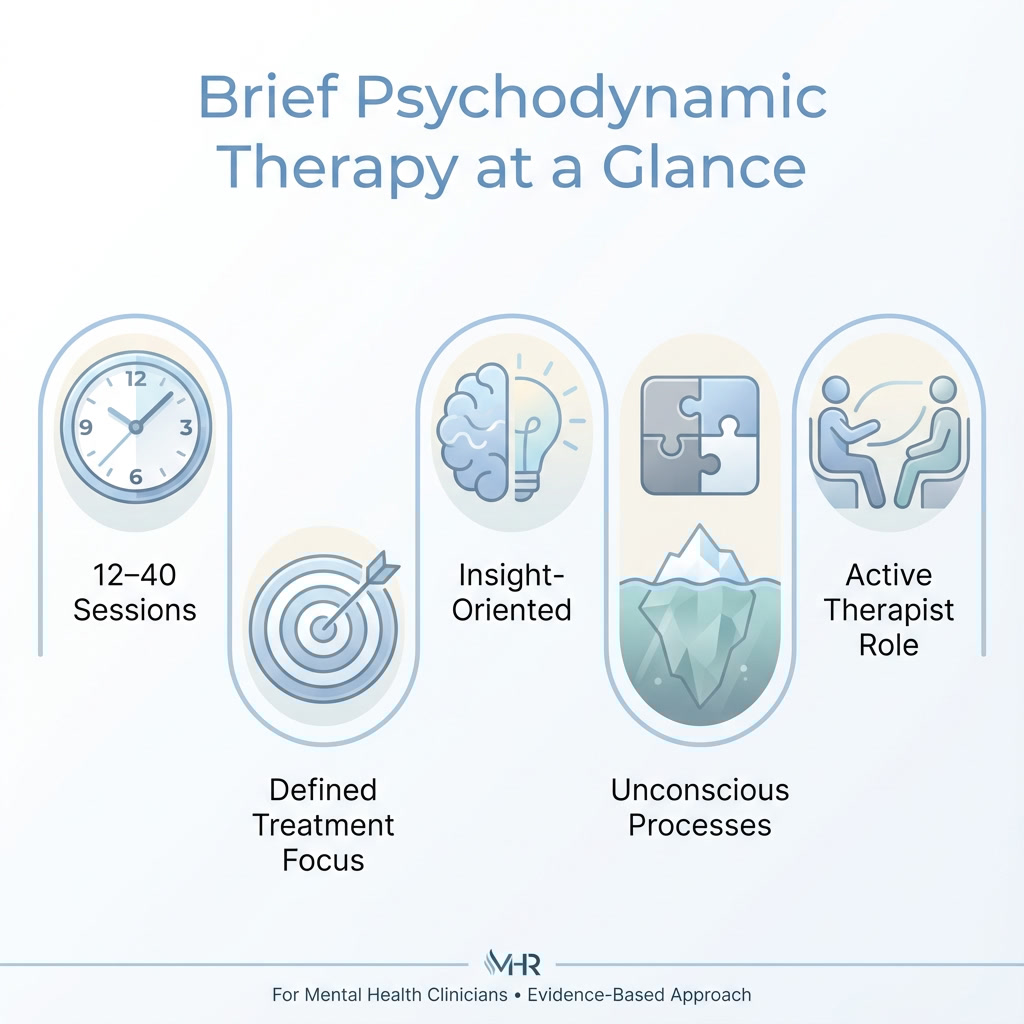
Brief psychodynamic therapy (BPT) offers behavioral health clinicians powerful, evidence-based tools to help clients achieve meaningful insights and behavioral changes within a constrained timeframe. Unlike traditional long-term psychodynamic therapy, which often requires years of engagement, brief psychodynamic therapy focuses on immediate presenting problems through strategic interventions. Research shows BPT can promote significant client insight and symptom resolution in 12 to 40 sessions, typically 16-25 sessions over 4-6 months. This comprehensive guide provides clinicians with practical brief psychodynamic therapy techniques, clinical examples, and evidence-based strategies to effectively implement this approach in time-limited settings.
What is Brief Psychodynamic Therapy?
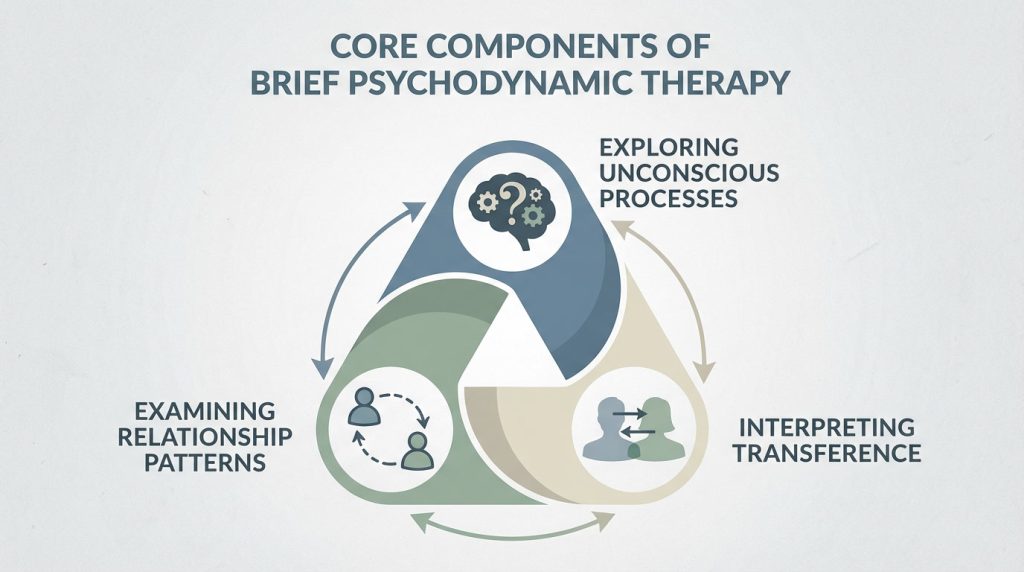
Brief psychodynamic therapy is an evidence-based, time-limited approach that retains core psychodynamic principles while adapting them specifically for shorter treatment periods. This therapeutic modality explores unconscious processes, examines relationship patterns, and interprets transference, but does so with a focused, active stance designed to produce rapid therapeutic change.
Core Components of Brief Psychodynamic Therapy
- Exploring unconscious processes: Helping clients understand the motivations, memories, and feelings influencing their behaviors that often operate below conscious awareness
- Examining relationship patterns: Identifying recurring behaviors and emotional responses within personal relationships to highlight how past experiences shape current interactions
- Interpreting transference: Recognizing and discussing how clients project past relationships onto present ones, particularly within the therapeutic relationship itself
Research and Evidence Base for Brief Psychodynamic Therapy
Extensive research demonstrates the efficacy of brief psychodynamic therapy across multiple mental health conditions. A 2015 meta-analysis of 54 studies involving 3,946 patients found that short-term psychodynamic psychotherapy was significantly more effective than control conditions, with effect sizes ranging from 0.49 to 0.69. A 2023 umbrella review confirmed that brief dynamic therapy produces significant therapeutic gains comparable to other evidence-based treatments, with benefits that often persist and even increase after treatment ends.
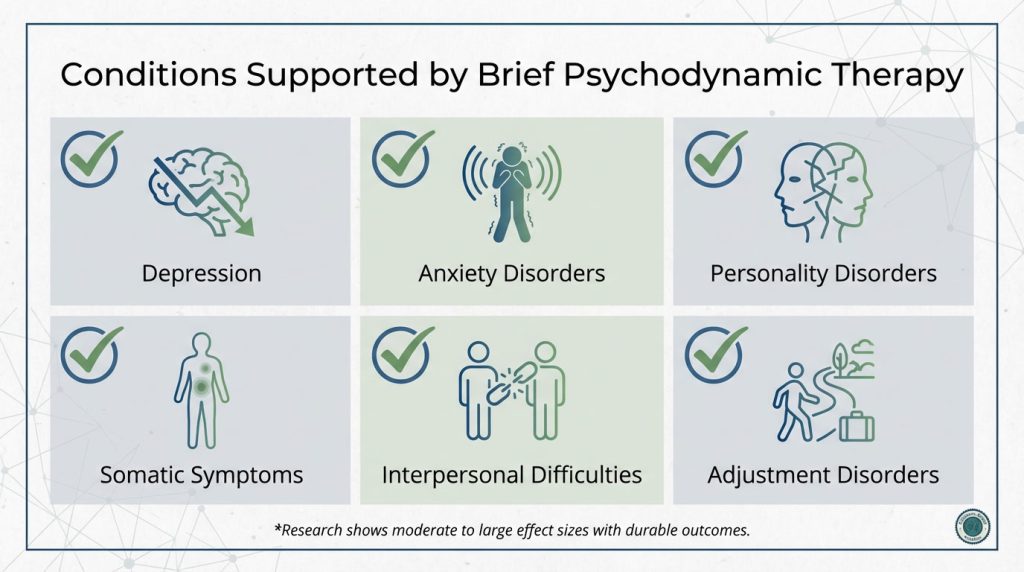
Conditions with strong evidence for brief psychodynamic therapy effectiveness:
- Depression (major depressive disorder and persistent depressive symptoms)
- Anxiety disorders (generalized anxiety disorder, social anxiety, panic disorder)
- Personality disorders, particularly cluster C (avoidant, obsessive-compulsive, and dependent personality disorders). For borderline personality disorder, specialized psychodynamic approaches such as Transference-Focused Psychotherapy (TFP) and Mentalization-Based Treatment (MBT) have demonstrated effectiveness comparable to Dialectical Behavior Therapy, though these typically require longer treatment (40+ sessions)
- Somatic symptom disorders
- Interpersonal difficulties and relationship conflicts
- Adjustment disorders and acute stress reactions
Multiple meta-analyses support these applications:
- Depression: A 2015 meta-analysis of 54 studies found medium to large effect sizes (d=0.49-0.69) compared to control conditions
- Anxiety disorders: A 2014 meta-analysis of 14 RCTs found PDT significantly more effective than controls (g=0.64) and equivalent to alternative treatments
- Personality disorders: A 2023 umbrella review found medium effect sizes (g=-0.63 to -0.65) for borderline and Cluster C personality disorders
Research indicates that brief psychodynamic therapy produces effect sizes ranging from moderate to large (d=0.57 to 1.18 for pre-treatment to post-treatment changes), with treatment gains often maintained or even improved at follow-up periods of 6 to 12 months post-treatment (effect sizes d=0.20 to 1.04). Studies suggest that the relational focus and insight-oriented nature of BPT may produce more durable changes in personality functioning and interpersonal patterns. A 2017 meta-analysis using formal equivalence testing found psychodynamic therapy to be as efficacious as cognitive-behavioral therapy and other established treatments.
How Brief Psychodynamic Therapy Compares to Other Treatments
Brief psychodynamic therapy has been rigorously compared to other evidence-based treatments. A 2017 study in the American Journal of Psychiatry was the first to formally test equivalence between psychodynamic therapy and established treatments using rigorous statistical methods. The study found psychodynamic therapy to be as efficacious as cognitive-behavioral therapy and other established treatments, even after controlling for researcher allegiance.
When compared specifically to CBT, most studies show no significant differences in outcomes at treatment termination. Interestingly, some research suggests that different patients may benefit more from different approaches based on individual characteristics such as reflective functioning capacity.
Core Principles of Short-Term Psychodynamic Therapy
In brief psychodynamic therapy, the therapist adopts an emotionally present and strategically focused role, intervening early around affective experience and relational dynamics rather than permitting prolonged defensive processes. To effectively apply brief psychodynamic therapy, clinicians should understand and implement these foundational principles that distinguish this approach from traditional long-term psychodynamic work:
- Clearly Defined Focus: Establish specific therapeutic goals based on client presentation within the first 1-3 sessions. Prioritize understanding and addressing immediate psychological conflicts rather than comprehensive personality restructuring. The therapeutic focus should remain consistent throughout treatment to maximize efficiency.
- Insight-Oriented Techniques: Emphasize interpretation and exploration of unconscious content that relates directly to the presenting problem. Unlike exploratory long-term therapy, brief dynamic therapy maintains a laser focus on material relevant to treatment goals.
- Active Therapist Role: Maintain an active and structured stance in sessions, guiding clients toward understanding rather than allowing open-ended exploration. The brief dynamic therapist takes a more directive approach compared to classical psychoanalysis, offering interpretations earlier and more frequently.
- Time-Consciousness: Both therapist and client maintain awareness of the limited timeframe, which can mobilize therapeutic work and reduce dependency. The time limit itself becomes a therapeutic tool that encourages focus and motivation.
Put brief psychodynamic therapy into practice without losing focus or clinical rigor.
Download the Brief Psychodynamic Therapy in Practice toolkit to get assessment checklists, focal conflict worksheets, intervention language, and documentation prompts designed specifically for time-limited psychodynamic work.
Who Benefits from Psychodynamic Therapy?
Brief psychodynamic therapy is particularly well-suited for specific client populations and presenting problems. Understanding who benefits most helps clinicians make appropriate treatment recommendations and set realistic expectations.
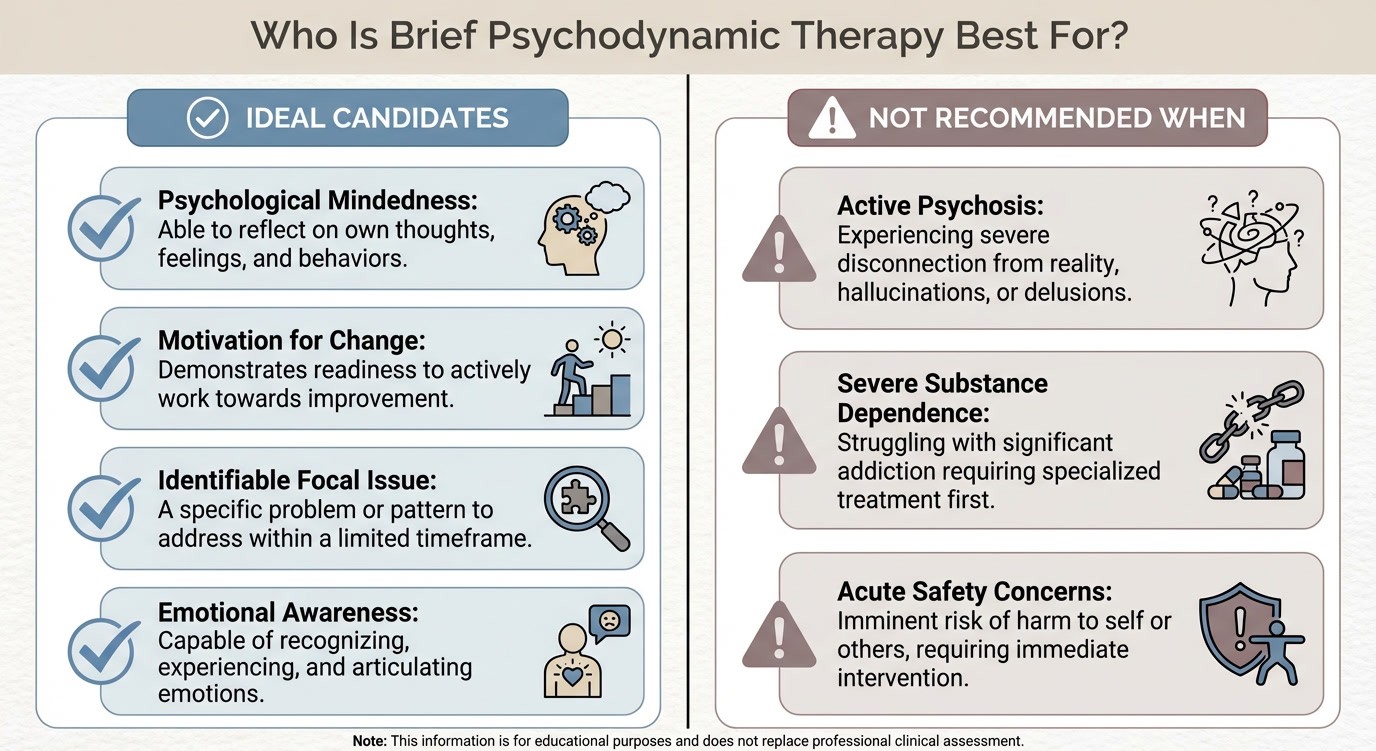
Ideal Client Characteristics
- Psychological mindedness: Ability to think about thoughts and feelings, reflect on internal experiences, and consider psychological explanations for behaviors
- Motivation for change: Active engagement in treatment and willingness to explore difficult emotional material
- Capacity for emotional expression: Ability to identify and articulate feelings, even if this capacity needs development during treatment
- Identifiable focal issue: Clear presenting problem that can be linked to relational patterns or unconscious conflicts
- Adequate ego strength: Sufficient psychological resources to tolerate anxiety and engage in exploratory work without decompensation
Optimal Presenting Problems
- Acute stressors and life transitions (job loss, relationship changes, grief)
- Mild to moderate depression and anxiety
- Interpersonal conflicts and relationship difficulties
- Recurrent maladaptive patterns in relationships or work
- Self-esteem and identity concerns
- Adjustment disorders and situational distress
Contraindications and Limitations
Brief psychodynamic therapy may not be appropriate for clients presenting with:
- Active psychosis or severe thought disorders. Research shows limited evidence for psychodynamic therapy's effectiveness with psychosis, obsessive-compulsive disorder, or active substance dependence (Fonagy, 2015).
- Active substance dependence requiring primary addiction treatment
- Severe personality disorders with significant instability
- Acute safety concerns (active suicidality, homicidality)
- Severe cognitive impairment limiting insight capacity
- Multiple complex comorbid conditions requiring comprehensive treatment
In these cases, clinicians should consider crisis intervention, stabilization, longer-term therapy, or referral to higher levels of care before considering brief psychodynamic work.
Brief Psychodynamic Therapy Techniques and Interventions
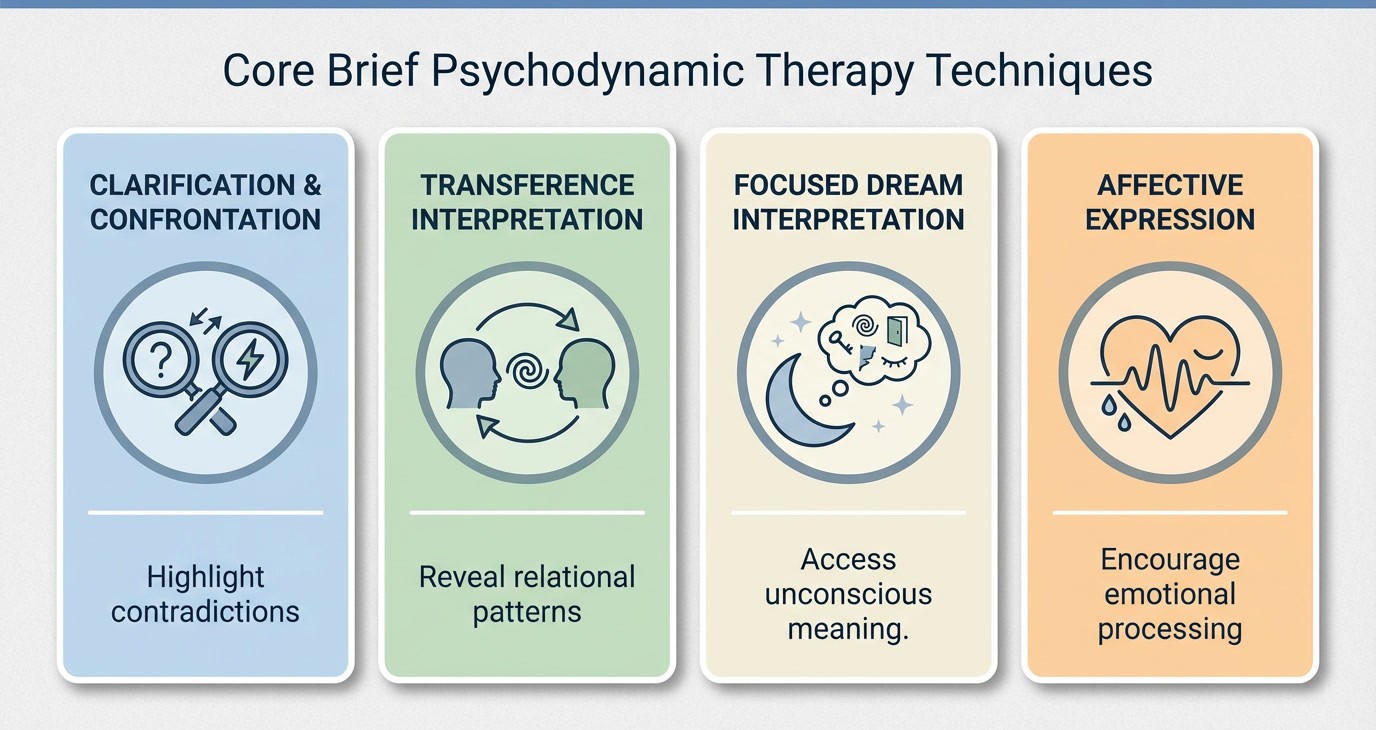
Clinicians can implement several targeted psychodynamic therapy interventions effectively within a brief therapeutic framework. These techniques maintain the depth of psychodynamic work while remaining focused and time-efficient.
1. Clarification and Confrontation
Gently challenge clients' contradictions or defensive behaviors to heighten awareness of unconscious conflicts. This intervention helps clients recognize discrepancies between their stated feelings and observable behaviors or between different aspects of their presentation.
Clinical Example:
If a client repeatedly insists they are unaffected by a relationship breakup yet shows signs of sadness, withdrawal, and decreased functioning, the clinician might clarify and confront this discrepancy gently to encourage deeper exploration.
Clarification and Confrontation Script:
Clinician: "I notice you said you're fine about your recent job loss, yet you also mentioned feeling unmotivated and withdrawn lately. Can we talk about what might really be going on beneath the surface?"
2. Interpretation of Transference
Rapidly identify and interpret transference dynamics to illuminate recurring interpersonal patterns. In brief dynamic therapy, transference interpretations are offered more quickly than in traditional psychoanalysis, focusing specifically on how these patterns relate to the presenting problem.
Clinical Example:
If a client consistently reacts defensively when receiving feedback in therapy, the therapist might explore how this mirrors early caregiver interactions, helping the client recognize and modify their relational patterns both in therapy and in outside relationships.
Interpretation of Transference Dialogue:
Client: "You seem frustrated with me."
Clinician: "I wonder if my feedback reminds you of situations where you've felt criticized before, perhaps by someone important in your past?"
3. Focused Dream Interpretation
Utilize selective dream analysis tied directly to therapeutic objectives to quickly uncover significant unconscious material. Unlike comprehensive dream work in long-term therapy, brief psychodynamic therapy uses dreams strategically to access material relevant to treatment goals.
Clinical Example:
A clinician might analyze a recurring dream theme related to feelings of helplessness or abandonment, directly linking this analysis to current emotional difficulties or relationship challenges the client is experiencing.
Focused Dream Interpretation Process:
- Ask the client to describe the dream vividly, including sensory details and emotions
- Identify core emotions and conflicts represented in the dream imagery
- Link these dream elements directly to current therapeutic issues and treatment goals
- Discuss insights and their practical application to current life challenges
4. Affective Expression Encouragement
Prompt clients to openly express suppressed emotions directly linked to their immediate concerns, facilitating rapid emotional processing and insight generation. This technique accelerates the therapeutic process by bringing previously avoided feelings into conscious awareness.
Clinical Example:
Encouraging a client to verbally express anger or disappointment towards a significant person in their life can facilitate immediate emotional release, provide insight into avoided feelings, and open pathways for processing complex emotional experiences.
Affective Expression Prompt:
Clinician: "What would you say right now if you could speak directly to your partner about your feelings of hurt?"
Brief Psychodynamic Therapy vs. Long-Term Psychodynamic Therapy
Understanding the key differences between brief and long-term psychodynamic approaches helps clinicians make appropriate treatment recommendations and set realistic expectations with clients.
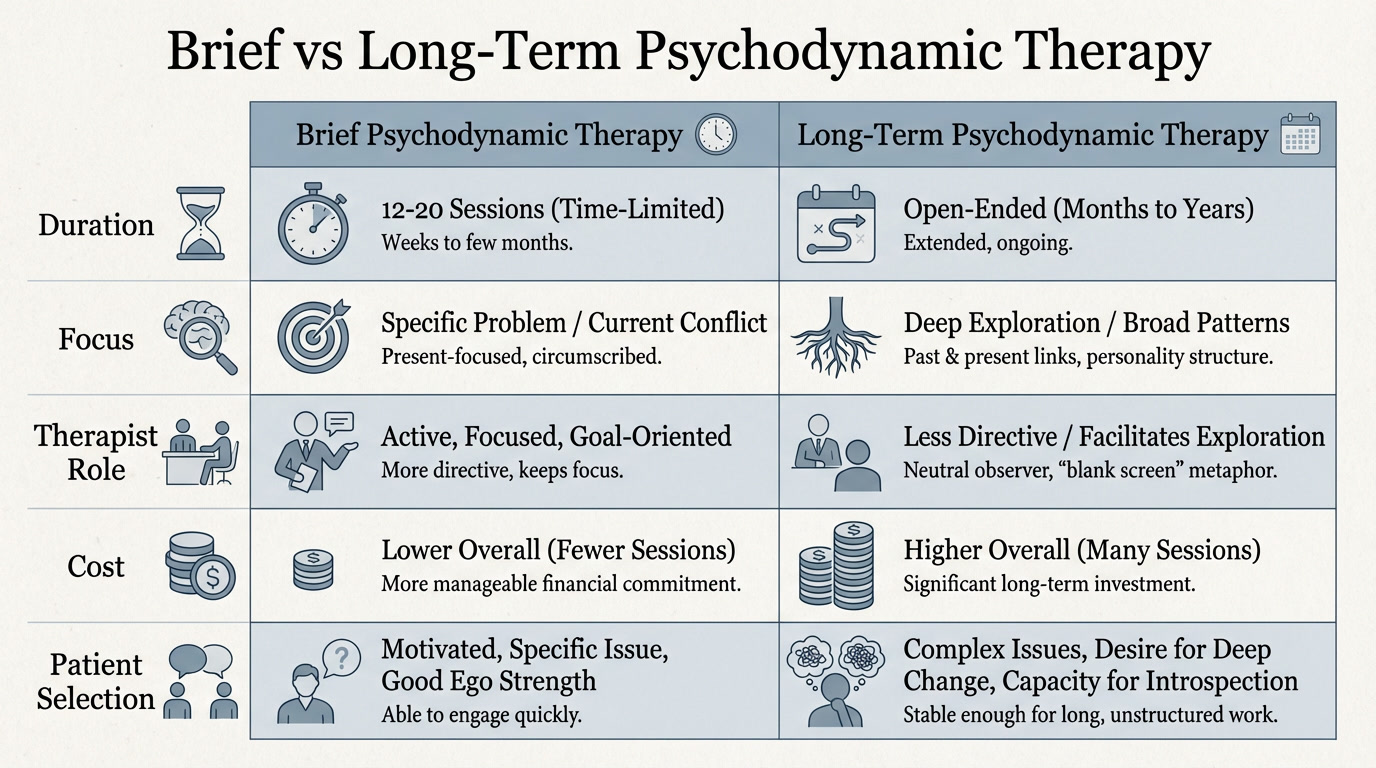
Treatment Duration:
- Brief Psychodynamic Therapy: Typically 12-40 sessions over 3-12 months, most commonly 16-25 sessions, with clearly defined endpoints established at treatment outset
- Long-Term Psychodynamic Therapy: Often 1-5+ years, sometimes open-ended without predetermined termination
Therapeutic Focus:
- Brief: Narrow, problem-focused approach targeting specific symptoms or conflicts directly related to presenting concerns
- Long-Term: Broad, comprehensive personality restructuring and exploration of multiple life domains
Therapist Activity Level:
- Brief: Active, structured, directive stance with frequent interpretations and clear session agendas
- Long-Term: More neutral, less directive stance allowing for free association and open-ended exploration
Patient Selection:
- Brief: More selective, requiring psychological mindedness, motivation, and identifiable focal conflicts
- Long-Term: Can accommodate more complex presentations, severe personality pathology, and clients with lower initial insight
Cost Considerations:
- Brief: Lower total cost, typically 12-40 sessions at standard therapy rates (estimated $100-$250 per session depending on location and provider credentials); more likely to be covered by insurance with clear treatment plans
- Long-Term: Significantly higher total investment, often requiring out-of-pocket payment as insurance coverage limitations are reached
Note: Costs vary significantly by location, provider credentials, and insurance coverage. Contact providers directly for accurate pricing.
What to Expect: Brief Psychodynamic Therapy Timeline and Process
Understanding the typical structure and timeline of brief psychodynamic therapy helps both clinicians and clients navigate the treatment process effectively.
Session Structure and Frequency
- Session length: Typically 50 minutes per session
- Frequency: Usually weekly sessions; some intensive formats may use twice-weekly sessions
- Total duration: Most commonly 16-20 sessions over 4-6 months for depression (NICE guidelines), though this can range from 12-40 sessions depending on client needs and treatment model. For social anxiety disorder, treatment typically consists of 25-30 sessions over 6-8 months
Treatment Phases
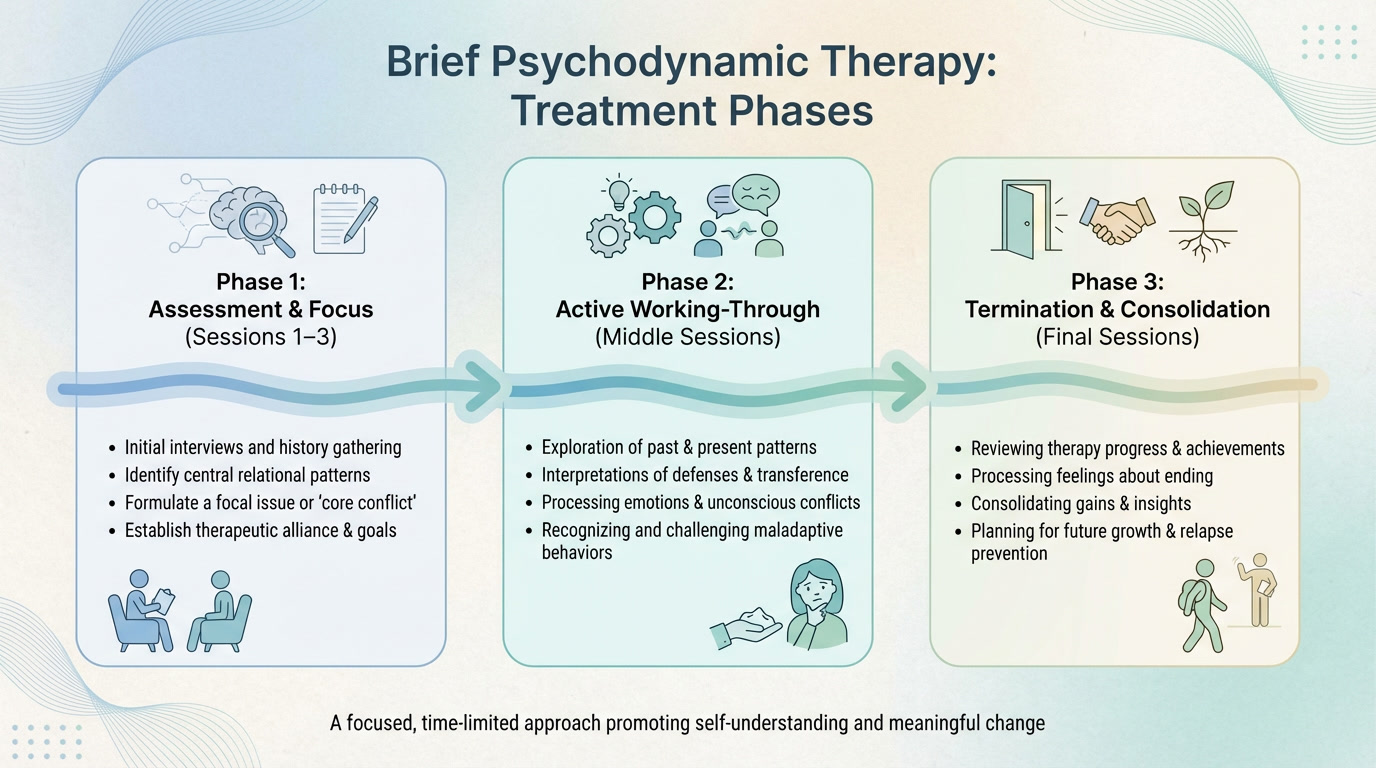
Phase 1: Assessment and Focus Formulation (Sessions 1-3)
During initial sessions, the therapist conducts a comprehensive assessment while beginning to establish the therapeutic alliance. Key activities include identifying the central conflict or focal issue, establishing treatment goals, and agreeing on the time frame. The therapist formulates a psychodynamic understanding linking current symptoms to underlying conflicts and relational patterns.
Phase 2: Active Working-Through (Middle Sessions)
The bulk of therapeutic work occurs during the middle phase. The therapist actively uses psychodynamic interventions — interpretations, confrontations, and transference analysis — to help the client develop insight into unconscious patterns. Clients often experience emotional breakthroughs, develop new understanding of their behaviors, and begin experimenting with different ways of relating to themselves and others.
Phase 3: Termination and Consolidation (Final 3-4 Sessions)
The ending phase focuses on reviewing progress, consolidating gains, and processing feelings about termination. Clients often re-experience separation and loss issues during this phase, providing valuable therapeutic material. The therapist helps clients identify strategies for maintaining progress and recognizing when future therapy might be beneficial.
Practical Tips for Successfully Implementing Brief Psychodynamic Therapy
Mastering brief psychodynamic therapy requires not only understanding the techniques but also developing the clinical skills to implement them effectively within time constraints.
1. Establish a Strong Therapeutic Alliance Early
The therapeutic relationship is the foundation of all psychodynamic work. In brief therapy, clinicians must quickly foster a strong therapeutic bond to enable deeper exploration in fewer sessions. Use empathic attunement, validation, and genuine warmth from the first contact. Research shows that the quality of the therapeutic alliance by session 3 predicts overall treatment outcome.
2. Maintain Clear Session Structure
While allowing space for spontaneous material, maintain sufficient structure to ensure sessions remain goal-oriented and productive. Begin sessions by checking in on the previous week and current state, focus the middle of the session on therapeutic work related to treatment goals, and conclude with brief summarization of insights or homework if appropriate. This structure prevents drift while maintaining psychodynamic depth.
3. Continuous Assessment and Flexibility
Regularly evaluate progress toward therapeutic objectives to maintain momentum and adjust interventions as needed. Use brief outcome measures every 4-6 sessions to track progress objectively. If the client is not progressing as expected, reconsider the treatment focus, increase intervention intensity, or consider whether brief therapy remains appropriate.
4. Address Termination from the Beginning
Discuss the time-limited nature of therapy in the first session and refer to it periodically throughout treatment. This time awareness mobilizes therapeutic work and allows adequate processing of termination issues. Count down remaining sessions explicitly in the final phase to help clients prepare emotionally for ending.
5. Balance Depth with Efficiency
Brief therapy does not mean superficial therapy. Maintain psychodynamic depth by focusing intensively on selected material rather than broadly exploring all areas. When clients introduce tangential issues, gently redirect to the therapeutic focus. This focused depth produces meaningful change within time constraints.
Integrating Brief Psychodynamic Therapy into Your Clinical Practice
Brief psychodynamic therapy offers significant advantages for modern clinical practice, providing depth-oriented treatment that accommodates the practical realities of contemporary healthcare delivery.
Offering brief psychodynamic therapy provides flexibility in your clinical practice and can attract clients who value depth-oriented therapy but have limited time or financial resources for long-term treatment. Many clients specifically seek insight-oriented approaches but cannot commit to years of therapy. BPT serves this population effectively while maintaining therapeutic depth and evidence-based practice standards.
Key considerations for successful integration include providing clear communication about therapy expectations and structure during initial contact, developing efficient assessment procedures to quickly identify appropriate candidates and formulate focal issues, utilizing structured clinical documentation that supports brief therapy's focused approach, and maintaining appropriate professional development through training, supervision, or consultation in brief dynamic approaches.
Brief psychodynamic therapy interventions can also be integrated with other therapeutic modalities when appropriate. Many clinicians successfully combine psychodynamic understanding with cognitive-behavioral techniques, creating integrative approaches that leverage the strengths of each model.
How ICANotes Supports Brief Psychodynamic Therapy
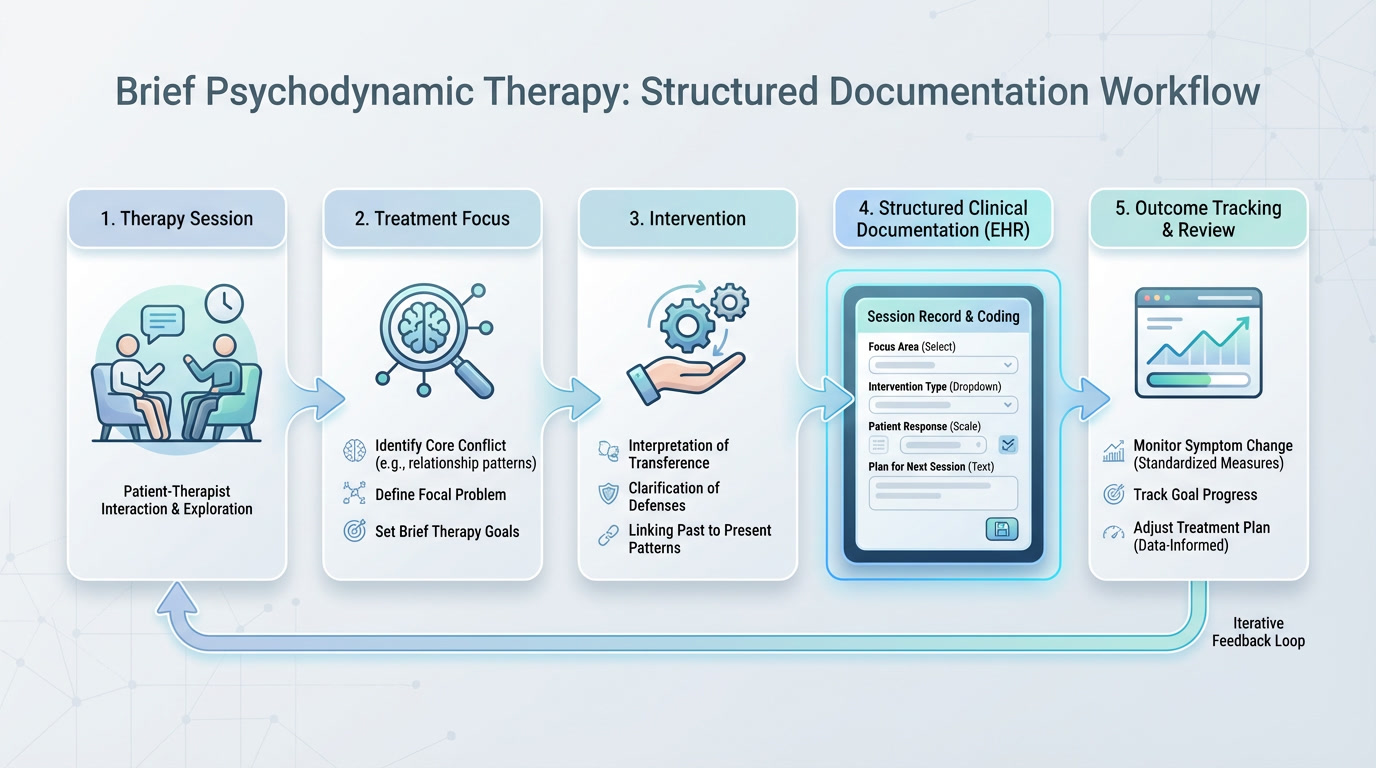
Because brief psychodynamic therapy relies on sustained focus and continuity of insight, documentation becomes part of the clinical container rather than a separate administrative task. Research shows that structured documentation and consistent progress monitoring are essential components of effective brief therapy. ICANotes is a robust electronic health record (EHR) system specifically designed to streamline clinical documentation and enhance therapeutic practice for mental health professionals.
Key features that support brief psychodynamic therapy include:
- Structured note templates: Facilitate concise yet comprehensive documentation of psychodynamic interventions, transference observations, and client progress without sacrificing clinical detail
- Goal tracking: Easy tracking of specific therapeutic goals, treatment focus, and progress toward objectives across sessions, maintaining the focused approach essential to brief therapy
- Session planning tools: Intuitive interface supports efficient session planning, helping clinicians prepare for each appointment and maintain therapeutic momentum
- Outcome monitoring: Built-in tools for tracking treatment outcomes and client progress over time, enabling continuous assessment and intervention adjustment
- Time management: Features that help clinicians manage the time-limited nature of brief therapy, including session counting and termination phase reminders
By streamlining administrative tasks and documentation requirements, ICANotes allows clinicians to focus their energy on therapeutic work rather than paperwork, supporting the delivery of high-quality, evidence-based brief psychodynamic care.
Ready to support focused, insight-oriented work without documentation slowing you down?
Start your free 30-day ICANotes trial and see how structured templates and outcome tracking can support efficient, high-quality brief psychodynamic therapy.

Start Your 30-Day Free Trial
Experience the most intuitive, clinically robust EHR designed for behavioral health professionals, built to streamline documentation, improve compliance, and enhance patient care.
- Complete Notes in Minutes - Purpose-built for behavioral health charting
- Always Audit-Ready – Structured documentation that meets payer requirements
- Keep Your Schedule Full – Automated reminders reduce costly no-shows
- Engage Clients Seamlessly – Secure portal for forms, messages, and payments
- HIPAA-Compliant Telehealth built into your workflow


Frequently Asked Questions: Brief Psychodynamic Therapy
Getting Started with Brief Psychodynamic Therapy
Brief psychodynamic therapy offers clinicians a powerful, evidence-based approach for providing depth-oriented treatment within contemporary practice constraints. By mastering brief psychodynamic therapy techniques and interventions, clinicians can offer profound therapeutic value even within time-limited formats, meeting clients' needs for meaningful insight and lasting change.
Whether you're a clinician seeking to expand your therapeutic repertoire or exploring treatment options for yourself, brief psychodynamic therapy provides an accessible pathway to psychological insight and behavioral change. The focused, time-efficient nature of this approach makes depth psychology available to more people while maintaining the transformative potential of psychodynamic work.
Ready to enhance your brief psychodynamic therapy practice? Discover how ICANotes can streamline your clinical documentation and support your delivery of high-quality time-limited psychodynamic care. Visit ICANotes.com to learn more and start your free trial today.
Related Posts






Dr. October Boyles
DNP, MSN, BSN, RN
About the Author
Dr. October Boyles is a behavioral health expert and clinical leader with extensive expertise in nursing, compliance, and healthcare operations. With a Doctor of Nursing Practice (DNP) and advanced degrees in nursing, she specializes in evidence-based practices, EHR optimization, and improving outcomes in behavioral health settings. Dr. Boyles is passionate about empowering clinicians with the tools and strategies needed to deliver high-quality, patient-centered care.