Blog > Treatment Strategies > ADHD Recovery Without Medication: Biofeedback & Coping Tools
ADHD Recovery Without Medication: Coping Mechanisms, Biofeedback, and Learning to Live With the Noise
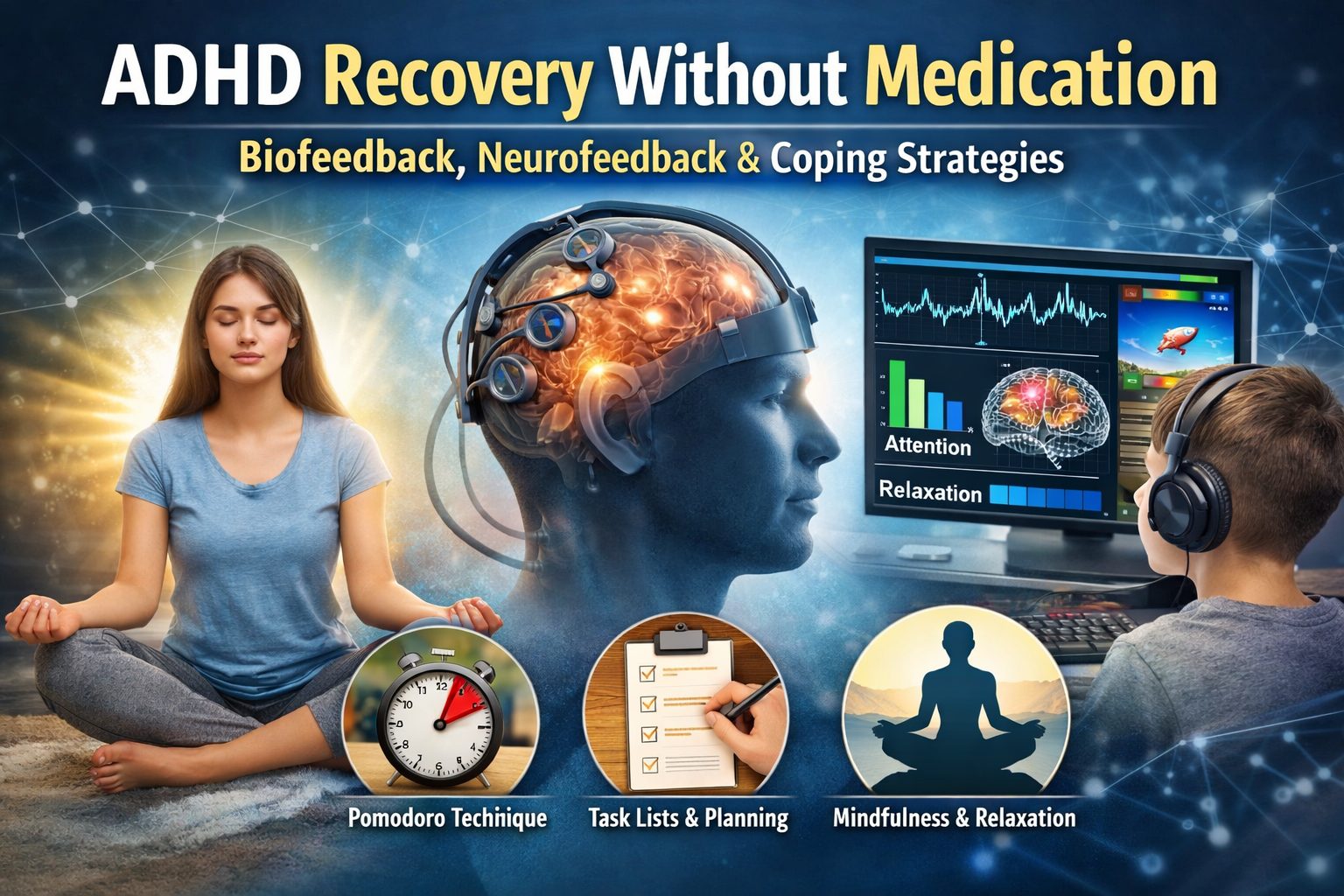
ADHD recovery doesn’t always mean medication alone. For many individuals, learning how to deal with ADHD without medication involves a combination of behavioral strategies, nervous system regulation, and evidence-informed therapies like biofeedback and neurofeedback. This article explores ADHD coping mechanisms that support long-term focus, emotional regulation, and daily functioning — including non-medication treatment options that can help both children and adults reclaim a sense of control.

Last Updated: December 30, 2025
The Noise That Wouldn’t Turn Off: Living With ADHD
When I was a child, I had severe ADHD — though at the time, we didn’t call it that. I just knew that my world never stopped spinning. I couldn’t sit still in class. I couldn’t finish simple tasks at home. Everything moved too fast for me to catch up.
There was always this noise in my head — thoughts colliding and overlapping, all demanding my attention at once. It wasn’t just distraction; it was chaos. My brain never turned off. I couldn’t even play a simple game of Uno without losing track of the rules halfway through. To say it was frustrating would be an understatement — I felt like something was deeply wrong with me.
As a child, I couldn’t sleep. My mind had a thousand thoughts racing in every direction, and bedtime felt like torture. I remember sitting at the edge of my bed, exhausted but restless, praying my brain would just slow down for one night. Even tying my shoes felt like a battle between my hands and my thoughts. It was absolutely exhausting.
At a very young age, I was prescribed Ritalin (methylphenidate). It made a significant difference — for the first time, I could hear myself think. But when the medicine wore off, those thousands of thoughts came rushing back in all at once, like a door flung open in a storm. Later, I tried Adderall (amphetamine/dextroamphetamine), which also improved my focus, but when it started to wear off, I felt waves of agitation and restlessness that were almost unbearable.
Understanding ADHD and the Path to ADHD Recovery
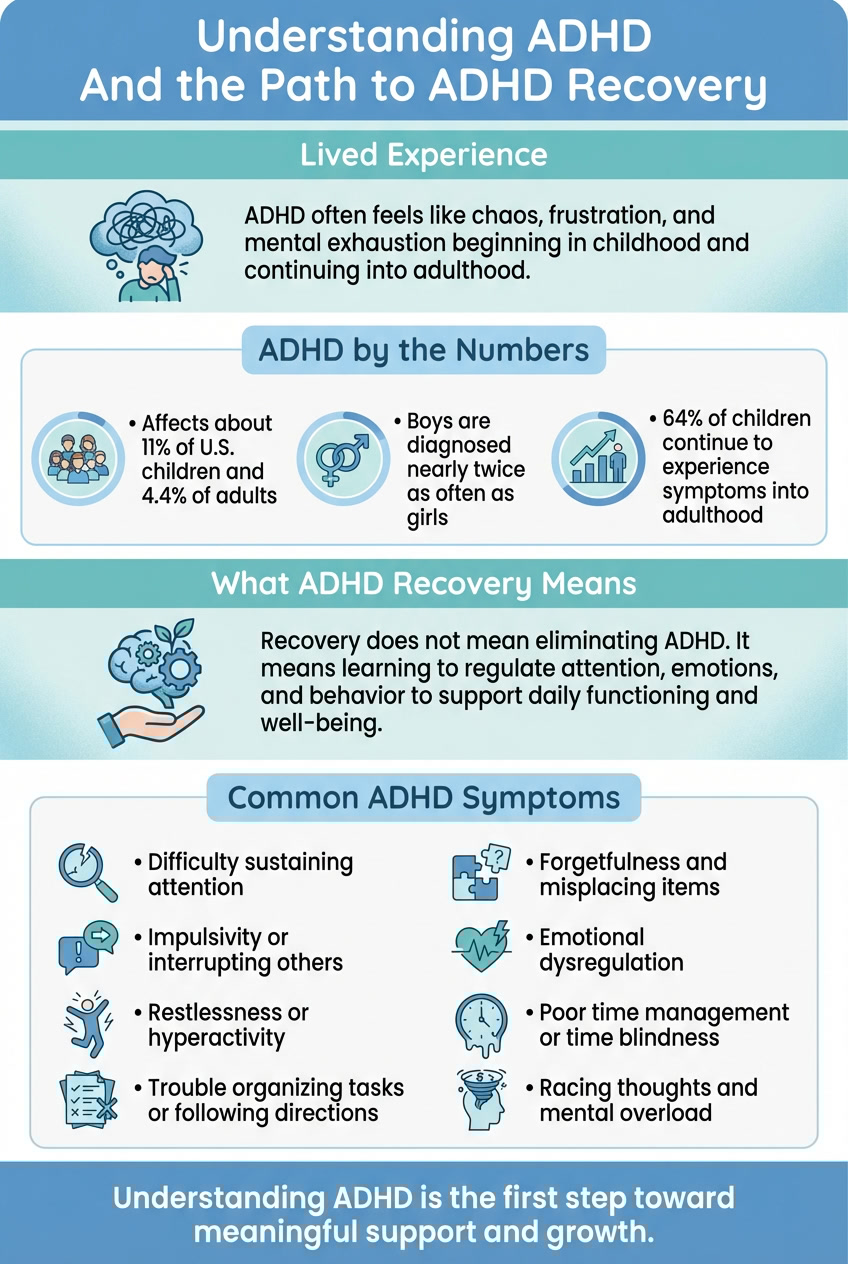
What I felt as a child — the chaos, the frustration, the exhaustion — mirrors the lived experience of millions of children and adults with ADHD.
According to the Centers for Disease Control and Prevention (CDC, 2024):
- ADHD affects approximately 11% of U.S. children (ages 4–17) and 4.4% of adults.
- Boys are diagnosed nearly twice as often as girls.
- Around 64% of children with ADHD continue to experience symptoms into adulthood.
ADHD recovery doesn’t mean eliminating the condition; it means learning how to regulate attention, emotion, and behavior in ways that support daily functioning and well-being.
Common ADHD Symptoms Include:
- Difficulty sustaining attention
- Impulsivity and interrupting others
- Restlessness or hyperactivity
- Trouble organizing tasks or following directions
- Forgetfulness and frequent misplacing of items
- Emotional dysregulation — frustration, irritability, or tearfulness
- Poor time management or “time blindness”
- Racing thoughts and mental overload
ADHD Medications: Helpful, But Not the Only Path
Medication can be life-changing for some individuals with ADHD — especially in childhood, when concentration and behavior directly impact academic and social development.
Stimulants:
- Methylphenidate-based: Ritalin, Concerta, Focalin, Daytrana
- Amphetamine-based: Adderall, Vyvanse, Dexedrine, Evekeo
According to a 2023 study published in JAMA Psychiatry, stimulant medications improve attention and impulse control in 70–80% of children diagnosed with ADHD. However, when the medication wears off, individuals may experience “rebound” symptoms such as irritability, fatigue, or restlessness — something I personally remember vividly.
Non-Stimulants:
- Atomoxetine (Strattera)
- Guanfacine (Intuniv)
- Clonidine (Kapvay)
These options are often used when stimulants cause intolerable side effects or when additional regulation of emotional and behavioral symptoms is needed.
However, medications don’t work for everyone. Some individuals experience side effects, rebound symptoms, or simply prefer to explore ADD treatment without medication — especially for long-term ADHD recovery.
ADD Treatment Without Medication: Therapies That Support ADHD Recovery
My battle with ADHD continued into my teenage years. My mother, desperate to help me find relief without harsh side effects, explored options that didn’t rely solely on medication. That’s when she discovered biofeedback and neurofeedback therapy — approaches that focus on self-regulation rather than symptom suppression.
A 2022 meta-analysis published in European Child & Adolescent Psychiatry found that neurofeedback for ADHD demonstrated medium-to-large improvements in attention and impulse control, in some cases comparable to stimulant medications.
While results vary depending on protocol and provider expertise, biofeedback for ADHD has become a meaningful treatment option for individuals seeking non-medication approaches.
For me, brian mapping and neurofeedback changed everything. I learned to recognize my body’s internal signals and early signs of dysregulation — the pulse in my temples when my mind was racing, the shallow breathing before impulsive moments — and gradually, I learned control and was able to intervene before my thoughts spiraled. I saw a specialist in the Charlotte, NC area, Myra A. Preston, Ph.D. with Siber Imaging, whose treatment was life-changing for me. Now, as an adult, I no longer take ADHD medication because I feel those sessions had tremendous, long-lasting results.
ADHD Biofeedback and Neurofeedback Therapy: How These Treatments Work
For those of us with ADHD, the body often mirrors the chaos of the mind, a racing heart, tense shoulders, or that restless leg that won’t stop bouncing under the desk. I still have trouble sitting still in my chair at times, however biofeedback turns that chaos into data. It’s a method that teaches you to see and regulate your own physiological patterns — heart rate, skin temperature, muscle tension, and even brainwave activity — by using sensors and real-time visual or auditory feedback.
Over time, you start to recognize what dysregulation feels like before it takes over. You learn that the tightness in your chest means your focus is slipping, or that your shallow breathing is your body’s way of saying “slow down.” Biofeedback helps bridge the gap between mind and body — the same gap that ADHD so often widens. By turning internal chaos into observable data, this awareness from biofeedback builds control.
Biofeedback for ADHD helps individuals:
- Identify early signs of overstimulation
- Improve emotional regulation
- Strengthen focus and stress tolerance
- Build body-mind awareness
Neurofeedback therapy for ADHD goes a step further by using EEG-based brain mapping to identify patterns of overactive or underactive brainwaves and trains the brain toward more balanced activity. For example, individuals with ADHD often show excessive slow-wave (theta) activity in the frontal regions of the brain — a pattern associated with inattention. Through repeated sessions, neurofeedback gently teaches the brain to shift toward more balanced patterns associated with sustained attention and impulse control.
While neurofeedback research continues to evolve, when delivered by trained providers using validated protocols, it can be a powerful component of ADHD recovery. In the right hands, like Dr. Myra Preston, it can be transformative. It was for me. What began as colored lines on a screen and quiet tones in a headset became something far greater, a way of learning to hear my own mind’s signals before they became storms.
Biofeedback doesn’t silence ADHD. It teaches you how to tune it, like learning to conduct an orchestra that once played out of sync. And when you can recognize the rhythms of your own nervous system, you begin to find calm in places that once felt impossible.
For individuals seeking ADD treatment without medication, biofeedback and neurofeedback therapy offer an alternative path. These approaches don’t aim to suppress ADHD symptoms, but rather to improve self-regulation by training the brain and nervous system to respond more effectively. While not a replacement for medication in all cases, many people find that neurofeedback for ADHD becomes a cornerstone of long-term ADHD recovery. There are also other mechanisms that truly help someone with ADHD thrive in their day-to-day life.
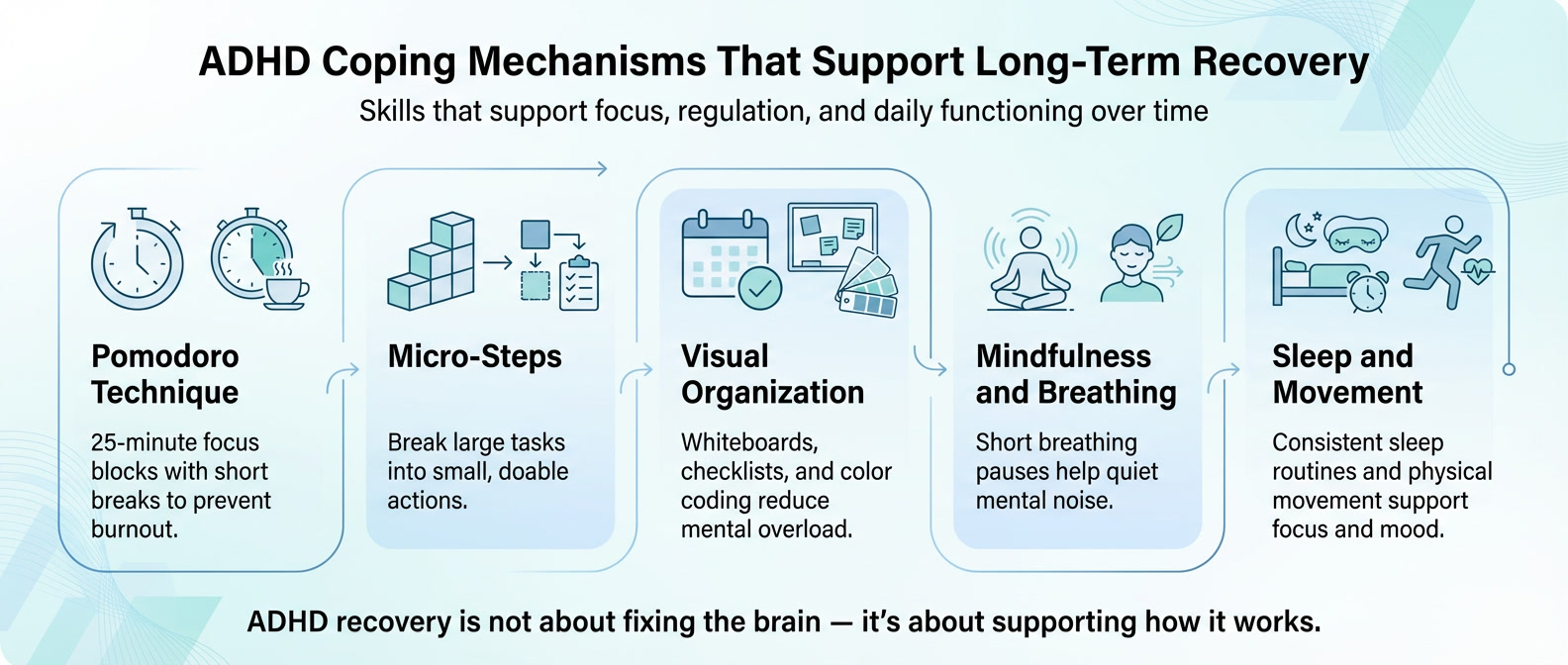
ADHD Coping Mechanisms That Support Long-Term Recovery
ADHD doesn’t disappear with age; it changes shape. These ADHD coping mechanisms aren’t quick fixes — they’re skills that help rewire habits, improve executive functioning, and support ADHD recovery without medication. I’ve had to learn to live with a fast-moving brain to manage it, not fight it. Here are some tools that help me stay grounded and productive:
- The Pomodoro Technique: Working in 25-minute bursts with 5-minute breaks keeps me focused without burnout.
- Breaking tasks into micro-steps: I divide large projects into small, doable actions — like “open document,” “write three sentences,” “review paragraph.” There are a plethora of apps that aid with breaking down tasks.
- Visual organization tools: Whiteboards, checklists, and color coding keep my external world as clear as my inner one is busy.
- Mindfulness and deep breathing: Just two minutes of focused breathing can slow the internal “noise” enough to reset my focus.
- Regular sleep routines: ADHD and insomnia often travel together. Consistent bedtime rituals and limiting screens at night have been essential.
- Physical movement: A quick walk, stretching, or dancing movement resets dopamine levels and helps regulate focus and emotion.
Now that I have children of my own, I understand how helpless and hopeless my mother must have felt. She was watching me suffer, and she was suffering with me. ADHD doesn’t just affect the individual; it touches everyone around them. But compassion, understanding, and good treatment modalities can change the story.
Every child with ADHD needs what I needed most: someone who believes that they are not broken, that their mind simply works differently, faster, louder, and with incredible creativity waiting to be harnessed. Individuals need to know that there are fantastic treatment modalities available that can truly help individuals improve their lives.
ADHD Recovery Is About Learning to Listen
ADHD isn’t a lack of discipline or willpower. It’s a neurodevelopmental difference — one that requires patience, structure, and empathy. From Ritalin to biofeedback, from sleepless nights to Pomodoro timers, my life has been a continuous process of learning how to live well inside my own mind. And maybe that’s the real lesson: ADHD isn’t about quieting the noise... it’s about learning how to listen through it.

FAQs: ADHD Recovery without Medication
How ICANotes Supports Clinicians Treating ADHD
For clinicians working with clients who live inside this kind of constant mental noise, accurate and efficient documentation is essential. ADHD treatment involves complex assessments, medication management, behavioral interventions, and ongoing symptom tracking — all of which must be reflected clearly in the clinical record.
ICANotes streamlines this process with fully configured templates built for behavioral health. Clinicians can document ADHD evaluations, medication adjustments, and therapy sessions using structured, click-through tools that ensure no critical detail is overlooked. Each note automatically links to the treatment plan and progress documentation, helping providers maintain the “golden thread” of clinical justification across every encounter.
For prescribers, ICANotes offers integrated e-prescribing and medication management tools that simplify stimulant and non-stimulant tracking, monitor side effects, and support compliance with controlled-substance documentation standards. For therapists, features like customizable progress note templates, rating scale tracking, and built-in screening tools make it easier to record client functioning, attention levels, and behavioral changes over time.
With ICANotes, ADHD documentation doesn’t have to feel as overwhelming as the condition itself. Every note, from the initial evaluation to follow-up sessions, can be completed quickly, accurately, and in a way that reflects the true complexity of your client’s experience — freeing you to focus more on care, and less on clicks.

Start Your 30-Day Free Trial
Experience the most intuitive, clinically robust EHR designed for behavioral health professionals, built to streamline documentation, improve compliance, and enhance patient care.
- Complete Notes in Minutes - Purpose-built for behavioral health charting
- Always Audit-Ready – Structured documentation that meets payer requirements
- Keep Your Schedule Full – Automated reminders reduce costly no-shows
- Engage Clients Seamlessly – Secure portal for forms, messages, and payments
- HIPAA-Compliant Telehealth built into your workflow


Dr. October Boyles
DNP, MSN, BSN, RN
About the Author
Dr. October Boyles is a behavioral health expert and clinical leader with extensive expertise in nursing, compliance, and healthcare operations. With a Doctor of Nursing Practice (DNP) and advanced degrees in nursing, she specializes in evidence-based practices, EHR optimization, and improving outcomes in behavioral health settings. Dr. Boyles is passionate about empowering clinicians with the tools and strategies needed to deliver high-quality, patient-centered care.