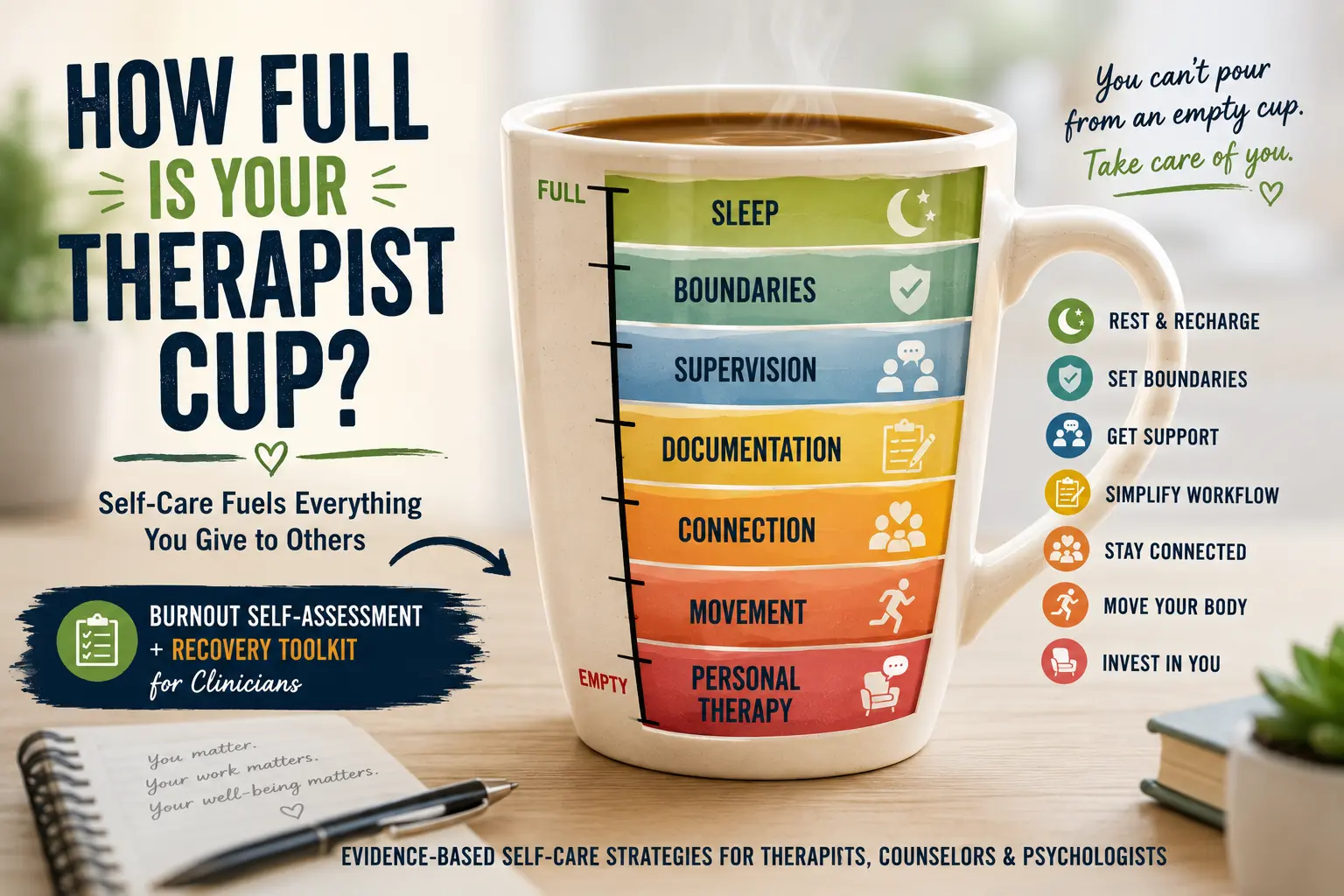
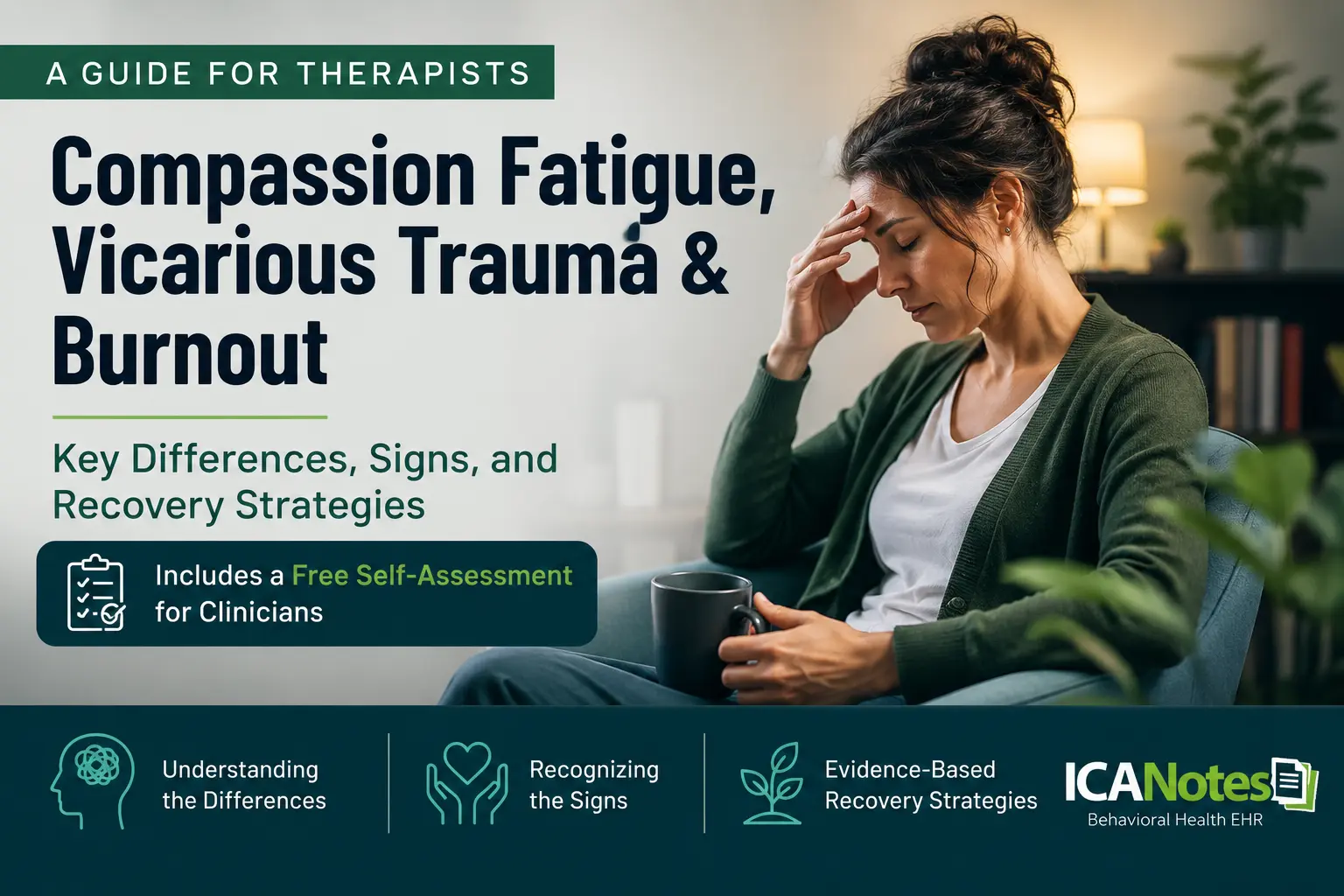
Self-care for therapists is more than a wellness trend — it's an ethical and professional necessity. Therapists, counselors, psychologists, and psychiatrists routinely support clients through trauma, grief, crisis, and emotional distress, making them especially vulnerable to burnout, compassion fatigue, and secondary traumatic stress. This guide explores evidence-based self-care strategies for mental health professionals, including therapist burnout recovery techniques, warning signs of clinician burnout, a burnout severity self-check, and a therapist self-care checklist you can use to support your well-being and sustain a healthy practice. Whether you're looking to prevent burnout, recover from it, or build a more sustainable career, you'll find practical tools and actionable strategies designed specifically for behavioral health clinicians.


Last Updated: June 1, 2026

What You'll Learn
- Why self-care for therapists is essential for preventing burnout and maintaining ethical, sustainable clinical practice.
- The early warning signs of therapist burnout, compassion fatigue, and secondary traumatic stress — and what to do when you notice them.
- Evidence-based burnout recovery strategies for therapists, counselors, psychologists, and psychiatrists.
- How Maslow's Hierarchy of Needs can help you identify the foundations of clinician well-being.
- Practical self-care techniques that support emotional, cognitive, physical, relational, and professional health.
- How documentation burden, administrative stress, and workflow challenges contribute to clinician burnout — and ways to reduce their impact.
- How to build a realistic therapist self-care routine that works even with a busy caseload.
- How to use a therapist self-care checklist and free Burnout Recovery Toolkit to monitor your well-being and create a recovery plan.
Contents
- Why Self-Care is Essential for Mental Health Professionals
- Understanding Clinician Needs Through Maslow's Hierarchy of Needs
- How to Know if You're Experiencing Therapist Burnout
- Understanding the Unique Stressors Clinicians Face
- Evidence-Based Self-Care Tips for Mental Health Professionals
- A Mental Health Self-Care Checklist for Clinicians
- How ICANotes Supports Clinician Self Care Through Better Workflows
- FAQs: Self-Care for Mental Health Professionals
- Final Thoughts: Self-Care is Ethical Care
Mental health professionals give extraordinary emotional energy to clients every day. Therapists, counselors, psychologists, and psychiatrists carry the weight of other people’s trauma, grief, and crisis — and without intentional self-care, that weight accumulates. This guide provides evidence-based self-care strategies specifically for clinicians, including a burnout severity self-check, therapist burnout recovery techniques, and a therapist self-care checklist you can use daily or weekly.
Whether you’re looking to prevent burnout, recover from it, or simply sustain a practice that feels meaningful long-term, this resource is for you.
Why Self-Care Is Essential for Mental Health Professionals
Mental health clinicians routinely support clients through trauma, crisis, grief, and emotional dysregulation. The nature of therapeutic work demands sustained empathic attention — a resource that depletes without intentional replenishment.
Without consistent self-care, therapists and counselors are at elevated risk for:
- Compassion fatigue
- Secondary traumatic stress (STS)
- Burnout
- Emotional exhaustion and reduced empathy
- Difficulty maintaining therapeutic boundaries
- Declining clinical effectiveness
Ethical guidelines from the APA, NASW, and ACA all emphasize clinician well-being as a core professional competency — not an optional perk. A regulated, supported clinician is better equipped to make sound clinical judgments, provide appropriate interventions, and maintain the therapeutic boundaries that protect both client and provider.
Self-care is not indulgent. For therapists and counselors, it is ethical practice.
Therapist Burnout by the Numbers
Research consistently shows that burnout is a significant concern across the behavioral health profession. Consider these findings:
Burnout is not simply an individual resilience issue. Workload, documentation requirements, administrative burden, and trauma exposure all play a role in clinician well-being and long-term career sustainability.
Understanding Clinician Needs Through Maslow's Hierarchy of Needs
Maslow’s model helps clinicians understand why certain types of self-care feel restorative while others don’t — and why burnout so often starts at the foundation, not the top.
1. Physiological Needs (Foundation Level)
Even the most skilled clinician cannot function well without:
- Adequate sleep (7–9 hours for most adults)
- Regular meals and hydration
- Physical movement throughout the day
- Rest between high-intensity sessions
These are typically the first sacrifices clinicians make under pressure — and the fastest route to burnout.
2. Safety Needs
Clinicians need a stable, predictable professional environment. This includes:
- Financial security and sustainable billing
- Clear, manageable documentation workflows
- Professional liability coverage
- Predictable scheduling with protected breaks
When administrative burden is overwhelming or unpredictable, the clinician’s sense of professional safety erodes quickly.
3. Love & Belonging

Isolation is a significant risk, especially for therapists in solo private practice. Healthy belonging looks like:
- Peer consultation groups
- Supportive supervision relationships
- Time with family and non-clinical friends
- Professional community and collegial connection
4. Esteem Needs
Clinicians sustain their practice when they feel competent, valued, and effective. Esteem is supported by:
- Continuing education that inspires rather than drains
- Skill-building in areas of clinical interest
- Peer feedback and supportive supervision
- Recognition of clinical progress and outcomes
5. Self-Actualization
At the apex, therapists thrive when their work aligns with their values. This grows through creative clinical work, meaningful supervision, value-aligned practice decisions, and time for reflection and professional growth.
Maslow’s model makes clear that foundational self-care — sleep, rest, connection, safety — is not optional. It is the infrastructure on which everything else depends.
Recognizing Therapist Burnout: Signs and Symptoms
Burnout in mental health professionals rarely announces itself all at once. It builds gradually, often disguised as conscientiousness or dedication. Knowing the warning signs is the first step toward intervention.

Emotional Warning Signs
- Feeling emotionally drained before the day begins
- Loss of empathy or a sense of numbness in sessions
- Persistent irritability, impatience, or cynicism about clients
- Difficulty transitioning out of “clinical mode” after work
Physical and Cognitive Warning Signs
- Chronic fatigue that doesn’t resolve with rest
- Poor concentration or difficulty retaining clinical information
- Headaches, muscle tension, or somatic symptoms
- Sleep disruption, including difficulty falling or staying asleep
- Forgetfulness or trouble making clinical decisions
Professional Warning Signs
- Consistent avoidance of documentation or charting
- Dreading client sessions or specific clients
- Reduced sense of professional accomplishment
- Contemplating leaving the profession
- Feeling ineffective even when clients are progressing
Relational Warning Signs
- Withdrawing from colleagues, supervisors, or consultation
- Emotional unavailability in personal relationships
- Loss of interest in professional development or supervision
When to Take Action
Therapist burnout becomes clinically significant when symptoms persist for two weeks or longer, or when they interfere with work performance, personal relationships, or sleep. If you recognize yourself in three or more categories above, the burnout treatment section below is for you.
Quick Therapist Burnout Self-Check
Ask yourself:
If you answered “yes” to two or more of these questions, you may be experiencing early signs of burnout.
Want a more complete assessment?
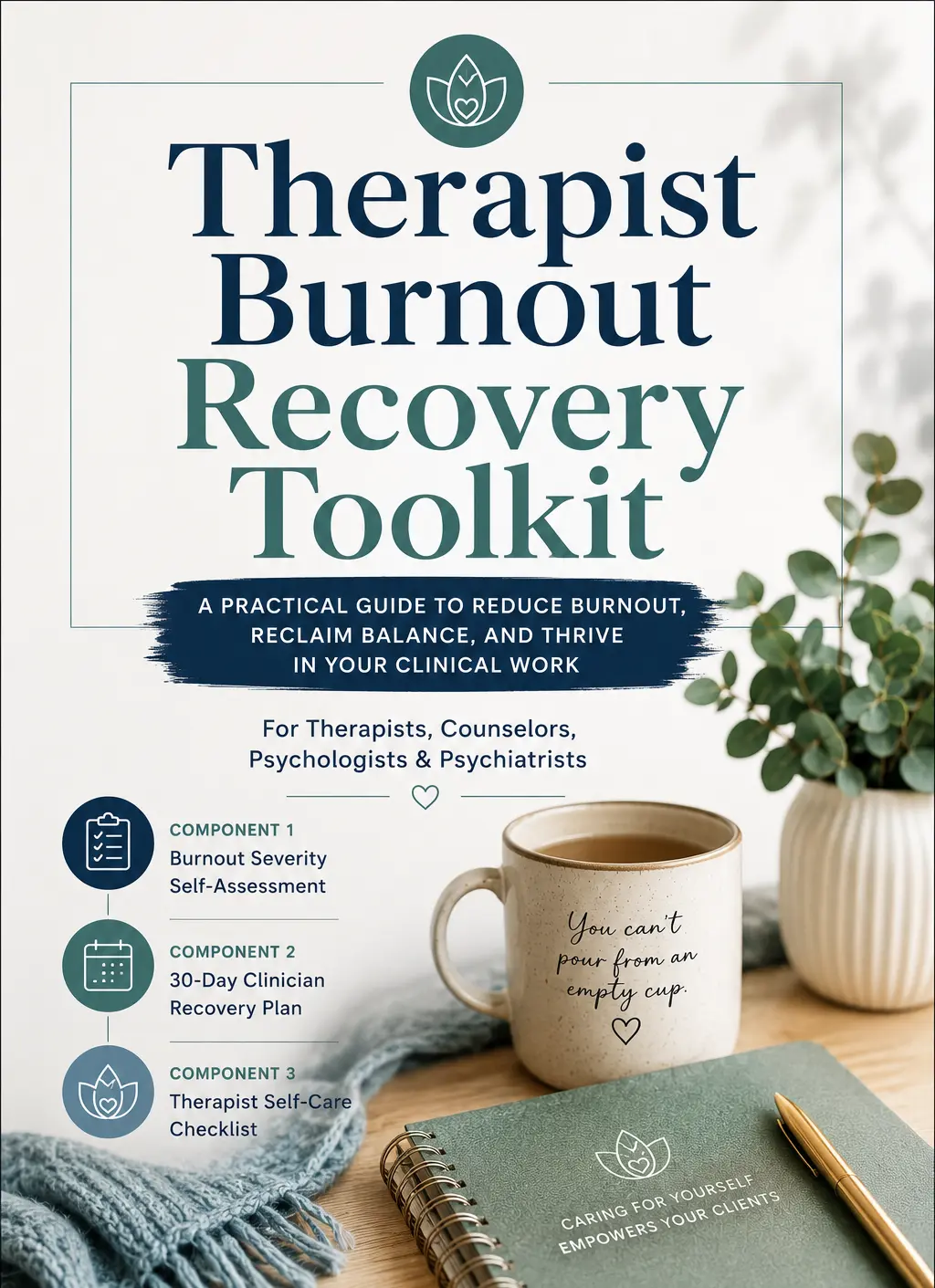
Download the free Therapist Burnout Recovery Toolkit for a 10-question Burnout Severity Assessment and personalized recovery guidance.
Therapist Burnout vs. Compassion Fatigue: What's the Difference?
Burnout and compassion fatigue are often used interchangeably, but they are not the same thing. Understanding the distinction can help clinicians choose the most effective recovery strategies.
Many clinicians experience both simultaneously. When burnout and compassion fatigue occur together, recovery often requires both systemic changes and intentional emotional processing.
Burnout Treatment for Mental Health Professionals: How to Recover
Most clinician wellness content focuses on burnout prevention. But what do you do when you’re already burned out? Burnout treatment is a distinct process from prevention — it requires active recovery, not just the addition of more self-care habits to an already depleted schedule.
The following steps are grounded in the research on burnout recovery and adapted specifically for therapists, counselors, psychologists, and psychiatrists.
Step 1: Acknowledge and Assess
The first barrier to burnout treatment is denial. Clinicians are trained to care for others and may minimize their own symptoms or attribute them to a “tough stretch.” Before anything else, take an honest self-inventory.
- Use a validated tool such as the Maslach Burnout Inventory (MBI) or the Professional Quality of Life Scale (ProQOL)
- Identify which domains are most affected: emotional, cognitive, physical, relational, or professional
- Name a trusted colleague, supervisor, or personal therapist who can give you honest outside perspective
The Burnout Severity Self-Assessment in our free Therapist Burnout Recovery Toolkit can help you identify whether you are experiencing mild, moderate, or severe burnout — and tailor your recovery steps accordingly.
Step 2: Reduce the Load
You cannot recover from burnout by working through it. Burnout treatment requires a genuine reduction in load, particularly in the areas contributing most to depletion.
- Temporarily reduce your caseload: most full-time therapists find 15–20 clients per week sustainable; those in active recovery may need fewer
- Eliminate or defer non-essential administrative work
- Set hard stops on after-hours client contact
- Decline new clients until symptoms stabilize
- If caseload reduction is not immediately possible, advocate for it with your employer or supervisor as an urgent professional need
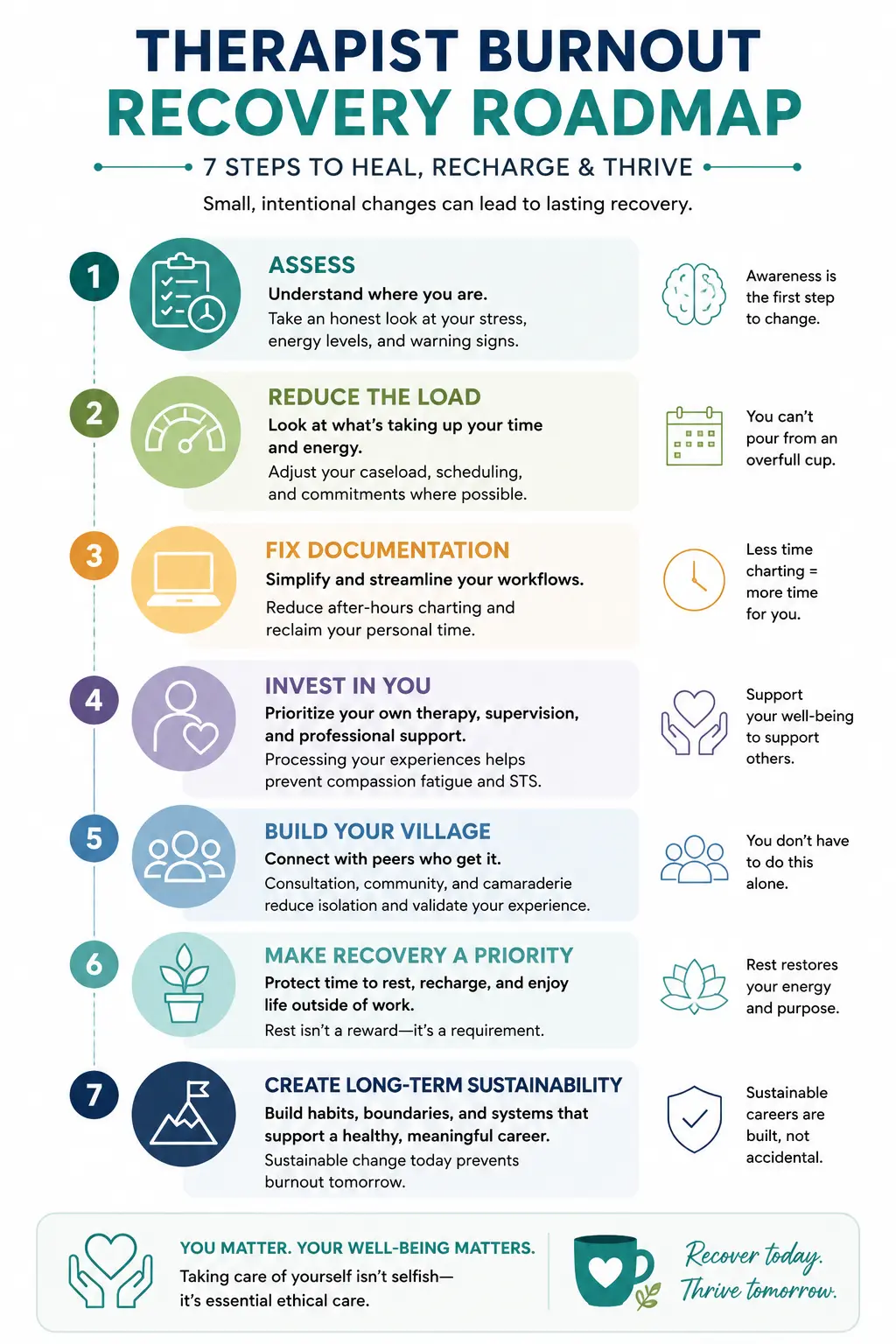
Step 3: Audit Your Documentation Burden
Research consistently shows that documentation overload is one of the primary drivers of behavioral health clinician burnout — often more so than clinical caseload alone. Therapists who spend hours each evening completing notes have less recovery time and experience ongoing cognitive and emotional depletion.
- Identify how many hours per week you spend on documentation outside of scheduled clinical time
- If it exceeds 5–7 hours weekly, your documentation workflow likely needs structural improvement
- Consider whether your current EHR or documentation system is contributing to the problem
- Purpose-built behavioral health EHR platforms with structured, menu-driven note templates (like ICANotes) can dramatically reduce documentation time for therapists and psychiatrists
Reclaiming documentation time is one of the most concrete and durable forms of burnout treatment available to clinicians in private practice and agency settings.
Step 4: Engage Personal Therapy
Personal therapy is one of the most evidence-supported burnout treatment interventions for mental health professionals. Therapists who engage in their own therapy during recovery report:
- Greater ability to process countertransference and secondary traumatic stress
- Improved professional boundaries
- Reduced symptoms of emotional exhaustion
- Increased sense of purpose and clinical identity
If you are not currently in therapy, initiating it during a burnout recovery period is strongly recommended. Many therapists increase session frequency during acute phases and taper back as symptoms stabilize.
Step 5: Restructure Supervision and Peer Support
Isolation amplifies burnout. Reconnecting with professional support structures is a core component of burnout treatment, not a luxury.
- Restart or increase clinical supervision frequency
- Join or re-engage with a peer consultation group
- Identify one or two colleagues you can contact when sessions feel overwhelming
- Consider whether your current supervision arrangement is supportive or depleting — and make changes if needed
Step 6: Protect Recovery Time as Non-Negotiable
Rest is not the absence of work. During burnout treatment, protected recovery time needs to be scheduled and defended the same way clinical appointments are.
- Schedule at least one full day off per week with no clinical or administrative work
- Protect mealtimes, sleep schedules, and physical activity
- Engage in activities that are restorative and entirely unrelated to clinical work
- Resist the pull to “catch up” on administrative tasks during recovery time
Step 7: Seek Professional Support When Needed
When burnout is severe — defined by persistent symptoms lasting four or more weeks, significant functional impairment, or intrusive thoughts about leaving the profession — professional intervention beyond peer support may be appropriate. Options include:
- Individual therapy or coaching with a clinician who works with healthcare professionals
- A formal leave of absence, where available
- Employee Assistance Programs (EAPs) for agency-based clinicians
- Consultation with your licensing board’s wellness or support programs
Understanding the Unique Stressors Clinicians Face
Effective self-care for therapists and counselors requires recognizing that the demands of clinical work are distinct from those of other high-stress professions. Generic wellness advice often falls short because it doesn’t account for the specific nature of therapeutic labor.
Emotional Labor and Empathic Strain
Listening deeply, holding space for trauma, and maintaining consistent attunement across multiple sessions each day requires significant emotional energy. Over time, sustained empathic engagement without adequate recovery can lead to empathic fatigue — a gradual dulling of the attunement capacity that defines effective therapy.
High Caseloads and Administrative Burden
Therapists, especially those in agency or group practice settings, frequently carry caseloads that exceed what is sustainably manageable. Add documentation requirements, billing coordination, and insurance prior authorizations, and clinicians are often doing the equivalent of two jobs.
Boundary Complexity
Maintaining therapeutic boundaries is cognitively and emotionally demanding work. Clinicians who are trained to prioritize client needs may struggle to recognize when those same patterns are causing them to deprioritize their own.
Isolation in Practice
Solo practitioners and those in small group settings often lack the day-to-day collegial contact that buffers stress in other professions. The confidentiality inherent in clinical work means there is limited ability to discuss the emotional content of sessions with people outside the field.
Exposure to Trauma
Therapists who work with trauma survivors are at elevated risk for vicarious traumatization and secondary traumatic stress—conditions that develop not from personal trauma exposure, but from sustained empathic engagement with clients who have experienced trauma.
Evidence-Based Self-Care for Therapists, Counselors, and Psychologists: What Actually Works?
The following evidence-based strategies are grounded in research on clinician well-being and adapted for the specific demands of behavioral health practice. They cover emotional, cognitive, professional, physical, relational, and values-based dimensions of self-care.
1. Emotional and Psychological Self-Care
Prioritizing your emotional well-being supports clinical judgment and resilience.
- Use reflective journaling or clinical debriefing after difficult sessions
- Notice countertransference as data, without self-criticism
- Normalize seeking therapy for yourself — it is both a clinical and personal resource
- Build a regular consultation or supervision routine
- Create emotional transition rituals between sessions: grounding exercises, breathwork, music, or a brief walk
2. Cognitive Self-Care
Protect your mental bandwidth and manage the thought patterns that shape your clinical effectiveness.
- Practice cognitive reframing when you notice negative internal dialogue about your clinical effectiveness
- Set realistic expectations for productivity, especially around documentation
- Limit perfectionism: “good enough” documentation that meets clinical and compliance standards is the appropriate standard
- Use mindfulness practices to reduce cognitive overload between sessions
3. Professional Self-Care for Therapists and Counselors
Strengthening your clinical foundation reduces overwhelm and improves confidence.
- Maintain a manageable, sustainable caseload — most research suggests 15–25 clients per week for full-time therapists
- Schedule dedicated administrative time rather than squeezing documentation into margins
- Engage in continuing education that inspires you and builds skills you want
- Use structured documentation tools that reduce charting burden without sacrificing clinical quality
- Join peer consultation circles, practice communities, or professional organizations
4. Physical Self-Care
The mind-body connection is central to clinician well-being.
- Stand, stretch, or take a short walk between sessions
- Practice diaphragmatic breathing before emotionally heavy appointments
- Organize your workspace ergonomically
- Protect morning and evening routines that support your nervous system
- Prioritize sleep over administrative catch-up whenever possible
5. Social and Relational Self-Care for Counselors and Psychologists
Healthy relationships replenish the emotional reserves clinicians depend on.
- Seek peer support and maintain professional friendships
- Connect regularly with friends outside the clinical world
- Protect personal time in the evenings and on weekends
- Practice saying no to additional clients or responsibilities when you are at capacity
- Recognize that difficulty accepting support is itself a burnout symptom
6. Values-Based and Restorative Self-Care
This does not need to be religious; it can be value-driven.
- Engage in hobbies and activities that have no connection to clinical work
- Spend time in nature, which has well-documented restorative effects
- Build mindfulness, meditation, or reflective practices into your routine
- Periodically reconnect with your original reasons for entering the field
Therapist Self-Care Checklist: Daily and Weekly Practices
A clinician self-care checklist provides a practical tool for monitoring your own well-being across the domains that matter most. Use the abbreviated version below for daily and weekly reference, then download the complete checklist in the Therapist Burnout Recovery Toolkit for a comprehensive, printable guide.
Daily Self-Care Checklist
Weekly Self-Care Checklist for Therapists and Counselors
Monthly Self-Care Checklist

How Workflows and Documentation Impact Clinician Self-Care
When clinicians think about burnout, they often focus on emotional labor, difficult cases, or high caseloads. Yet for many therapists, counselors, psychologists, and psychiatrists, one of the biggest contributors to burnout happens after the last client session ends.
Documentation, treatment planning, billing coordination, prior authorizations, and administrative follow-up can create a "second shift" that extends well beyond the workday. Over time, those extra hours reduce opportunities for rest, exercise, relationships, supervision, and other activities that support well-being.
Documentation burden often shows up as:
- Rewriting narratives to meet compliance requirements
- Updating treatment plans and progress notes
- Preparing documentation for audits or utilization reviews
- Correcting errors caused by inefficient workflows
- Managing denials related to documentation issues
- Completing notes during evenings, weekends, or personal time
The result is not simply lost time. Administrative overload can contribute to emotional exhaustion, chronic stress, reduced job satisfaction, and difficulty maintaining healthy work-life boundaries.
For many behavioral health professionals, improving documentation efficiency is one of the fastest and most practical ways to reclaim time, reduce stress, and create space for meaningful self-care. In that sense, optimizing workflows is not just an operational improvement — it is an investment in clinician well-being.
How ICANotes Supports Clinician Self-Care Through Better Workflows
While self-care practices such as supervision, personal therapy, exercise, and mindfulness are important, sustainable clinician well-being also depends on reducing unnecessary sources of stress. One of the most effective ways to accomplish that is by improving the systems clinicians use every day.
ICANotes was built specifically for behavioral health professionals and is designed to reduce the documentation burden that contributes to therapist burnout. By streamlining common administrative tasks, clinicians can spend less time charting and more time focusing on clients, professional development, personal relationships, and recovery.
ICANotes helps support clinician well-being by:
- Reducing documentation time through structured, menu-driven note templates
- Supporting medical necessity and audit readiness without extensive manual editing
- Simplifying treatment planning with intuitive workflows
- Integrating telehealth, scheduling, and patient engagement tools into a single platform
- Helping practices reduce billing-related stress through revenue cycle management features
- Leveraging AI-powered tools such as Ambient Listening and the Readability Enhancer to further streamline documentation
No EHR can eliminate every source of burnout. However, reducing the administrative workload that follows clinicians home each evening can have a meaningful impact on work-life balance and long-term career sustainability.
When documentation becomes more efficient, clinicians gain something that is often in short supply: time. And time is one of the most valuable self-care resources available.

FAQs: Self-Care for Therapists and Mental Health Professionals
+ What is the most effective burnout treatment for therapists?
Evidence-based burnout treatment for therapists involves reducing caseload and administrative burden, initiating or increasing personal therapy, restructuring supervision and peer support, and protecting non-negotiable recovery time. Burnout treatment is not simply adding more self-care habits—it requires reducing inputs, not just adding replenishment.
+ How does clinical supervision help prevent burnout in therapists?
Clinical supervision provides emotional support, professional guidance, and a structured space to process difficult cases. Therapists who receive consistent supervision report lower burnout rates because supervision creates regular opportunities to discuss challenges, receive validation, and gain perspective on clinical work.
+ Should therapists get their own therapy to prevent or treat burnout?
Yes. Personal therapy is highly recommended for mental health professionals both as a preventive measure and as a treatment when burnout has developed. Therapists in personal therapy are better equipped to manage countertransference, process work-related stress, and maintain the self-awareness necessary for effective clinical practice.
+ What is an ideal caseload size for therapists to prevent burnout?
Most research suggests that full-time therapists can sustain 15–25 clients per week without significant burnout risk. The appropriate number depends on client complexity, session intensity, specialization, and the clinician's own recovery capacity.
+ What is the difference between therapist burnout and compassion fatigue?
Burnout develops from chronic organizational and occupational stress, while compassion fatigue develops from empathic engagement with clients who have experienced trauma. Both can occur together, but they often require different recovery approaches.
+ How can counselors set better boundaries to prevent burnout?
Effective boundary-setting includes establishing clear work hours, limiting after-hours client contact, protecting breaks between sessions, and setting realistic caseload limits based on actual capacity rather than financial pressure.
+ What role does documentation burden play in therapist burnout?
Documentation burden is one of the most commonly cited contributors to clinician burnout. Therapists who spend hours outside clinical sessions completing notes, treatment plans, and billing-related tasks have less time for recovery, supervision, and personal well-being.
+ How can mental health practices support staff self-care?
Practices can reduce burnout by improving documentation systems, providing supportive supervision, protecting administrative time, setting sustainable caseload expectations, and fostering a culture that prioritizes clinician well-being.
+ Can therapist burnout affect client care?
Yes. Burnout can reduce empathy, increase documentation errors, impair concentration, and make it more difficult to maintain therapeutic presence. Addressing burnout supports both clinician well-being and high-quality client care.
Final Thoughts: Self-Care is Ethical Care
The mental health professionals who sustain long, meaningful careers are not those who sacrifice themselves most completely. They are the ones who learn, often the hard way, that self-care is not a reward earned at the end of an exhausting week — it is the infrastructure that makes the work possible.
Whether you are preventing burnout, in active recovery, or simply trying to stay well in a demanding field, the strategies here are evidence-based starting points, not a comprehensive prescription. Adapt them to your circumstances. Use the checklist. And if you’re in burnout treatment, be patient with the process.
You take care of your clients every day. You deserve the same quality of care.
Recent Posts




Dr. October Boyles
DNP, MSN, BSN, RN
About the Author
Dr. October Boyles is a behavioral health expert and clinical leader with extensive expertise in nursing, compliance, and healthcare operations. With a Doctor of Nursing Practice (DNP) and advanced degrees in nursing, she specializes in evidence-based practices, EHR optimization, and improving outcomes in behavioral health settings. Dr. Boyles is passionate about empowering clinicians with the tools and strategies needed to deliver high-quality, patient-centered care.